Bylaws of First American Insurance Portfolios, Inc.
Overview of this form
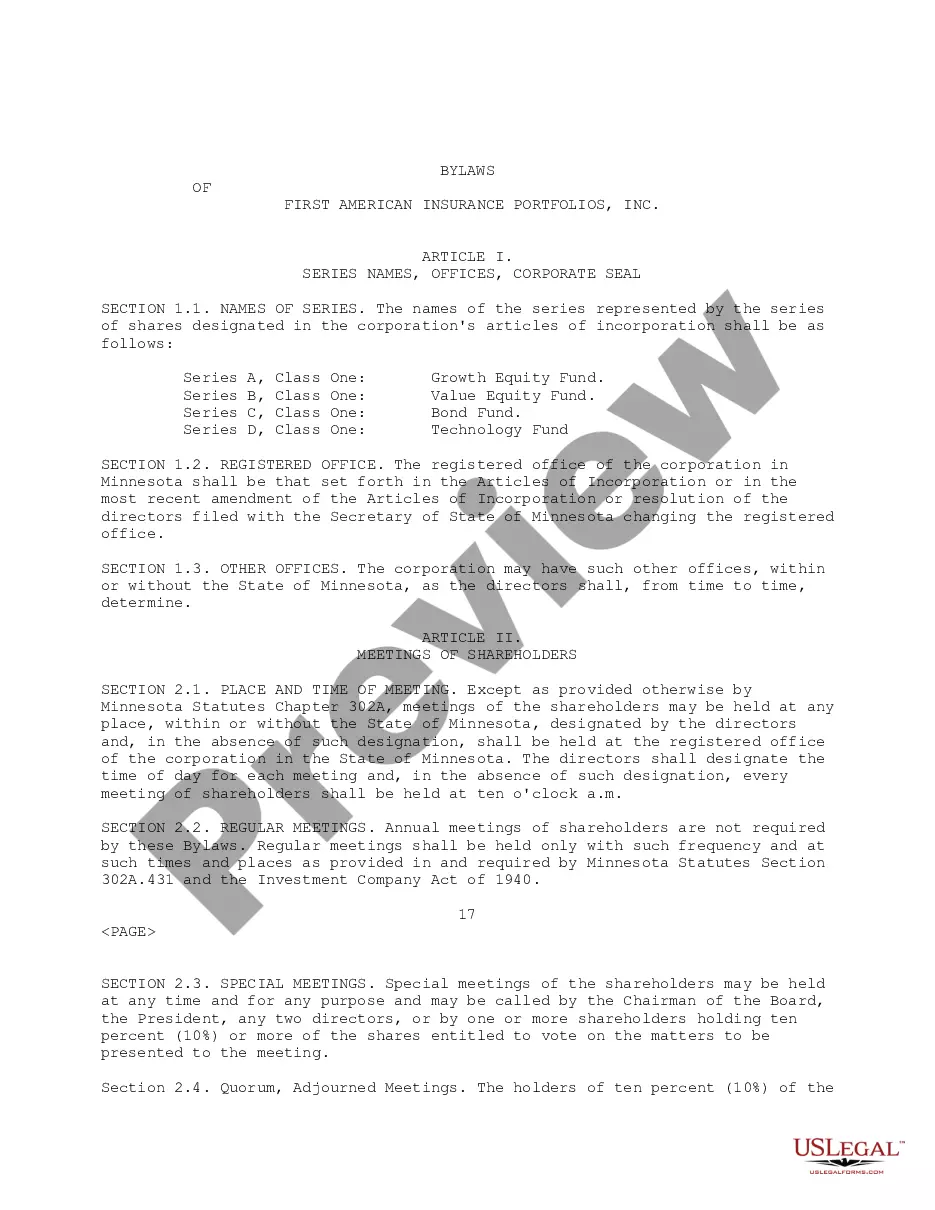
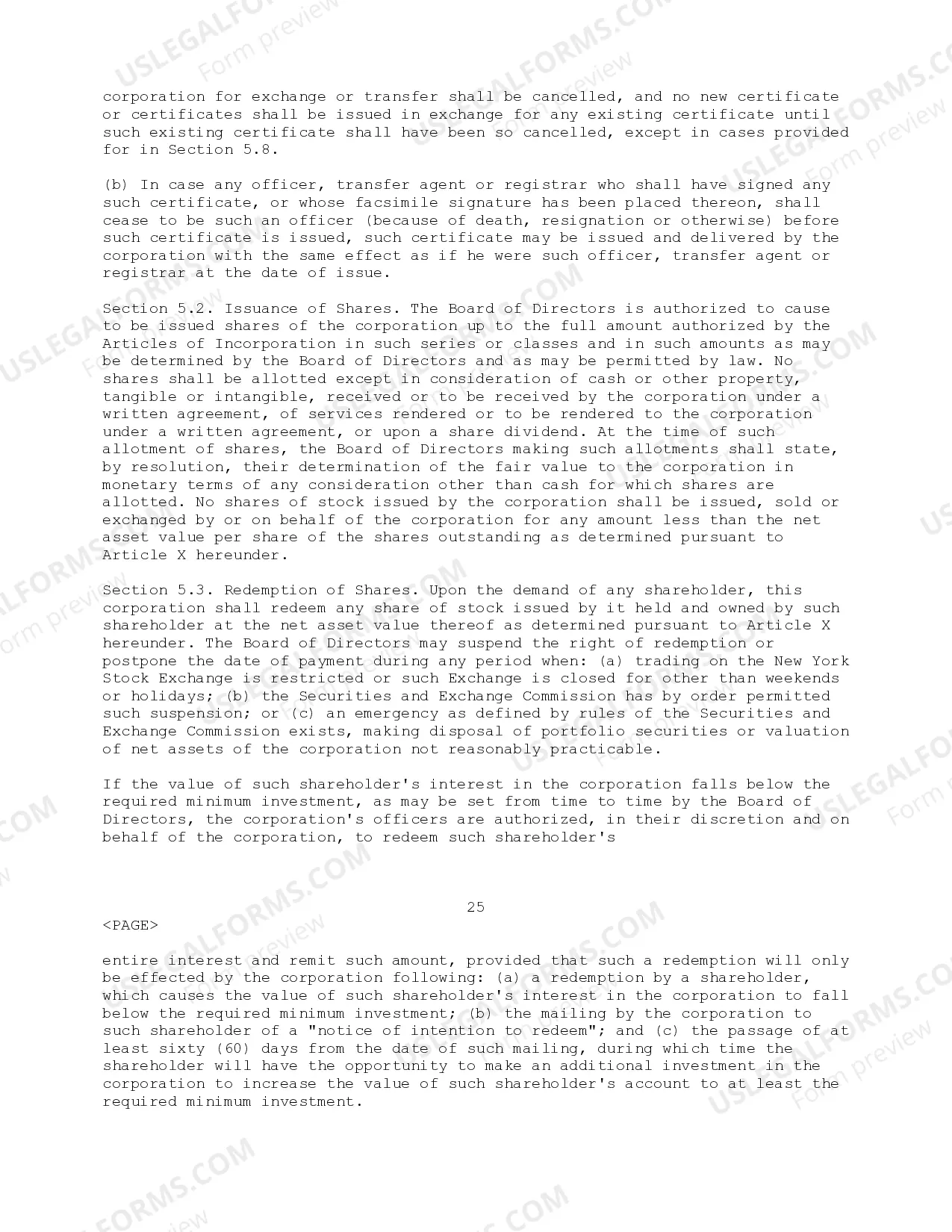
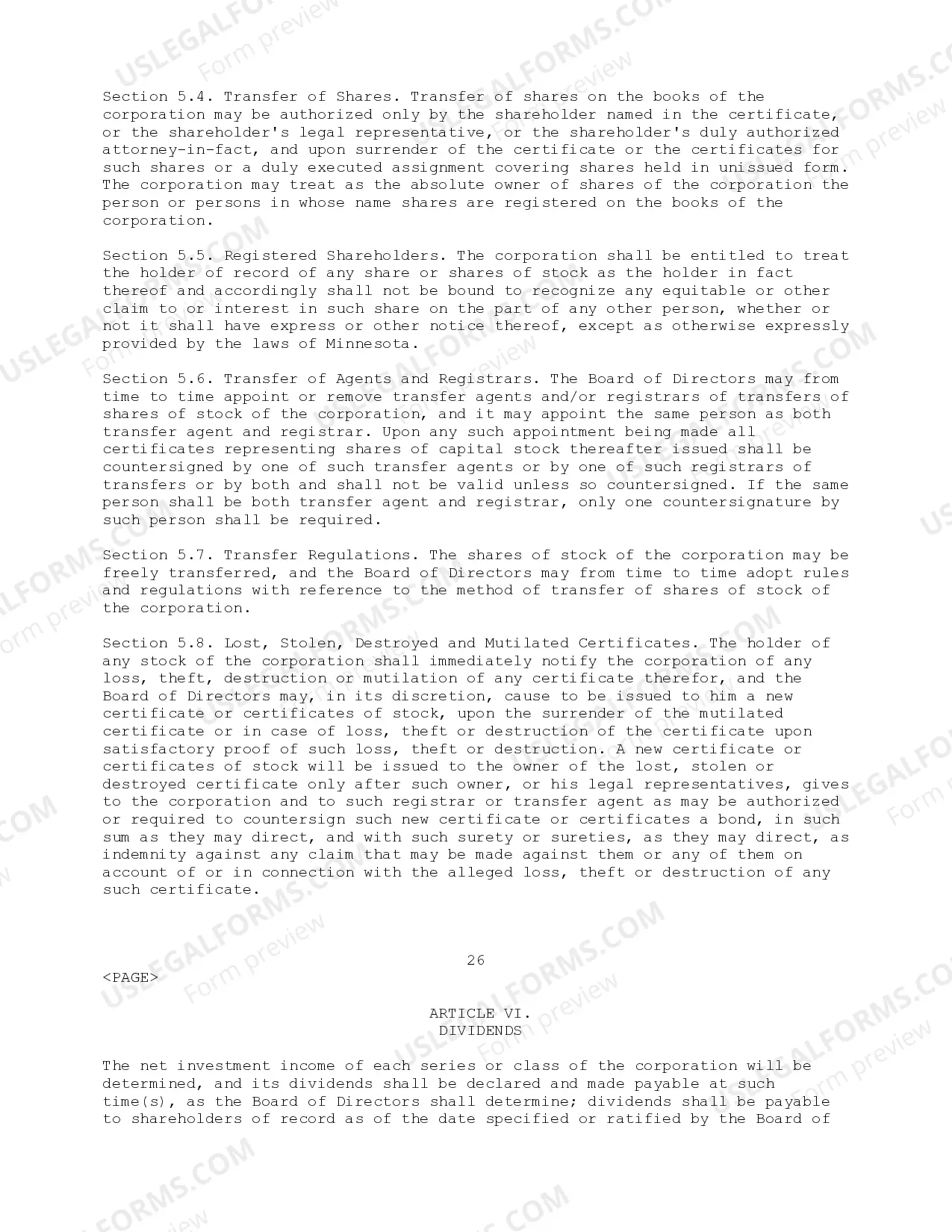
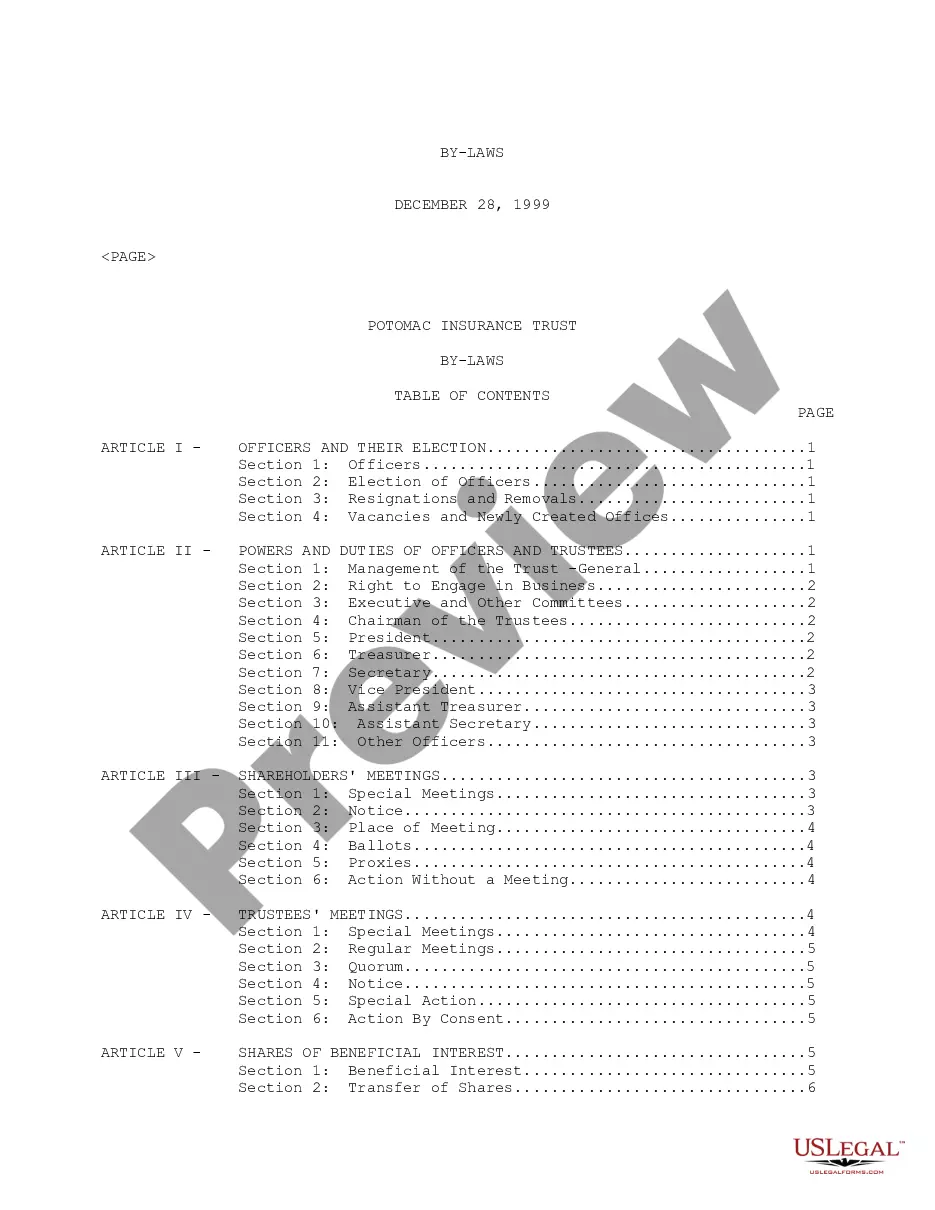
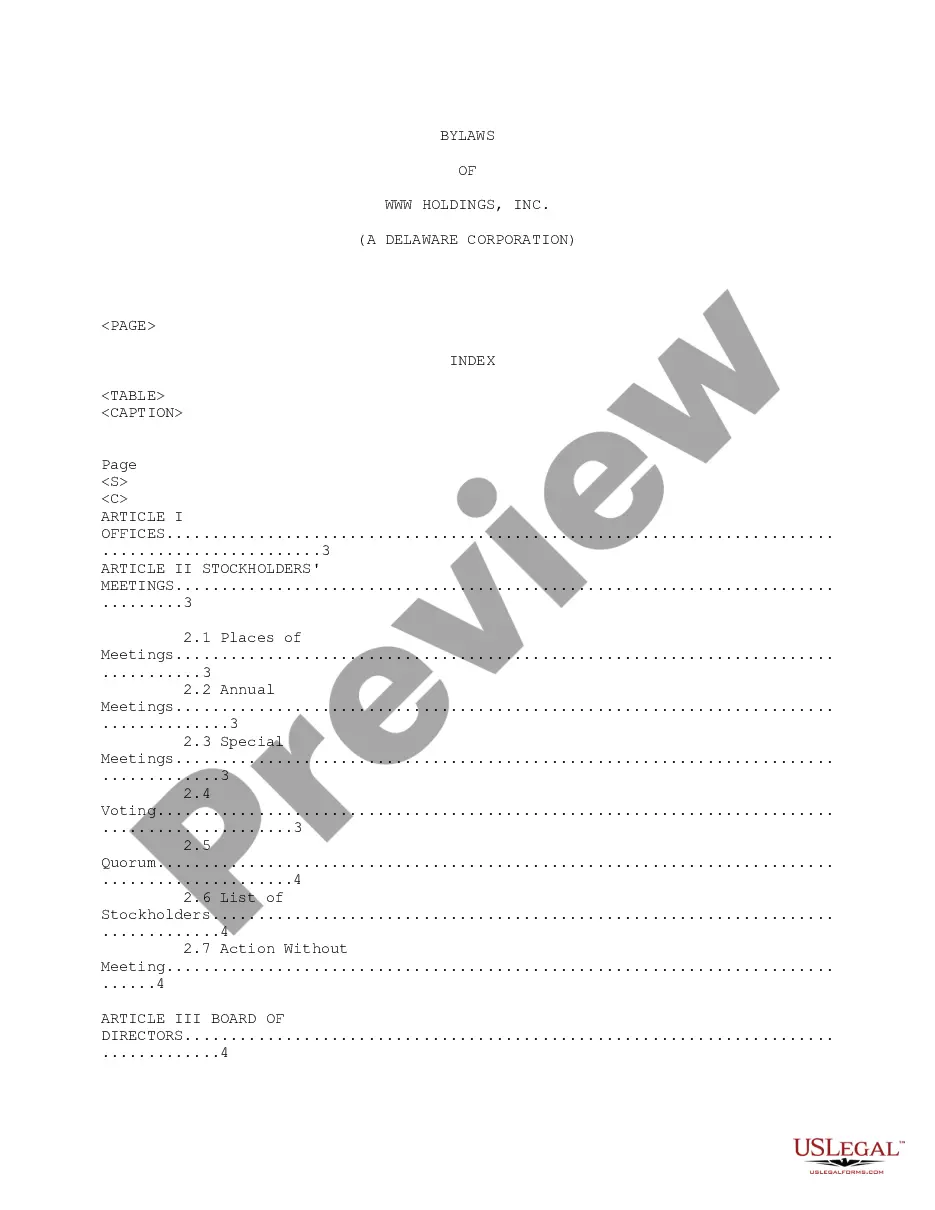
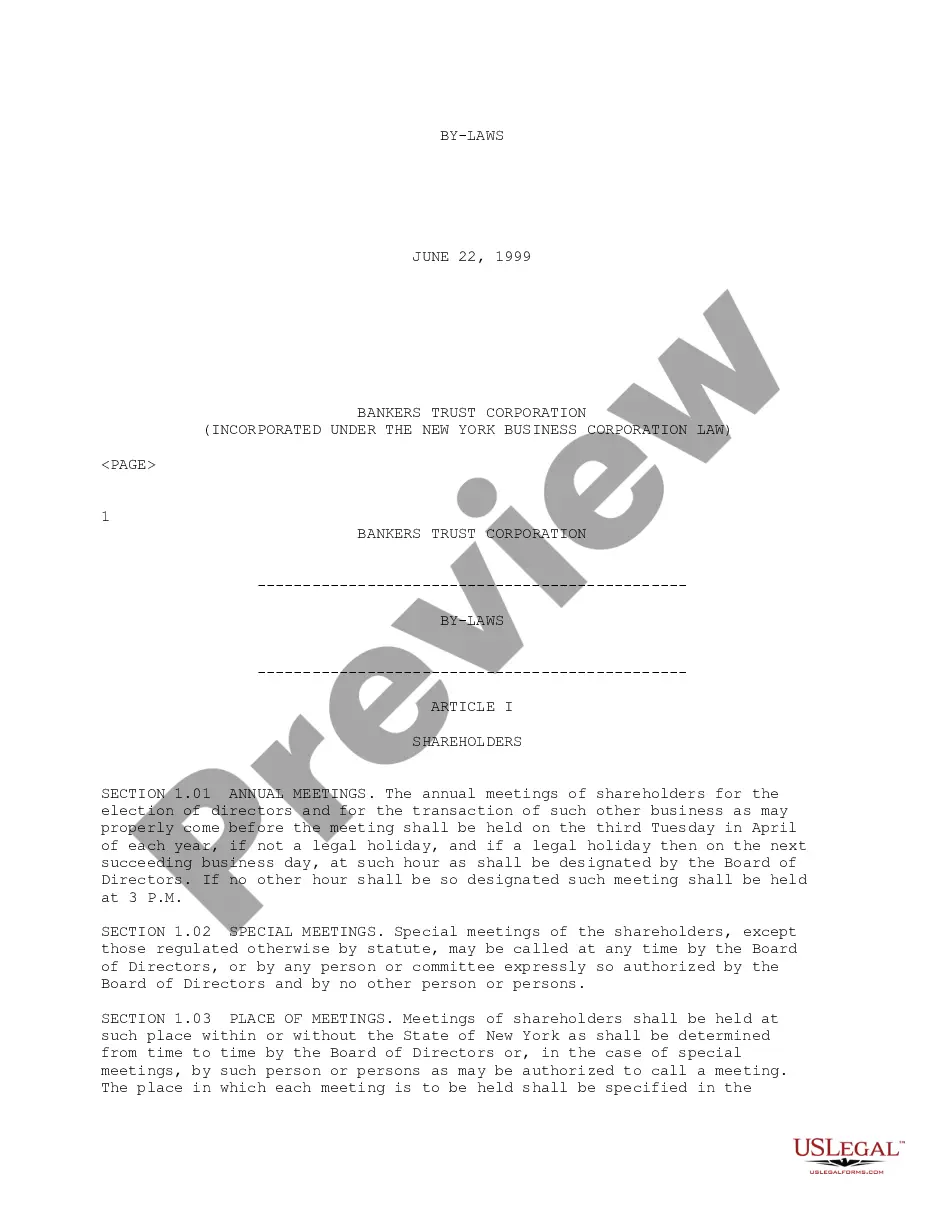
The Bylaws of First American Insurance Portfolios, Inc. outline the rules and regulations governing the internal management of the corporation. This document serves as a foundational guide that dictates how the corporation operates, including shareholder meetings, director responsibilities, and the management structure. Unlike other corporate documents, the bylaws are tailored to the specific needs and operational guidelines of this corporation, ensuring compliance with Minnesota state law and providing clarity for stakeholders involved.
Key components of this form
- Series Names and Office Locations: Details the names of investment series and the registered office of the corporation.
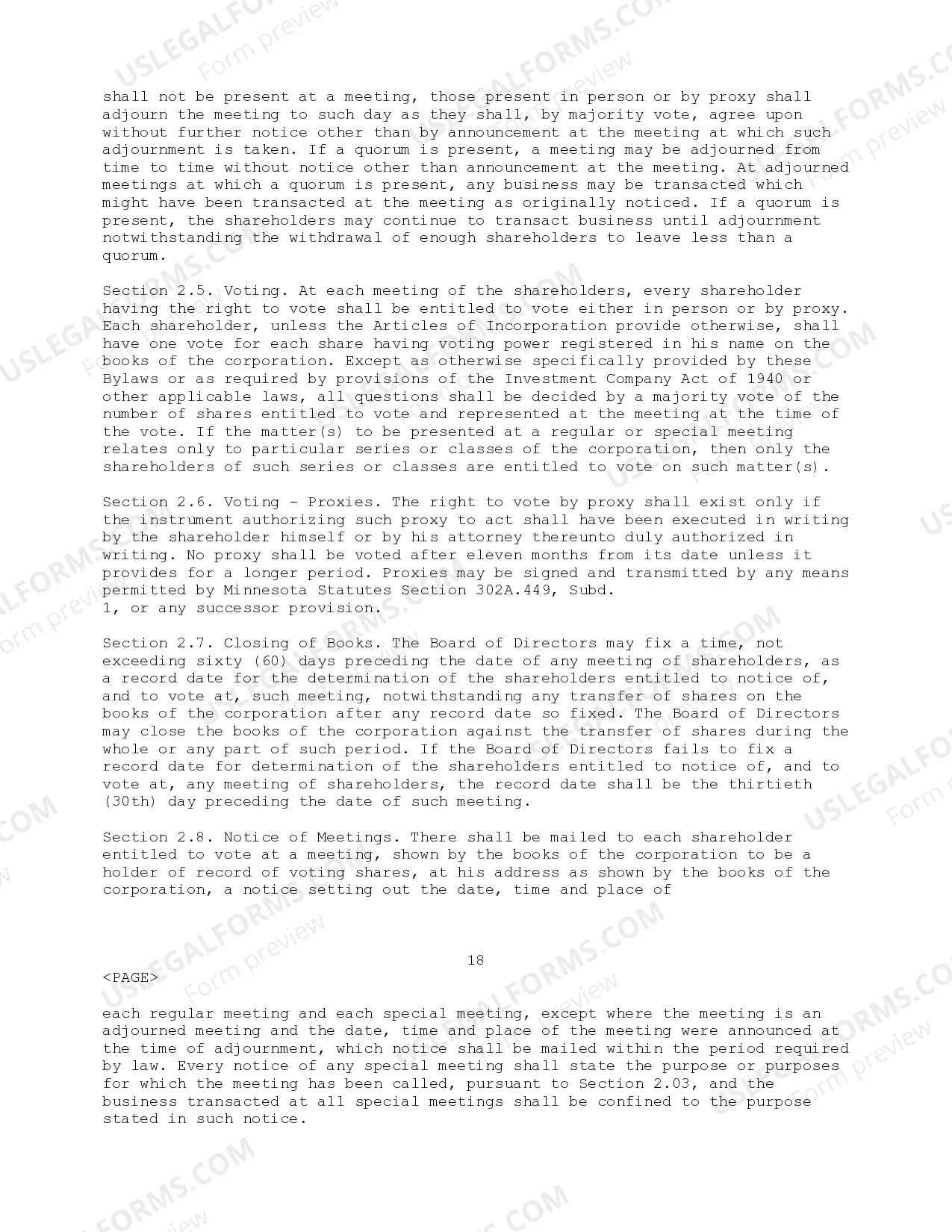
- Meetings of Shareholders: Covers regulations for scheduling, conducting, and documenting meetings.
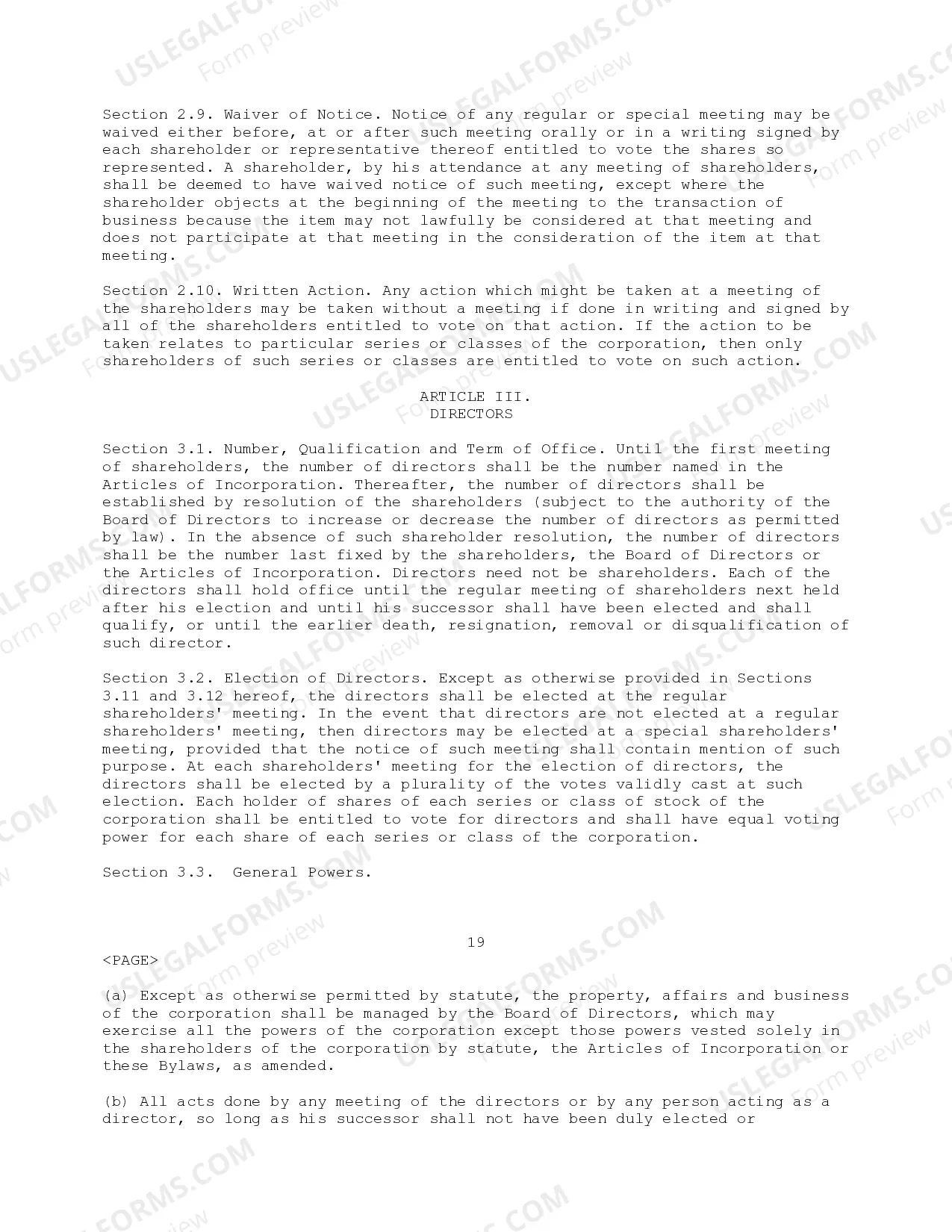
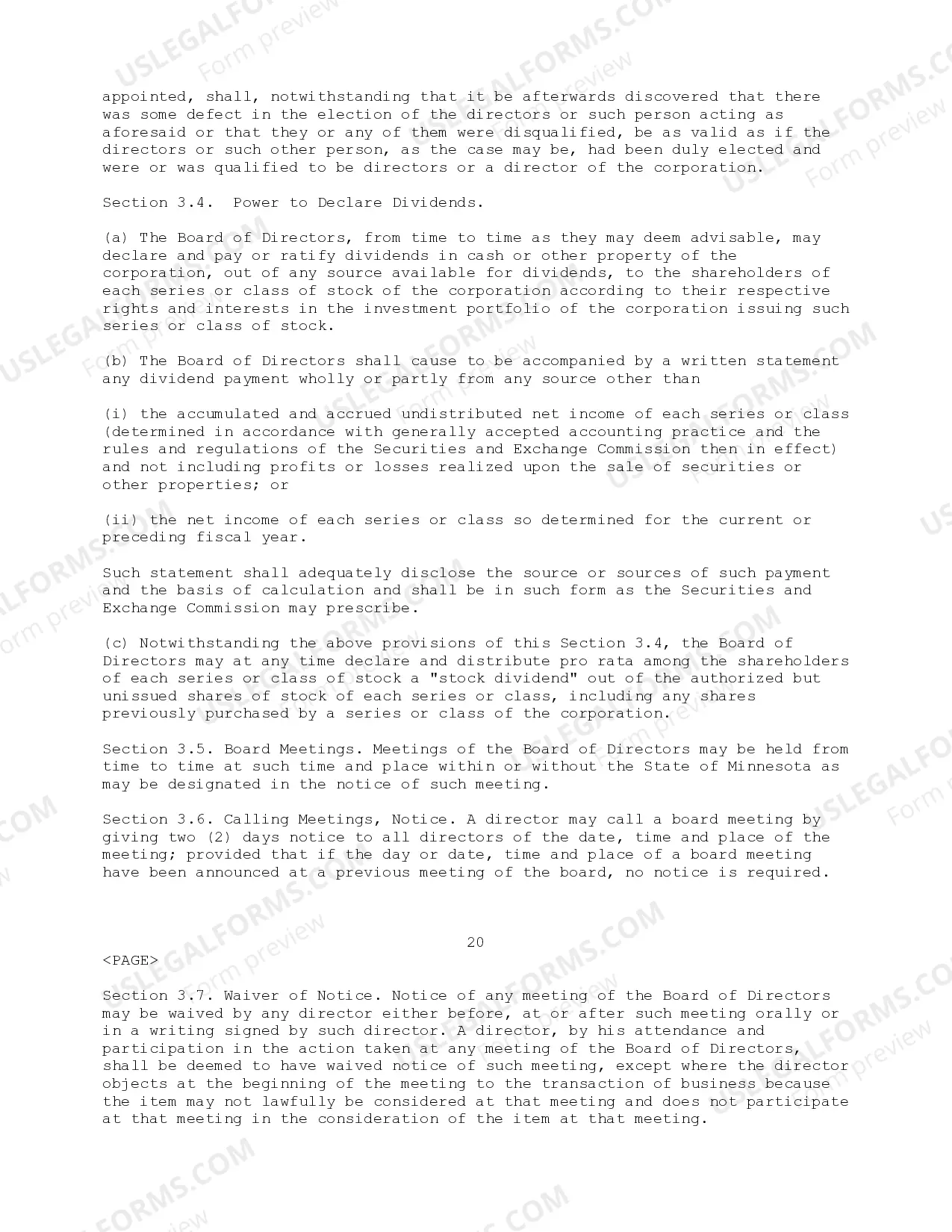
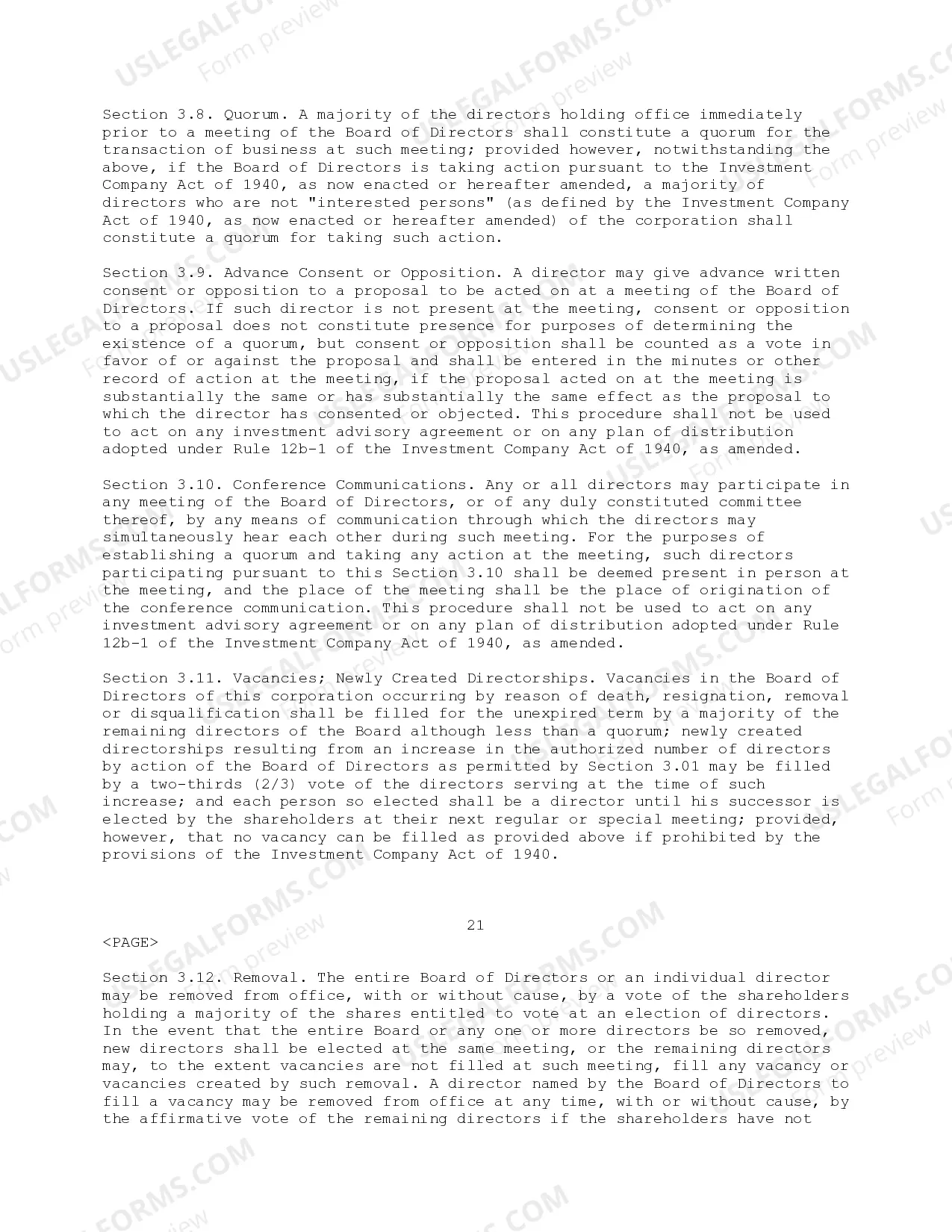
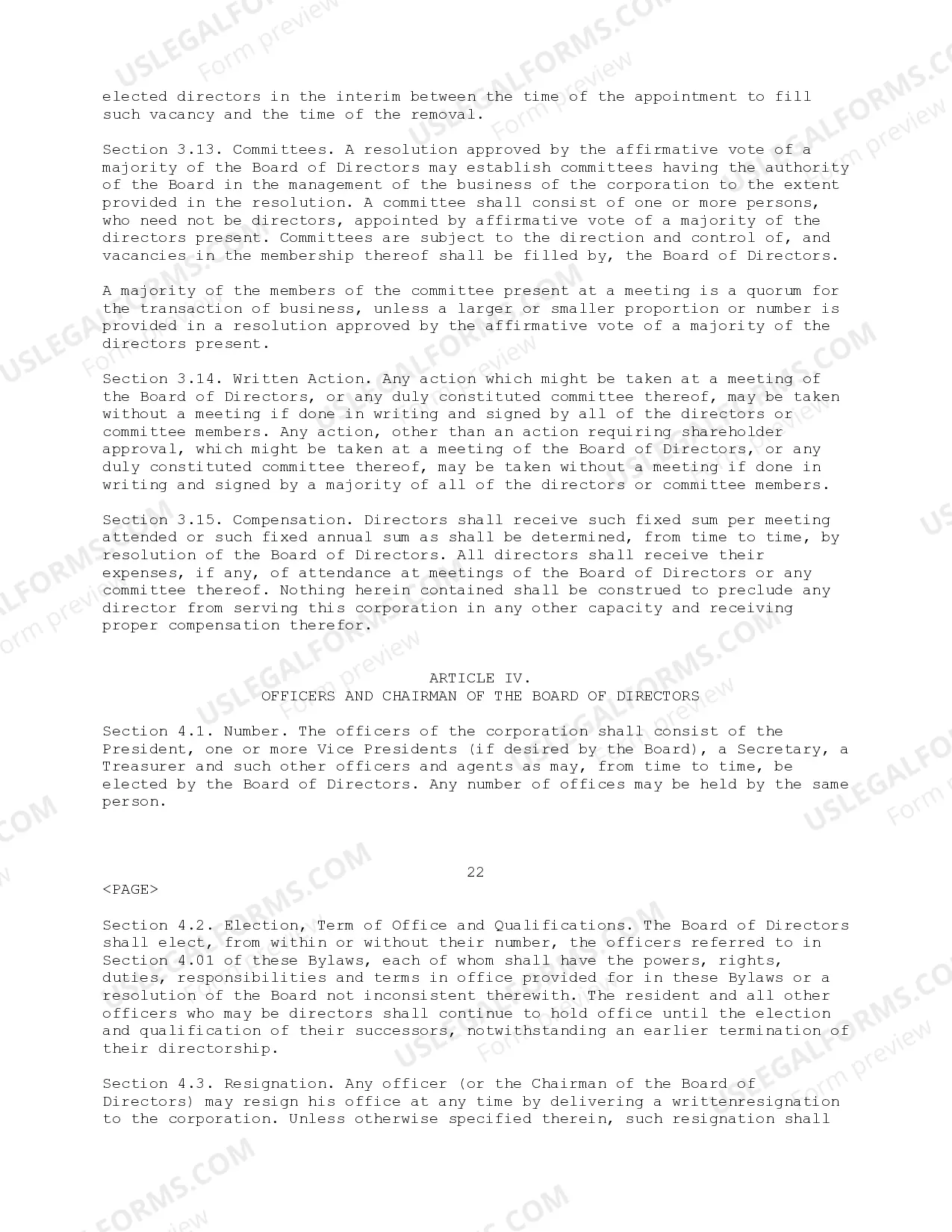
- Directors: Defines the number, qualifications, and terms of office for directors, including election procedures.
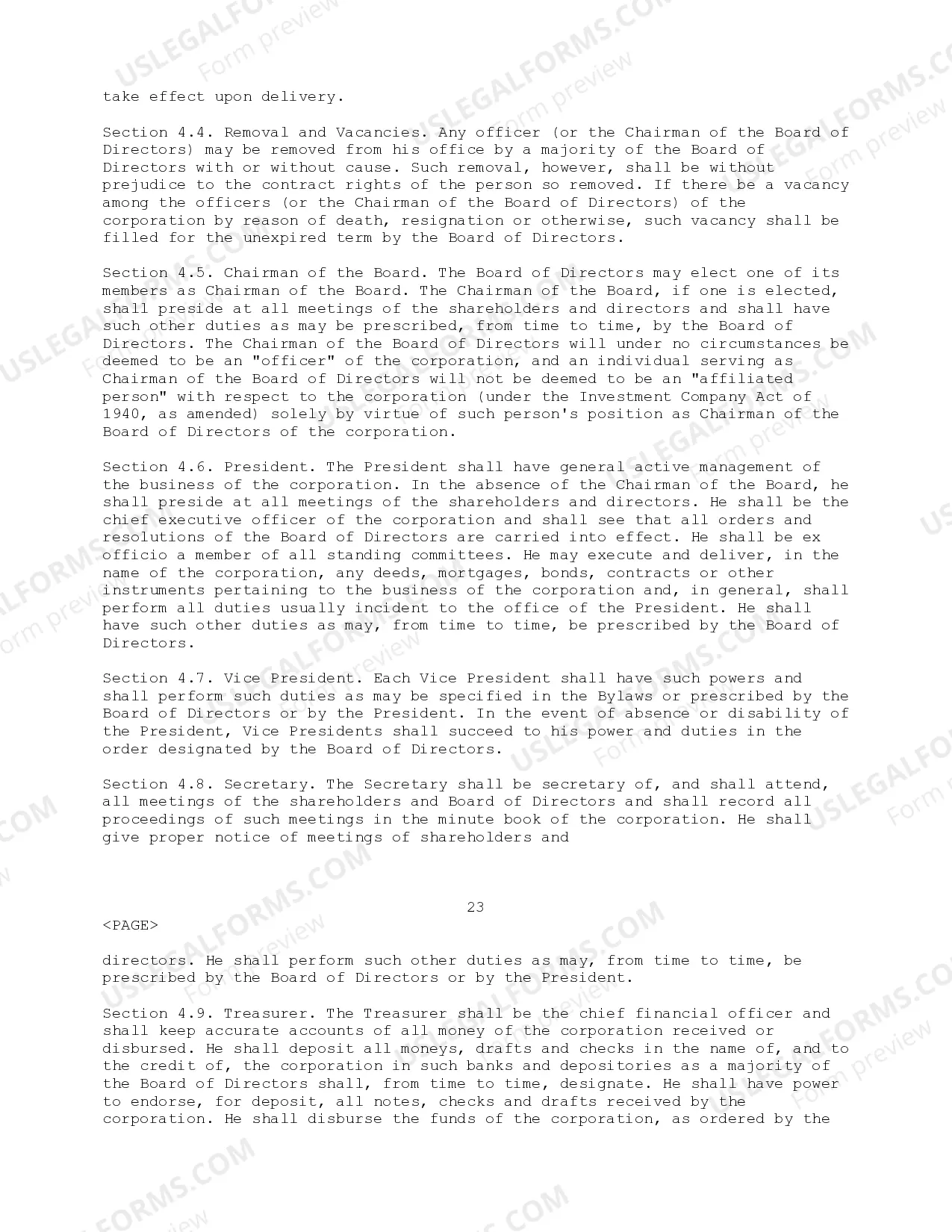
- Officers: Outlines the roles and responsibilities of corporate officers, including the President and Treasurer.
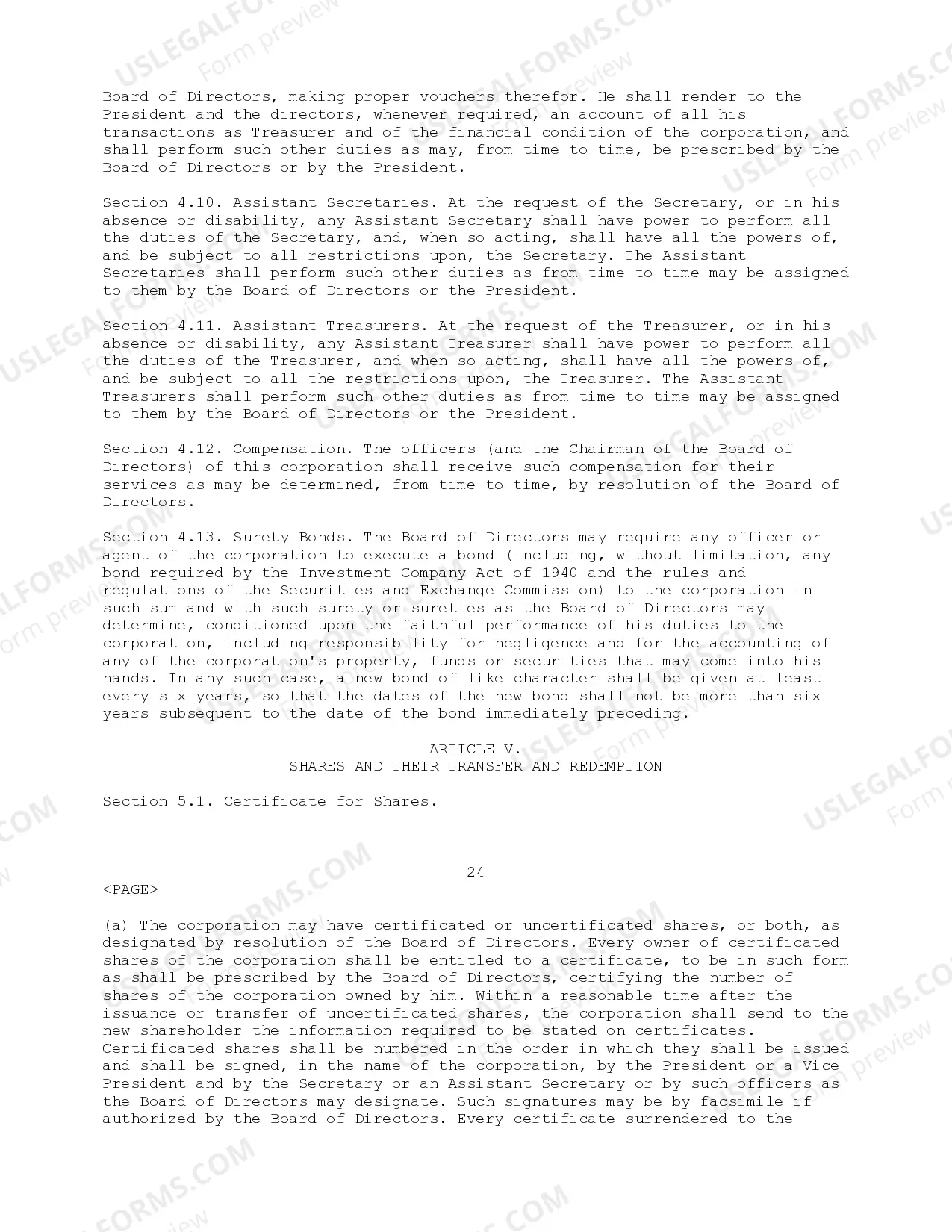
- Shares and Transfer: Discusses the issuance, transfer, and redemption of shares held by members.
- Amendments: Describes how bylaws can be altered or amended.

When to use this document
This form should be used when establishing or updating the operational guidelines for the corporation. It is essential during initial formation, organizational restructuring, or in response to changes in governance. Corporations are required to have bylaws to comply with legal obligations and maintain clear procedures for shareholder and director interactions.
Who needs this form
This form is intended for:
- Corporation founders and directors who need to establish governance procedures.
- Legal professionals advising corporate clients on compliance and organizational structure.
- Shareholders seeking to understand their rights and responsibilities within the corporation.
Steps to complete this form
- Identify the corporation name and the series of shares to be defined within the bylaws.
- Specify the location of the registered office and other potential office locations.
- Detail the process for scheduling shareholder meetings, including notice requirements.
- Clarify the roles, powers, and election process for directors and corporate officers.
- Outline the mechanisms for transferring shares and redemption procedures.
Does this document require notarization?
This form does not typically require notarization unless specified by local law. However, having the documents reviewed by a legal professional can enhance their validity and assured compliance with state regulations.
Get your form ready online
Our built-in tools help you complete, sign, share, and store your documents in one place.
Make edits, fill in missing information, and update formatting in US Legal Forms—just like you would in MS Word.
Download a copy, print it, send it by email, or mail it via USPS—whatever works best for your next step.
Sign and collect signatures with our SignNow integration. Send to multiple recipients, set reminders, and more. Go Premium to unlock E-Sign.
If this form requires notarization, complete it online through a secure video call—no need to meet a notary in person or wait for an appointment.
We protect your documents and personal data by following strict security and privacy standards.

Make edits, fill in missing information, and update formatting in US Legal Forms—just like you would in MS Word.

Download a copy, print it, send it by email, or mail it via USPS—whatever works best for your next step.

Sign and collect signatures with our SignNow integration. Send to multiple recipients, set reminders, and more. Go Premium to unlock E-Sign.

If this form requires notarization, complete it online through a secure video call—no need to meet a notary in person or wait for an appointment.

We protect your documents and personal data by following strict security and privacy standards.
Avoid these common issues
- Failing to hold regular meetings as stipulated by the bylaws.
- Neglecting to update bylaws after significant corporate changes.
- Omitting specific procedures for voting and shareholder rights.
Benefits of completing this form online
- Instantly downloadable and editable for specific corporate needs.
- Saves time by providing a structured format required by law.
- Access to attorney-drafted templates ensures legal compliance and accuracy.
Main things to remember
- The Bylaws serve as the foundational document for corporate governance.
- They define management structure and procedures, ensuring clarity and compliance.
- Understanding these bylaws is crucial for shareholders and directors alike.
- Regular updates are necessary to maintain legal compliance and reflect changes in governance.
Looking for another form?
Form popularity
FAQ
To put it simply, bylaws are a set of rules and guidelines that a company must follow. These rules and guidelines set: Rules and obligations for shareholders, directors, and officers. Rules pertaining to the removal of officers and directors.
Senate committees monitor on-going governmental operations, identify issues suitable for legislative review, gather and evaluate information, and recommend courses of action to the Senate. During each two-year Congress thousands of bills and resolutions are referred to Senate committees.
Most boards consider committees an essential part of their structure. Traditionally, the bylaws define the standing committees and their roles.To allow for flexibility, the bylaws could authorize the board to form committees as necessary and allow for policies to define the details.
The bylaws of a corporation specify the numerous methods that affect the company's operations. A corporation's bylaws can contain provisions relating to the ways it conducts its affairs, the duties of its directors and the responsibilities of its officers and employees.
Like the Constitution, your bylaws should deal with only the highest level of governing issues such as: Organizational purpose, board structure, officer position descriptions and responsibilities, terms of board service, officer/board member succession and removal, official meeting requirements, membership provisions,
The key differences between standing rules and bylaws therefore relate to both effect and scope: bylaws are more overarching and refer to procedures while standing rules tend to be more administrative and speak to specifics. Bylaws and standing rules are also hierarchical in nature: bylaws supersede standing rules.
The bylaws committee is responsible for gathering all the information necessary to draft the bylaws. Committee members commonly research the bylaws of other nonprofit organizations in the area as well as organizations that do the same type of work.
Bylaws generally define things like the group's official name, purpose, requirements for membership, officers' titles and responsibilities, how offices are to be assigned, how meetings should be conducted, and how often meetings will be held.
ARTICLE I. NAME OF ORGANIZATION. The name of the corporation is YOUR NONPROFIT NAME HERE. ARTICLE II. CORPORATE PURPOSE. Section 1. ARTICLE III. MEMBERSHIP. ARTICLE IV. MEETINGS OF MEMBERS. ARTICLE V. BOARD OF DIRECTORS. ARTICLE VI. OFFICERS. ARTICLE VII. COMMITTEES. ARTICLE VIII. CORPORATE STAFF.