Indemnification Agreement between corporation and its current and future directors
About this form
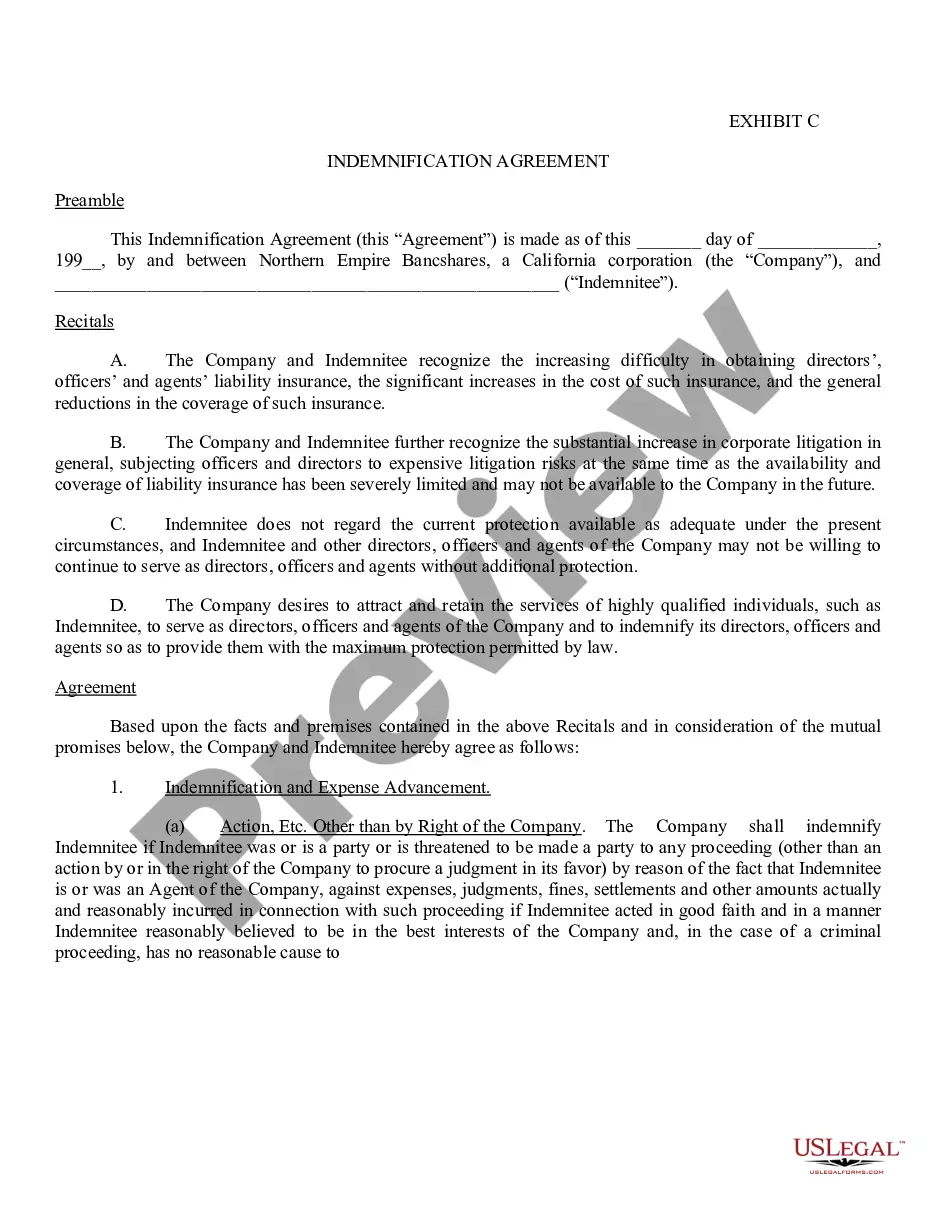
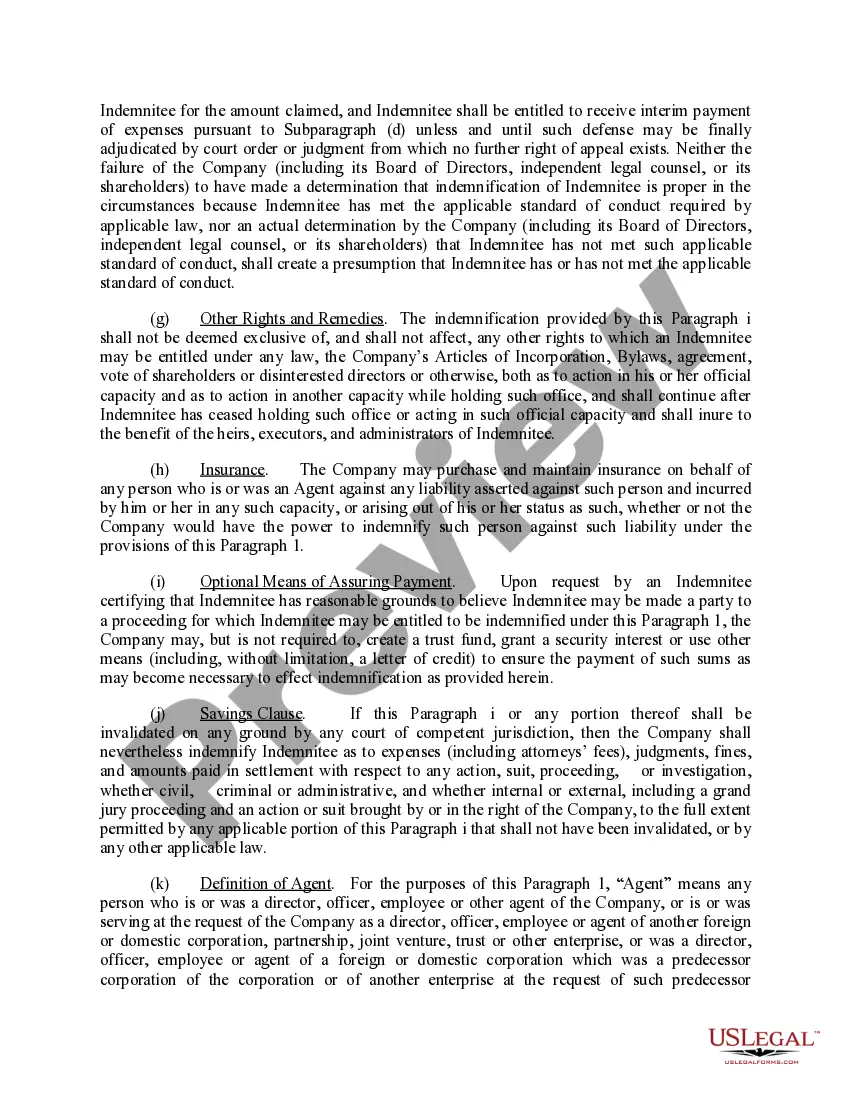
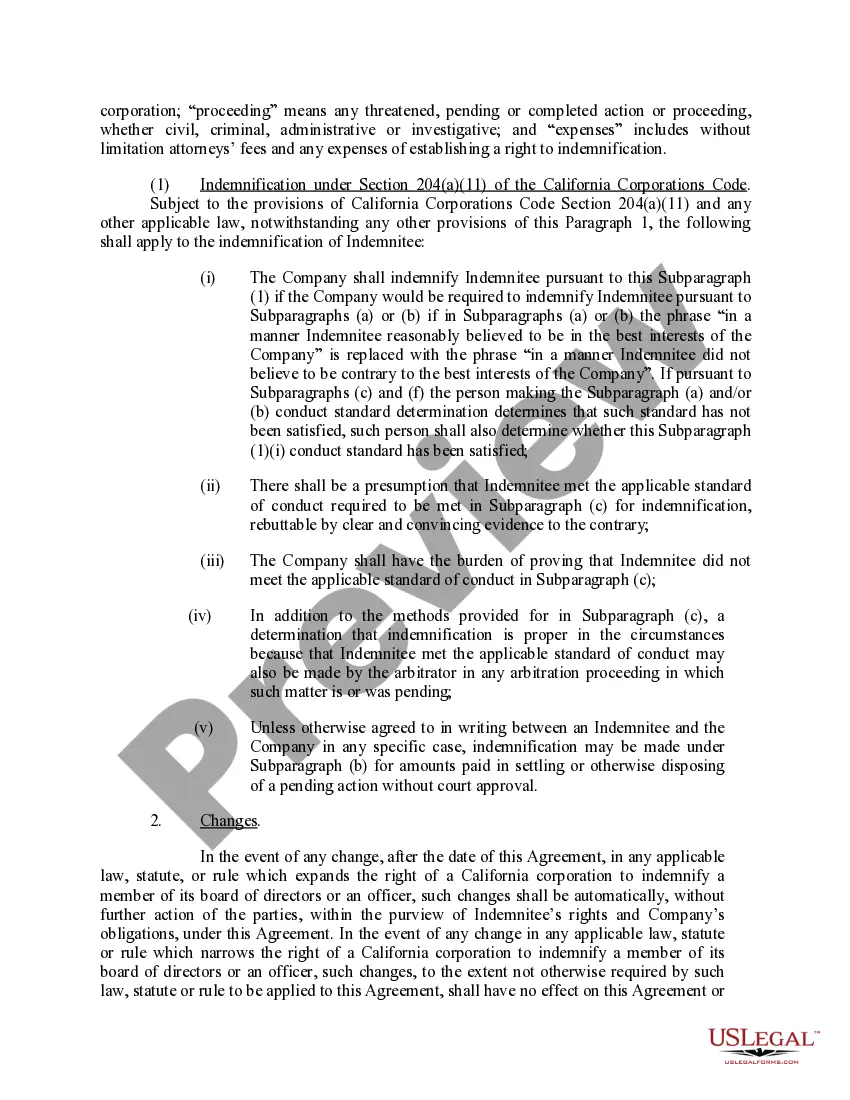
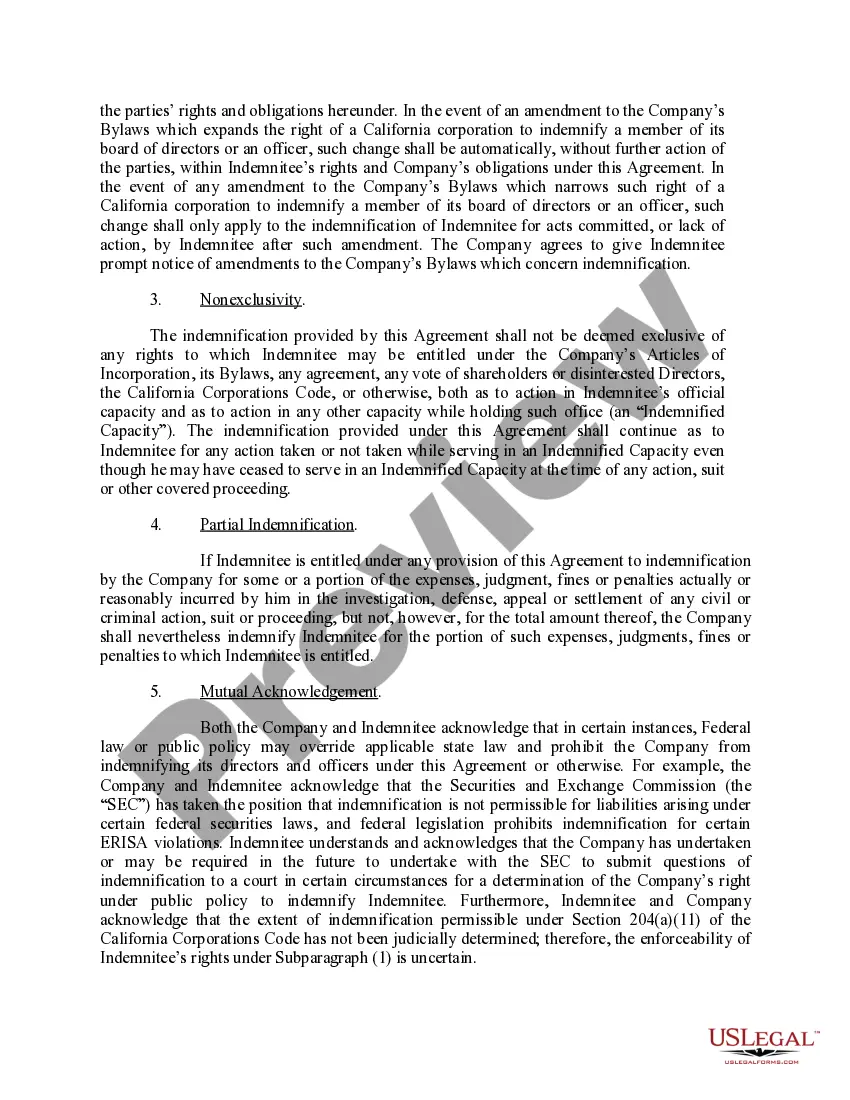
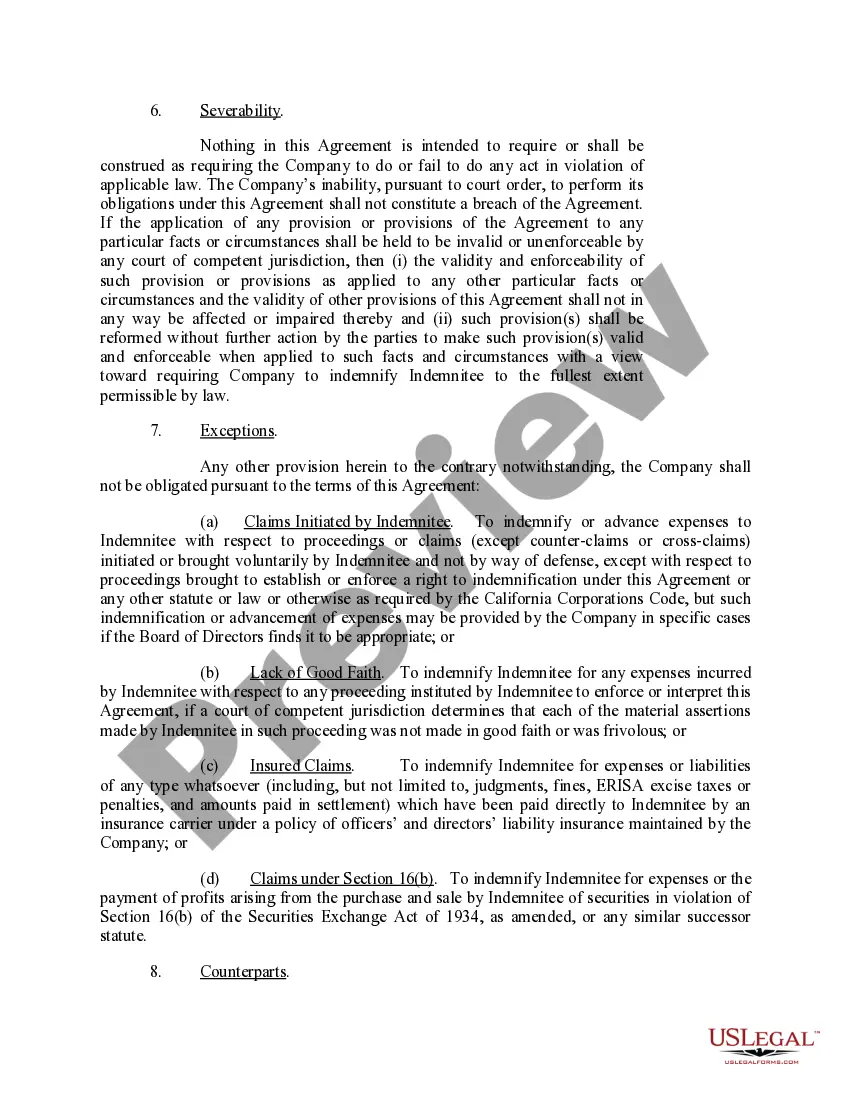
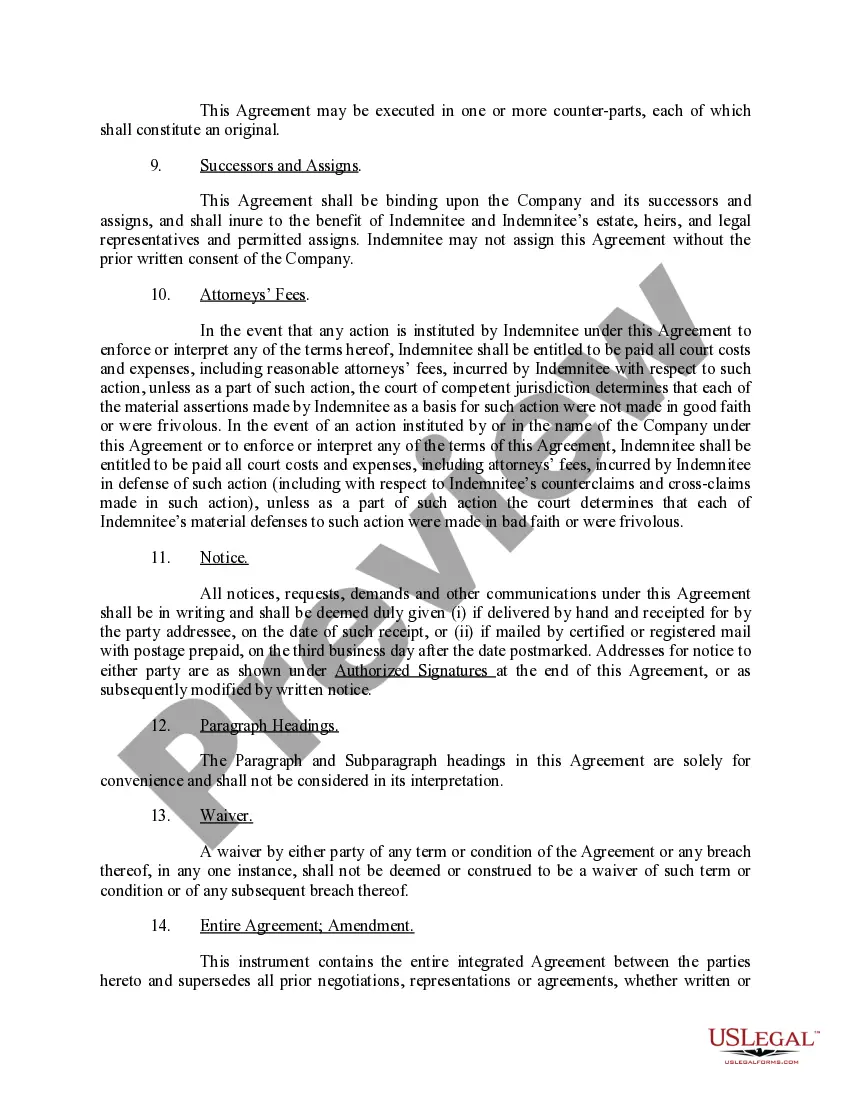
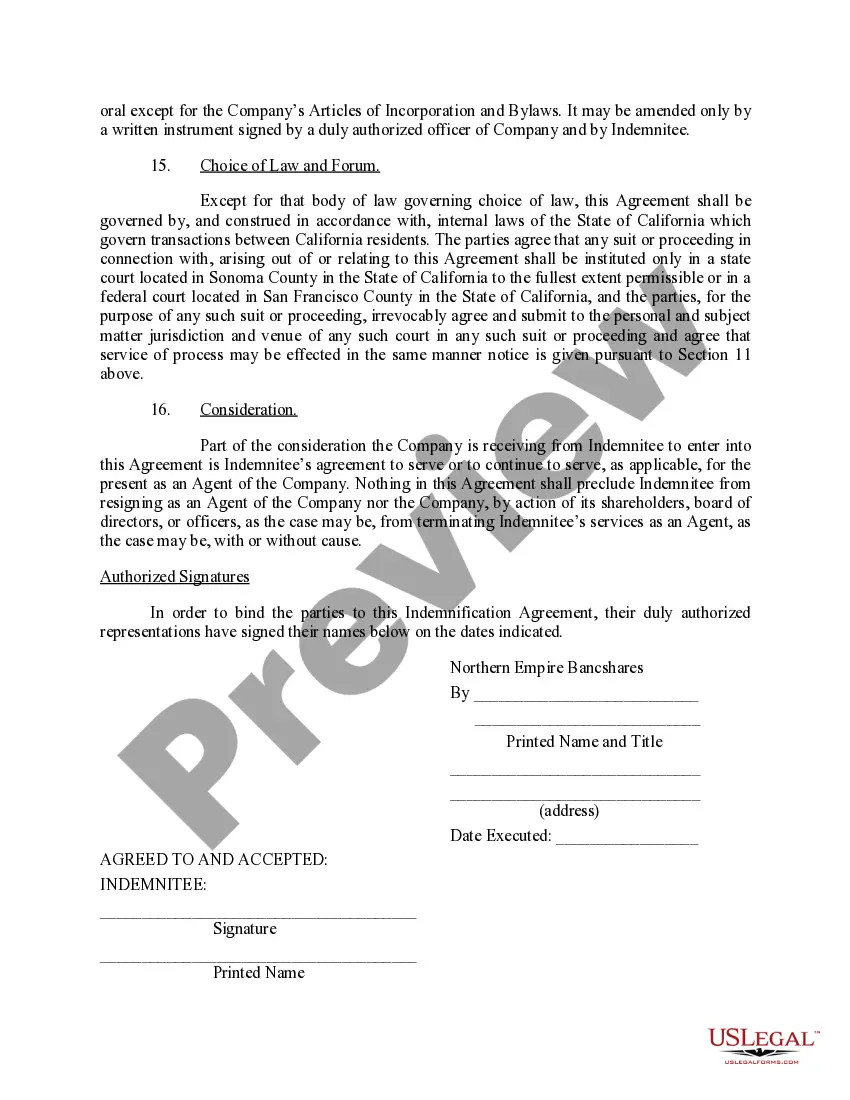
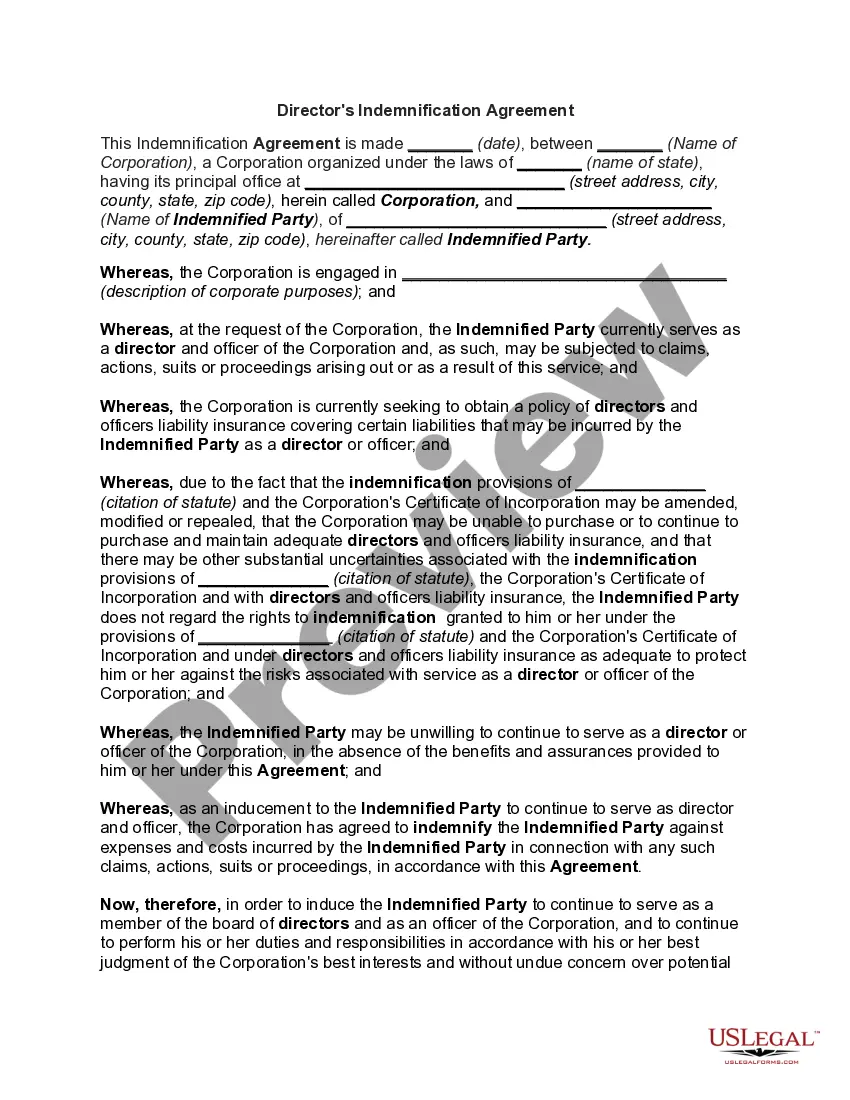
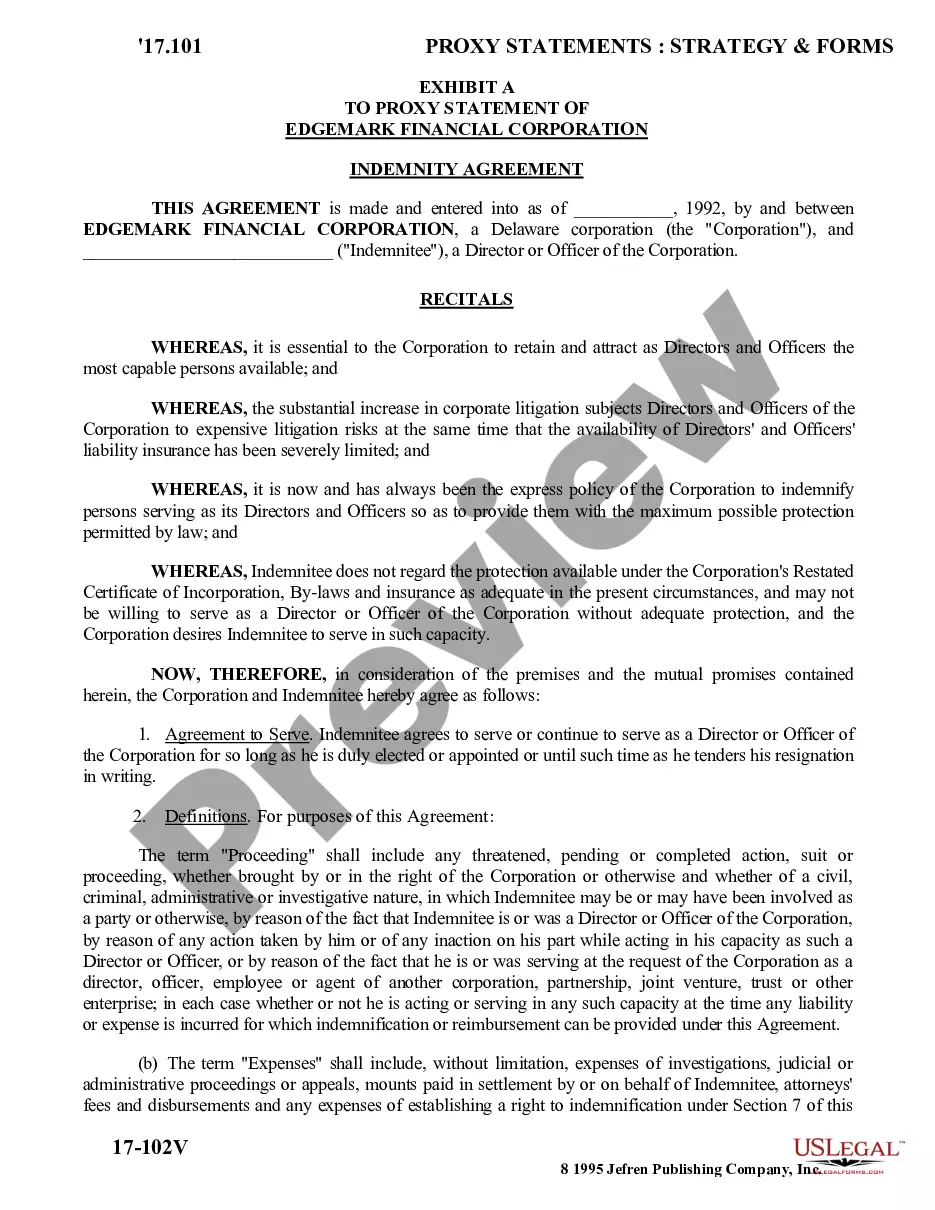
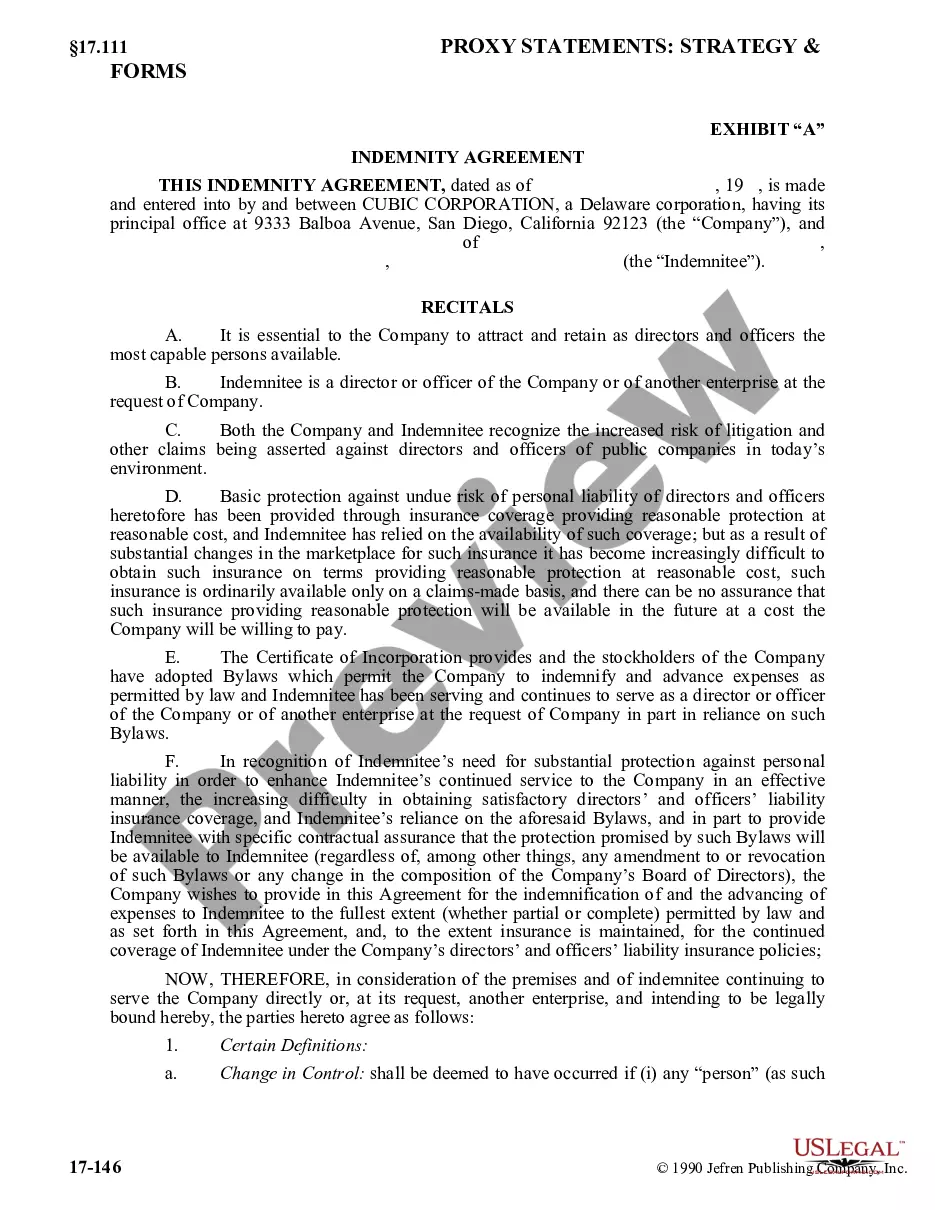
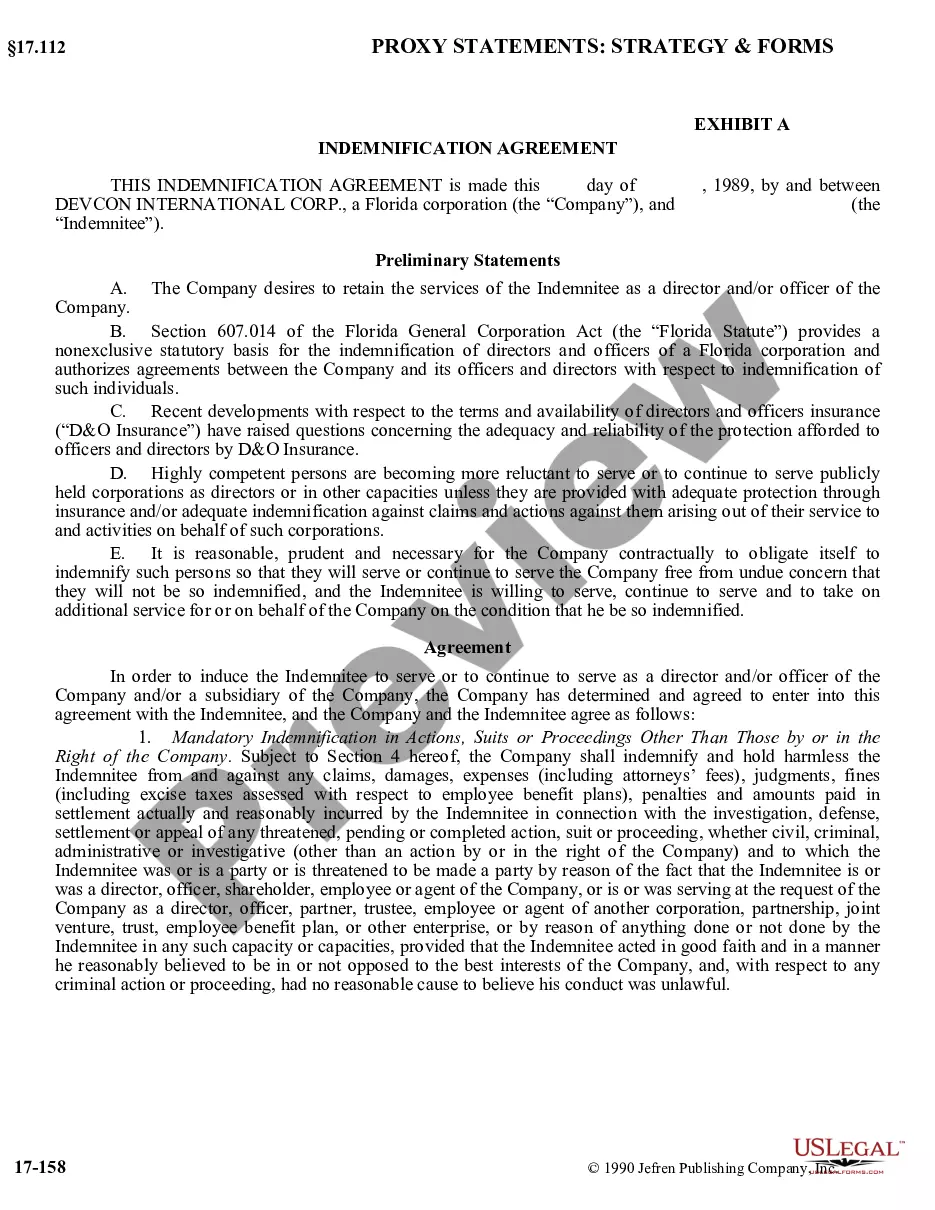
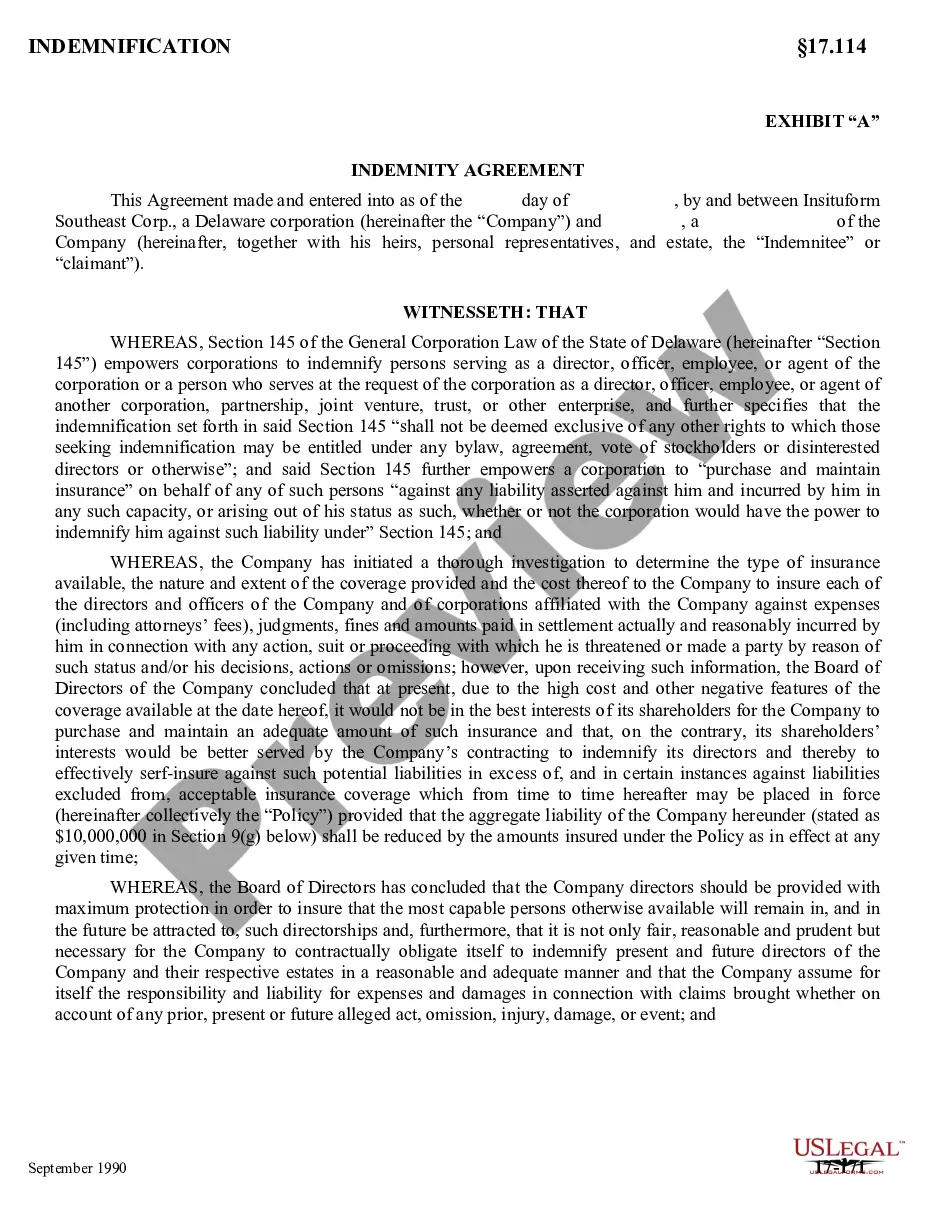
An Indemnification Agreement is a legal contract between a corporation and its current and future directors, officers, and agents. This form outlines the terms under which the corporation agrees to indemnify these individuals against certain liabilities incurred while acting in their capacity as corporate representatives. It serves to attract and retain qualified individuals by providing protection against legal risks, especially in light of rising litigation costs and decreasing insurance coverage for directors and officers. This form differs from other agreements by specifically addressing the unique needs and legal standards applicable in California.
Form components explained
- Preamble explaining the purpose of the agreement.
- Recitals outlining the context and necessity for indemnification.
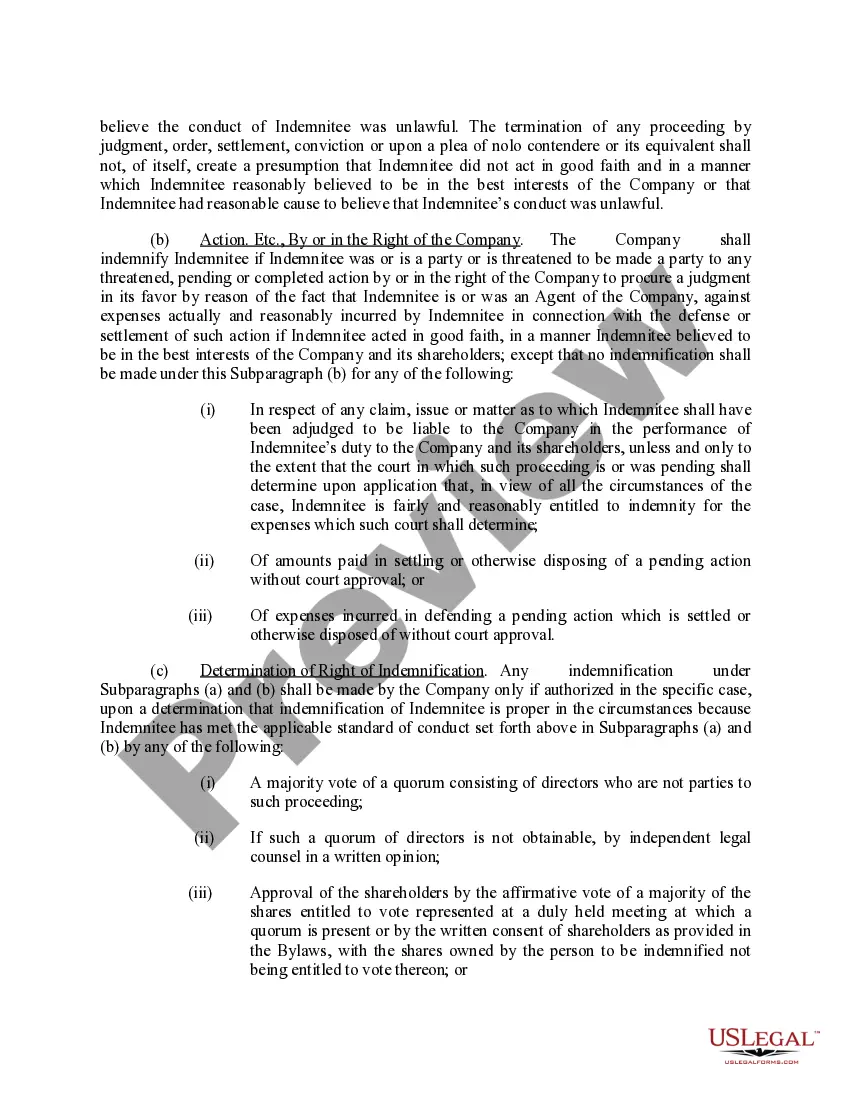
- Indemnification clauses detailing circumstances under which indemnification applies.
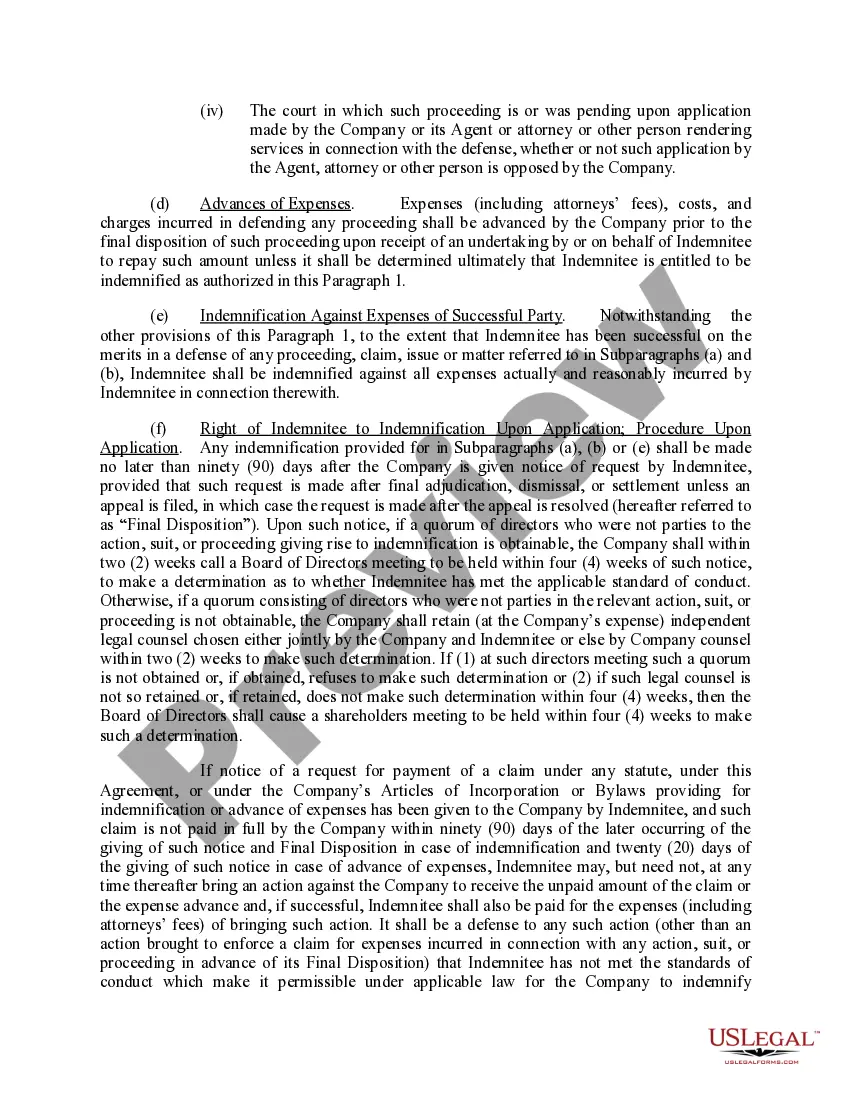
- Procedure for determination of indemnification eligibility.
- Rights related to expense advancements and insurance options.
- Signature sections for both the corporation and the indemnitee.

Common use cases
This form should be used when a corporation wishes to provide indemnification to its directors and officers against potential legal actions related to their service to the corporation. It is particularly relevant when the corporation anticipates facing potential lawsuits or when the current insurance coverage is deemed insufficient. Additionally, it can be used to encourage qualified candidates to join the board by assuring them of their protection while acting in their official capacities.
Intended users of this form
- Corporations looking to protect their directors and officers from legal liabilities.
- Current and future directors of a corporation who seek reassurance of legal protection.
- Corporate officers or agents designated by directors to ensure their liability coverage.
How to prepare this document
- Identify the parties involved: the corporation and the indemnitee.
- Fill in the date of the agreement and the details of the indemnitee.
- Review and complete the recital section to reflect the specific reasons for indemnification.
- Include necessary clauses related to indemnification, expense advancement, and other relevant rights.
- Both parties should sign and date the agreement at the designated sections.
Notarization requirements for this form
This form does not typically require notarization unless specified by local law. However, ensuring signatures are properly witnessed can enhance its enforceability.
Get your form ready online
Our built-in tools help you complete, sign, share, and store your documents in one place.
Make edits, fill in missing information, and update formatting in US Legal Forms—just like you would in MS Word.
Download a copy, print it, send it by email, or mail it via USPS—whatever works best for your next step.
Sign and collect signatures with our SignNow integration. Send to multiple recipients, set reminders, and more. Go Premium to unlock E-Sign.
If this form requires notarization, complete it online through a secure video call—no need to meet a notary in person or wait for an appointment.
We protect your documents and personal data by following strict security and privacy standards.

Make edits, fill in missing information, and update formatting in US Legal Forms—just like you would in MS Word.

Download a copy, print it, send it by email, or mail it via USPS—whatever works best for your next step.

Sign and collect signatures with our SignNow integration. Send to multiple recipients, set reminders, and more. Go Premium to unlock E-Sign.

If this form requires notarization, complete it online through a secure video call—no need to meet a notary in person or wait for an appointment.

We protect your documents and personal data by following strict security and privacy standards.
Typical mistakes to avoid
- Failing to clearly identify the indemnitee on the form.
- Incomplete or incorrect information in indemnification clauses.
- Neglecting to sign and date the agreement properly.
- Not including all necessary procedural steps for claim approvals.
Benefits of completing this form online
- Easy access to a professionally drafted indemnification agreement.
- Ability to download and customize the form according to specific corporate needs.
- Enhanced security and reliability as the forms are prepared by licensed attorneys.
Legal use & context
- This agreement provides legally binding assurances to directors and officers regarding indemnification.
- There may be limitations on indemnification based on the circumstances of each case, especially under California law.
- The agreement should be carefully reviewed to avoid conflicts with existing bylaws or corporate policies.
Summary of main points
- An Indemnification Agreement is essential for protecting corporate leaders from legal exposure.
- The agreement must be tailored to comply with California Corporations Code.
- Proper completion and signatures are necessary for the agreementâs validity.
Looking for another form?
Form popularity
FAQ
Indemnification under Companies Act, 2013: While Section 201 of the erstwhile Companies Act, 1956 had restricted a company from indemnifying the directors of the company, the Companies Act, 2013 does not have any such restriction and therefore, directors can now be indemnified by companies against liabilities.
What does "Corporate Indemnification" mean?In the context of business organizations, a limited liability company or corporation will often indemnify its officers and directors, covering their expenses (including legal fees) and judgment amounts incurred by such persons as a result of their service to the entity.
To indemnify someone is to absolve that person from responsibility for damage or loss arising from a transaction. Indemnification is the act of not being held liable for or being protected from harm, loss, or damages, by shifting the liability to another party.
A company can indemnify its directors against personal liability so long as the indemnity does not cover:other liabilities (such as legal costs) in criminal cases where the director is convicted, or in civil cases brought by the company where the final judgment goes against the director.
Permitted indemnity provision (737251c68a3176845f4c511f689d6587), in relation to. a company, means a provision that (a) provides for indemnity against liability incurred by a. director of the company to a third party; and.
Indemnification. Indemnification is an undertaking by the company to defend the director and officer against the cost of certain claims, including legal fees, litigation awards and settlement costs.
When the term indemnity is used in the legal sense, it may also refer to an exemption from liability for damages. Indemnity is a contractual agreement between two parties. In this arrangement, one party agrees to pay for potential losses or damages caused by another party.