Complaint regarding Auction Collection
What is this form?
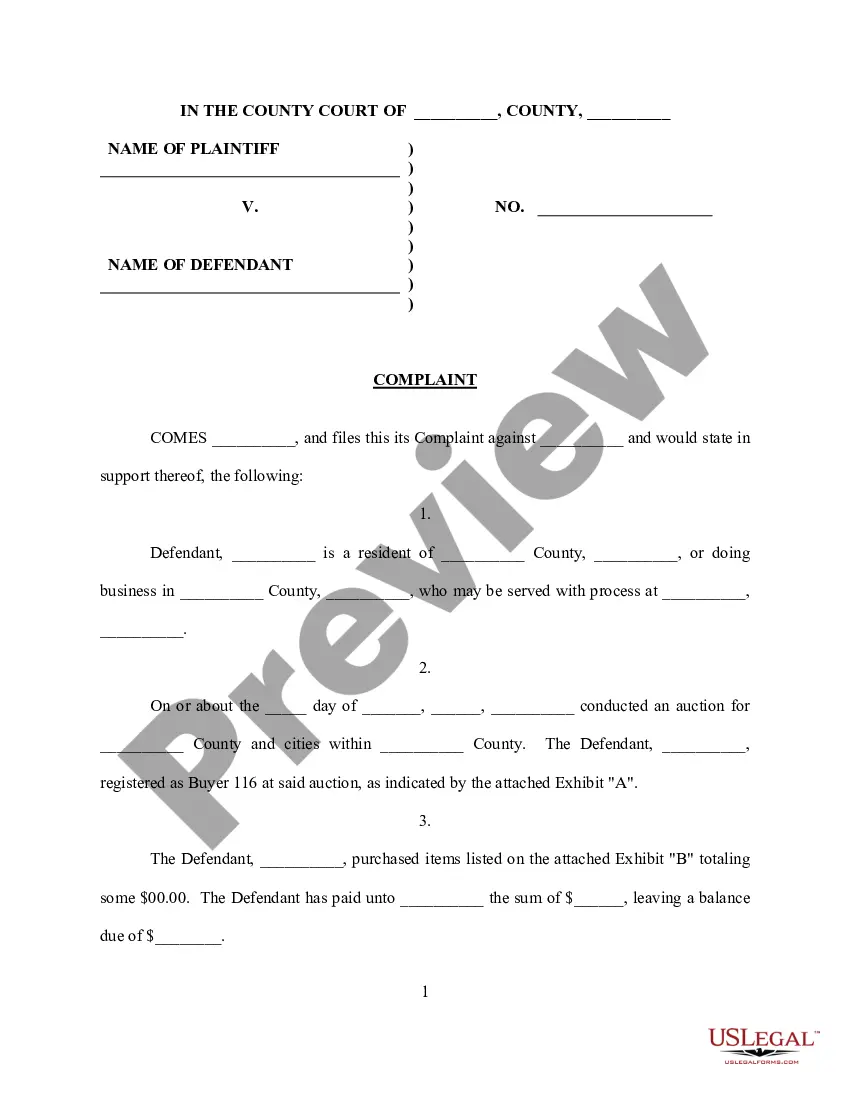
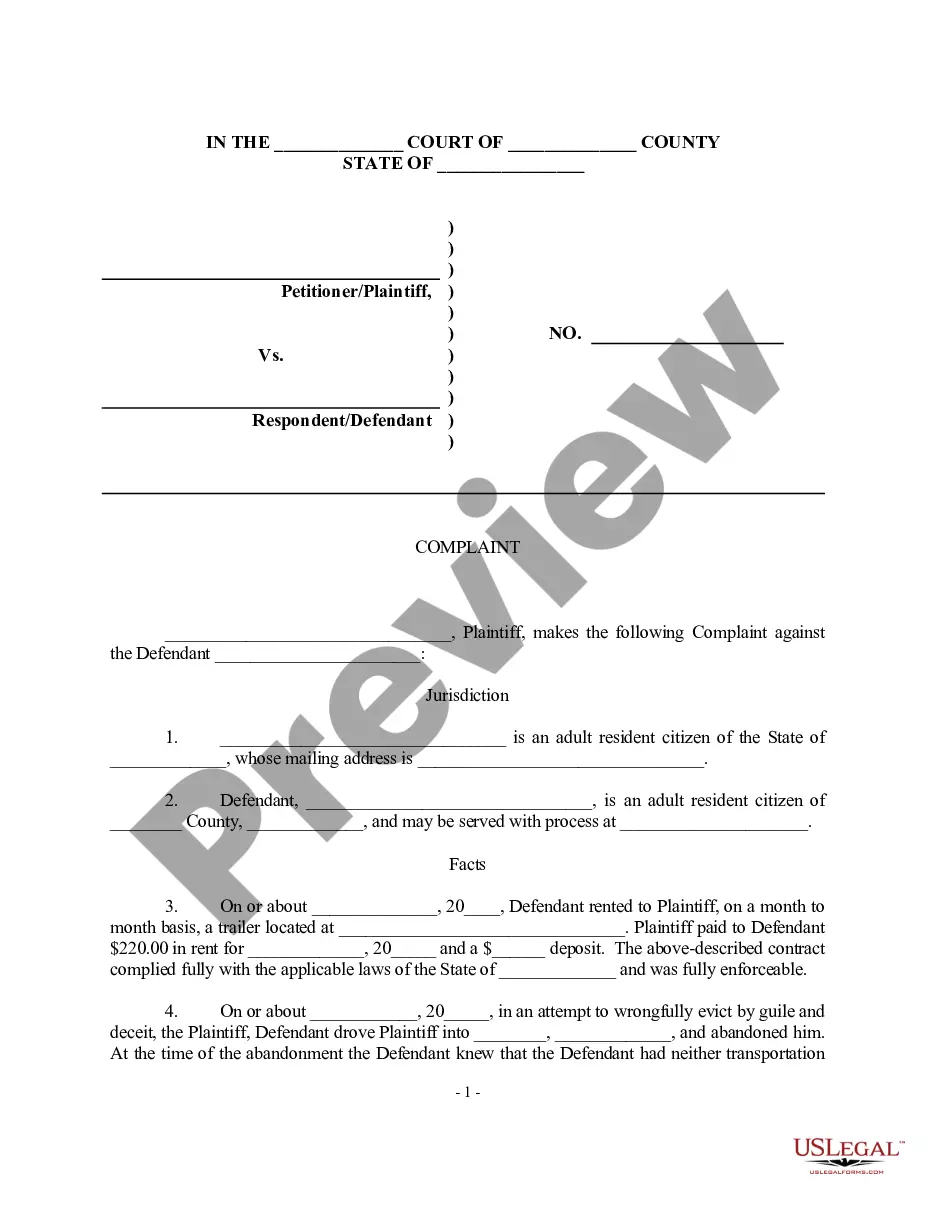
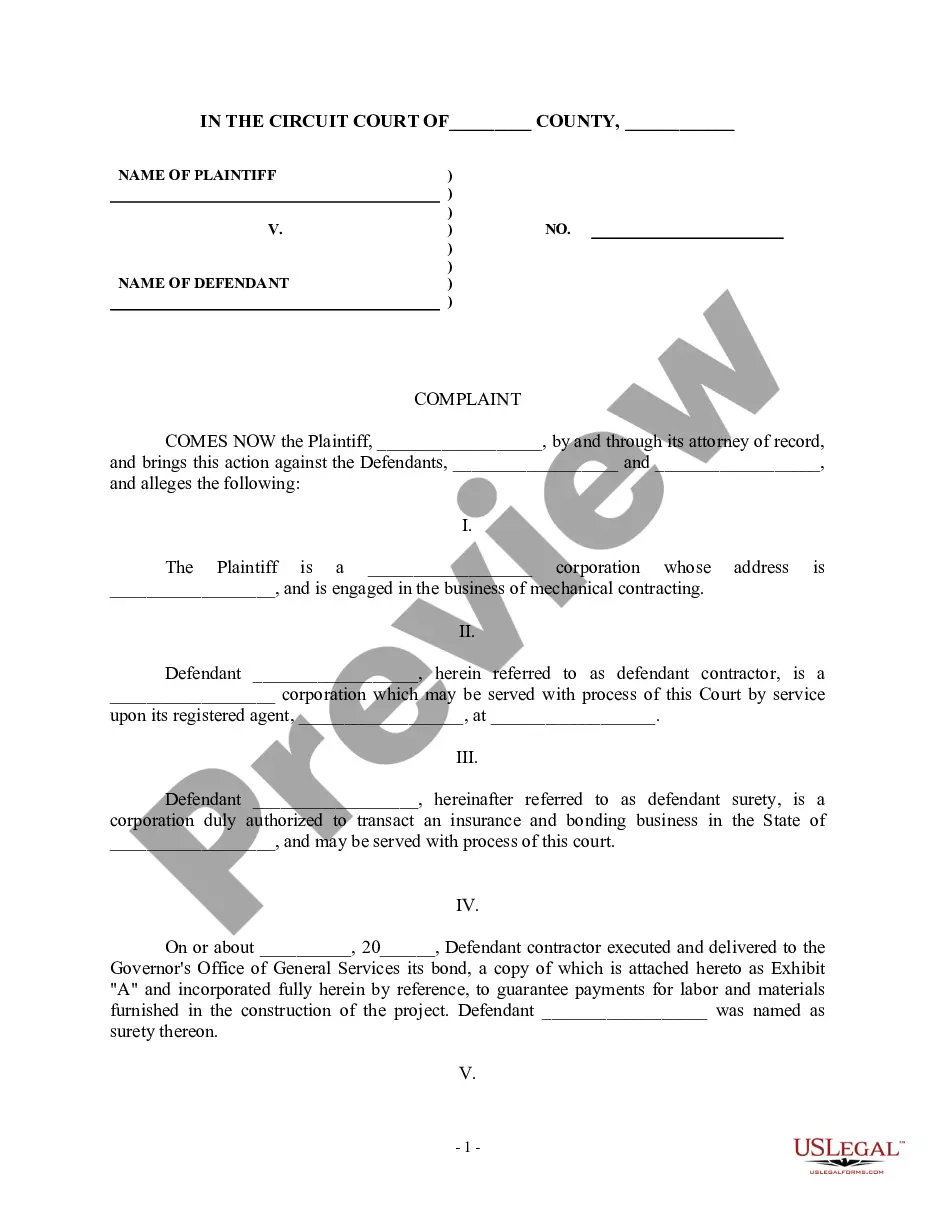
The Complaint regarding Auction Collection form is a legal document used to initiate a lawsuit against a buyer in an auction setting who failed to complete payment for purchased items. This form allows the seller to claim the amount owed plus any associated costs, such as interest and attorney's fees. Unlike other complaint forms, this specific template is designed to address issues related specifically to auctions and the collection of debts incurred from such transactions.
Key components of this form
- Identification of the Defendant, including their residency or business location.
- Details of the auction proceedings, including the date and nature of the auction.
- A listing of items purchased and the total amount due, showing payments made and remaining balances.
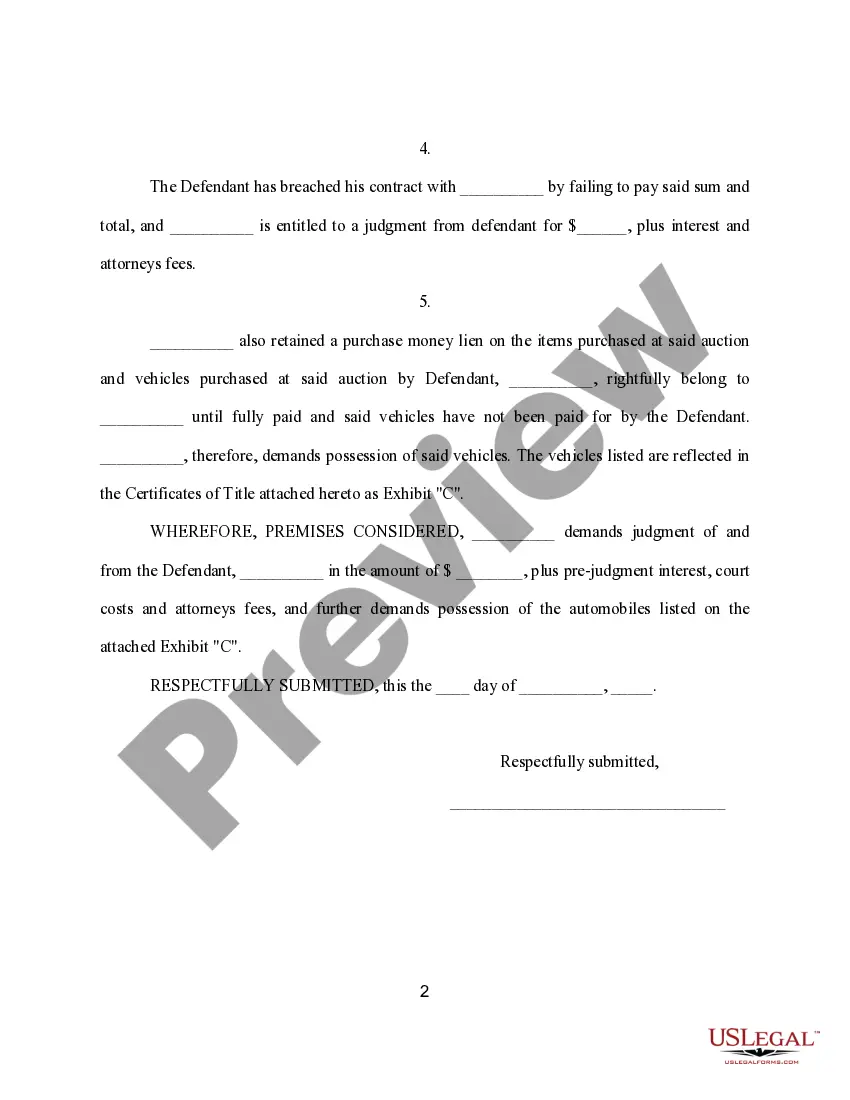
- Assertion of breach of contract due to non-payment, entitling the seller to judgment.
- Retention of a purchase money lien on the items purchased until fully paid.
- A demand for possession of the vehicles purchased if payments are not completed.


When to use this form
This form should be used when a buyer at an auction fails to complete their payment for items purchased. It is relevant in situations when the seller has made multiple attempts to collect the unpaid amount and seeks legal remedies to recover the owed payments and regain possession of the auctioned items.
Intended users of this form
- Sellers or auctioneers who have conducted an auction and need to collect unpaid balances from buyers.
- Individuals or businesses that have retained auctioned items until full payment is received.
- Legal representatives assisting clients in recovering debts related to auction purchases.
Steps to complete this form
- Identify the parties involved: fill in the names and addresses of the defendant and the seller.
- Specify the auction details: include the date and nature of the auction.
- List the items purchased and the payment details, specifying the total amount due and any payments already made.
- State the breach of contract and the amount sought in judgment, including additional costs like interest and attorney's fees.
- Attach any relevant exhibits, such as evidence of the auction and title certificates for vehicles.
- Sign and date the form to authenticate it.
Is notarization required?
In most cases, this form does not require notarization. However, some jurisdictions or signing circumstances might. US Legal Forms offers online notarization powered by Notarize, accessible 24/7 for a quick, remote process.
Get your form ready online
Our built-in tools help you complete, sign, share, and store your documents in one place.
Make edits, fill in missing information, and update formatting in US Legal Forms—just like you would in MS Word.
Download a copy, print it, send it by email, or mail it via USPS—whatever works best for your next step.
Sign and collect signatures with our SignNow integration. Send to multiple recipients, set reminders, and more. Go Premium to unlock E-Sign.
If this form requires notarization, complete it online through a secure video call—no need to meet a notary in person or wait for an appointment.
We protect your documents and personal data by following strict security and privacy standards.

Make edits, fill in missing information, and update formatting in US Legal Forms—just like you would in MS Word.

Download a copy, print it, send it by email, or mail it via USPS—whatever works best for your next step.

Sign and collect signatures with our SignNow integration. Send to multiple recipients, set reminders, and more. Go Premium to unlock E-Sign.

If this form requires notarization, complete it online through a secure video call—no need to meet a notary in person or wait for an appointment.

We protect your documents and personal data by following strict security and privacy standards.
Common mistakes to avoid
- Failing to completely fill in all relevant fields, leaving out necessary details.
- Neglecting to attach required exhibits, such as evidence of the auction and title certificates.
- Incorrectly calculating the total amounts due or paid.
- Not signing or dating the complaint form before submission.
Why use this form online
- Convenience of access: download and fill out the form at your own pace.
- Editability: make adjustments easily before finalizing the document.
- Reliability: templates are drafted by licensed attorneys ensuring compliance and effectiveness.
- Time-saving: no need to schedule appointments with attorneys for straightforward complaints.
Legal use & context
- This form holds legal validity in seeking judgment for unpaid auction items.
- It may be enforced in court to recover debts linked to auction purchases.
- Specific procedures may vary by jurisdiction, which can impact the enforceability of claims.
Quick recap
- The Complaint regarding Auction Collection is essential for recovering unpaid auction debts.
- Complete the form accurately to ensure proper processing and legal standing.
- Consult applicable local laws to ensure compliance with state-specific auction regulations.
Looking for another form?
Form popularity
FAQ
The National Association of Valuers and Auctioneers (NAVA) is a professional self-regulating body solely concerned with valuers and auctioneers. Their website contains comprehensive information for buying or selling at auction, looking for a valuer or need some guidance on auction terminology.
Should a successful bidder choose not to pay, an auctioneer has every legal right to seek payment for purchased items, including canceling the sale and reoffering the property without reserve. Typically a defaulted lot is either reoffered or returned to the consignor, but can be tainted to the marketplace.
In many cases yes. Buyers who have placed a bid can retract their bid any time before the auctioneer announces the sale has been completed. It's important to note, however, that the withdrawal of one bid does not revive any previous bid.
What happens if I dont pay fof an item I won? You'll have violated the user agreement you signed agreeing to pay for any item you win or purchase. You'll likely receive an unpaid item strike on your account. You'll have cost the seller time and money he cannot recoup because you didn't fulfill your contract.
If the winning bidder would like to back out after the close of the auction, you can offer the item to the next highest bidder, or close the item as Not Sold.If they refuse the item you can offer the item to the next bidder in the list, and so on.
Before the highest bid is accepted, a seller can withdraw the property from the auction. The auctioneer can withdraw property from the auction sale before the dropping of the gavel. Additionally, if the bidding is too low, an auctioneer need not sell property.