Log of Work Related Injuries and Illnesses (OSHA 300)
What this document covers
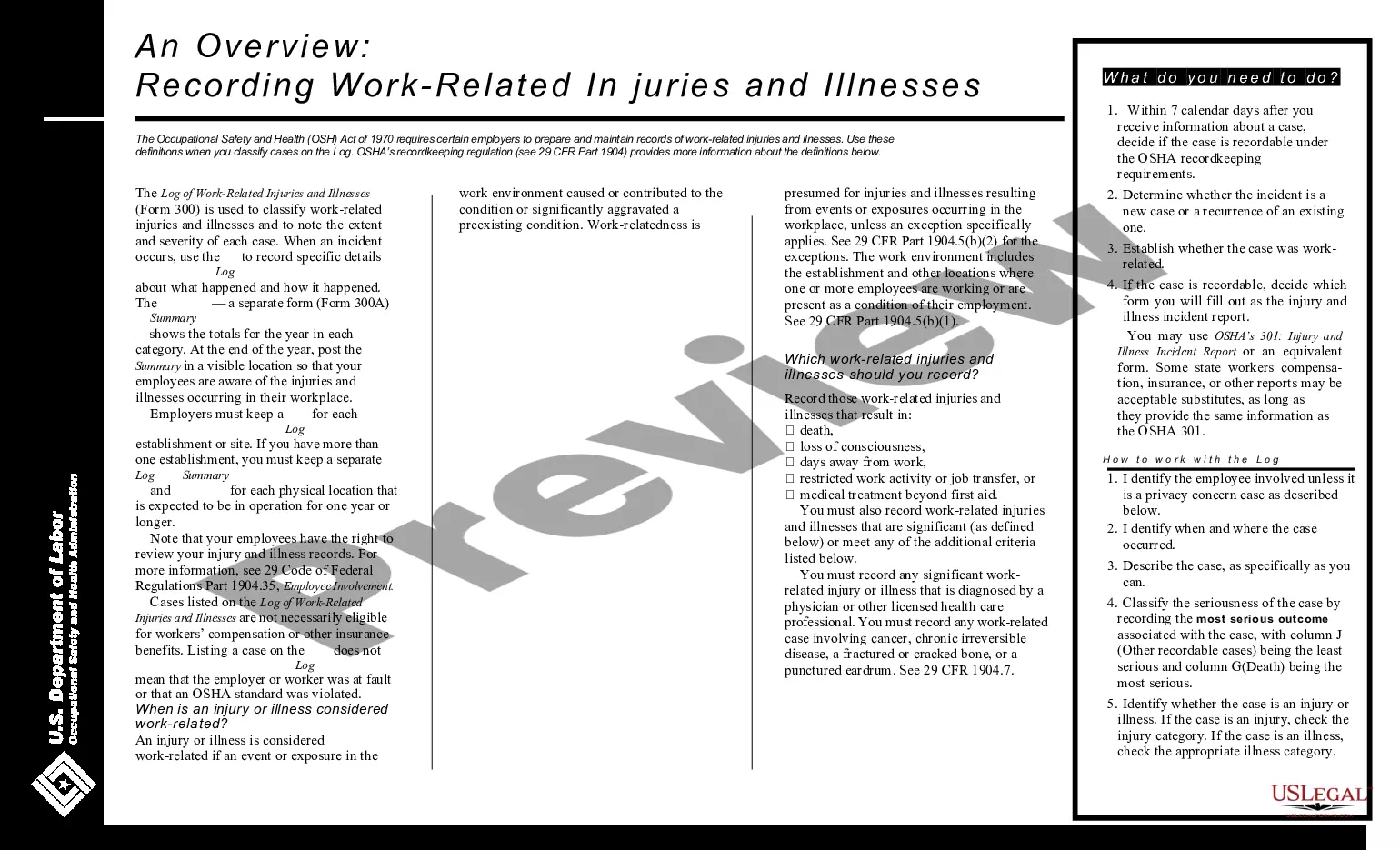
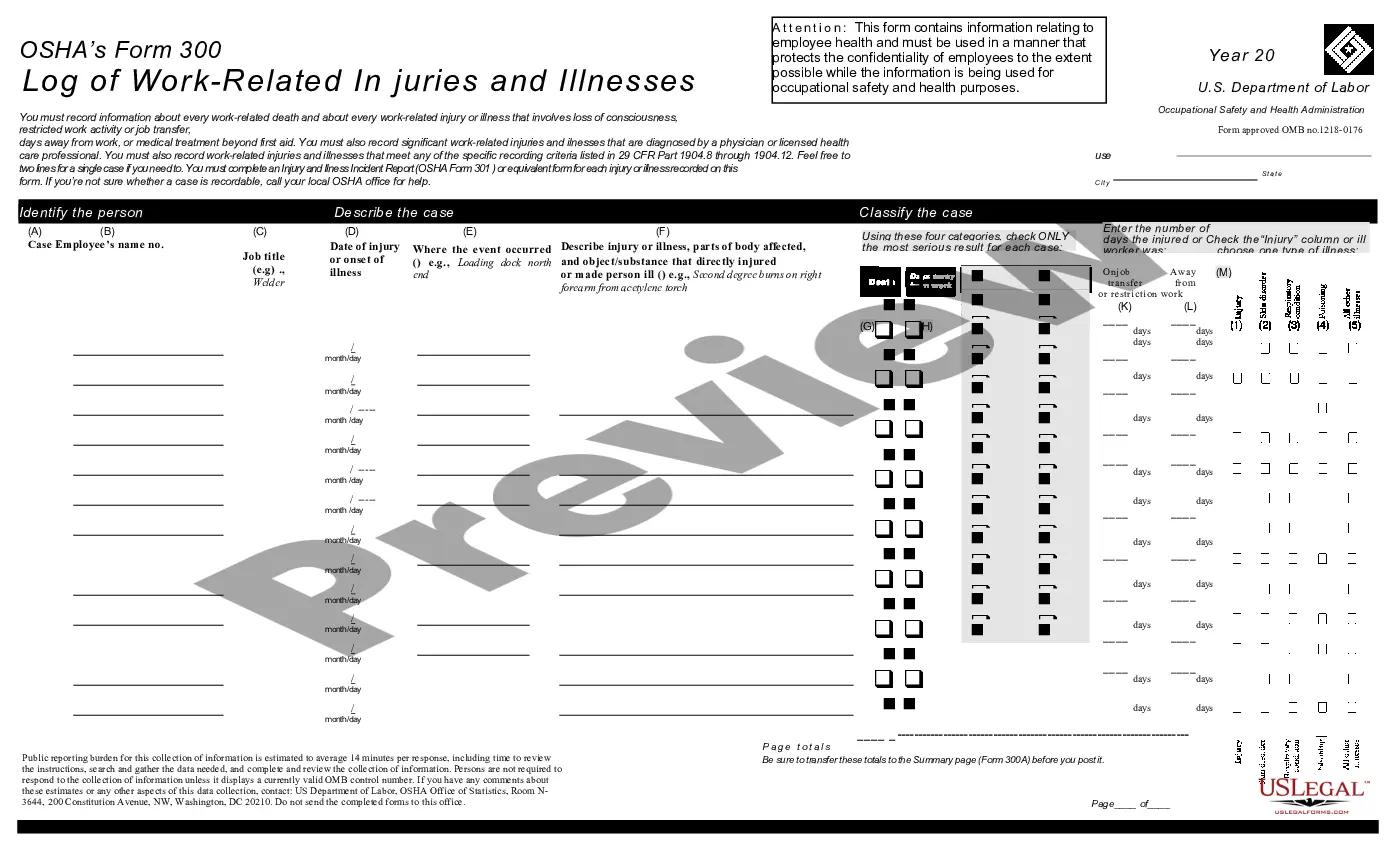
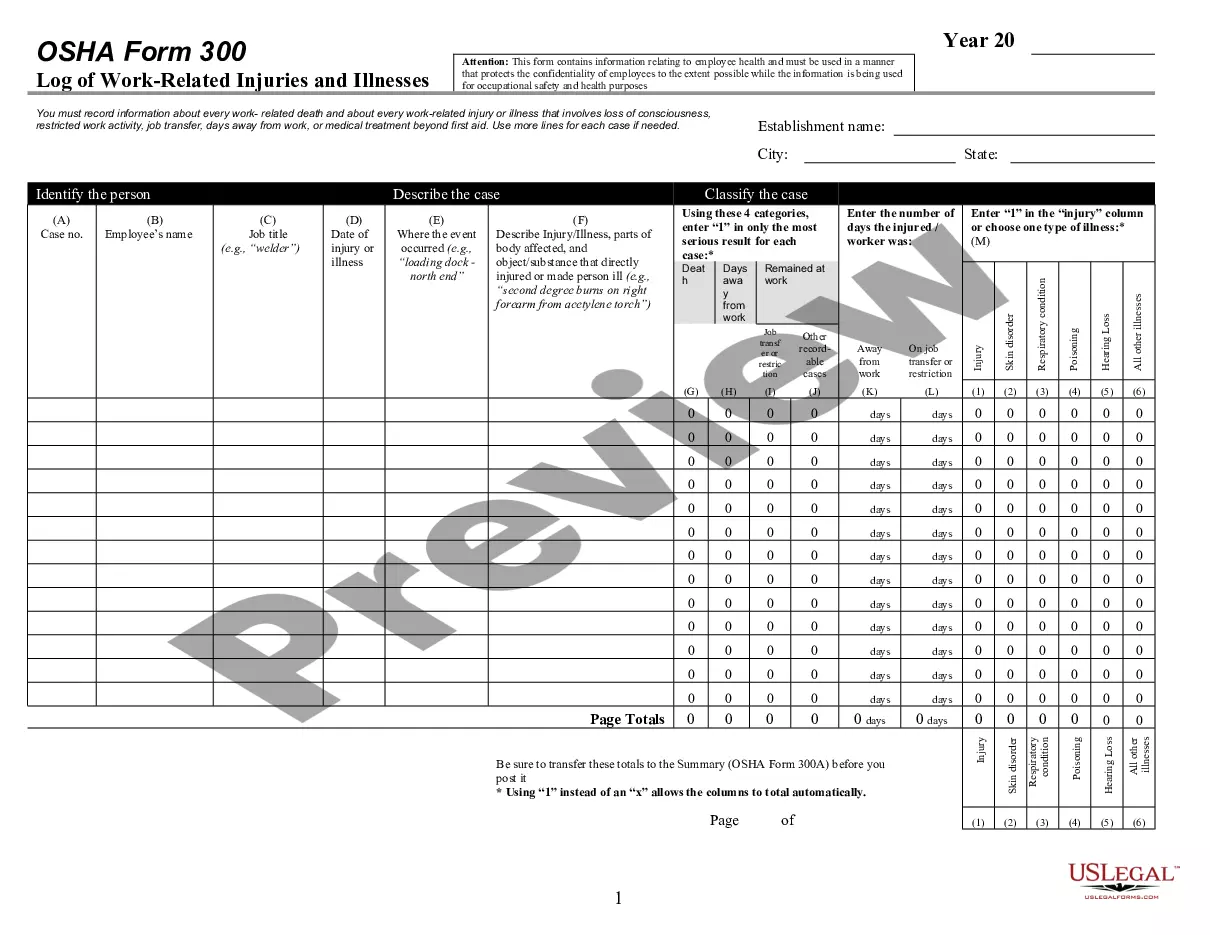
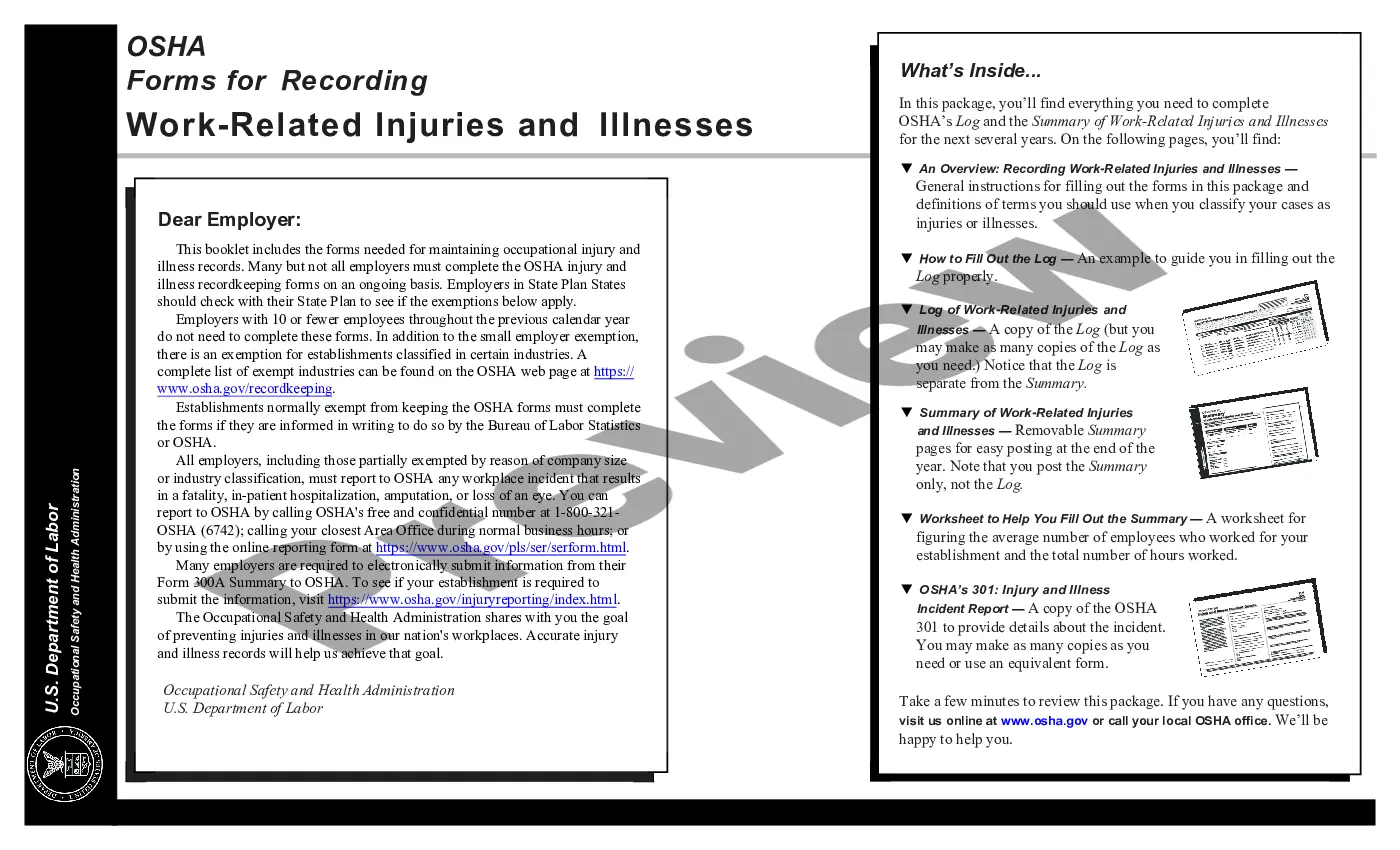
The Log of Work Related Injuries and Illnesses (OSHA 300) is a crucial document used by employers to record any work-related injuries and illnesses that occur within their establishment. This form serves to fulfill the Occupational Safety and Health Administration (OSHA) requirements, ensuring proper documentation of workplace incidents, which aids in maintaining safety standards and improving workplace conditions.
Main sections of this form
- Employee Details: Collection of basic information about the employee involved in the incident.
- Incident Description: Detailed reporting of the incident, including date, location, and nature of the injury or illness.
- Outcome Assessment: Classification of the injury or illness, determining its seriousness and associated outcomes.
- Case Classification: Categories to specify whether it is an injury or illness and document treatments received.
- Details of Events: Specific items that led to the injury or illness are recorded to aid in analyzing workplace hazards.
Common use cases
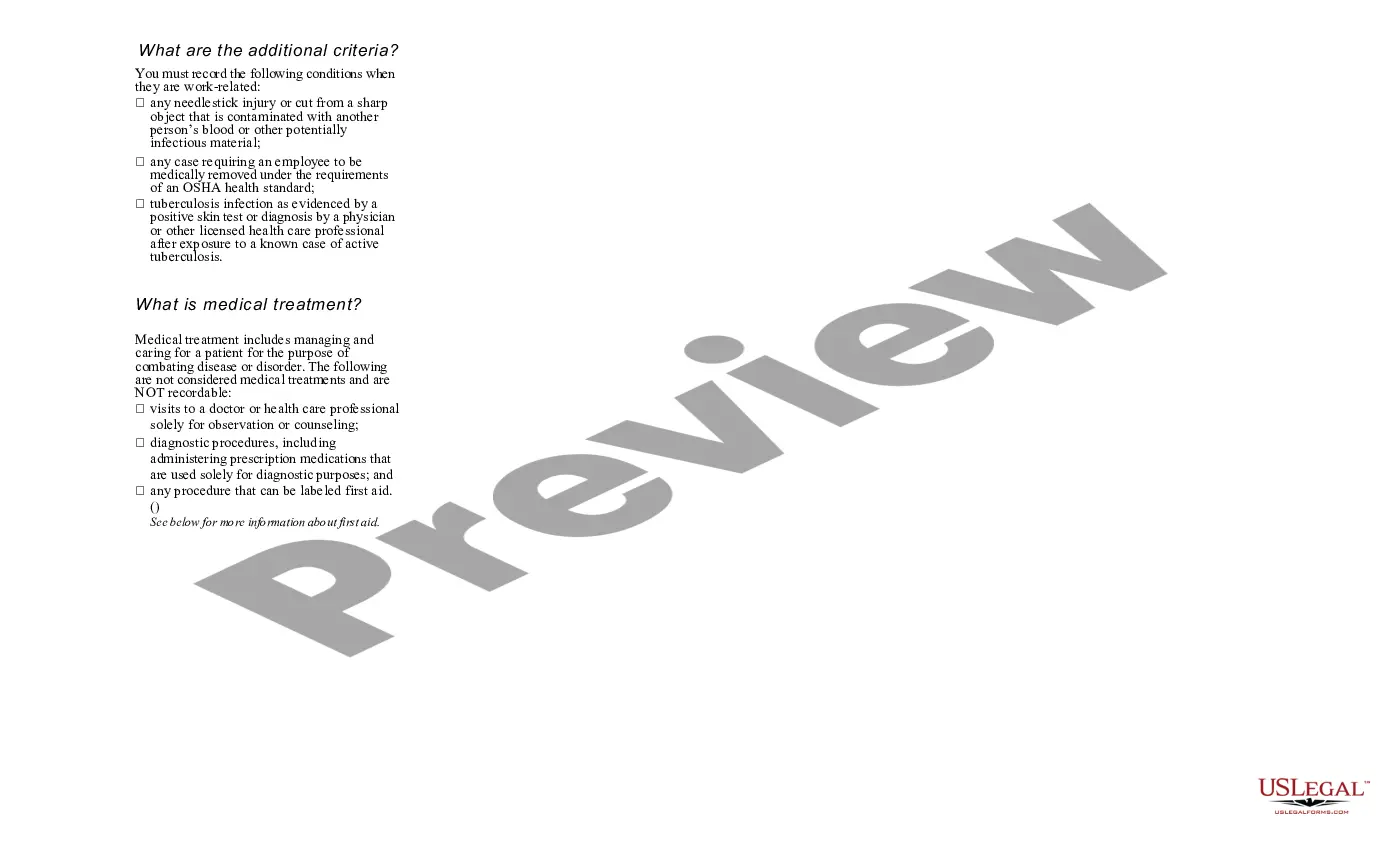
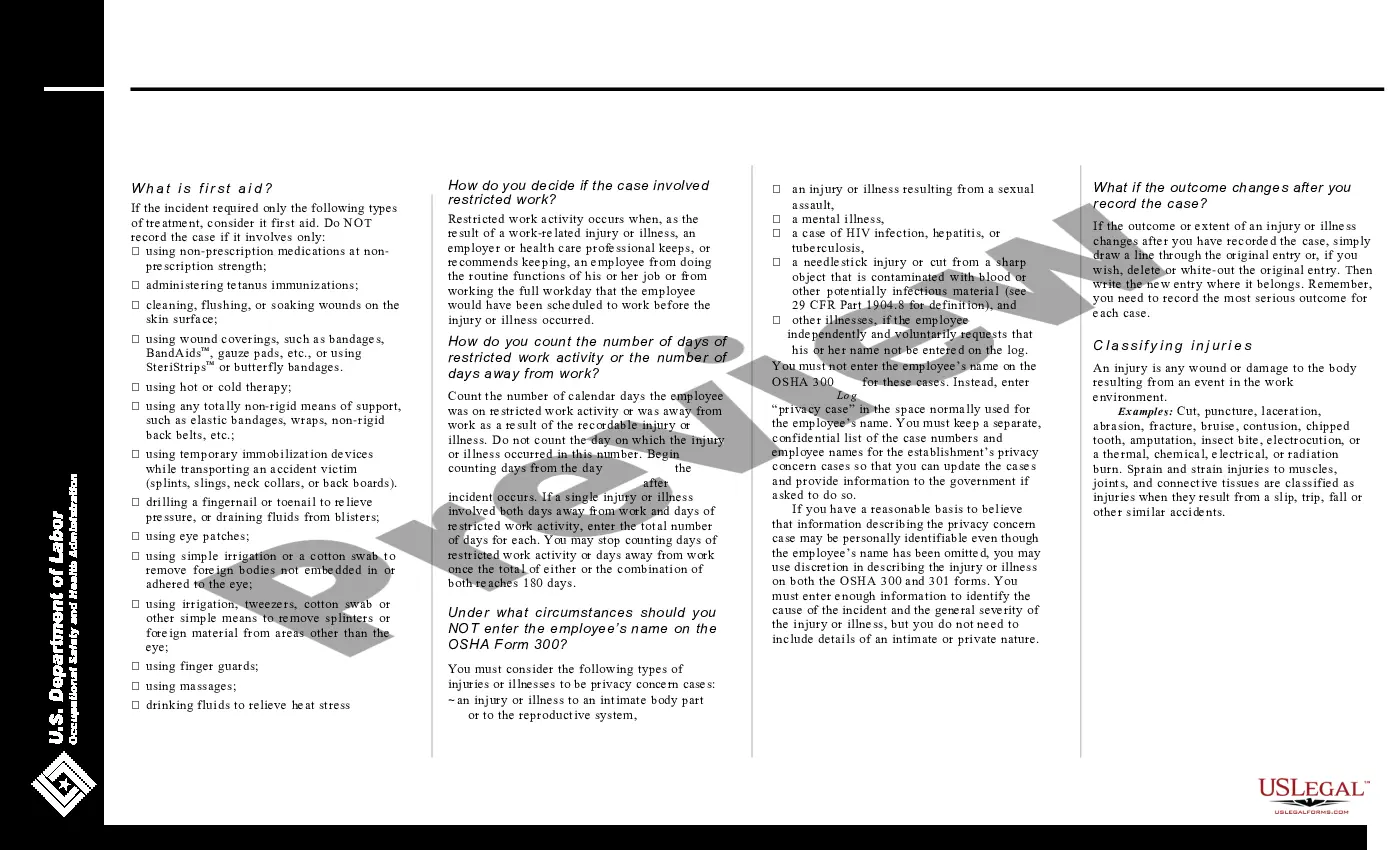
This form should be used whenever an employee experiences a work-related death, loss of consciousness, or a work-related injury or illness that leads to days away from work, medical treatment beyond first aid, or job restrictions. It is essential for employers to promptly document these incidents to comply with OSHA regulations and contribute to a safer workplace.
Who should use this form
- Employers of businesses required to maintain OSHA records.
- Human resource professionals tasked with managing workplace safety.
- Safety officers responsible for documenting employee health incidents.
- Business owners ensuring compliance with safety regulations.
Steps to complete this form
- Identify and document the employee involved in the incident.
- Clearly record when and where the incident occurred.
- Describe the nature and seriousness of the injury or illness in detail.
- Classify the incident as either an injury or illness and note the relevant categories.
- Submit the completed Log after ensuring all information is accurate.
Does this form need to be notarized?
In most cases, this form does not require notarization. However, some jurisdictions or signing circumstances might. US Legal Forms offers online notarization powered by Notarize, accessible 24/7 for a quick, remote process.
Get your form ready online
Our built-in tools help you complete, sign, share, and store your documents in one place.
Make edits, fill in missing information, and update formatting in US Legal Forms—just like you would in MS Word.
Download a copy, print it, send it by email, or mail it via USPS—whatever works best for your next step.
Sign and collect signatures with our SignNow integration. Send to multiple recipients, set reminders, and more. Go Premium to unlock E-Sign.
If this form requires notarization, complete it online through a secure video call—no need to meet a notary in person or wait for an appointment.
We protect your documents and personal data by following strict security and privacy standards.

Make edits, fill in missing information, and update formatting in US Legal Forms—just like you would in MS Word.

Download a copy, print it, send it by email, or mail it via USPS—whatever works best for your next step.

Sign and collect signatures with our SignNow integration. Send to multiple recipients, set reminders, and more. Go Premium to unlock E-Sign.

If this form requires notarization, complete it online through a secure video call—no need to meet a notary in person or wait for an appointment.

We protect your documents and personal data by following strict security and privacy standards.
Common mistakes
- Filling out the form without complete incident details.
- Failing to classify injuries and illnesses adequately.
- Not recording every required incident, such as those that involve treatment beyond first aid.
- Submitting the Log without verifying the accuracy of the information provided.
Benefits of using this form online
- Convenient online access allows for immediate documentation of workplace incidents.
- Editability ensures that any necessary changes can be easily made before final submission.
- Reliability enhances record-keeping, minimizing the risk of lost or misfiled forms.
- Compliance with legal requirements becomes straightforward with guided prompts for each section.
Legal use & context
- This form is mandated by OSHA to ensure proper reporting and documentation of workplace incidents.
- Failure to maintain accurate records can result in penalties for non-compliance with federal regulations.
- Employers have the legal obligation to allow employees access to review these records upon request.
- The information collected can be crucial for improving workplace safety practices and responding to health-related incidents effectively.
Main things to remember
- The OSHA 300 log is essential for documenting work-related injuries and illnesses.
- Employers must accurately maintain this log and ensure it reflects compliance with OSHA regulations.
- It is important to keep the log up to date and review it regularly for safety improvements.
- Understanding how to properly fill out the log is crucial for workplace safety and legal compliance.
Looking for another form?

Form popularity
FAQ
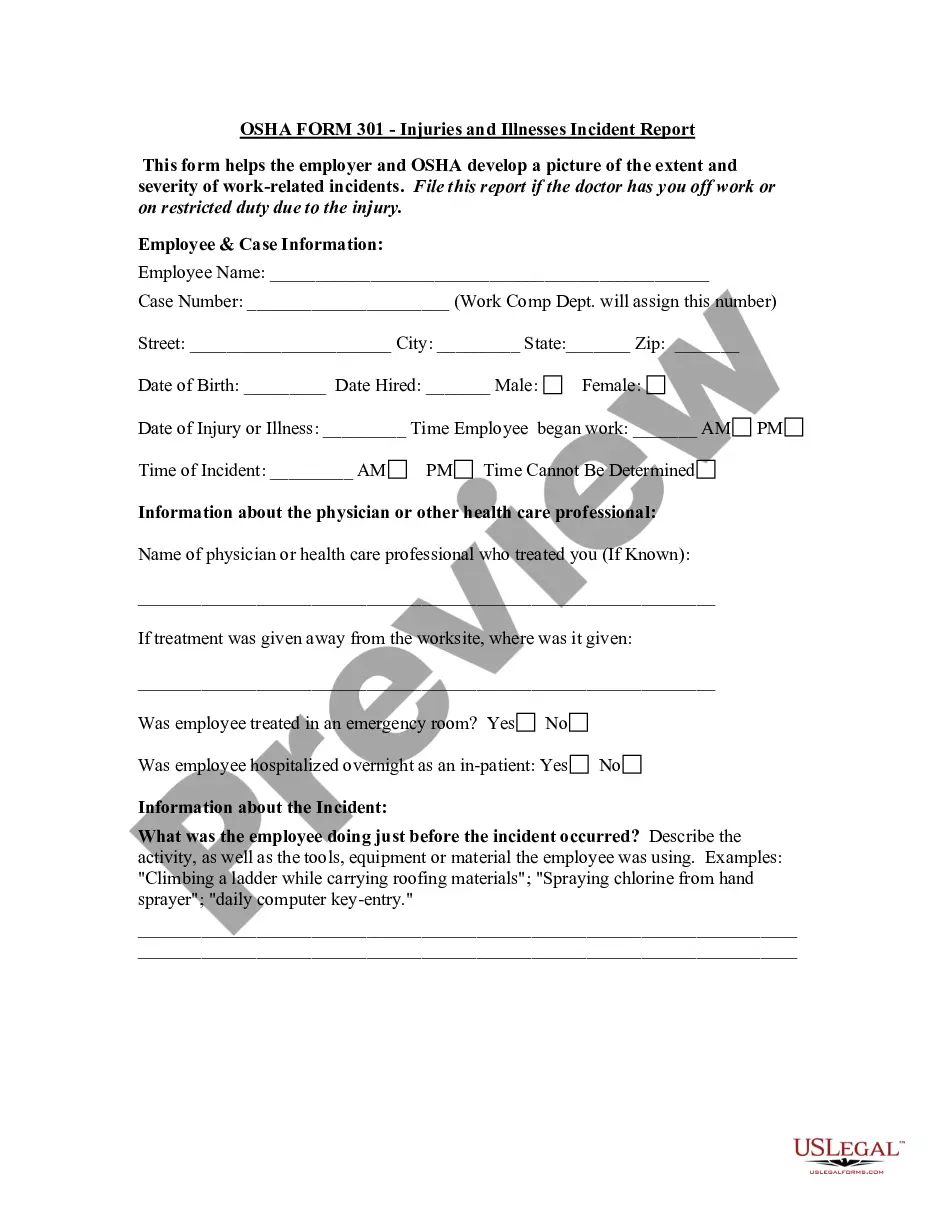
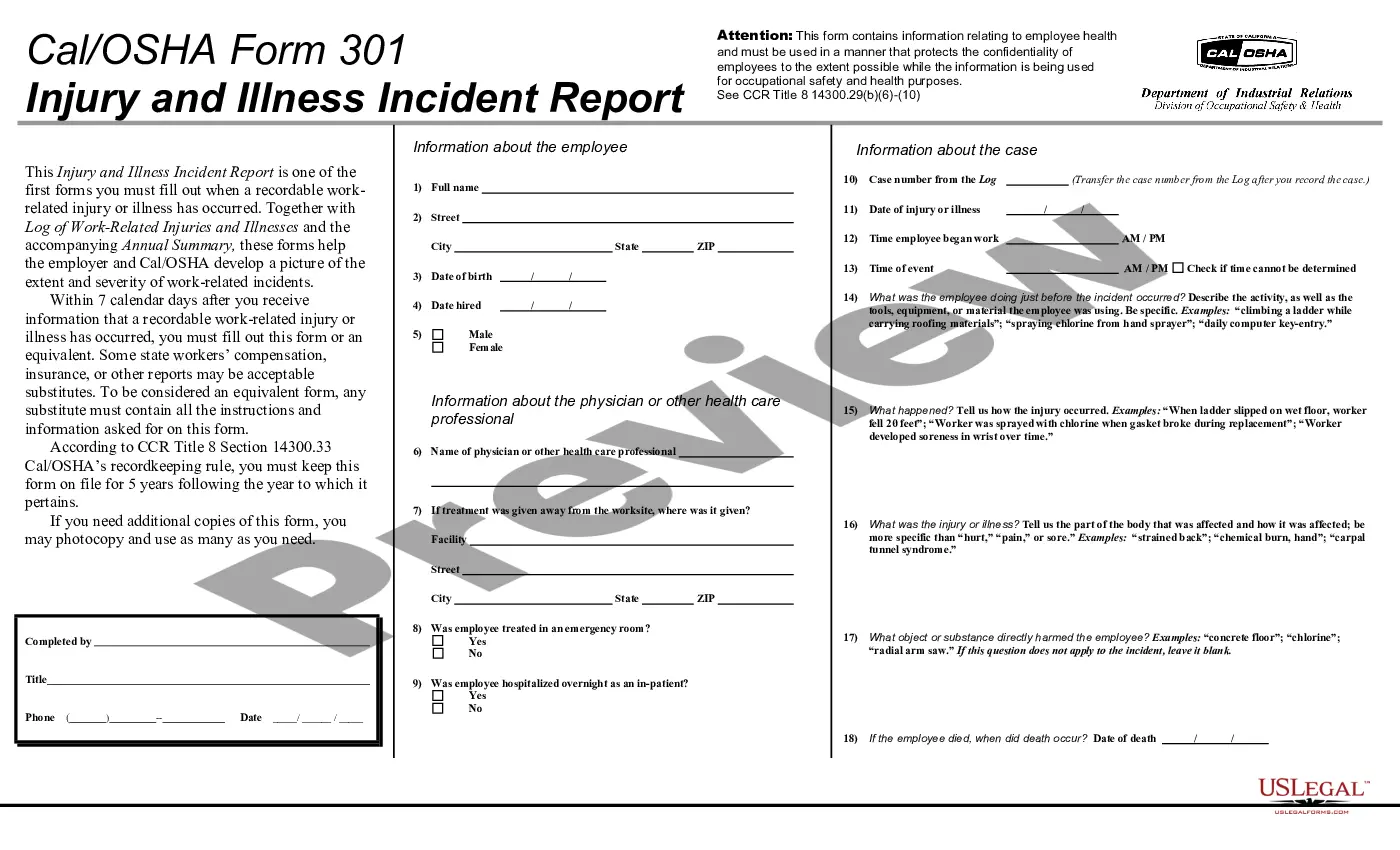
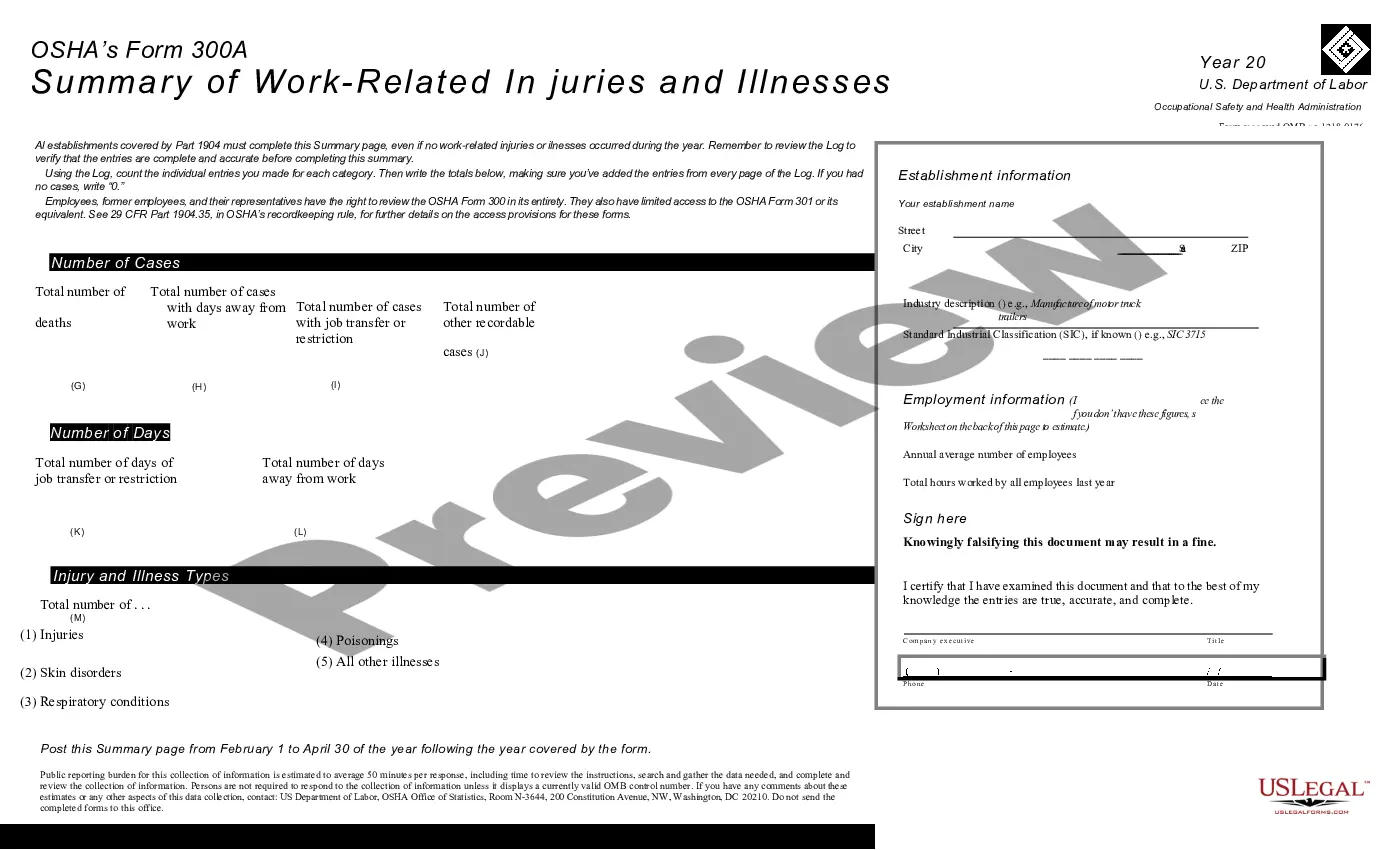
Employers must complete an incident report (Form 301) for each injury or illness and log work-related incidents on OSHA Form 300. Form 300A is a summary of the information in the log that must be posted in the worksite from Feb. 1 to April 30 each year.
Covered establishments are only required to electronically submit information from the OSHA Form 300A (Summary of Work-Related Injuries and Illnesses). The requirement to keep and maintain OSHA Forms 300, 300A, and 301 for five years is not changed by this Final Rule.
Tips for Maintaining an OSHA 300 Log The information shall be posted within seven days after a recordable case has occurred. Employers must keep injury and illness records for each establishment.
The Log of Work-Related Injuries and Illnesses (Form 300) is used to classify work-related injuries and illnesses and to note the extent and severity of each case. When an incident occurs, use the Log to record specific details about what happened and how it happened.
In general, employers with 10 or more employees are required to post in the workplace a completed OSHA Form 300A (Summary of Work-Related Injuries and Illnesses) every year between February 1 and April 1. Employers with fewer than 10 employees and certain low-risk industries are exempt from this requirement.
The OSHA Form 300 is a form for employers to record all reportable injuries and illnesses that occur in the workplace, where and when they occur, the nature of the case, the name and job title of the employee injured or made sick, and the number of days away from work or on restricted or light duty, if any.
First, employers with ten or fewer employees at all times during the previous calendar year are exempt from routinely keeping OSHA injury and illness records. OSHA's revised recordkeeping regulation maintains this exemption.
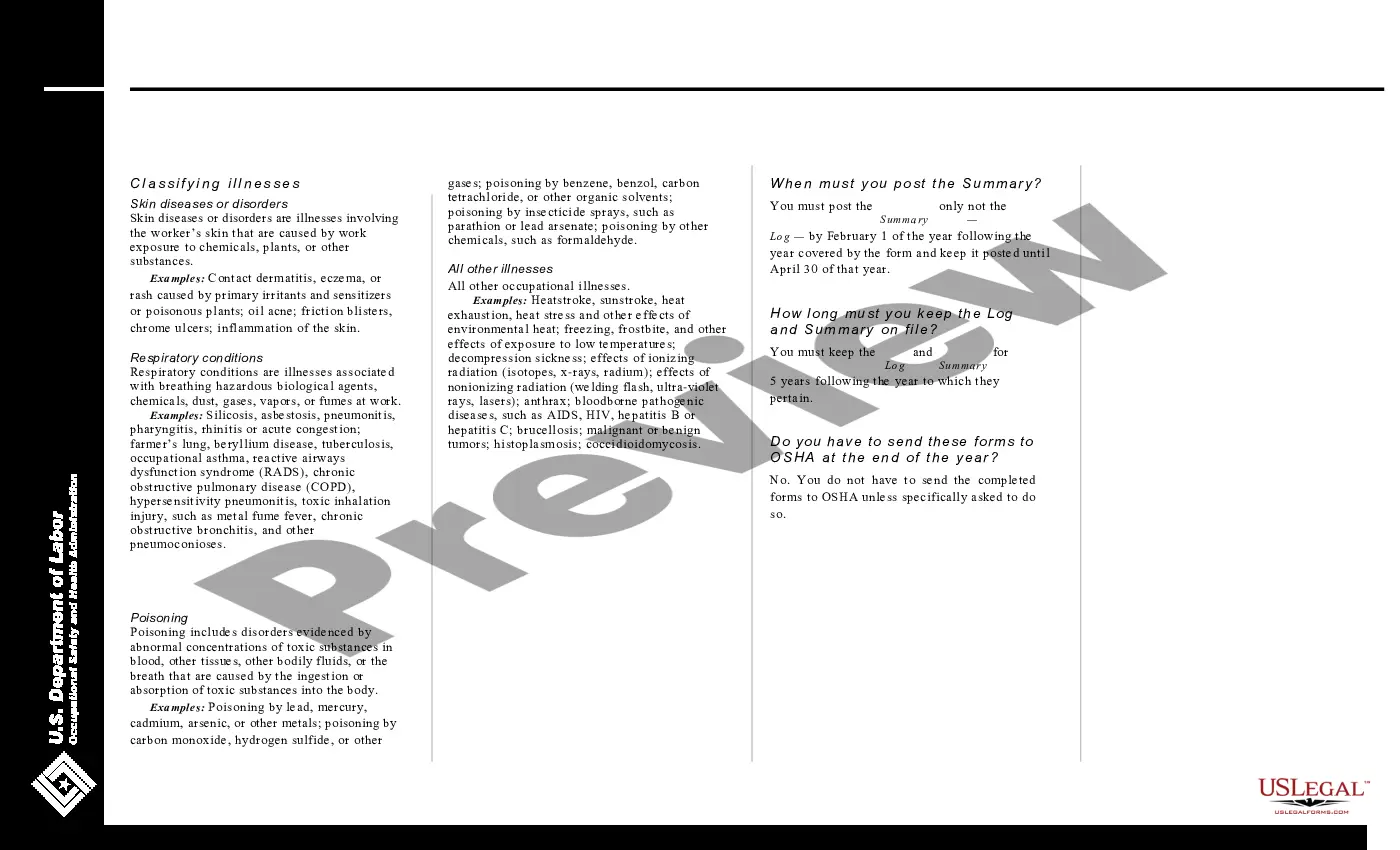
We note that for certain injuries and illnesses addressed in 29 CFR 1904.29, the employer is required to protect personal privacy by omitting the employee's name from the OSHA 300 Log. Instead, the employer enters "privacy case," and keeps a separate, confidential list containing the identifying information.
The OSHA 300 log is part of a federal requirement concerning safety in the workplace. OSHA Form 300A is the second page of the OSHA Form 300. The first page (Form 300) contains a log for work-related injuries and illnesses designed by the Occupational Safety and Health Administration (OSHA).