General Non-Competition Agreement
About this form
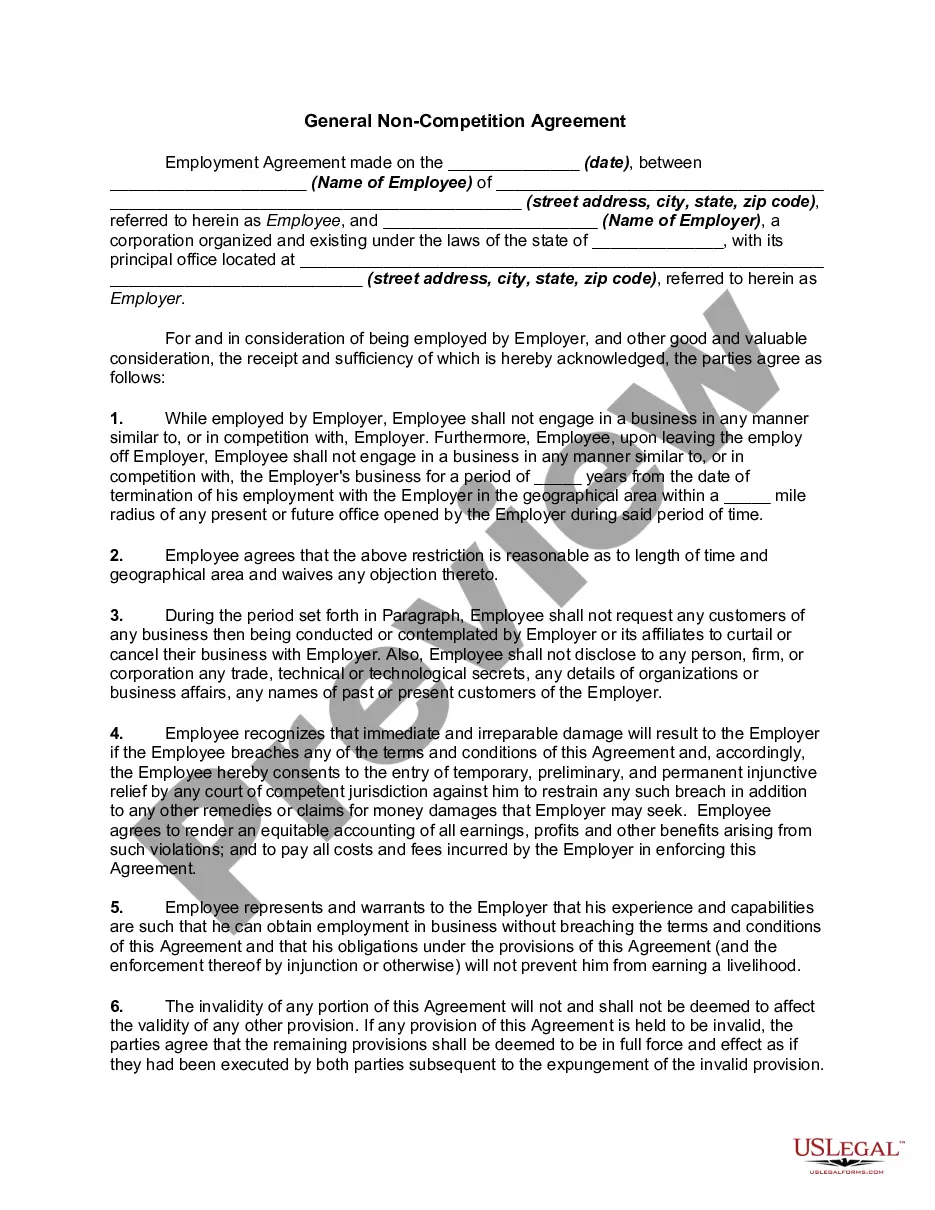
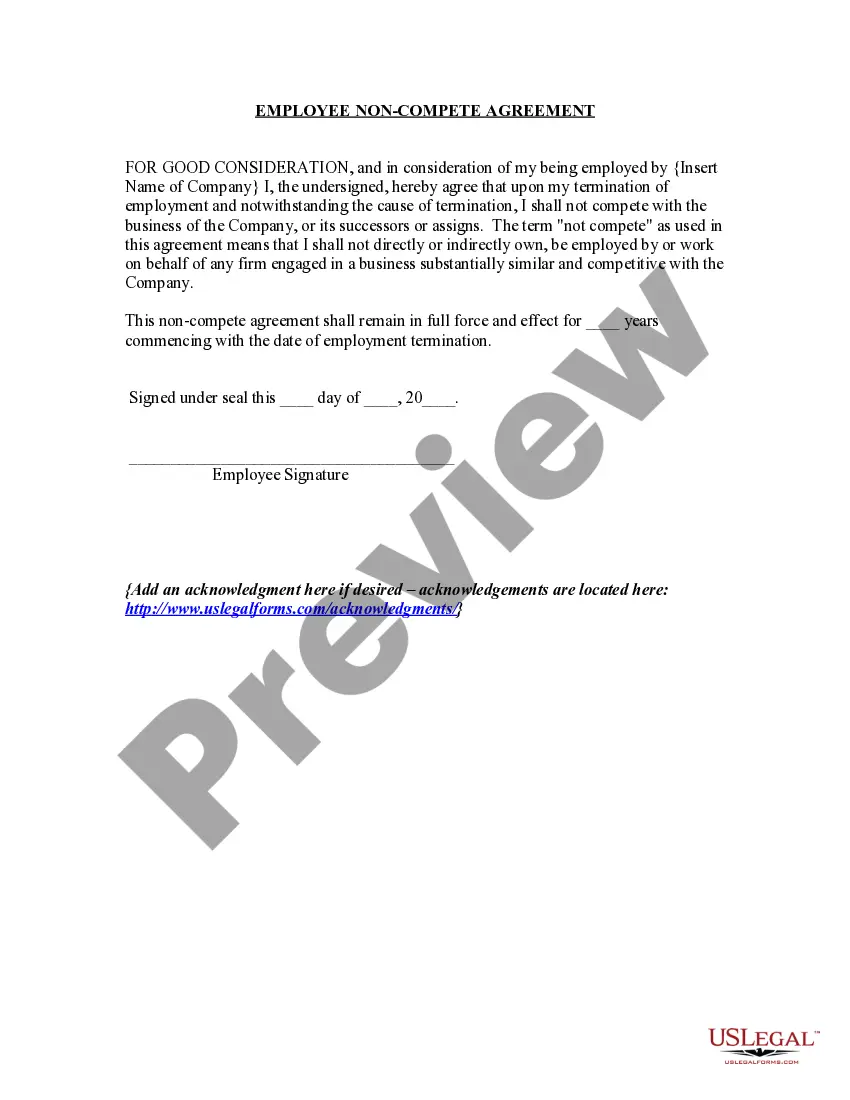
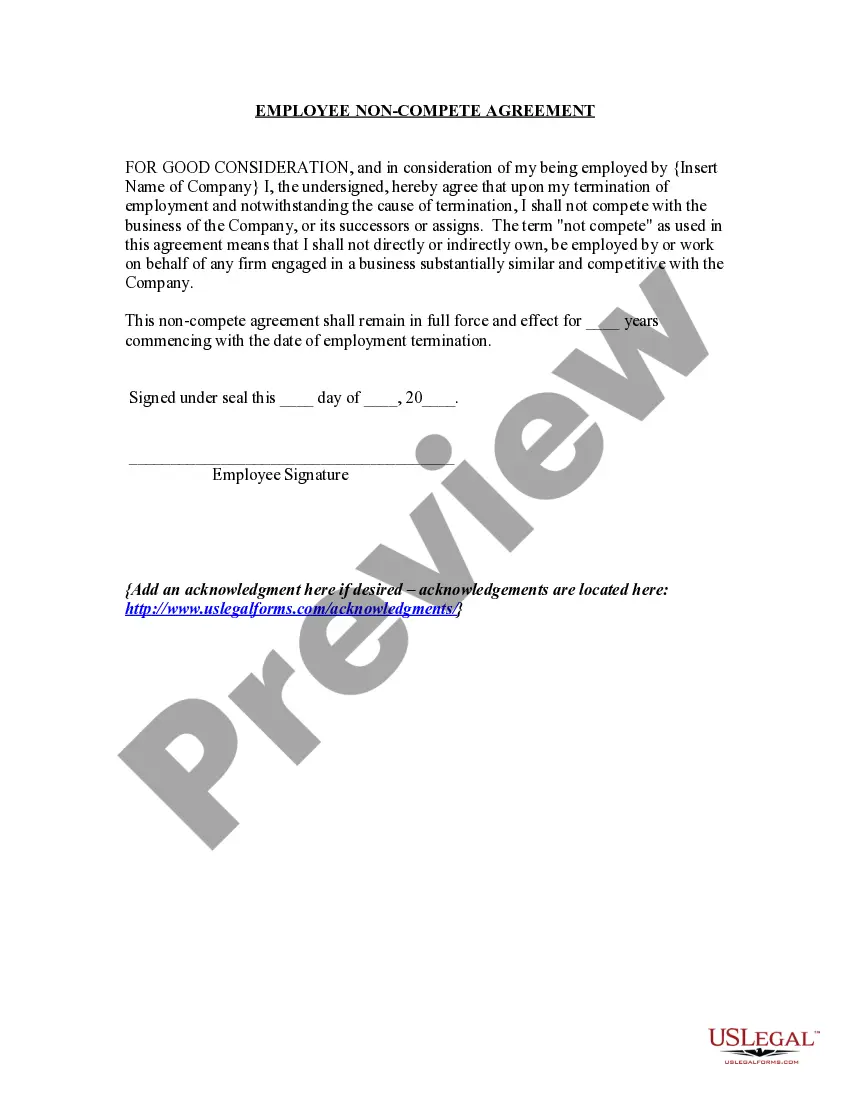
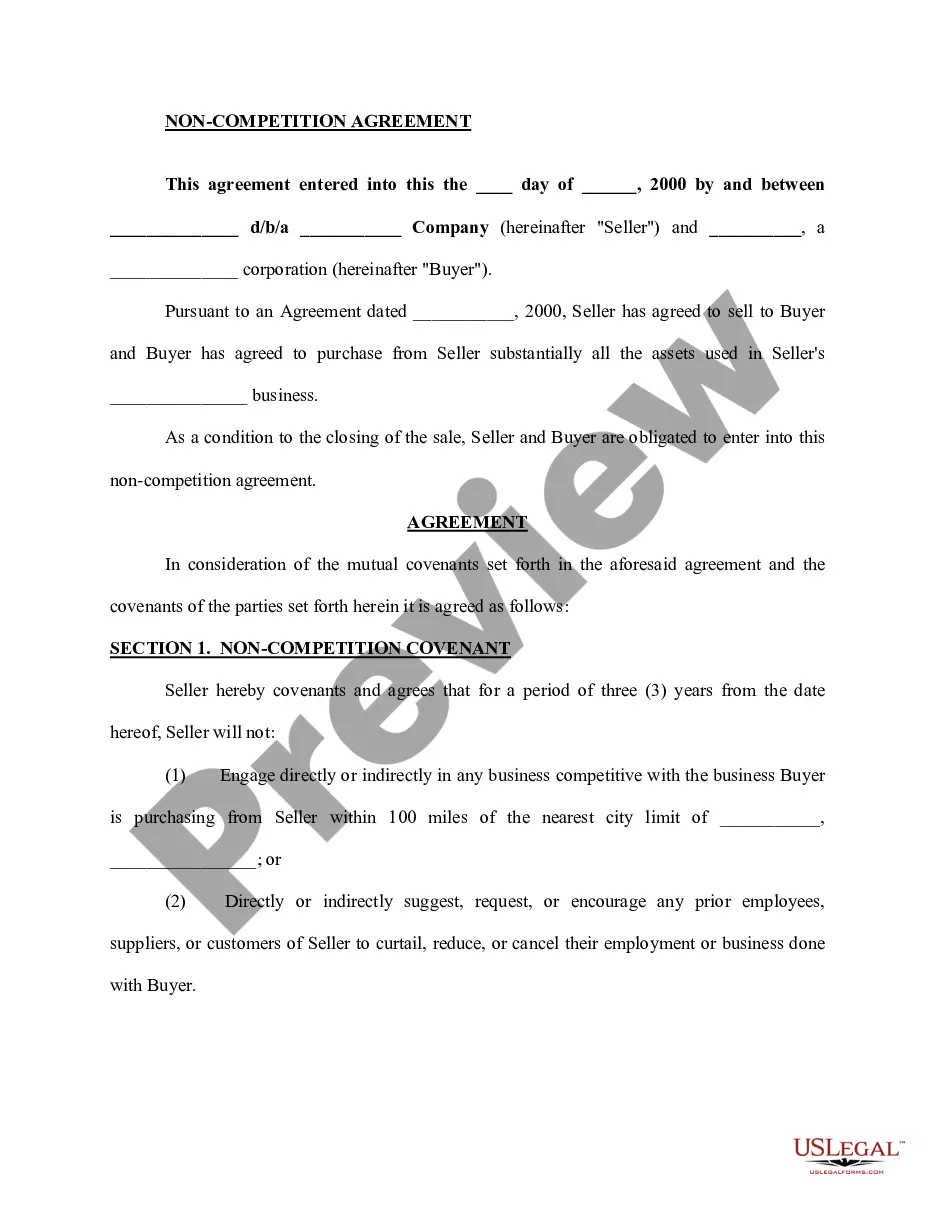
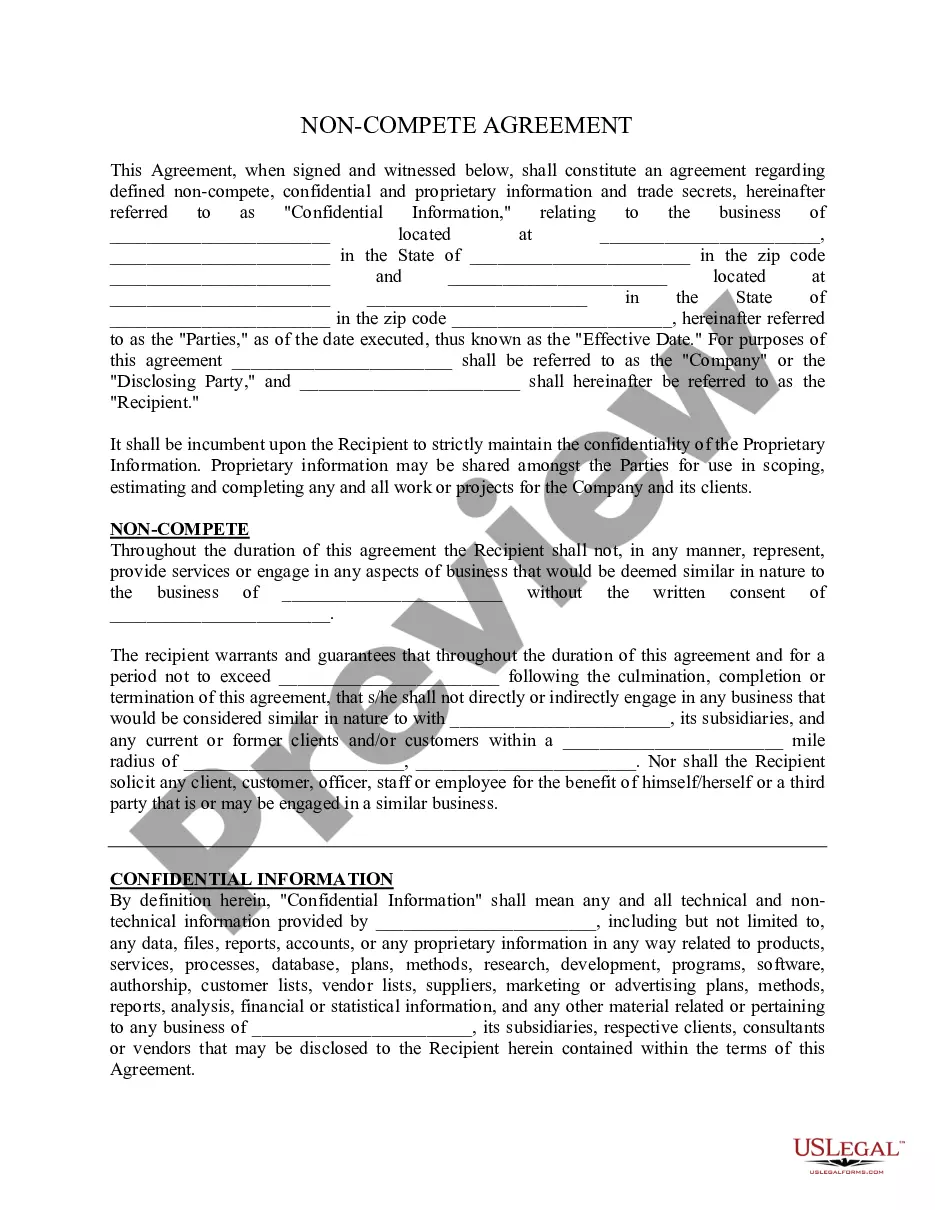
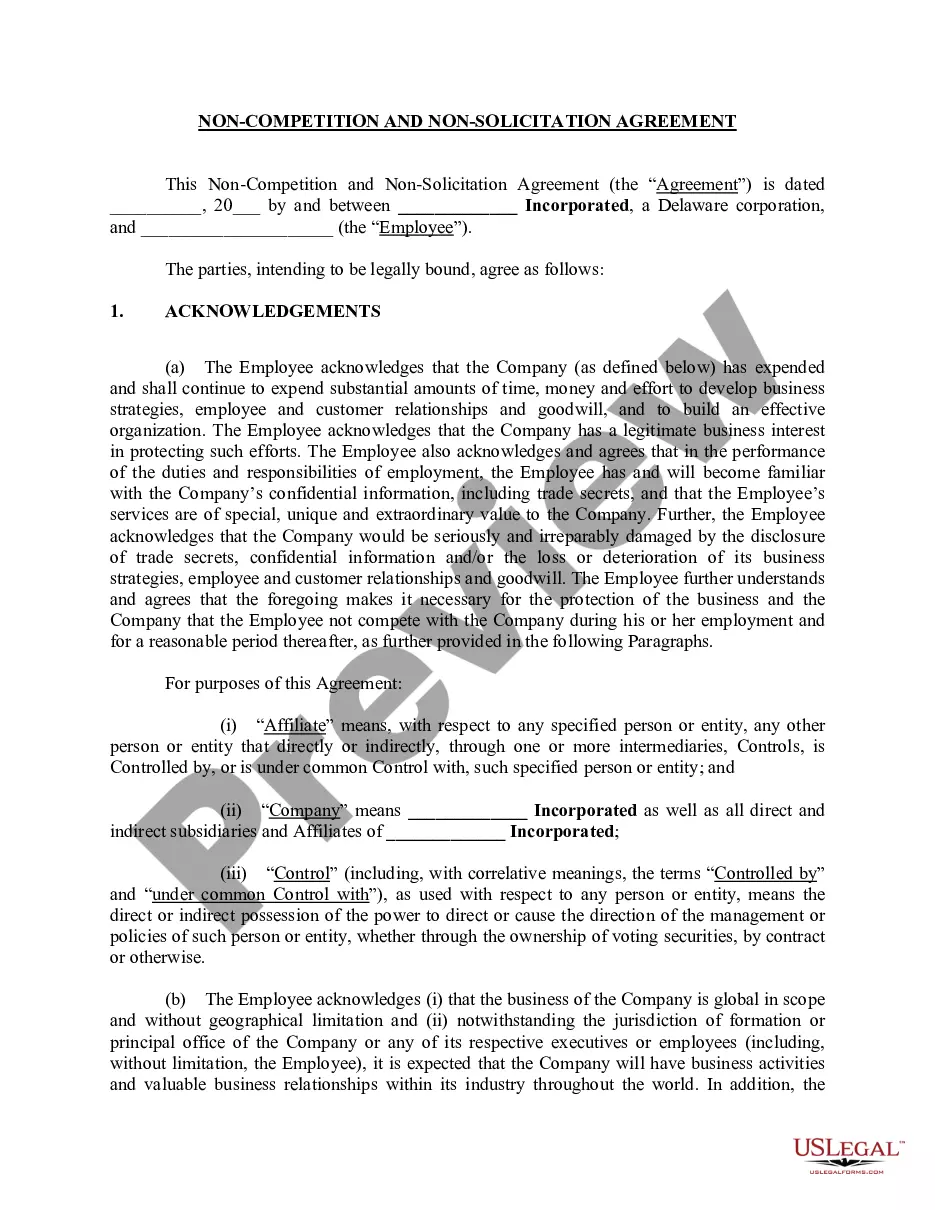
The General Non-Competition Agreement is a legal document designed to protect business interests by preventing an employee from competing against their employer during and after employment. This agreement outlines the restrictions on the employee in relation to similar business activities, ensuring that confidential information and trade secrets are not misused. It differs from similar forms by emphasizing the necessity for reasonable terms related to time and geographical area for enforceability.
Key components of this form
- Date of the agreement and identities of the employer and employee.
- Non-competition obligations during employment and after termination.
- Duration of the non-competition restriction.
- Geographical area covered by restrictions.
- Consequences of breaching the agreement, including potential legal remedies.
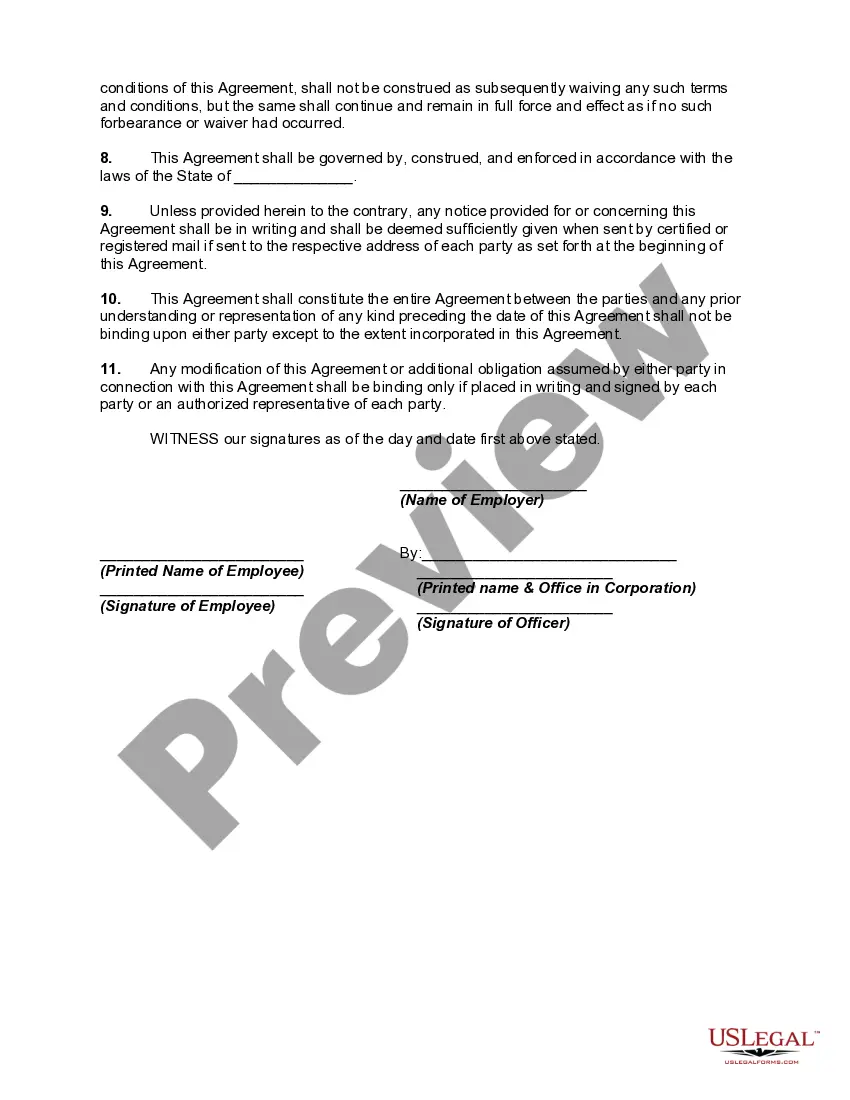
- Governing law and modifications to the agreement.
Situations where this form applies
This form is useful when a business owner wants to prevent a former employee from entering into a competing business or soliciting customers post-employment. It can also be vital when an employee is considering a new job opportunity in the same field as their current or former employer, especially in scenarios where the employer has provided them with proprietary information or trade secrets.
Who should use this form
- Businesses that require protection of proprietary information and trade secrets.
- Employers who wish to limit competition from former employees.
- Employees who are entering into agreements to understand their post-employment restrictions.
How to prepare this document
- Identify the parties involved by filling in the names and addresses of the employee and employer.
- Specify the date when the agreement is made.
- Detail the duration of the non-competition restrictions following employment termination.
- Outline the geographical area where the non-competition applies.
- Ensure both parties sign and date the agreement to validate it.
Notarization requirements for this form
Notarization is generally not required for this form. However, certain states or situations might demand it. You can complete notarization online through US Legal Forms, powered by Notarize, using a verified video call available anytime.
Get your form ready online
Our built-in tools help you complete, sign, share, and store your documents in one place.
Make edits, fill in missing information, and update formatting in US Legal Forms—just like you would in MS Word.
Download a copy, print it, send it by email, or mail it via USPS—whatever works best for your next step.
Sign and collect signatures with our SignNow integration. Send to multiple recipients, set reminders, and more. Go Premium to unlock E-Sign.
If this form requires notarization, complete it online through a secure video call—no need to meet a notary in person or wait for an appointment.
We protect your documents and personal data by following strict security and privacy standards.

Make edits, fill in missing information, and update formatting in US Legal Forms—just like you would in MS Word.

Download a copy, print it, send it by email, or mail it via USPS—whatever works best for your next step.

Sign and collect signatures with our SignNow integration. Send to multiple recipients, set reminders, and more. Go Premium to unlock E-Sign.

If this form requires notarization, complete it online through a secure video call—no need to meet a notary in person or wait for an appointment.

We protect your documents and personal data by following strict security and privacy standards.
Typical mistakes to avoid
- Including overly broad restrictions that may not be enforceable.
- Failing to identify the parties correctly.
- Not specifying a reasonable duration for the non-competition clause.
- Neglecting to have both parties sign the agreement.
Advantages of online completion
- Convenient access and immediate availability for download.
- Editability to tailor the agreement to specific needs.
- Reliability by relying on templates drafted by licensed attorneys.
Legal use & context
- A non-competition agreement is enforceable only if it is reasonable in scope and duration.
- Courts may modify overly restrictive terms instead of voiding the entire agreement.
- Compliance with specific state laws is essential for enforceability.
Summary of main points
- A General Non-Competition Agreement is vital for protecting business interests after employment ends.
- It must be reasonable in duration and geographical coverage to be enforceable.
- Both parties should clearly understand their rights and obligations under the agreement.
- It is essential to ensure compliance with state-specific laws to avoid unenforceability.
Looking for another form?
Form popularity
FAQ
Roughly half of businesses use noncompete agreements Roughly half, 49.4%, of responding establishments indicated that at least some employees in their establishments were required to enter into a noncompete agreement.
A non-compete agreement is a contract between an employee and employer.While an employer cannot require you to sign a non-compete, they may terminate, or choose not to hire you if you refuse to sign. Courts generally do not approve of non-compete agreements.
A traditional non-compete stops an employee from working for a competitor in a certain geographical area for a certain amount of time after leaving the company. A non-solicitation agreement prevents an employee from poaching customers, contracts or other employees from the company that first hired them.
The value of a non-competition agreement is represented by the present value of the cash flows that would be lost if the covenanter were to compete, adjusted for the effective probability that the covenanter would compete, and compete successfully.
In contrast, in many industries, a Non-Compete with a duration of 6-months will be considered reasonable, and therefore enforceable. The general rule is that the duration of the agreement should not exceed the time reasonably necessary to protect the employer's legitimate business interests.
Voiding a non-compete contract is possible in certain circumstances. For instance, if you can prove that you never signed the contract, or if you can demonstrate that the contract is against the public interest, you may be able to void the agreement.
A non-compete agreement is a contract between an employee and employer. A non-compete prohibits an employee from engaging in a business that competes with his/her current employer's business.Courts generally do not approve of non-compete agreements.