Irrevocable Stock Power
What this document covers
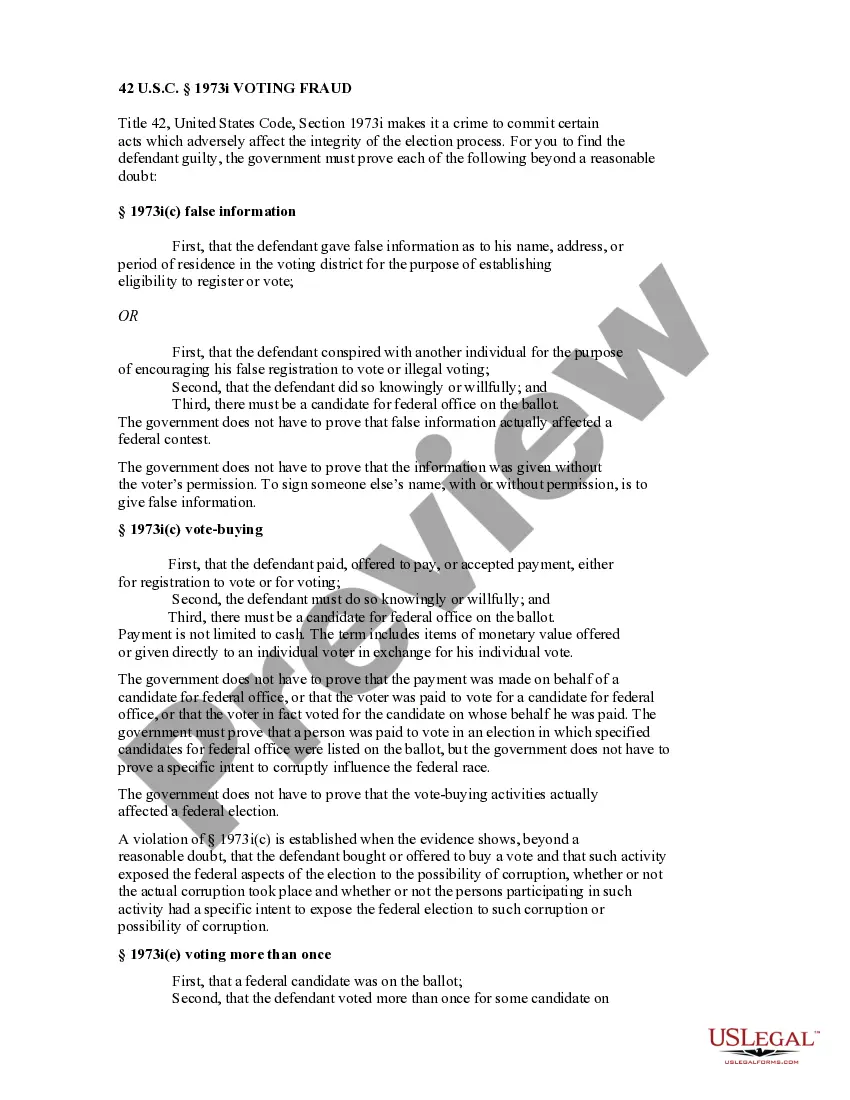
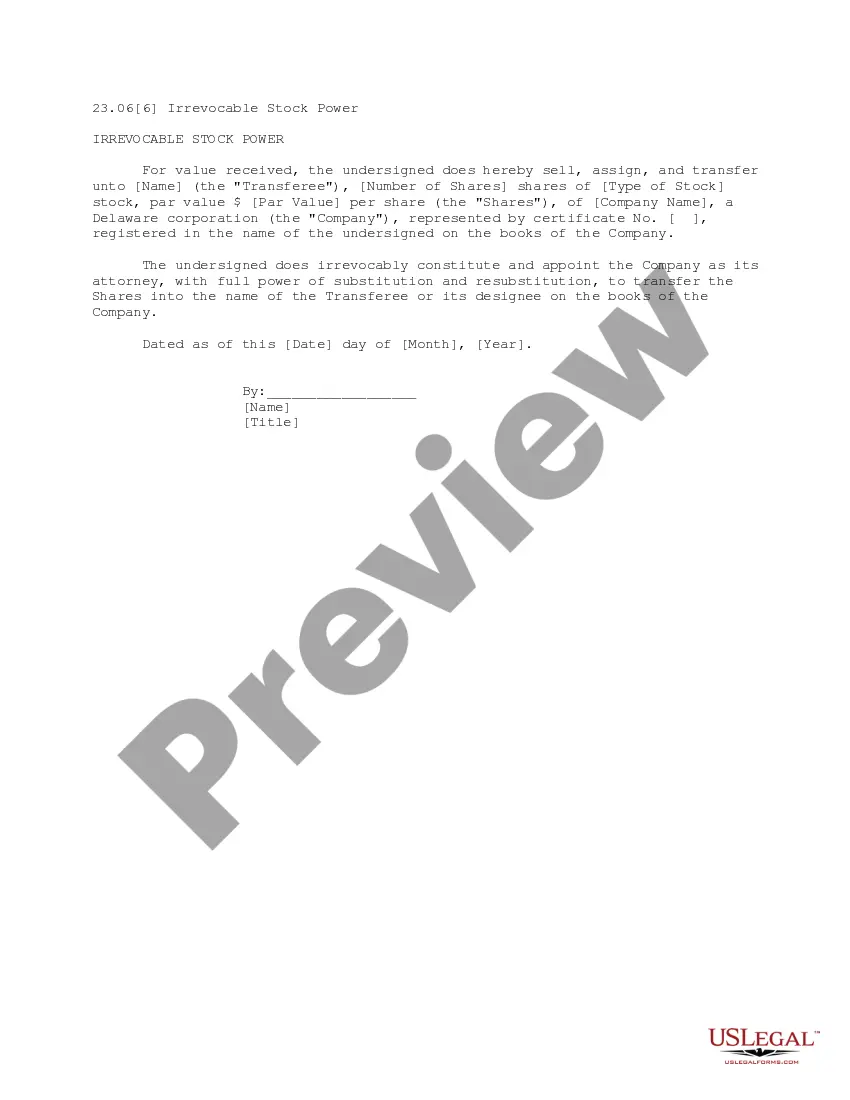
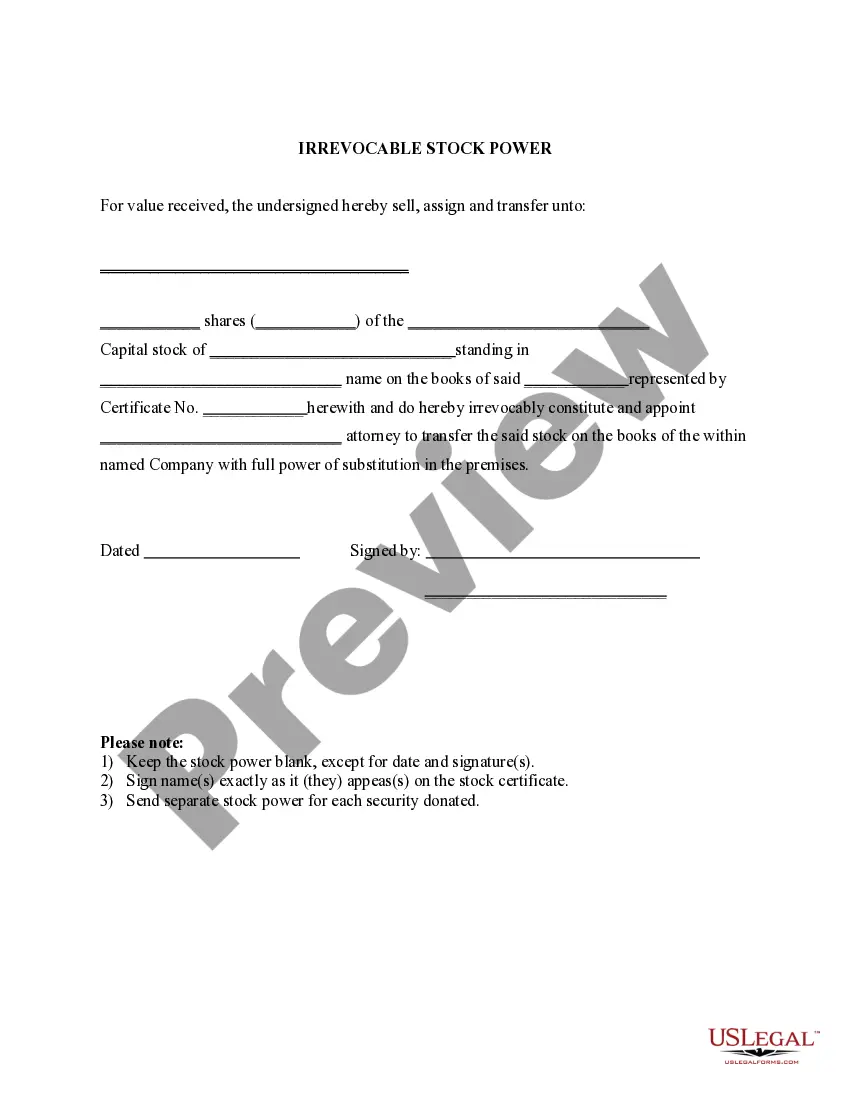
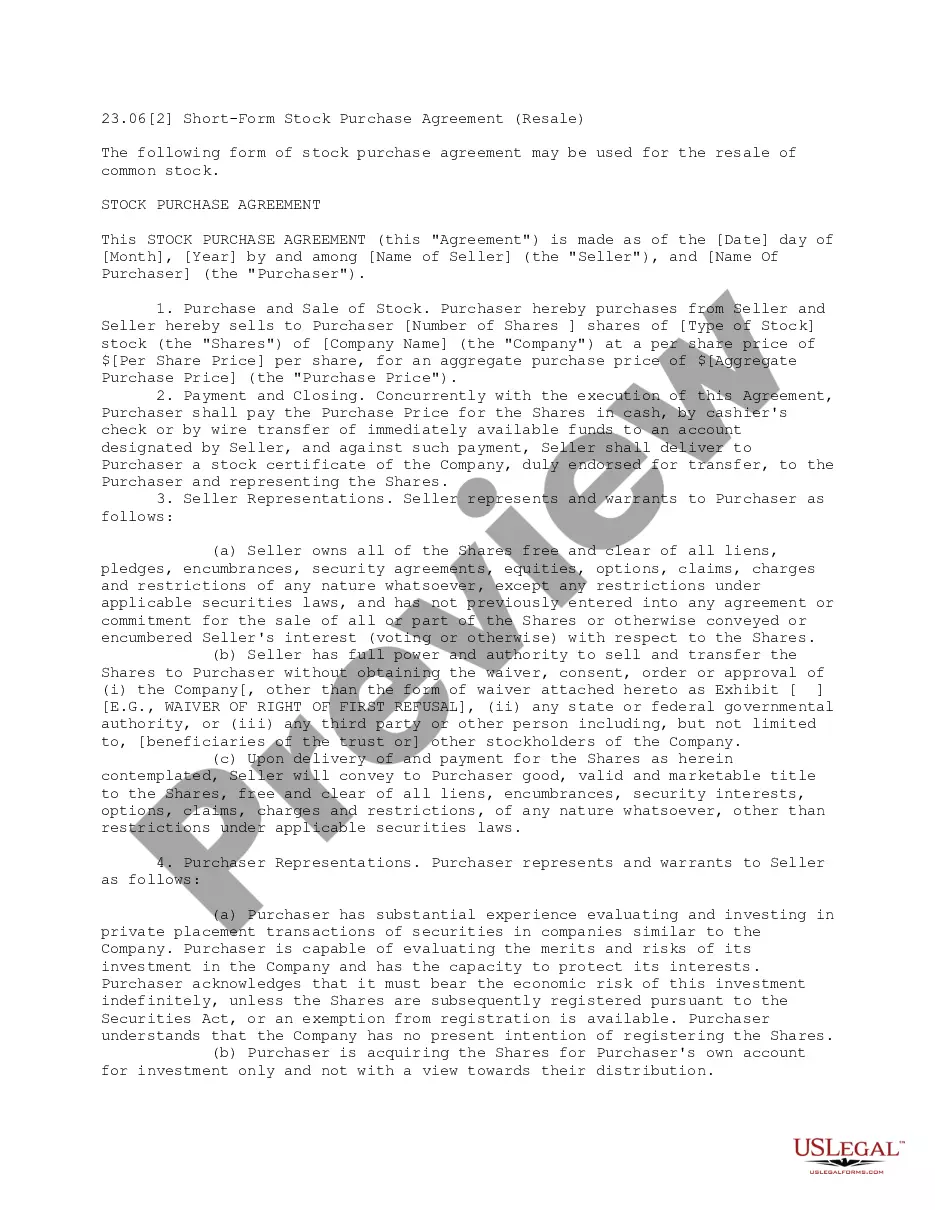
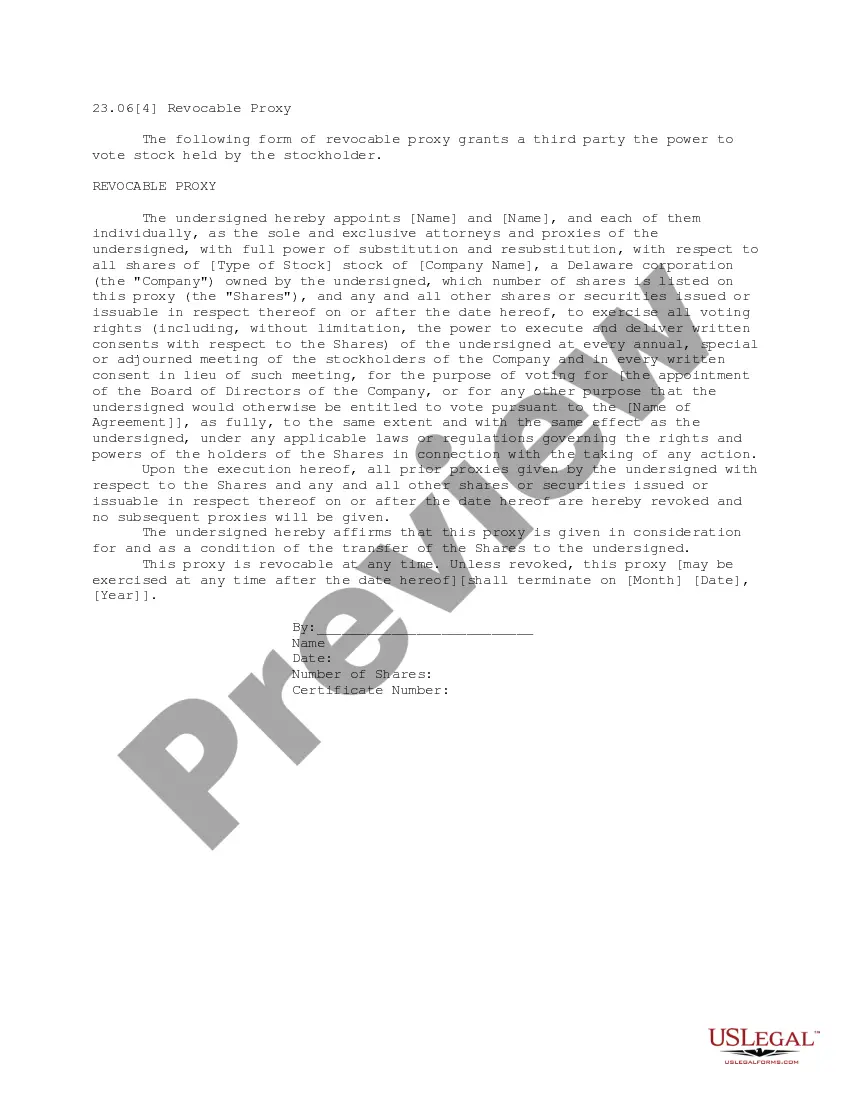
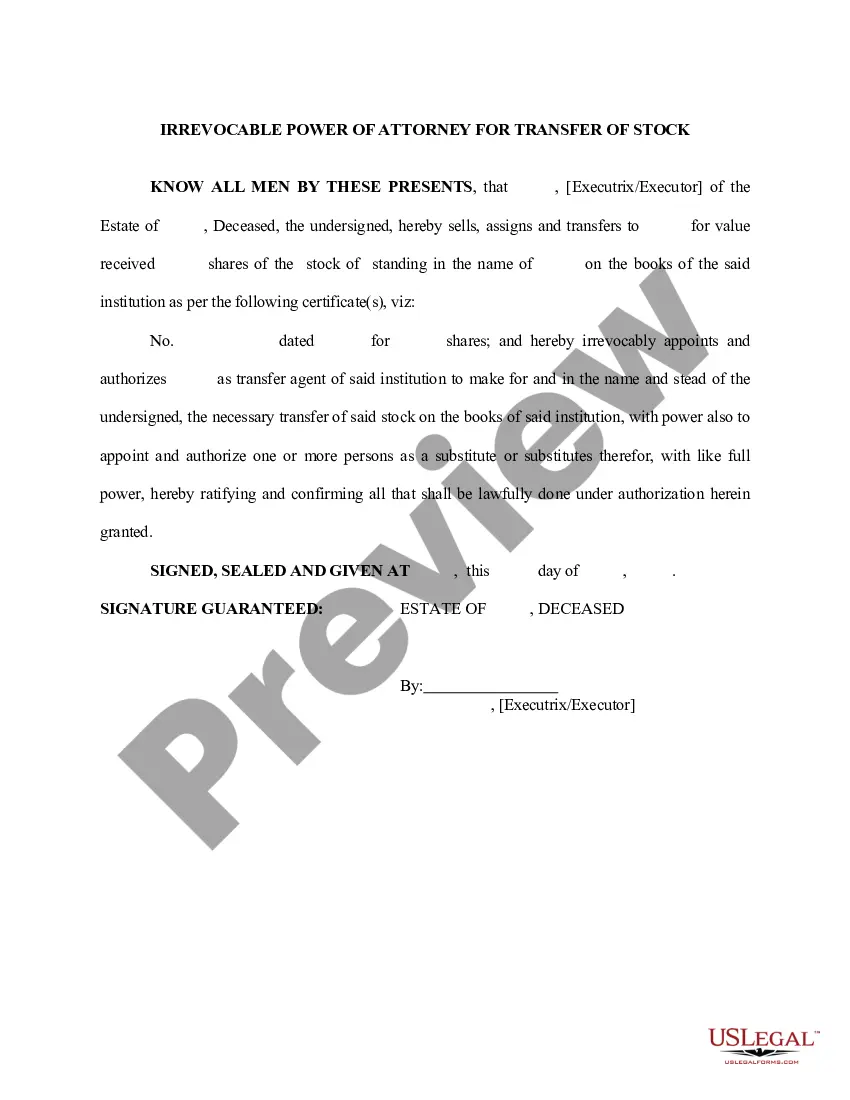
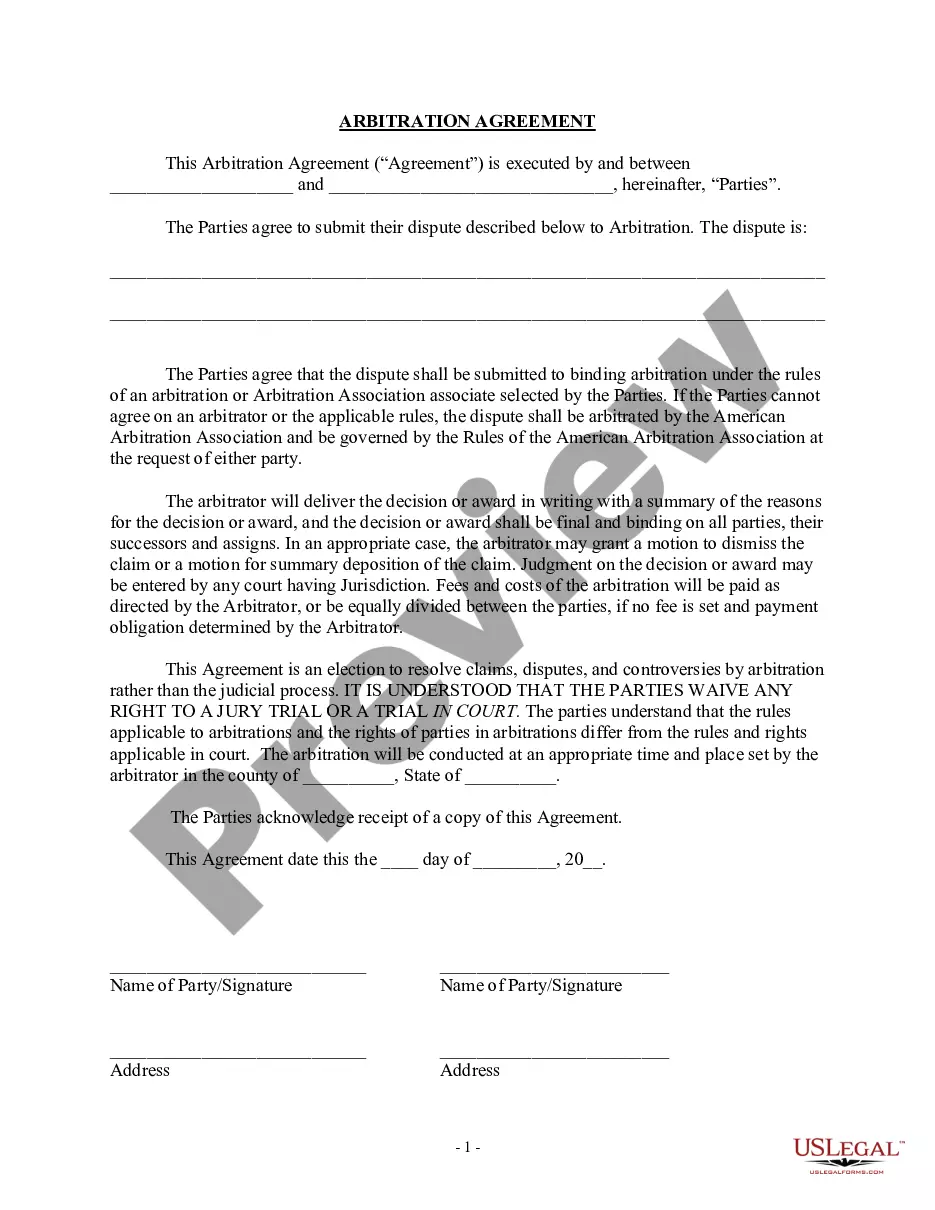
The Irrevocable Stock Power is a legal document used to transfer ownership of shares from one party to another, specifically in corporate or business contexts. Unlike a regular stock power, this form is irrevocable, meaning the transfer cannot be undone once executed. This feature makes it particularly important for transactions that require certainty in transferring stock ownership.
Key parts of this document
- Transferor and Transferee Information: Details of the person transferring the shares and the individual receiving them.
- Number of Shares and Type of Stock: Specifies how many shares and the type of stock being transferred.
- Par Value: Indicates the nominal value of each share in the transfer.
- Certificate Number: Identifies the specific certificate representing the shares being transferred.
- Signature and Title: The transferor must sign the document, providing their title if applicable, to validate the transfer.
Common use cases
This form should be used when a shareholder wants to transfer ownership of their shares in a corporation, particularly when the transfer is intended to be permanent and cannot be reversed. Common scenarios include estate planning, corporate restructuring, or transferring shares as part of a financial transaction.
Intended users of this form
- Shareholders looking to transfer their stock ownership permanently.
- Corporations dealing with issues of stock ownership transfer.
- Estate executors managing stock transfers due to inheritance.
- Businesses engaged in mergers, acquisitions, or divestitures.
Completing this form step by step
- Identify the transferor (the person transferring shares) and the transferee (the person receiving shares).
- Enter the number of shares and specify the type of stock being transferred.
- Provide the par value for each share involved in the transfer.
- Include the certificate number associated with the shares being transferred.
- Sign and date the form, including your name and title if relevant.
Does this document require notarization?
Notarization is generally not required for this form. However, certain states or situations might demand it. You can complete notarization online through US Legal Forms, powered by Notarize, using a verified video call available anytime.
Get your form ready online
Our built-in tools help you complete, sign, share, and store your documents in one place.
Make edits, fill in missing information, and update formatting in US Legal Forms—just like you would in MS Word.
Download a copy, print it, send it by email, or mail it via USPS—whatever works best for your next step.
Sign and collect signatures with our SignNow integration. Send to multiple recipients, set reminders, and more. Go Premium to unlock E-Sign.
If this form requires notarization, complete it online through a secure video call—no need to meet a notary in person or wait for an appointment.
We protect your documents and personal data by following strict security and privacy standards.

Make edits, fill in missing information, and update formatting in US Legal Forms—just like you would in MS Word.

Download a copy, print it, send it by email, or mail it via USPS—whatever works best for your next step.

Sign and collect signatures with our SignNow integration. Send to multiple recipients, set reminders, and more. Go Premium to unlock E-Sign.

If this form requires notarization, complete it online through a secure video call—no need to meet a notary in person or wait for an appointment.

We protect your documents and personal data by following strict security and privacy standards.
Mistakes to watch out for
- Failing to include the correct certificate number can delay the transfer process.
- Not signing the document properly, which can render it invalid.
- Omitting to specify the number of shares or their par value, causing confusion.
- Assuming the form is valid in all states without checking local laws.
Benefits of completing this form online
- Immediate access to the form ready for download and use.
- Editability allows customization to fit specific circumstances.
- Guidance through the completion process, reducing the risk of errors.
- Convenience of completing the form from any location at any time.
What to keep in mind
- The Irrevocable Stock Power is essential for permanent stock transfer.
- Accurate completion is crucial to avoid delays or invalidation.
- Different states may have varying regulations; always check local laws.
Looking for another form?


Form popularity
FAQ
The owner must endorse the stock by signing it in the presence of a guarantor, which can be their bank or broker. There may also be a form on the back of the certificate, which relates to the transferring of ownership. After the certificate is complete, it will be rendered non-negotiable and becomes transferable.
A stock certificate represents a shareholder's ownership interest in a corporation. Most states do not require a corporation to issue a paper stock certificate -- that is, the corporation's board can authorize issuance of shares without the need for certificates.
To provide stock for the plans, the corporation was going to repurchase shares from the founders.That separate document, which is associated with the applicable share certificate, is called a Stock Assignment Separate from Certificate. That audit trail is set forth in a corporation's Stock Transfer Ledger.
Old stock certificates shouldn't be simply thrown away. They can still have value if they represent an existing or merged company, or if they are valued as collectibles. A little bit of research can help you determine the worth, if any, of your old paper stock certificate.
Corporate stock refers to a type of ownership in a legal business entity, such as an C-corporation. Corporations typically issue stock to raise money from investors to fund capital expenditures or future growth. Typically corporate stock is broken up into common or preferred stock.
Quite often, a shareholder (who may also be a founder) wishes to gift his or her shares to another shareholder (who may also be a co-founder), or to a family member of his. The good news is that there is no Capital Gains Tax on gifts of assets (including shares) you give to your spouse or civil partner.
A stock certificate is a physical piece of paper that represents a shareholder's ownership in a company. Stock certificates include information such as the number of shares owned, the date of purchase, an identification number, usually a corporate seal, and signatures.
To initiate a transfer you need to sign a demat instruction slip (similar to a cheque leaf), which the DP will give you, and submit it back to the DP with complete details such as the date of transfer, scrip name, quantity, international security identification number (ISIN), recipient's DP name and ID.
Stock Certificates Are No Longer Necessary Today, most of the world's exchanges have either done away with or are phasing out paper certificates. Stock ownership is much easier to prove now thanks to electronic records and electronic communication networks (ECN).