Designated Settlement Funds Treasury Regulations 1.468 and 1.468B.1 through 1.468B.5
Overview of this form
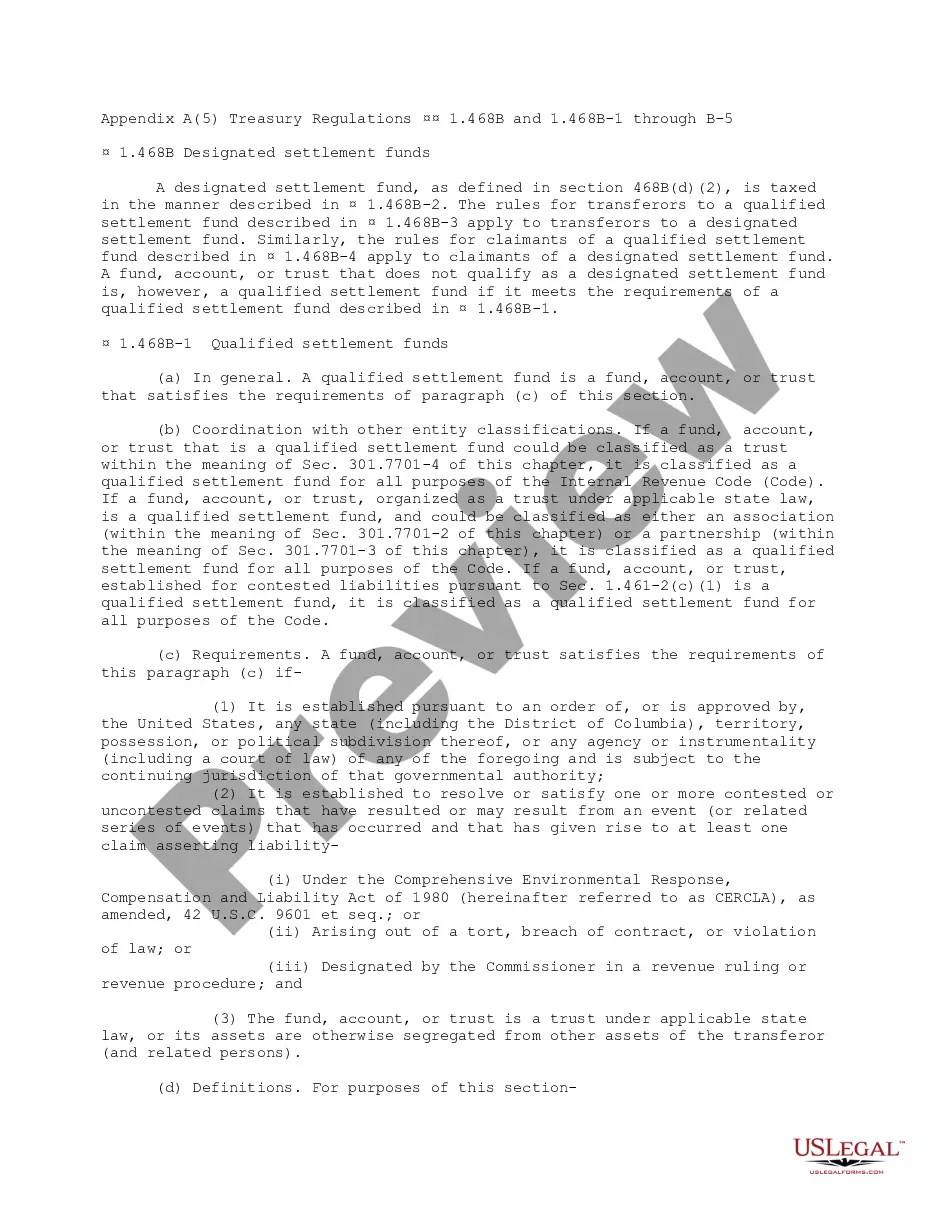
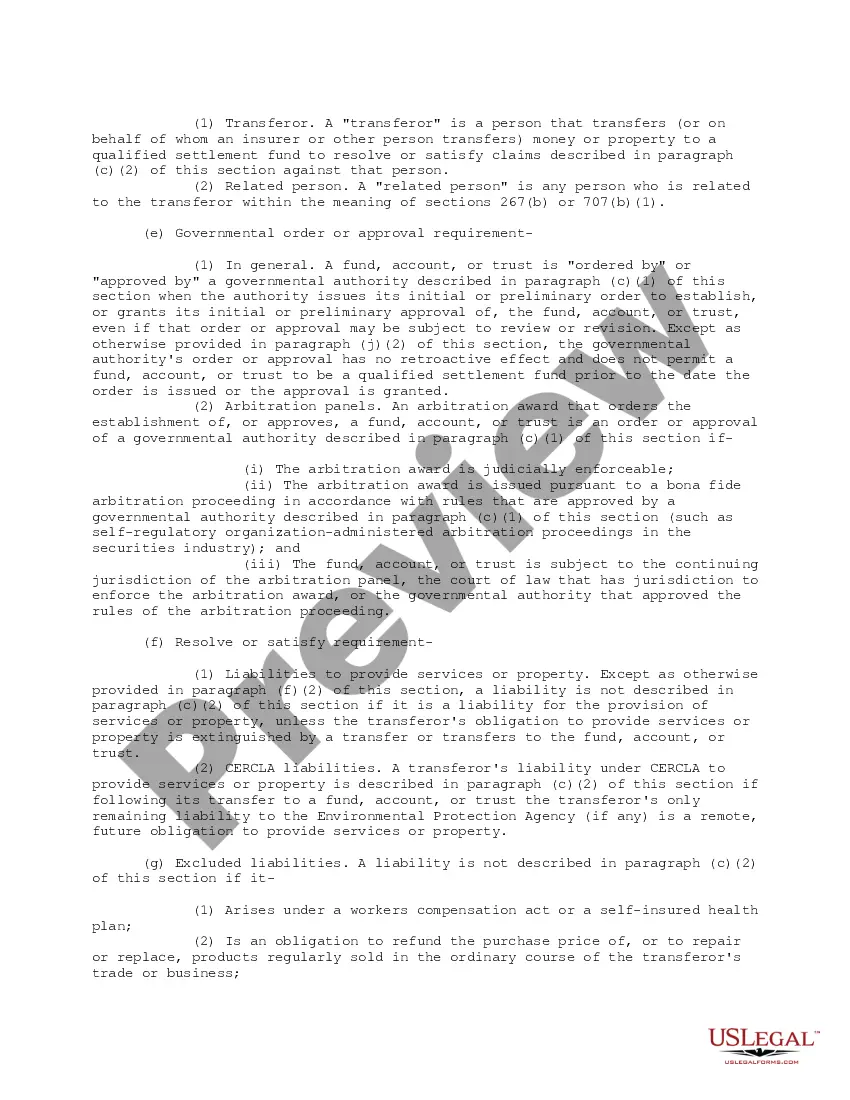
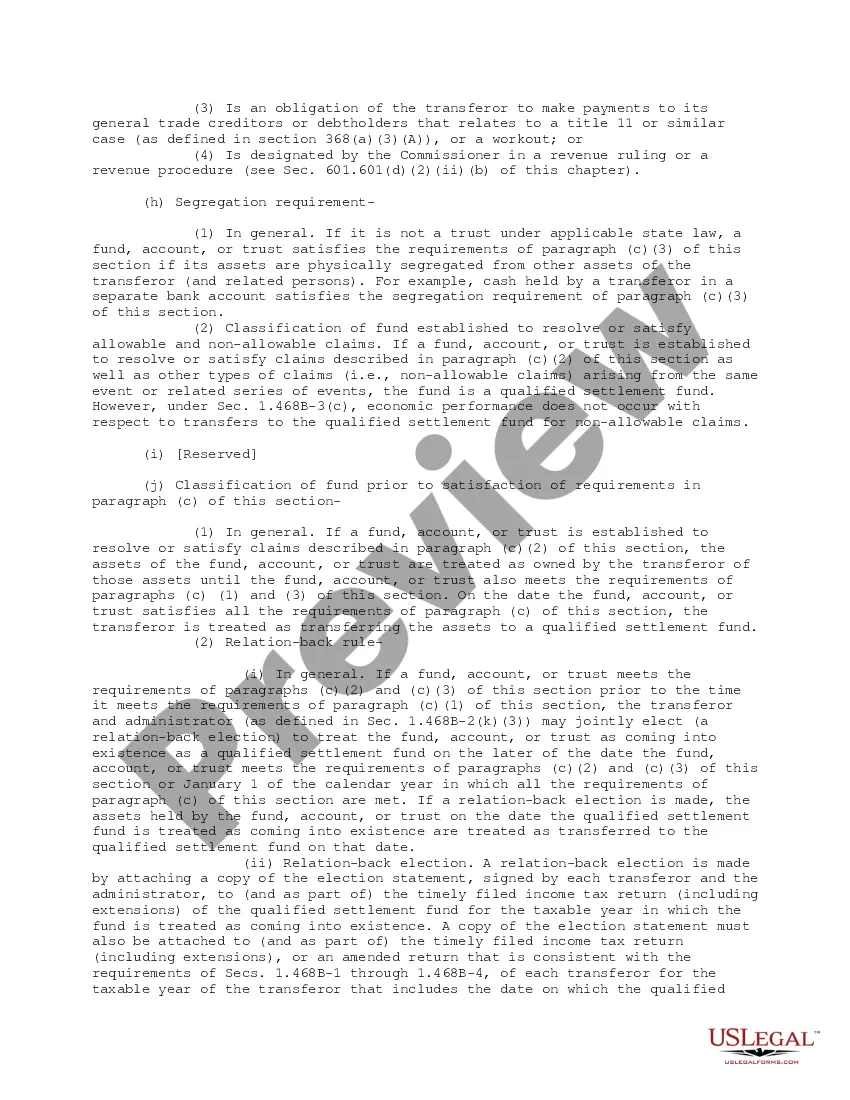
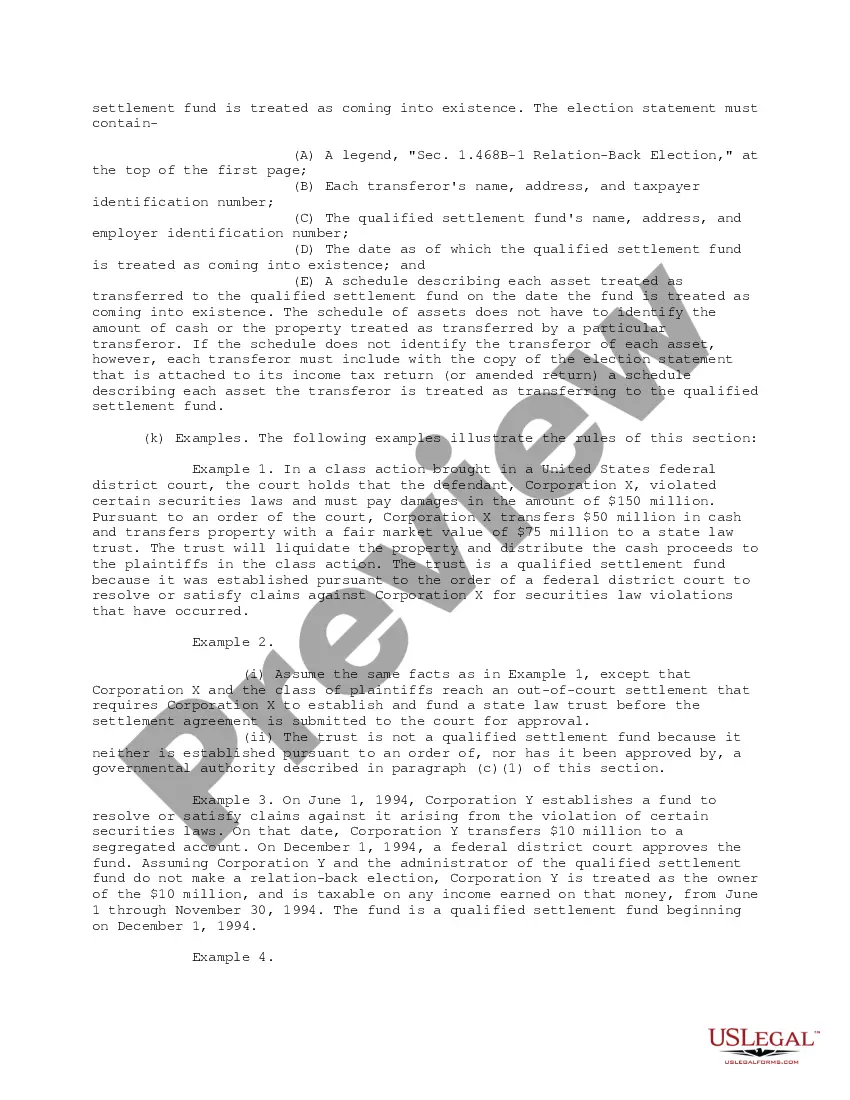
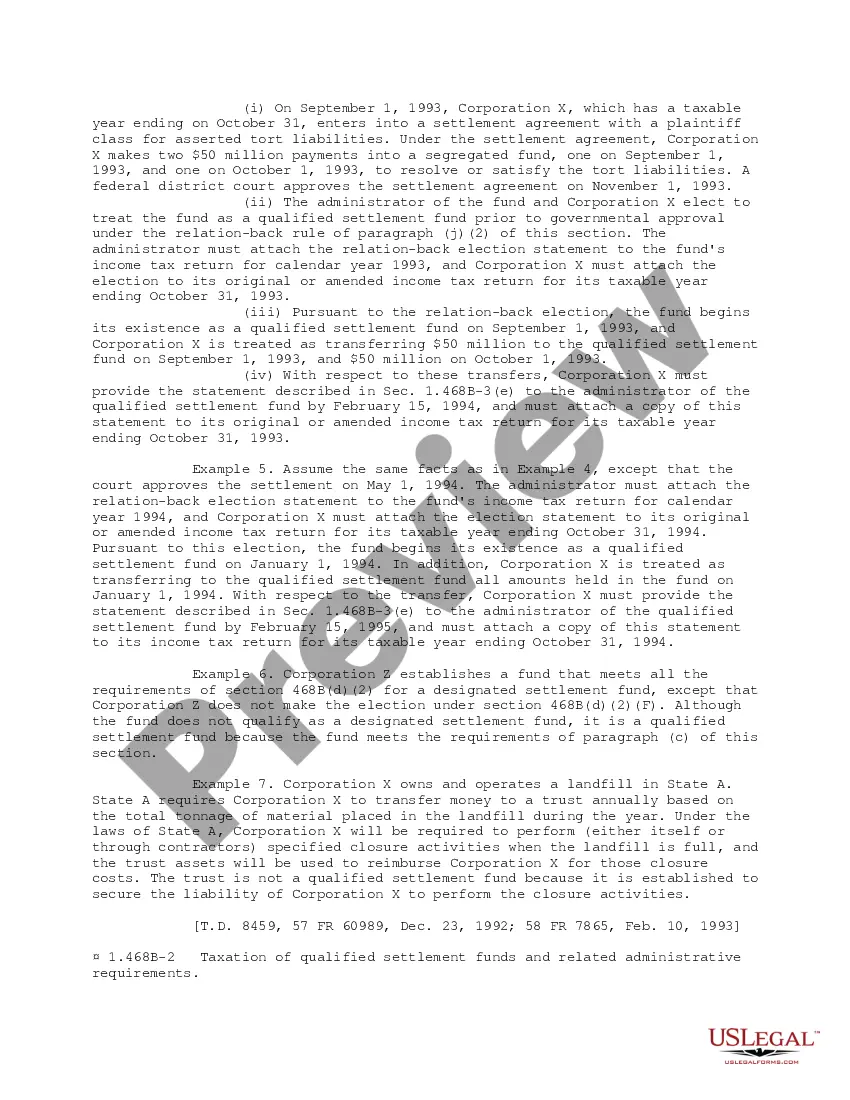
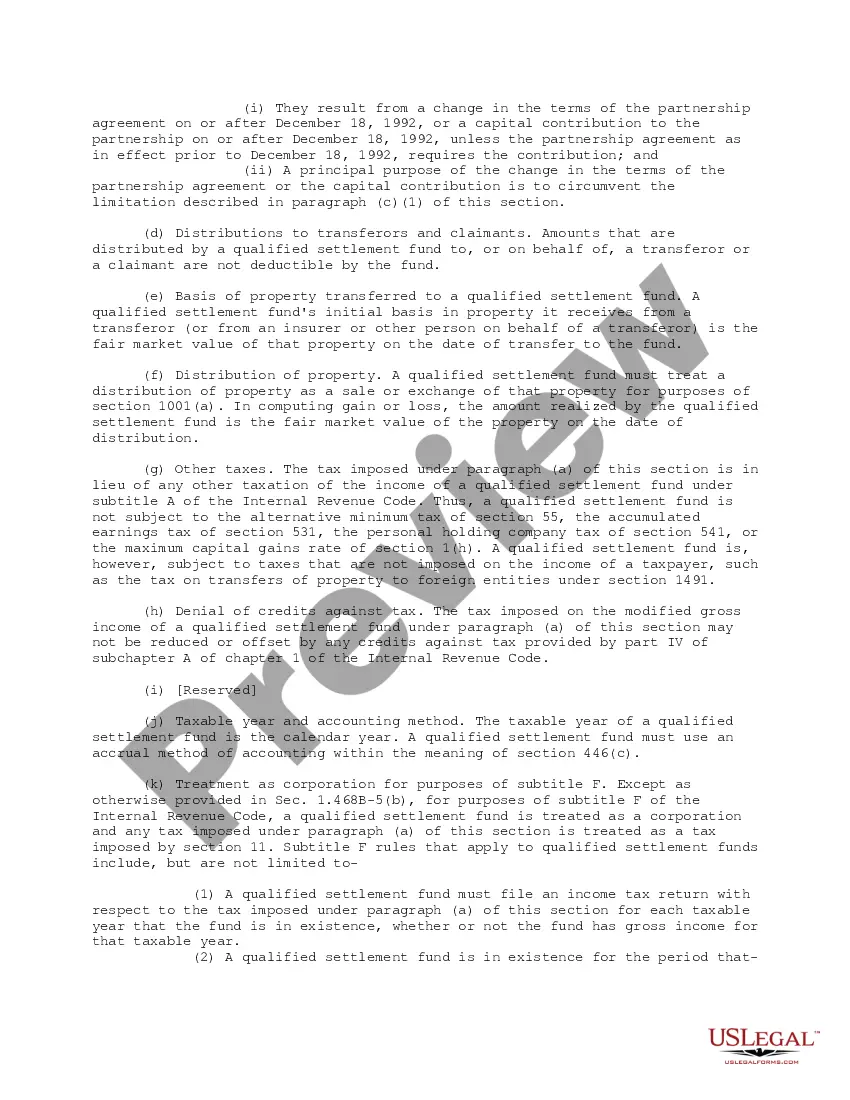
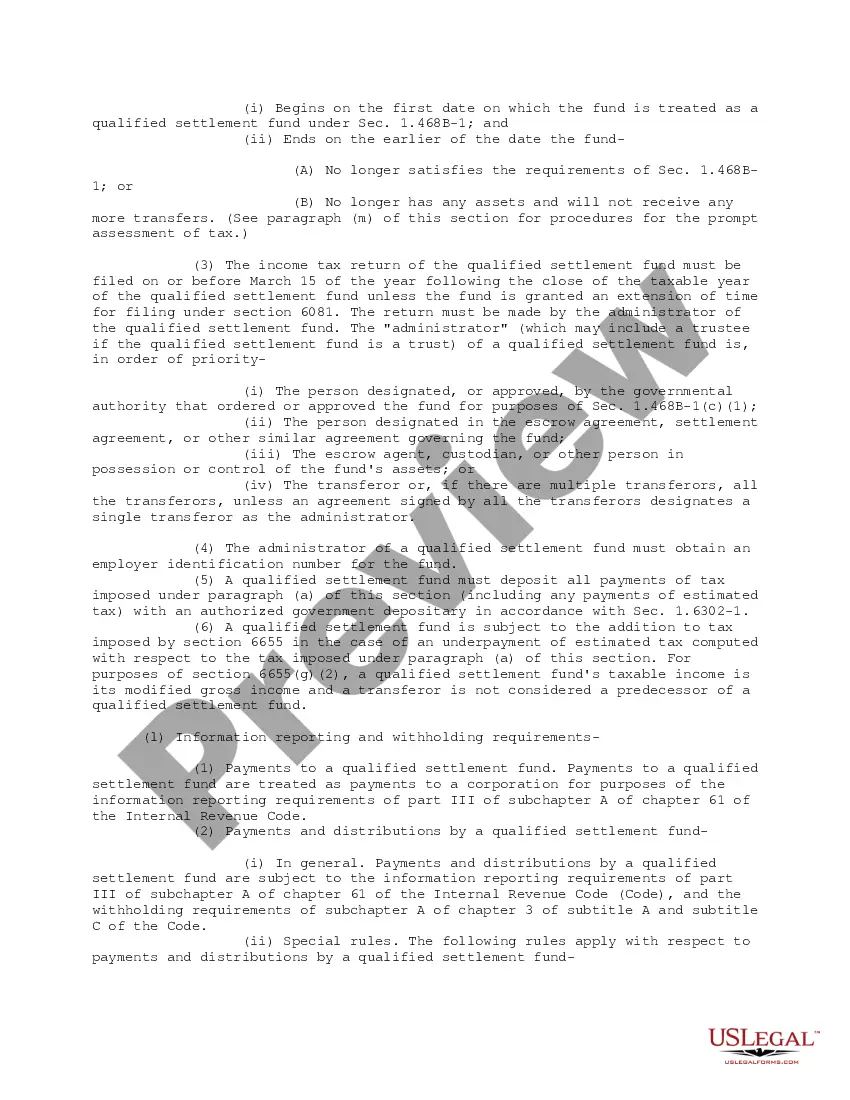
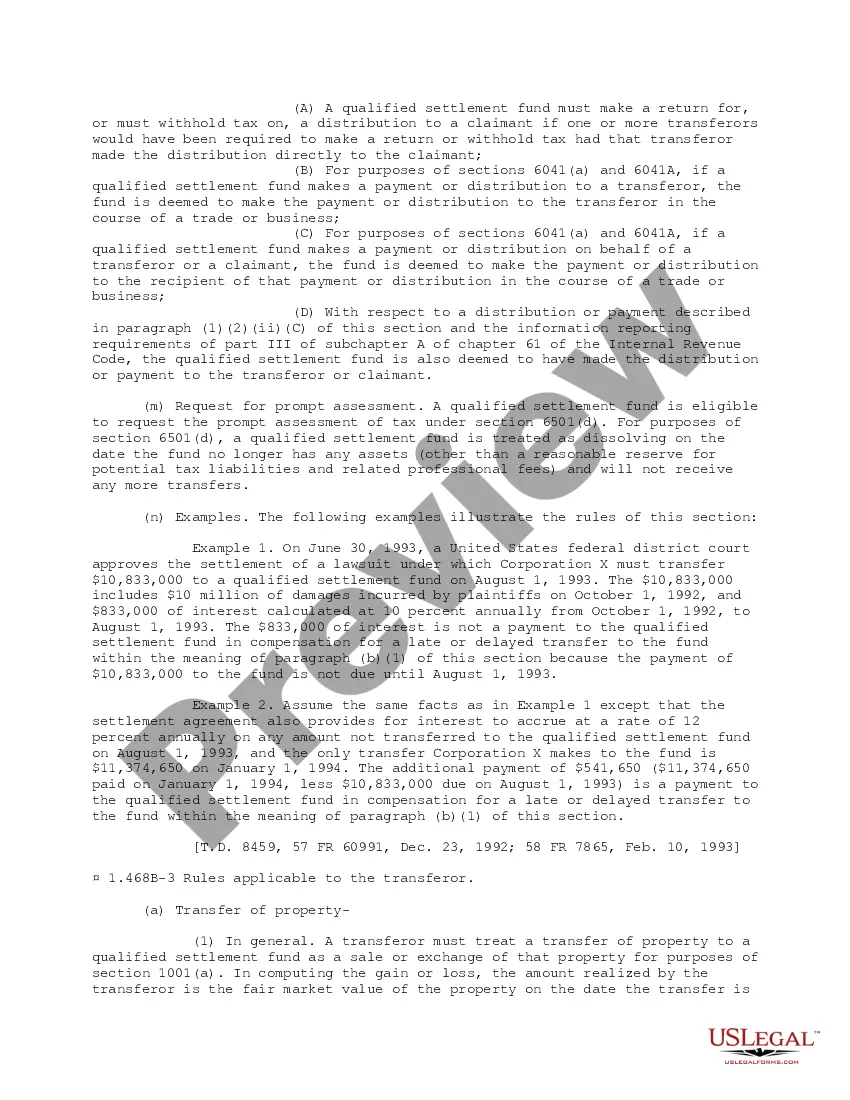
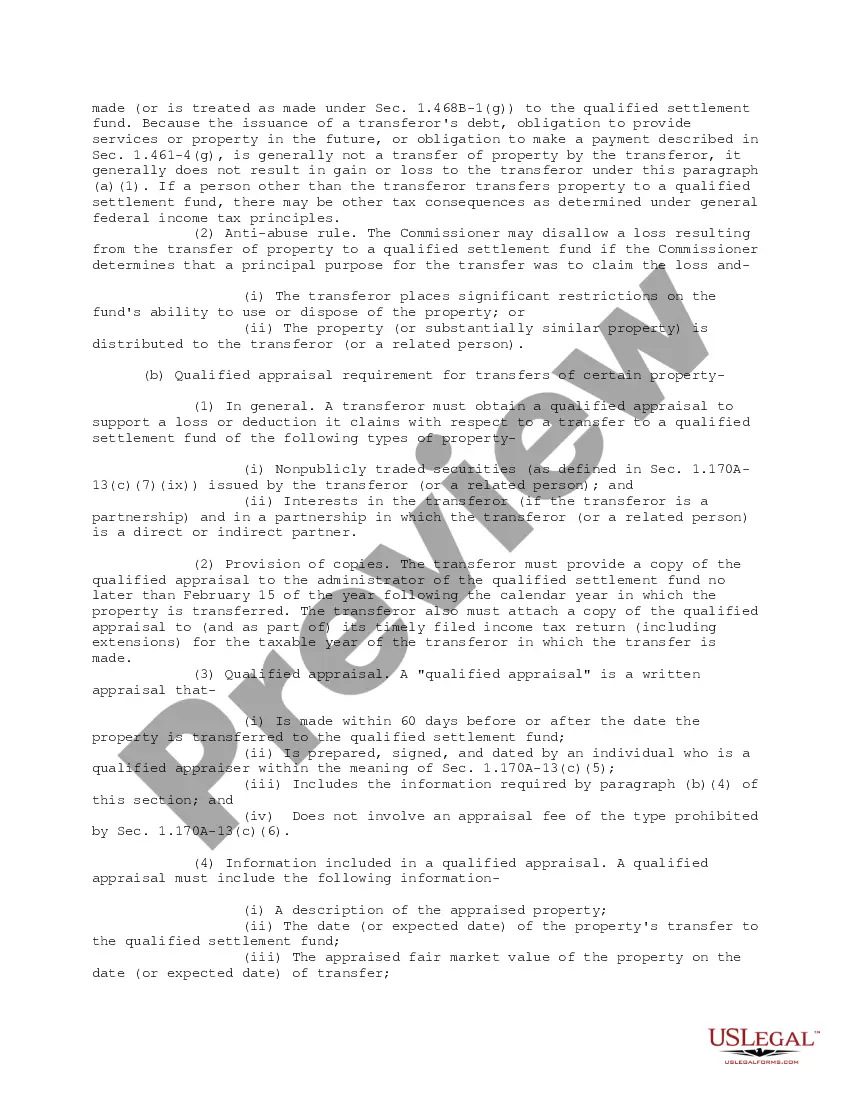
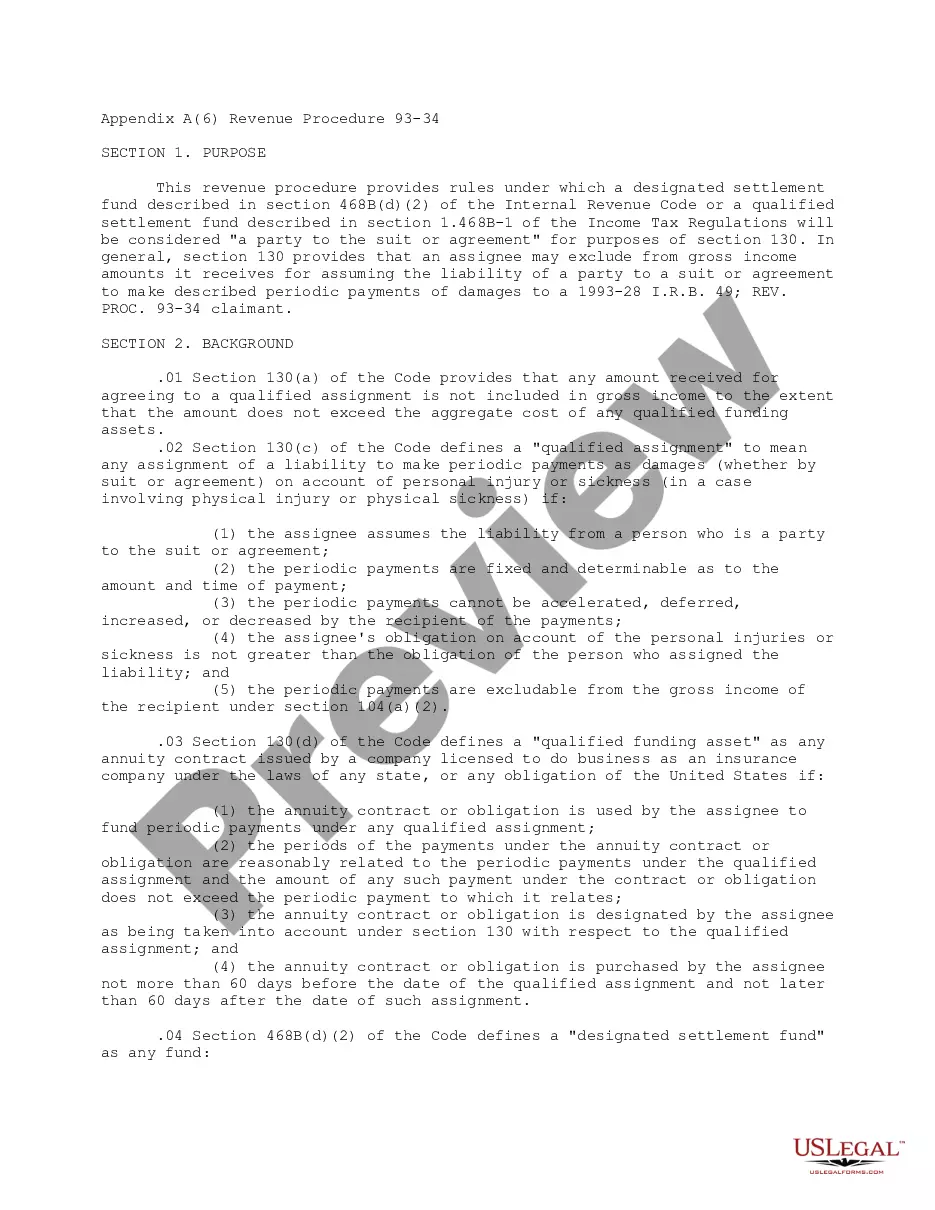
The Designated Settlement Funds Treasury Regulations (1.468 and 1.468B.1 through 1.468B.5) is a legal document that outlines the statutory guidelines related to designated settlement funds and qualified settlement funds. This form is crucial for entities engaging in the establishment of funds intended to resolve claims, ensuring proper tax treatment and adherence to federal regulations. Unlike generic settlement agreements, this form specifically addresses the tax implications, ensuring compliance with the Internal Revenue Code for both transferors and claimants involved in settlement proceedings.
Key parts of this document
- Definition of designated settlement and qualified settlement funds.
- Taxation rules applicable to qualified settlement funds.
- Requirements for establishing and maintaining a qualified settlement fund.
- Procedures and documentation needed for transfers to and distributions from the fund.
- Guidelines for economic performance related to liabilities addressed by the fund.



When this form is needed
This form is utilized when an organization or entity is establishing a designated settlement fund to resolve or satisfy claims, such as those arising from environmental liabilities or torts. It is appropriate for situations where claims are contested or uncontested, and it helps ensure that the tax implications are correctly managed under relevant sections of the Internal Revenue Code.
Who needs this form
- Entities or organizations involved in litigation that require resolution through a fund.
- Transferors looking to establish qualified settlement funds for tax benefits.
- Claimants who need assurance regarding the tax implications of their settlement funds.
How to prepare this document
- Identify the parties involved, including transferors and claimants.
- Specify the claims being resolved through the fund.
- Enter the necessary details regarding the establishment of the fund, including governmental approvals.
- Detail the segregation of assets as required by tax regulations.
- Complete the administrative requirements including any necessary appraisals or assessments for transferred property.
Is notarization required?
This form does not typically require notarization unless specified by local law. It is important to verify local requirements for additional signatures or endorsements to ensure the form's legal validity.
Get your form ready online
Our built-in tools help you complete, sign, share, and store your documents in one place.
Make edits, fill in missing information, and update formatting in US Legal Forms—just like you would in MS Word.
Download a copy, print it, send it by email, or mail it via USPS—whatever works best for your next step.
Sign and collect signatures with our SignNow integration. Send to multiple recipients, set reminders, and more. Go Premium to unlock E-Sign.
If this form requires notarization, complete it online through a secure video call—no need to meet a notary in person or wait for an appointment.
We protect your documents and personal data by following strict security and privacy standards.

Make edits, fill in missing information, and update formatting in US Legal Forms—just like you would in MS Word.

Download a copy, print it, send it by email, or mail it via USPS—whatever works best for your next step.

Sign and collect signatures with our SignNow integration. Send to multiple recipients, set reminders, and more. Go Premium to unlock E-Sign.

If this form requires notarization, complete it online through a secure video call—no need to meet a notary in person or wait for an appointment.

We protect your documents and personal data by following strict security and privacy standards.
Avoid these common issues
- Failing to obtain necessary governmental approvals before establishing the fund.
- Not segregating fund assets from other assets of the transferor.
- Inadequate documentation of the basis for property transferred to the fund.
- Not following proper procedures for reporting distributions to claimants.
Why complete this form online
- Convenience of immediate download and use without the need for physical copies.
- Editability allows for tailored adjustments based on specific case needs.
- Reliable access to updated legal guidelines ensuring compliance with current laws.
- Streamlined process for submission and record-keeping of settlement transactions.
Looking for another form?


Form popularity
FAQ
While the fund holds onto the payout from the defendant, the trustee will likely invest the funds in a secure, interest-bearing account. Because qualified settlement funds are separate tax entities they pay tax on any interest or dividend income.
There are only three requirements for establishing a QSF. It must be created by a court order with continuing jurisdiction over the QSF. i The trust is set up to resolve tort or other legal claims prescribed by the Treasury regulations. ii Finally, it must be a trust under applicable state law.
A Qualified Settlement Fund, or QSF, is a fund, account, or trust established under applicable state law. A court can order that the defendant (or insurer) pay the agreed settlement amount into a Qualified Settlement Fund "within the meaning of 468B-1 of the Treasury Regulations".
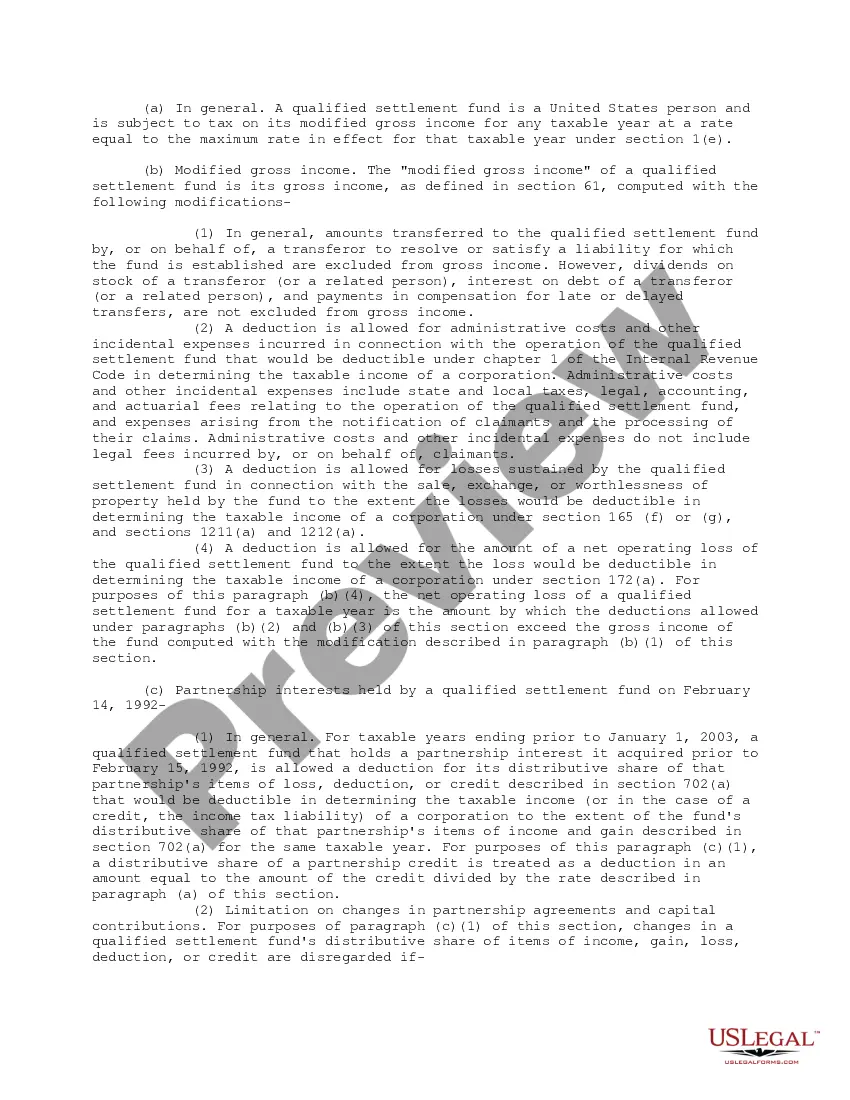
A qualified settlement fund is a United States person and is subject to tax on its modified gross income for any taxable year at a rate equal to the maximum rate in effect for that taxable year under section 1(e).
Settlement money and damages collected from a lawsuit are considered income, which means the IRS will generally tax that money, although personal injury settlements are an exception (most notably: car accident settlement and slip and fall settlements are nontaxable).
The Affected Investor Fund QSF is a Qualified Settlement Fund (QSF) under the Internal Revenue Code. Reported to the IRS for the tax year in which the payment is made.
A Qualified Settlement Fund (QSF), also referred to as a 468B Trust, is an exceptionally useful settlement tool that allows time to properly resolve mass tort litigation and other cases involving multiple claimants.