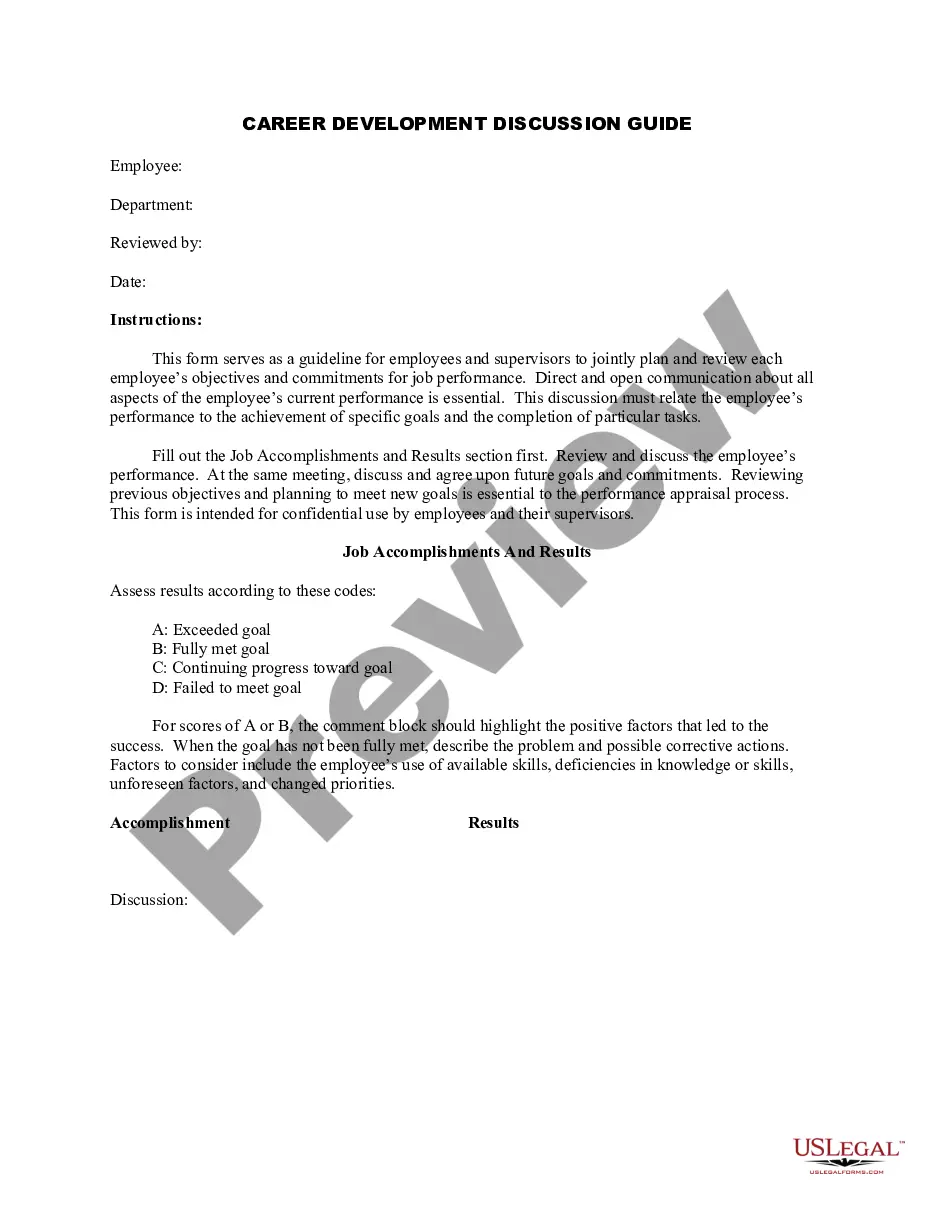
Planning and Development Review Discussion Guide
What is this form?
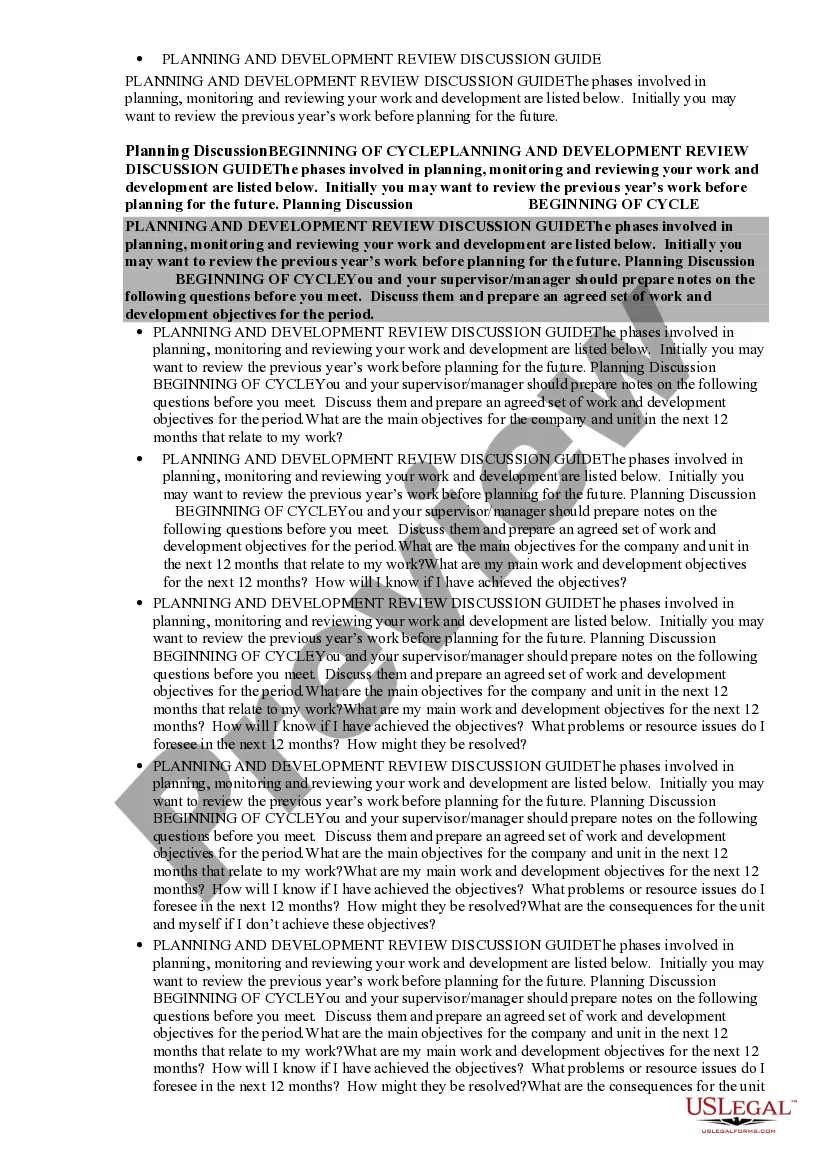
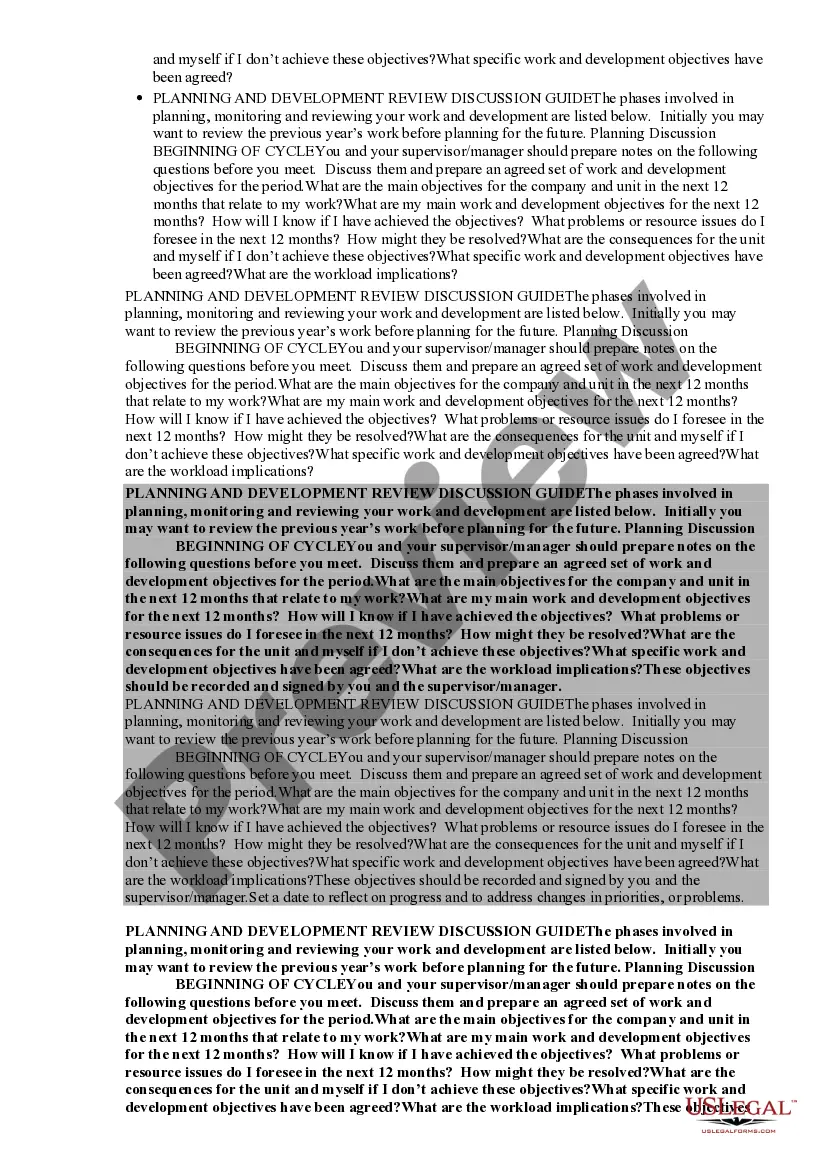
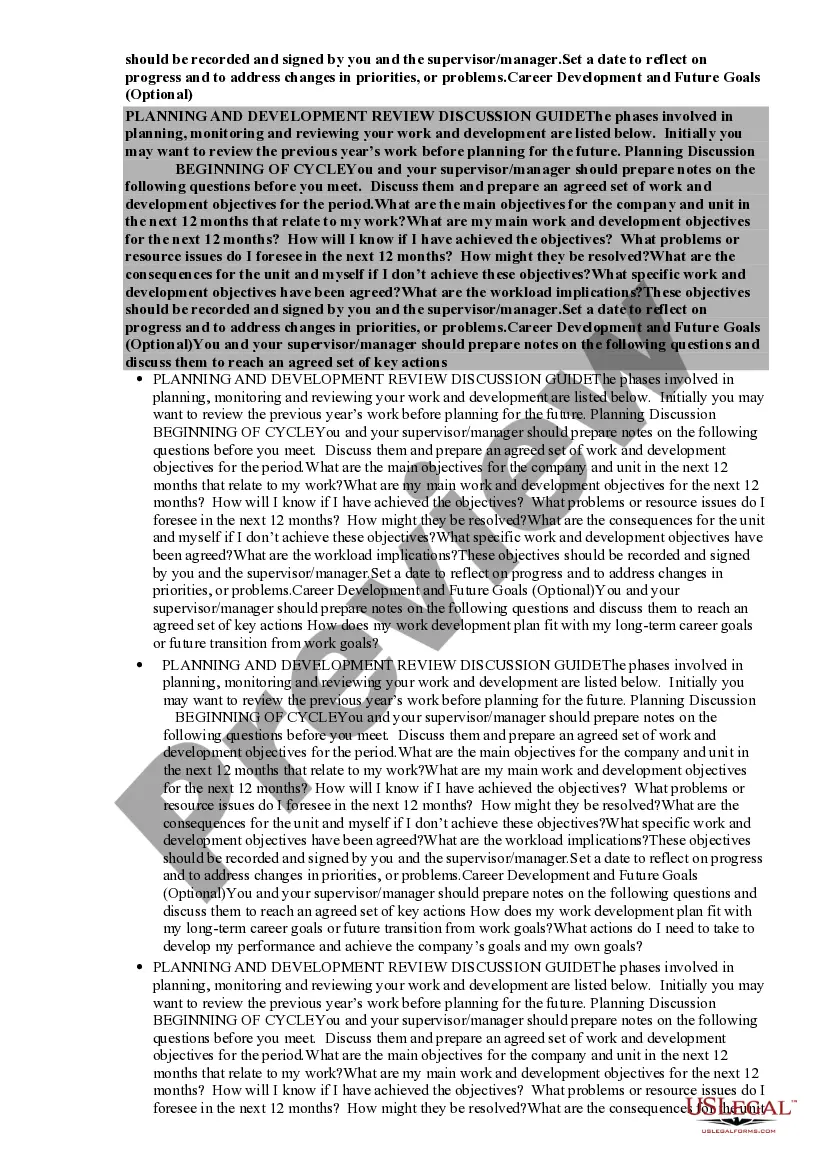
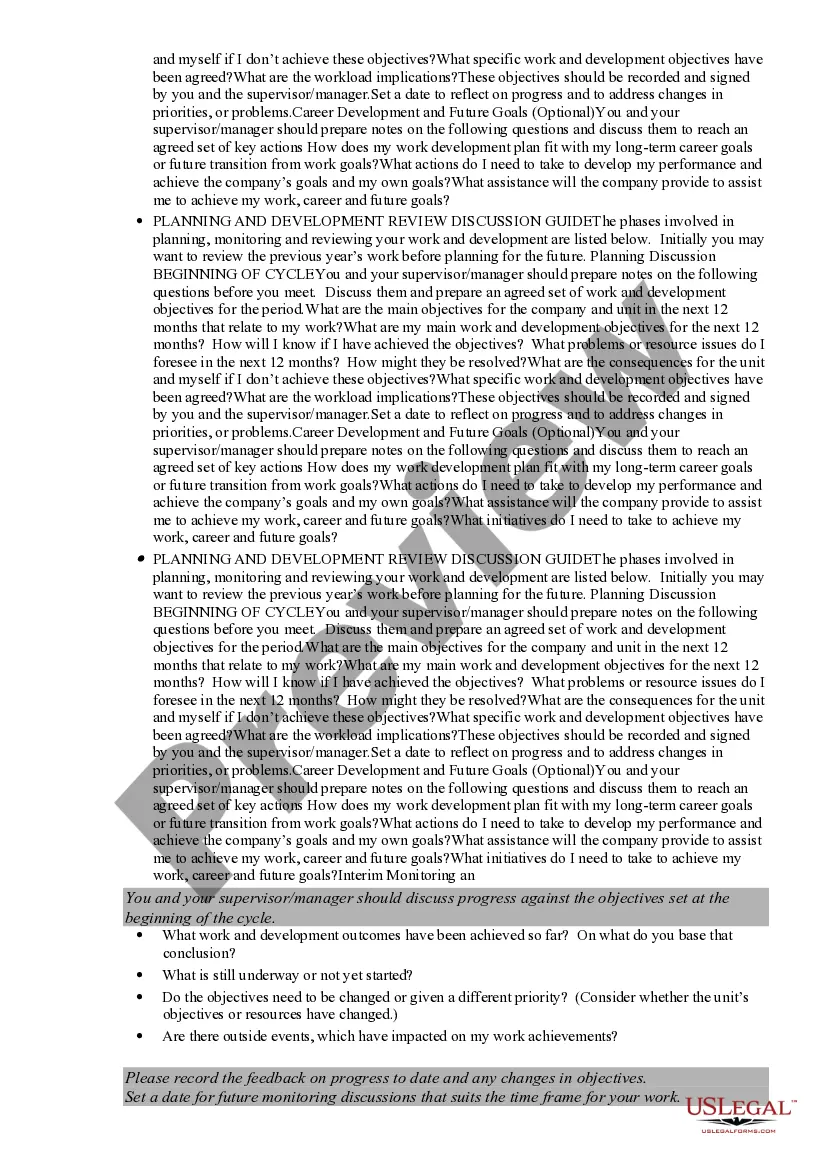
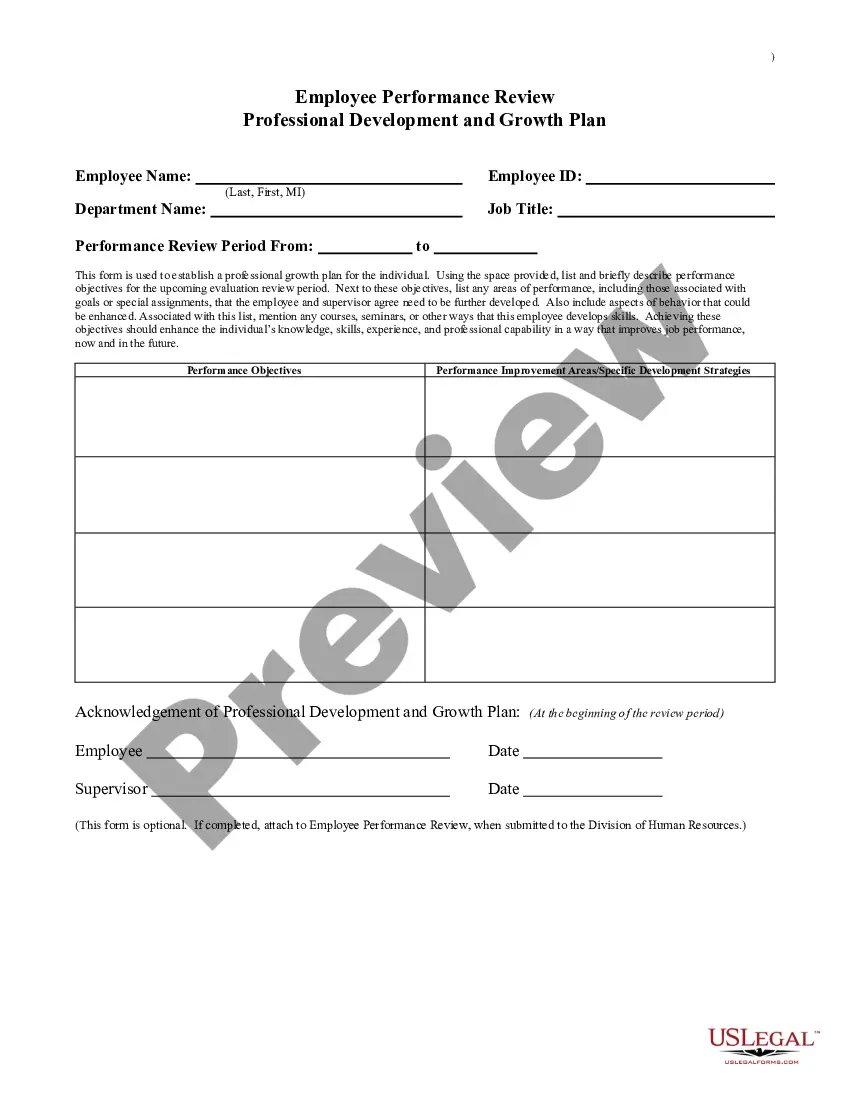
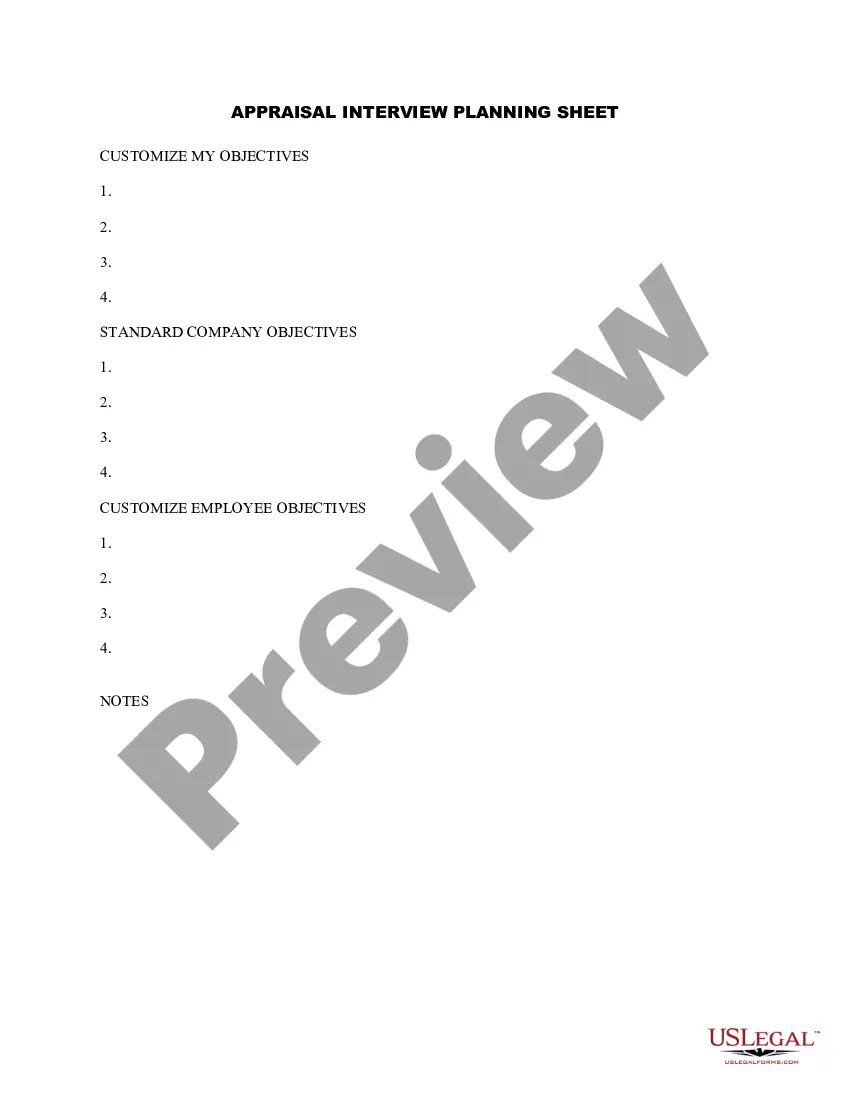
The Planning and Development Review Discussion Guide is a structured tool designed to facilitate discussions between employers and employees regarding career development planning. It assists in setting, monitoring, and reviewing development objectives, distinguishing itself from similar forms by its focus on collaborative goal-setting and continuous feedback throughout the planning cycle.
Main sections of this form
- Planning Discussion: Agreement on work and development objectives for the upcoming year.
- Career Development Goals: Discussion on aligning personal performance with long-term career aspirations.
- Interim Monitoring: Ongoing review of progress toward set objectives during the review cycle.
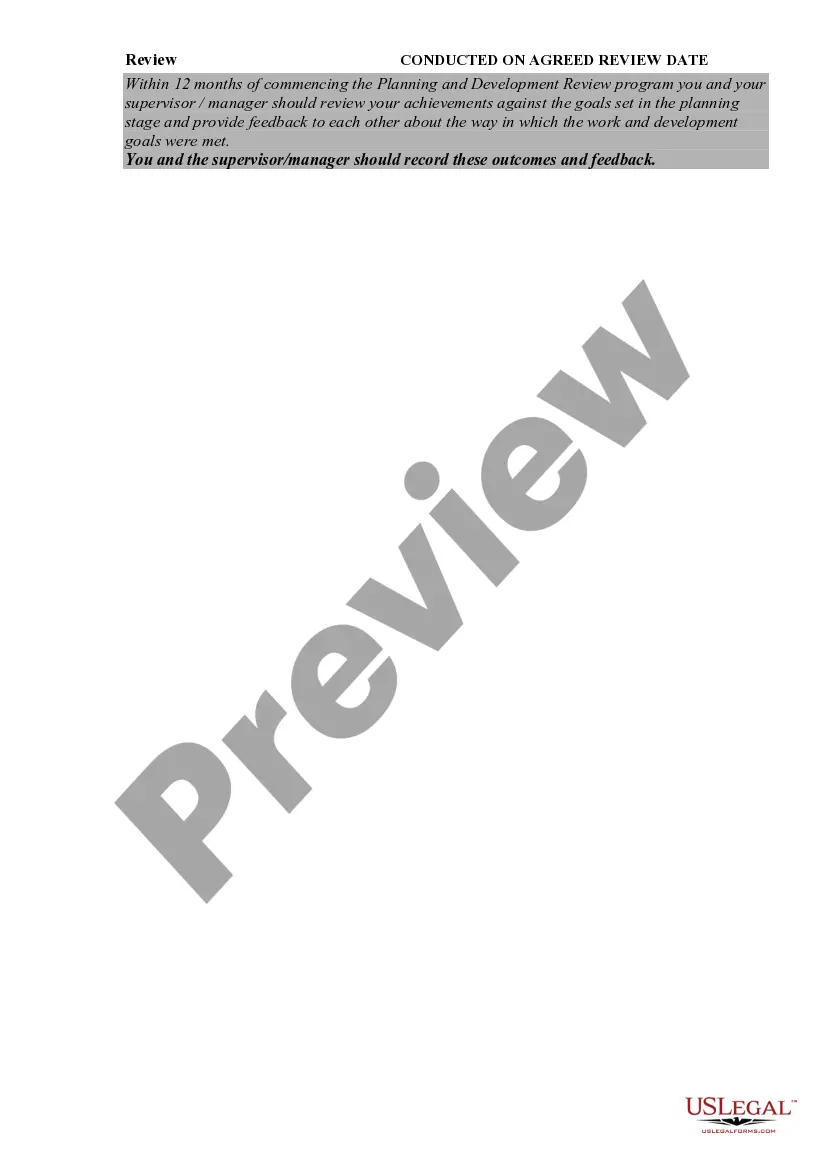
- Review Feedback: Evaluation of achievements against the initial goals, including mutual feedback between the employee and supervisor.
When to use this form
This form should be used at the beginning of a review cycle, typically once a year, to establish clear objectives and expectations. It is also useful for interim check-ins to ensure that both the employer and employee are aligned on progress and any necessary adjustments throughout the year.
Who needs this form
- Employees seeking to define and track their personal development goals.
- Supervisors or managers facilitating employee development discussions.
- Human Resources professionals involved in performance evaluation processes.
Completing this form step by step
- Identify the main objectives for the company and the relevant unit.
- Discuss and outline your personal work and development objectives.
- Record agreed-upon objectives and their implications on workload.
- Schedule interim meetings to monitor progress and adjust goals as necessary.
- Conduct a final review at the end of the cycle to evaluate achievements and provide feedback.
Notarization guidance
Notarization is generally not required for this form. However, certain states or situations might demand it. You can complete notarization online through US Legal Forms, powered by Notarize, using a verified video call available anytime.
Get your form ready online
Our built-in tools help you complete, sign, share, and store your documents in one place.
Make edits, fill in missing information, and update formatting in US Legal Forms—just like you would in MS Word.
Download a copy, print it, send it by email, or mail it via USPS—whatever works best for your next step.
Sign and collect signatures with our SignNow integration. Send to multiple recipients, set reminders, and more. Go Premium to unlock E-Sign.
If this form requires notarization, complete it online through a secure video call—no need to meet a notary in person or wait for an appointment.
We protect your documents and personal data by following strict security and privacy standards.

Make edits, fill in missing information, and update formatting in US Legal Forms—just like you would in MS Word.

Download a copy, print it, send it by email, or mail it via USPS—whatever works best for your next step.

Sign and collect signatures with our SignNow integration. Send to multiple recipients, set reminders, and more. Go Premium to unlock E-Sign.

If this form requires notarization, complete it online through a secure video call—no need to meet a notary in person or wait for an appointment.

We protect your documents and personal data by following strict security and privacy standards.
Mistakes to watch out for
- Failing to set specific and measurable objectives.
- Neglecting to schedule interim monitoring meetings.
- Not documenting discussions and agreements, which can lead to misunderstandings.
Benefits of completing this form online
- Convenience of accessing and managing development discussions from anywhere.
- Ability to easily edit and update objectives as needed.
- Secure storage of discussions and agreements in case of future reference.
Legal use & context
- This form serves as a framework for employee development discussions, enhancing accountability and clarity.
- While it is not legally binding, it can be used to support HR practices and employee reviews.
Key takeaways
- The Planning and Development Review Discussion Guide is essential for structured employee development conversations.
- Effective completion requires collaboration and ongoing communication between employees and supervisors.
- Regular monitoring and review can enhance employee satisfaction and performance alignment.
Looking for another form?

Form popularity
FAQ
Personal development reviews also know as a 200b'PDR Review' are key to making sure that development is happening.However you choose to hold them, personal development reviews allow employees and managers to identify learning and development opportunities, review progress and plan for future development.
Think about the work you've already done. Write a list of your strengths and weaknesses. Start setting your goals. Form a SMART action plan. Set aside time to evaluate and update your PDP.
Set aside time for your review. Find your original plan, with your goals and planned activities. For each planned activity, assess how far what you have done by way of activity was in line with your plan.
Identify performance or behavioral issues that need improvement. Explain the level of performance and behavior expected. Supply helpful suggestions for employee improvement. Schedule progress meetings with the employee. Outline consequences for not meeting standards.
Step 1: Identify Program Goals and Objectives. Step 2: Define Indicators. Step 3: Define Data Collection Methods and TImeline. Step 4: Identify M&E Roles and Responsibilities. Step 5: Create an Analysis Plan and Reporting Templates. Step 6: Plan for Dissemination and Donor Reporting.
Set aside time for your review. Find your original plan, with your goals and planned activities. For each planned activity, assess how far what you have done by way of activity was in line with your plan.
Outline and discuss performance goals. You should also talk about developmental goals, which are things you strive to accomplish. Explain how you will accomplish those goals. Include an assessment of the specific performance goals outlined at the beginning of the review period, and how well you met them.
Provide regular, informal feedback. While performance reviews typically happen once or twice a year, feedback should not be limited to those short review periods. Be honest. Do it face to face. Use tangible, pertinent examples. End on a positive note. Choose your words with care.