Letter for Performance Improvement Plan - Simple
Understanding this form
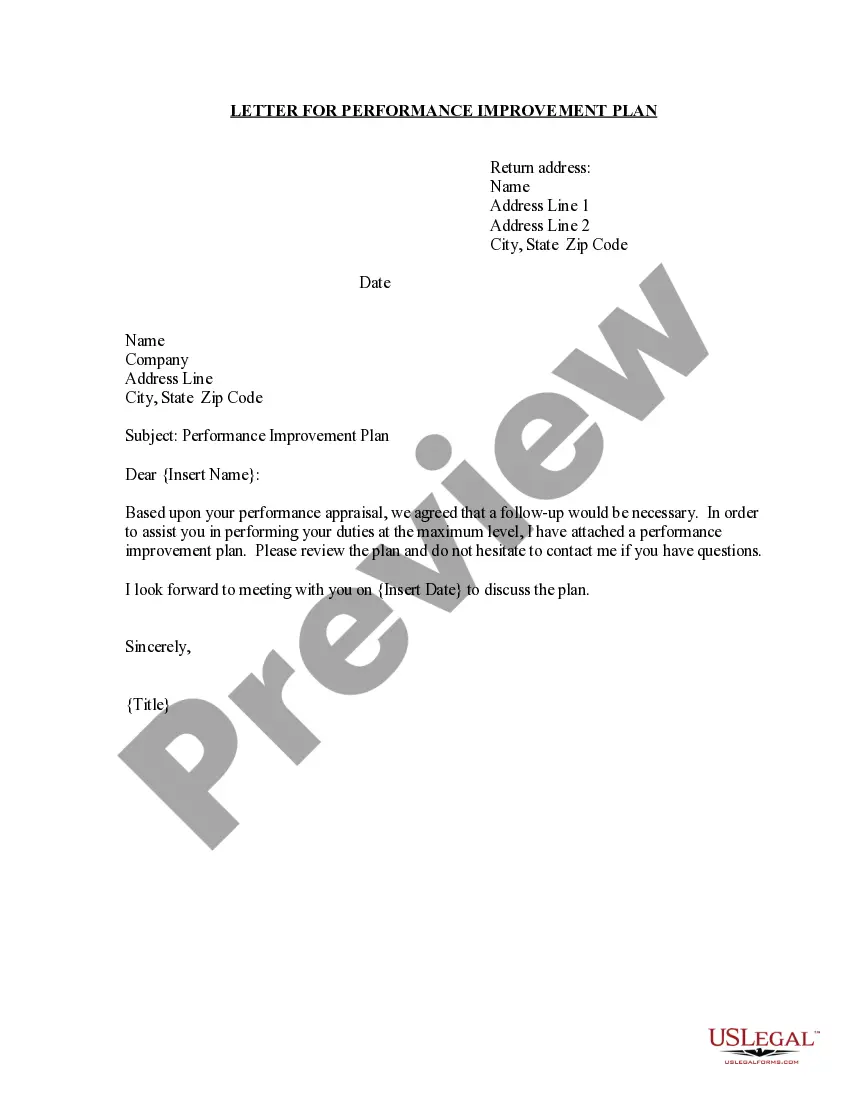
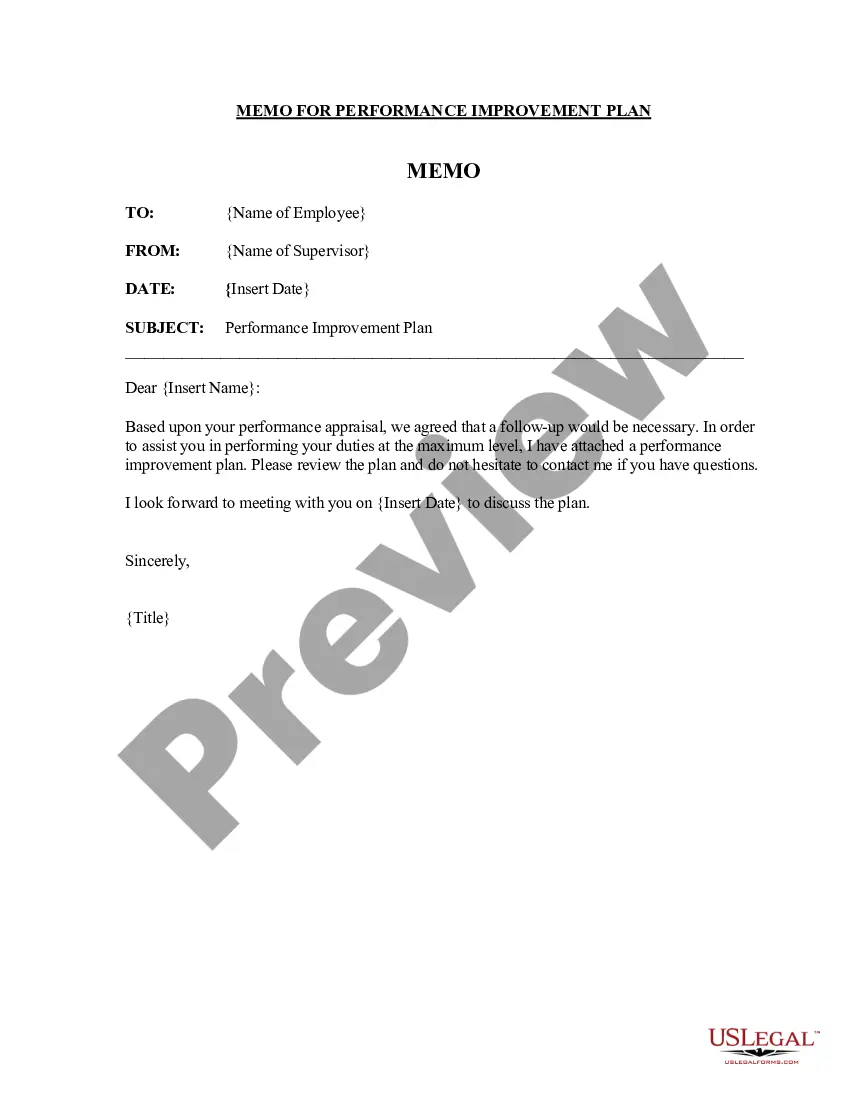
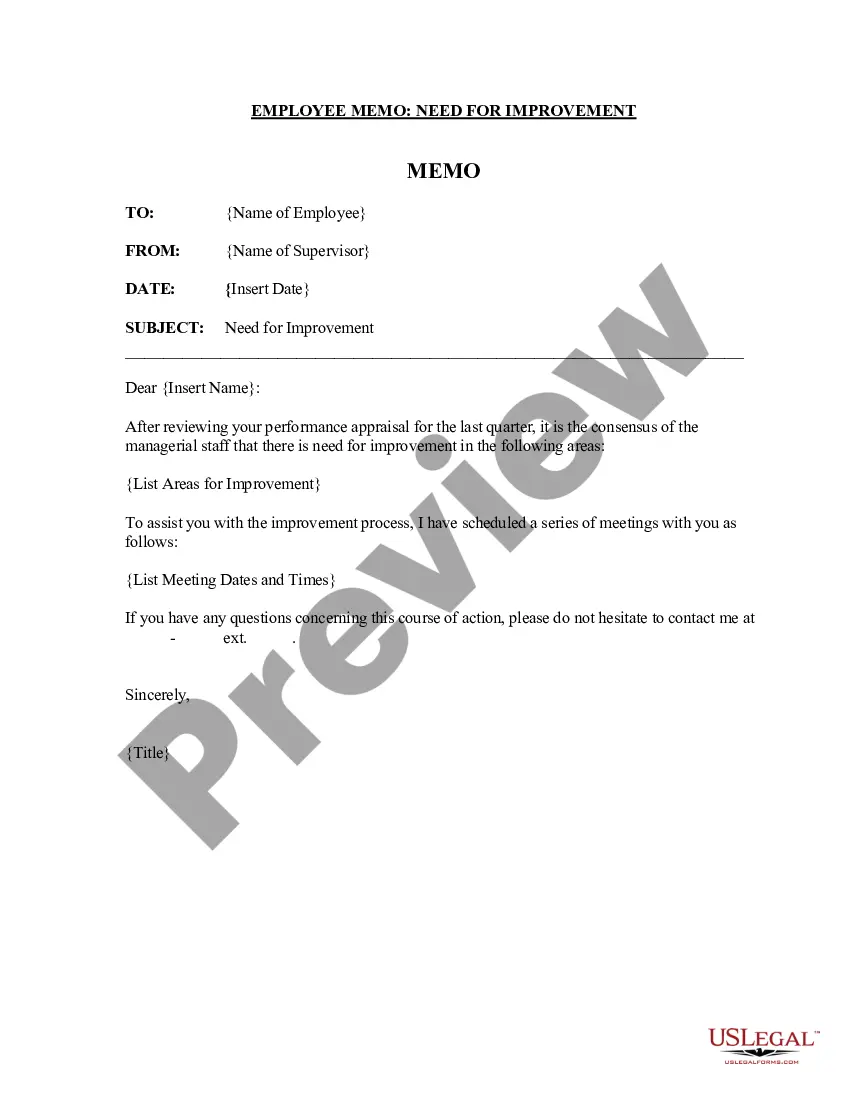
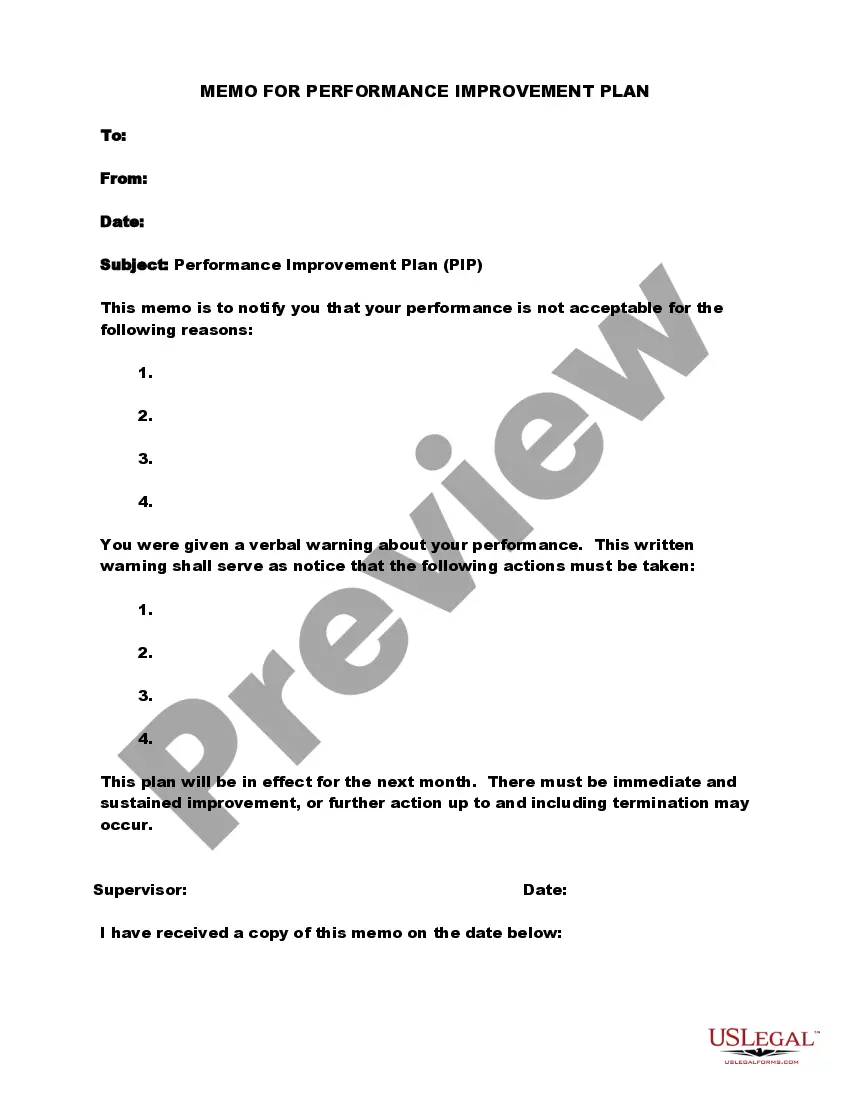
The Letter for Performance Improvement Plan - Simple is a formal document used by supervisors to address performance issues with employees. This letter serves as an initiation of dialogue regarding the need for improved performance, aiming to assist the employee in enhancing their job responsibilities. Unlike other performance-related letters, this document specifically attaches a performance improvement plan, offering a structured approach for discussion and development.
Form components explained
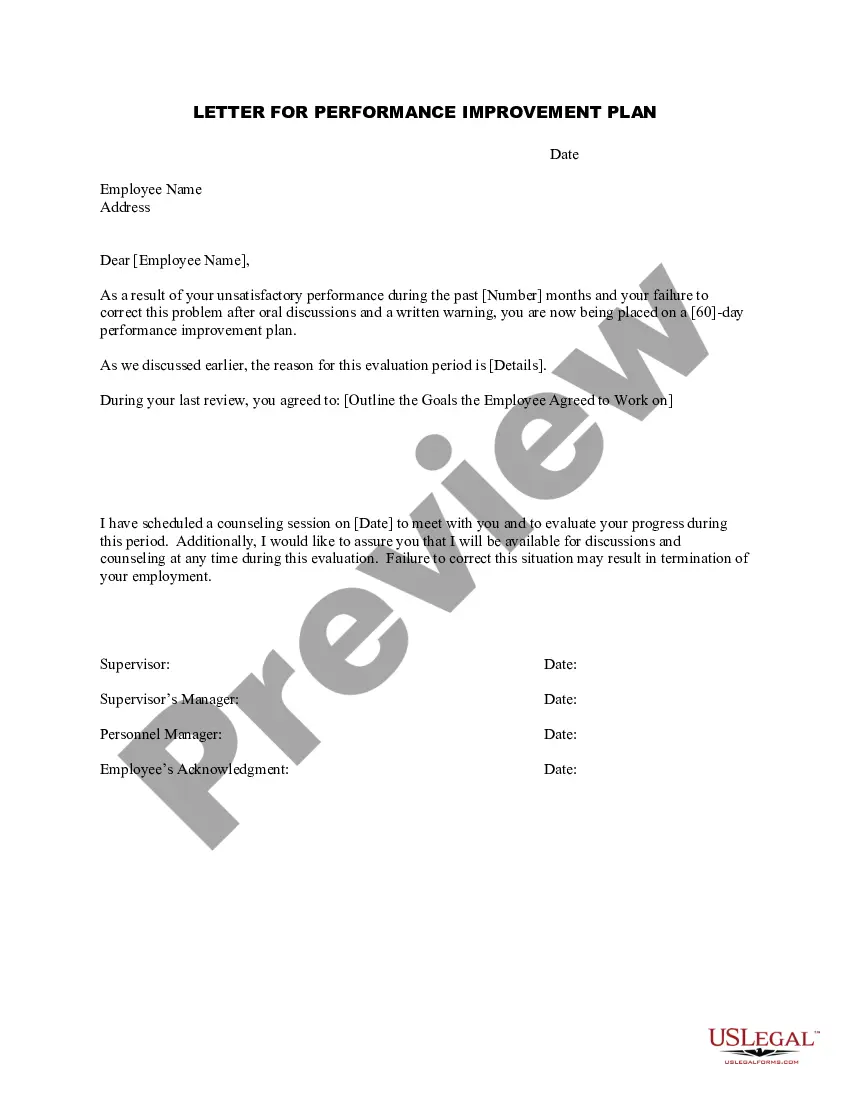
- Return Address: Include the supervisor's name and address.
- Date: Specify the date of the letter.
- Recipient's Information: Include the employee's name and address.
- Subject Line: Clearly state "Performance Improvement Plan."
- Greeting: Address the employee by name.
- Body Content: Discuss the performance appraisal and attach the performance improvement plan.
- Closing: Suggest a meeting date to discuss the plan and provide contact information.
When to use this form
This letter should be used when a supervisor identifies performance issues during an appraisal and feels the need for structured feedback. It is particularly useful when the supervisor wants to create a formalized method for addressing performance gaps and aiding the employee's improvement in their role.
Intended users of this form
The intended audience for this letter includes:
- Supervisors or managers responsible for employee performance.
- HR representatives overseeing performance management processes.
- Any organizational leader needing to communicate performance expectations clearly.
How to prepare this document
To complete the Letter for Performance Improvement Plan - Simple, follow these steps:
- Identify the sender's return address and contact details.
- Enter the date when the letter is issued.
- Fill in the employee's name and address in the designated sections.
- Draft the body of the letter, highlighting the need for improved performance and attaching the specific performance improvement plan.
- Suggest a specific date for a follow-up meeting to discuss the plan further.
- Sign the letter with the supervisor's title.
Notarization guidance
This form does not typically require notarization unless specified by local law. Ensure that you comply with any specific regulations in your jurisdiction when utilizing this form.
Get your form ready online
Our built-in tools help you complete, sign, share, and store your documents in one place.
Make edits, fill in missing information, and update formatting in US Legal Forms—just like you would in MS Word.
Download a copy, print it, send it by email, or mail it via USPS—whatever works best for your next step.
Sign and collect signatures with our SignNow integration. Send to multiple recipients, set reminders, and more. Go Premium to unlock E-Sign.
If this form requires notarization, complete it online through a secure video call—no need to meet a notary in person or wait for an appointment.
We protect your documents and personal data by following strict security and privacy standards.

Make edits, fill in missing information, and update formatting in US Legal Forms—just like you would in MS Word.

Download a copy, print it, send it by email, or mail it via USPS—whatever works best for your next step.

Sign and collect signatures with our SignNow integration. Send to multiple recipients, set reminders, and more. Go Premium to unlock E-Sign.

If this form requires notarization, complete it online through a secure video call—no need to meet a notary in person or wait for an appointment.

We protect your documents and personal data by following strict security and privacy standards.
Common mistakes to avoid
- Failing to personalize the letter with the employee's name.
- Not attaching the performance improvement plan mentioned in the letter.
- Using vague language that does not clearly outline performance issues.
- Neglecting to suggest a meeting date for further discussion.
Why complete this form online
- Convenience: Easily downloadable and customizable for individual needs.
- Editability: Simple to modify for specific employee situations or organizational policies.
- Trustworthy: Drafted by licensed attorneys ensuring legal soundness.
Legal use & context
- This form is a crucial tool in documenting performance issues, creating a record for potential future actions.
- Utilizing this letter may help protect the organization in case of disputes regarding the employee's performance.
Quick recap
- The Letter for Performance Improvement Plan is essential for formalizing performance discussions.
- It should clearly outline the issues and the next steps for improvement.
- Using this letter helps to ensure a fair process for addressing employee performance.
- Adjust the letter as necessary to meet local legal requirements.
Looking for another form?







Form popularity
FAQ
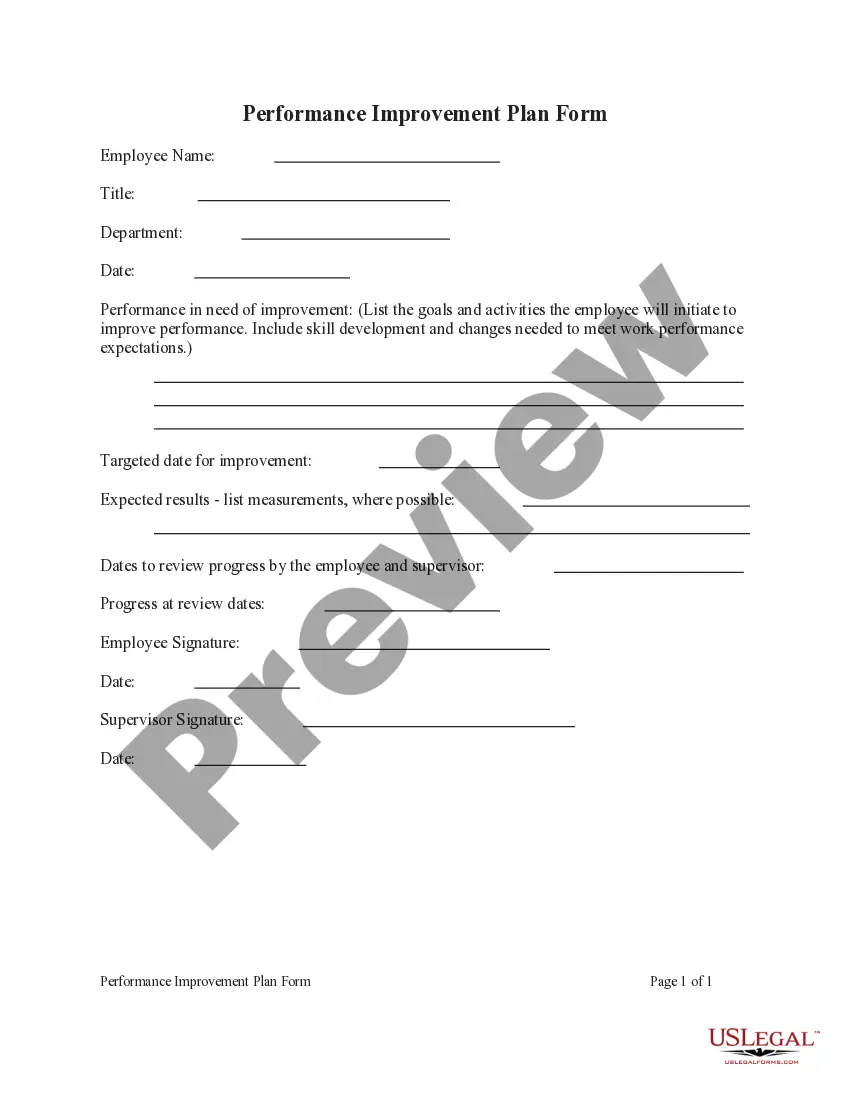
A performance improvement plan (PIP), also known as a performance action plan, is a tool to give an employee with performance deficiencies the opportunity to succeed. It may be used to address failures to meet specific job goals or to ameliorate behavior-related concerns.
1Step 1: Identify if a PIP is needed.2Step 2: Focus on behaviors.3Step 3: Provide proof with specific examples.4Step 4: List your expectations.5Step 5: Offer resources.6Step 6: Create a timeline.7Step 7: Sign off on it.
Be Punctual at Work, Meetings, and Events.Maintain a Healthy Diet and Exercise Regularly.Take Initiative.Improve Your Work Quality.Request (and Utilize) Feedback.Develop Job Knowledge and Skills.Support and Advance Your Organization's Vision, Mission, and Values.15 Performance Goals For Delivering Uncommon Results At Work\nwww.lifehack.org > performance-goals
Identify the performance/behavior that needs improving. Provide specific examples for reasoning. Outline expected standard. Identify training and support. Schedule check-ins and review points. Sign and acknowledge.
Specific and measurable objectives that are achievable, relevant and time-bound (otherwise known as SMART goals). PIPs usually last 30, 60 or 90 days, depending on how long it would reasonably take to improve the specific issue.
Identify the performance/behavior that needs improving. Provide specific examples for reasoning. Outline expected standard. Identify training and support. Schedule check-ins and review points. Sign and acknowledge.
Identify performance or behavioral issues that need improvement. Explain the level of performance and behavior expected. Supply helpful suggestions for employee improvement. Schedule progress meetings with the employee. Outline consequences for not meeting standards.
Step 1: Identify if a PIP is needed. Step 2: Focus on behaviors. Step 3: Provide proof with specific examples. Step 4: List your expectations. Step 5: Offer resources. Step 6: Create a timeline. Step 7: Sign off on it.
Achievements. Productivity. Communication skills. Teamwork. Creativity and Innovation. Flexibility and Problem-solving.