Employee Memo - Need for Improvement
Understanding this form
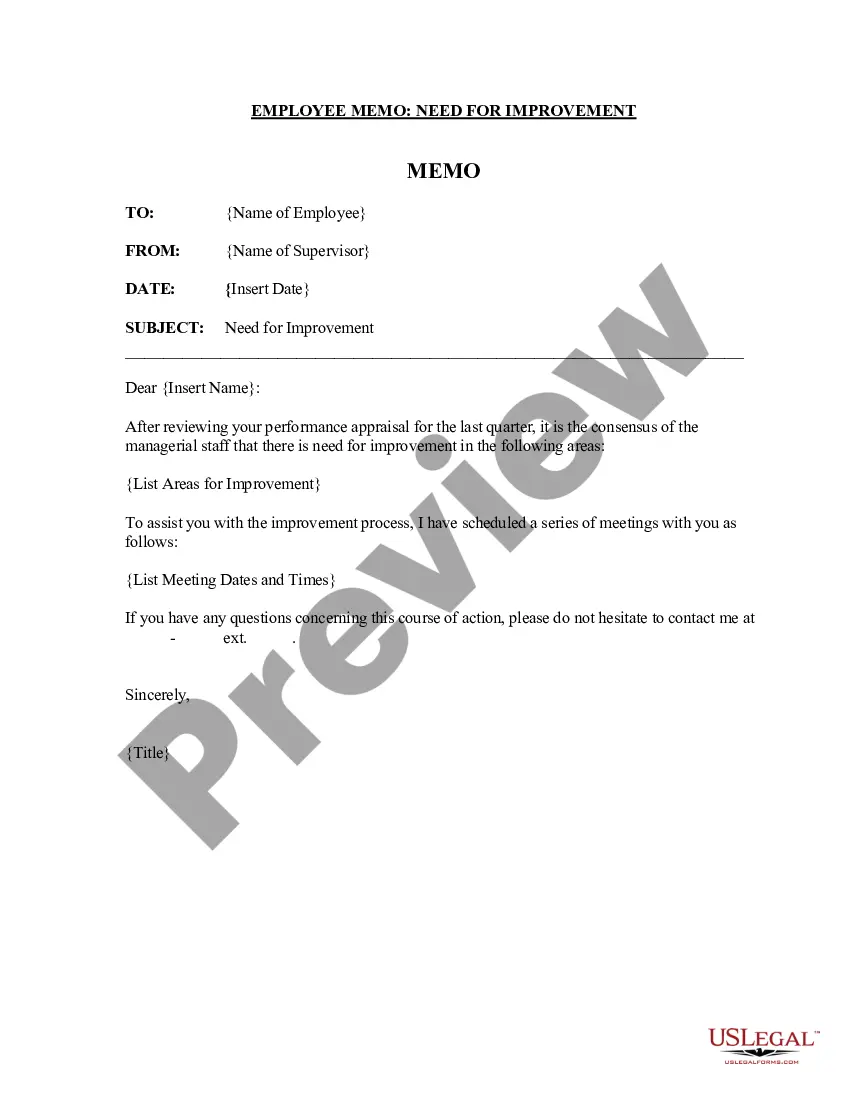
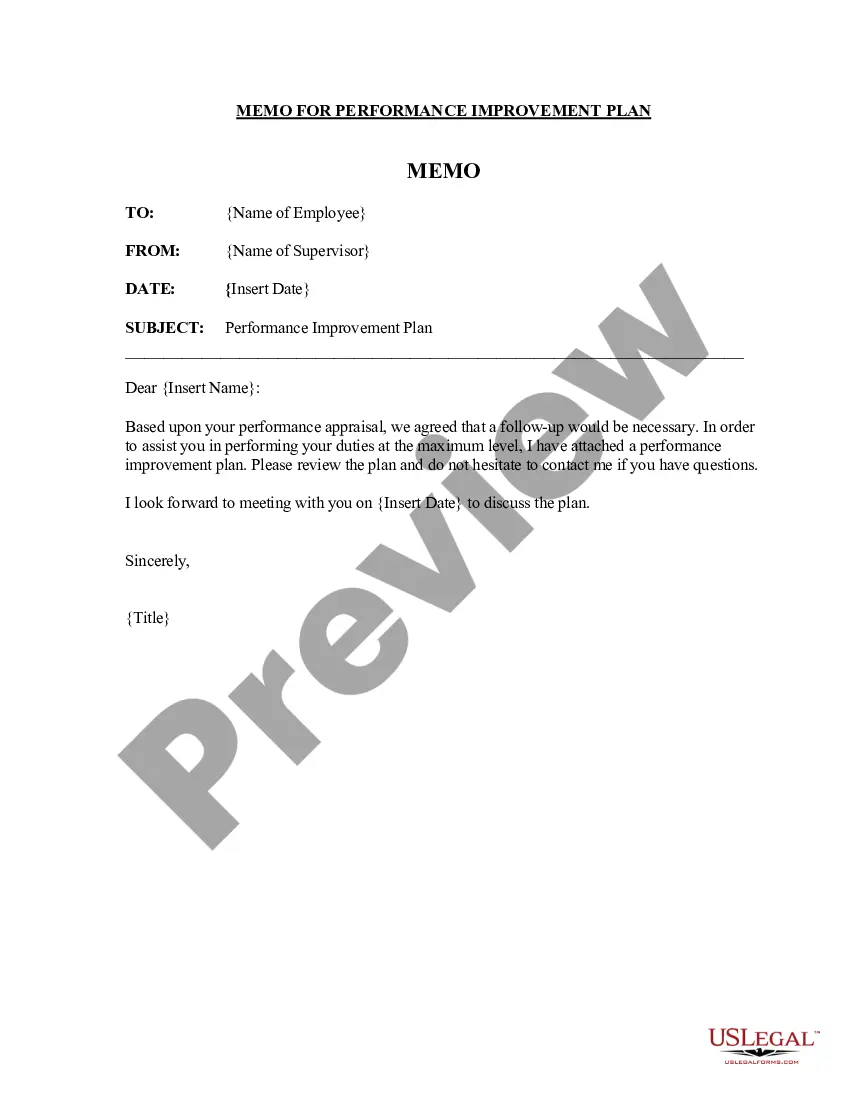
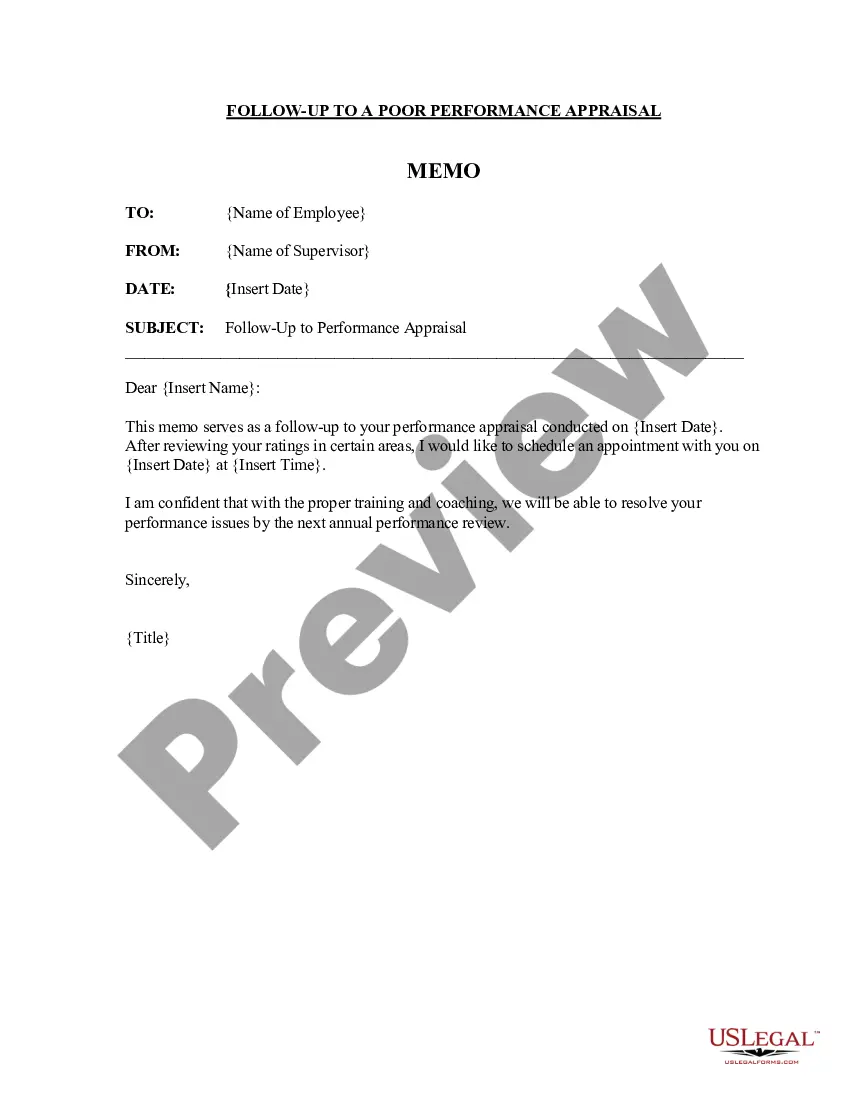
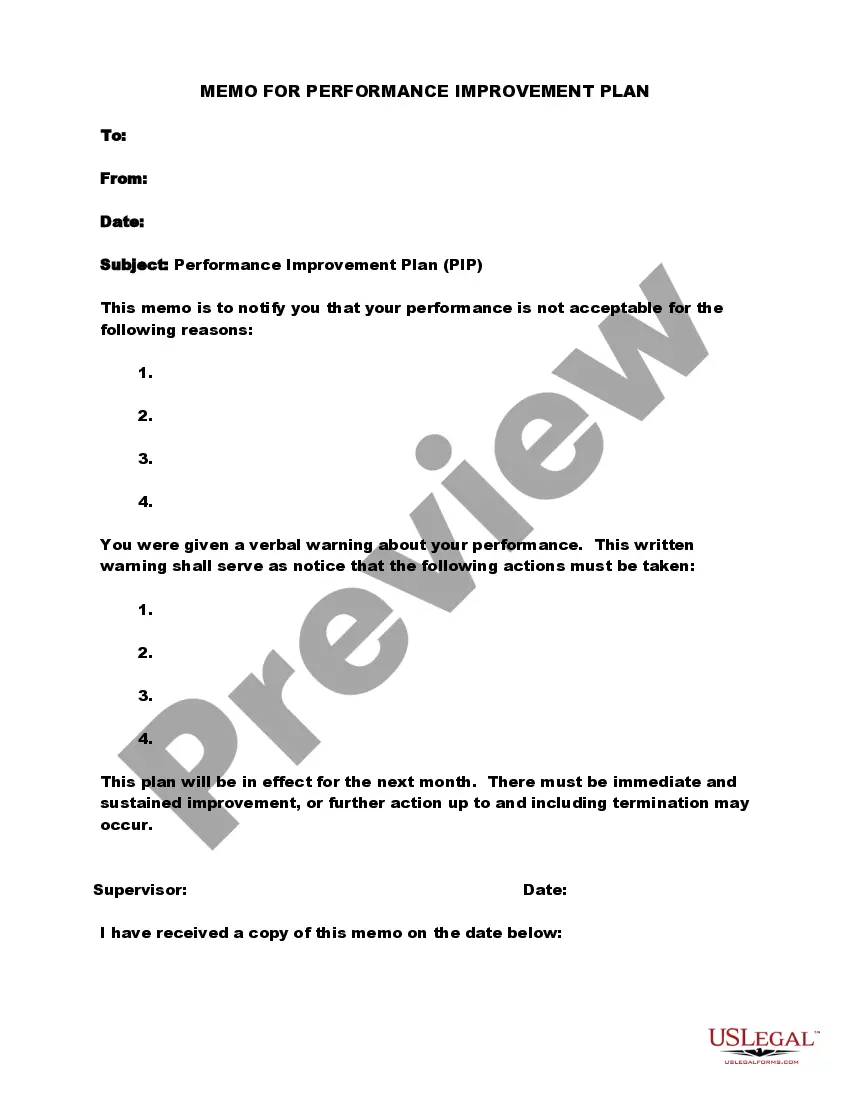
The Employee Memo - Need for Improvement is a formal document used by supervisors to notify an employee about deficiencies in their job performance. This memo outlines specific areas that require improvement and offers support through scheduled meetings. Unlike performance reviews, this memo serves as a direct communication tool to address issues promptly and constructively, aiming to enhance the employee's performance and productivity.
What’s included in this form
- Employee and supervisor names for clear identification.
- Date of the memo to establish a formal record.
- A subject line specifying the purpose of the memo.
- A detailed list of performance areas needing improvement.
- Scheduled meeting dates and times for further discussion.
- Contact information for the supervisor for any queries.
Situations where this form applies
This form should be used in situations where an employee's job performance is not meeting the expectations set by management. It is applicable when specific areas of improvement have been identified and when the employer wishes to engage in direct communication to support employee development and performance enhancement.
Who can use this document
- Supervisors or managers who oversee employee performance.
- Human resources personnel handling employee relations.
- Business owners aiming to provide structured feedback to employees.
Instructions for completing this form
- Fill in the name of the employee and the supervisor at the top of the memo.
- Enter the date the memo is issued for proper documentation.
- Specify the subject of the memo to summarize the issue at hand.
- List the areas of performance that require improvement in detail.
- Schedule and include dates and times for meetings to discuss improvements.
- Provide your contact information for any follow-up questions from the employee.
Notarization requirements for this form
This form does not typically require notarization unless specified by local law. It serves as an internal communication tool rather than a legal document requiring witness verification.
Get your form ready online
Our built-in tools help you complete, sign, share, and store your documents in one place.
Make edits, fill in missing information, and update formatting in US Legal Forms—just like you would in MS Word.
Download a copy, print it, send it by email, or mail it via USPS—whatever works best for your next step.
Sign and collect signatures with our SignNow integration. Send to multiple recipients, set reminders, and more. Go Premium to unlock E-Sign.
If this form requires notarization, complete it online through a secure video call—no need to meet a notary in person or wait for an appointment.
We protect your documents and personal data by following strict security and privacy standards.

Make edits, fill in missing information, and update formatting in US Legal Forms—just like you would in MS Word.

Download a copy, print it, send it by email, or mail it via USPS—whatever works best for your next step.

Sign and collect signatures with our SignNow integration. Send to multiple recipients, set reminders, and more. Go Premium to unlock E-Sign.

If this form requires notarization, complete it online through a secure video call—no need to meet a notary in person or wait for an appointment.

We protect your documents and personal data by following strict security and privacy standards.
Common mistakes to avoid
- Failing to specify clear areas of improvement.
- Not providing a supportive tone that encourages dialogue.
- Leaving out scheduled meeting dates can lead to confusion.
- Not ensuring that the memo is delivered personally to the employee.
Benefits of completing this form online
- Convenient access allows for easy documentation and tracking.
- Editability ensures that the memo can be customized to fit individual situations.
- Reliable templates reduce the likelihood of errors in communication.
What to keep in mind
- The Employee Memo is crucial for addressing performance issues professionally.
- It provides clear communication regarding areas of needed improvement.
- Utilizing this form can foster open dialogue and support employee development.
Looking for another form?

Form popularity
FAQ
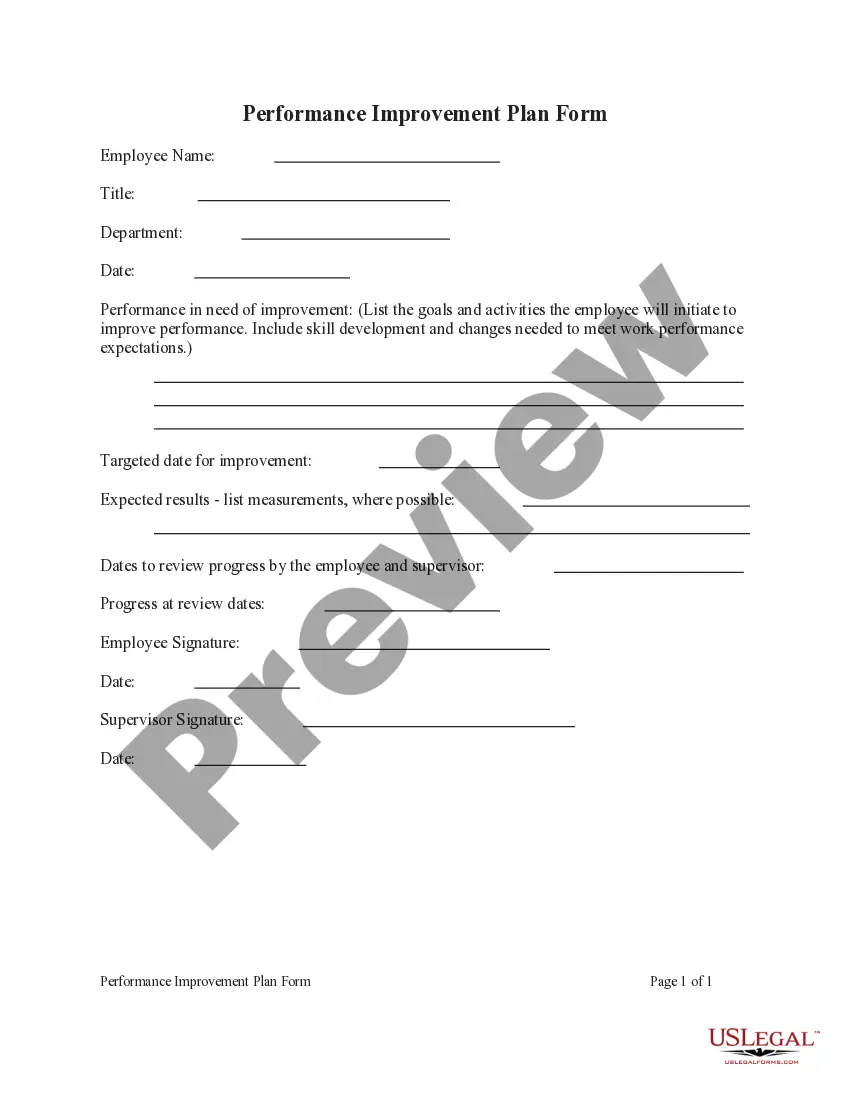
Add the employee's name, position, and department. Add the name of the manager or supervisor handling the performance improvement plan. Write a brief introduction. List the employee's performance issues and improvement objectives.
Explain the importance of communication. Instruct the employee to express his ideas and feelings when necessary. Explain the importance of remaining calm when communicating. Tell the employee that communication is more effective when words are chosen carefully.
Time management. The better people can multitask, meet deadlines and manage their time, the more productive they will be at work. Customer service. Teamwork. Interpersonal skills. Communication. Writing. Accepting feedback. Organization.
Let the employee know your concern. Share what you have observed. Explain how their behavior impacts the team. Tell them the expected behavior. Solicit solutions from the employee on how to fix the situation. Convey the consequences. Agree upon a follow-up date. Express your confidence.
Create clear metrics of job performance. Have the right mindset. Collect 360 feedback from other team members. Have a one-to-one meeting. Use the Johari window matrix. Ask questions, listen, and understand.
Don't be Afraid to Delegate. Match Tasks to Skills. Communicate Effectively. Keep Goals Clear & Focused. Incentivize Employees. Cut Out the Excess. Train and Develop Employees. Embrace Telecommuting.
Be Honest & Candid With Your Feedback. Focus on Areas of Strength and Weakness. Craft an Improvement Plan for the Under Performing Employee.
1) Time Management. Time management is crucial to your business's success. 2) Organization. Organization can make time management much easier. 3) Interpersonal Communication. 4) Customer Service. 5) Cooperation. 6) Conflict Resolution. 7) Listening. 8) Written Communication.
Don't do it when you're angry. Document the problem. Use company policies to back you up. Include any relevant witness statements. Set expectations for improvement. Deliver the news in person (and proof of receipt) Keep a copy for your records. Follow up.