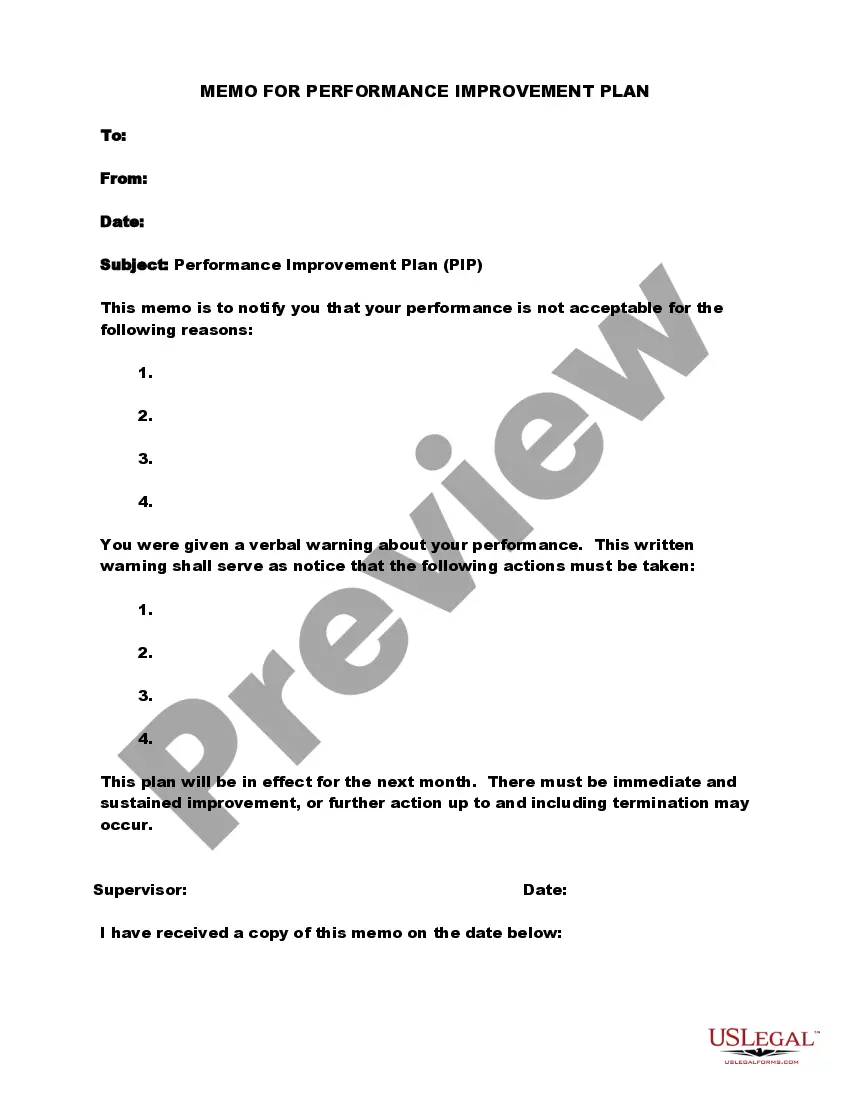
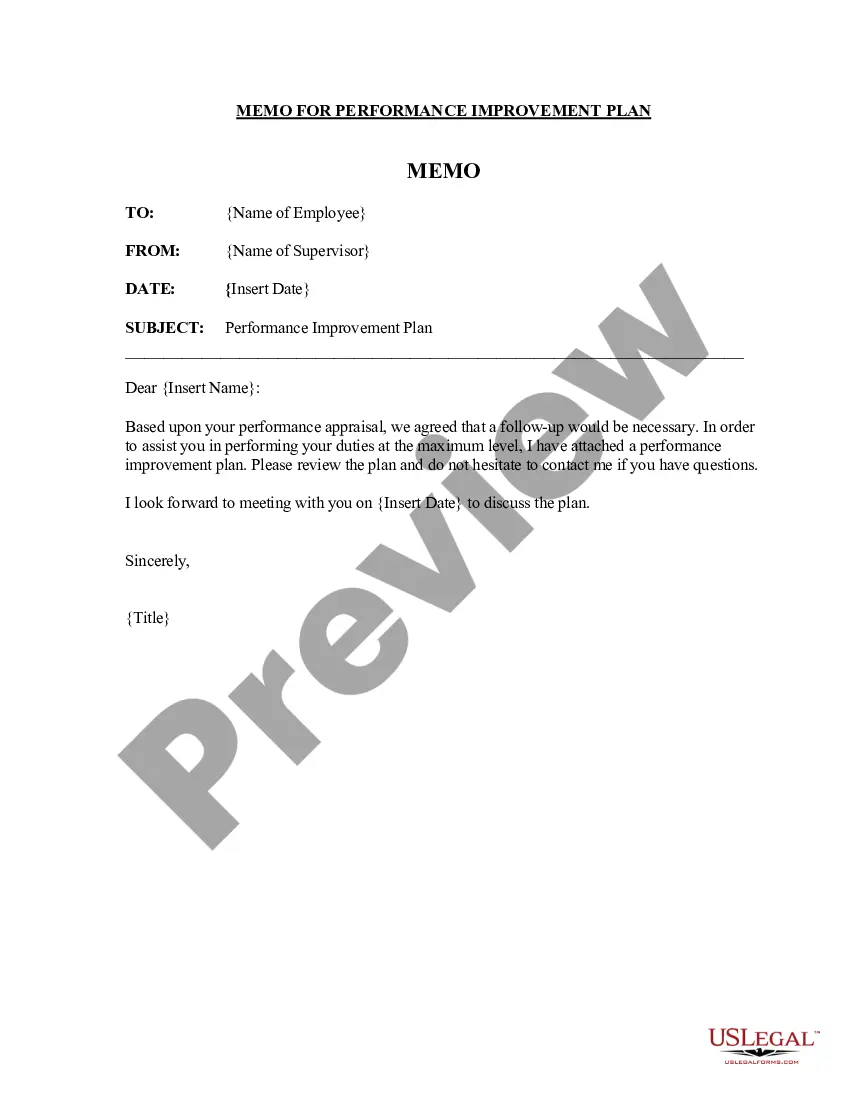
Memo for Conveying Performance Improvement Plan - Detailed
What is this form?
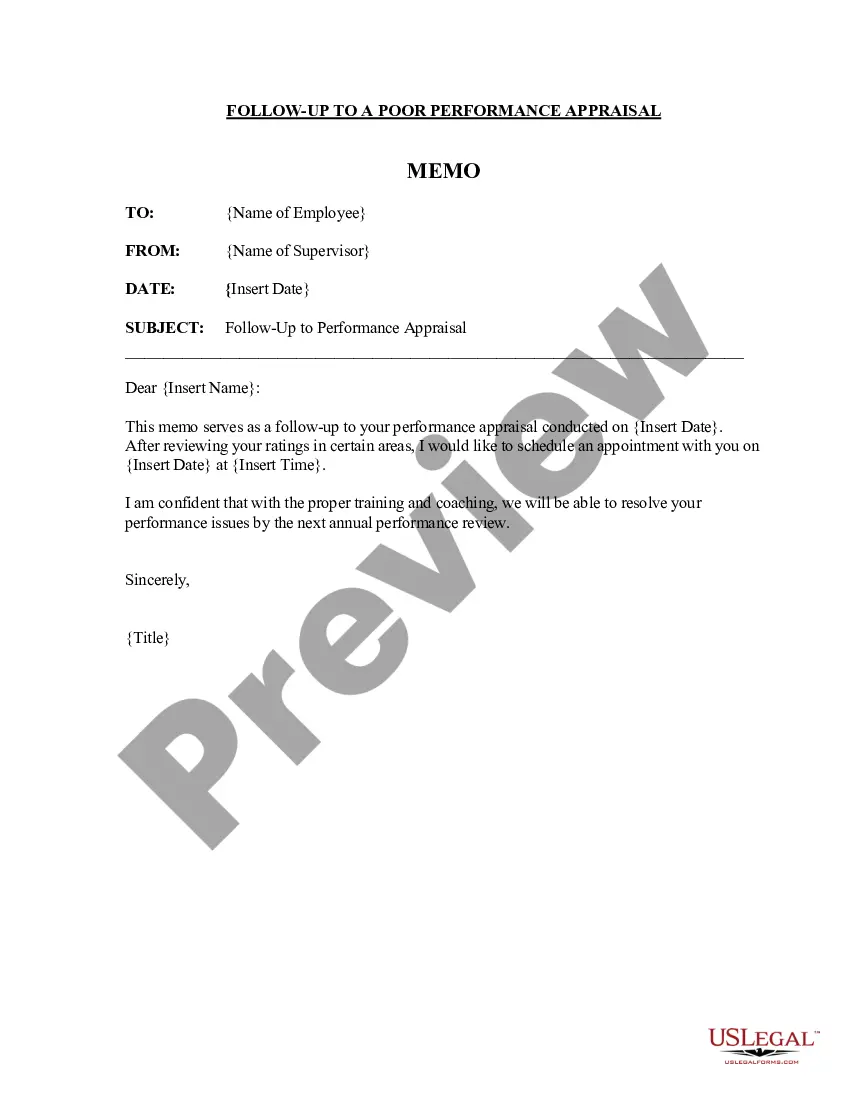
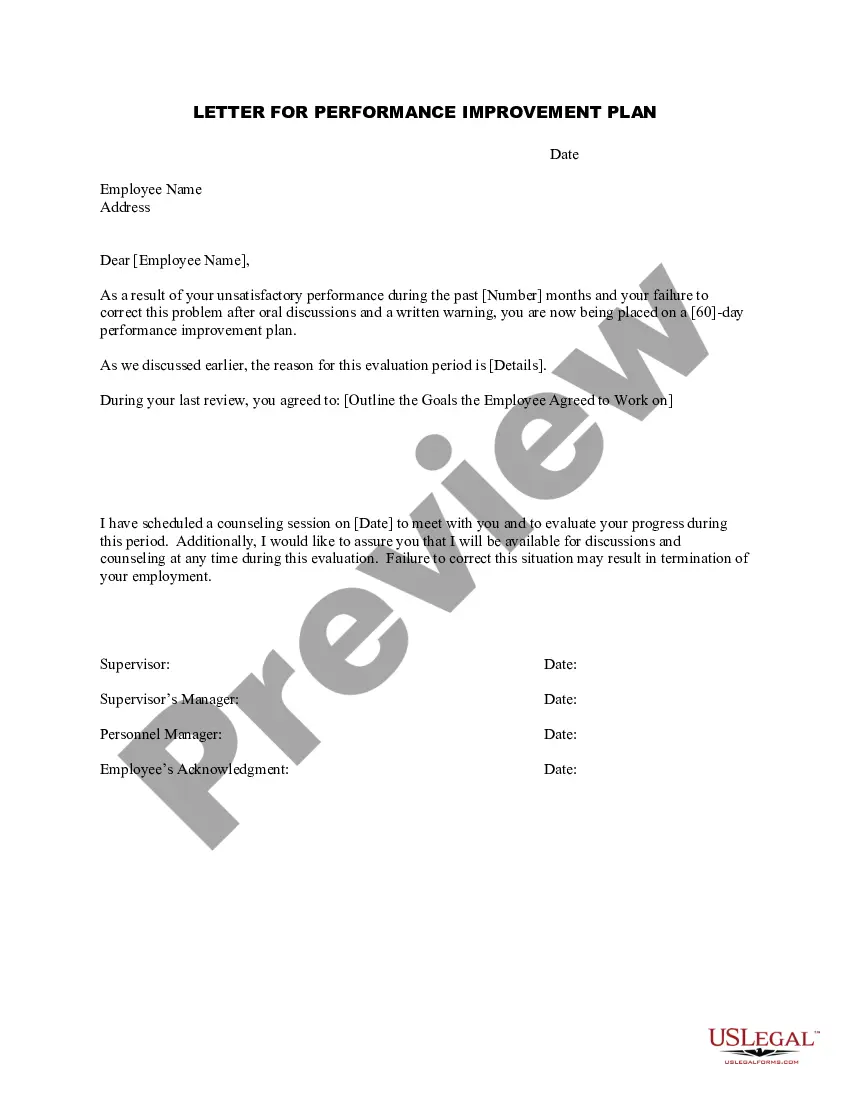
The Memo for Conveying Performance Improvement Plan - Detailed is a formal document used by employers to notify an employee of unsatisfactory performance. This memo serves to clearly outline the areas in which the employee must improve, while detailing the consequences of not addressing these performance issues. This form differs from other performance evaluation forms by providing a structured plan to help employees understand expectations and take corrective actions.
Key parts of this document
- Date of the memo
- Details of the employee and supervisor
- Specific performance issues and concerns
- Actions required by the employee
- Timeframe for improvement
- Consequences of failure to improve
- Employee acknowledgment section
When to use this document
This memo should be used when an employee's performance falls below the set expectations, requiring formal documentation for improvement. It is particularly useful in scenarios where previous verbal warnings or informal feedback have not led to the desired changes. Using this memo helps ensure that the employee is aware of the seriousness of the situation and the necessity for improvement.
Intended users of this form
This form is intended for:
- Human resources professionals
- Managers and supervisors responsible for employee oversight
- Team leaders conducting performance evaluations
- Any personnel tasked with employee disciplinary actions
How to prepare this document
- Identify and enter the date of the memo.
- Fill in the employeeâs name and the supervisorâs name.
- Clearly outline the specific performance issues that need to be addressed.
- Detail the actions that the employee must take to improve their performance.
- Specify the timeframe for these improvements to occur.
- Have the employee acknowledge receipt of the memo by signing and dating it.
Does this document require notarization?
This form does not typically require notarization unless specified by local law.
Get your form ready online
Our built-in tools help you complete, sign, share, and store your documents in one place.
Make edits, fill in missing information, and update formatting in US Legal Forms—just like you would in MS Word.
Download a copy, print it, send it by email, or mail it via USPS—whatever works best for your next step.
Sign and collect signatures with our SignNow integration. Send to multiple recipients, set reminders, and more. Go Premium to unlock E-Sign.
If this form requires notarization, complete it online through a secure video call—no need to meet a notary in person or wait for an appointment.
We protect your documents and personal data by following strict security and privacy standards.

Make edits, fill in missing information, and update formatting in US Legal Forms—just like you would in MS Word.

Download a copy, print it, send it by email, or mail it via USPS—whatever works best for your next step.

Sign and collect signatures with our SignNow integration. Send to multiple recipients, set reminders, and more. Go Premium to unlock E-Sign.

If this form requires notarization, complete it online through a secure video call—no need to meet a notary in person or wait for an appointment.

We protect your documents and personal data by following strict security and privacy standards.
Typical mistakes to avoid
- Failing to provide clear examples of performance issues.
- Not specifying a clear timeframe for improvement.
- Neglecting to follow up on the employee's progress.
- Omitting the consequences of failing to improve.
Benefits of completing this form online
- Easy to download and customize according to your needs.
- Accessible from anywhere, allowing for prompt issuance.
- Pre-defined structure ensures all important components are covered.
- Streamlined process for tracking and documenting employee performance.
Legal use & context
- It serves as a formal documentation of performance issues that can be referenced in future performance reviews.
- This memo can support your case in potential employment disputes.
- Following a clear process helps ensure compliance with employment laws and protects against claims of unfair treatment.
What to keep in mind
- Clear documentation is essential when addressing performance issues.
- This memo helps set clear expectations and timelines for improvement.
- Proper use can protect both the employee's and employer's best interests.
Looking for another form?
Form popularity
FAQ
Don't let too much time pass after the training. Get your employees involved. Allow your employees to be creative with their own ways to reinforce the training and new skills they learned. Assign periodic assignments on different topics from the training. Assign a "mentee" to each employee who attended the training.
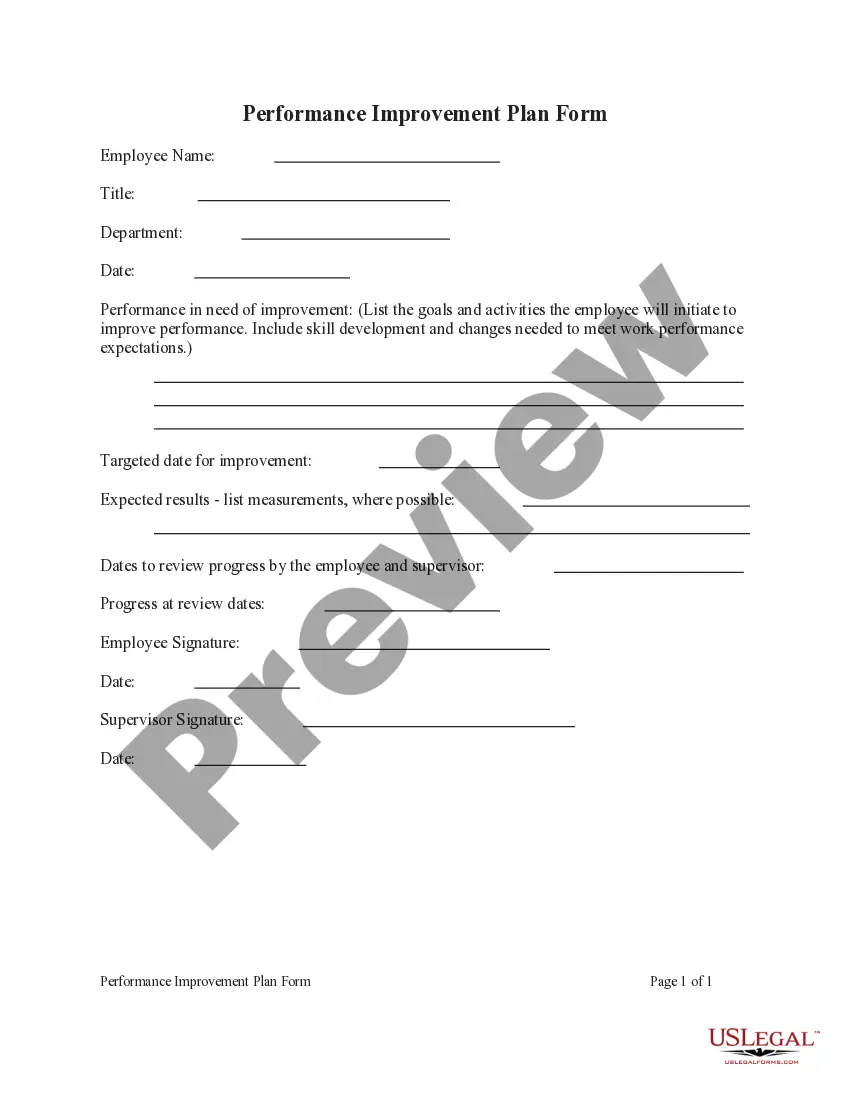
Identify the performance/behavior that needs improving. Provide specific examples for reasoning. Outline expected standard. Identify training and support. Schedule check-ins and review points. Sign and acknowledge.
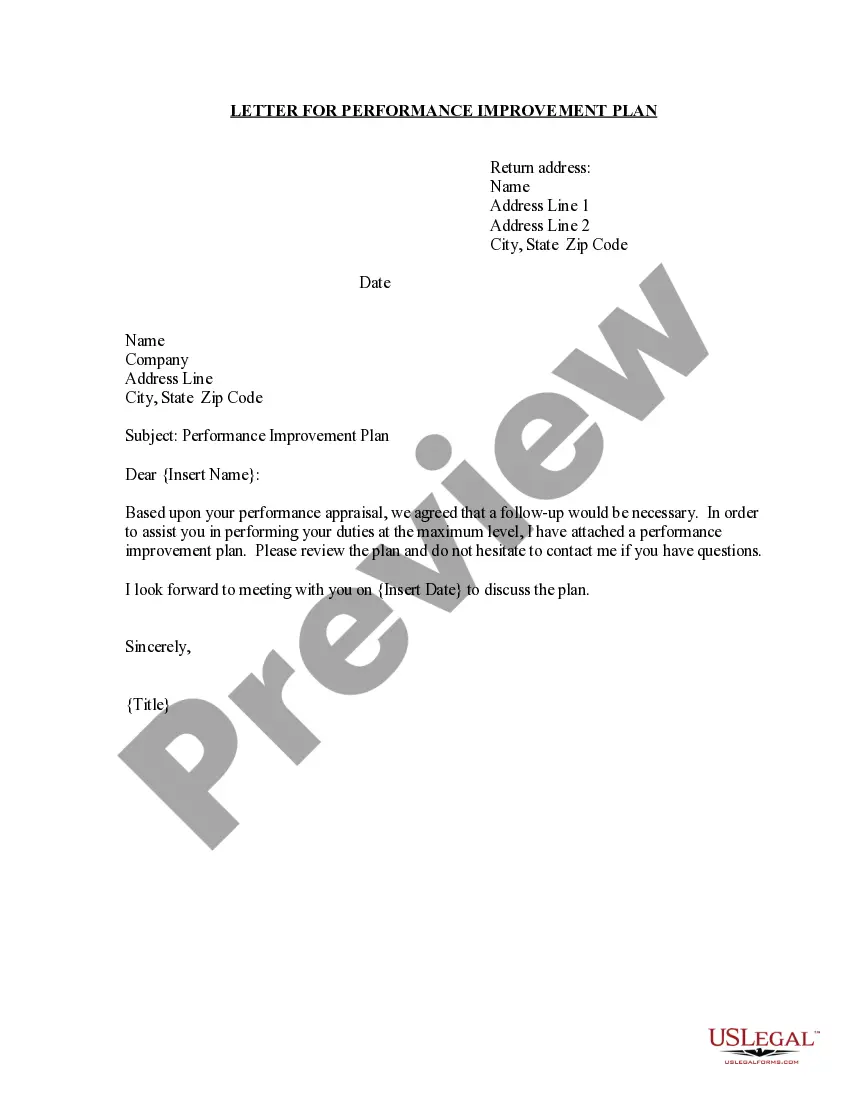
Add the employee's name, position, and department. Add the name of the manager or supervisor handling the performance improvement plan. Write a brief introduction. List the employee's performance issues and improvement objectives.
Identify the performance/behavior that needs improving. Provide specific examples for reasoning. Outline expected standard. Identify training and support. Schedule check-ins and review points. Sign and acknowledge.
Have a positive attitude. Take responsibility. Request extra time. Ask for help. Double your effort. Check in regularly. Talk with your team. Set your own goals.
PIPS must be S.M.A.R.T: specific, measurable, achievable, relevant, and time-based. Avoid generalities. In the PIP, clearly state the expectations for the role using its original job description and compare them to the employee's recent performance.
Specific and measurable objectives that are achievable, relevant and time-bound (otherwise known as SMART goals). PIPs usually last 30, 60 or 90 days, depending on how long it would reasonably take to improve the specific issue.
Share your notes. After the performance review meeting is over, share your notes with the employee. Track individual goals and how they impact team performance. Keep the conversation going. Be approachable. Check in with other team members.
Successful PIP Conclusion A successful outcome occurs when the employee raises her performance rating, meets all the requirements of the PIP and her job performance is back on track. In this case, a successful outcome means continued employment and, possibly, a salary increase.