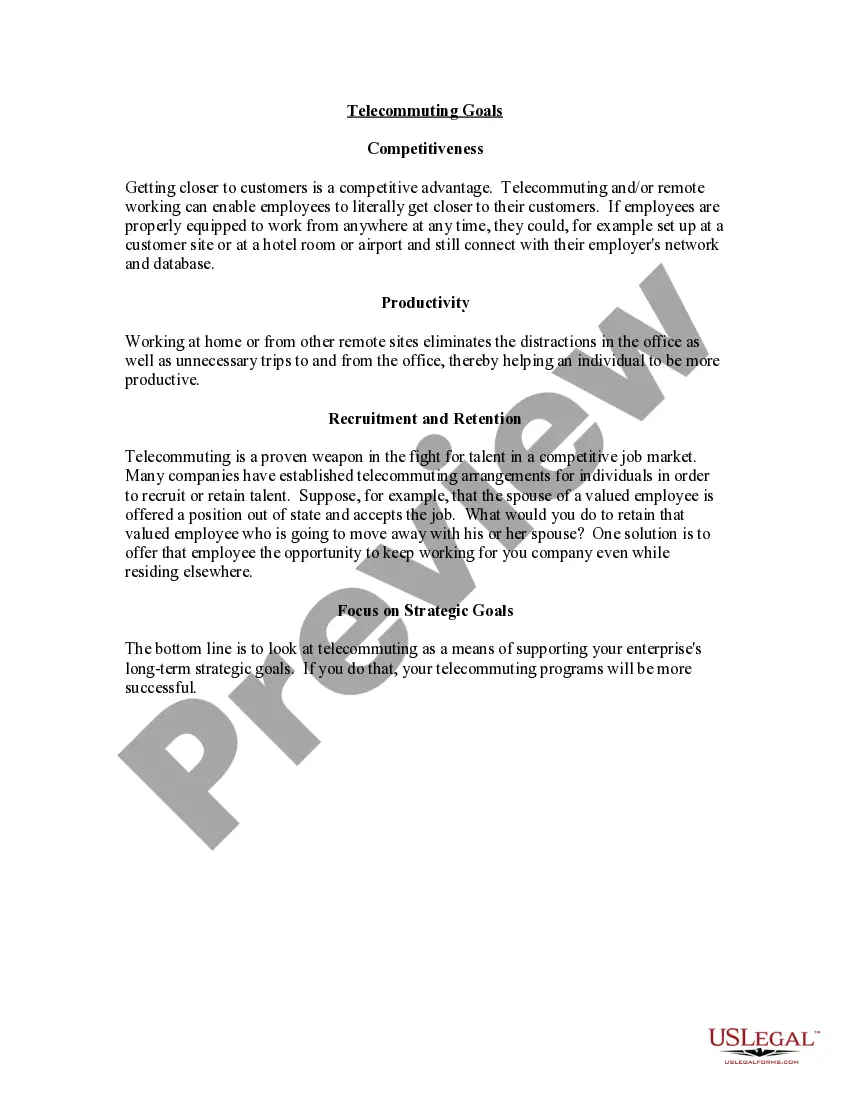
Telecommuting Goals
Overview of this form
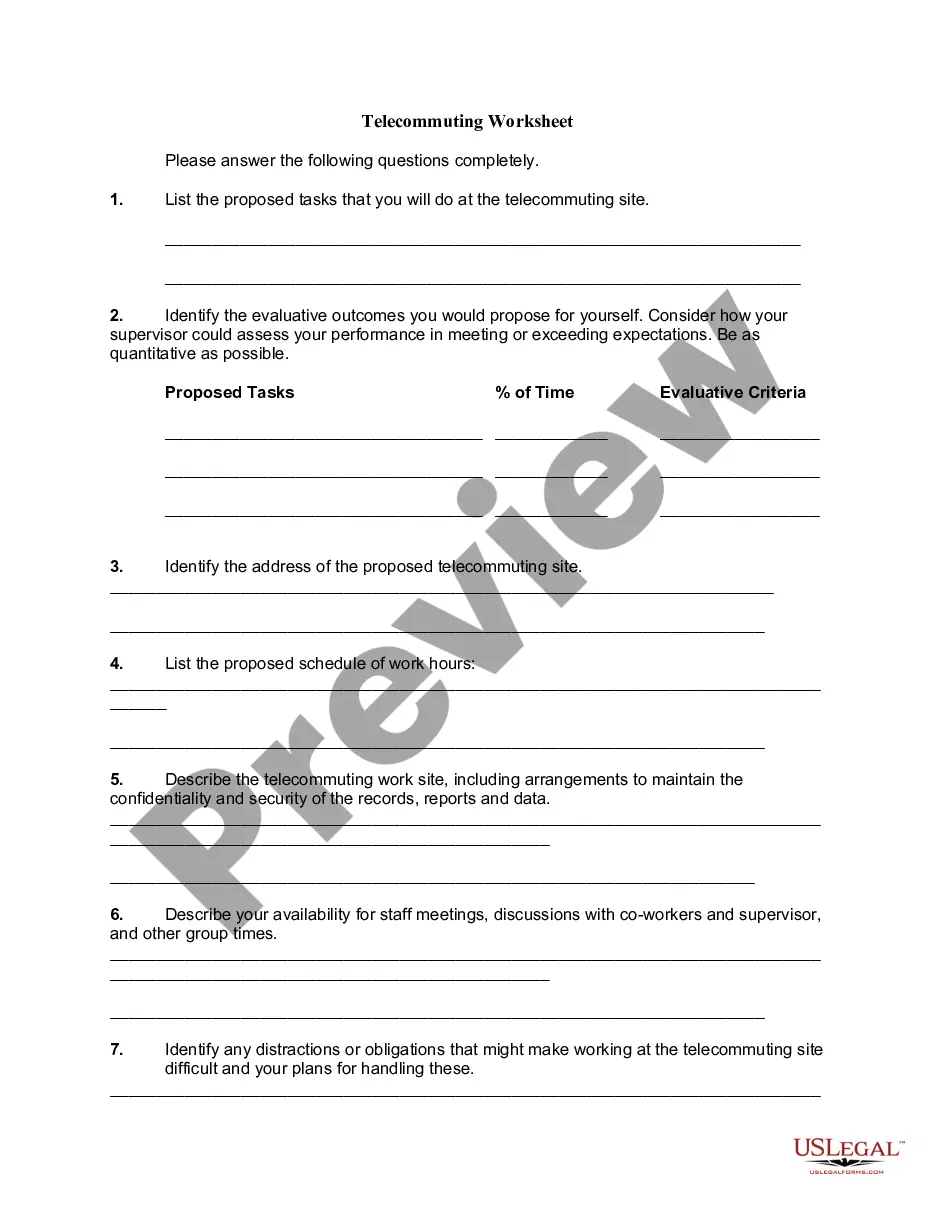
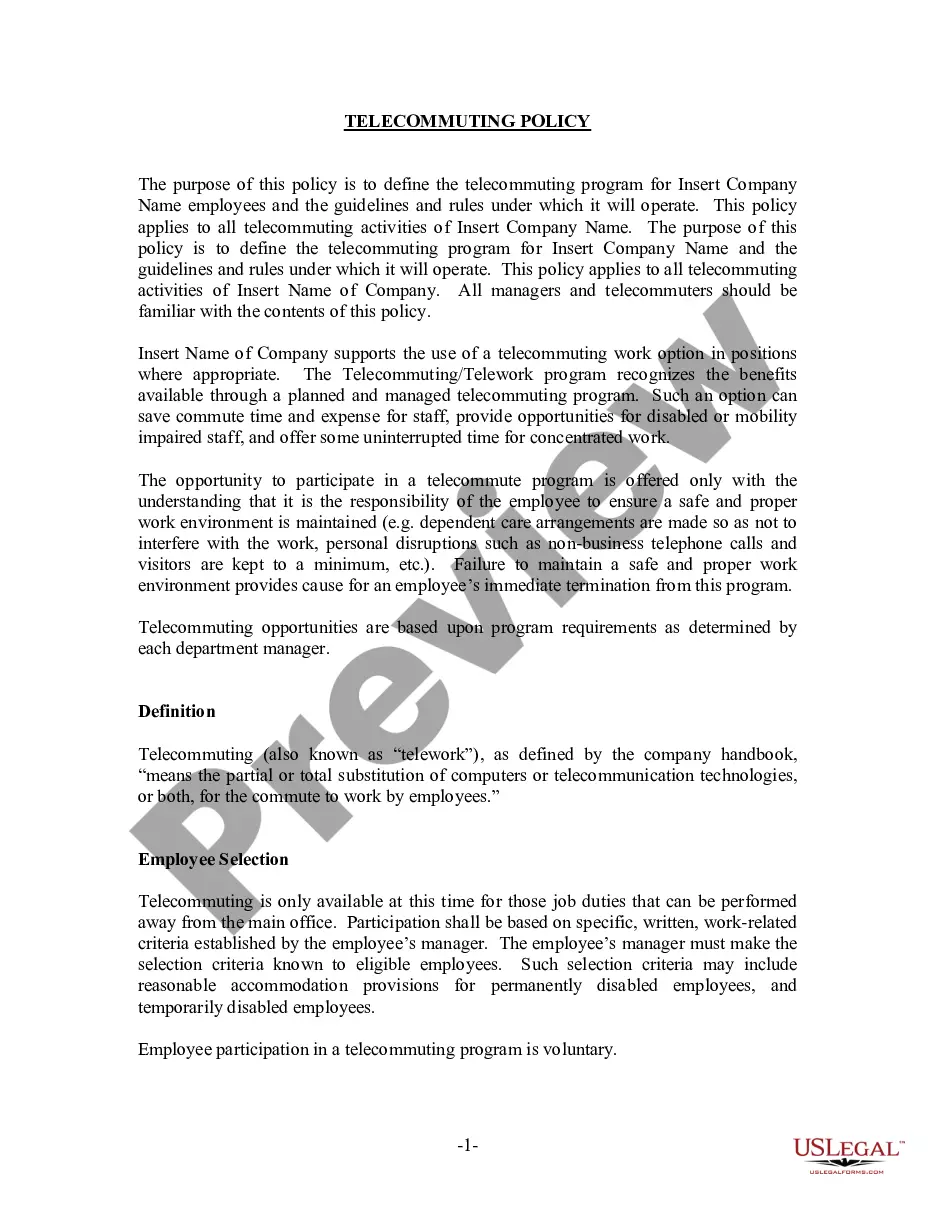
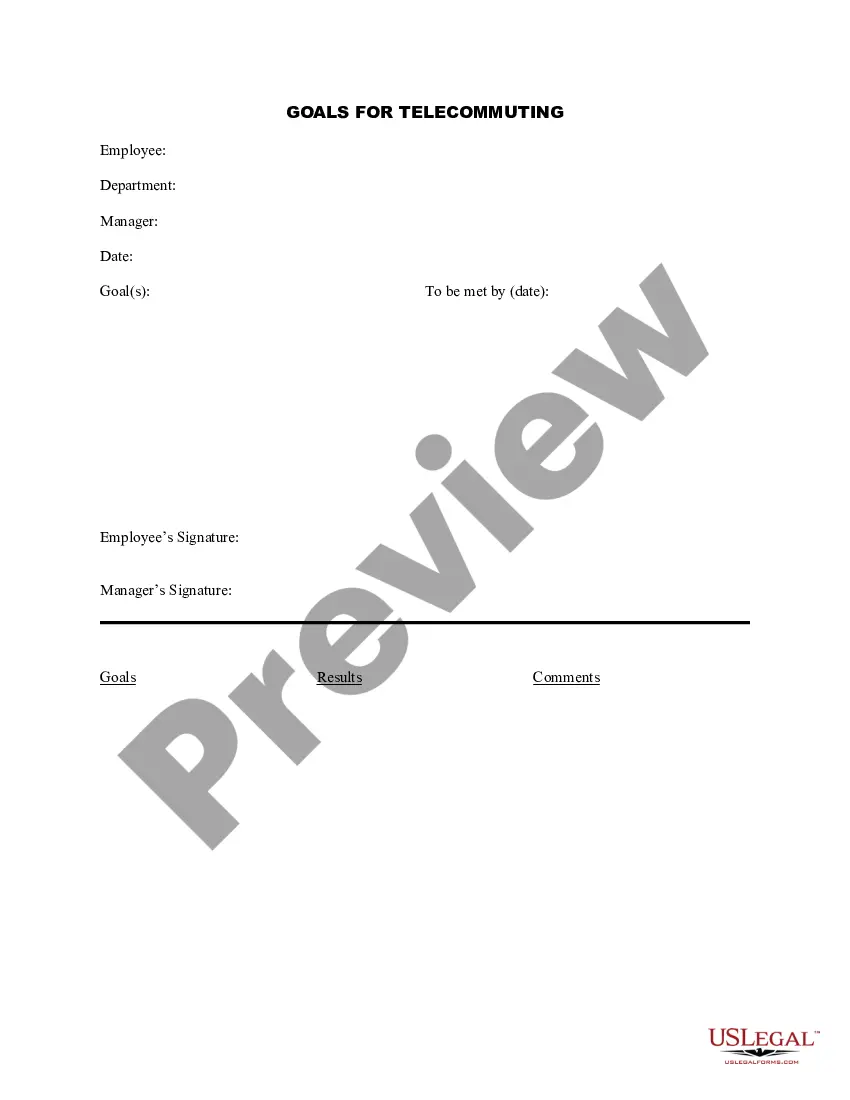
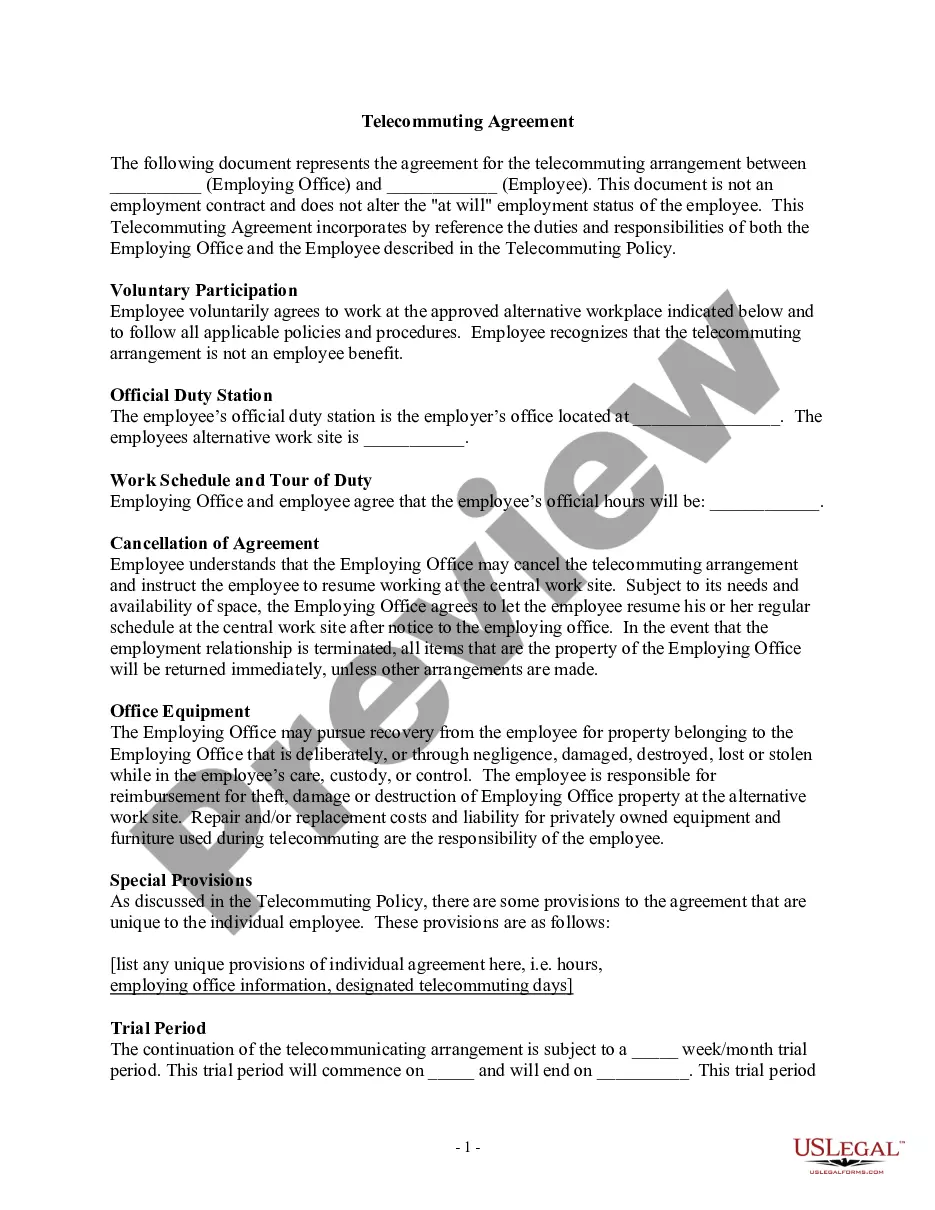
The Telecommuting Goals form is a strategic document designed for companies to outline their vision for telecommuting programs. It helps in establishing clear objectives that align remote work with the organizationâs overall goals, enhancing productivity and employee satisfaction. This form is distinct from other employment agreements as it focuses specifically on the goals of telecommuting rather than the terms of employment.
Main sections of this form
- Competitiveness: Explanation of how telecommuting allows employees to engage more closely with customers, enhancing business competitiveness.
- Productivity: Insights on how remote work reduces office distractions and travel time, boosting individual productivity.
- Recruitment and Retention: Strategies for using telecommuting arrangements to attract and retain top talent in a competitive job market.
- Strategic Goals: Emphasis on aligning telecommuting practices with the company's long-term strategic objectives for effective implementation.
When this form is needed
This form is useful for businesses looking to establish or revamp their telecommuting policies. It is particularly beneficial when organizations are facing challenges in talent retention, employee productivity, or customer engagement. Companies should consider using this form during strategic planning sessions or when rolling out new remote work initiatives.
Who needs this form
The following individuals and organizations should use this form:
- Human resources managers developing telecommuting policies.
- Business leaders looking to align remote work with strategic goals.
- Employers aiming to improve employee satisfaction and retention through flexible work arrangements.
Completing this form step by step
To complete the Telecommuting Goals form, follow these steps:
- Identify the key objectives for your telecommuting program.
- Outline specific measures to enhance competitiveness through remote work.
- Define productivity goals to be achieved by telecommuting employees.
- Include strategies for recruitment and retention that leverage remote working options.
- Ensure alignment with long-term strategic goals of your organization.
Is notarization required?
This form does not typically require notarization unless specified by local law. However, itâs always best to check state regulations to ensure compliance.
Get your form ready online
Our built-in tools help you complete, sign, share, and store your documents in one place.
Make edits, fill in missing information, and update formatting in US Legal Forms—just like you would in MS Word.
Download a copy, print it, send it by email, or mail it via USPS—whatever works best for your next step.
Sign and collect signatures with our SignNow integration. Send to multiple recipients, set reminders, and more. Go Premium to unlock E-Sign.
If this form requires notarization, complete it online through a secure video call—no need to meet a notary in person or wait for an appointment.
We protect your documents and personal data by following strict security and privacy standards.

Make edits, fill in missing information, and update formatting in US Legal Forms—just like you would in MS Word.

Download a copy, print it, send it by email, or mail it via USPS—whatever works best for your next step.

Sign and collect signatures with our SignNow integration. Send to multiple recipients, set reminders, and more. Go Premium to unlock E-Sign.

If this form requires notarization, complete it online through a secure video call—no need to meet a notary in person or wait for an appointment.

We protect your documents and personal data by following strict security and privacy standards.
Common mistakes
- Failing to align telecommuting goals with broader business objectives.
- Neglecting to involve employees in the development of telecommuting policies.
- Overlooking local regulations related to remote work arrangements.
Advantages of online completion
- Convenience of easily downloadable templates drafted by legal professionals.
- Editable forms allowing you to tailor goals to specific organizational needs.
- Quick access to essential legal documents, helping you save time and resources.
Summary of main points
- The Telecommuting Goals form helps organizations establish a clear vision for remote work.
- Aligning telecommuting practices with business strategies is critical for success.
- This form can enhance employee productivity and retention when used effectively.
Looking for another form?









Form popularity
FAQ
Telecommuting positively impacts job performance, study finds. Telecommuting contributes to improved job performance for employees in complex jobs, allowing them to benefit from fewer interruptions common in an office setting, research from FIU Business finds.
Set immediate and clear expectations. Document your communication strategy. Engage as often as possible. Schedule regular team meetings. Be transparent. Build a strong rapport with each team member. Use technology to overcome geographic boundaries.
1) Higher employee satisfaction. 2) Better work-life balance. 3) Increased flexibility. 4) Reduced operational costs. 5) Reduced expenses for employees. 6) Easier to focus. 7) There's zero commuting necessary. 1) You need the right technology to be effective.
A telecommuting policy shows a brands openness to new trends and ways of working, it also shows a level of trust in your employees. These traits are welcomed by employees and, as a result, they'll be happier, more productive and less likely to look for alternative employment.
For a successful telecommuting arrangement, there needs to be some structure, productivity expectations, and good communication. However, the number one goal for telecommuting should be to provide the employee with the proper tools and environment so they can do their job and to meet the needs of the organization.
Separate work life from home life. Get ready for work. Establish office hours. Divide up your day. Set up the proper environment. Keep the lines of communication open. Don't constantly monitor your cellphone. Get out of the house.
But a successful teleworking program requires more. Measuring and developing employees for job performance.This model helps employees and managers identify specific goals and job expectations, but gives the employees significant flexibility over when, where, and how to meet them.
You do not have to spend time commuting back and forth from work. It is easier to focus without the usual workplace distractions. There are no transportation costs. It can provide a better balance of work and personal pursuits. Employers may save money on real estate and other overhead expenses.
Telecommuting allows employees to work at home, on the road or in a satellite location for all or part of their workweek. Company Name considers telecommuting to be a viable, flexible work option when both the employee and the job are suited to such an arrangement.