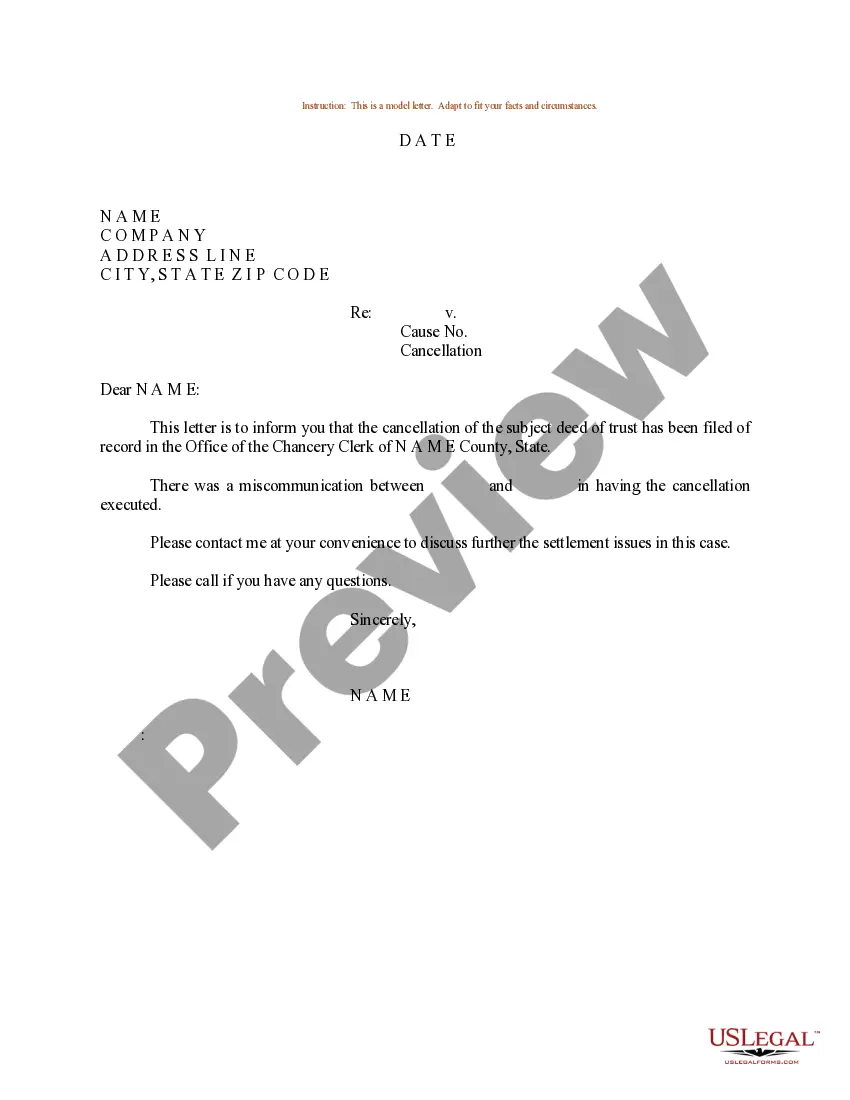
Sample Letter for Cancellation of Subject Deed of Trust
About this form
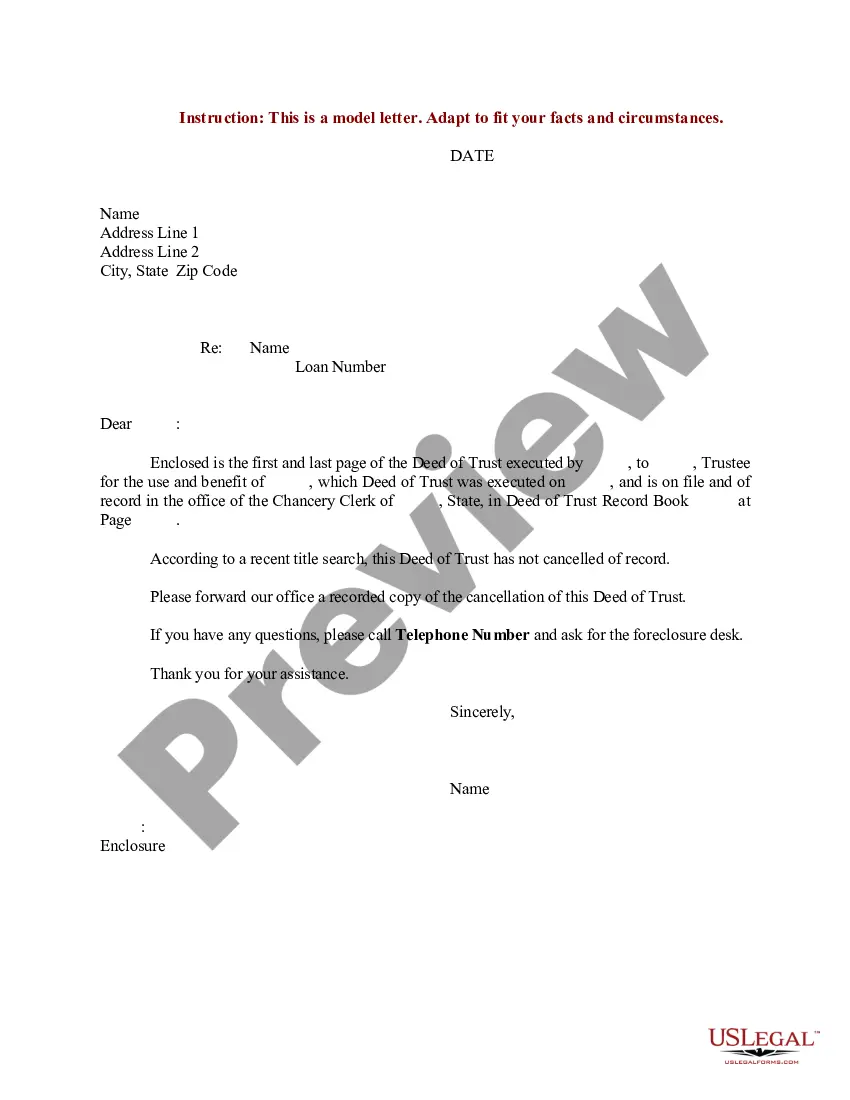
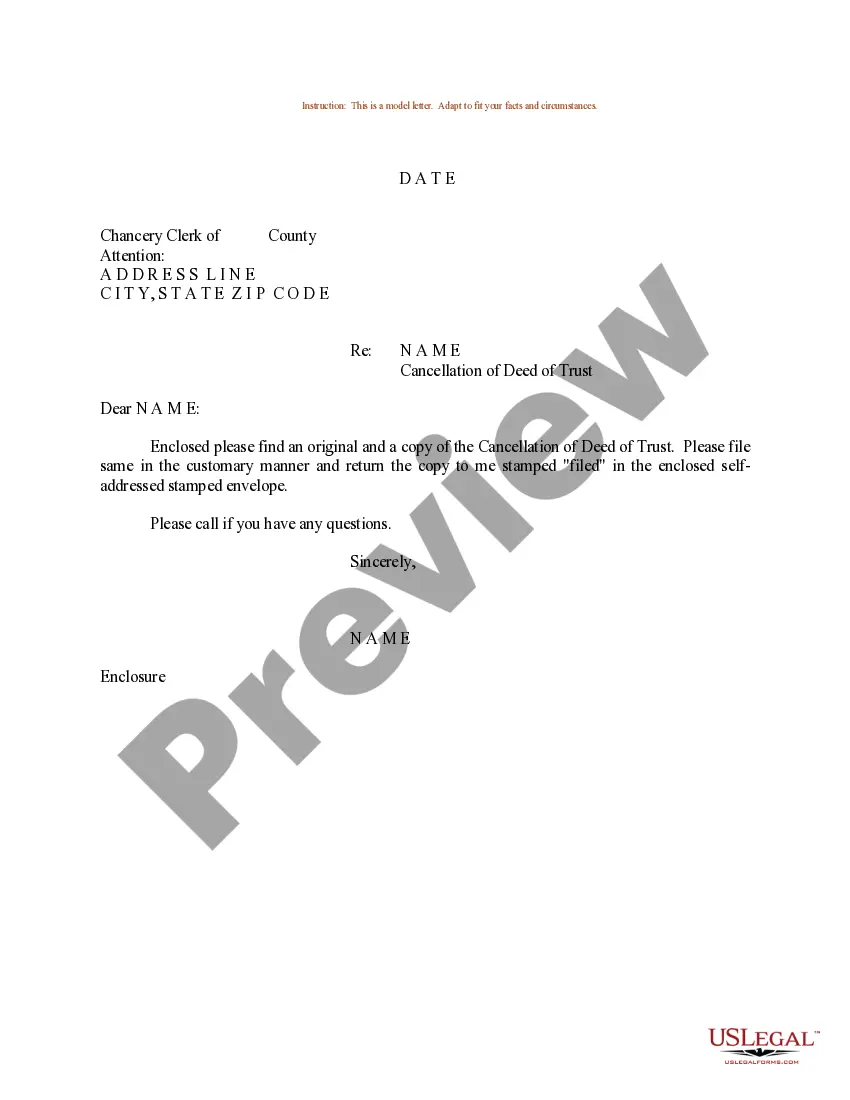
The Sample Letter for Cancellation of Subject Deed of Trust is a legal document used to formally cancel a deed of trust that secures a loan on a property. Unlike other cancellation forms, this letter is specifically designed for addressing the cancellation to the lender or trustee, ensuring clear communication of the intent to terminate the trust relationship. It is crucial for homeowners or property owners looking to release the obligations tied to their property.
Main sections of this form
- Date of cancellation
- Identification of the parties involved (borrower and lender)
- Property information related to the deed of trust
- Statement of cancellation intent
- Signature of the borrower
When this form is needed
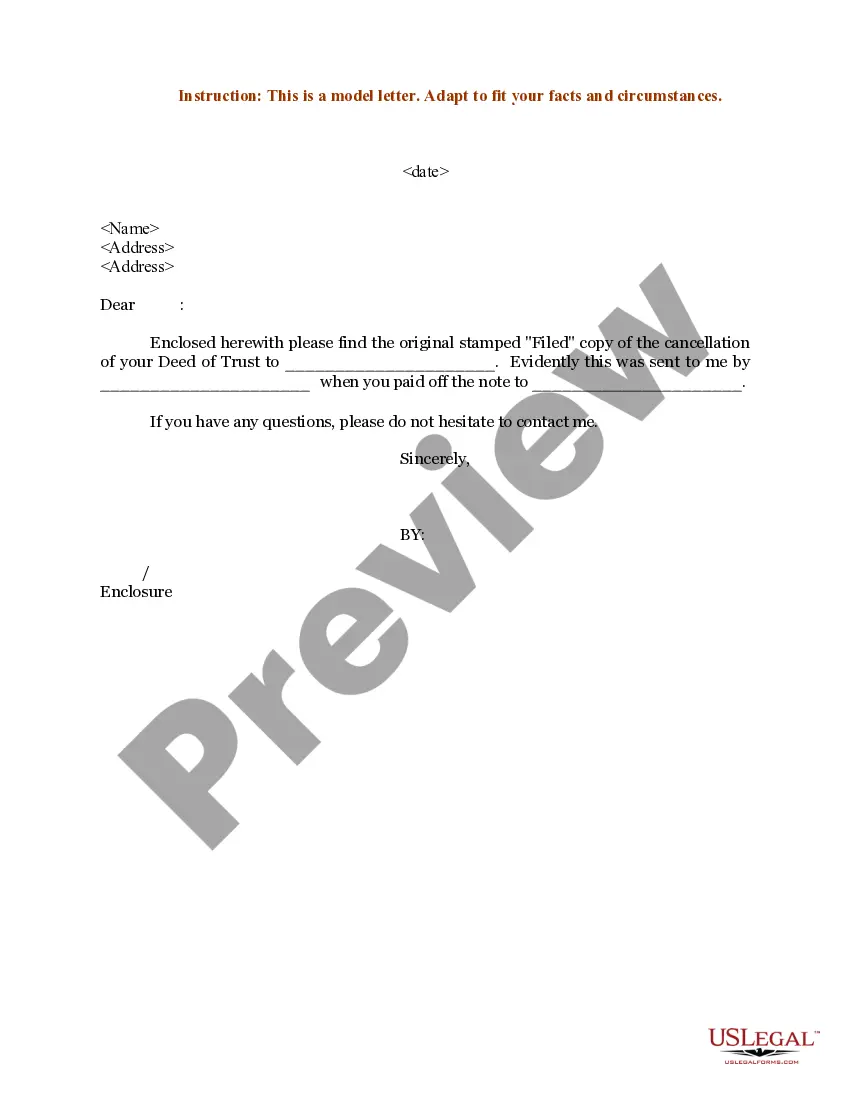
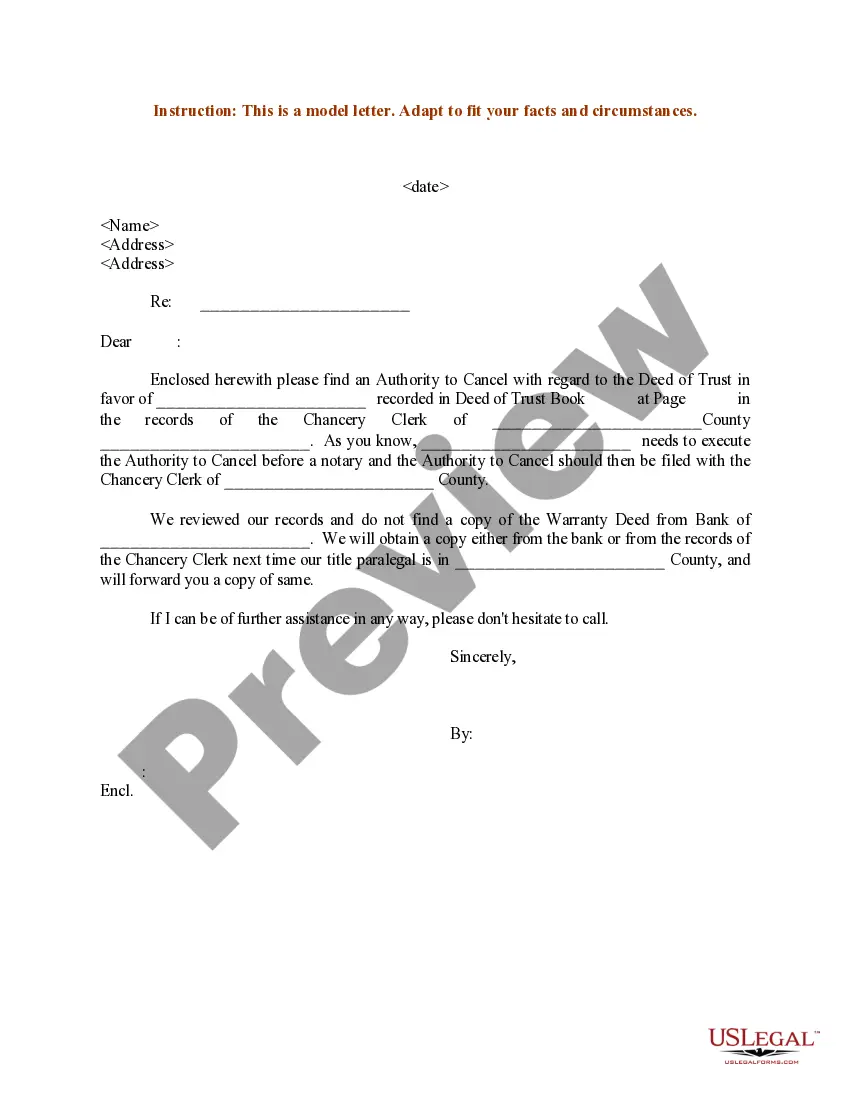
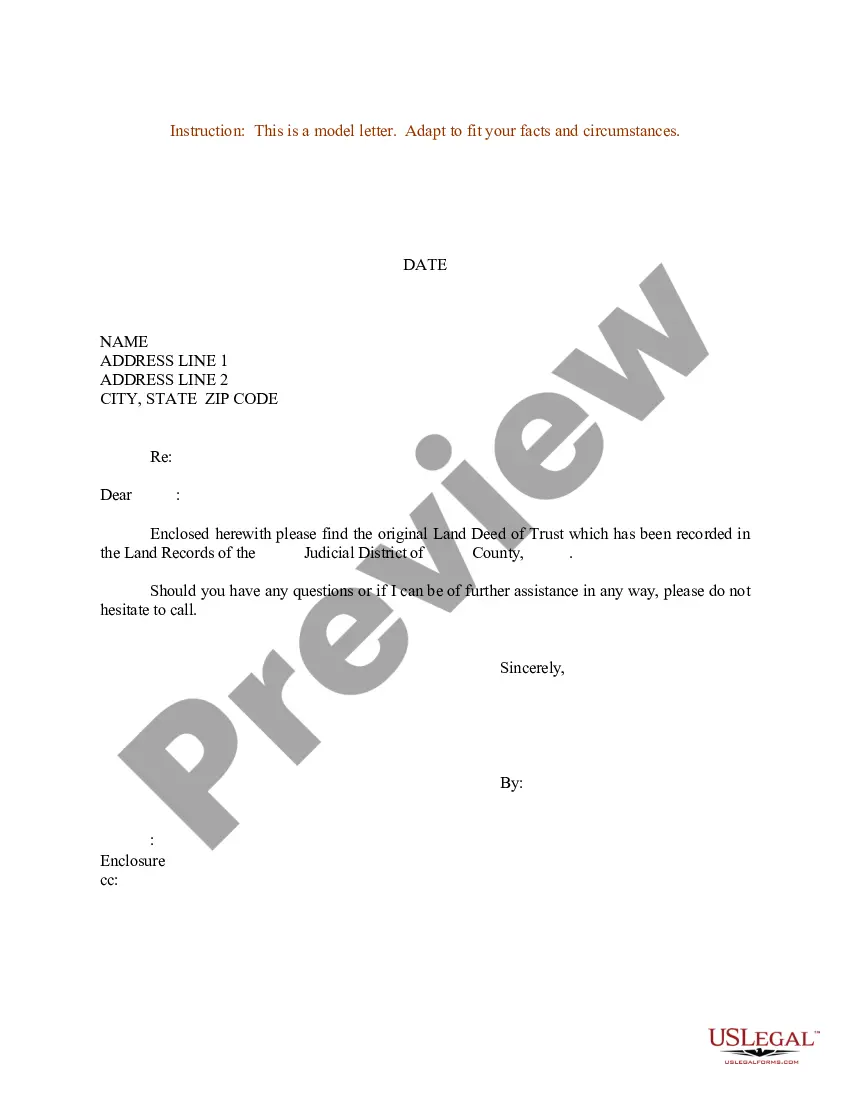
This form is necessary when a borrower wishes to officially cancel a deed of trust that was previously established to secure a loan. This situation may arise when the loan is paid off, the property is sold, or the borrower decides to refinance their mortgage using a different lender. Completing this cancellation letter ensures that the lender is formally notified, preventing further claims on the property.
Who should use this form
- Homeowners who have paid off their mortgage
- Property owners looking to terminate an existing deed of trust
- Individuals refinancing their mortgage
- Lenders or trustees who manage deed of trust agreements
How to prepare this document
- Identify and enter the date at the top of the letter.
- Clearly state the names and addresses of the borrower and lender.
- Specify the property information associated with the deed of trust.
- Include a clearly worded statement indicating your intent to cancel the deed of trust.
- Sign the letter to validate your cancellation request.
Is notarization required?
This form does not typically require notarization unless specified by local law. However, it's advisable to check local requirements to ensure compliance with any specific guidelines that may apply.
Get your form ready online
Our built-in tools help you complete, sign, share, and store your documents in one place.
Make edits, fill in missing information, and update formatting in US Legal Forms—just like you would in MS Word.
Download a copy, print it, send it by email, or mail it via USPS—whatever works best for your next step.
Sign and collect signatures with our SignNow integration. Send to multiple recipients, set reminders, and more. Go Premium to unlock E-Sign.
If this form requires notarization, complete it online through a secure video call—no need to meet a notary in person or wait for an appointment.
We protect your documents and personal data by following strict security and privacy standards.

Make edits, fill in missing information, and update formatting in US Legal Forms—just like you would in MS Word.

Download a copy, print it, send it by email, or mail it via USPS—whatever works best for your next step.

Sign and collect signatures with our SignNow integration. Send to multiple recipients, set reminders, and more. Go Premium to unlock E-Sign.

If this form requires notarization, complete it online through a secure video call—no need to meet a notary in person or wait for an appointment.

We protect your documents and personal data by following strict security and privacy standards.
Typical mistakes to avoid
- Not including the correct property details.
- Failing to sign the letter.
- Submitting the letter without confirming it was delivered to the correct party.
Why complete this form online
- Easy downloading and editing to suit your specific needs.
- Access to templates drafted by licensed attorneys ensuring legal compliance.
- Convenience of completing the form from home without needing to schedule an appointment.
Looking for another form?
Form popularity
FAQ
Keep it simple, straightforward and to the point. State clearly that you are canceling your contract and include a simple reason why. If you owe any money on the account, request a final bill or enclose the payment.
Begin the cancellation letter with the date, the company's name and address, and your account number. State politely but firmly that you want the company to cancel your account, and give them the customary 30-day notice before you expect it to become effective.
The revocation should include your name, a statement that you are of sound mind, and your wish to revoke the power of attorney. You should also specify the date the original power of attorney was executed and the person selected as your agent.
Keep it simple, straightforward and to the point. State clearly that you are canceling your contract and include a simple reason why. If you owe any money on the account, request a final bill or enclose the payment.
Include the date of the letter along with the name and contact details of the organization. Also, give your complete name, your mailing address, and the subscription or membership details based on the records of the company.
The power of attorney revocation form allows a person to cancel a previous appointment that was made. The form, once signed by the principal, cancels and immediately terminates the rights of the agents listed in the original power of attorney document.
Include the date of the letter along with the name and contact details of the organization. Also, give your complete name, your mailing address, and the subscription or membership details based on the records of the company.
Can I cancel the Trust Deed after it has been signed? No. Once signed you are bound by its terms and it cannot be cancelled.
Party information: names and addresses of the trustor(s), trustee(s), beneficiary(ies), and guarantor(s) (if applicable) Property details: full address of the property and its legal description (which can be obtained from the County Recorder's Office)