Sample Letter regarding Authority to Cancel Deed of Trust
Overview of this form
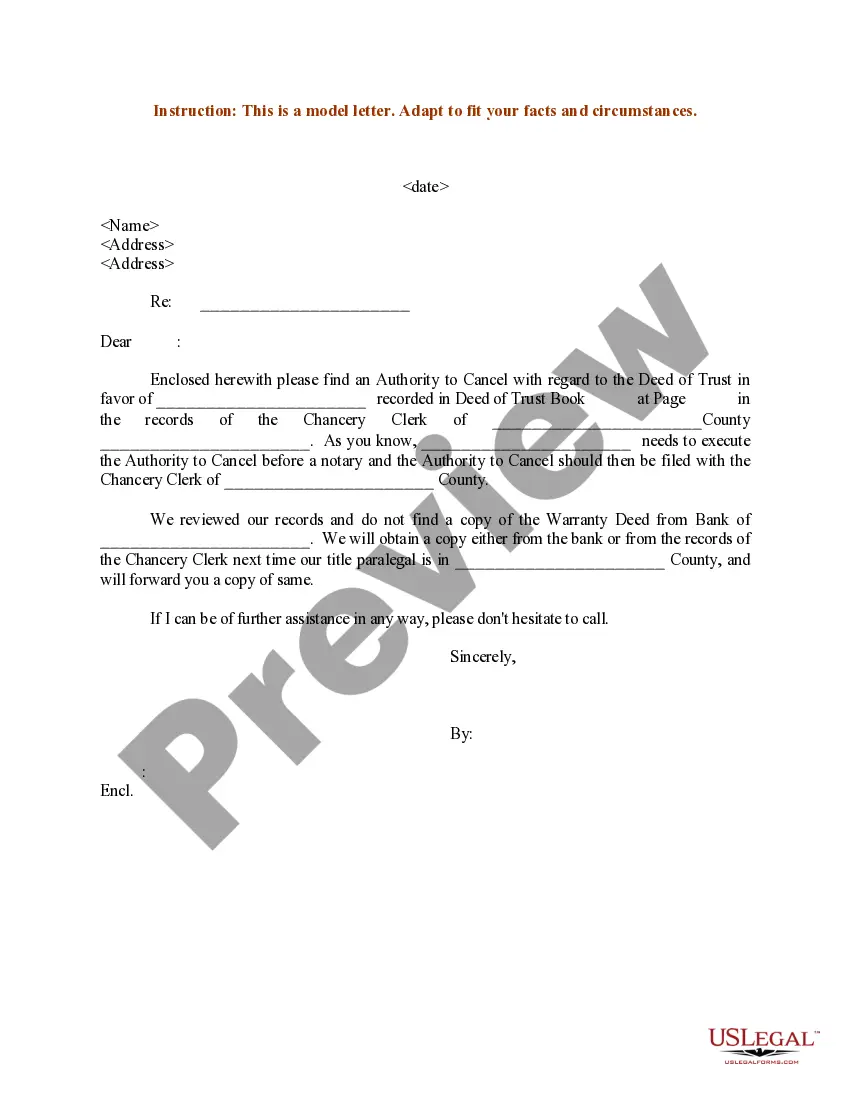
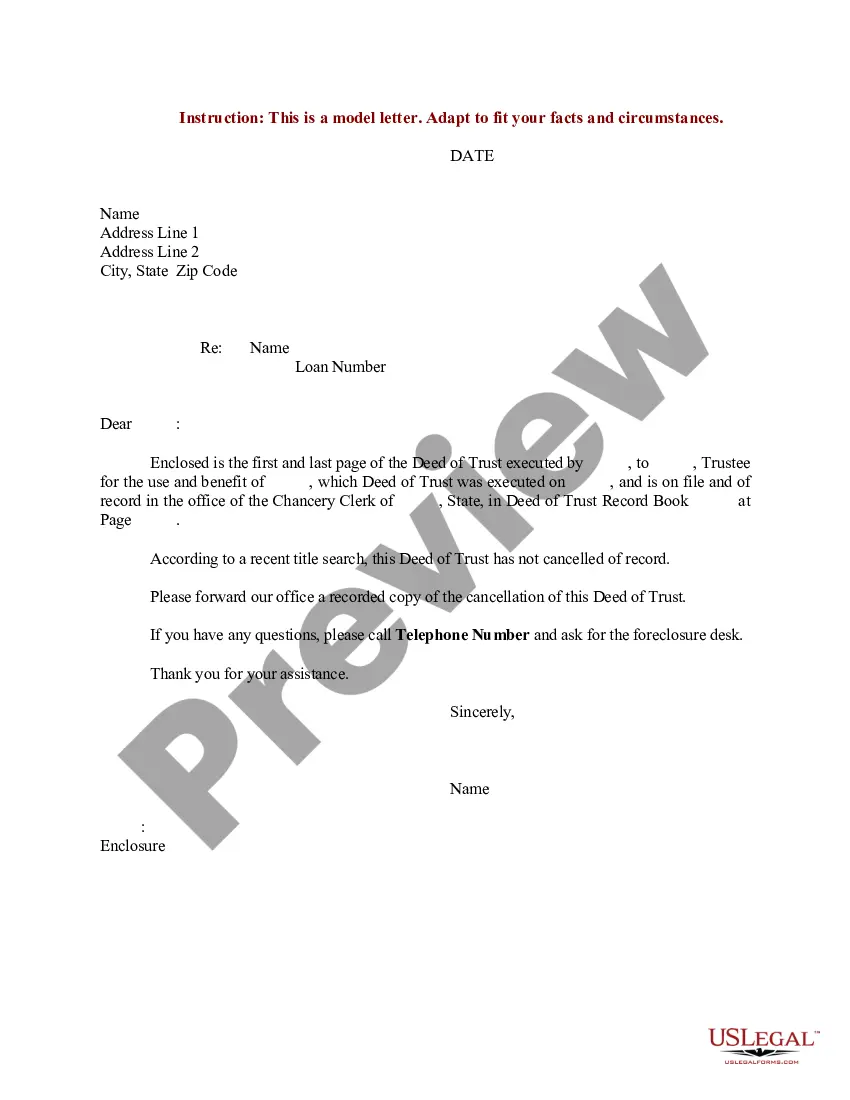
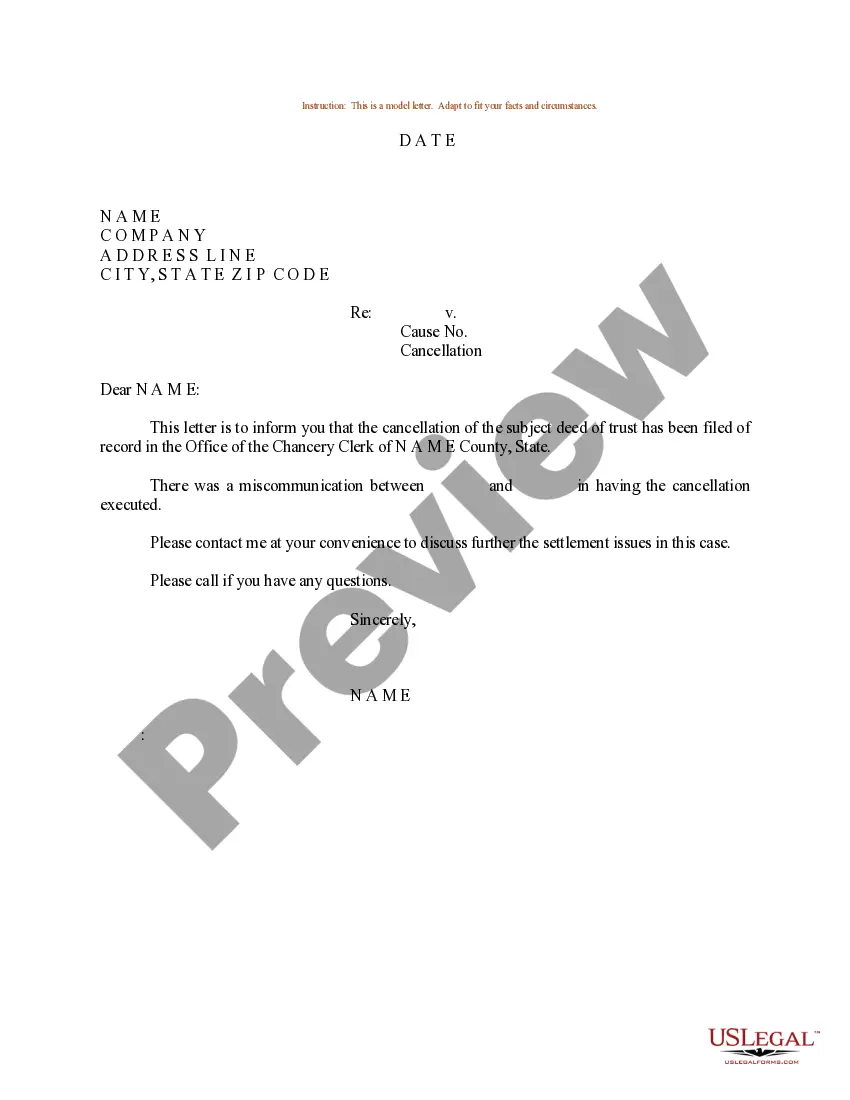
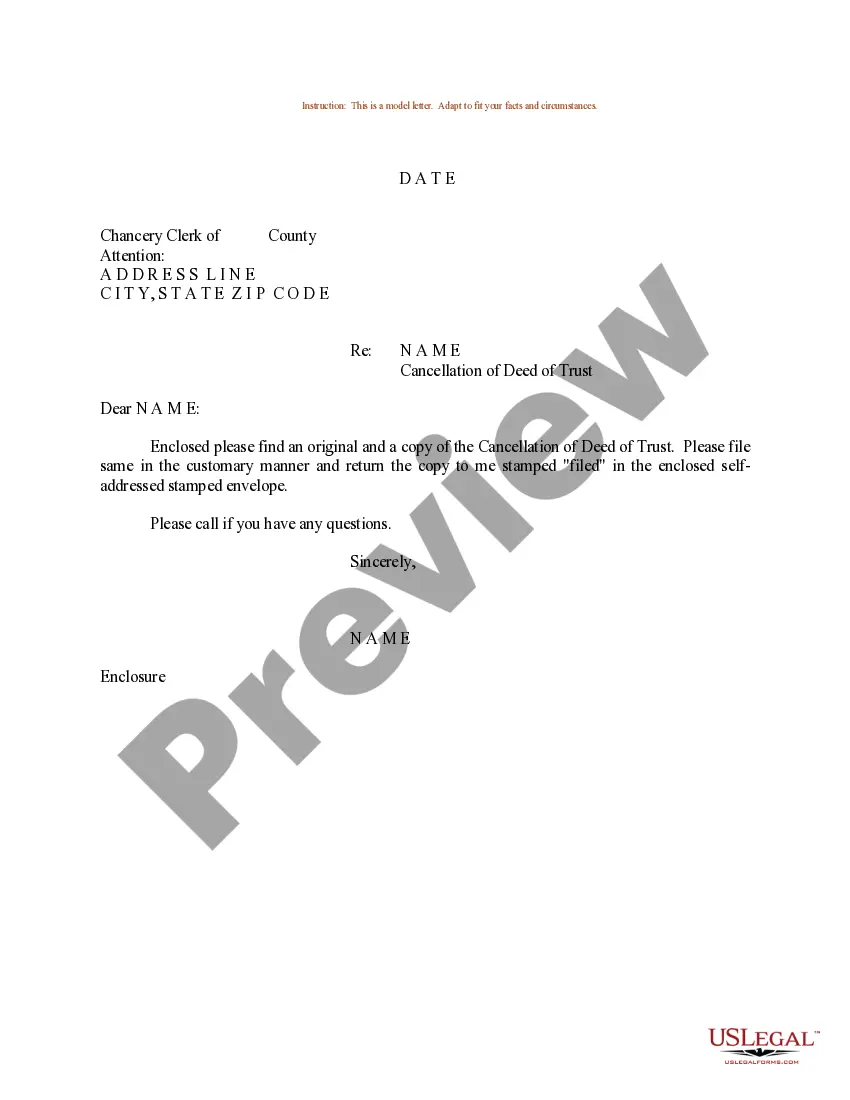
The Sample Letter regarding Authority to Cancel Deed of Trust is a template designed to assist individuals in formally communicating the intention to cancel a deed of trust. This letter is essential for notifying relevant parties, such as lenders or trustees, about the decision to cancel a deed, ensuring that all legal protocols are followed. It differs from similar forms by focusing specifically on the authority to cancel, rather than on authorization to manage or transfer property rights.
Key parts of this document
- Introduction: States the purpose of the letter.
- Authorization Clause: Confirms the sender's authority to cancel the deed.
- Details of the Deed: Includes information about the deed of trust being canceled.
- Contact Information: Provides the sender's and recipient's contact details.
- Signature Line: Space for the sender's signature to validate the letter.
When to use this document
This form is useful in scenarios where a property owner or authorized agent decides to cancel an existing deed of trust. Common situations include when a loan has been paid off, the terms of the trust are no longer needed, or if there has been a mistake in the original deed. This letter helps to formally document this intent to avoid potential legal complications in the future.
Intended users of this form
- Property owners seeking to cancel a deed of trust.
- Authorized representatives acting on behalf of property owners.
- Lenders or financial institutions involved in the property transaction.
- Attorneys assisting clients with real estate matters.
Instructions for completing this form
- Identify the parties involved, including the sender and recipient.
- Specify the details of the deed of trust, including the property address and date of the trust.
- Clearly state the authorization to cancel the deed.
- Provide the sender's contact information and any relevant account numbers.
- Sign and date the letter at the bottom to validate it.
Notarization guidance
This form needs to be notarized to ensure legal validity. US Legal Forms provides secure online notarization powered by Notarize, allowing you to complete the process through a verified video call, available anytime.
Get your form ready online
Our built-in tools help you complete, sign, share, and store your documents in one place.
Make edits, fill in missing information, and update formatting in US Legal Forms—just like you would in MS Word.
Download a copy, print it, send it by email, or mail it via USPS—whatever works best for your next step.
Sign and collect signatures with our SignNow integration. Send to multiple recipients, set reminders, and more. Go Premium to unlock E-Sign.
If this form requires notarization, complete it online through a secure video call—no need to meet a notary in person or wait for an appointment.
We protect your documents and personal data by following strict security and privacy standards.

Make edits, fill in missing information, and update formatting in US Legal Forms—just like you would in MS Word.

Download a copy, print it, send it by email, or mail it via USPS—whatever works best for your next step.

Sign and collect signatures with our SignNow integration. Send to multiple recipients, set reminders, and more. Go Premium to unlock E-Sign.

If this form requires notarization, complete it online through a secure video call—no need to meet a notary in person or wait for an appointment.

We protect your documents and personal data by following strict security and privacy standards.
Mistakes to watch out for
- Failing to include all necessary parties in the letter.
- Omitting specific details about the deed of trust.
- Not signing or dating the letter, which can invalidate it.
- Using unclear language that may lead to misunderstandings.
Benefits of completing this form online
- Convenience of downloading and customizing the form immediately.
- Editability allows users to tailor the content to their specific situation.
- Access to legal form templates drafted by licensed attorneys.
Summary of main points
- The Sample Letter regarding Authority to Cancel Deed of Trust is essential for formally requesting deed cancellation.
- It includes critical components such as property details and a clear statement of authority.
- Use this form to document your request and avoid potential disputes or errors.
- Understanding local requirements can assist in ensuring the effectiveness of your letter.
Looking for another form?
Form popularity
FAQ
To change the trust deed itself, you must execute a deed of variation. This is a document that updates the relevant section of the original trust deed. The deed of variation forms part of the documentation of your discretionary trust and details how the trust deed has been changed over time.
A deed executed in blank, without designation of a grantee, is also void.In contrast, if the title is voidable, the grantor can choose to rescind the deed against the grantee, but title may be enforced by a bona fide purchaser. For example, a deed is voidable if it was obtained by fraud in the inducement.
...the trust deed and vide clauses 18 and 19, the trustees have been given power to amend, alter, change or modify the provisions of the trust deed with a condition mentioned therein.
You can make changes to your trust in one of three ways.Sign a complete trust restatement that's valid under your applicable state law. Sign a complete revocation of the original trust agreement and any amendments, then transfer the assets held in the revoked trust back into your own name.
A deed of trust is a legal contract between a lender and a borrower to transfer some interest of the borrower's land to a trustee (see References 1).Like most other legal contracts, it can be modified through an amendment.
Pay off your mortgage fully. Draft a letter to your mortgage lender requesting a deed of reconveyance.
Locate the original trust. The grantor must locate the original trust documents and identify the specific provisions that require amendment. Prepare an amendment form. Get the amendment form notarized. Attach amendment form to original trust.
The person who owns the property usually signs a promissory note and a deed of trust. The deed of trust does not have to be recorded to be valid.
The property's title remains in the trust until the loan is paid off, or satisfied, then it is released from the trust. To complete the release, the lender prepares a deed of reconveyance. This document states that the conditions of the loan have been met and you have no further financial obligations to the lender.