Sample Letter for Discharge of Debtor and Order Approving Trustee's Report of No Distribution and Closing Estate
Understanding this form
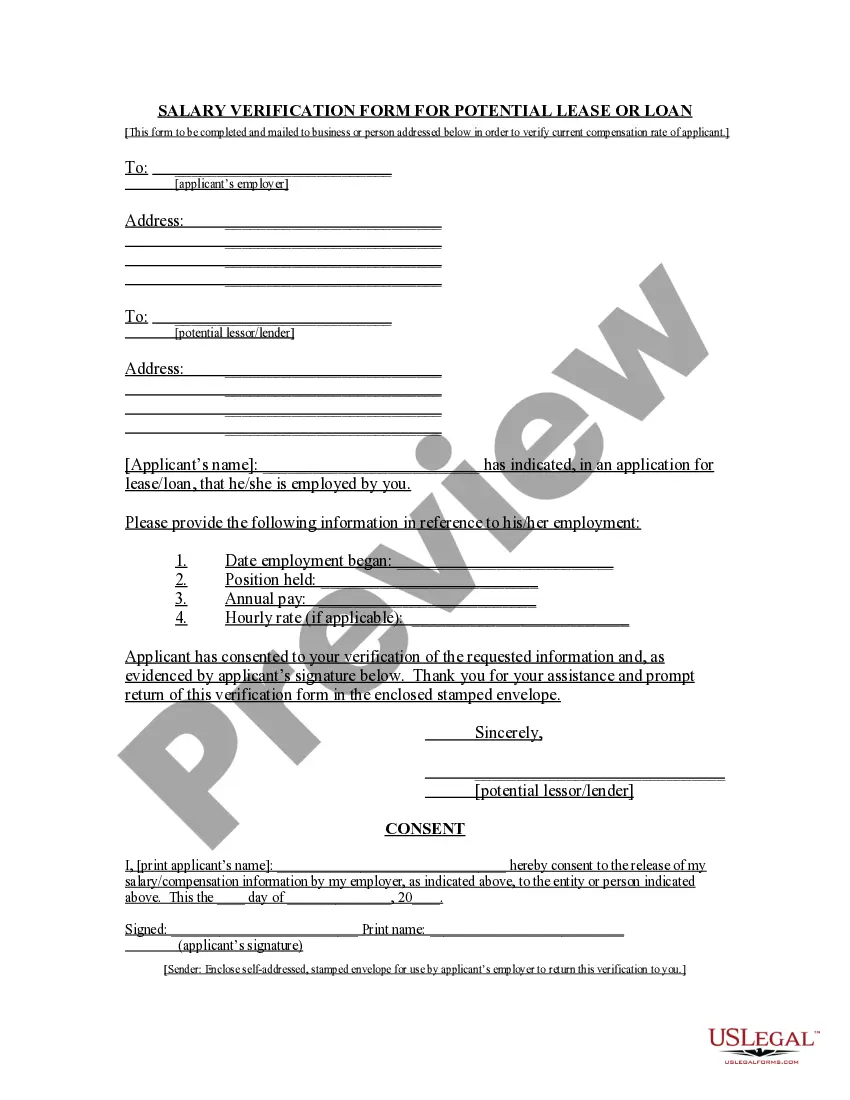
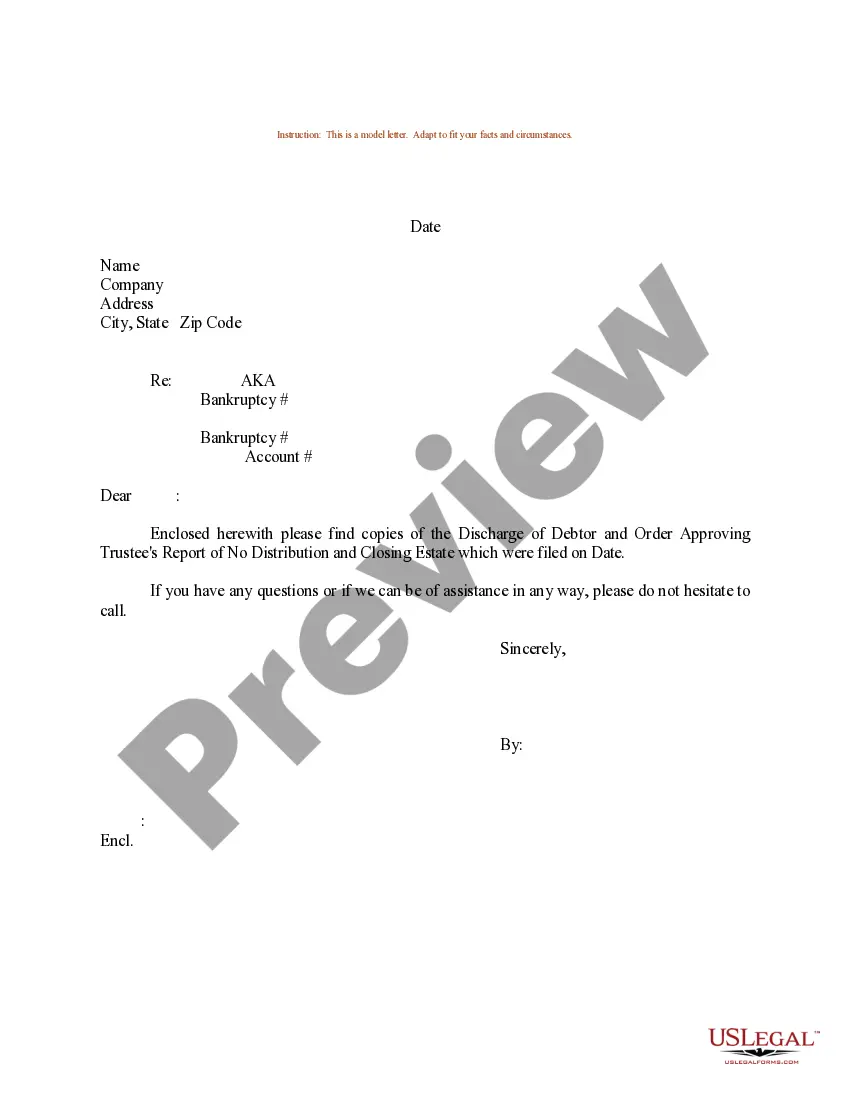
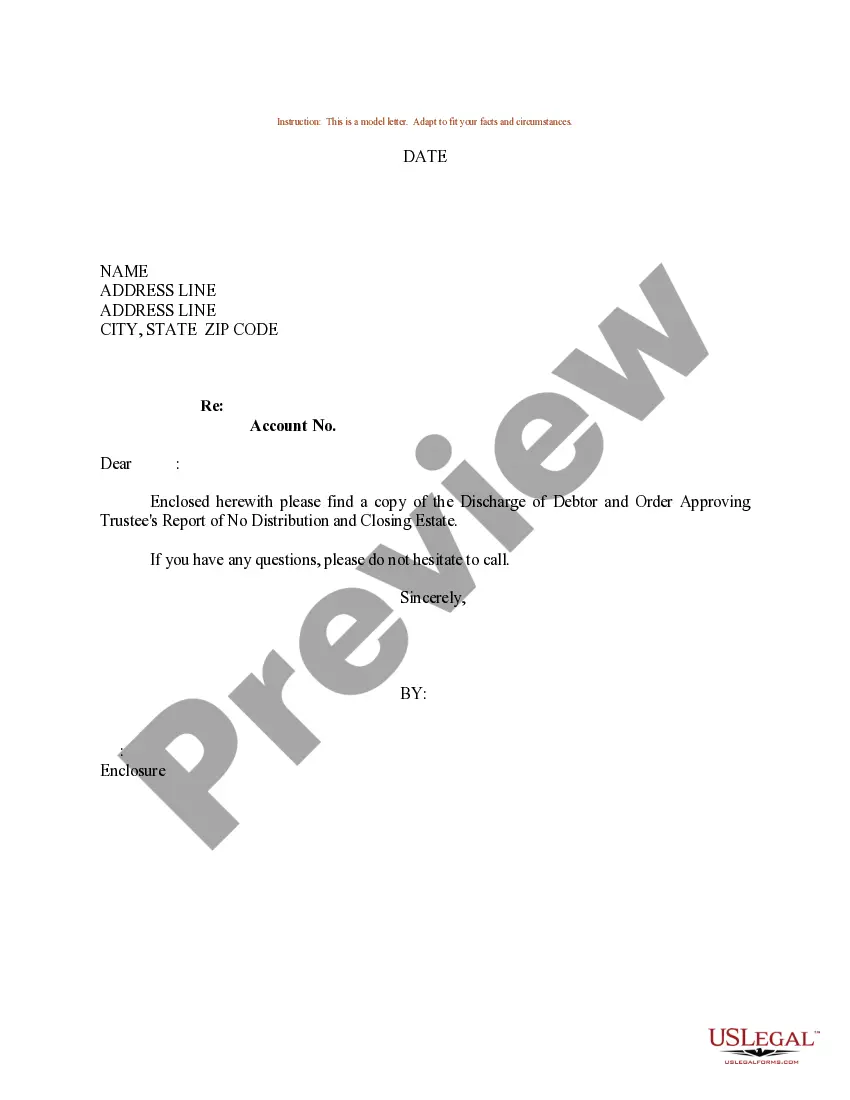
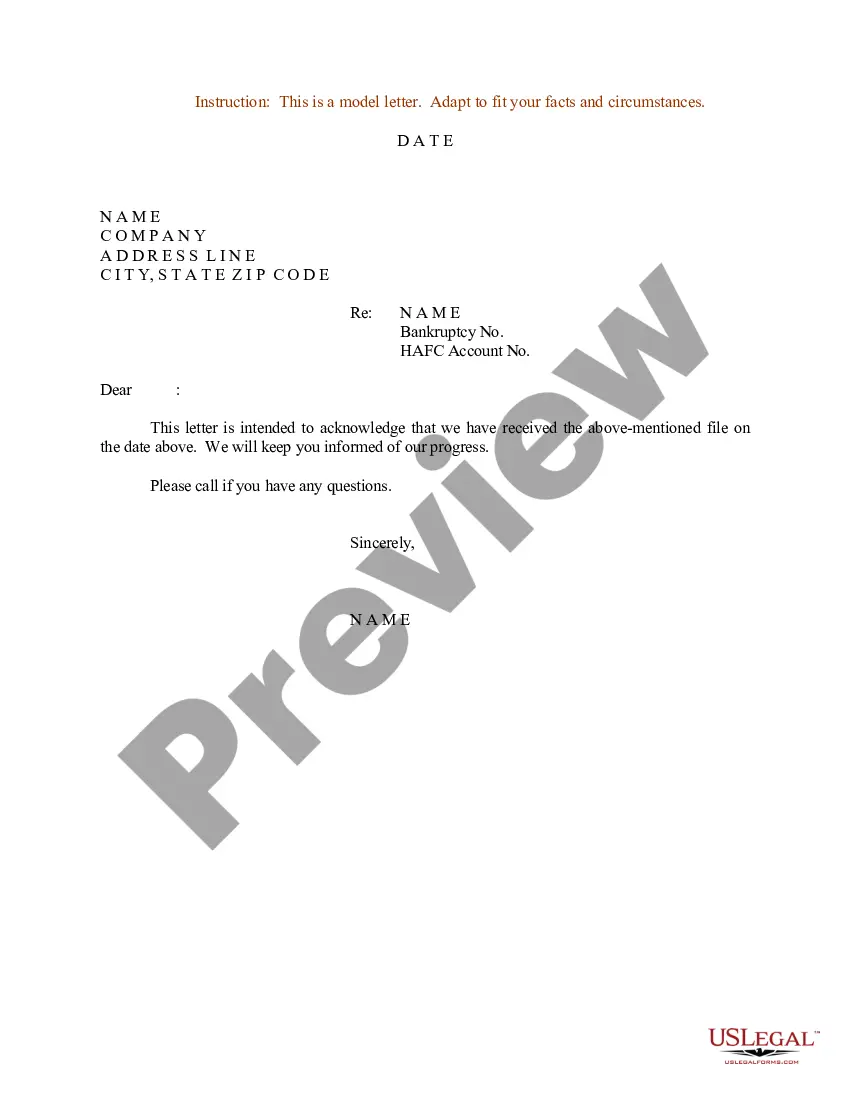
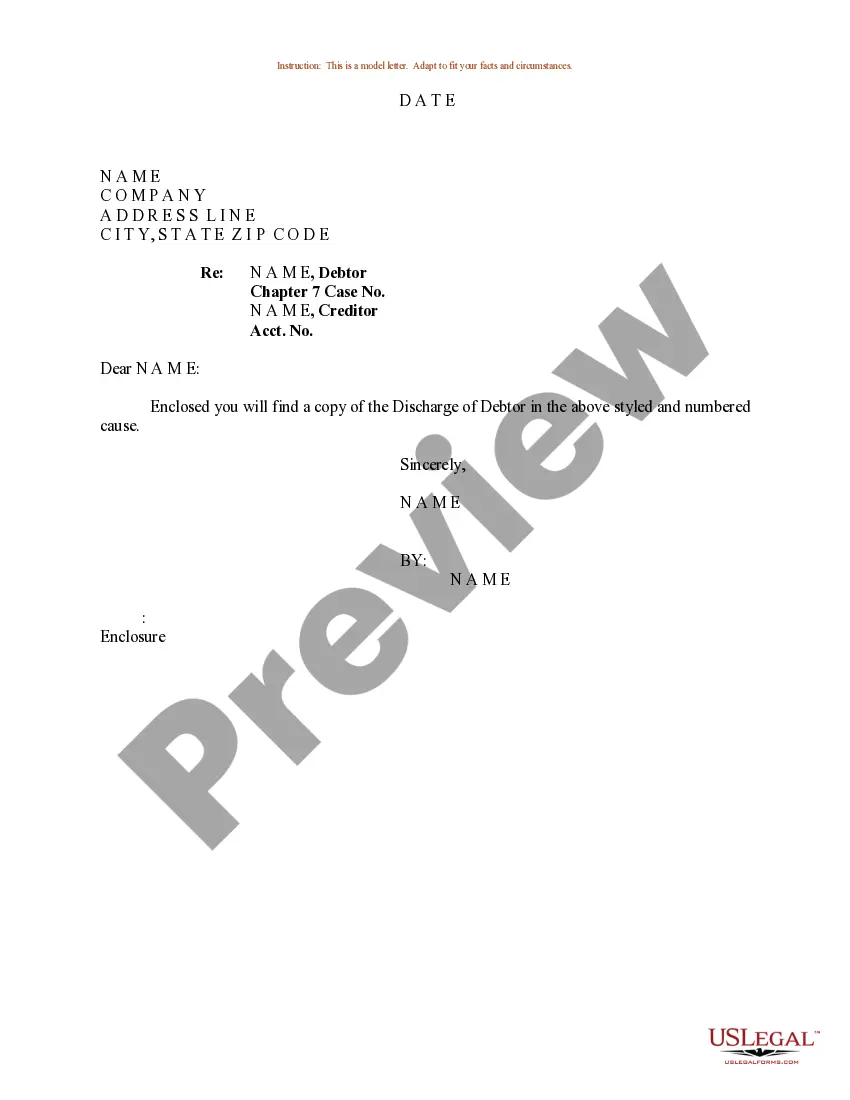
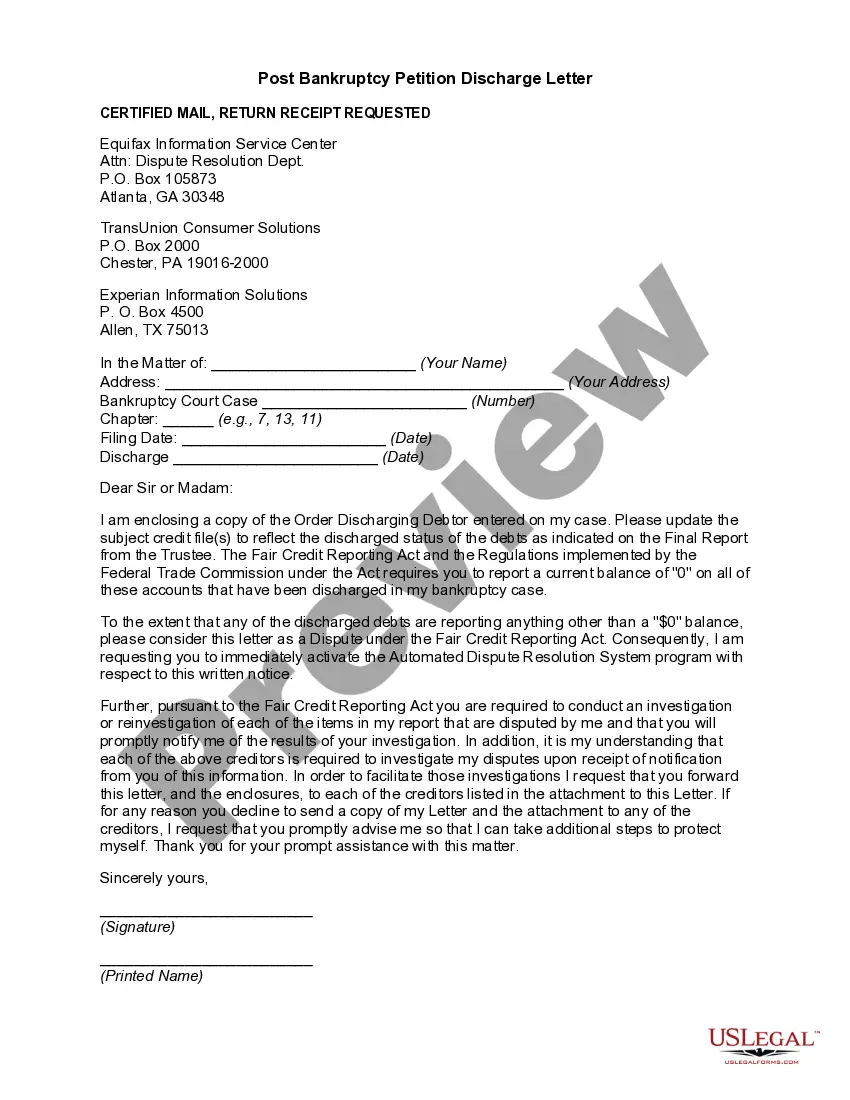
The Sample Letter for Discharge of Debtor and Order Approving Trustee's Report of No Distribution and Closing Estate is a template that allows individuals or legal representatives to formally conclude a bankruptcy case. This form communicates the discharge of the debtor and indicates that the trustee reported no distribution of assets, facilitating the closure of the estate. Unlike other legal forms, this specific template addresses the conditions surrounding discharge and estate closure post-bankruptcy, making it an essential document for proper legal compliance and record-keeping.
What’s included in this form
- Date of the letter
- Recipient's name and contact information
- Statement of discharge of the debtor
- Approval of the trustee's report
- Notification of no distribution of assets
- Closing remarks regarding the estate
When to use this form
This form is typically used when a bankruptcy case is officially concluded, and there are no remaining assets to distribute to creditors. It is appropriate when the bankruptcy trustee has completed their reporting duties, and the debtor is fully discharged. Using this letter helps ensure that all parties are aware of the case's closure and provides legal confirmation of the debtor's discharge.
Who needs this form
- Individuals who have filed for bankruptcy
- Bankruptcy trustees overseeing a case
- Legal representatives assisting a debtor
- Creditors seeking formal notification of discharge
Steps to complete this form
- Enter the date at the top of the letter
- Fill in the recipient's name and address details
- Clearly state that the debtor is discharged
- Include a statement that the trustee's report indicates no distribution
- Conclude with remarks about closing the estate
- Sign the letter and provide necessary contact information
Does this form need to be notarized?
This form does not typically require notarization unless specified by local law. Users should check their respective jurisdiction for any additional requirements.
Get your form ready online
Our built-in tools help you complete, sign, share, and store your documents in one place.
Make edits, fill in missing information, and update formatting in US Legal Forms—just like you would in MS Word.
Download a copy, print it, send it by email, or mail it via USPS—whatever works best for your next step.
Sign and collect signatures with our SignNow integration. Send to multiple recipients, set reminders, and more. Go Premium to unlock E-Sign.
If this form requires notarization, complete it online through a secure video call—no need to meet a notary in person or wait for an appointment.
We protect your documents and personal data by following strict security and privacy standards.

Make edits, fill in missing information, and update formatting in US Legal Forms—just like you would in MS Word.

Download a copy, print it, send it by email, or mail it via USPS—whatever works best for your next step.

Sign and collect signatures with our SignNow integration. Send to multiple recipients, set reminders, and more. Go Premium to unlock E-Sign.

If this form requires notarization, complete it online through a secure video call—no need to meet a notary in person or wait for an appointment.

We protect your documents and personal data by following strict security and privacy standards.
Mistakes to watch out for
- Failing to include the date, which can cause confusion
- Omitting recipient information that may delay processing
- Neglecting to state specific details about asset distribution
- Not signing the letter, rendering it invalid
- Using unclear language that may lead to misinterpretations
Benefits of using this form online
- Convenience of accessing and downloading the template anytime
- Ability to edit the document easily to fit specific situations
- Reliability of using a form drafted by licensed attorneys
- Immediate availability of the form, reducing waiting times
Looking for another form?

Form popularity
FAQ
Well first, the trustee can apply to the court for his discharged. This means he is no longer administering your bankruptcy.Once the trustee is discharged, all of the original creditors are able to come back.
The Chapter 7 trustee can keep the case open for about four to six months after filing the bankruptcy papers.
Bankruptcy and Foreclosure While filing for Chapter 7 bankruptcy can stall the foreclosure process during the bankruptcy proceedings, which usually takes about four months, mortgage lenders can ask the court to lift the bankruptcy stay so that the lender can proceed with the foreclosure.
The Trustee's Report of No Distribution, or NDR, lets the court and all interested parties know that no money will be paid to creditors. If a NDR is filed, the court will close the bankruptcy case shortly after the discharge has been entered.I request that I be discharged from any further duties as trustee.
The Chapter 7 Discharge. A discharge releases individual debtors from personal liability for most debts and prevents the creditors owed those debts from taking any collection actions against the debtor.
Well first, the trustee can apply to the court for his discharged. This means he is no longer administering your bankruptcy.Once the trustee is discharged, all of the original creditors are able to come back.
The bankruptcy is reported in the public records section of your credit report. Both the bankruptcy and the accounts included in the bankruptcy should indicate they are discharged once the bankruptcy has been completed. To verify this, the first step is to get a copy of your personal credit report.
Payment of reaffirmed debts. In a Chapter 7 case, the debtor can reaffirm debts that would otherwise be discharged at the end of the case. If the debtor reaffirms a debt, such as a house or a car, the debtor must resume payments within 30 days after the 341 meeting.
Firstly, that debt can likely not be added to a Chapter 7 later for numerous reasons. The most obvious of these is that the debtor is barred from filing another bankruptcy for another 7 years. If you default on those payments then the creditor can repossess the property that secures the debt.