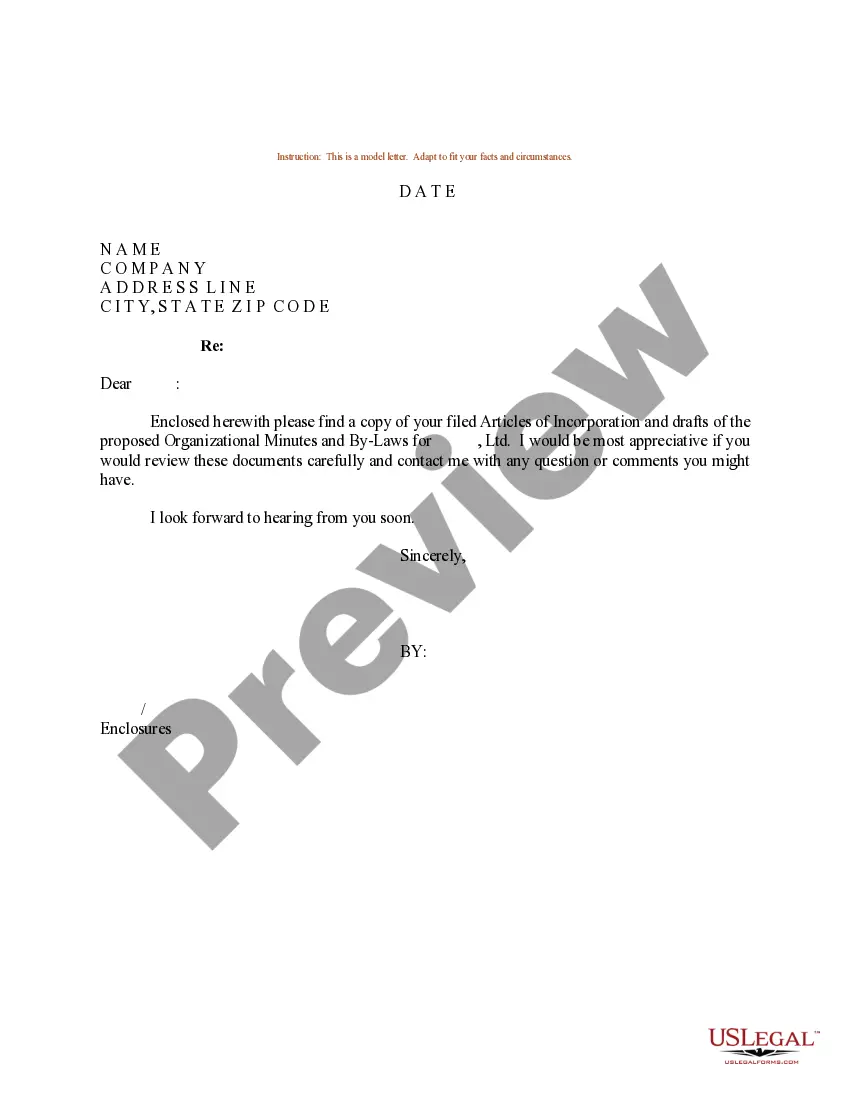
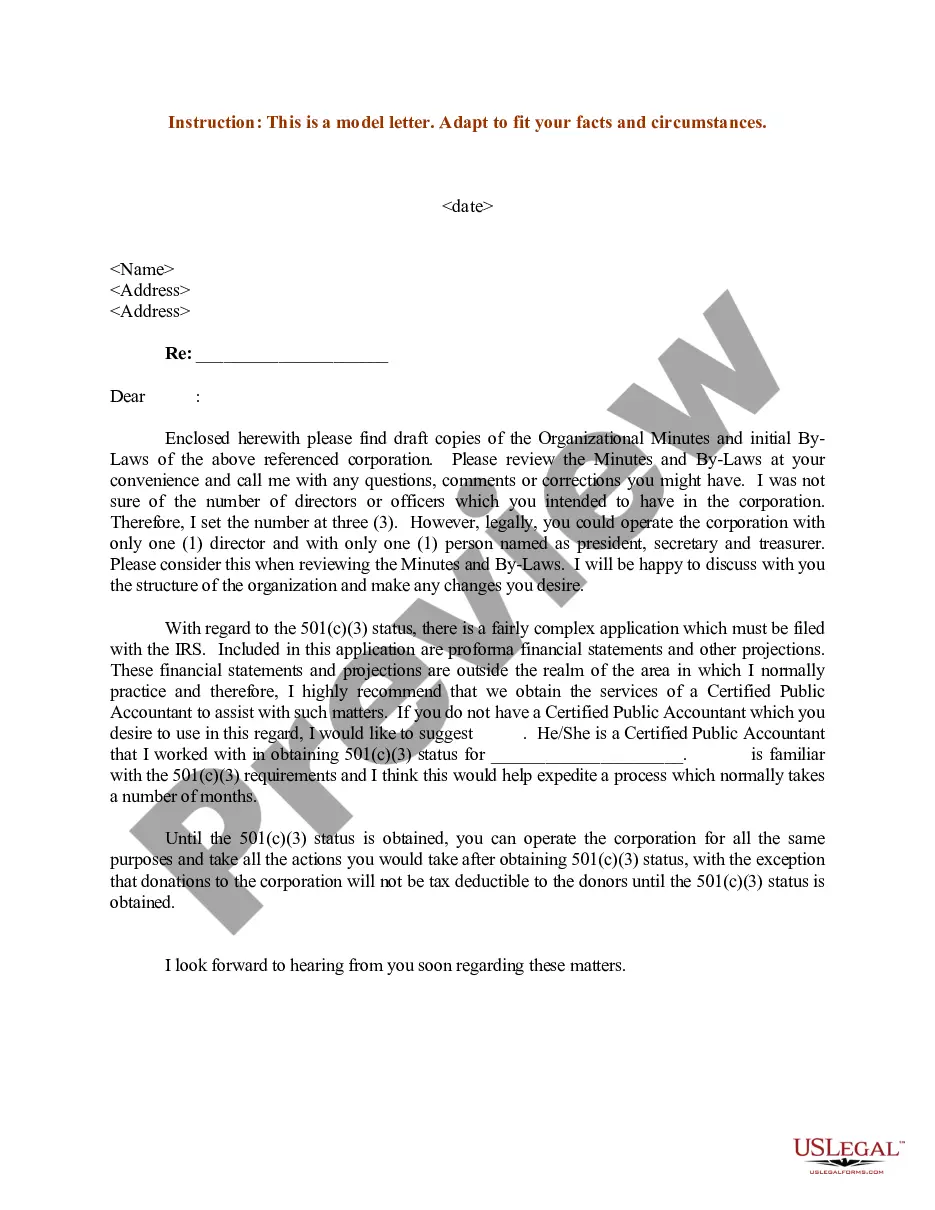
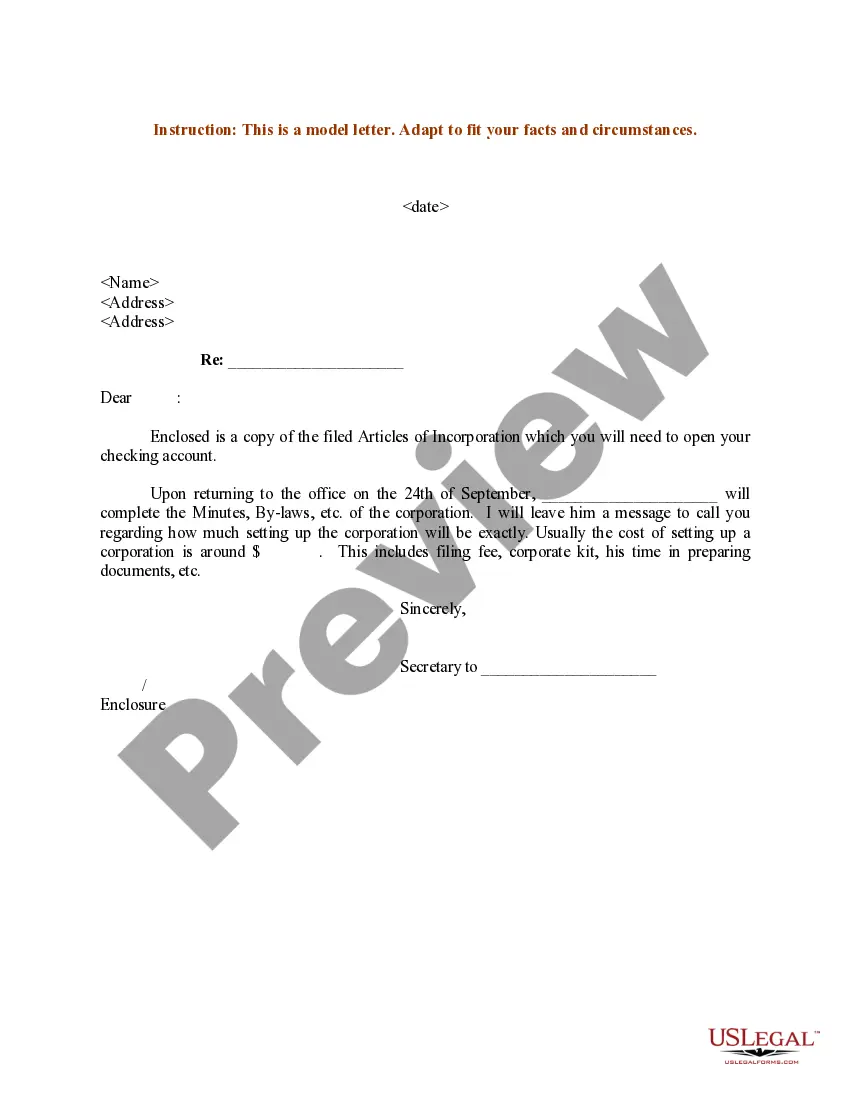
Sample Letter regarding Articles of Incorporation - Drafts of Minutes
Overview of this form
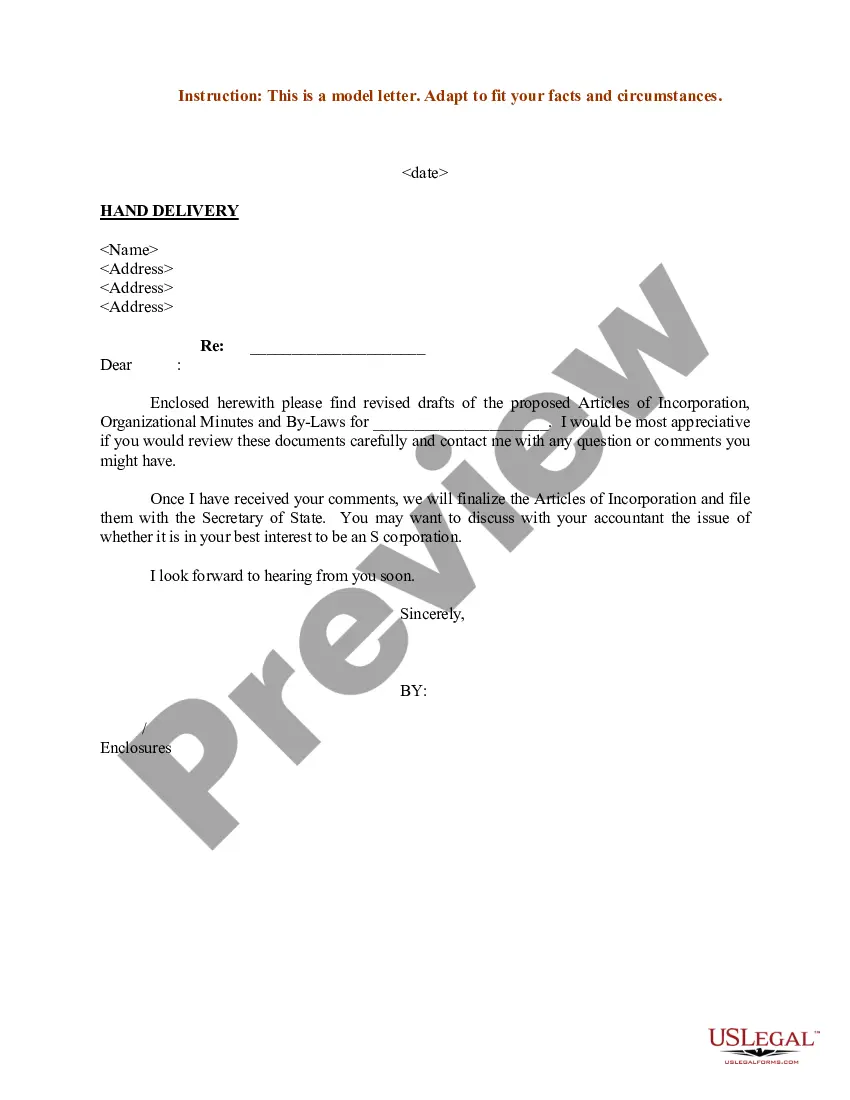
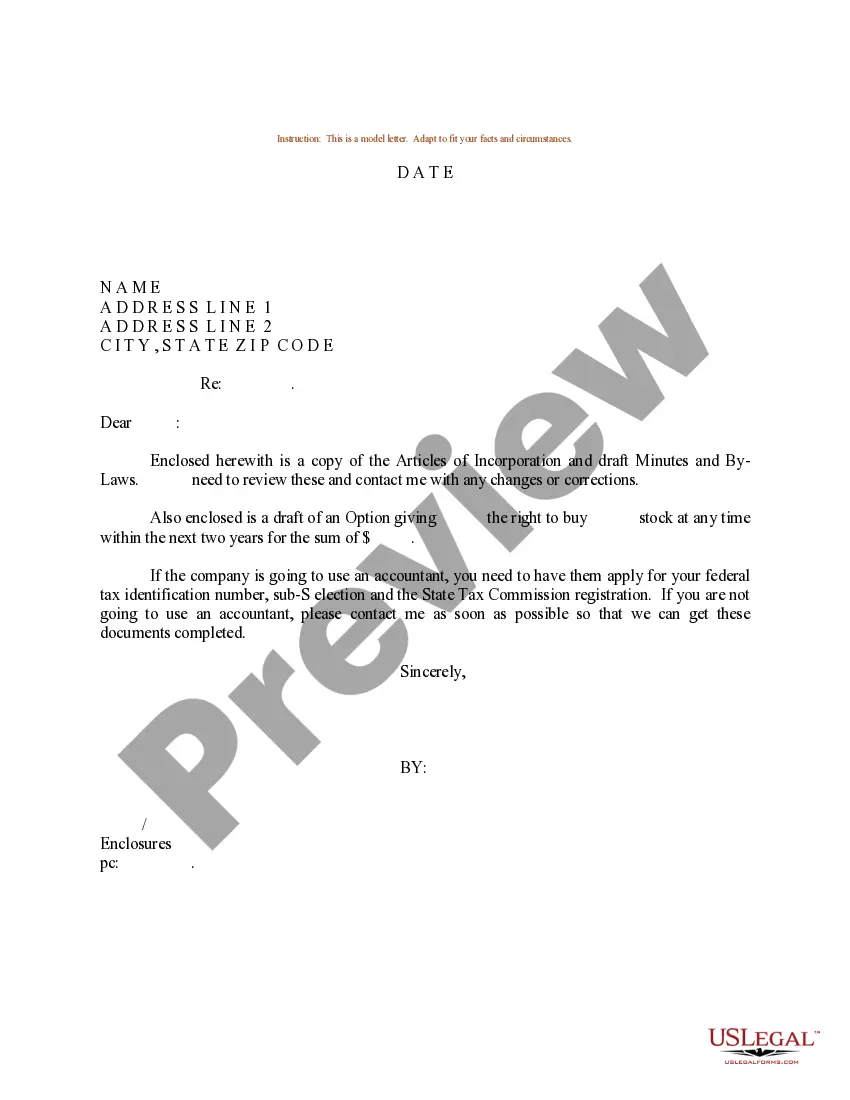
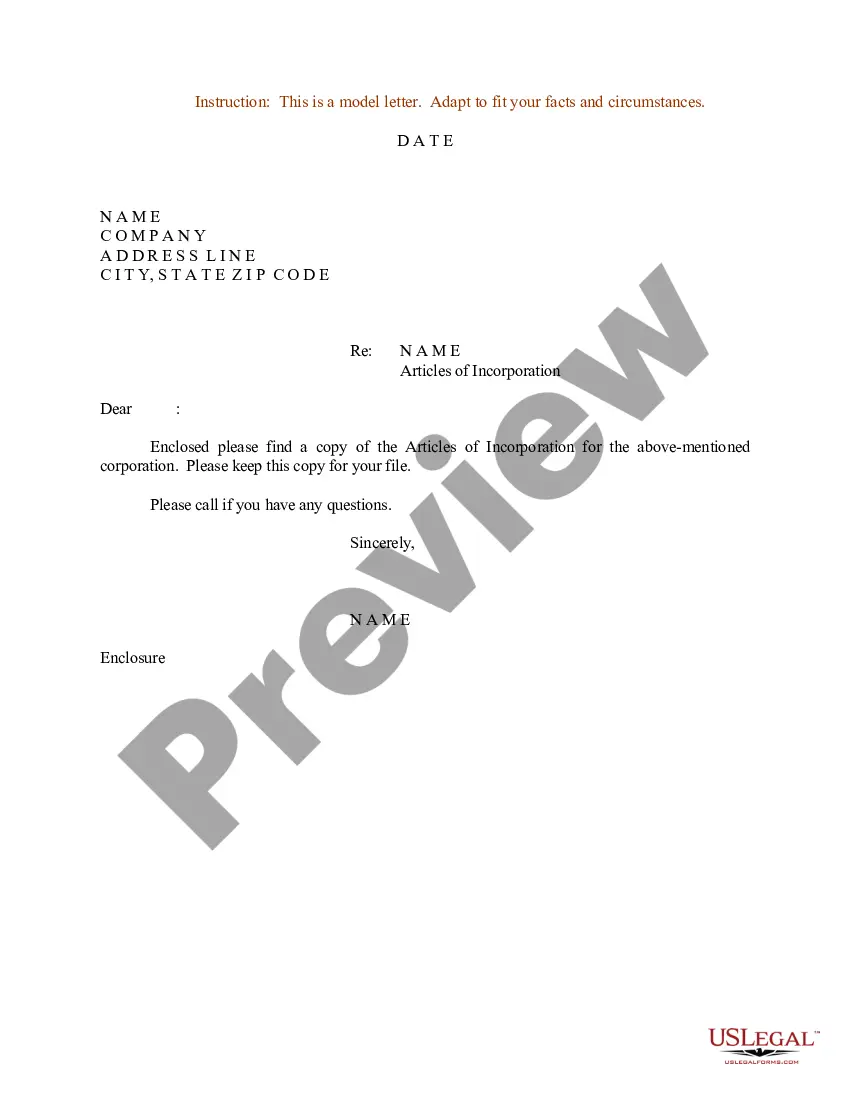
The Sample Letter regarding Articles of Incorporation - Drafts of Minutes is a document used to communicate crucial information about the formation and initial meetings of a corporation. This letter typically accompanies the articles of incorporation, outlining the drafted minutes of the first meetings. It serves to ensure that all legal administrative tasks related to the incorporation process are documented and clear for stakeholders. Unlike general incorporation documents, this letter specifically focuses on the minutes, highlighting the decisions made during initial meetings and ensuring transparency among shareholders and directors.
What’s included in this form
- Date of the letter
- Name of the recipient with proper address
- Company name and address
- Summary of minutes from the first meetings
- Signature line for the sender
When to use this document
This form is used when a corporation has been established and there is a need to document the minutes of the initial meeting among directors or shareholders. It is essential for communicating the decisions made during that meeting, such as the appointment of officers, adoption of bylaws, and other organizational matters. This letter is important for maintaining clear records and for compliance with state requirements regarding corporate governance.
Who needs this form
- Corporate officers responsible for governance
- Directors and shareholders of newly formed corporations
- Attorneys assisting clients with corporate matters
- Individuals seeking to maintain compliance and proper documentation
Steps to complete this form
- Enter the date of the letter at the top.
- Fill in the name and address of the recipient.
- Include the name and complete address of the corporation.
- Summarize the key decisions made during the initial meetings.
- Sign the letter to authenticate it.
Notarization guidance
In most cases, this form does not require notarization. However, some jurisdictions or signing circumstances might. US Legal Forms offers online notarization powered by Notarize, accessible 24/7 for a quick, remote process.
Get your form ready online
Our built-in tools help you complete, sign, share, and store your documents in one place.
Make edits, fill in missing information, and update formatting in US Legal Forms—just like you would in MS Word.
Download a copy, print it, send it by email, or mail it via USPS—whatever works best for your next step.
Sign and collect signatures with our SignNow integration. Send to multiple recipients, set reminders, and more. Go Premium to unlock E-Sign.
If this form requires notarization, complete it online through a secure video call—no need to meet a notary in person or wait for an appointment.
We protect your documents and personal data by following strict security and privacy standards.

Make edits, fill in missing information, and update formatting in US Legal Forms—just like you would in MS Word.

Download a copy, print it, send it by email, or mail it via USPS—whatever works best for your next step.

Sign and collect signatures with our SignNow integration. Send to multiple recipients, set reminders, and more. Go Premium to unlock E-Sign.

If this form requires notarization, complete it online through a secure video call—no need to meet a notary in person or wait for an appointment.

We protect your documents and personal data by following strict security and privacy standards.
Mistakes to watch out for
- Failing to include all essential decisions made during the meeting.
- Not accurately capturing the names and titles of the individuals involved.
- Incorrectly formatting the letter, which can mislead recipients.
- Neglecting to sign the letter, making it unofficial.
Benefits of completing this form online
- Convenient access from anywhere at any time.
- Editable formats allow easy customization to meet specific needs.
- Reliability from templates drafted by licensed attorneys.
- Time-efficient process for creating and finalizing corporate documentation.
Looking for another form?
Form popularity
FAQ
Allow time for members to get settled and focused. Provide a way for members to share what's weighing on their minds. Include time for socializing. Clarify each person's specific role for the meeting. Take time to formally review and approve the agenda.
1Hold Shareholders' and Directors' Meetings.2Document Shareholders' and Directors' Corporate Decisions.3Maintain a Separation Between the Corporation and the Owners/Officers/Directors.4Keep Detailed Financial Records.5File a Separate Corporate Income Tax Return.
Taking Meeting Notes. Type Meeting Notes - Type up a full version of the meeting minutes. Circulate a Draft - Follow your corporation's policy about who must review the draft notes. Distribute Minutes to Board - Usually in advance of the next meeting.
Date, time, and location. Minutes should include this basic information about when and where the meeting was held and how long it lasted. Creator. List of persons present. Topics list. Voting record. Review and approval.
If you run an S corporation, you are not required by law to keep meeting minutes. However, they can be a good way to record the progress your company makes toward meeting corporate objectives. Minutes can also be useful as a legal record of corporate activities in the event of a lawsuit or tax audit.
Name of the organization. date and time of meeting. board members in attendance, excused, and absent. existence of a quorum. motions made and by whom. brief account of any debate. voting results. names of abstainers and dissenters.
Use a template. Check off attendees as they arrive. Do introductions or circulate an attendance list. Record motions, actions, and decisions as they occur. Ask for clarification as necessary. Write clear, brief notes-not full sentences or verbatim wording.
Organization name. Date of meeting. Time the meeting was called to order. Board members present. Name of the presiding officer. Absent board members. Note whether the session meets quorum. Guests and organizational staff present.
Meeting name and place. Date and time of the meeting. List of meeting participants. Purpose of the meeting. For each agenda items: decisions, action items, and next steps. Next meeting date and place. Documents to be included in the meeting report.