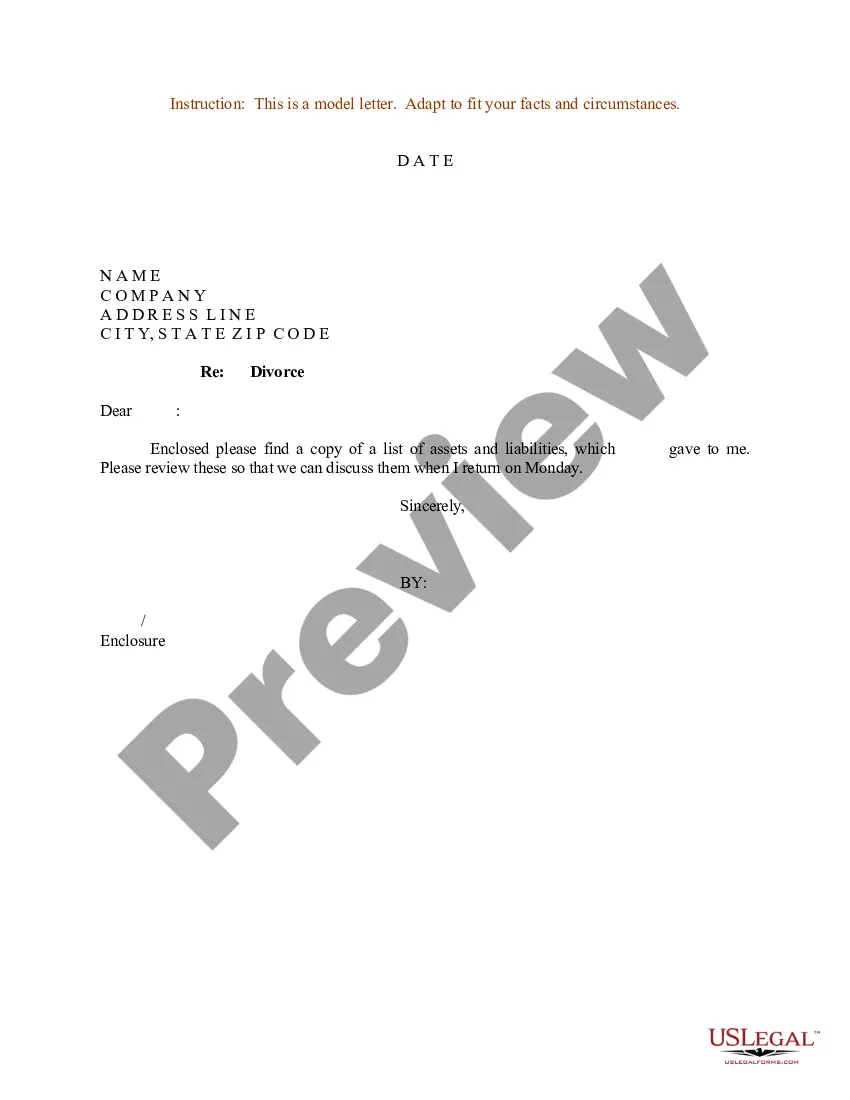
Sample Letter for Divorce - List of Liabilities and Assets
What is this form?
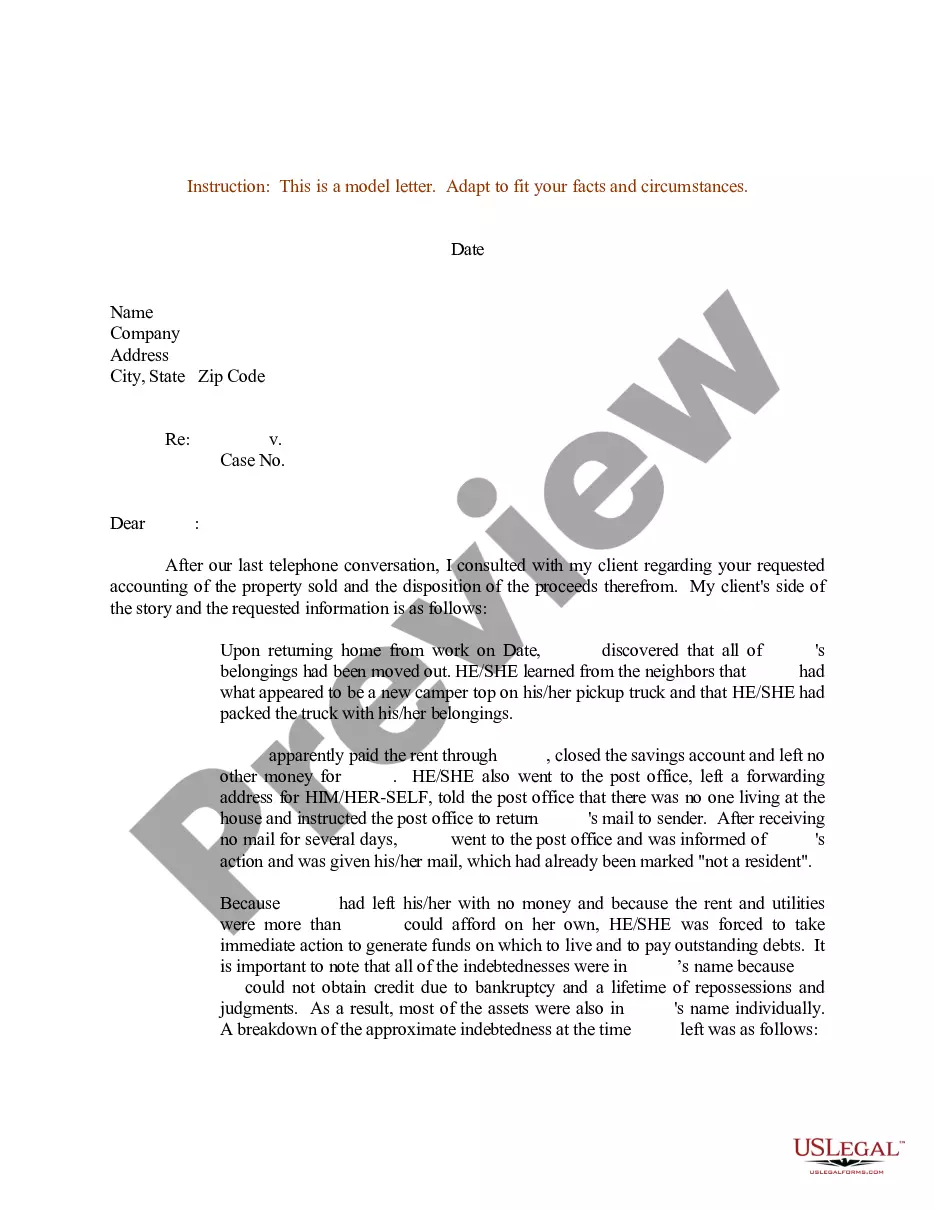
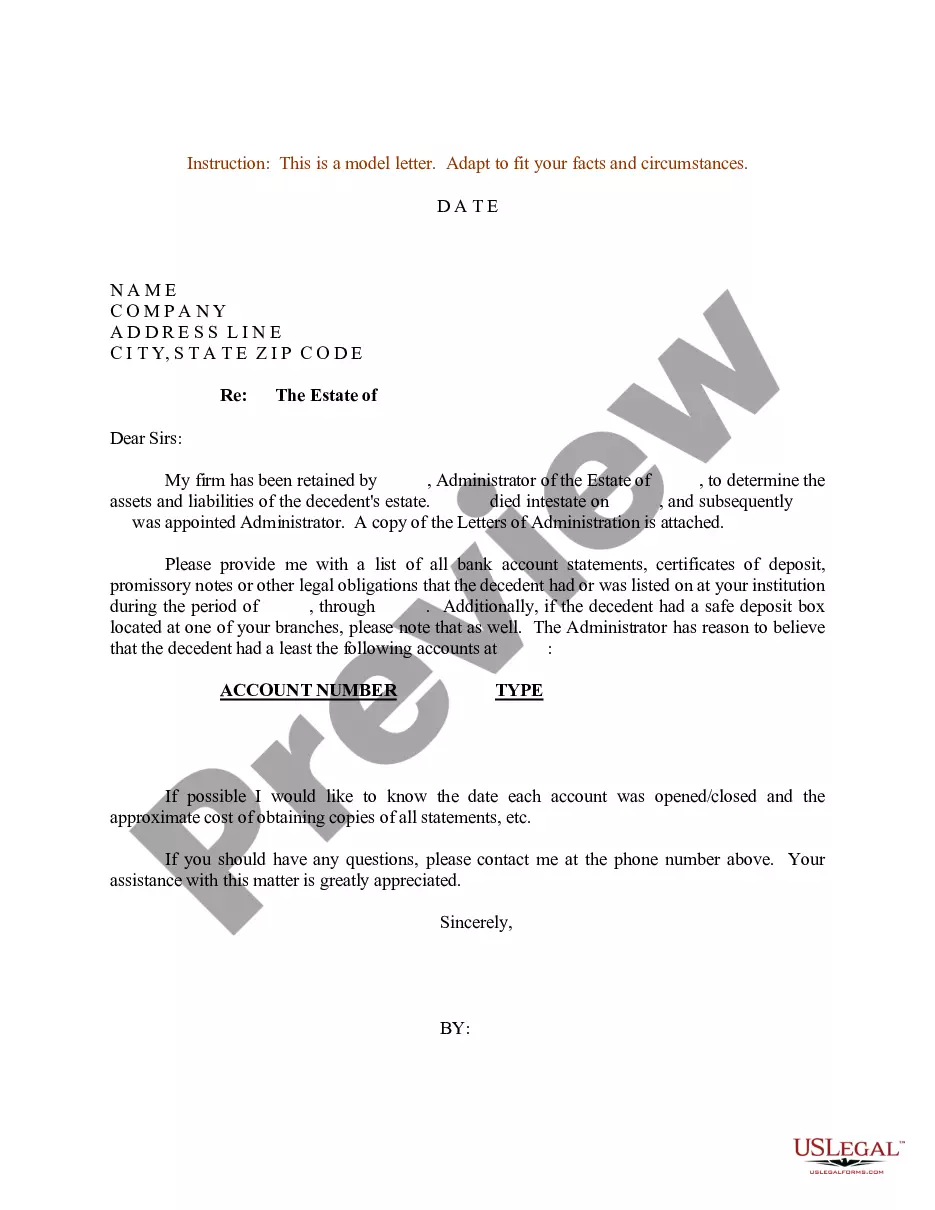
The Sample Letter for Divorce - List of Liabilities and Assets is a document used to outline an individual's financial obligations and assets during divorce proceedings. This letter serves as a sample template that can be customized to your situation, differentiating it from other forms that may only summarize financial information without offering a structured letter format. It helps ensure that all financial aspects are considered during the divorce process, allowing for fair negotiations and settlements.
What’s included in this form
- Date of the letter
- Party names and addresses
- Subject line indicating the purpose of the letter
- Detailed lists of liabilities, such as debts and obligations
- Comprehensive lists of assets, including property, bank accounts, and investments
When to use this form
This form is useful when preparing for a divorce and needing to disclose financial information to your spouse or legal counsel. It is particularly important in cases where assets and debts must be evaluated and divided, as it provides a clear overview of both parties' financial situations to facilitate negotiations during the divorce proceedings.
Who needs this form
This form is intended for:
- Individuals initiating a divorce
- Spouses looking to clarify their financial situation
- Anyone interested in providing a transparent view of assets and debts for legal purposes
- Individuals who may require assistance from legal professionals during the divorce process
Steps to complete this form
- Enter the date at the top of the letter.
- Fill in your full name and the address where you reside.
- Input the name and address of the other party involved.
- State the purpose of the letter in the subject line.
- Clearly list all liabilities, detailing each debt or obligation.
- Provide a comprehensive list of assets, including all relevant property and financial accounts.
Does this document require notarization?
This form does not typically require notarization unless specified by local law. However, it is advisable to verify whether notarization is necessary in your jurisdiction to ensure that the document is legally binding.
Get your form ready online
Our built-in tools help you complete, sign, share, and store your documents in one place.
Make edits, fill in missing information, and update formatting in US Legal Forms—just like you would in MS Word.
Download a copy, print it, send it by email, or mail it via USPS—whatever works best for your next step.
Sign and collect signatures with our SignNow integration. Send to multiple recipients, set reminders, and more. Go Premium to unlock E-Sign.
If this form requires notarization, complete it online through a secure video call—no need to meet a notary in person or wait for an appointment.
We protect your documents and personal data by following strict security and privacy standards.

Make edits, fill in missing information, and update formatting in US Legal Forms—just like you would in MS Word.

Download a copy, print it, send it by email, or mail it via USPS—whatever works best for your next step.

Sign and collect signatures with our SignNow integration. Send to multiple recipients, set reminders, and more. Go Premium to unlock E-Sign.

If this form requires notarization, complete it online through a secure video call—no need to meet a notary in person or wait for an appointment.

We protect your documents and personal data by following strict security and privacy standards.
Mistakes to watch out for
- Failing to include all liabilities or assets.
- Using unclear terminology that could confuse the recipient.
- Omitting the date or contact information.
- Not reviewing the form for accuracy before sending.
Benefits of using this form online
- Easy access to a professionally drafted template.
- Editable format allows for personalization according to your specific situation.
- Reliable source of legal documentation that has been reviewed by attorneys.
- Convenient downloading options, enabling quick use in your divorce proceedings.
Looking for another form?









Form popularity
FAQ
Your divorce settlement agreement should cover everything that is important to you, including custody of your children, child support payments, alimony, and the separation of your property, such as your family home, vehicles, and other assets.
There are many factors to consider, including assets, incomes, living expenses, inflation, alimony, child support, taxes, retirement plans, investments, medical expenses and health insurance costs, and child-related expenses such as education.
A detailed parenting-time scheduleincluding holidays! Specifics about support. Life insurance. Retirement accounts and how they will be divided. A plan for the sale of the house.
Some people wonder if they can save even more by money by writing their own settlement agreement and not seeking the help of a divorce attorney at all. While there is no legal requirement that you have a lawyer draft your settlement agreement, it is certainly a good idea to do so.
Easy Format by Wife for getting Divorce Taking law into consideration, I am writing this letter to take divorce from my husband. Therefore, it is important to mention that I am very much conscious while taking this decision. I want to file divorce against my husband as things between us are not going well.
A fair settlement should include ample parenting time for each parent. An equitable visitation agreement may not give parents equal custodial time, but it should provide for frequent and continuing contact with each parent.
#1. Start with the Basics. #2. Include the Details. #3. Confirm Your Agreement. #4. Identify and Divide Assets and Debts. #5. Create a Parenting Plan for Custody and Visitation. #6. Agree on Child Support and Spousal Support (Alimony) #7. Polishing Your Agreement. Conclusion.
#1. Start with the Basics. #2. Include the Details. #3. Confirm Your Agreement. #4. Identify and Divide Assets and Debts. #5. Create a Parenting Plan for Custody and Visitation. #6. Agree on Child Support and Spousal Support (Alimony) #7. Polishing Your Agreement. Conclusion.