Delaware Discovery Interrogatories from Plaintiff to Defendant with Production Requests
Understanding this form
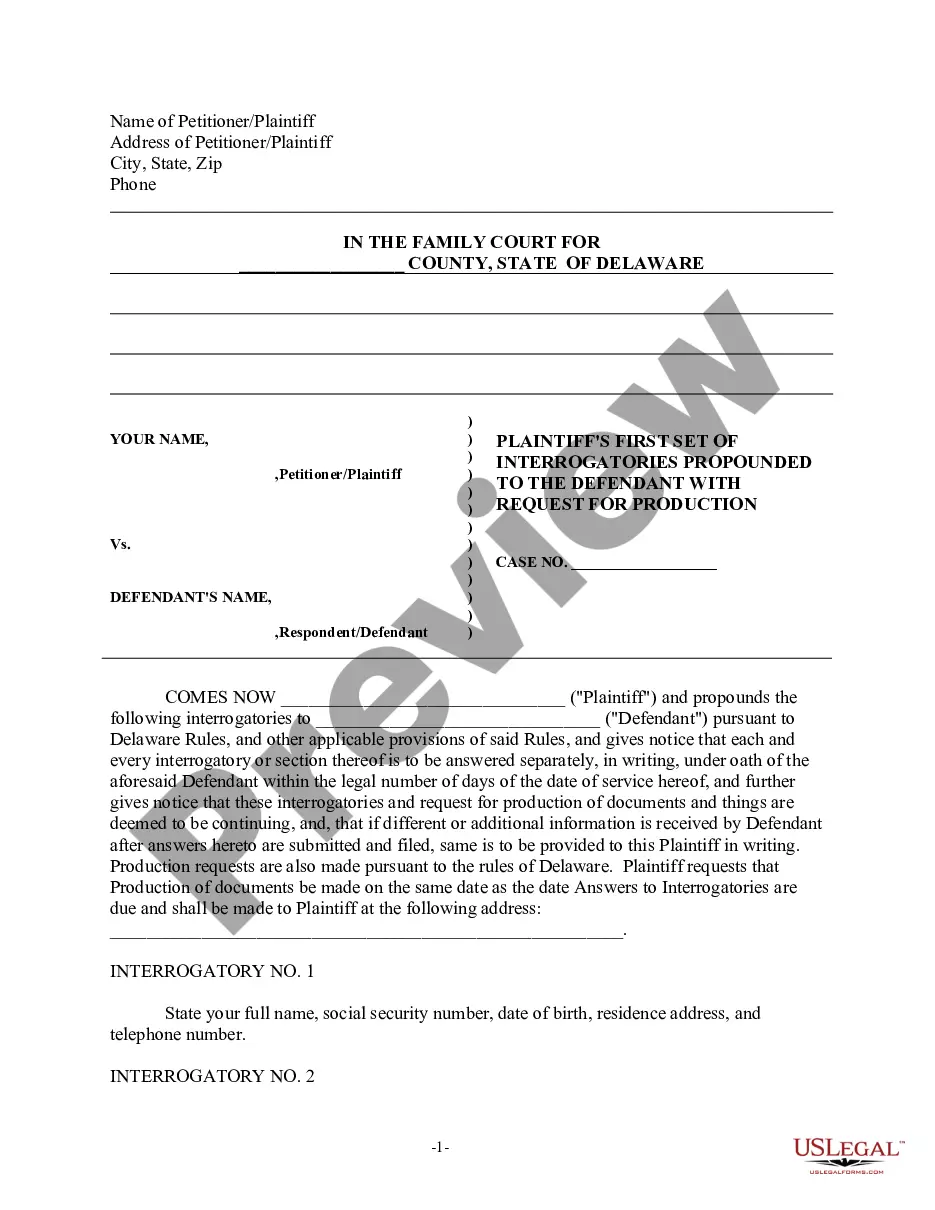
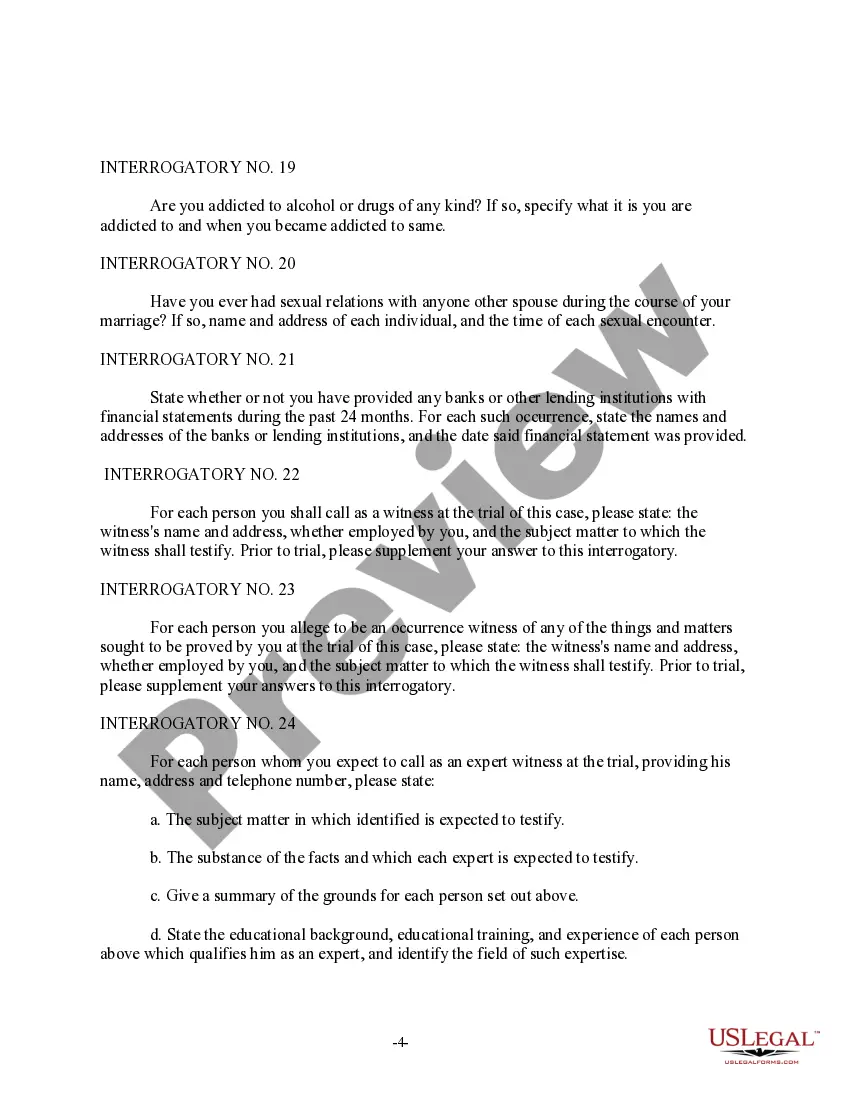
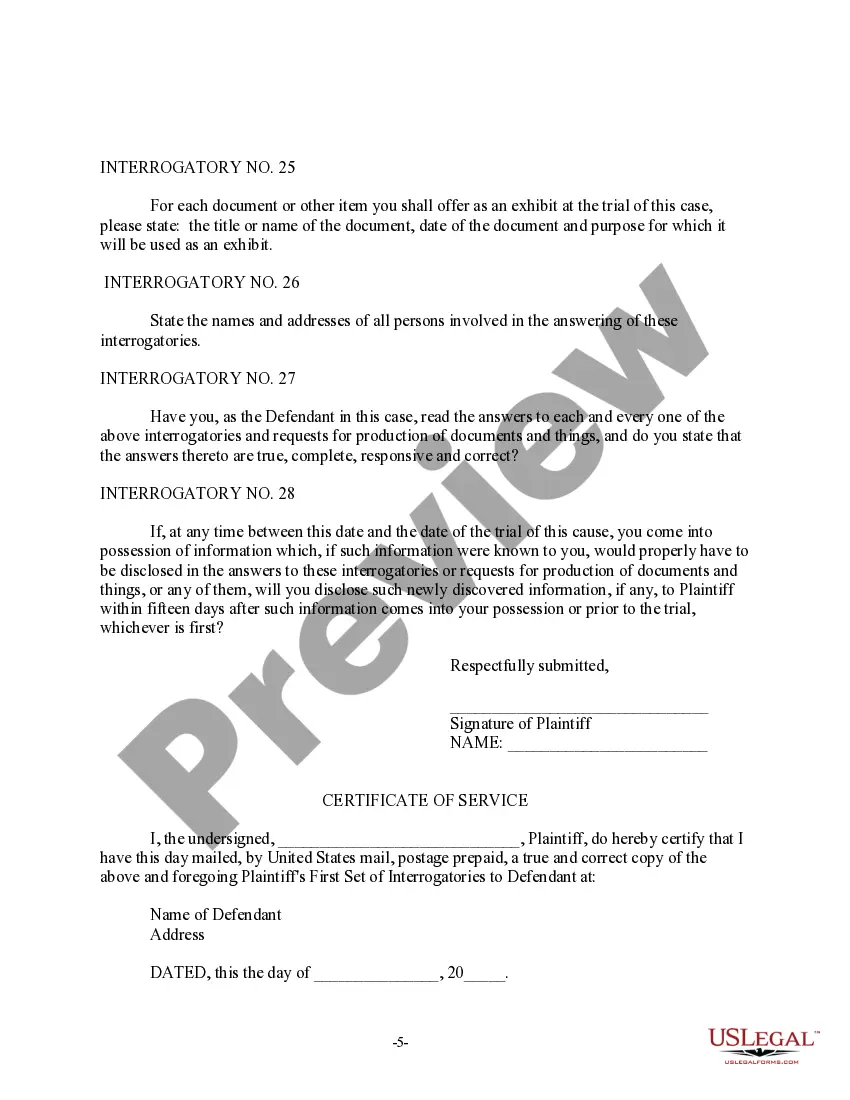
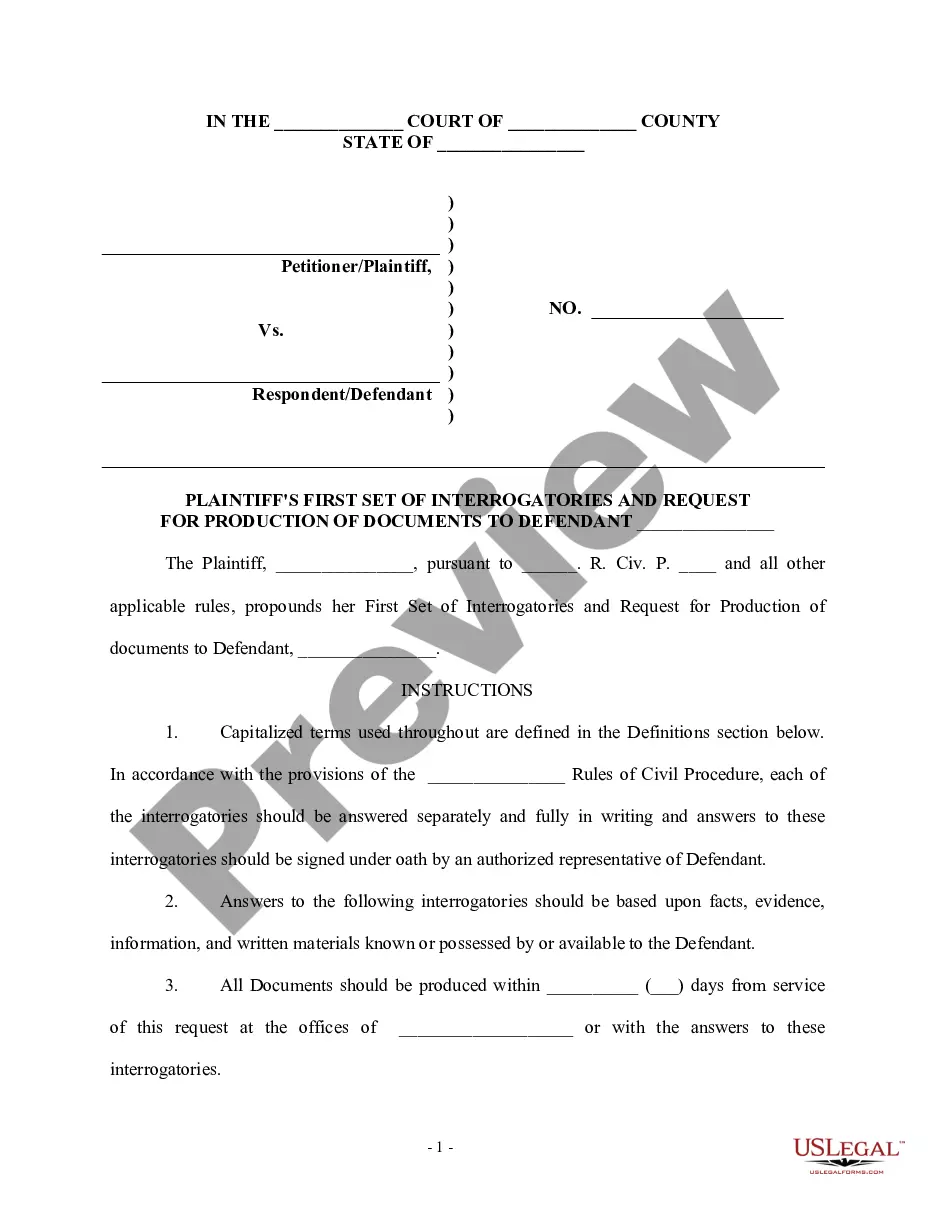
This Discovery Interrogatories from Plaintiff to Defendant with Production Requests is a legal tool used in family law cases, specifically during divorce proceedings. It enables the plaintiff to formally request information and documents from the defendant, aimed at gathering evidence to support their case. This form is essential for ensuring that both parties provide full disclosures relevant to the divorce, thus differentiating it from other discovery forms that may not include production requests.
Main sections of this form
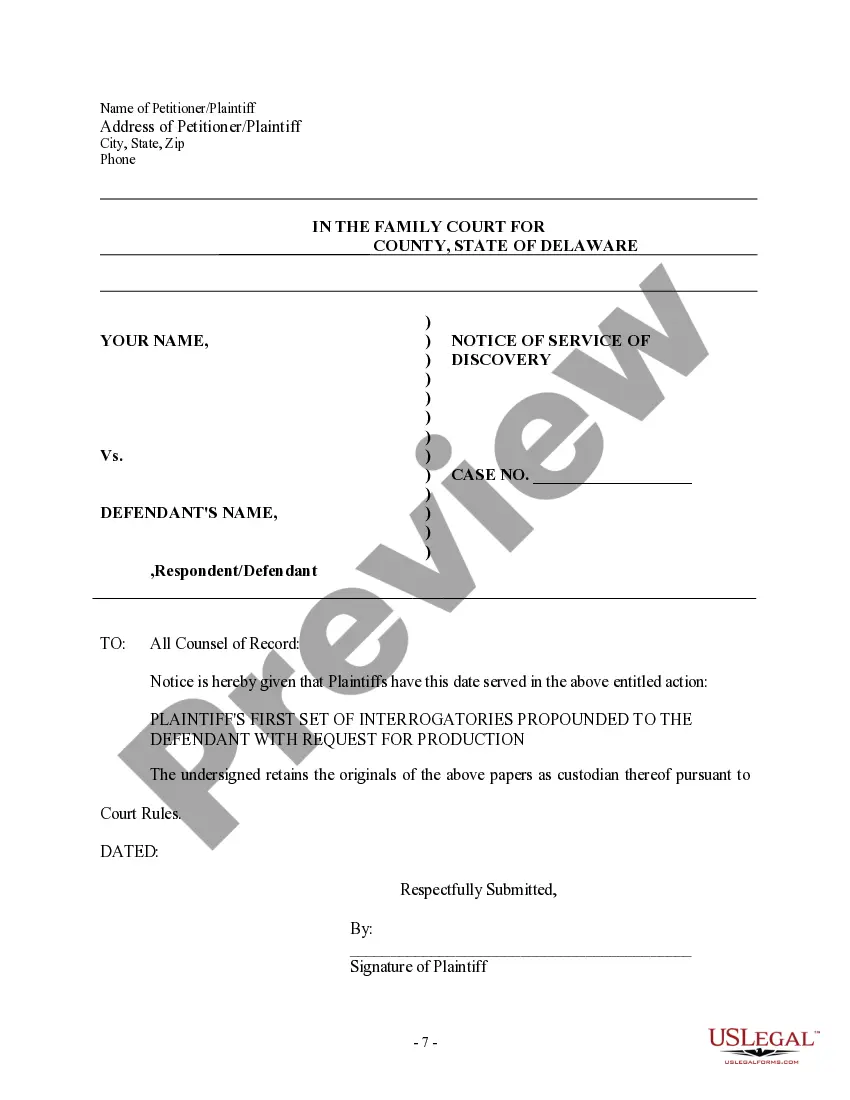
- Petitioner's and respondent's information, including names and addresses.
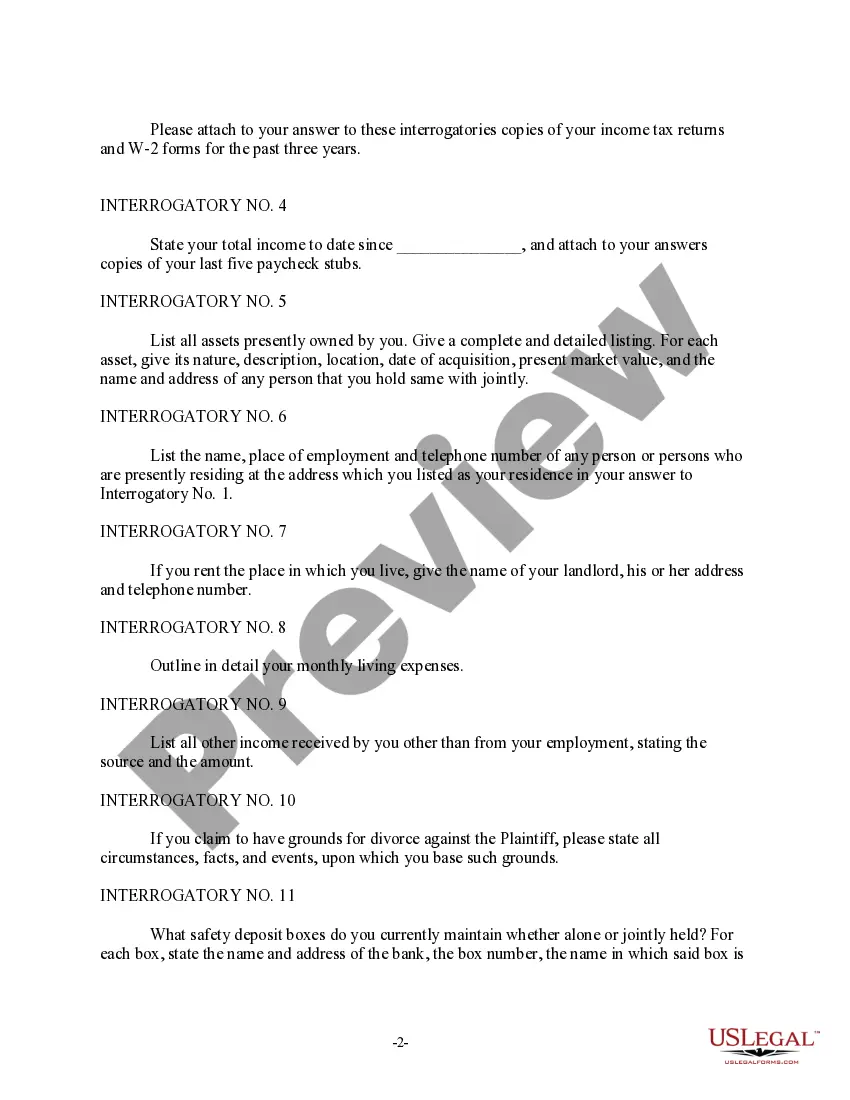
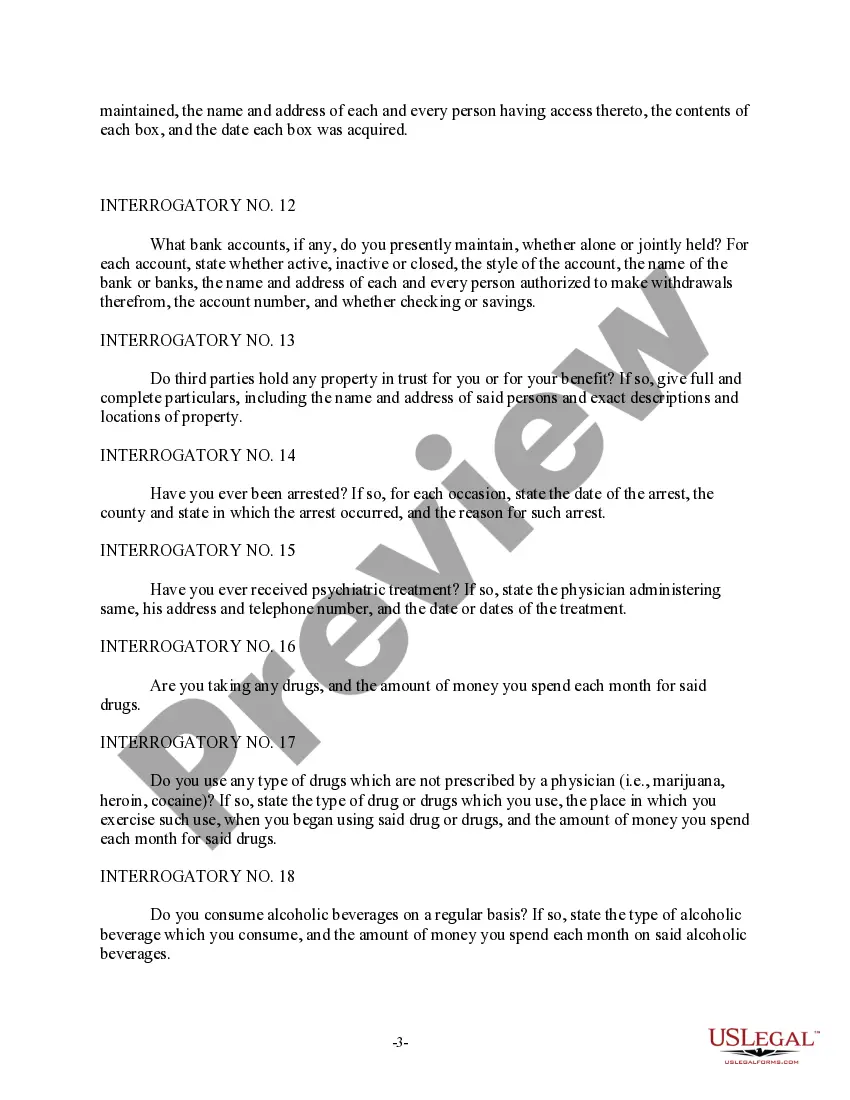
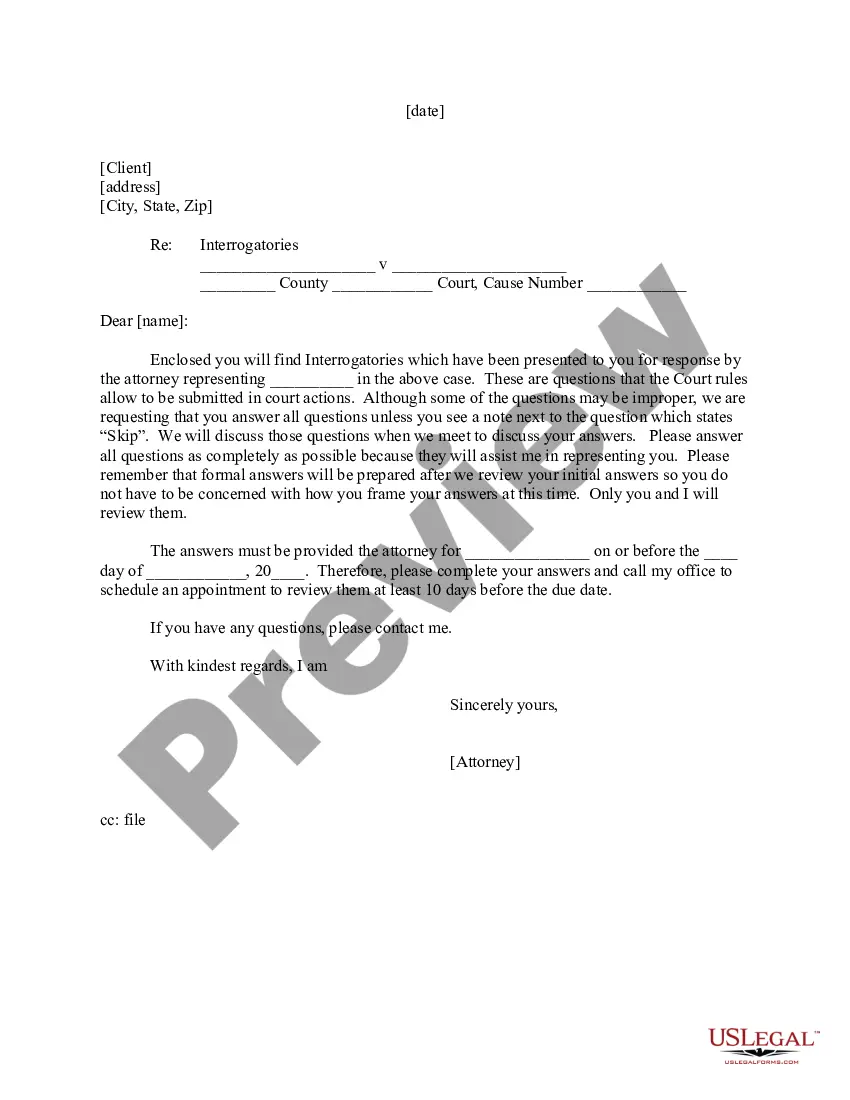
- A series of structured interrogatories requiring detailed responses from the defendant.
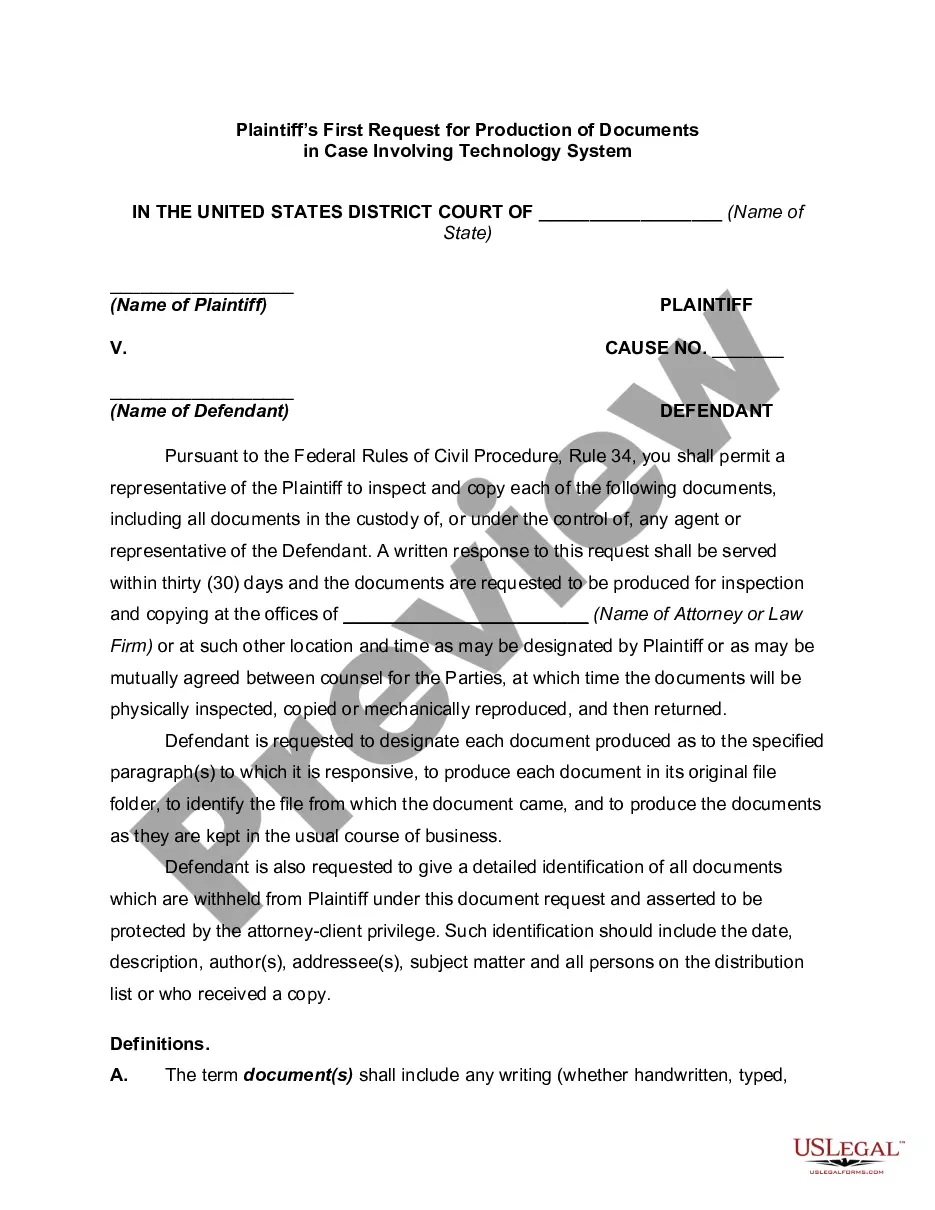
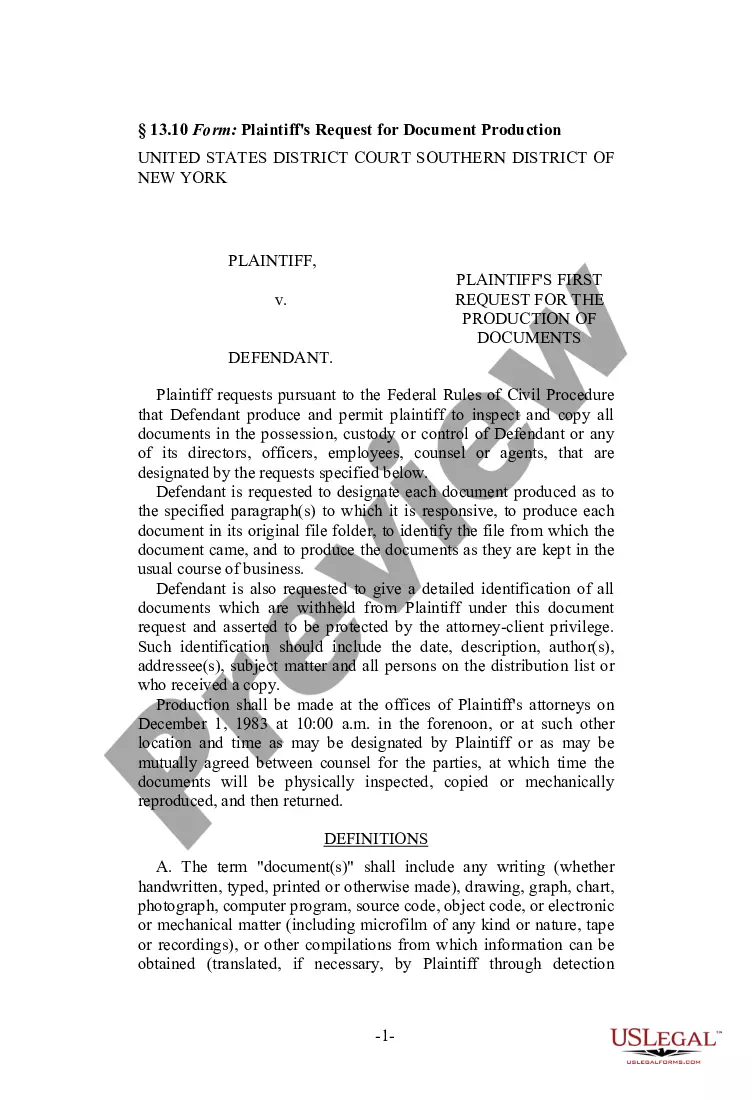
- Requests for production of documents relevant to the case.
- Notice of service to confirm the delivery of the interrogatories to the defendant.
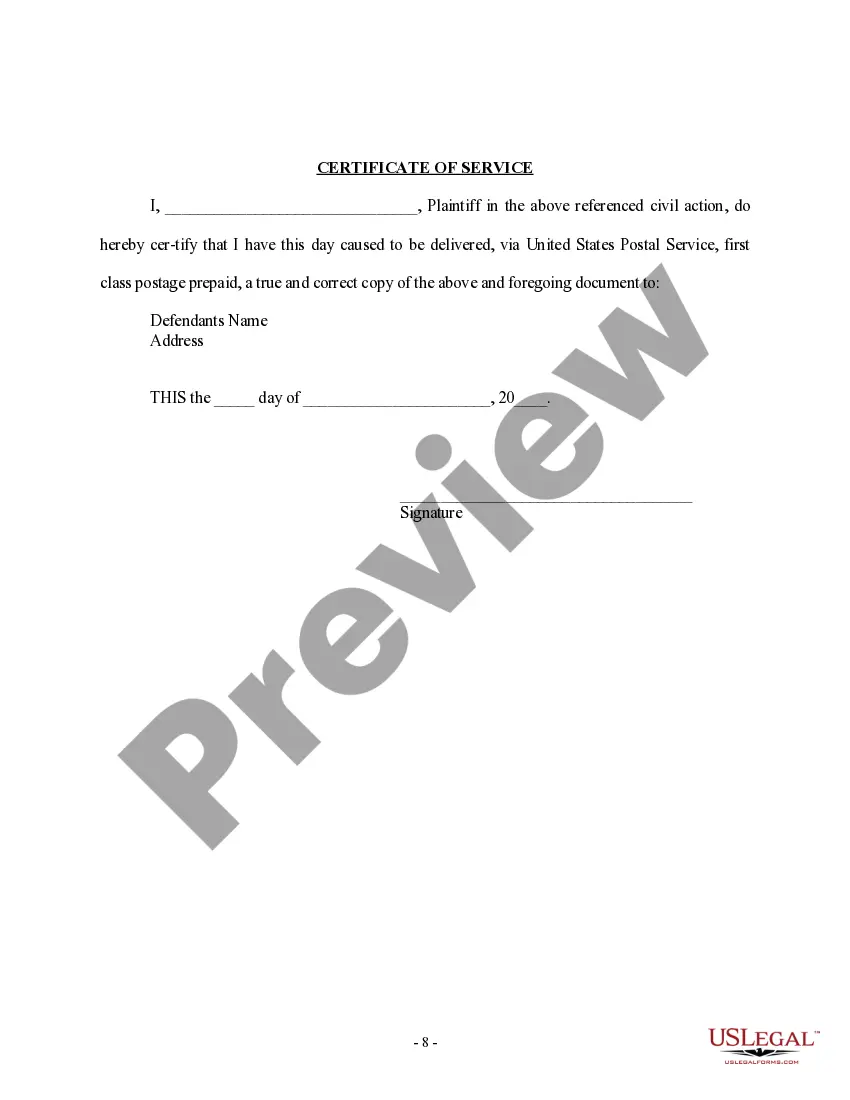
- Certification of service to verify that copies were sent to all relevant parties.
Common use cases
This form is typically used during the discovery phase of a divorce proceeding. It is appropriate when the plaintiff needs specific information about the defendant's financial status, assets, or other pertinent details that may impact the court's decisions regarding property division, support, and other legal matters. The form can set the stage for negotiations or resolution before a trial.
Who this form is for
- Individuals initiating a divorce who need to gather information from their spouse (the defendant).
- Lawyers representing clients in family law cases requiring detailed disclosures from the opposing party.
- Any party involved in a contested divorce where financial or factual disputes exist.
Instructions for completing this form
- Enter the full names and contact information of both the petitioner and the respondent.
- Carefully review and respond to each interrogatory, providing complete and honest answers.
- Attach any required documents, such as tax returns and pay stubs, as specified in the interrogatories.
- Sign and date the completed form, certifying its accuracy and truthfulness.
- Mail a copy of the interrogatories to the defendant and keep a record of the correspondence for your files.
Notarization requirements for this form
This form does not typically require notarization to be legally valid. However, some jurisdictions or document types may still require it. US Legal Forms provides secure online notarization powered by Notarize, available 24/7 for added convenience.
Get your form ready online
Our built-in tools help you complete, sign, share, and store your documents in one place.
Make edits, fill in missing information, and update formatting in US Legal Forms—just like you would in MS Word.
Download a copy, print it, send it by email, or mail it via USPS—whatever works best for your next step.
Sign and collect signatures with our SignNow integration. Send to multiple recipients, set reminders, and more. Go Premium to unlock E-Sign.
If this form requires notarization, complete it online through a secure video call—no need to meet a notary in person or wait for an appointment.
We protect your documents and personal data by following strict security and privacy standards.

Make edits, fill in missing information, and update formatting in US Legal Forms—just like you would in MS Word.

Download a copy, print it, send it by email, or mail it via USPS—whatever works best for your next step.

Sign and collect signatures with our SignNow integration. Send to multiple recipients, set reminders, and more. Go Premium to unlock E-Sign.

If this form requires notarization, complete it online through a secure video call—no need to meet a notary in person or wait for an appointment.

We protect your documents and personal data by following strict security and privacy standards.
Common mistakes to avoid
- Failing to answer all interrogatories thoroughly and accurately.
- Not providing requested documents or failing to attach them as required.
- Missing deadlines for responding to the interrogatories.
- Inaccurately certifying that all necessary parties were served with copies of the form.
Why complete this form online
- Instant access to professionally drafted legal forms tailored to your needs.
- Easy-to-edit templates that allow you to customize questions specific to your case.
- Secure and reliable download options that ensure you have access to the form at any time.
- Convenience of completing the form from the comfort of your home or office.
Looking for another form?
Form popularity
FAQ
To answer a request for production of documents, begin by carefully reviewing the request. Identify and compile all relevant documents that correspond to the request, ensuring you respond adequately. A thoughtful response should reflect the procedures outlined in the Delaware Discovery Interrogatories from Plaintiff to Defendant with Production Requests. For further guidance, consider utilizing resources from USLegalForms which can streamline your document preparation.
When answering interrogatories, you should focus on precision and clarity. Address each interrogatory separately, using full sentences to explain your responses. Ensure your answers follow the guidelines set by Delaware Discovery Interrogatories from Plaintiff to Defendant with Production Requests. To simplify this process, USLegalForms offers tools and templates that can assist you in providing proper answers.
To effectively answer interrogatories and requests for production of documents in Delaware, start by reviewing each question carefully. Gather relevant information and documents that support your responses. It's important to respond in a clear and concise manner while ensuring your answers align with the Delaware Discovery Interrogatories from Plaintiff to Defendant with Production Requests. You may also consider using USLegalForms as a resource to help you format your responses correctly.
Rule 59 in Delaware refers to motions for a new trial or amendments to judgments. This rule allows parties to request the court to reconsider a decision if they believe there has been an error in the trial process. Awareness of this rule is important when drafting Delaware Discovery Interrogatories from Plaintiff to Defendant with Production Requests, as it could affect the outcome of your case. Make sure to use US Legal Forms to access relevant templates and legal information to support your motion.
A Rule 56 motion refers to a motion for summary judgment under Delaware procedural law. This motion argues that there are no genuine disputes regarding material facts, allowing the court to decide the case without a trial. When preparing Delaware Discovery Interrogatories from Plaintiff to Defendant with Production Requests, understanding Rule 56 can help you present your case more effectively. For more clarity, you might consider checking US Legal Forms for resources.
The Delaware retirement income exclusion offers tax benefits to residents receiving retirement income. This exclusion allows individuals to potentially exclude a portion of their retirement income from taxable income, depending on specific qualifications. Knowing about this exclusion can be beneficial when discussing financial aspects in Delaware Discovery Interrogatories from Plaintiff to Defendant with Production Requests. You can find forms and guidance on US Legal Forms to help you manage your retirement income effectively.
Rule 45 in Delaware Superior Court pertains to the issuance of subpoenas. This rule allows parties to request documents or compel testimony from individuals who are not parties to the litigation. When drafting Delaware Discovery Interrogatories from Plaintiff to Defendant with Production Requests, it is essential to understand how to effectively utilize Rule 45 to gather necessary evidence. US Legal Forms can help ensure your compliance with this rule.
In Delaware, the statute of limitations on debt is generally three years. This means creditors have a limited time to file a lawsuit to collect a debt from the date of the last payment. Understanding this timeframe is crucial when dealing with Delaware Discovery Interrogatories from Plaintiff to Defendant with Production Requests. If you need assistance navigating these laws, consider exploring the resources available on the US Legal Forms platform.
In Delaware, a plaintiff may serve interrogatories on a defendant as soon as the defendant has been officially served with the complaint. This early engagement allows both parties to exchange critical information essential for the case. The Delaware Discovery Interrogatories from Plaintiff to Defendant with Production Requests facilitate this process, ensuring that plaintiffs can gather necessary evidence right from the start. Utilizing resources like US Legal Forms can guide you through crafting these interrogatories effectively.
Production of documents refers to the process of providing relevant documents requested by one party in a legal case to another party. This serves as a crucial step in the discovery process, allowing both sides to obtain evidence necessary for building their cases. Utilizing Delaware Discovery Interrogatories from Plaintiff to Defendant with Production Requests amplifies this essential exchange of information.