Nevada Discovery Interrogatories for Divorce Proceeding for either Plaintiff or Defendant
What this document covers
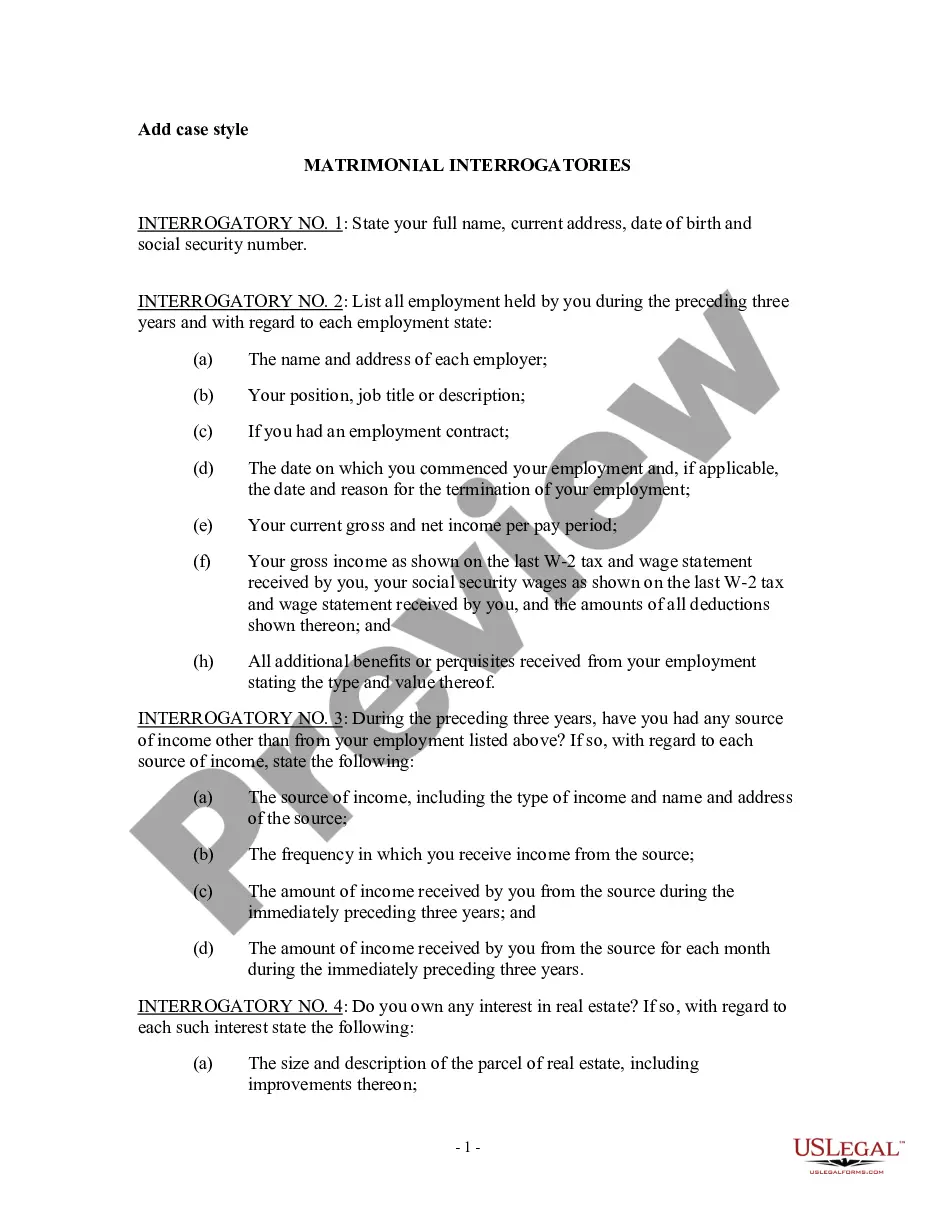
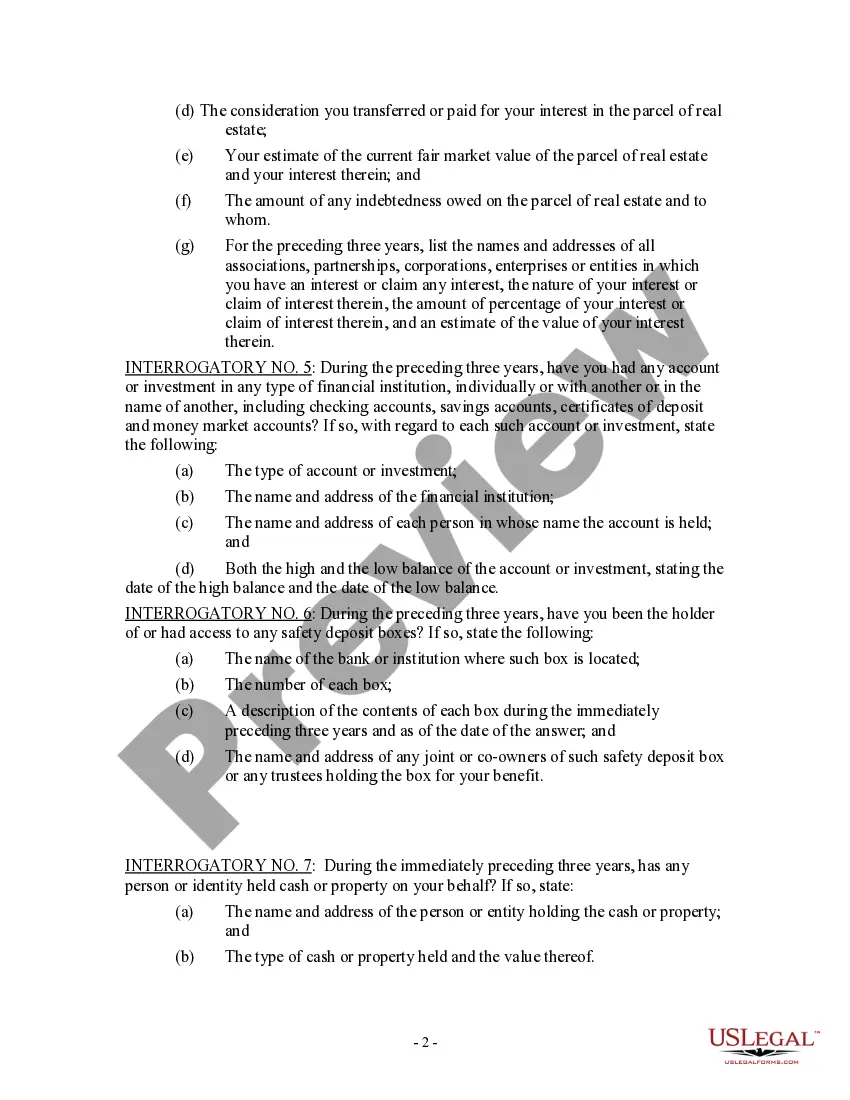
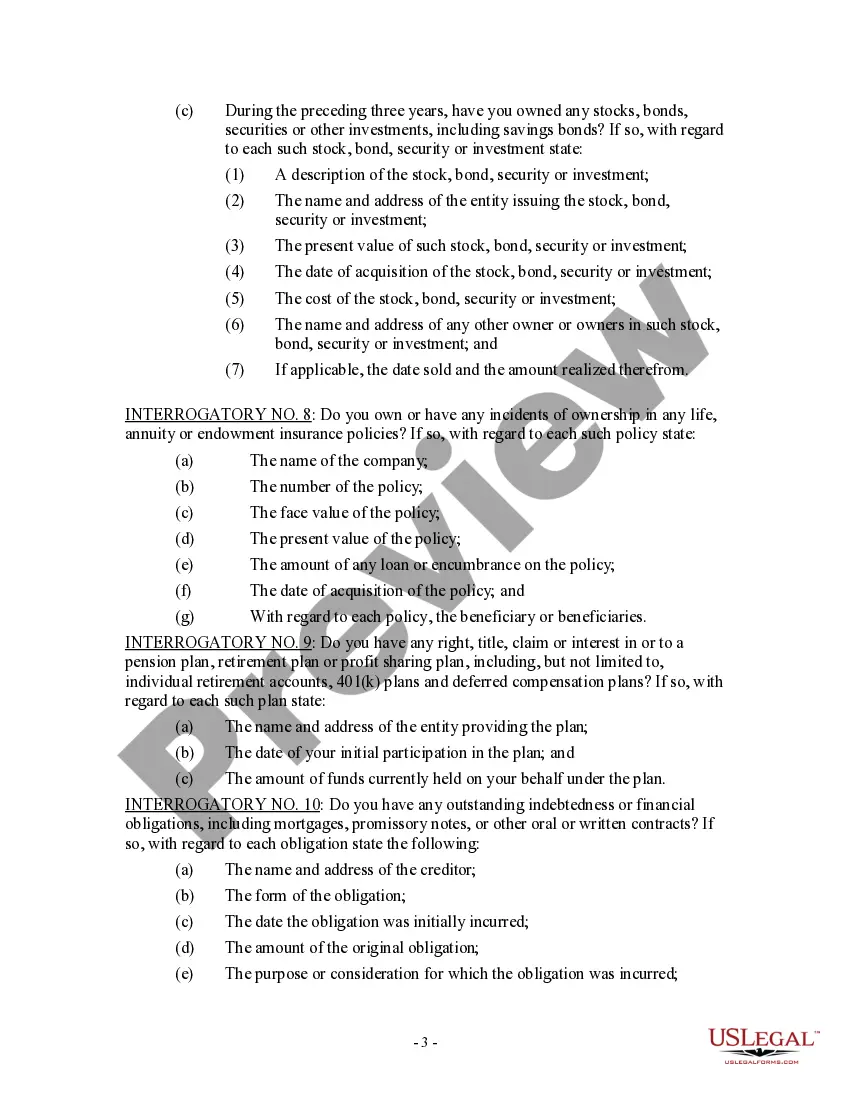
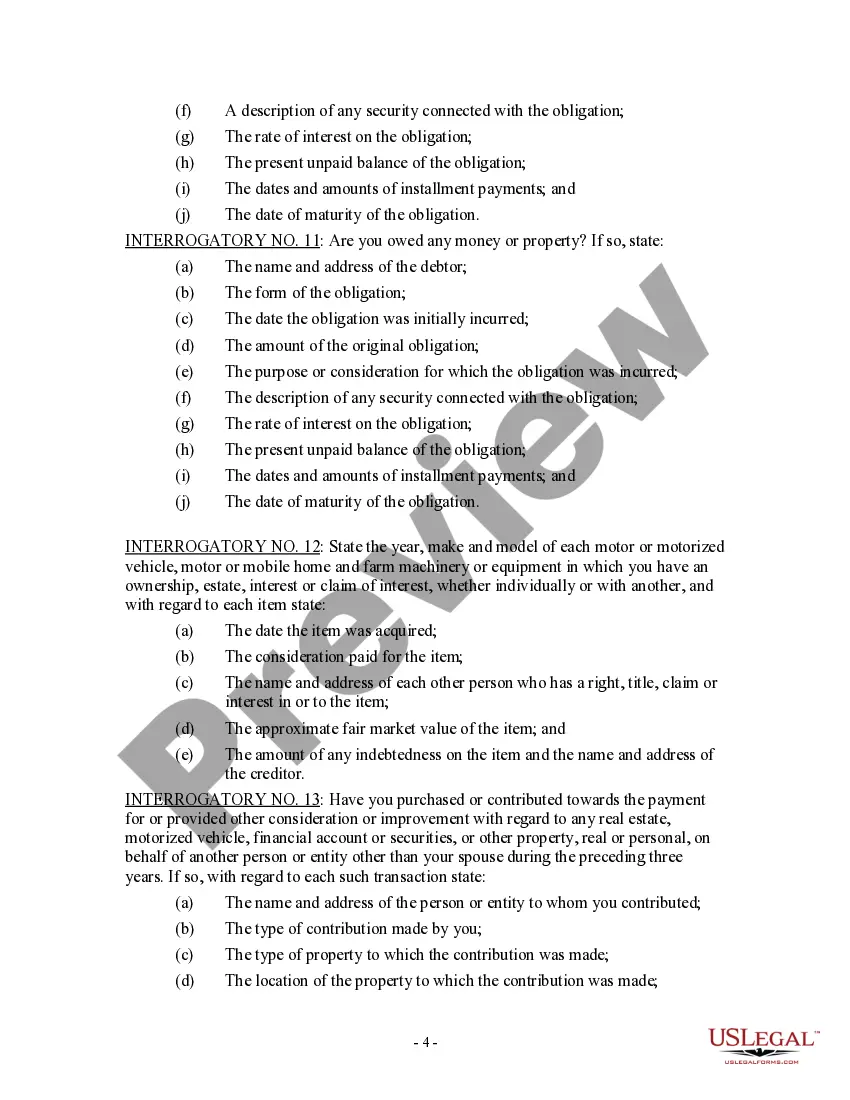
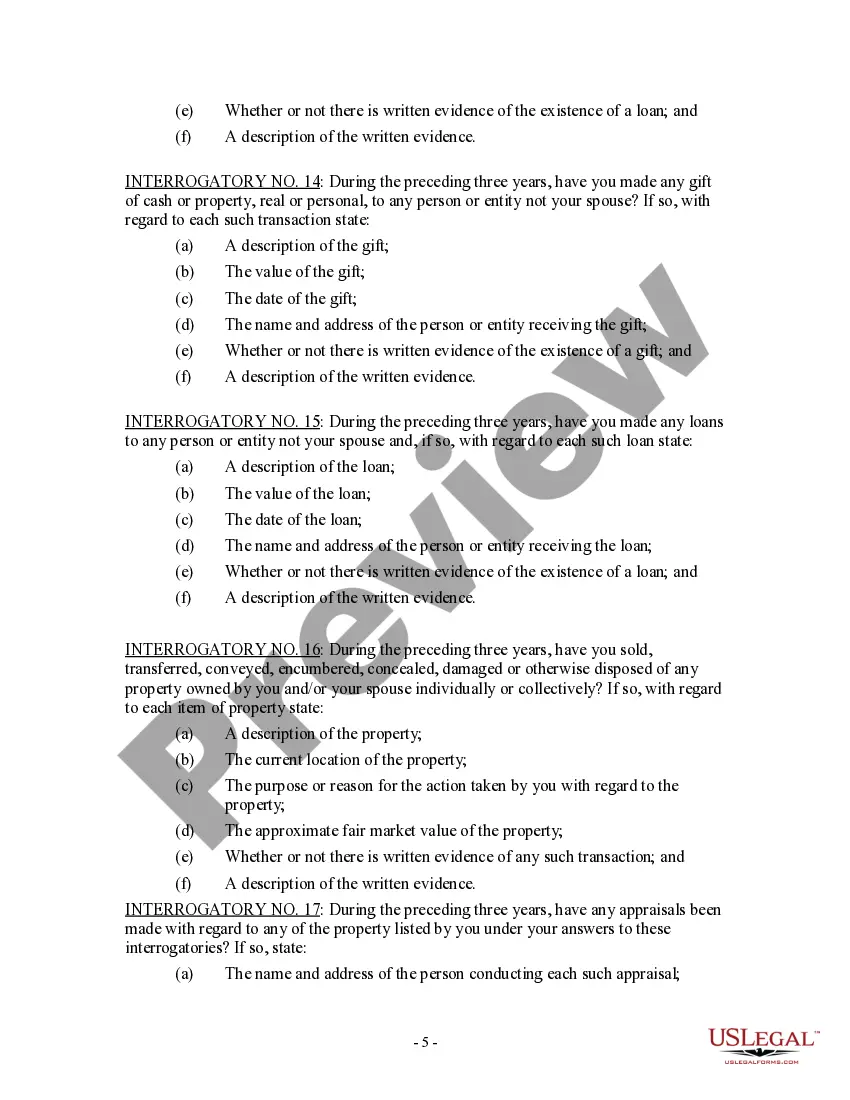
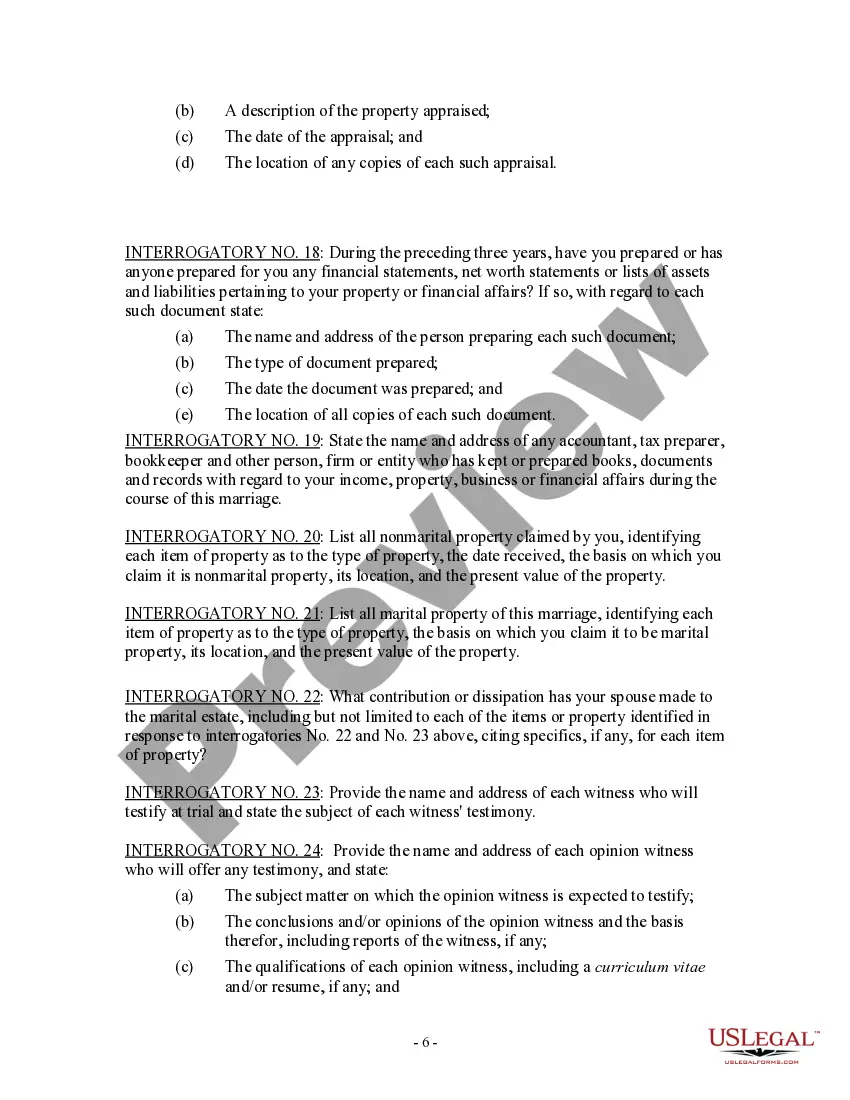
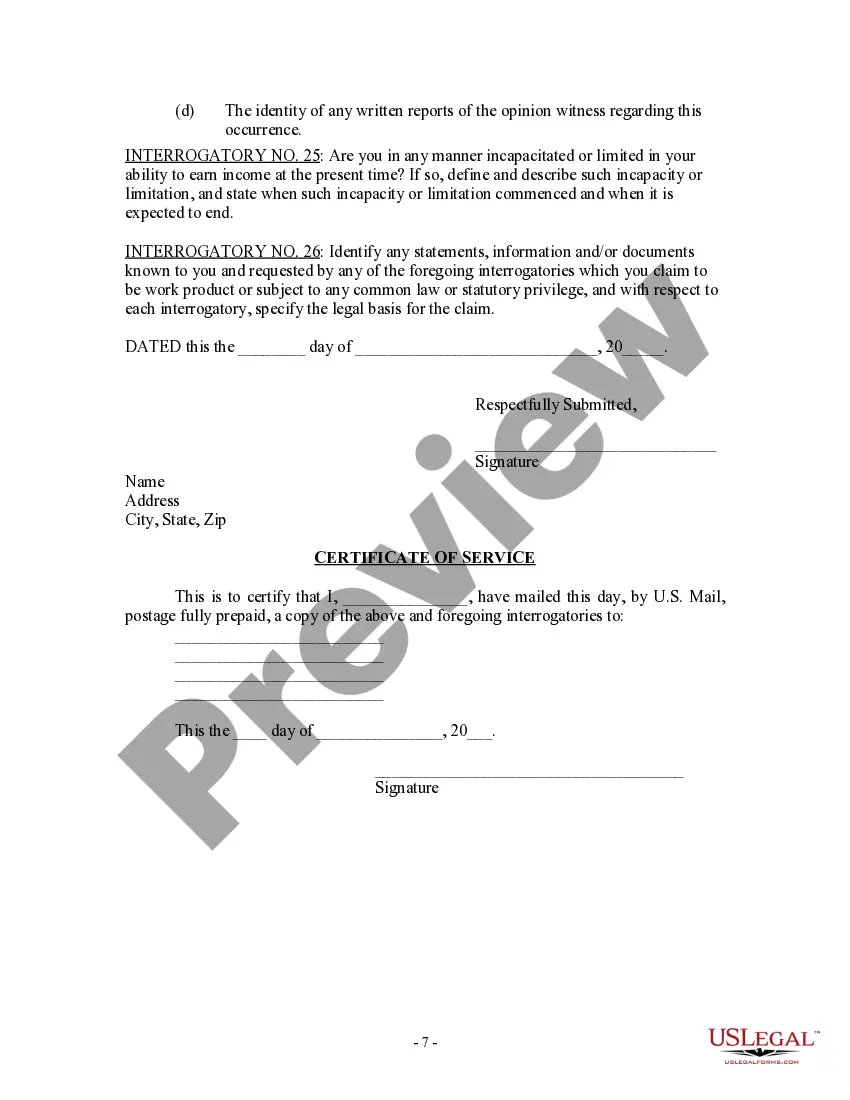
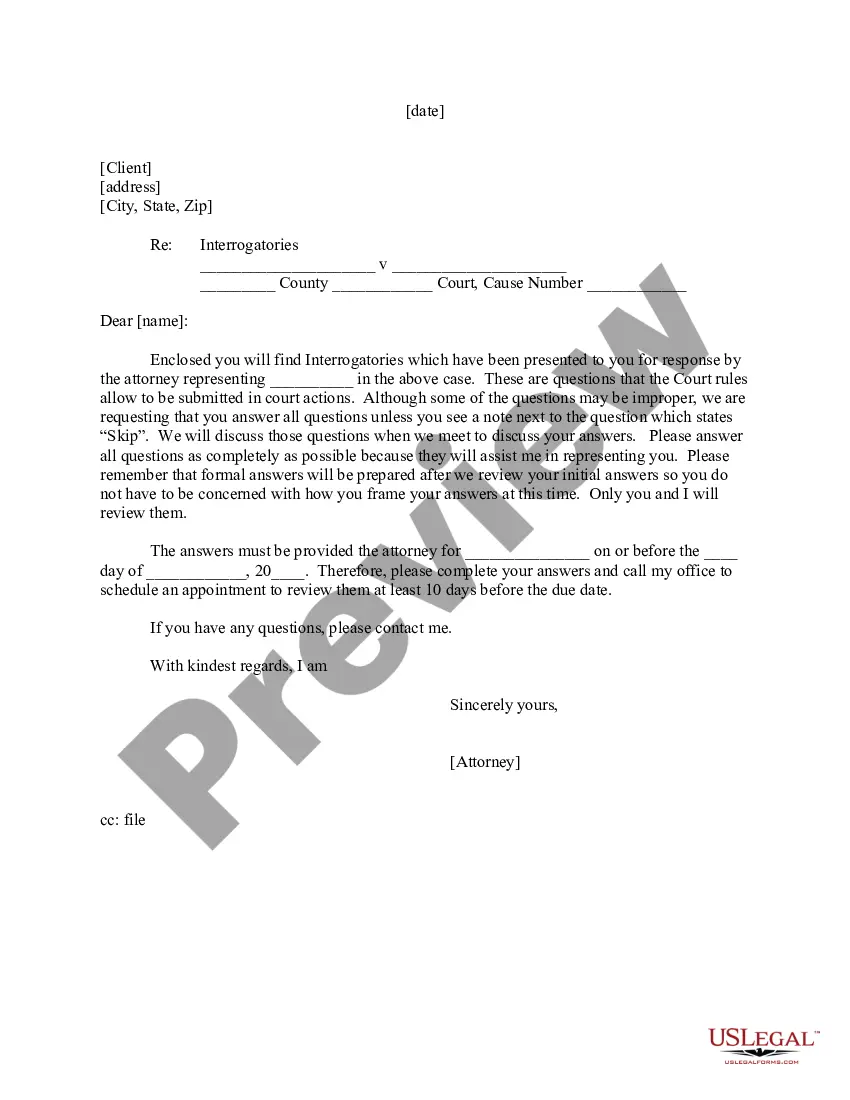
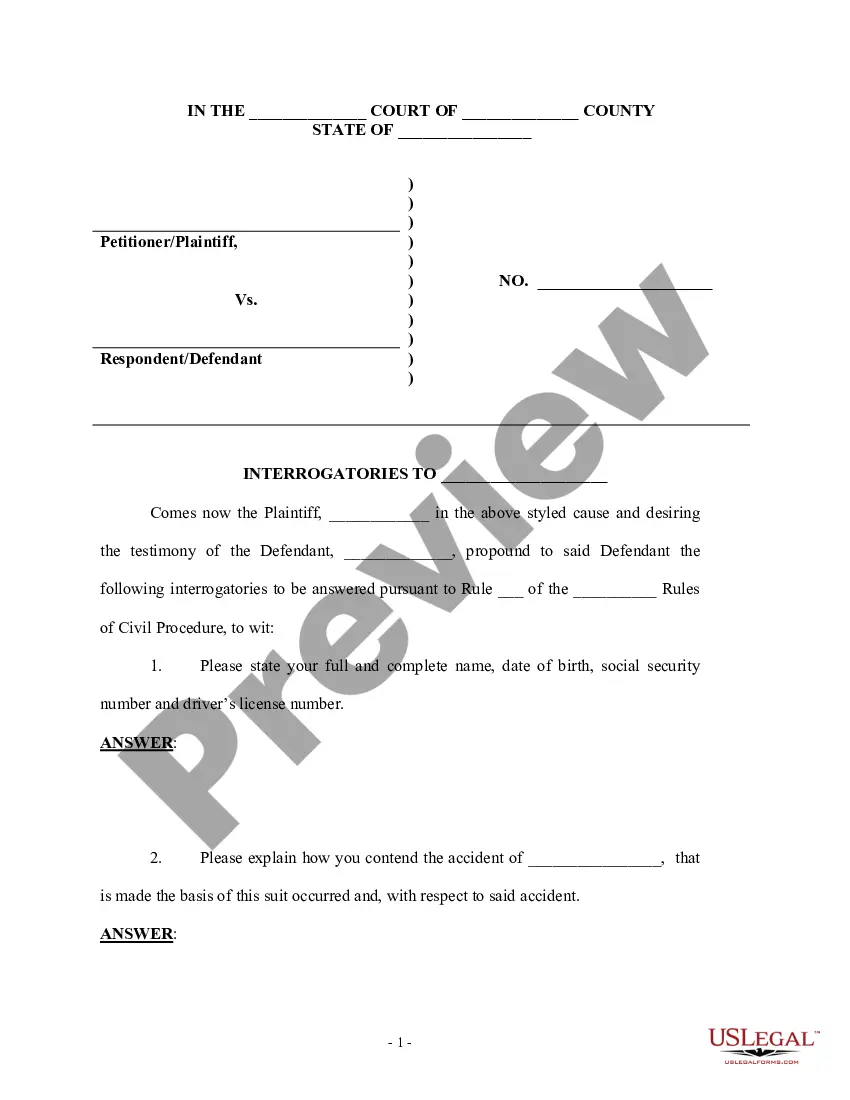
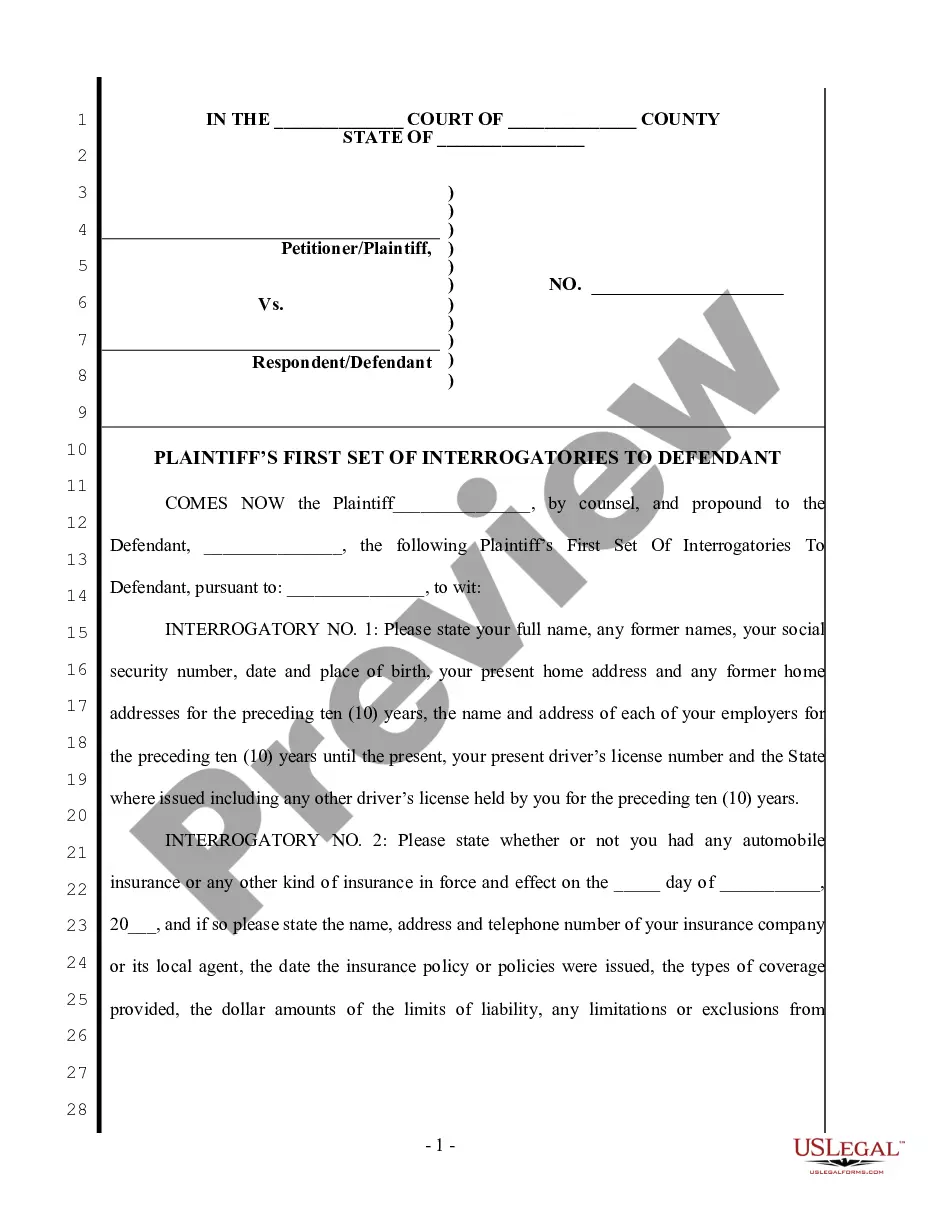
The Discovery Interrogatories for Divorce Proceeding is a legal document used by the Plaintiff or Defendant in a divorce case. This form allows one party to request detailed information from the other party about their finances, property, and any other relevant matters. Unlike similar forms, this document not only includes interrogatories but also requests for the production of documents, making it a comprehensive tool for gathering information in a divorce proceeding.
What’s included in this form
- Request for personal information, including name, address, and Social Security number.
- Employment history and income details for the past three years.
- Information on real estate holdings and any debts or interests in properties.
- Details about financial accounts and investments.
- Details regarding gifts, loans, and property transactions with third parties.
- Identification of witnesses and their expected testimony.
Situations where this form applies
This form should be used during the discovery phase of a divorce proceeding when one party needs to obtain financial and personal information from the other party. It is applicable in cases where there are disputes about asset division, income, or other financial matters that need clarification to resolve the divorce amicably or through court intervention.
Who should use this form
- The Plaintiff or Defendant in a divorce proceeding seeking to gather information from the other party.
- Individuals who need to clarify financial matters as part of organizing a divorce settlement.
- Lawyers representing clients in divorce cases who require comprehensive interrogatories for their cases.
Steps to complete this form
- Begin by identifying the parties involved, including their full names and contact information.
- Complete the employment and income sections by providing accurate details about your job history for the past three years.
- List all assets, including real estate and financial accounts, with supporting values and ownership details.
- Include any outstanding debts and financial obligations you have.
- Review the form carefully, ensuring that all relevant questions are answered and irrelevant ones are removed.
Notarization requirements for this form
This form does not typically require notarization unless specified by local law. Users should check their state regulations to confirm any specific notarization requirements for legal documents in divorce proceedings.
Get your form ready online
Our built-in tools help you complete, sign, share, and store your documents in one place.
Make edits, fill in missing information, and update formatting in US Legal Forms—just like you would in MS Word.
Download a copy, print it, send it by email, or mail it via USPS—whatever works best for your next step.
Sign and collect signatures with our SignNow integration. Send to multiple recipients, set reminders, and more. Go Premium to unlock E-Sign.
If this form requires notarization, complete it online through a secure video call—no need to meet a notary in person or wait for an appointment.
We protect your documents and personal data by following strict security and privacy standards.

Make edits, fill in missing information, and update formatting in US Legal Forms—just like you would in MS Word.

Download a copy, print it, send it by email, or mail it via USPS—whatever works best for your next step.

Sign and collect signatures with our SignNow integration. Send to multiple recipients, set reminders, and more. Go Premium to unlock E-Sign.

If this form requires notarization, complete it online through a secure video call—no need to meet a notary in person or wait for an appointment.

We protect your documents and personal data by following strict security and privacy standards.
Typical mistakes to avoid
- Failing to provide complete and accurate information, which can lead to discovery disputes.
- Including irrelevant questions that do not pertain to the case.
- Not reviewing the form for omissions before submitting it to the court.
Why use this form online
- Convenient access to the form allows you to complete and submit it from home.
- Editable fields make it easy to customize the interrogatories to fit your specific case.
- This form is created by licensed attorneys, ensuring it meets legal standards.
Main things to remember
- The Discovery Interrogatories for Divorce Proceeding is essential for gathering crucial information during a divorce.
- Completing this form accurately can aid in a fair resolution of divorce-related issues.
- It is important to review state-specific requirements to ensure compliance.
- Common mistakes in filling out the form can be avoided by careful review and complete responses.
Looking for another form?
Form popularity
FAQ
Interrogatories can be quicker, less costly, and less complicated than depositions, but there are downsides. Since the questions are written, the witness may have more time to think and craft answers, rather than providing more candid answers during discovery.
Interrogatories are lists of questions sent to the other party that s/he must respond to in writing. You can use interrogatories to find out facts about a case but they cannot be used for questions that draw a legal conclusion.
The purpose of interrogatories is to learn a great deal of general information about a party in a lawsuit. For example, the defendant in a personal injury lawsuit about a car accident might send you interrogatories asking you to disclose things like: Where you live.
Motions to Compel If a party doesn't respond to interrogatories or requests for production, then the party seeking those answers must file a motion to compel with the court. If the court grants the motion to compel, then the party who objected or failed to answer must then do so.
Interrogatories Interrogatories are written questions that are sent by one party to another. Generally speaking, the party who receives these questions has 30 days to answer them.If the other party fails to respond on time, within 30 days, then the questions are deemed admitted.
So, can you refuse to answer interrogatories? The answer is, no, you may not. You must answer a Rule 33 interrogatory within 30 days of being served with it. That answer must either permit inspection of the requested information or object to the production of the information for a specific reason.
Motions to Compel If a party doesn't respond to interrogatories or requests for production, then the party seeking those answers must file a motion to compel with the court. If the court grants the motion to compel, then the party who objected or failed to answer must then do so.
You must answer each interrogatory separately and fully in writing under oath, unless you object to it. You must explain why you object. You must sign your answers and objections.