Sample Letter for Notice to Debtor of Assignment of Debt
What this document covers
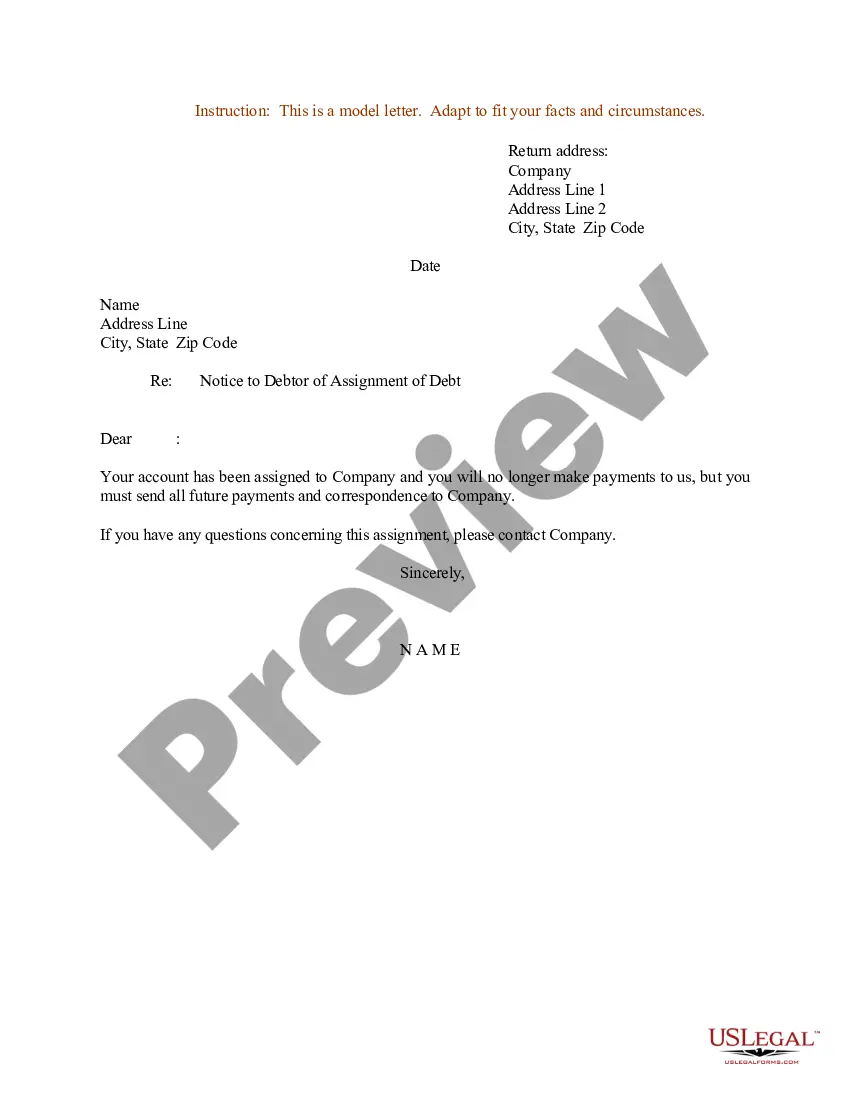
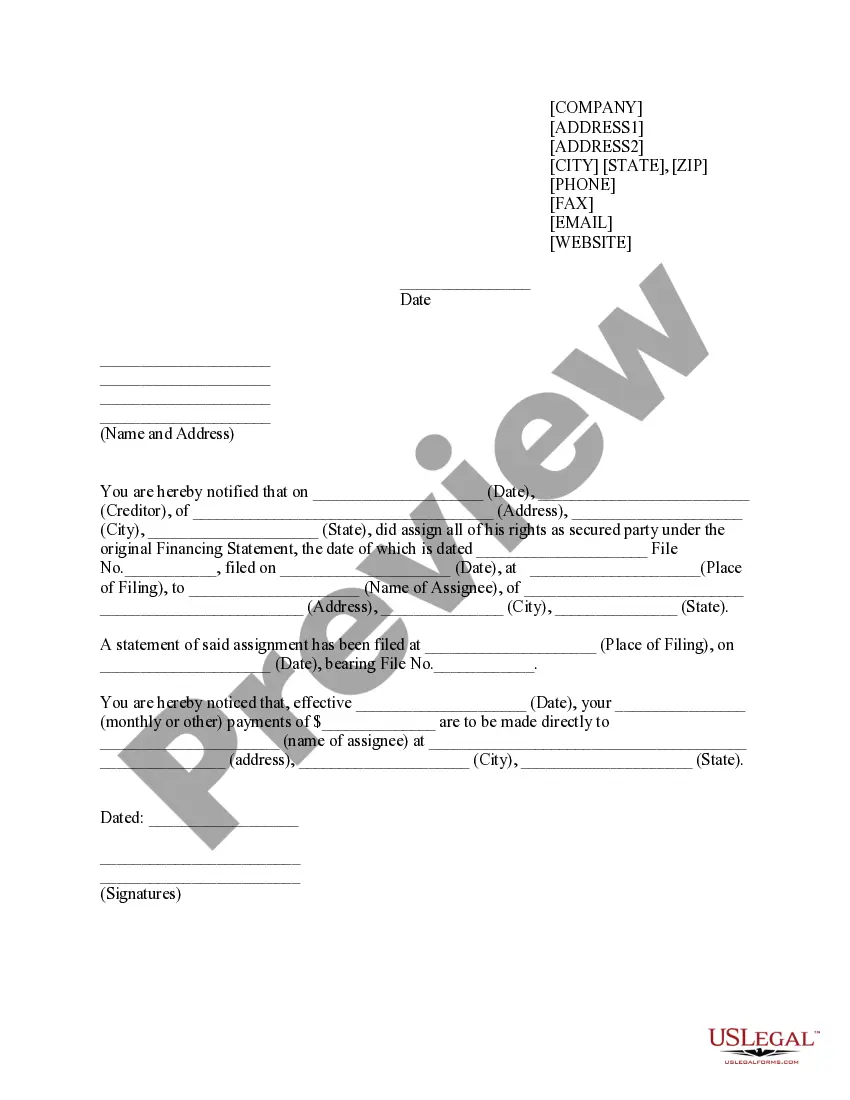
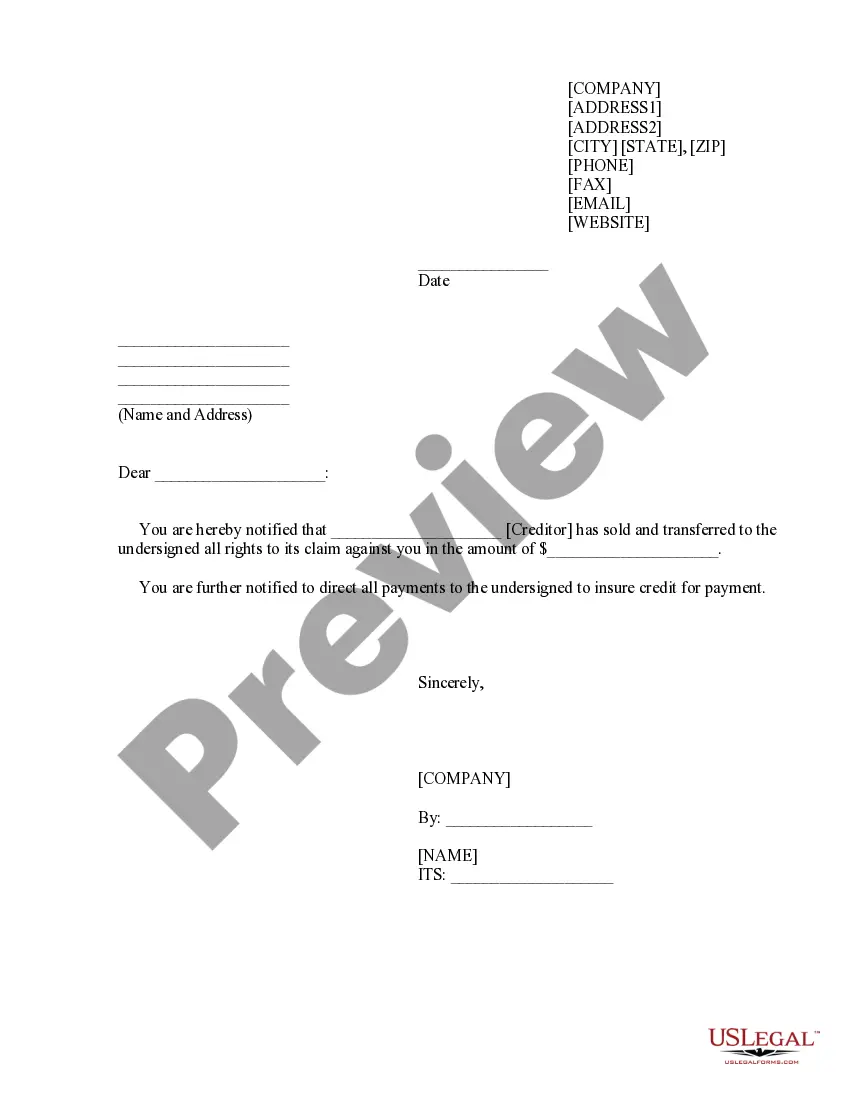
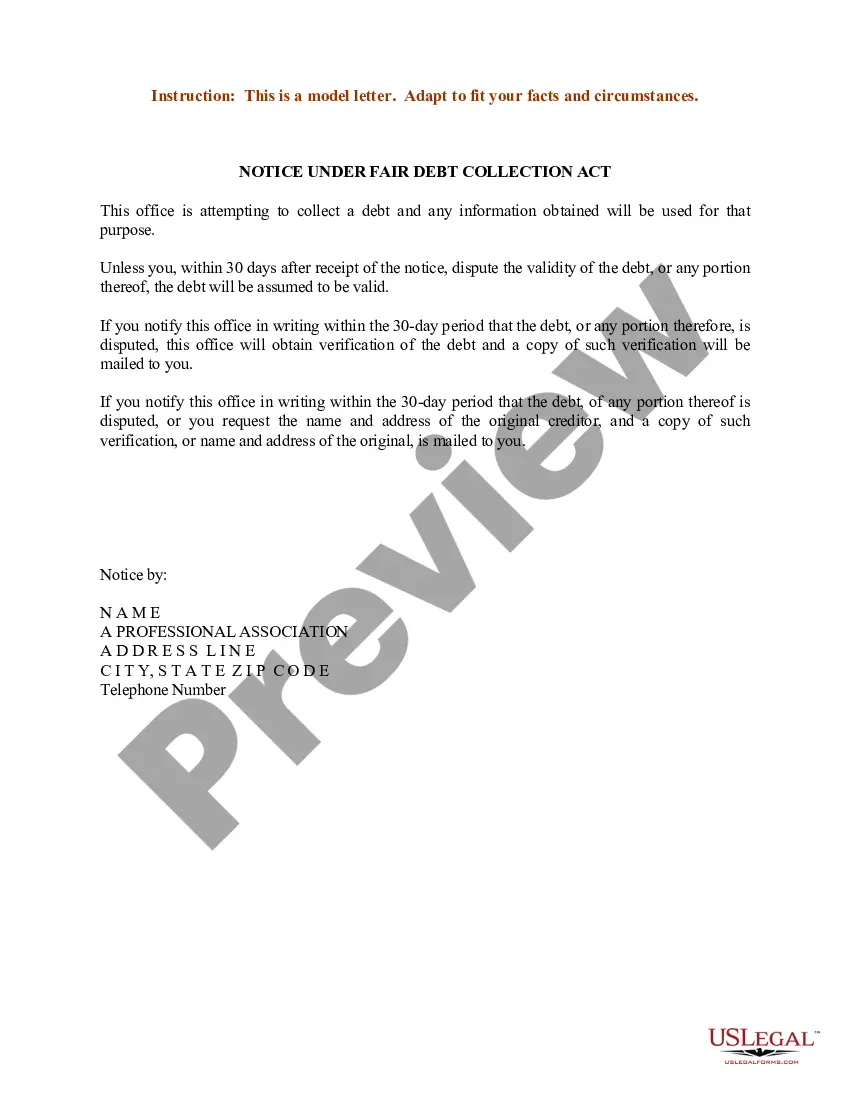
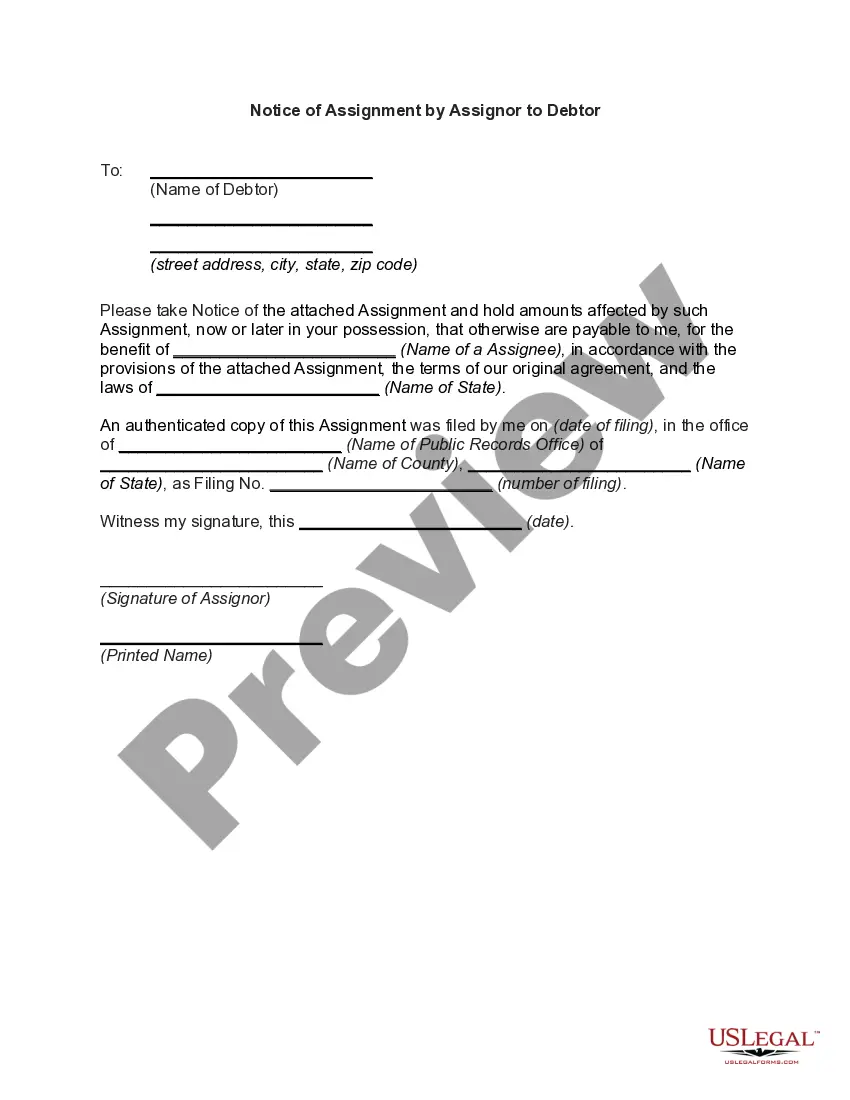
The Sample Letter for Notice to Debtor of Assignment of Debt is a formal document used to inform a debtor that their debt has been transferred to another party. This letter serves as a notification of the assignment, making it clear who now holds the rights to collect the debt. It is distinct from other forms of debt collection notices, as it specifically addresses the assignment of debt rather than a demand for payment or a settlement proposal.
What’s included in this form
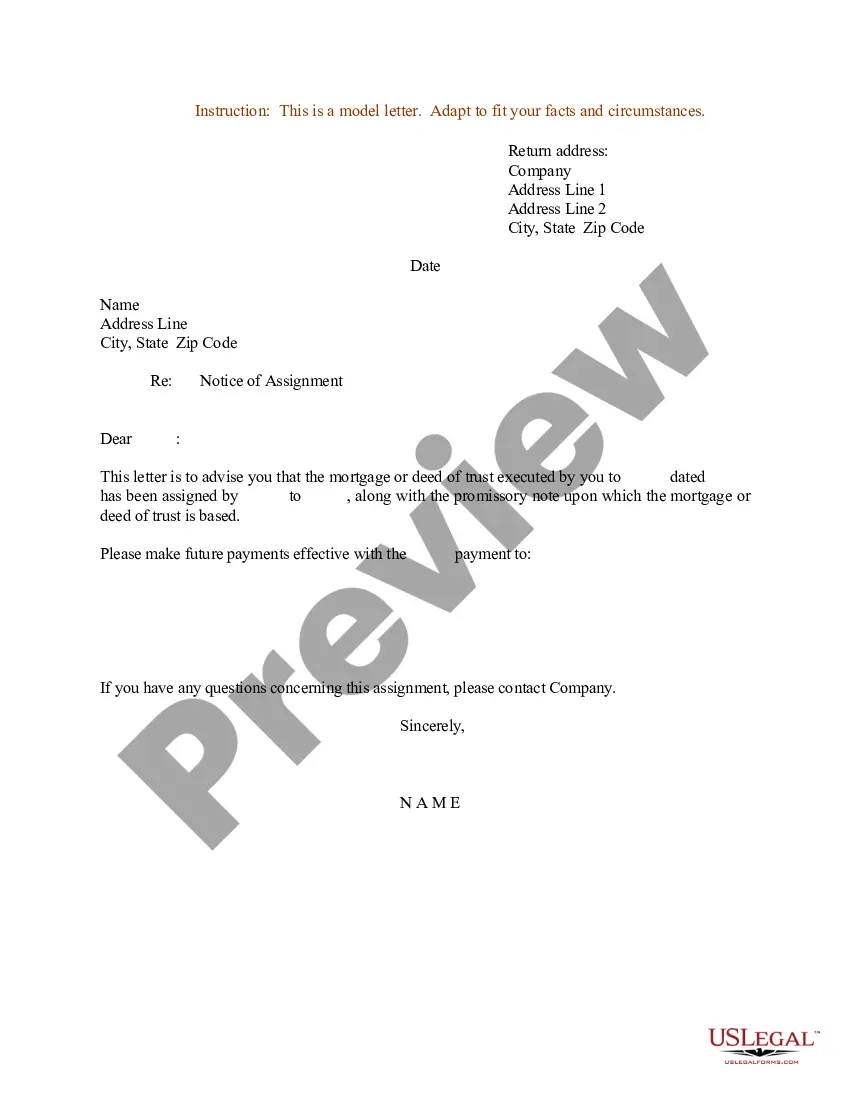
- Return address: Where the letter is being sent from.
- Date: The date the letter is created.
- Debtor's name and address: Identifies the person being notified.
- Subject line: Clearly states the purpose of the letter.
- Body of the letter: Provides details about the assignment of the debt.
- Signature: The name of the individual sending the letter.
When to use this form
This letter should be used when a creditor assigns a debt to another party. It is important in situations where the debtor needs to be officially informed about the change in who is managing their debt. Common scenarios include debt collection agencies taking over accounts or when debts are sold to another financial institution.
Who can use this document
- Creditors who have transferred a debt to another party.
- Debt collection agencies acting on behalf of creditors.
- Businesses needing to inform clients about debt assignments.
Completing this form step by step
- Identify the return address and date at the top of the letter.
- Enter the debtor's name and contact details in the designated fields.
- Clearly state the subject of the letter: Notice to Debtor of Assignment of Debt.
- Provide details about the debt assignment in the body of the letter.
- Sign the letter, including your printed name below the signature.
Notarization requirements for this form
This form does not typically require notarization unless specified by local law.
Get your form ready online
Our built-in tools help you complete, sign, share, and store your documents in one place.
Make edits, fill in missing information, and update formatting in US Legal Forms—just like you would in MS Word.
Download a copy, print it, send it by email, or mail it via USPS—whatever works best for your next step.
Sign and collect signatures with our SignNow integration. Send to multiple recipients, set reminders, and more. Go Premium to unlock E-Sign.
If this form requires notarization, complete it online through a secure video call—no need to meet a notary in person or wait for an appointment.
We protect your documents and personal data by following strict security and privacy standards.

Make edits, fill in missing information, and update formatting in US Legal Forms—just like you would in MS Word.

Download a copy, print it, send it by email, or mail it via USPS—whatever works best for your next step.

Sign and collect signatures with our SignNow integration. Send to multiple recipients, set reminders, and more. Go Premium to unlock E-Sign.

If this form requires notarization, complete it online through a secure video call—no need to meet a notary in person or wait for an appointment.

We protect your documents and personal data by following strict security and privacy standards.
Typical mistakes to avoid
- Failing to include the date or return address.
- Using incorrect or outdated debtor information.
- Not clearly stating the assignment details in the letter.
Advantages of online completion
- Convenience of downloading and using the form anytime.
- Editability allows customization to suit specific needs.
- Reliability of having a professionally drafted form by licensed attorneys.
Legal use & context
- This letter serves as proof of notification in the event of a dispute.
- It ensures compliance with applicable laws regarding debt notifications.
- Helps establish clear communication between the creditor and debtor.
Key takeaways
- The letter is essential when a debt is assigned to another party.
- Fill in all relevant information accurately to avoid issues.
- Understand state-specific laws and regulations related to debt assignments.
Looking for another form?
Form popularity
FAQ
The creditor and/or debt collectors name. The date the letter was drafted. Your name. Your account number.
When writing the letter, it is crucial to use a simple and professional language. Do not be harsh or threat the debtor in your letter as it can turn the tables against you. The letter should be addressed to the debtor's home address or any other address that the debtor has provided before.
Use a letterhead. Outline the facts/story leading up to the demand letter in a chronological manner. State the legal basis for your claim. State how you will pursue legal action if your demand is not met, and include a timeline within which the demand is to be met.
When writing letters to debtors, especially those asking for payment, you need to be professional. Start with a friendly letter and if the failure to pay continues, get progressively more serious. Provide important details about the debt - state how much is owed and when the payment should be made.
Your debt settlement proposal letter must be formal and clearly state your intentions, as well as what you expect from your creditors. You should also include all the key information your creditor will need to locate your account on their system, which includes: Your full name used on the account. Your full address.
The answer is that is it is actually perfectly legal for them to sell your debt to another company. When you sign a credit agreement there will have been a clause within the fine print. This will have stated that they are able to assign their rights to a third party.
Know What to Include A demand letter should include the name of the creditor, the amount owed, action required, debt reference, deadline, and the consequences. Ensure you include all these details so your letter is not only compliant with the FDCPA, but also practical.
Debts may be assigned by the creditor to another party, the assignee, who may then proceed with further legal action to recover the debt.