Sample Letter for Notice Under Fair Debt Collection Act
Understanding this form
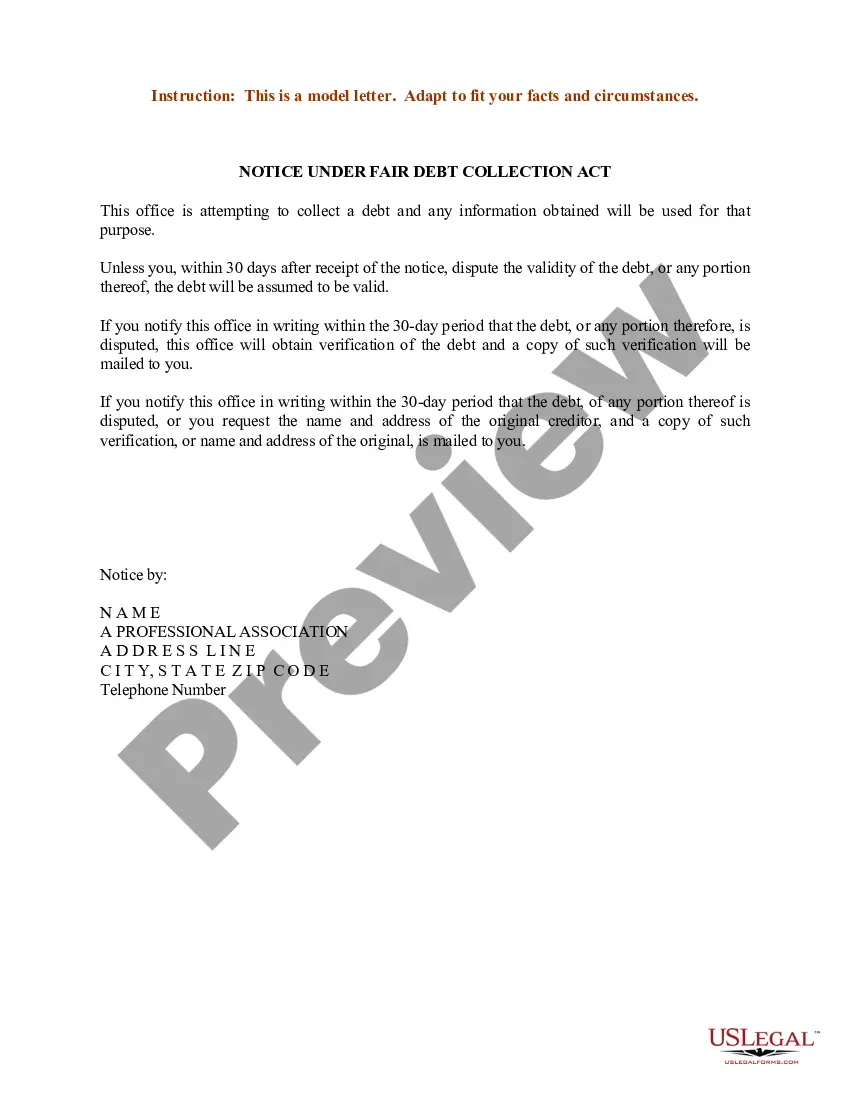
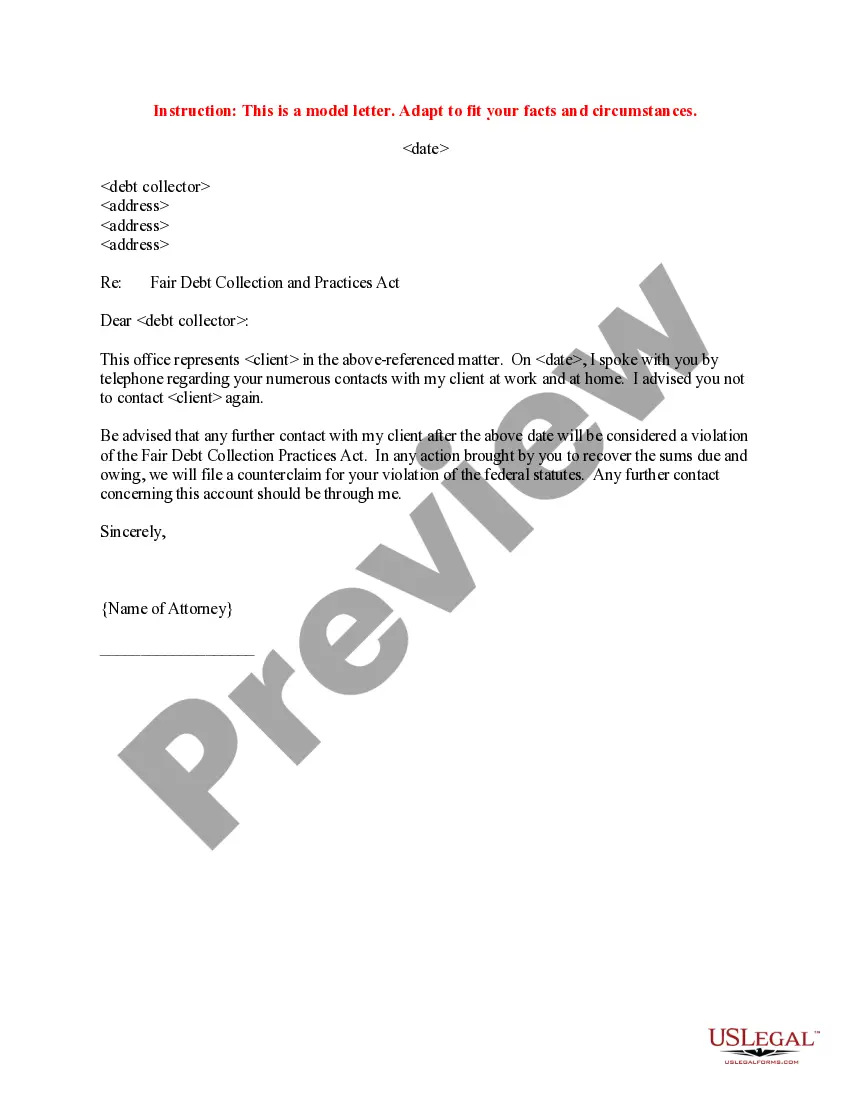
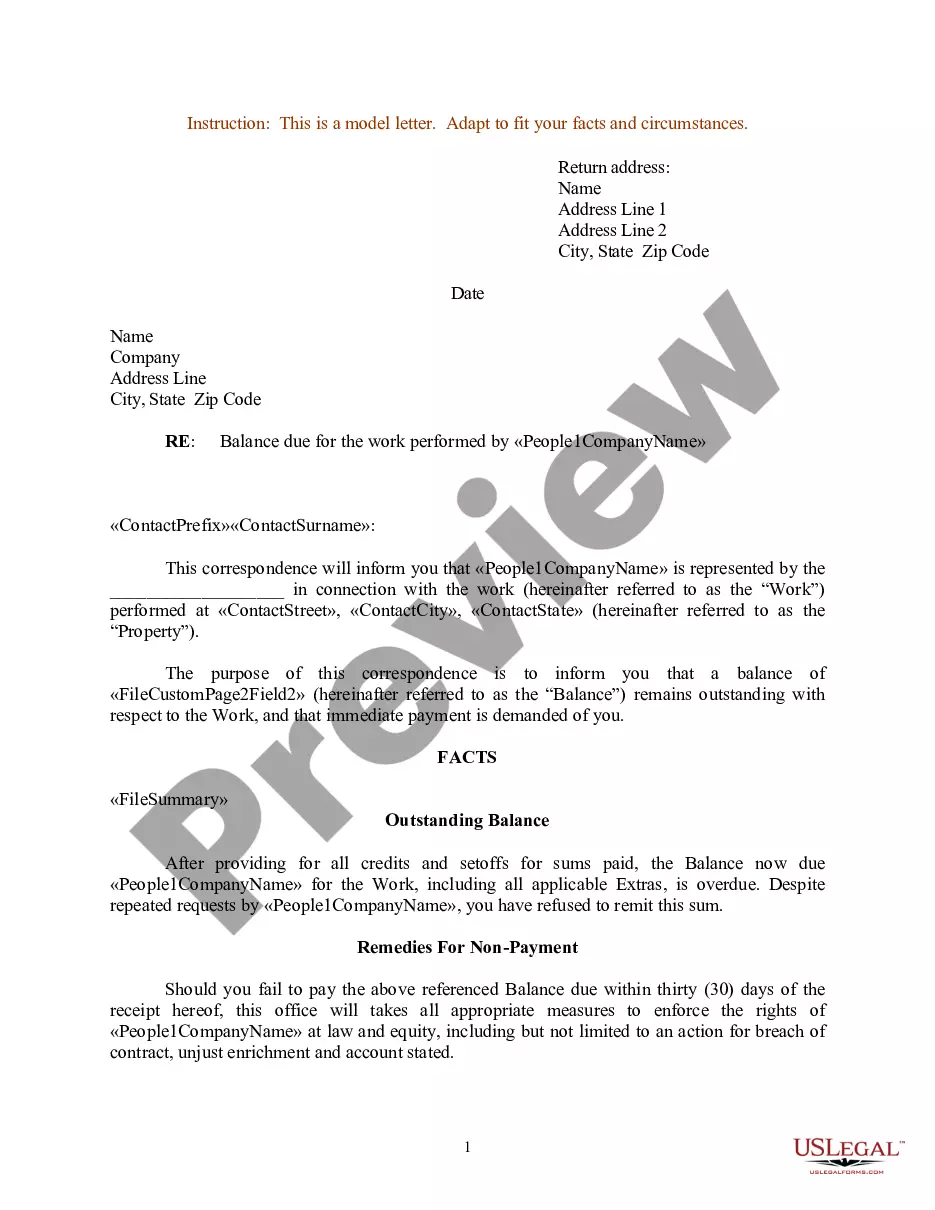
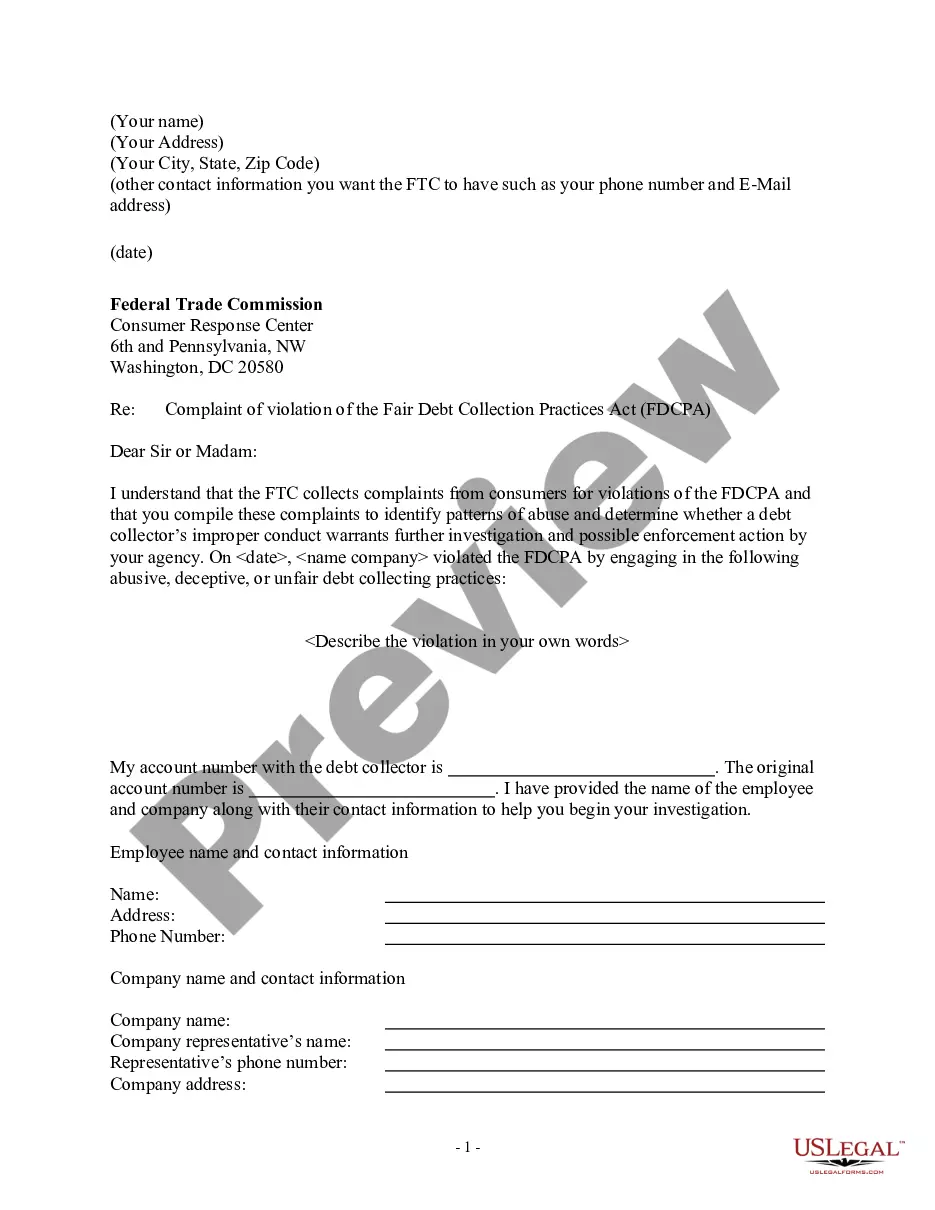
The Sample Letter for Notice Under Fair Debt Collection Act is a template designed to inform a debtor of their rights under the Fair Debt Collection Practices Act (FDCPA). This form serves as an official notification that a debt is being pursued and outlines the debtor's rights to dispute the validity of the debt. This letter differs from other forms as it specifically addresses communication from debt collectors to consumers, ensuring that necessary legal protections are communicated clearly.
What’s included in this form
- Notice of Debt Collection: Clearly states that the office is attempting to collect a debt.
- Validation Rights: Outlines the debtor's right to dispute the debt within 30 days.
- Original Creditor Information: Provides information about requesting the name and address of the original creditor.
- Contact Information: Includes fields for the name of the debt collection agency and its contact details.
Common use cases
This form should be used when a debtor receives a notice from a debt collector and needs to formally address the validity of the debt. It is particularly useful in situations where the debtor is unsure if the debt is legitimate or if the debt collector has the right to collect the amount claimed. Using this letter can help protect the debtor's rights and initiate communication with the collector.
Intended users of this form
- Individuals who have received a notice from a debt collector.
- Consumers wanting to confirm the legitimacy of a debt.
- Anyone who wishes to exercise their rights under the Fair Debt Collection Practices Act.
How to complete this form
- Enter your full name and address in the designated fields at the top of the letter.
- Include the date you are sending the letter.
- Clearly state that you are disputing the validity of the debt.
- If necessary, request information on the original creditor and verification of the debt.
- Sign and date the letter before sending it to the debt collector.
Notarization guidance
Notarization is not commonly needed for this form. However, certain documents or local rules may make it necessary. Our notarization service, powered by Notarize, allows you to finalize it securely online anytime, day or night.
Get your form ready online
Our built-in tools help you complete, sign, share, and store your documents in one place.
Make edits, fill in missing information, and update formatting in US Legal Forms—just like you would in MS Word.
Download a copy, print it, send it by email, or mail it via USPS—whatever works best for your next step.
Sign and collect signatures with our SignNow integration. Send to multiple recipients, set reminders, and more. Go Premium to unlock E-Sign.
If this form requires notarization, complete it online through a secure video call—no need to meet a notary in person or wait for an appointment.
We protect your documents and personal data by following strict security and privacy standards.

Make edits, fill in missing information, and update formatting in US Legal Forms—just like you would in MS Word.

Download a copy, print it, send it by email, or mail it via USPS—whatever works best for your next step.

Sign and collect signatures with our SignNow integration. Send to multiple recipients, set reminders, and more. Go Premium to unlock E-Sign.

If this form requires notarization, complete it online through a secure video call—no need to meet a notary in person or wait for an appointment.

We protect your documents and personal data by following strict security and privacy standards.
Typical mistakes to avoid
- Failing to send the letter within the 30-day period.
- Not including a clear statement of the dispute.
- Forgetting to keep a copy of the letter for personal records.
- Not providing adequate identification or contact information to the collector.
Benefits of using this form online
- Convenience of downloading and customizing the letter from home.
- Editability allows you to easily input personal information and dates.
- Reliable format drafted by licensed attorneys to ensure legal compliance.
Legal use & context
- The letter serves as documentation of your dispute, which is essential for protecting your rights.
- Use of this letter can prevent future collection efforts based on the disputed debt until verification is provided.
- Submitting this notice creates a formal record that may be useful in case of litigation.
Summary of main points
- The Sample Letter for Notice Under Fair Debt Collection Act is vital for asserting your rights as a debtor.
- Timely communication is crucial; dispute any debt within 30 days.
- This form helps ensure that your request for debt verification is properly documented.
Looking for another form?
Form popularity
FAQ
Fair Debt Collection Practices Act (FDCPA) Validation Letter The Fair Debt Collection Practices Act (FDCPA) is a federal law that protects consumers from abusive collection practices by debt collectors and collection agencies.
Here's some basic information you should write down anytime you speak with a debt collector: date and time of the phone call, the name of the collector you spoke to, name and address of collection agency, the amount you allegedly owe, the name of the original creditor, and everything discussed in the phone call.
For the name and contact information of the original creditor. why the collector believes you own the debt in the first place. for a record of all owners of the debt. the amount and age of the debt (including an account number if you're able). under what authority the collector has to collect.
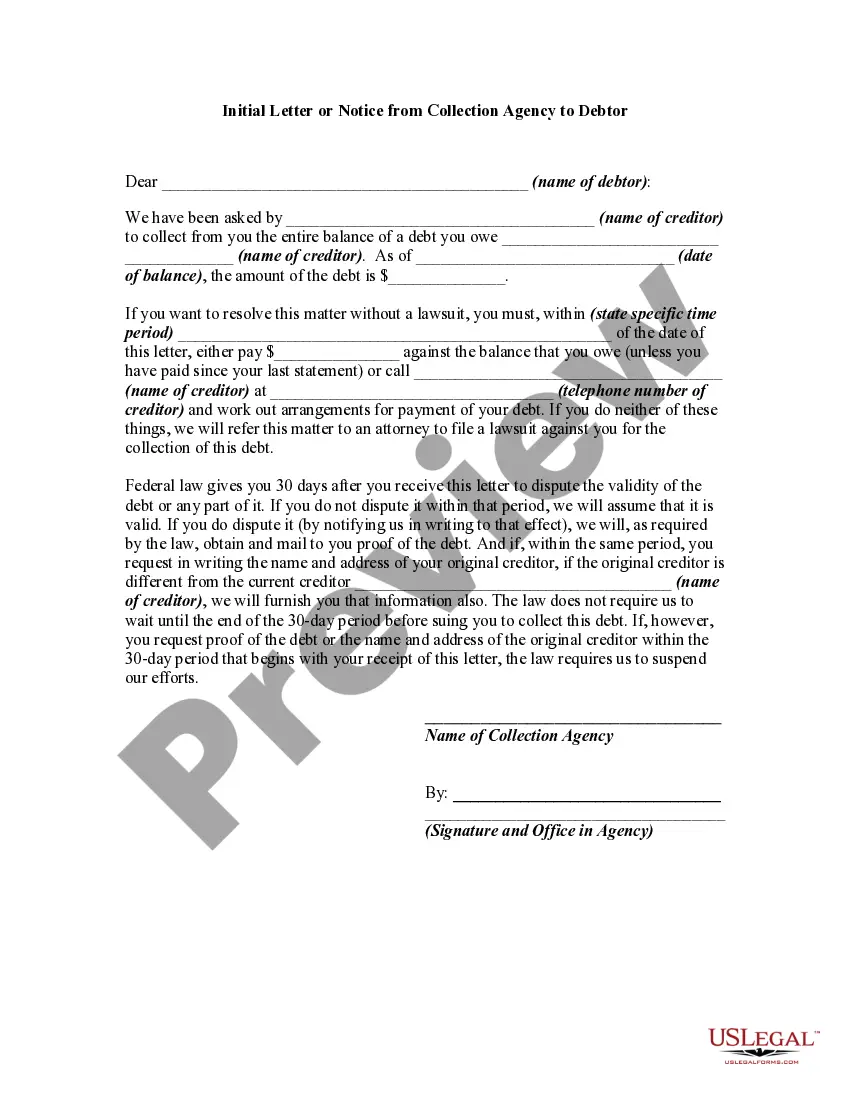
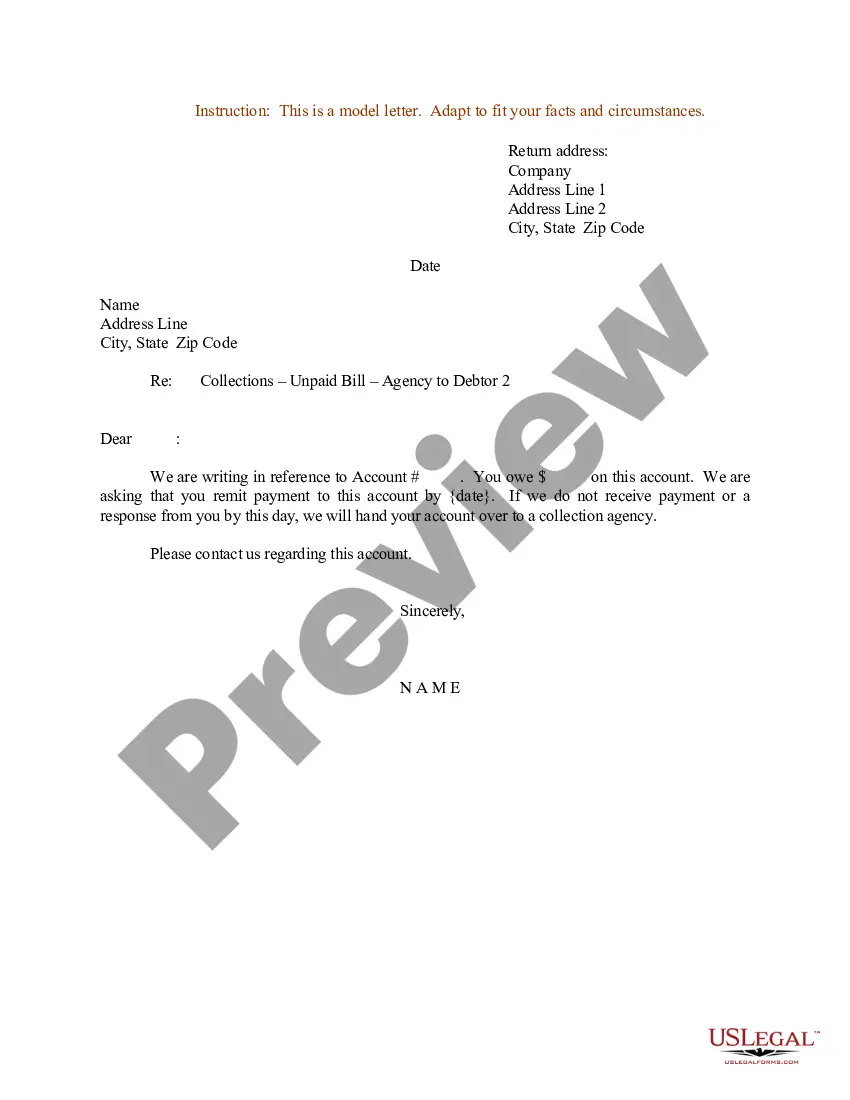
The amount the debtor owes you. The initial due date of the payment. A new due date for the payment, whether ASAP or longer. Instructions on how to pay the debt.
Under the Fair Debt collection Practices Act (FDCPA), I have the right to request validation of the debt you say I owe you. I am requesting proof that I am indeed the party you are asking to pay this debt, and there is some contractual obligation that is binding on me to pay this debt.
Know What to Include A demand letter should include the name of the creditor, the amount owed, action required, debt reference, deadline, and the consequences. Ensure you include all these details so your letter is not only compliant with the FDCPA, but also practical.
The letter should be sent certified mail (so you can have proof of receipt) and include your account number, the date they contacted you, the method they used to contact you, and a statement requesting that they provide validation of the debt. It doesn't have to be long, as you can see from this sample letter.
Never Give Them Your Personal Information. A call from a debt collection agency will include a series of questions. Never Admit That The Debt Is Yours. Even if the debt is yours, don't admit that to the debt collector. Never Provide Bank Account Information.