Graphics License Agreement
About this form
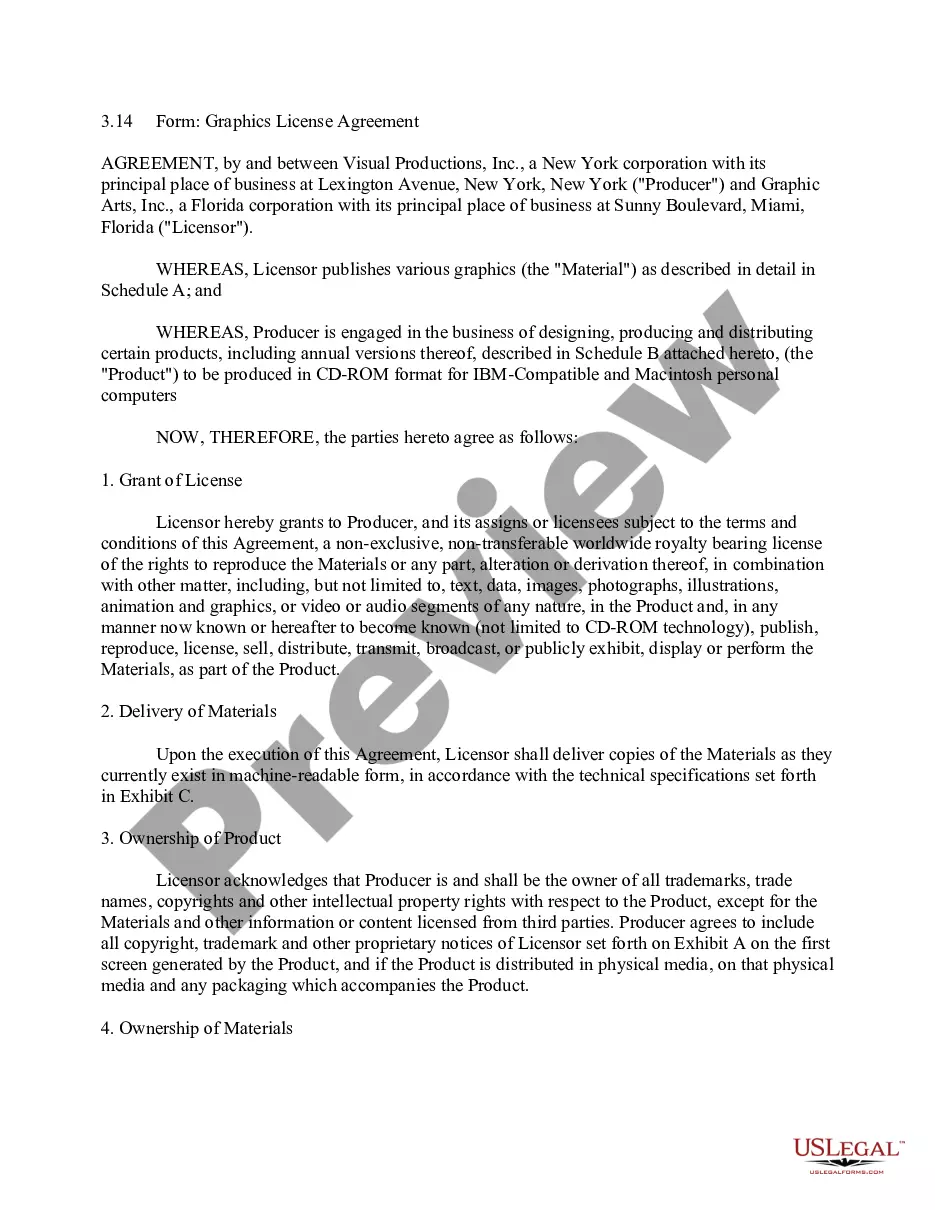
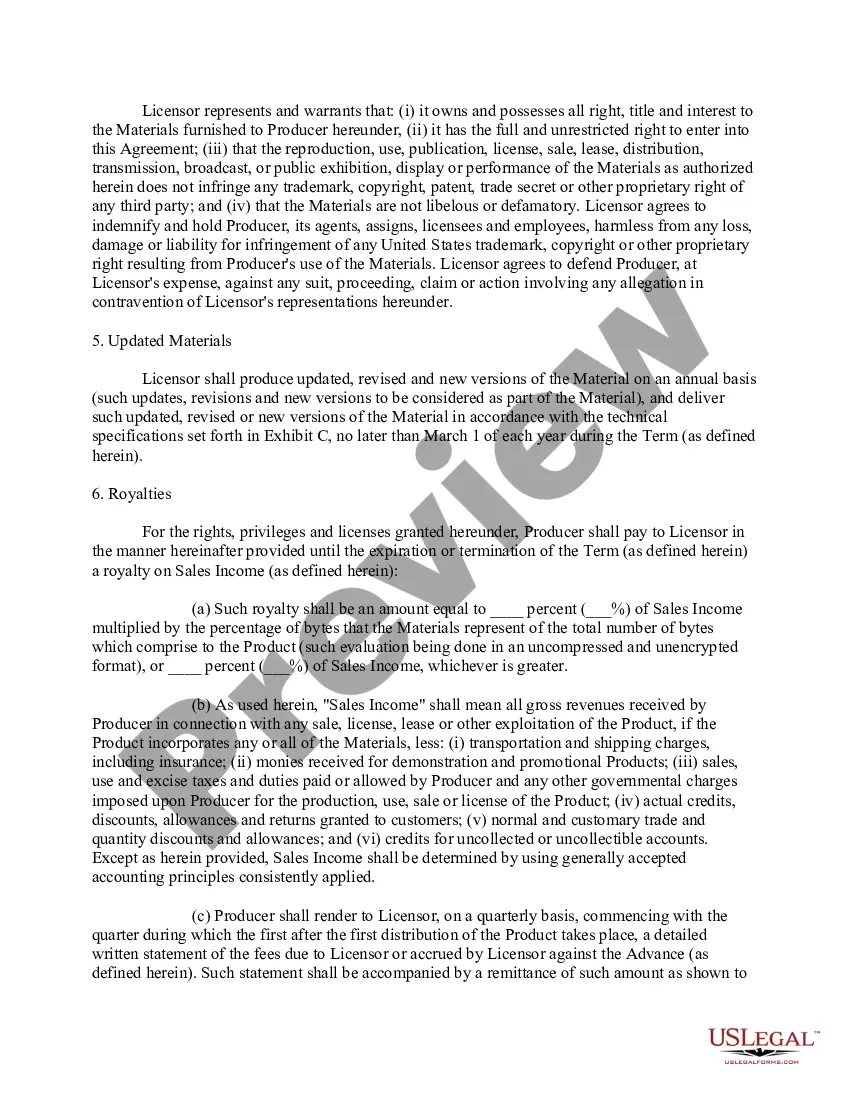
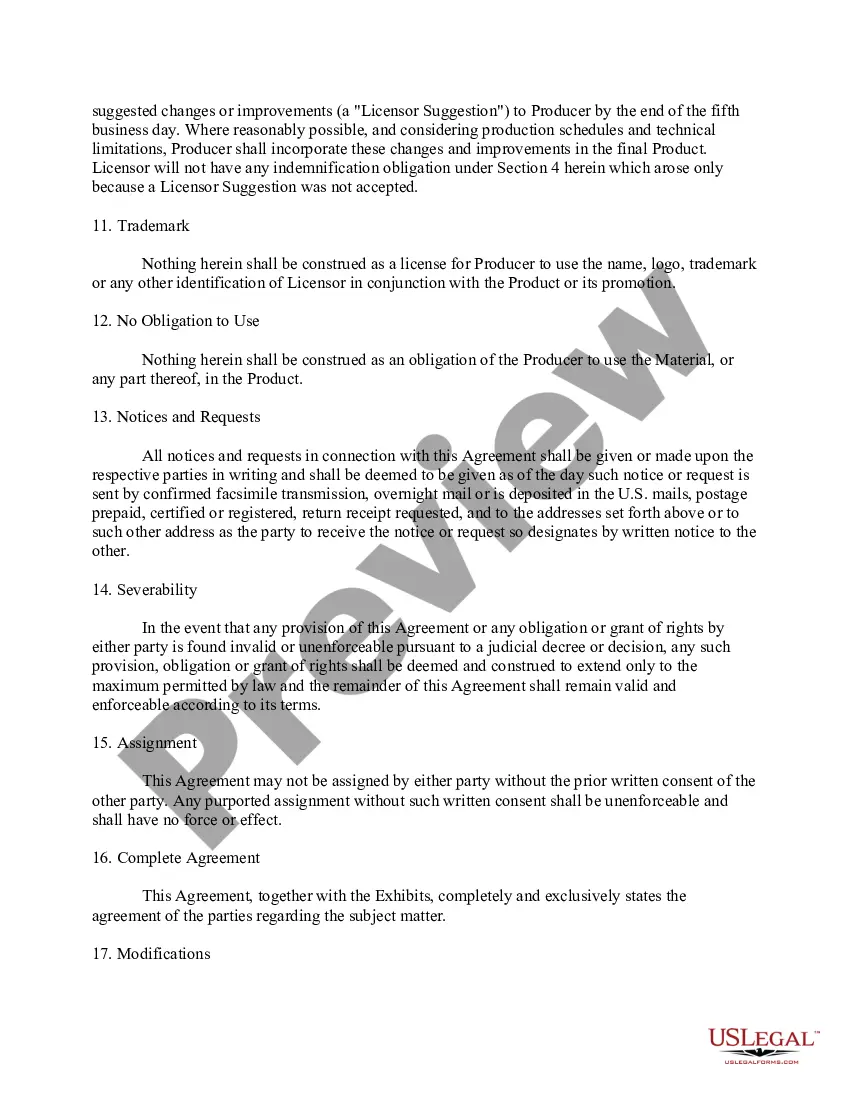
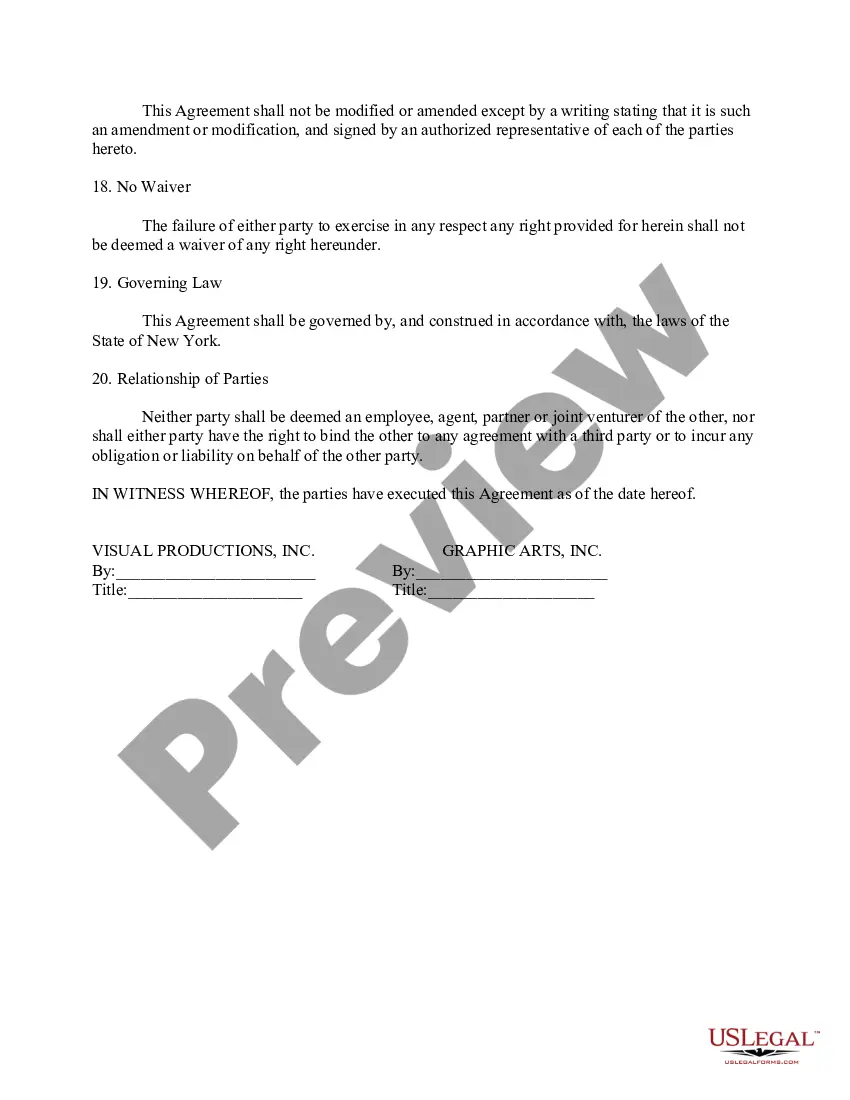
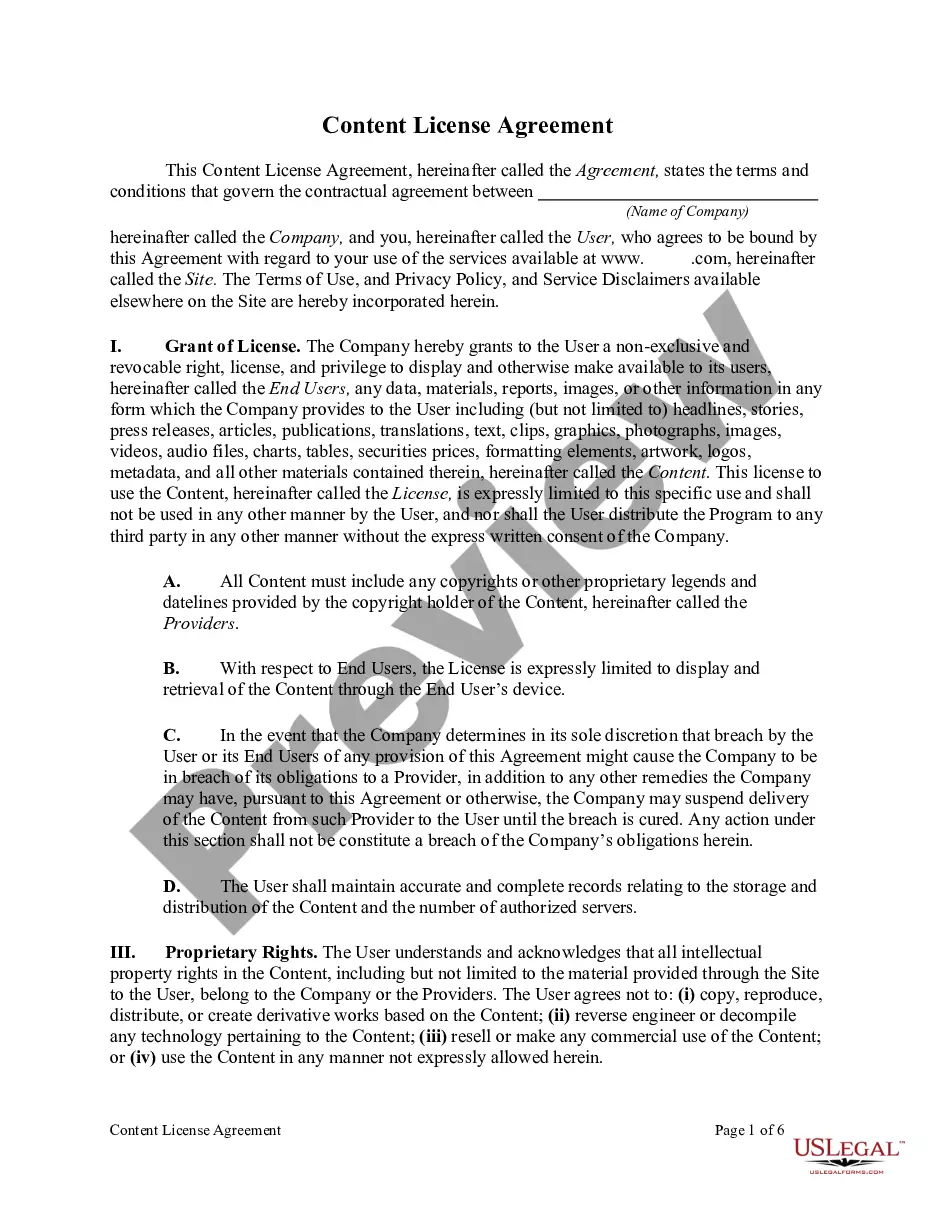
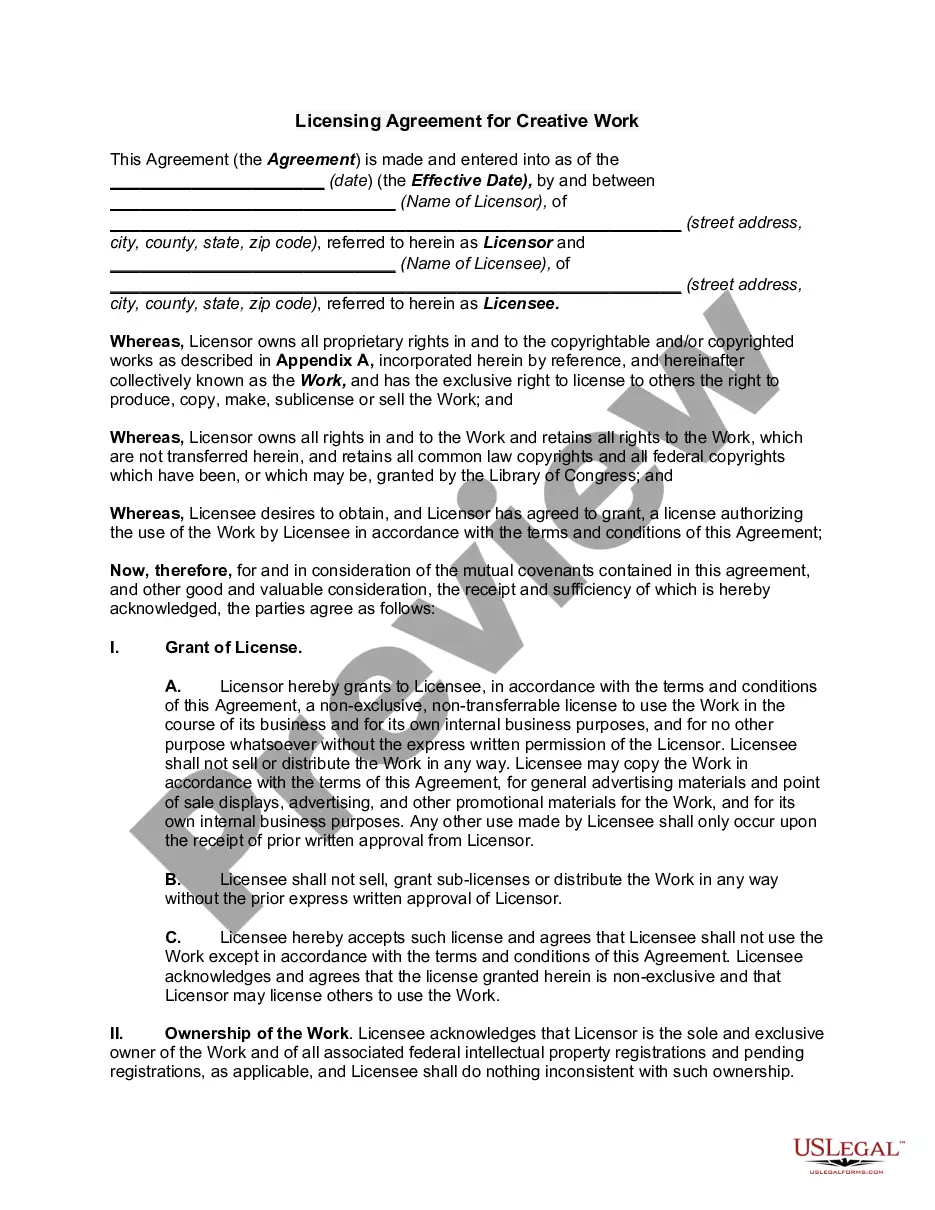
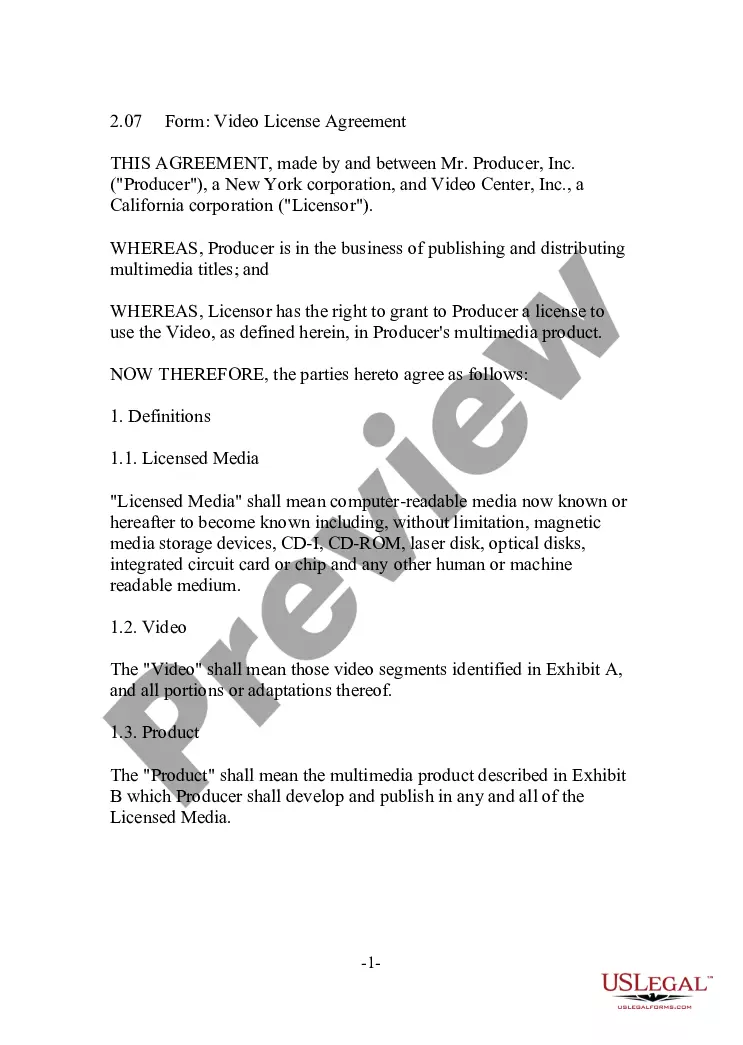
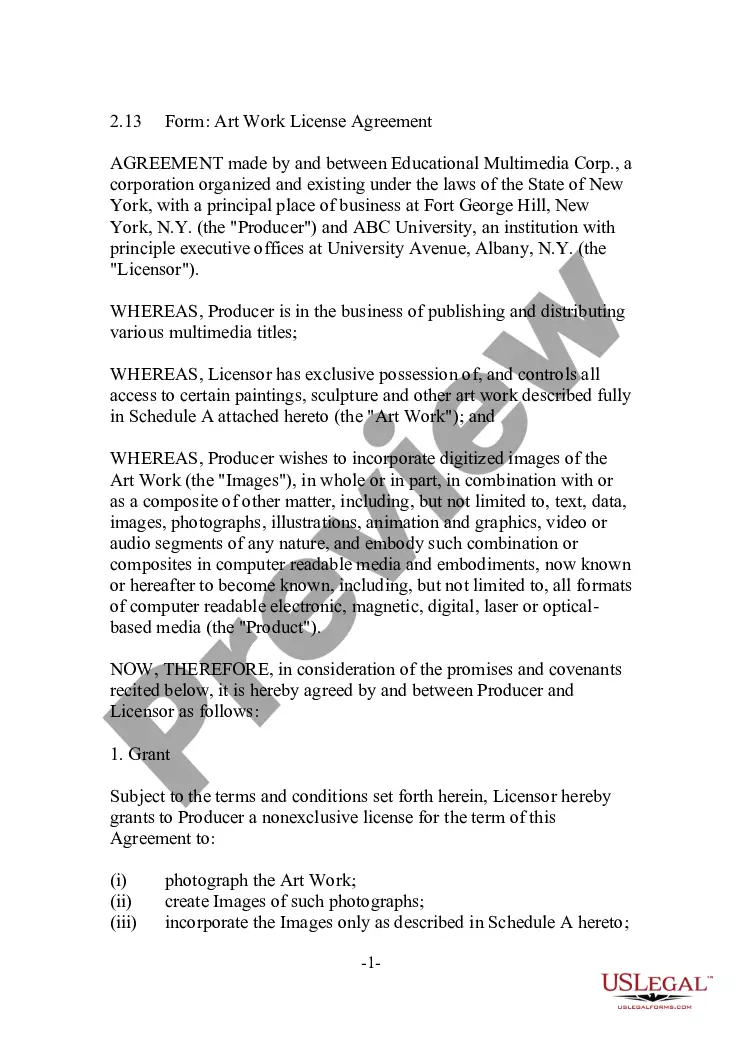
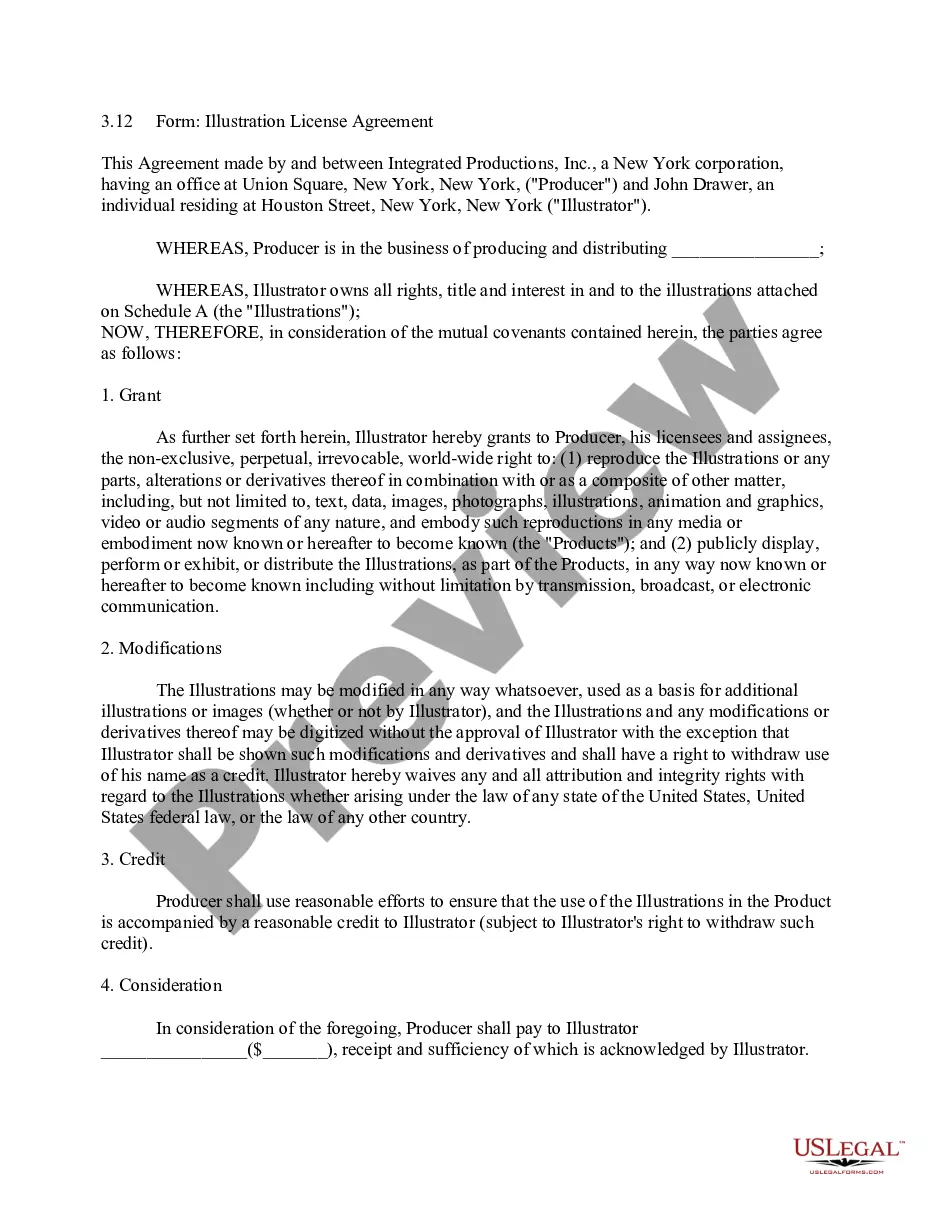
The Graphics License Agreement is a legal document that establishes the terms and conditions under which one party grants another the rights to use specific graphics and related materials. This agreement is essential for producers and licensors in the graphics industry to clarify ownership rights, royalty arrangements, and usage permissions, ensuring a mutual understanding that protects both parties' interests.
Form components explained
- Parties involved: Identifies the Licensor and Producer entering into the agreement.
- Grant of License: Details the scope and nature of the license granted for using the graphics.
- Ownership Rights: Clarifies ownership of the materials and any products created from them.
- Royalties: Specifies the payment structure and percentage of sales income owed to the Licensor.
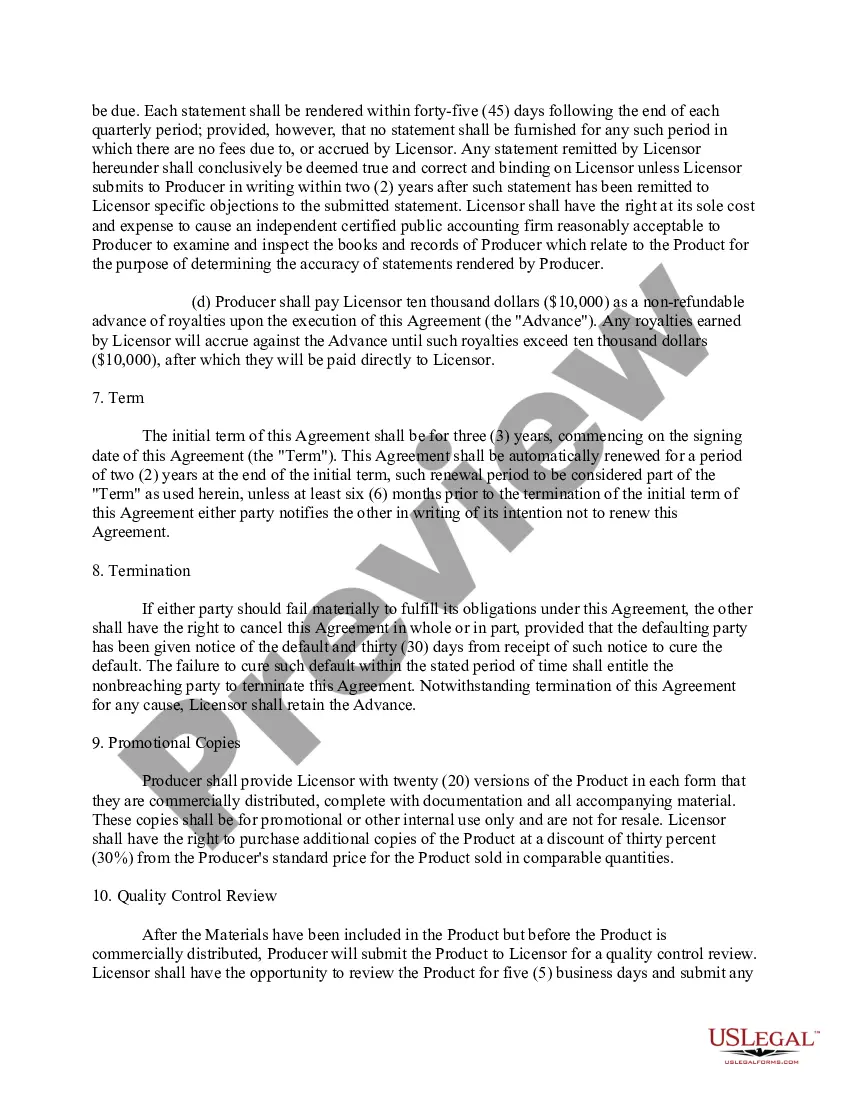
- Term and Termination: Outlines the duration of the agreement and conditions for termination.
- Quality Control Review: Describes the process for reviewing the final product before commercial distribution.
When to use this document
This agreement is needed when a graphic artist or company (the Licensor) wishes to license their graphics to a producer who will use those graphics in a product, such as a software application or multimedia project. It is essential for protecting intellectual property rights and ensuring that both parties agree on how the graphics will be used and compensated.
Who needs this form
- Graphic artists or companies looking to license their graphics.
- Producers or developers planning to include licensed graphics in their products.
- Businesses involved in creative projects that require clarity on graphic usage rights.
How to prepare this document
- Identify the parties: Fill in the names and addresses of the Licensor and the Producer.
- Specify the graphics: Detail the graphics to be licensed and refer to any attached schedules for clarification.
- Enter royalty percentages: Clearly state the agreed royalty percentage and calculation method.
- Acknowledge ownership: Confirm the ownership rights of both parties concerning the graphics and any derivative works.
- Set the term: Define the agreement's duration and renewal terms.
- Complete signatures: Ensure both parties sign and date the agreement to make it legally binding.
Does this document require notarization?
This form usually doesn’t need to be notarized. However, local laws or specific transactions may require it. Our online notarization service, powered by Notarize, lets you complete it remotely through a secure video session, available 24/7.
Get your form ready online
Our built-in tools help you complete, sign, share, and store your documents in one place.
Make edits, fill in missing information, and update formatting in US Legal Forms—just like you would in MS Word.
Download a copy, print it, send it by email, or mail it via USPS—whatever works best for your next step.
Sign and collect signatures with our SignNow integration. Send to multiple recipients, set reminders, and more. Go Premium to unlock E-Sign.
If this form requires notarization, complete it online through a secure video call—no need to meet a notary in person or wait for an appointment.
We protect your documents and personal data by following strict security and privacy standards.

Make edits, fill in missing information, and update formatting in US Legal Forms—just like you would in MS Word.

Download a copy, print it, send it by email, or mail it via USPS—whatever works best for your next step.

Sign and collect signatures with our SignNow integration. Send to multiple recipients, set reminders, and more. Go Premium to unlock E-Sign.

If this form requires notarization, complete it online through a secure video call—no need to meet a notary in person or wait for an appointment.

We protect your documents and personal data by following strict security and privacy standards.
Avoid these common issues
- Failing to detail the graphics covered by the license, leading to confusion.
- Not specifying the royalty calculation, which can create disputes later.
- Omitting signatures, which can invalidate the agreement.
Why use this form online
- Convenience of downloading and editing the form as per specific requirements.
- Reduces the time and cost associated with hiring a lawyer for initial drafting.
- Ensures compliance with common legal standards in graphics licensing.
Legal use & context
- This agreement is legally binding once signed by both parties, provided it meets all local legal standards.
- It serves to protect the intellectual property rights of both the Licensor and the Producer, minimizing legal risks associated with misuse.
Quick recap
- The Graphics License Agreement protects both the producer and the licensor by clearly defining rights and responsibilities.
- Proper completion of this form can prevent future legal issues and misunderstandings.
- Using the form ensures compliance with relevant intellectual property laws.
Looking for another form?



Form popularity
FAQ
The 3 P's of collegiate licensing are protection, promotion, and profit.
A license agreement is a business contract between two parties. The licensor (the seller of the license) owns the asset being licensed and the licensee (the buyer) pays for the right to use the license. The licensee pays royalties to the owner in exchange for the right to sell the product or use the technology.
Call up a company, speak with the receptionist. You don't even have to give your real name if it makes you nervous. Ask them how to pitch new art to them or if they manufacture their own products. Call up an artist and ask them who they are licensing with or how they liked working with a manufacturer you're unsure of.
Exclusive or non-exclusive. In an exclusive license, the intellectual property holder is licensing the work only to one person, for that particular use/territory. Territory. Use. Attribution. Derivative works. Confidentiality. Time frame. Termination.
Download a template for a licensing agreement. Choose your role as the licensor or licensee. Define the license(s) in the agreement. Decide whether the license is exclusive or not. Settle the matter of fees and payment schedule. Add a renewal date and rules.
An example of a licensing agreement is a contract between the copyright holders of software and another company, allowing the latter to use the computer software for their daily business operations.
It is a process of creating and managing contracts between the owner of a brand and a company or individual who wants to use the brand in association with a product, for an agreed period of time, within an agreed territory.An arrangement to license a brand requires a licensing agreement.
Art licensing is a way of making money wherein, as licensing expert Tara Reed puts it, you rent your artwork to companies to put on their products. An artist who chooses to license their art may not sell any originals at all, but simply license the images for use on commercial products.