Job Sharing Policy
What this document covers
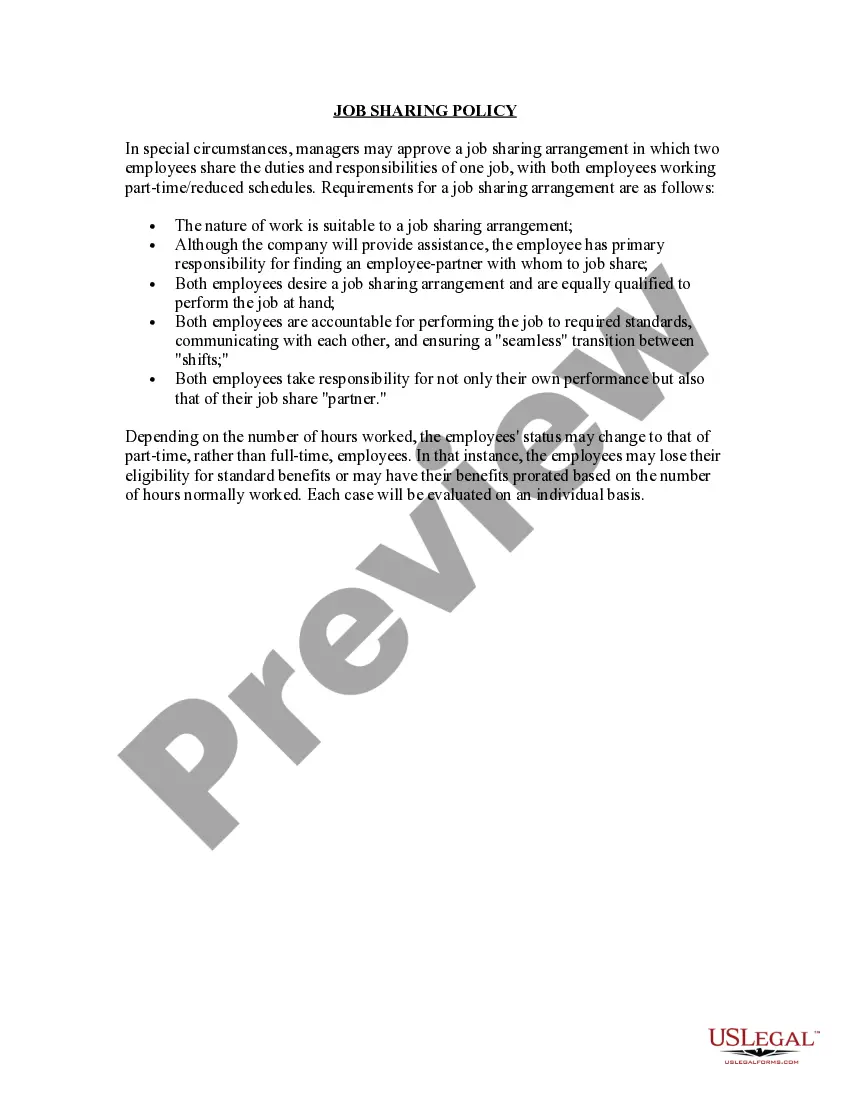
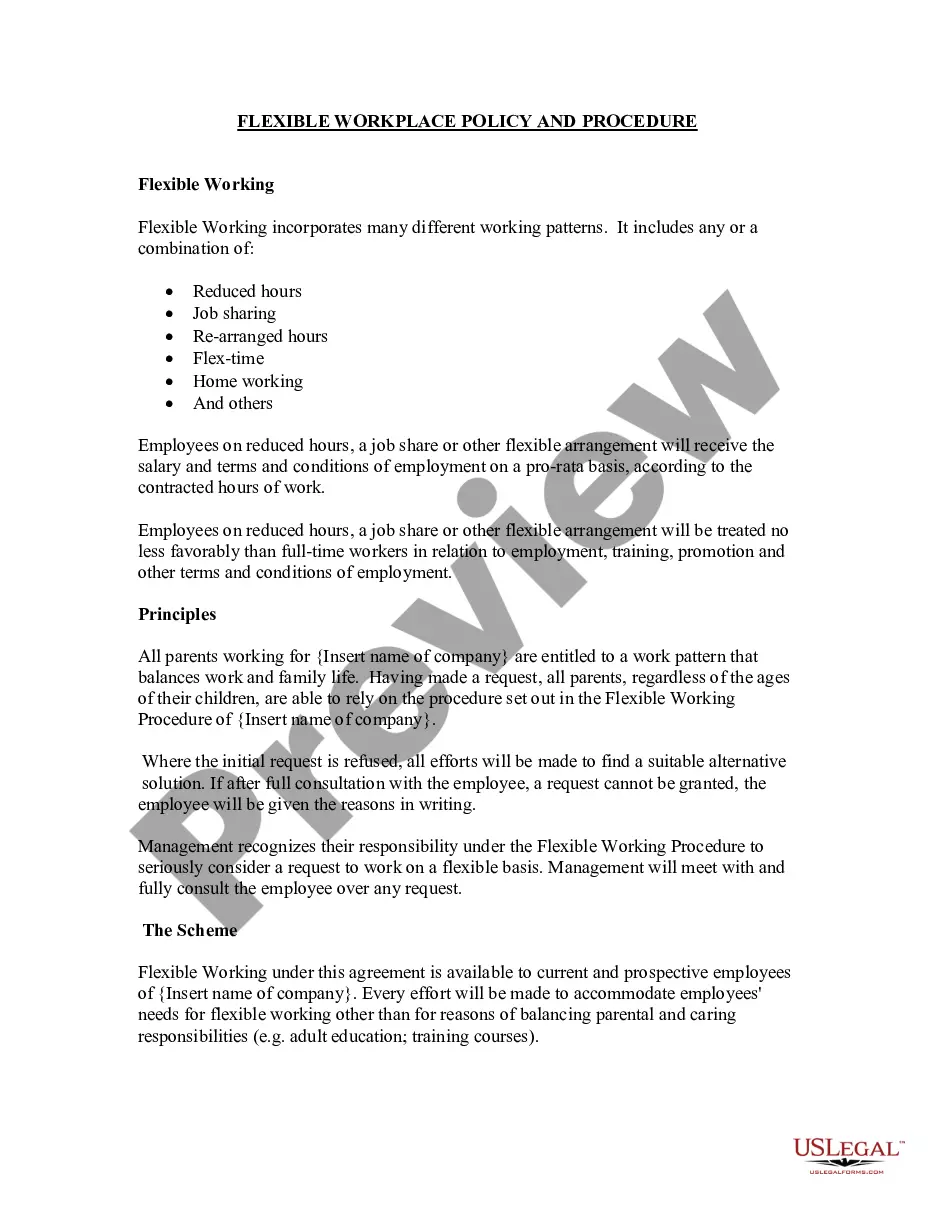
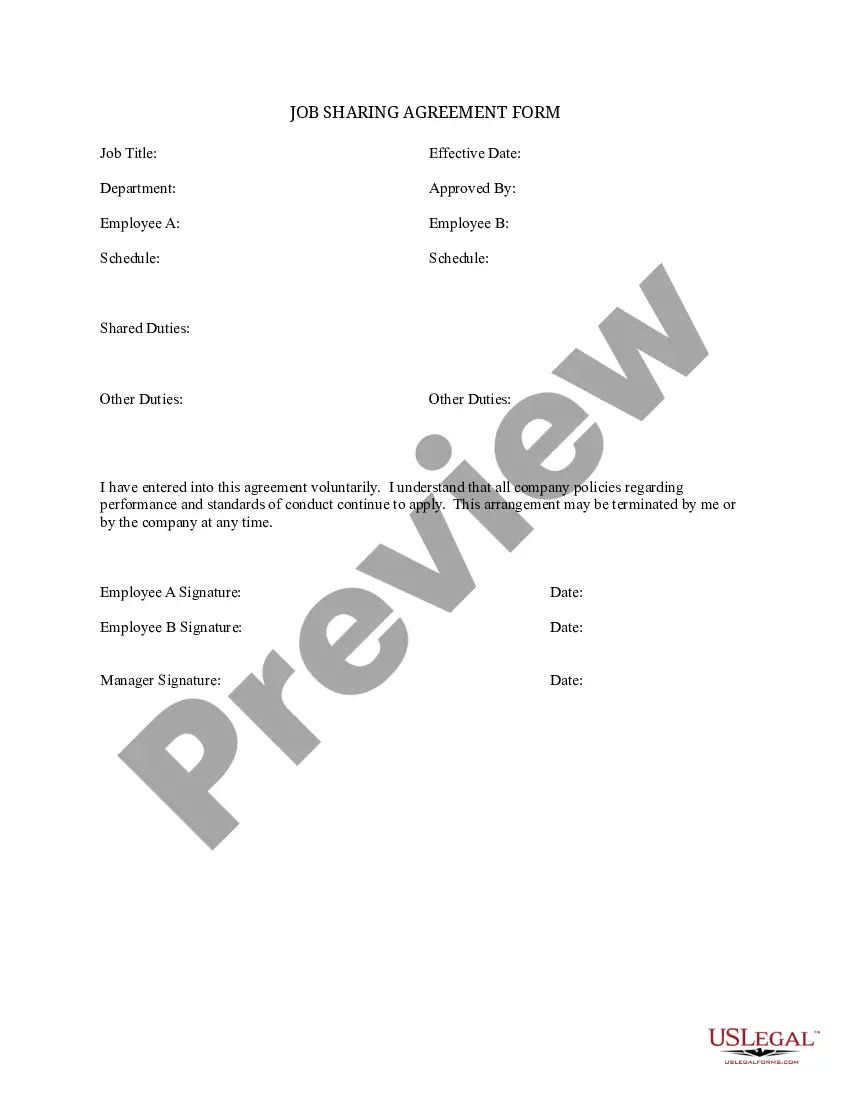
The Job Sharing Policy outlines the framework for employees wishing to share a job role under a job sharing arrangement. This policy provides clarity on how two employees can collaboratively fulfill the responsibilities of one position, working part-time or reduced schedules. Unlike traditional employment agreements, this policy emphasizes the cooperative nature of job sharing and the expectations of both employees involved.
Form components explained
- Definition and purpose of job sharing arrangements
- Eligibility requirements for employees wishing to share a job
- Accountability and performance standards for both employees
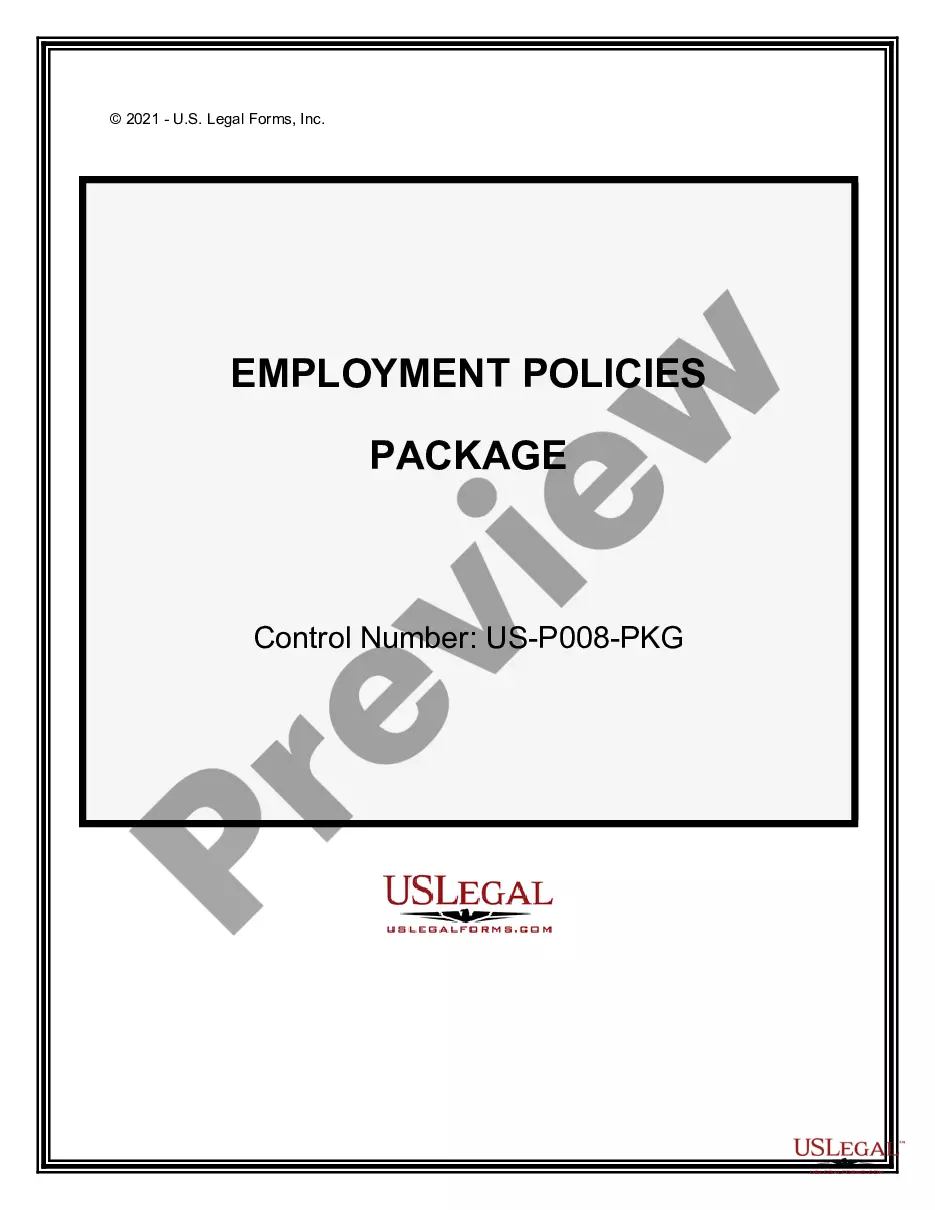
- Potential changes in employment status and benefits
- Process for finding a job share partner
When to use this form
This Job Sharing Policy should be used when two employees are interested in sharing the duties of a single full-time position. It is designed for situations where employees prefer a part-time schedule yet want to maintain their collaboration and productivity in a shared role. Managers can approve such arrangements where the work nature supports effective job sharing.
Who needs this form
- Employees who wish to enter a job sharing arrangement
- Managers responsible for approving job sharing agreements
- Human resources professionals involved in policy implementation
Instructions for completing this form
- Discuss interest in a job sharing arrangement with your employer.
- Ensure both employees meet the eligibility criteria outlined in the policy.
- Choose an appropriate job share partner who complements your skills.
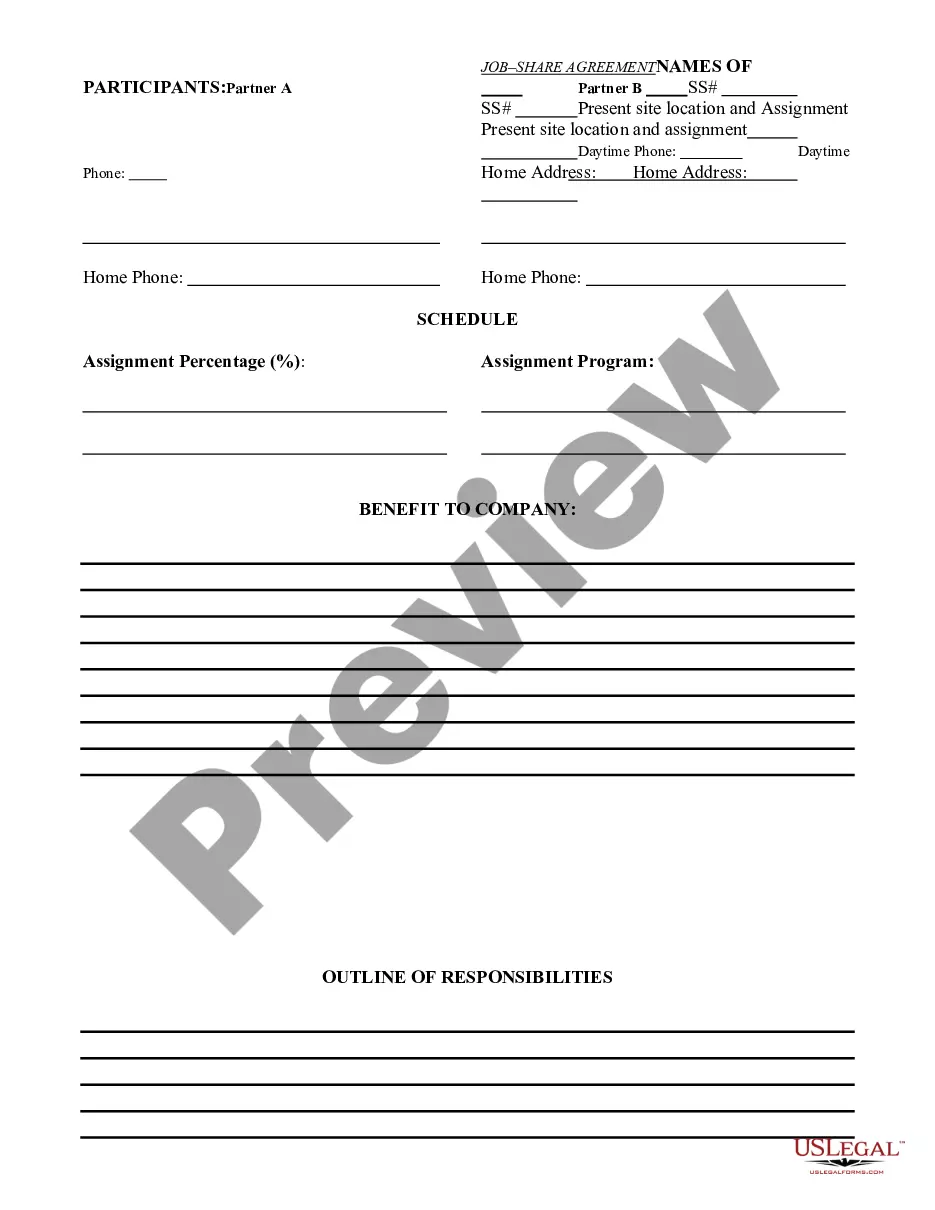
- Collaborate to create a clear plan for responsibilities and communication.
- Submit the job sharing proposal for managerial approval.
Is notarization required?
In most cases, this form does not require notarization. However, some jurisdictions or signing circumstances might. US Legal Forms offers online notarization powered by Notarize, accessible 24/7 for a quick, remote process.
Get your form ready online
Our built-in tools help you complete, sign, share, and store your documents in one place.
Make edits, fill in missing information, and update formatting in US Legal Forms—just like you would in MS Word.
Download a copy, print it, send it by email, or mail it via USPS—whatever works best for your next step.
Sign and collect signatures with our SignNow integration. Send to multiple recipients, set reminders, and more. Go Premium to unlock E-Sign.
If this form requires notarization, complete it online through a secure video call—no need to meet a notary in person or wait for an appointment.
We protect your documents and personal data by following strict security and privacy standards.

Make edits, fill in missing information, and update formatting in US Legal Forms—just like you would in MS Word.

Download a copy, print it, send it by email, or mail it via USPS—whatever works best for your next step.

Sign and collect signatures with our SignNow integration. Send to multiple recipients, set reminders, and more. Go Premium to unlock E-Sign.

If this form requires notarization, complete it online through a secure video call—no need to meet a notary in person or wait for an appointment.

We protect your documents and personal data by following strict security and privacy standards.
Common mistakes
- Not having a clear communication plan between job share partners.
- Assuming eligibility without confirming with management.
- Neglecting to evaluate how the job sharing will impact productivity.
Why complete this form online
- Quick access to the latest policy updates and templates.
- Easy to customize the form to fit specific employment circumstances.
- Convenient downloading options for immediate use.
Legal use & context
- The policy provides a framework for implementing job sharing in compliance with labor laws.
- Consideration of employee rights and responsibilities under the job sharing arrangement.
- Ensures that both employees understand their duties and the implications for benefits.
Summary of main points
- The Job Sharing Policy allows two employees to share the responsibilities of one position.
- Clear guidelines and accountability structures are essential for successful job sharing.
- This policy serves to help improve employee satisfaction and promote flexible working.
Looking for another form?



Form popularity
FAQ
Divide the role in the most effective way possible. Make the most of potential flexibility. Minimise common problems. Have clear contractual arrangements. Ensure arrangements for one job share partner leaving are clear.
Unlike other positions where you may be the only person qualified to do the work, job-share partners can cover each other's shifts seamlessly.For example, if a good employee was considering leaving the company because they felt their full-time workload was too much, job sharing would be a suitable alternative.
Benefits for the employee Enjoy the flexibility of part time hours. Exchange of skills and knowledge between job sharers. Keep a level of seniority with their organisation while changing the structure of their hours. Meet the demands of a challenging role while upholding an improved work/life balance.
What happens if one Job Share Partner leaves? Job share arrangements are dependent upon the partners and when one partner leaves, for whatever reason, the remaining job sharer should be offered the post on a full time basis.
A job share arrangement is a full-time job split between two individuals, each with responsibility for the success of the total job. Job sharing allows two staff members to share the responsibilities of one full-time position, typically with prorated salary and paid time off.
Establish clear and concise job descriptions that allocate responsibilities and tasks to each employee. set clear guidelines and expectations about job sharers' workload capacity. set up a work schedule outlining the days and hours each job sharer works.
Retention of valued employees: Job sharing keeps workers seeking reduced hours, such as working parents, from being forced to quit your company to get time off. It can greatly reduce expensive employee turnover, which is especially important in key positions.