Profit-Sharing Plan and Trust Agreement
About this form
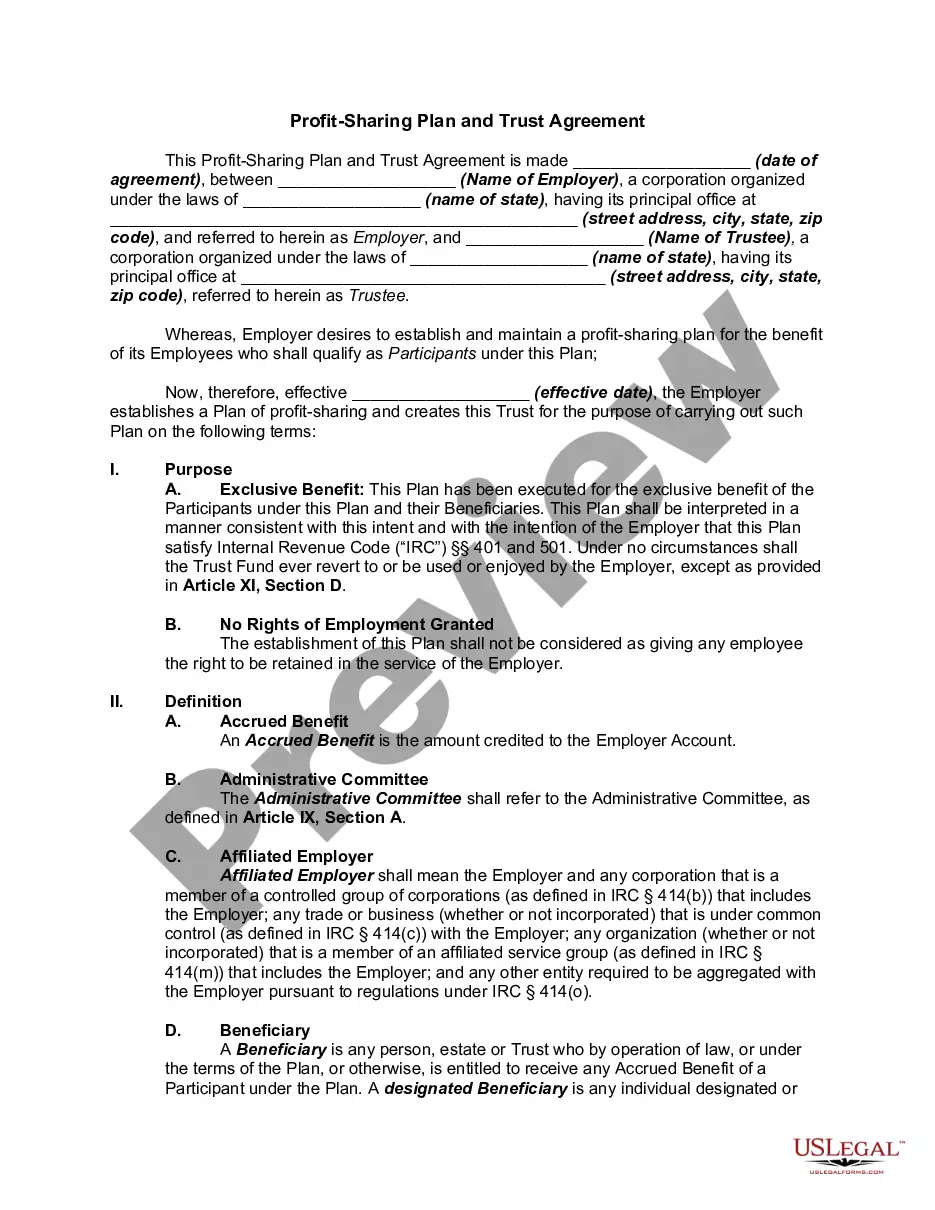
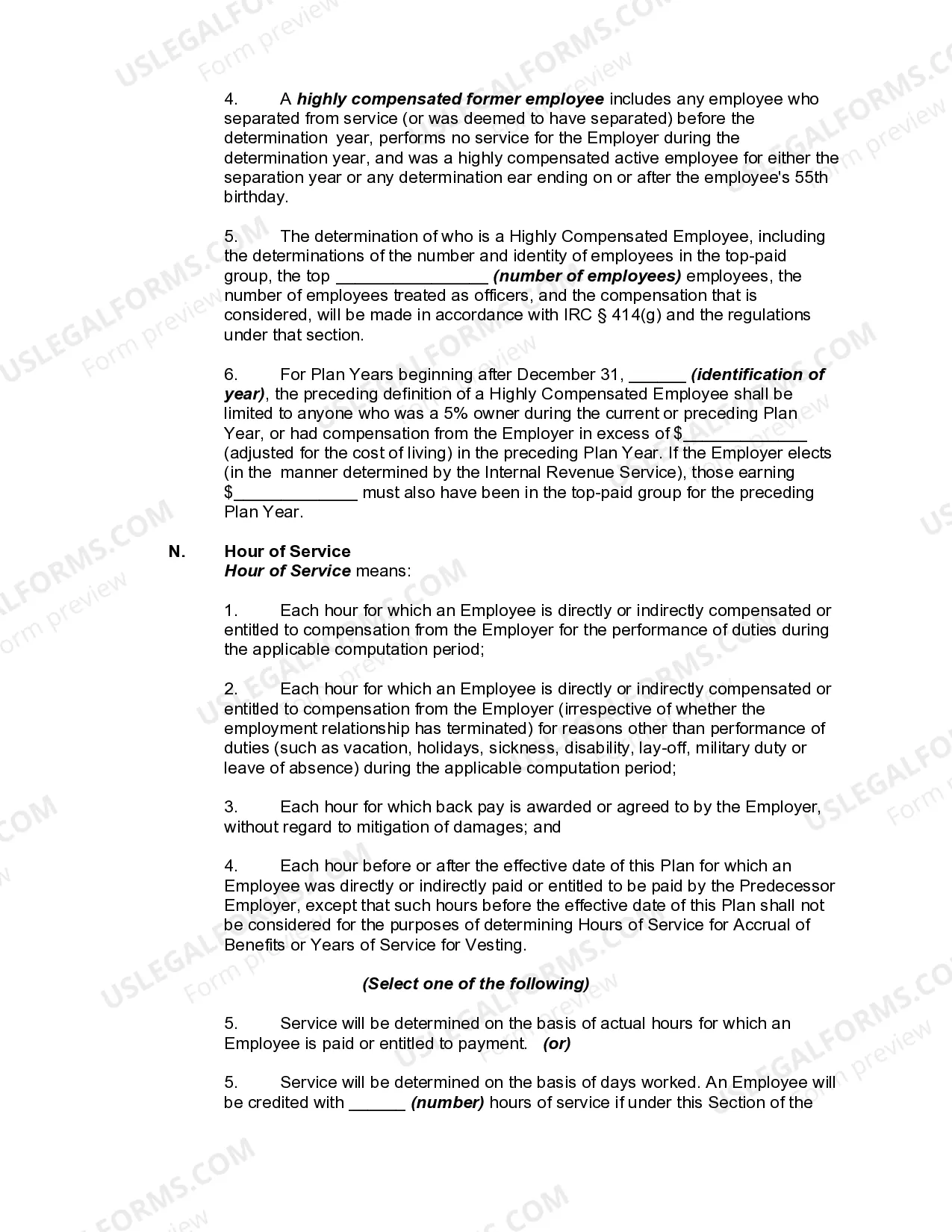
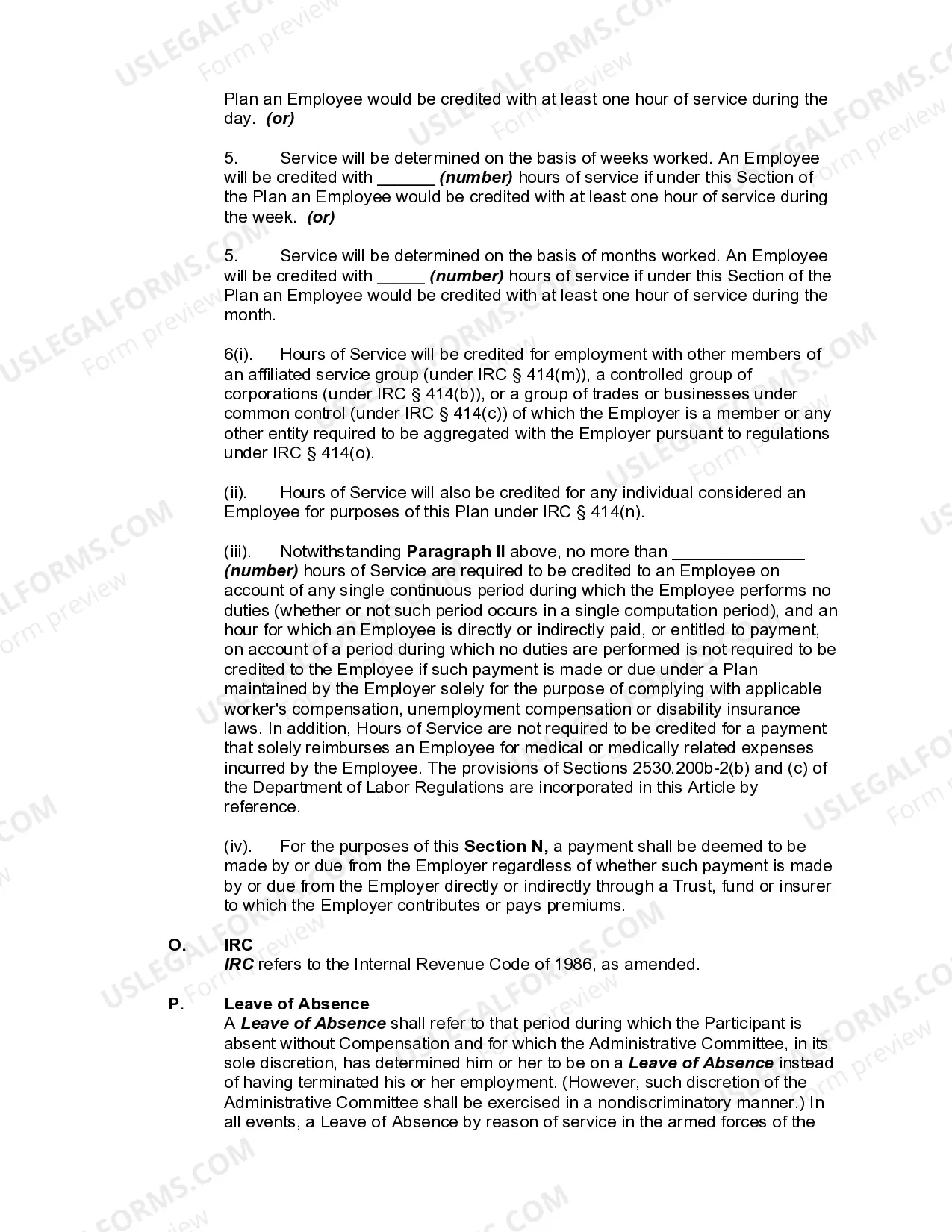
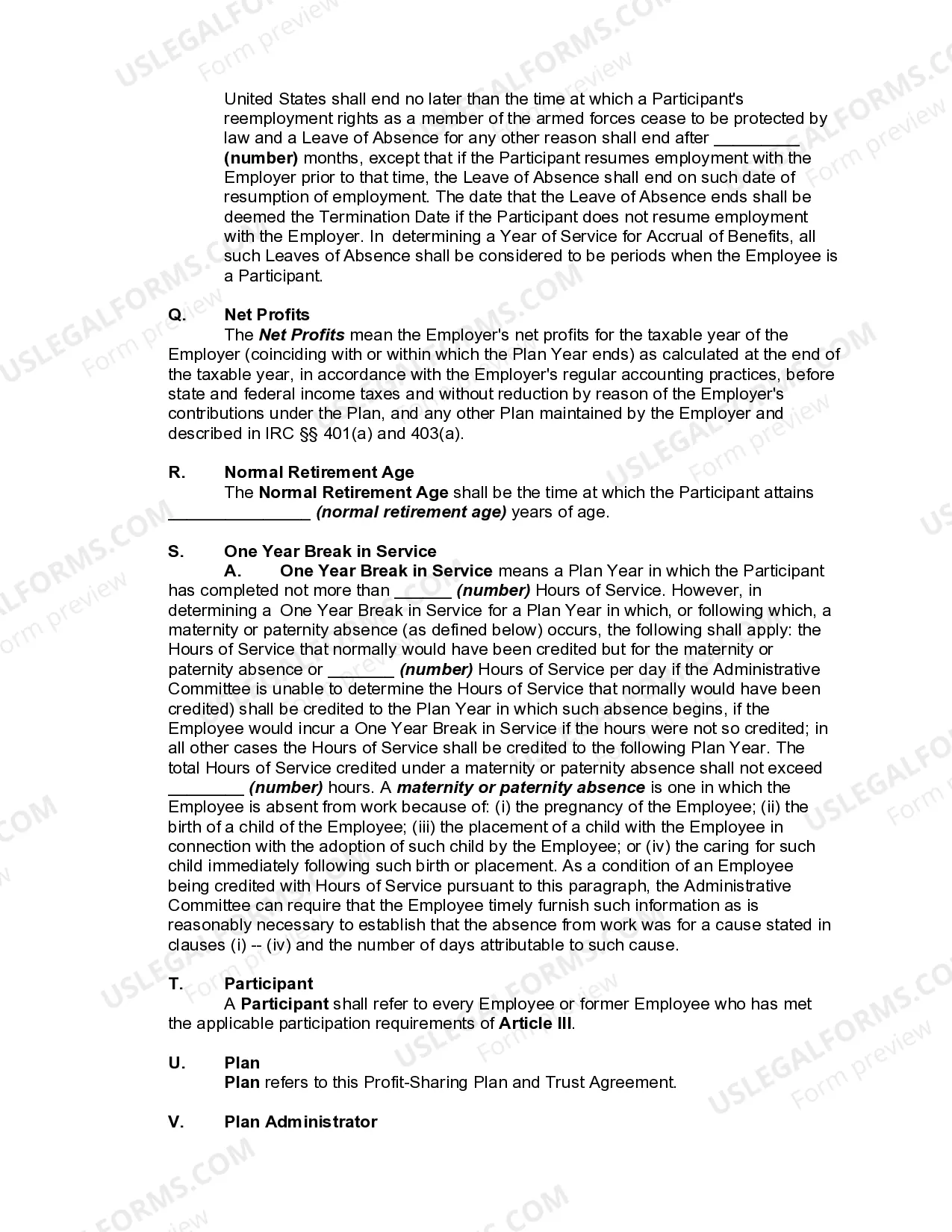
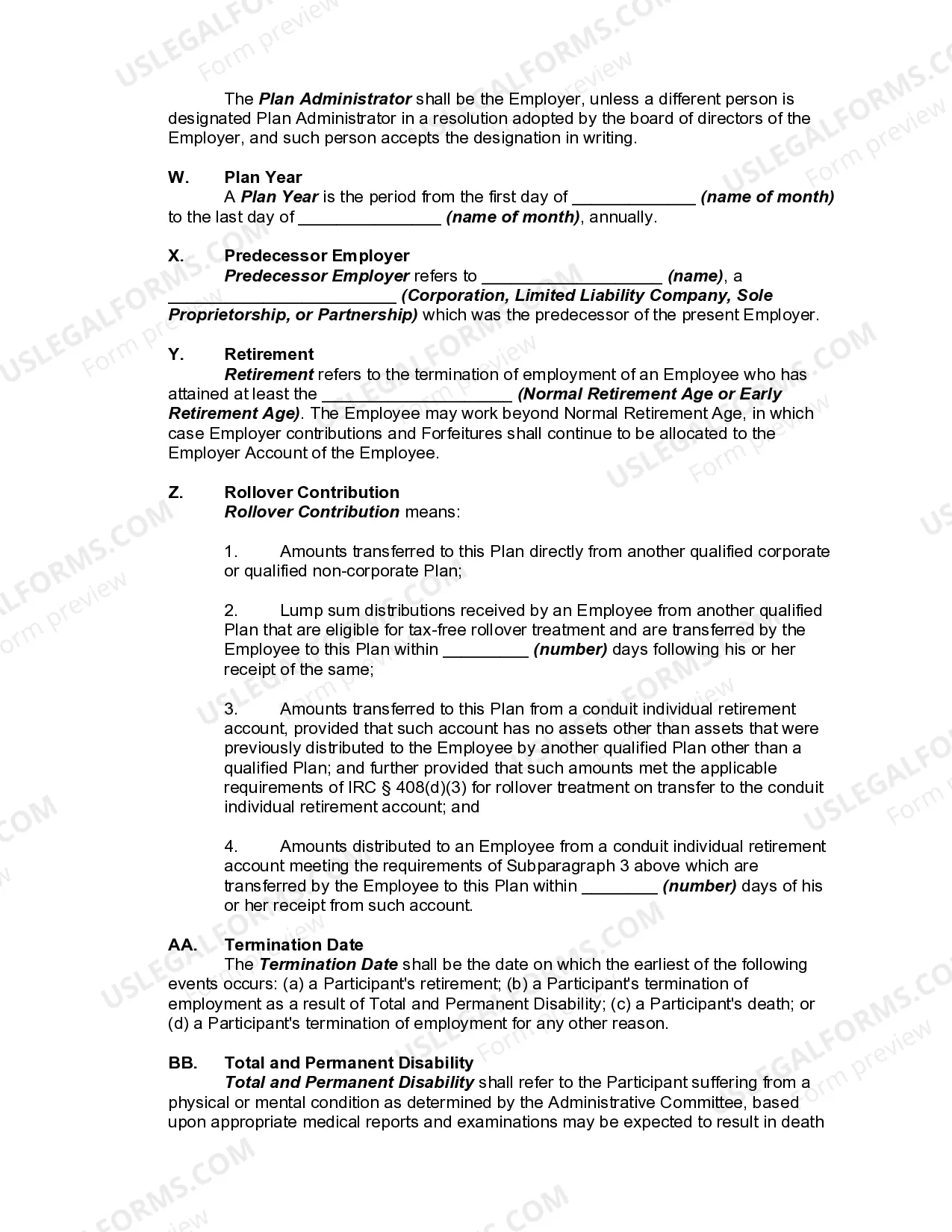
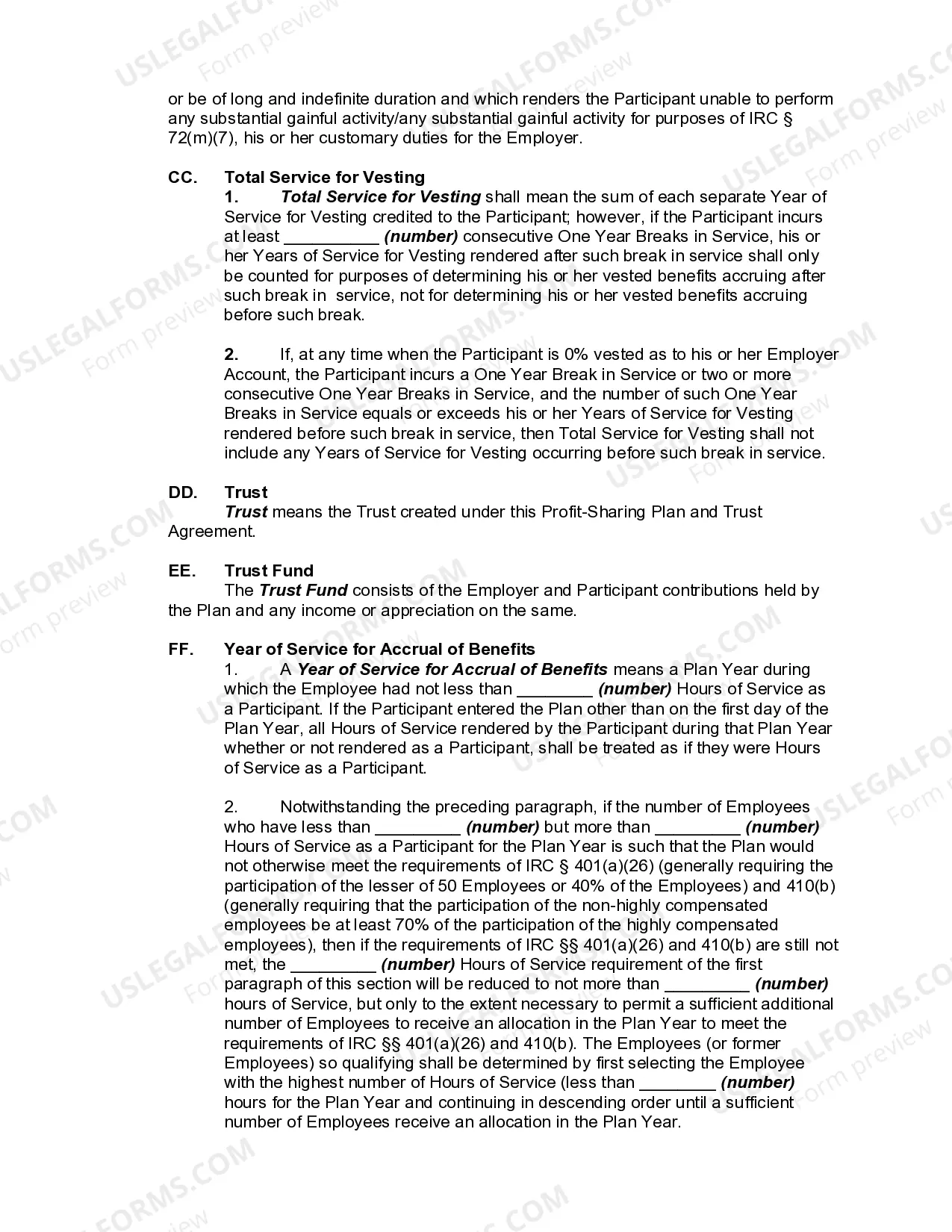
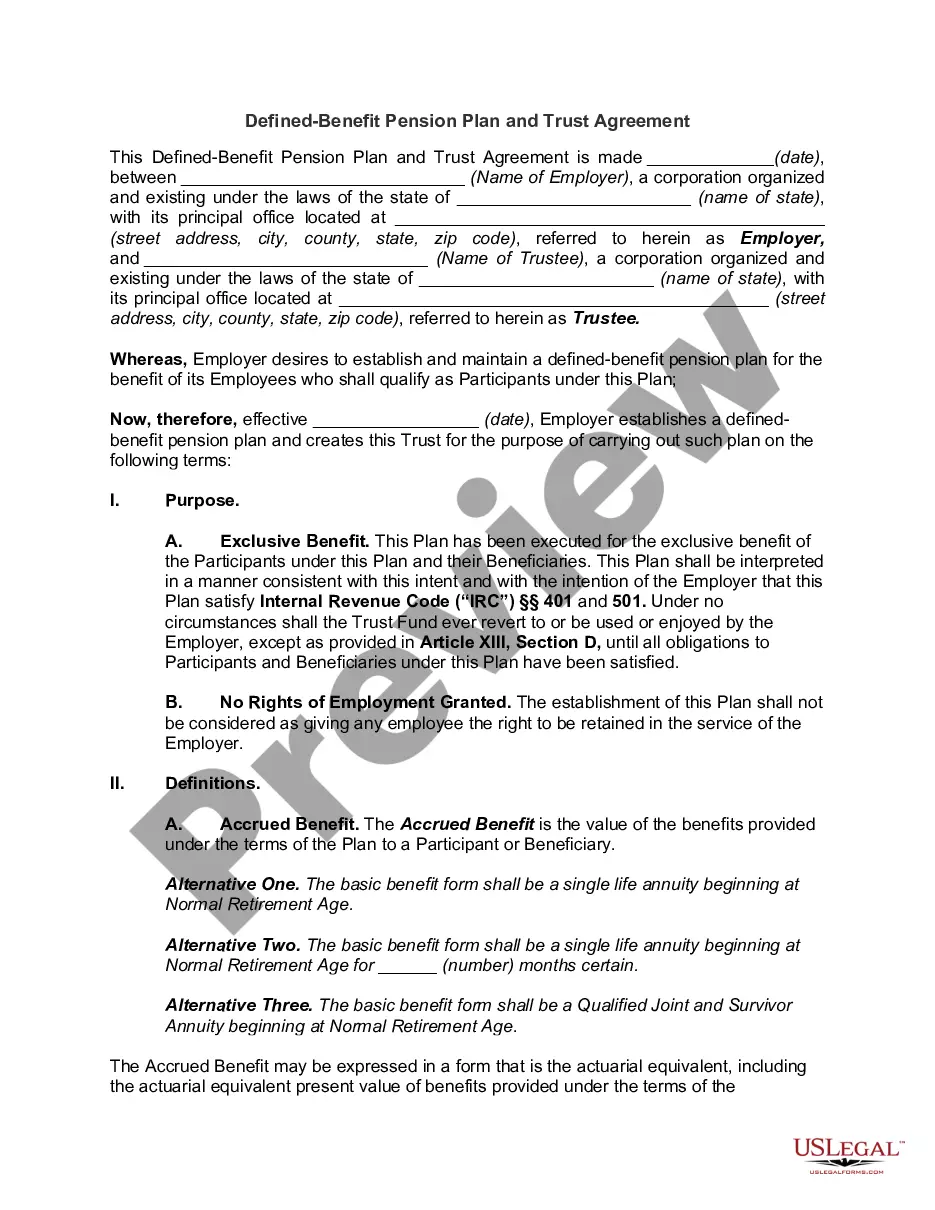
The Profit-Sharing Plan and Trust Agreement is a defined-contribution retirement plan designed to allow an employer to share profits with eligible employees and their beneficiaries. This plan establishes a systematic approach to allocate contributions among participants and ensures distribution of accumulated funds according to predefined formulas. Unlike other retirement options, this plan is specifically structured to comply with Internal Revenue Code requirements under sections 401 and 501, ensuring tax advantages for both the employer and employees.
Form components explained
- Purpose: Establishes a trust for the exclusive benefit of participants and their beneficiaries.
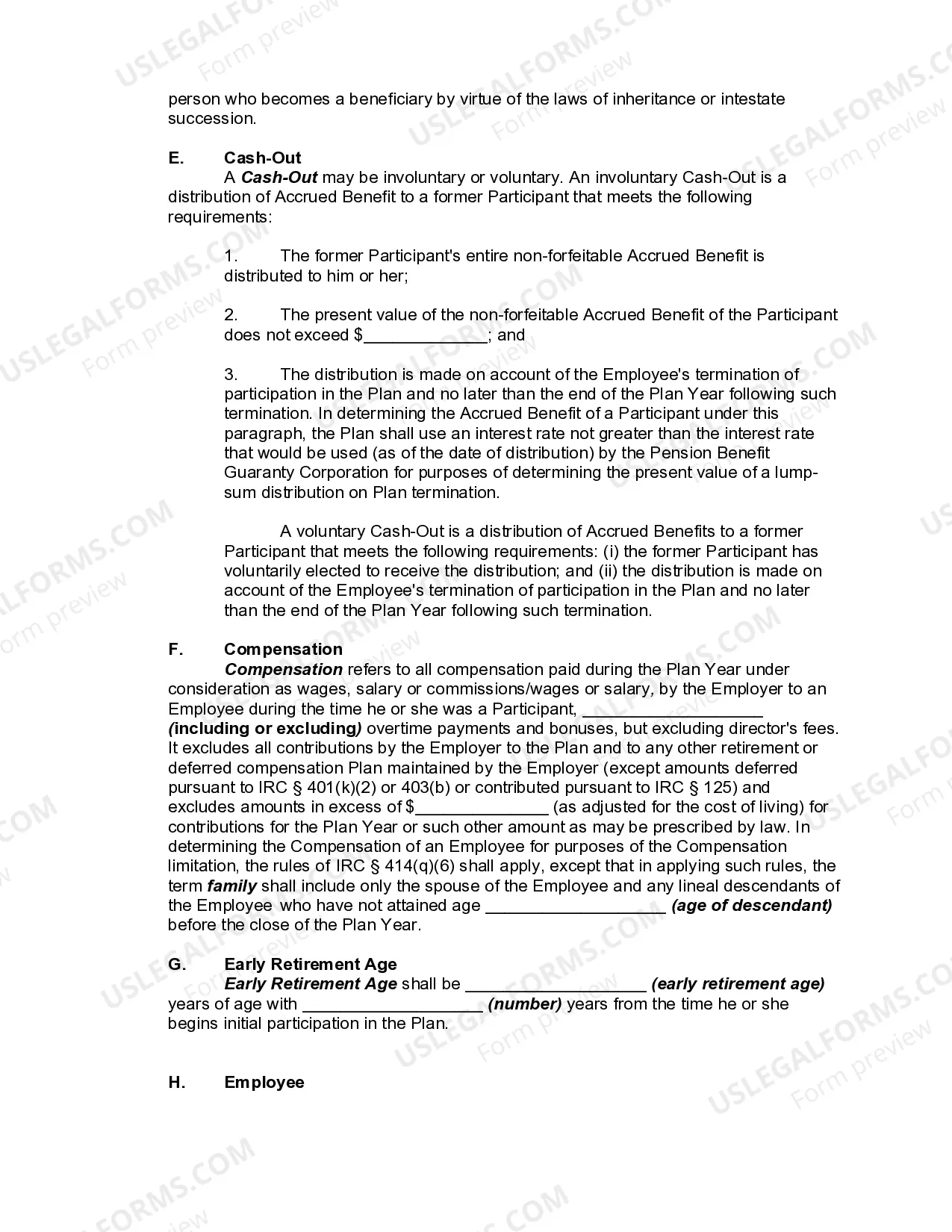
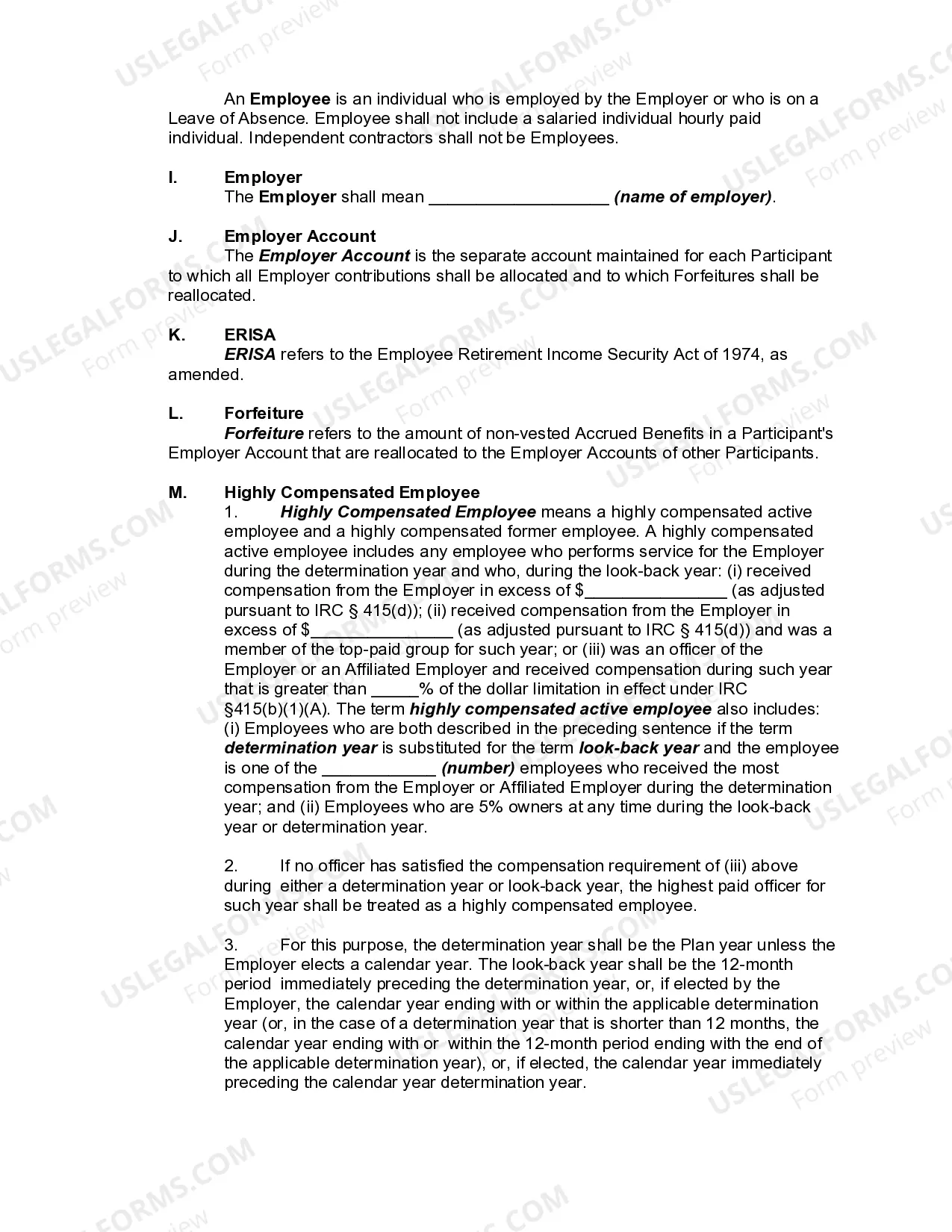
- Definitions: Includes specific definitions for key terms such as 'Participant', 'Trustee', and 'Accrued Benefit'.
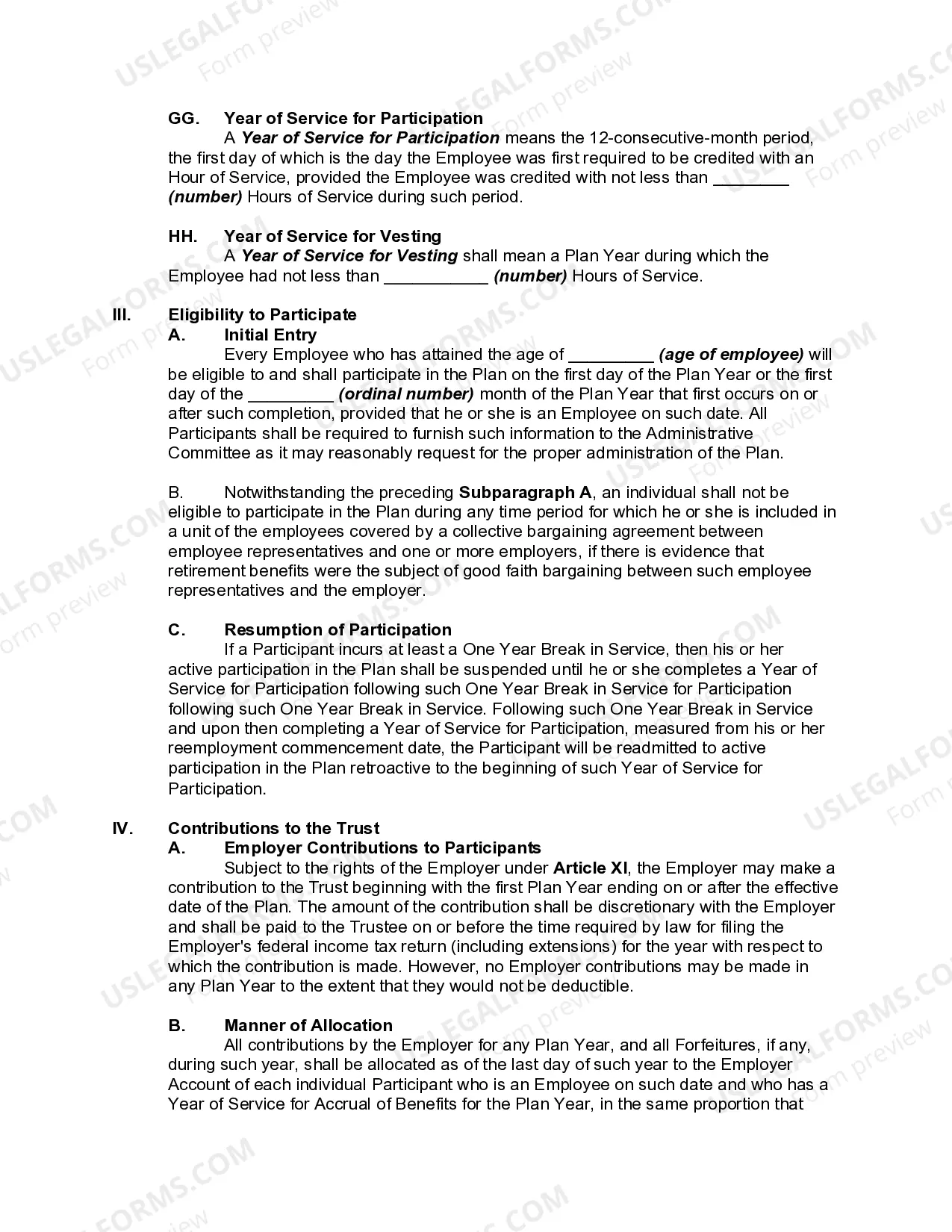
- Eligibility: Outlines criteria for employee participation based on age and service duration.
- Vesting: Details the vesting schedule which determines how much of the benefit a participant owns at termination.
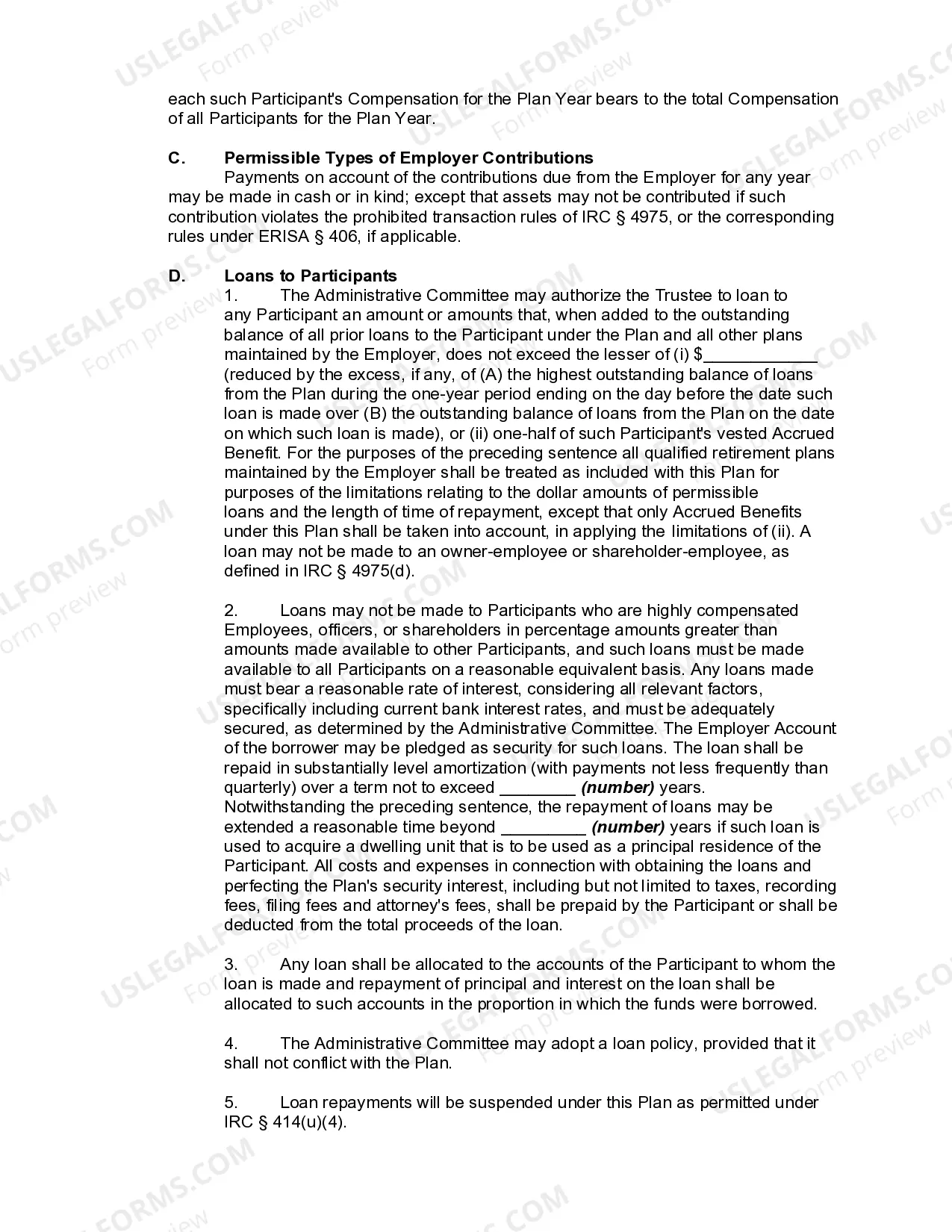
- Distribution Methods: Specifies how participants can receive their benefits, including lump sums or installments.

Common use cases
This form should be used when an employer wishes to set up a profit-sharing plan to compensate employees, allowing them to benefit from the financial success of the company. It is essential when employees have qualified for participation based on predefined criteria, ensuring a structured method for contributions and distributions is in place.
Who can use this document
Eligible users of this form include:
- Companies looking to establish a profit-sharing plan for their employees.
- Employers who wish to enhance employee compensation packages.
- Trustees responsible for managing and overseeing the planâs operations.
How to prepare this document
Follow these steps to complete the Profit-Sharing Plan and Trust Agreement:
- Identify the parties involved, including the name of the employer and the trustee.
- Set the effective date for the plan to begin.
- Complete the sections defining contributions, eligibility, and vesting schedules.
- Ensure all definitions and terms are clearly outlined according to the relevant legal standards.
- Obtain signatures from all necessary parties to finalize the agreement.
Is notarization required?
This form does not typically require notarization unless specified by local law.
Get your form ready online
Our built-in tools help you complete, sign, share, and store your documents in one place.
Make edits, fill in missing information, and update formatting in US Legal Forms—just like you would in MS Word.
Download a copy, print it, send it by email, or mail it via USPS—whatever works best for your next step.
Sign and collect signatures with our SignNow integration. Send to multiple recipients, set reminders, and more. Go Premium to unlock E-Sign.
If this form requires notarization, complete it online through a secure video call—no need to meet a notary in person or wait for an appointment.
We protect your documents and personal data by following strict security and privacy standards.

Make edits, fill in missing information, and update formatting in US Legal Forms—just like you would in MS Word.

Download a copy, print it, send it by email, or mail it via USPS—whatever works best for your next step.

Sign and collect signatures with our SignNow integration. Send to multiple recipients, set reminders, and more. Go Premium to unlock E-Sign.

If this form requires notarization, complete it online through a secure video call—no need to meet a notary in person or wait for an appointment.

We protect your documents and personal data by following strict security and privacy standards.
Common mistakes
- Neglecting to define specific terms, which may lead to confusion or misinterpretation.
- Failing to comply with federal guidelines, risking tax penalties.
- Inadequate documentation of contributions or distributions, which can result in legal disputes.
Why complete this form online
- Convenience: Easily accessible online form to streamline the creation of a profit-sharing plan.
- Editability: Users can modify the form to fit specific business needs without starting from scratch.
- Reliability: Legal forms are drafted by licensed attorneys, ensuring compliance with federal regulations.
Using this form establishes a legally binding agreement between the employer and participants of the profit-sharing plan. It is essential that all parties understand the terms and conditions outlined in the agreement to ensure compliance with IRS regulations and to benefit from potential tax advantages.
Key takeaways
- The Profit-Sharing Plan and Trust Agreement is vital for employers planning to enhance employee benefits.
- Clear definitions and eligibility criteria help avoid legal complications.
- Proper completion and compliance ensure the plan remains beneficial and adheres to legal requirements.
Looking for another form?

Form popularity
FAQ
Profit-sharing plans can be a great way to improve and keep employee morale, loyalty, and retention up. They are also a good way to motivate employees in participating in earning and protecting company profits because as part of the plan they have a vested interest in doing so.
Profit sharing is an incentivized compensation program that awards employees a percentage of the company's profits. The amount awarded is based on the company's earnings over a set period of time, usually once a year. Unlike employee bonuses, profit sharing is only applied when the company sees a profit.
A profit-sharing agreement generally expresses the ratio you'll use to distribute profits as well as how you'll divide any losses. Ratios may be determined by the amount of investment each partner put into the business or you may have an agreement that only divides profits, leaving you to take the hit for losses.
Profit sharing 401(k) plans work like this: A business sets aside a portion of its pre-tax profits to contribute to their employees' retirement accounts. Business owners can award that money to their employees as a percentage of their salary or as a set dollar amount.
A profit-sharing plan is a retirement plan that gives employees a share in the profits of a company. Under this type of plan, also known as a deferred profit-sharing plan (DPSP), an employee receives a percentage of a company's profits based on its quarterly or annual earnings.
401(k)s and profit-sharing plans are two types of retirement accounts that are offered to employees from their employer. 401(k) plans are typically funded by deferring employee wages into the account.A profit-sharing plan is funded entirely by the employer, with no employee contribution at all.
In general, making a withdrawal from your profit-sharing plan for a down payment (or anything else) before you reach 59½ means you'll pay a penalty on the funds. Employees may also be subject to vesting requirements. Other alternatives include taking a loan from the plan, but not all employers allow this option.
A profit-sharing plan gives employees a share in their company's profits based on its quarterly or annual earnings. It is up to the company to decide how much of its profits it wishes to share. Contributions to a profit-sharing plan are made by the company only; employees cannot make them, too.