Objection to Family Allowance in a Decedent's Estate
What is this form?
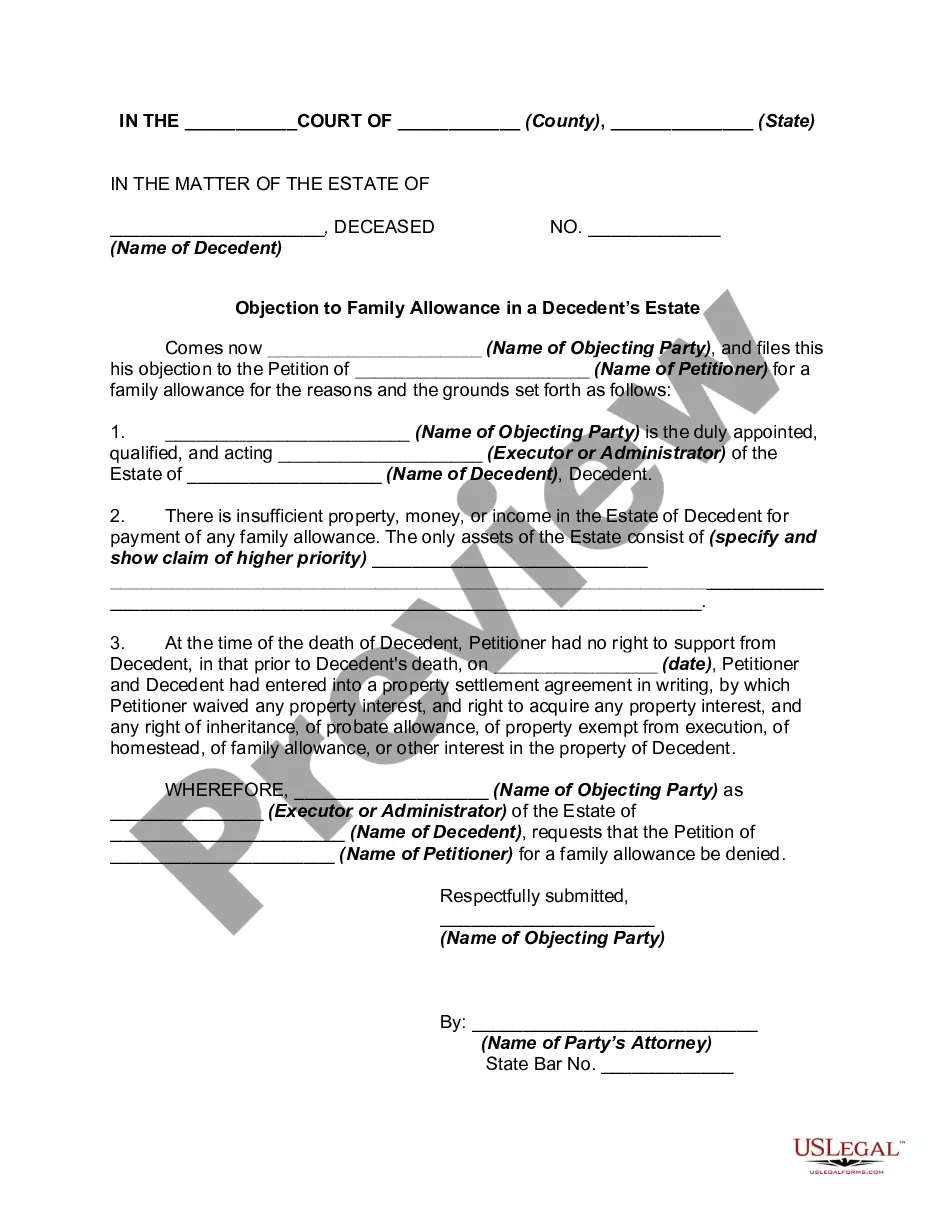
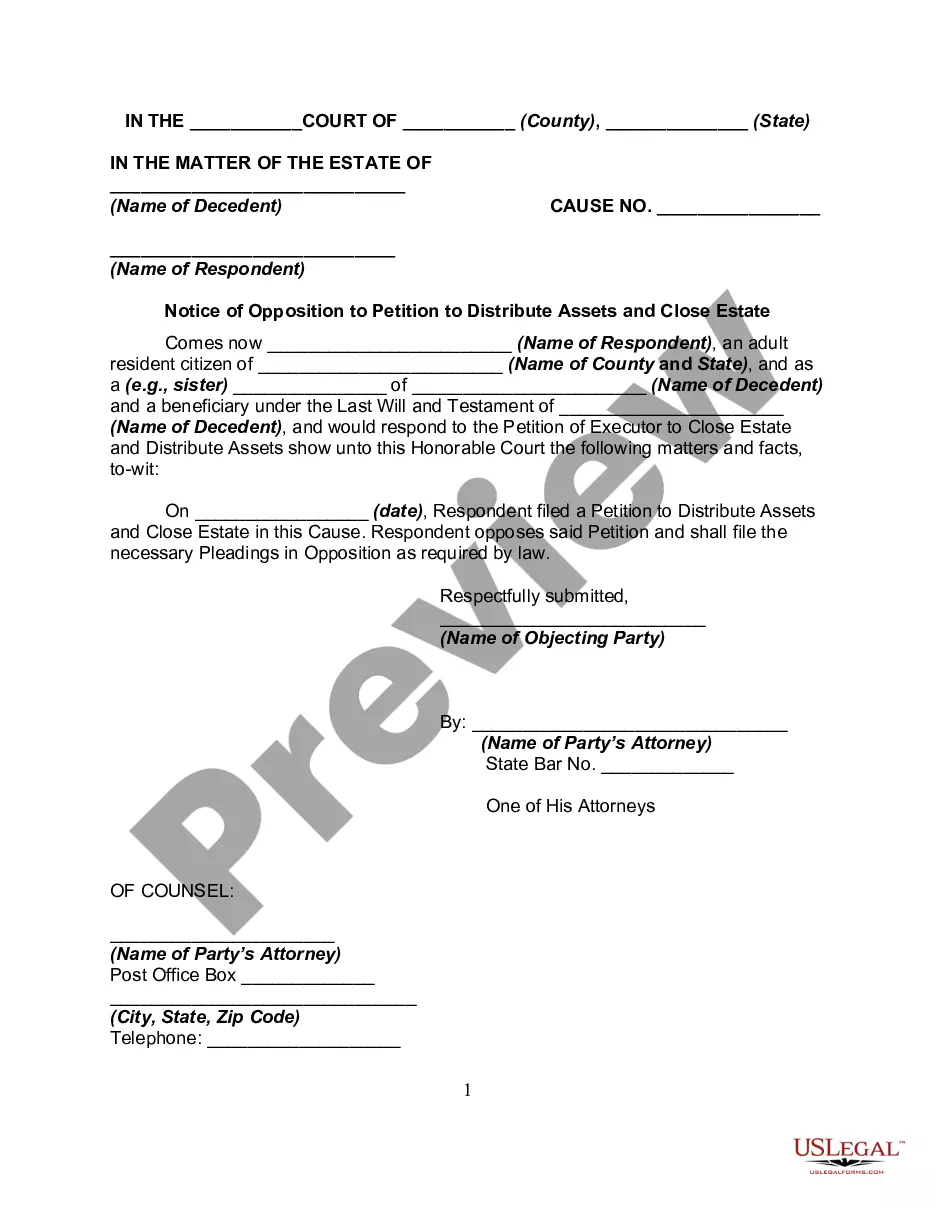
The Objection to Family Allowance in a Decedent's Estate form is used by an executor or administrator of an estate to formally object to a request for a family allowance. This allowance is typically a portion of the estate set aside for certain family members, regardless of what is stated in the decedent's will. This form ensures that the executor or administrator can legally contest the request if they believe there are insufficient resources in the estate to accommodate such a payment. It is distinct from other estate-related forms because it specifically addresses objections regarding family allowance claims.
Main sections of this form
- Name of the decedent and case number
- Name of the objecting party and their role in the estate
- Details on the estate's insufficiency for a family allowance
- Information on any prior agreements affecting the petitioner's rights
- Signature and representation of the objecting party's attorney
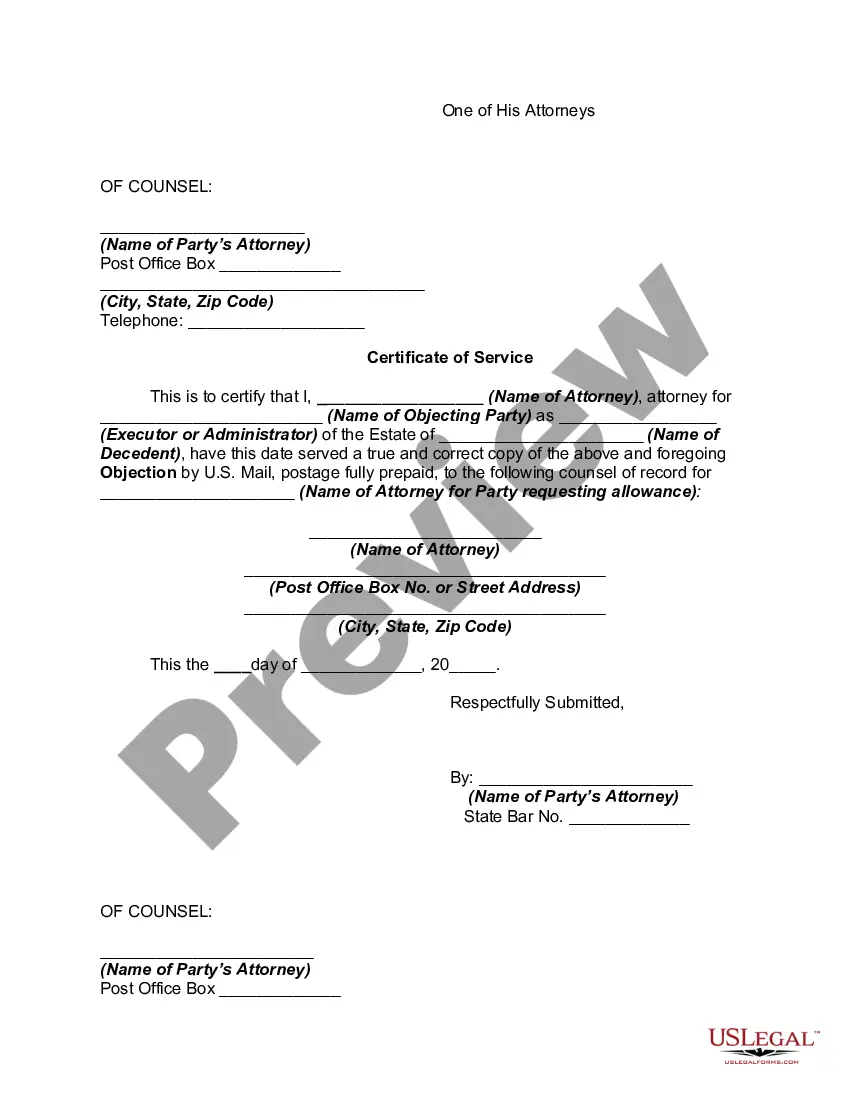
- Certificate of service confirming delivery of the objection

When this form is needed
This form should be used when an executor or administrator believes that a family allowance requested from a decedentâs estate is unjustified. Common scenarios include instances where the estate's assets are limited, or when there is a written agreement, such as a property settlement, that waives the petitioner's right to such support. By submitting this objection, the responsible party can oppose the request formally in court.
Intended users of this form
- Executors or administrators of an estate
- Individuals contesting a family allowance request made by a family member
- Legal representatives acting on behalf of the estate administrators
Steps to complete this form
- Identify the name of the decedent and enter the case number.
- Fill in the name of the objecting party and their role, such as executor or administrator.
- Provide details regarding the insufficiency of the estate's assets, specifying the types of assets available.
- State any agreements that support the objection to the family allowance.
- Include the signature of the objecting party and their attorneyâs details.
- Complete the certificate of service to verify that the objection was properly delivered to the requesting party.
Is notarization required?
This form does not typically require notarization unless specified by local law. Always verify your state's requirements before submission to ensure compliance.
Get your form ready online
Our built-in tools help you complete, sign, share, and store your documents in one place.
Make edits, fill in missing information, and update formatting in US Legal Forms—just like you would in MS Word.
Download a copy, print it, send it by email, or mail it via USPS—whatever works best for your next step.
Sign and collect signatures with our SignNow integration. Send to multiple recipients, set reminders, and more. Go Premium to unlock E-Sign.
If this form requires notarization, complete it online through a secure video call—no need to meet a notary in person or wait for an appointment.
We protect your documents and personal data by following strict security and privacy standards.

Make edits, fill in missing information, and update formatting in US Legal Forms—just like you would in MS Word.

Download a copy, print it, send it by email, or mail it via USPS—whatever works best for your next step.

Sign and collect signatures with our SignNow integration. Send to multiple recipients, set reminders, and more. Go Premium to unlock E-Sign.

If this form requires notarization, complete it online through a secure video call—no need to meet a notary in person or wait for an appointment.

We protect your documents and personal data by following strict security and privacy standards.
Avoid these common issues
- Failing to include essential details about the decedent's estate.
- Not specifying the reasons for the objection clearly.
- Omitting signatures or contact information of the attorney.
- Ignoring the requirement to serve the objection to all relevant parties.
Benefits of using this form online
- Easy access and quick downloads, saving time and effort.
- Editability allows customization to fit specific circumstances.
- Reliability as the forms are drafted by licensed attorneys ensuring legal compliance.
Looking for another form?




Form popularity
FAQ
Executors can use the money in the estate in whatever way they determine best for the estate and for fulfilling the decedent's wishes. Typically, this will amount to paying off debts and transferring bequests to the beneficiaries according to the terms of the will.
When a person dies without having a valid will in place, his or her property passes by what is called "intestate succession" to heirs according to state law. In other words, if you don't have a will, the state will make one for you. All fifty states have laws (or "statutes") of this kind on the books.
Before distributing assets to beneficiaries, the executor must pay valid debts and expenses, subject to any exclusions provided under state probate laws.The executor must maintain receipts and related documents and provide a detailed accounting to estate beneficiaries.
As an Executor, what you cannot do is go against the terms of the Will, Breach Fiduciary duty, fail to act, self-deal, embezzle, intentionally or unintentionally through neglect harm the estate, and cannot do threats to beneficiaries and heirs.
A family allowance is a court-authorized amount payable to certain of a California decedent's family members.
Beneficiaries often must sign off on the inheritance they receive to acknowledge receipt of the distribution. For example, if you inherit a portion of real estate from the decedent, you must sign a deed accepting that real estate.
All taxes and liabilities paid from the estate, including medical expenses, attorney fees, burial or cremation expenses, estate sale costs, appraisal expenses, and more. The executor should keep all receipts for any services or transactions needed to liquidate the assets of the deceased.
Beneficiaries are entitled to receive a financial accounting of the trust, including bank statements, regularly. When statements are not received as requested, a beneficiary must submit a written demand to the trustee.The court will review the trust account for any discrepancies or irregular activity.
Q: How Long Does an Executor Have to Distribute Assets From a Will? A: Dear Waiting: In most states, a will must be executed within three years of a person's death.