California Notice to Vacate - 30 or 60 Day
What this document covers
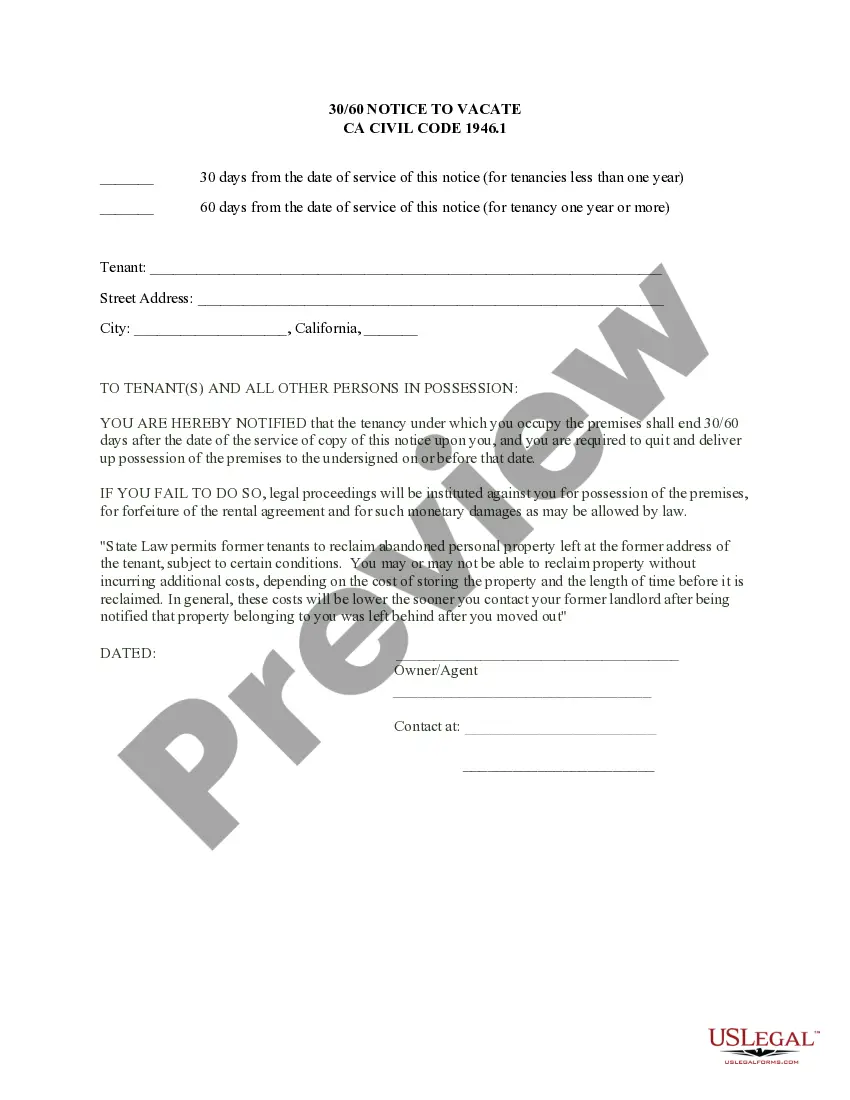
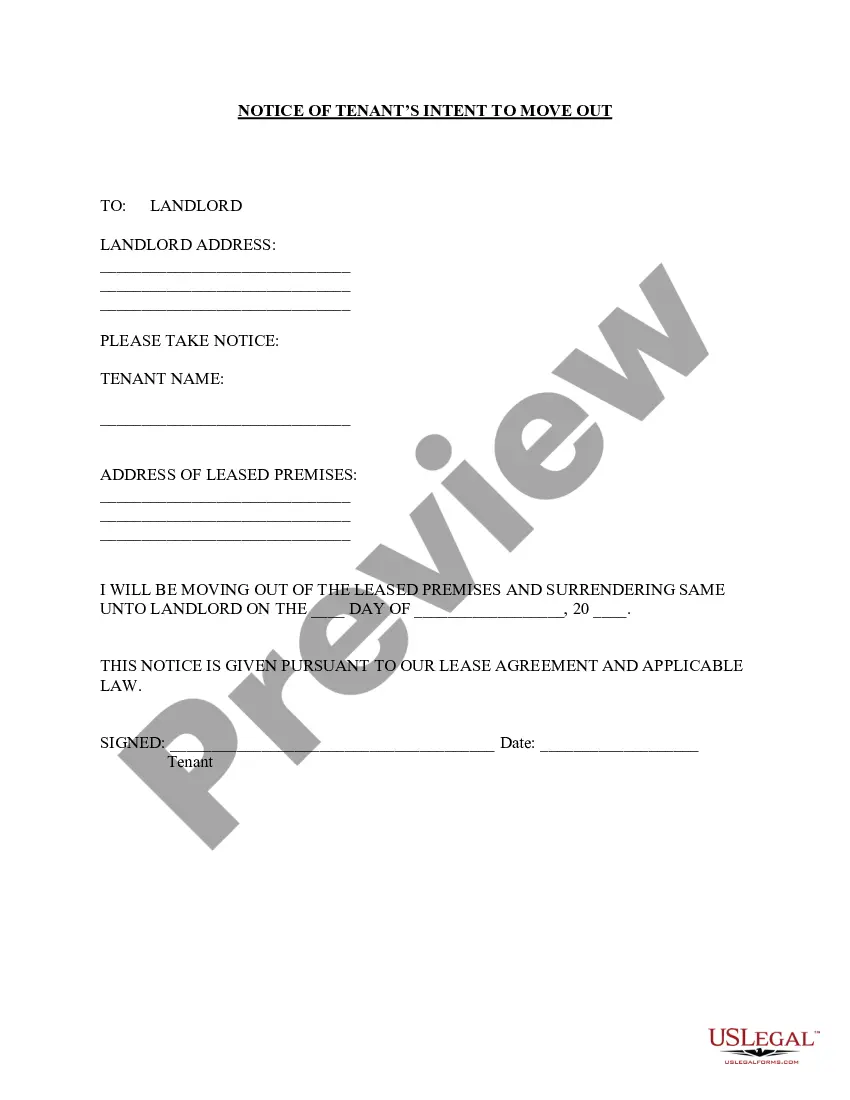
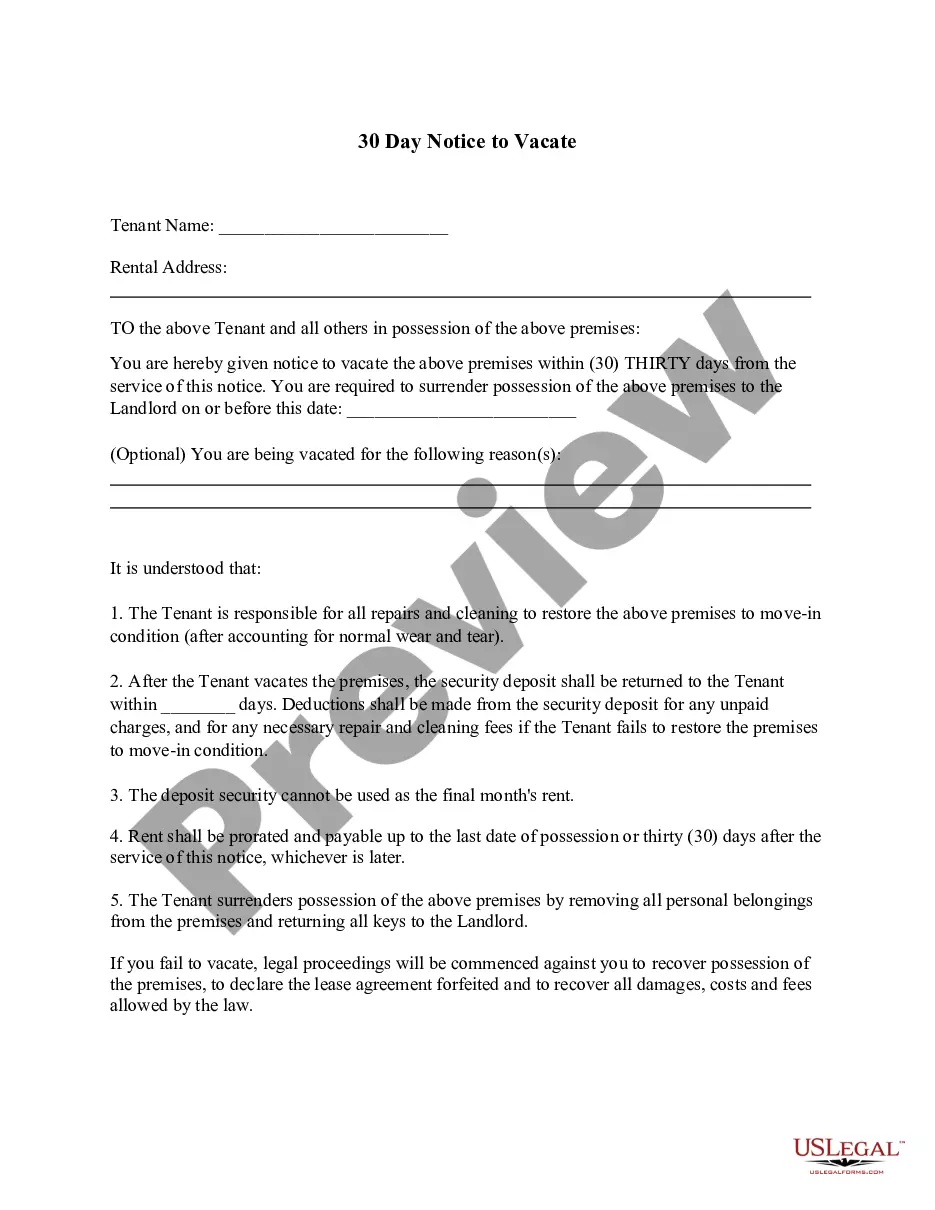
The Notice to Vacate - 30 or 60 Day is a legal document used by landlords to notify tenants that they must vacate the rental property. This notice is crucial before initiating any eviction proceedings. Depending on the length of the tenant's stay, the notice will require either thirty days or sixty days for the tenant to vacate, distinguishing it from other eviction notices that may have different time frames or requirements.
Form components explained
- Identifies the tenant and the rental property address.
- Specifies the notice period: 30 days for tenancies under one year, or 60 days for tenancies of one year or more.
- Details the consequences of not vacating the property, which may include legal actions for eviction.
- Includes a signature line for the landlord or their agent.
- States the date on which the notice is served to the tenant.

Common use cases
This form should be used when a landlord intends to terminate a rental agreement and require a tenant to vacate the premises. It is necessary in situations such as the landlord deciding to sell the property, needing to move back in, or simply choosing not to renew the lease. It's important to follow proper notice procedures to minimize conflicts and ensure legal compliance.
Who can use this document
Eligibility for this form includes:
- Landlords who wish to terminate a lease agreement.
- Property managers acting on behalf of the landlord.
- Landlords with tenants who have lived in the property for varying lengths of time, requiring tailored notice periods.
Steps to complete this form
- Identify and fill in the name of the tenant(s) and their address.
- Choose the appropriate notice period, either 30 or 60 days, based on the length of the tenancy.
- Clearly state the date of service of the notice.
- Include the signature of the landlord or authorized agent.
- Provide contact information for further communication.
Notarization guidance
This form does not typically require notarization unless specified by local law. It is essential to ensure compliance with any state-specific regulations regarding the service of notice.
Get your form ready online
Our built-in tools help you complete, sign, share, and store your documents in one place.
Make edits, fill in missing information, and update formatting in US Legal Forms—just like you would in MS Word.
Download a copy, print it, send it by email, or mail it via USPS—whatever works best for your next step.
Sign and collect signatures with our SignNow integration. Send to multiple recipients, set reminders, and more. Go Premium to unlock E-Sign.
If this form requires notarization, complete it online through a secure video call—no need to meet a notary in person or wait for an appointment.
We protect your documents and personal data by following strict security and privacy standards.

Make edits, fill in missing information, and update formatting in US Legal Forms—just like you would in MS Word.

Download a copy, print it, send it by email, or mail it via USPS—whatever works best for your next step.

Sign and collect signatures with our SignNow integration. Send to multiple recipients, set reminders, and more. Go Premium to unlock E-Sign.

If this form requires notarization, complete it online through a secure video call—no need to meet a notary in person or wait for an appointment.

We protect your documents and personal data by following strict security and privacy standards.
Common mistakes
- Not specifying the correct notice period based on tenancy length.
- Failing to serve the notice according to legal requirements (e.g., personal delivery, mail).
- Leaving out tenant or property details, which can lead to confusion.
- Not retaining a copy of the notice for personal records.
Advantages of online completion
- Convenience of instantly downloading and printing the form from anywhere.
- Editable templates that allow customization to fit specific circumstances.
- Access to professionally drafted legal language, ensuring compliance with state laws.
- Time-saving, as it eliminates the need to consult legal counsel for basic notices.
Legal use & context
- This form is legally binding once served to the tenant, following state regulations.
- Non-compliance by the tenant can lead to formal eviction proceedings by the landlord.
- The form provides clear documentation that a landlord has taken the necessary steps to notify the tenant.
Quick recap
- The Notice to Vacate is essential for landlords before eviction.
- Tenancy length dictates whether a 30 or 60-day notice is required.
- Completing this form correctly is crucial to enforceability.
- Landlords should familiarize themselves with state-specific laws to avoid legal issues.
Looking for another form?

Form popularity
FAQ
To write a 60-day lease notice, start by ensuring that you clearly define the reason for the notice and the necessary dates. Include your contact information, the property details, and the date the notice is issued. Many landlords find it helpful to use resources like uslegalforms to ensure that their notice is legally compliant and effectively communicates the intent to vacate.
Writing a 30-day notice in California requires clarity and completeness. Begin with the basic details such as the landlord's name, tenant’s name, rental address, and the notice date. Conclude with a statement that summarizes the intent to terminate the lease, ensuring you adhere to the state's requirements for such legal documents.
To write a 60-day notice to a tenant in California, start with a straightforward introduction, detailing the purpose of the notice. Clearly state the address of the rental unit and include the date by which the tenant must vacate. Using a professional template, like those available on uslegalforms, can help ensure that your notice meets legal standards.
Yes, you can write your own 30-day notice to vacate in California. When crafting your notice, include essential information such as your name, the tenant's name, the rental property's address, and the date of the notice. Be sure to state clearly that you are providing a 30-day notice to terminate the tenancy, following all state guidelines.
An example of a 60-day notice to a tenant in California includes clear statements indicating the intent to terminate tenancy, the relevant dates, and compliance with local laws. It should specify the address of the rental unit and confirm that the tenant has 60 days to vacate the premises. You can find templates online, like those offered at uslegalforms, to guide you in creating your notice.
In California, whether you need a 30 or 60-day notice depends on the rental situation. Typically, a 30-day notice is sufficient for tenancies less than a year, while a 60-day notice applies to longer tenancies or specific situations. Understanding the requirements can help you comply with state laws and protect your rights as a landlord or tenant.
To deliver a 60-day notice in California, you can choose from several methods. You can hand it directly to the tenant, leave it with someone at the rental unit, or send it via certified mail. Ensure that you keep a copy for your records, as this serves as proof of delivery in case of future disputes.
Yes, a 60-day notice to vacate is legal in California. Landlords can issue this notice to give tenants ample time to prepare for their move. This notice is particularly common in situations where the lease does not have a specific term, or after a month-to-month rental agreement. It's important to follow legal guidelines to ensure compliance.
Serving a 60-day notice to vacate in California can be done in several ways. You can hand-deliver the notice to the tenant or send it through certified mail. After serving the notice, it’s essential to document the delivery method and date. Platforms like USLegalForms can provide you with a structured format ensuring that all legal requirements are met efficiently.
To properly serve a 60-day notice in California, you can deliver it in person or send it through certified mail. Ensure you are providing the notice to the tenant at their current address, and keep a copy for your records. Using services from USLegalForms can help streamline this process and provide you with necessary documentation for legal compliance.