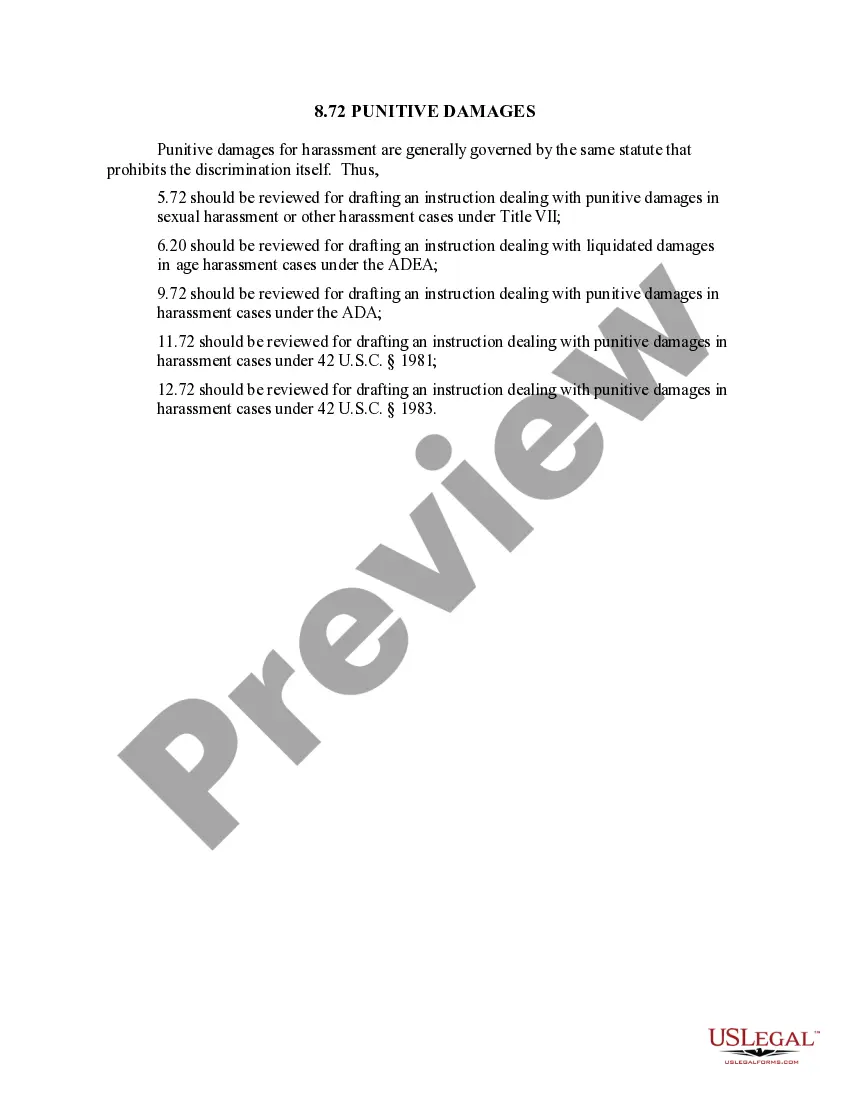
8.72 PUNITIVE DAMAGES
What is this form?
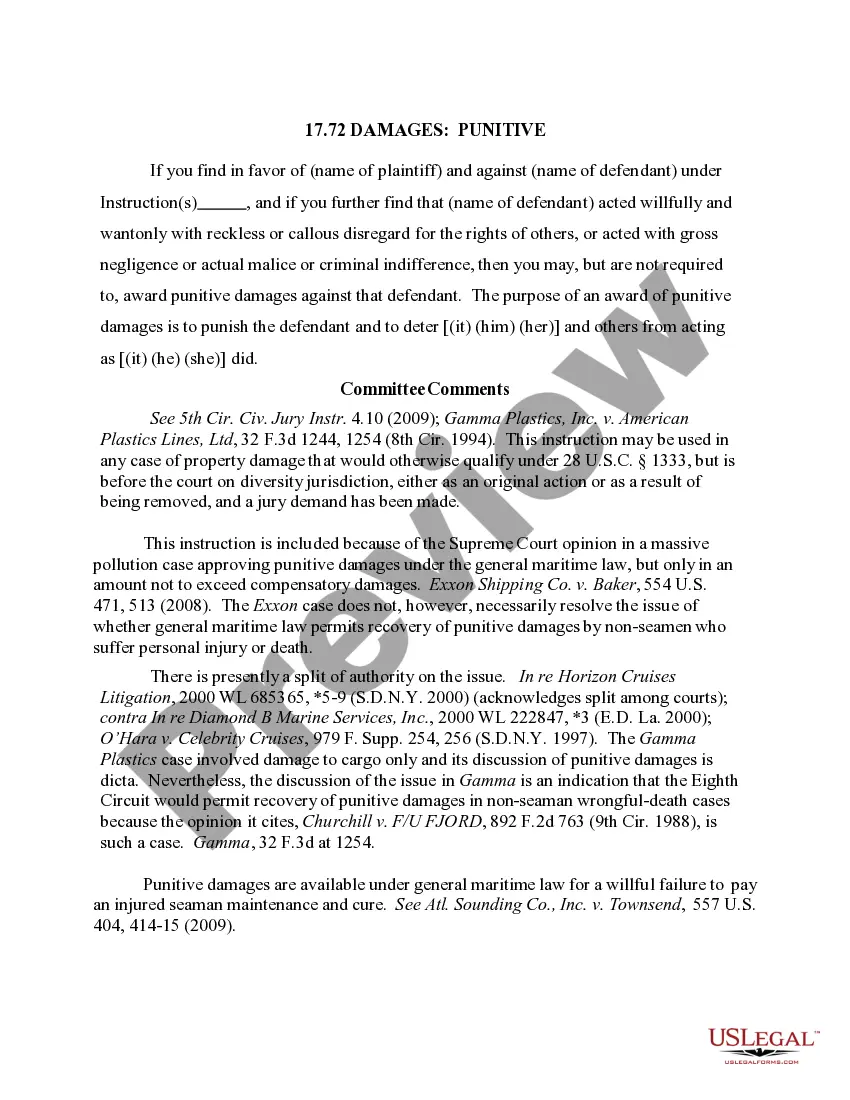
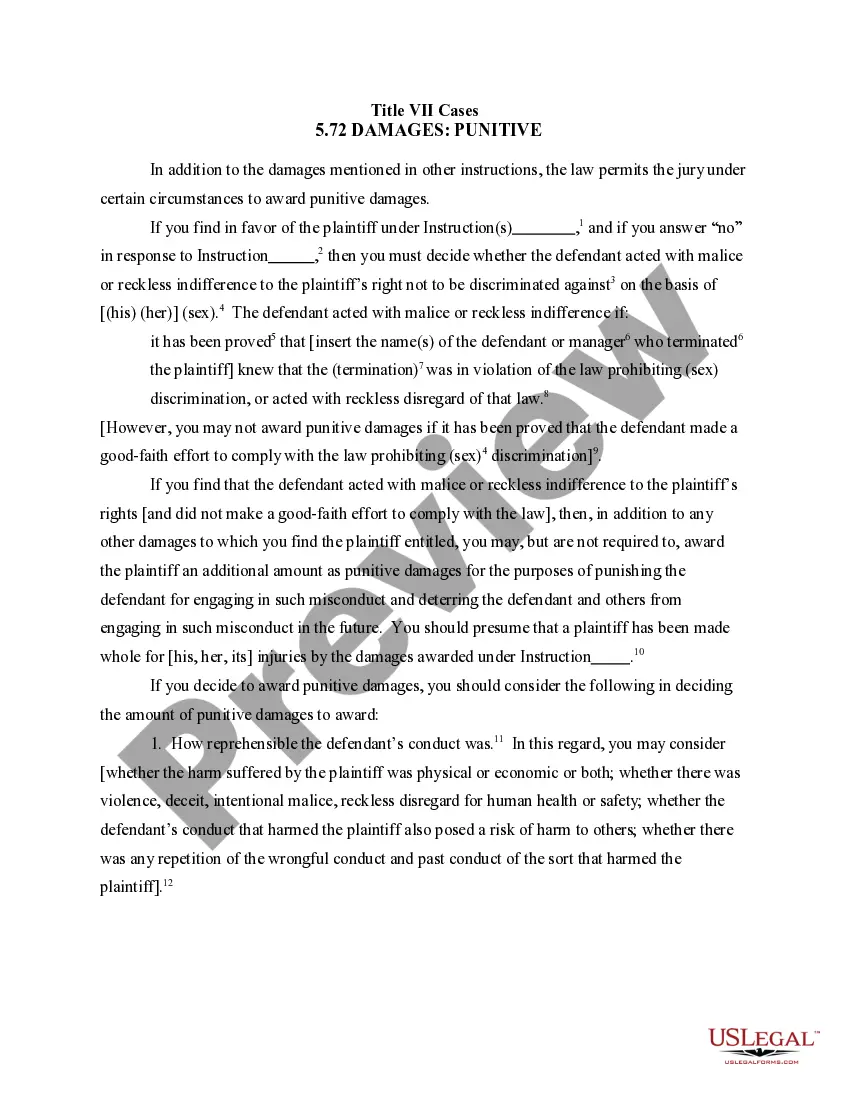
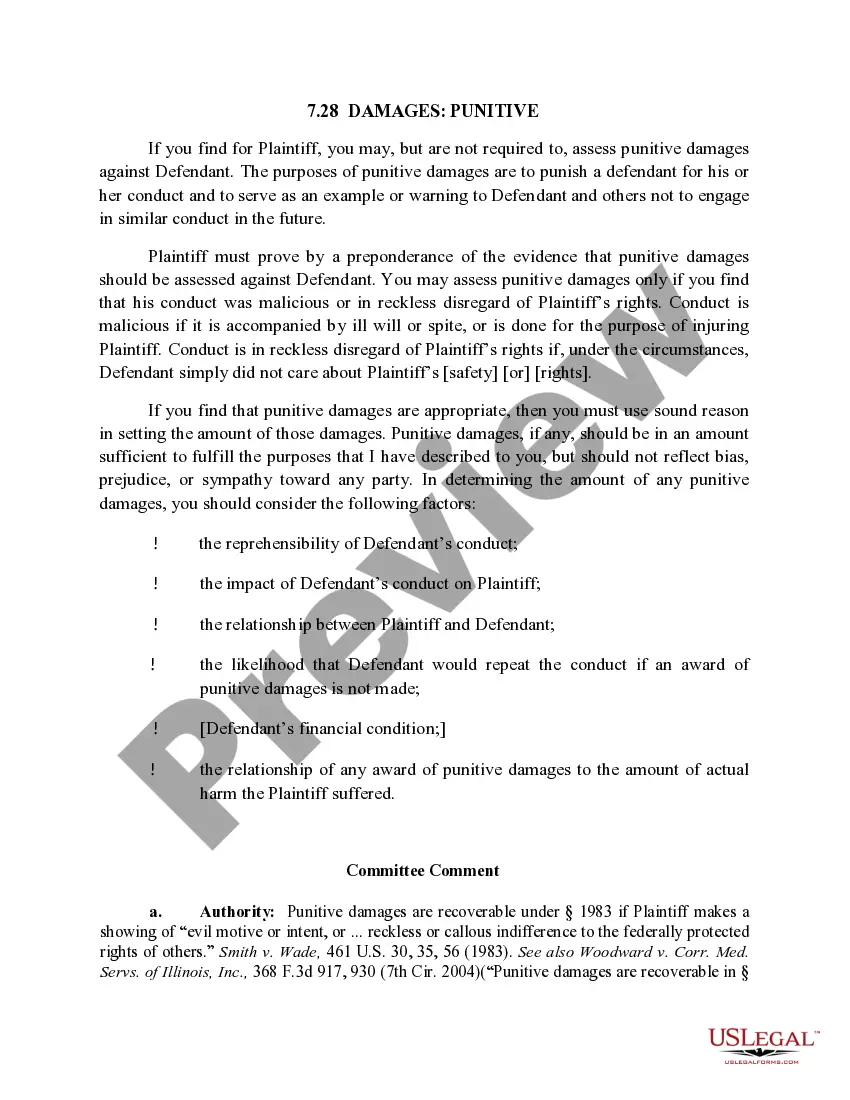
The 8.72 Punitive Damages form is a legal document used to outline the basis for awarding punitive damages in harassment cases. This form is specifically designed to address claims under various statutes, including Title VII for sexual harassment, the Americans with Disabilities Act (ADA), and others. Unlike compensatory damages, punitive damages aim to punish the wrongdoer and deter similar conduct in the future, making this form distinct from regular damage claims.
What’s included in this form
- Reference to statutory guidelines for punitive damages based on discrimination or harassment.
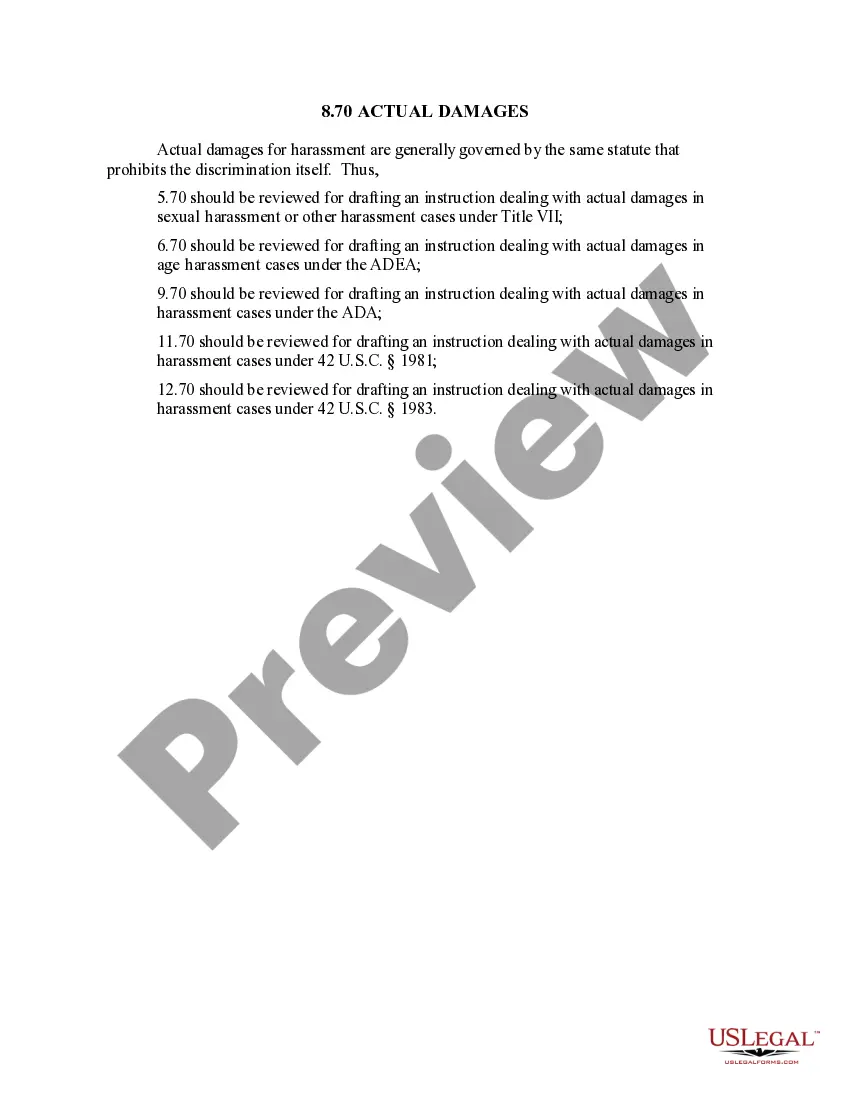
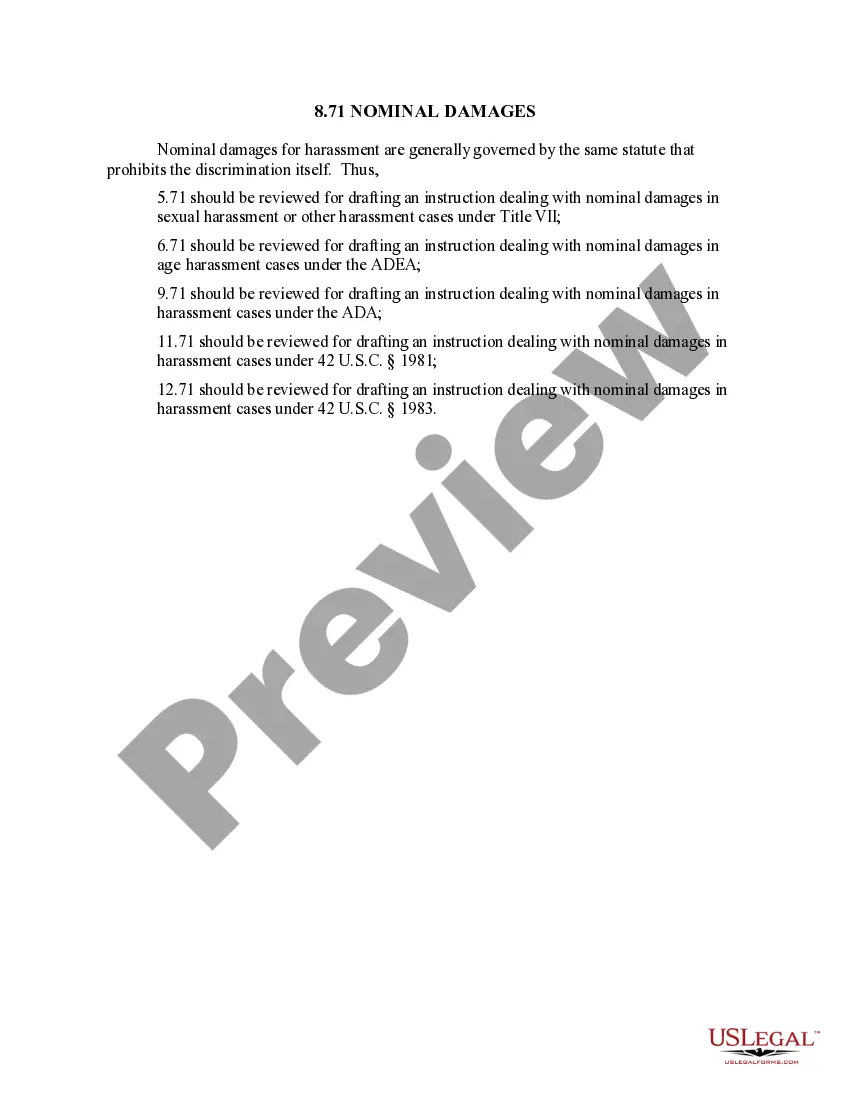
- Instructions tailored to specific laws, including Title VII, ADEA, ADA, and sections 1981 and 1983.
- Criteria for evaluating the nature of the harassment and the intent behind the actions.
When this form is needed
This form should be used in legal proceedings where punitive damages are sought in harassment cases. It is applicable when there is evidence of malicious intent or egregious misconduct by the offender. Situations may include workplace harassment, discrimination based on gender, age, or disability, and other instances where punitive damages are justified to serve justice and provide deterrence.
Who should use this form
- Individuals seeking punitive damages for harassment under relevant statutes.
- Attorneys representing clients in civil litigation involving harassment claims.
- Claimants in cases of workplace discrimination or other forms of harassment.
How to prepare this document
- Identify the relevant parties involved in the harassment claim.
- Specify the type of harassment suffered and the applicable statute.
- Provide detailed evidence supporting the claim for punitive damages.
- Enter necessary dates related to the incidents of harassment.
- Include signatures where required to validate the claim.
Does this form need to be notarized?
Notarization is not commonly needed for this form. However, certain documents or local rules may make it necessary. Our notarization service, powered by Notarize, allows you to finalize it securely online anytime, day or night.
Get your form ready online
Our built-in tools help you complete, sign, share, and store your documents in one place.
Make edits, fill in missing information, and update formatting in US Legal Forms—just like you would in MS Word.
Download a copy, print it, send it by email, or mail it via USPS—whatever works best for your next step.
Sign and collect signatures with our SignNow integration. Send to multiple recipients, set reminders, and more. Go Premium to unlock E-Sign.
If this form requires notarization, complete it online through a secure video call—no need to meet a notary in person or wait for an appointment.
We protect your documents and personal data by following strict security and privacy standards.

Make edits, fill in missing information, and update formatting in US Legal Forms—just like you would in MS Word.

Download a copy, print it, send it by email, or mail it via USPS—whatever works best for your next step.

Sign and collect signatures with our SignNow integration. Send to multiple recipients, set reminders, and more. Go Premium to unlock E-Sign.

If this form requires notarization, complete it online through a secure video call—no need to meet a notary in person or wait for an appointment.

We protect your documents and personal data by following strict security and privacy standards.
Mistakes to watch out for
- Failing to cite the appropriate statute relevant to the harassment claim.
- Insufficient evidence to support the claim for punitive damages.
- Omitting critical dates or details about the incidents.
Why use this form online
- Convenience: Access and download the form anytime from your home or office.
- Editable: Fill in your information easily and make necessary changes as needed.
- Time-saving: Quickly get the essential legal document without the need for an attorney in every case.
Looking for another form?

Form popularity
FAQ
Individuals can also be ordered to pay punitive damages that injure someone else due to negligent behavior. Examples of this would be drunk driving or distracted driving. In both cases, the defendant would have made a conscious decision to engage in behavior that could easily harm another person.
To determine the amount of punitive damages to award, the Book of Approved Jury Instructions (BAJI) states that the jury should consider: (1) The reprehensibility of the conduct of the defendant. (2) The defendant's financial condition and (3) the relationship to actual damages.
Individuals can also be ordered to pay punitive damages that injure someone else due to negligent behavior. Examples of this would be drunk driving or distracted driving. In both cases, the defendant would have made a conscious decision to engage in behavior that could easily harm another person.
In considering the amount of any punitive damages, consider the degree of reprehensibility of the defendant's conduct , including whether the conduct that harmed the plaintiff was particularly reprehensible because it also caused actual harm or posed a substantial risk of harm to people who are not parties to this
Punitive damages are awarded in addition to actual damages in certain circumstances. Punitive damages are considered punishment and are typically awarded at the court's discretion when the defendant's behavior is found to be especially harmful.
There is no set formula for the calculation of punitive damages. The amount of punitive damages that are awarded will depend on the specific facts of the defendant's conduct. The court must ensure that defendants who deserve to be punished for their behavior do not receive punishment that is excessive.
There is no set formula for determining the amount of punitive damages in California, but factors such as the severity of the defendant's conduct, the harm you suffered, and the defendant's financial status are taken into account.
A typical cap on punitive damages is four times the amount of compensatory damages. Criteria for punitive damages differs from state to state, with some more likely to award punitive damages than others.