Affidavit of Domicile
About this form
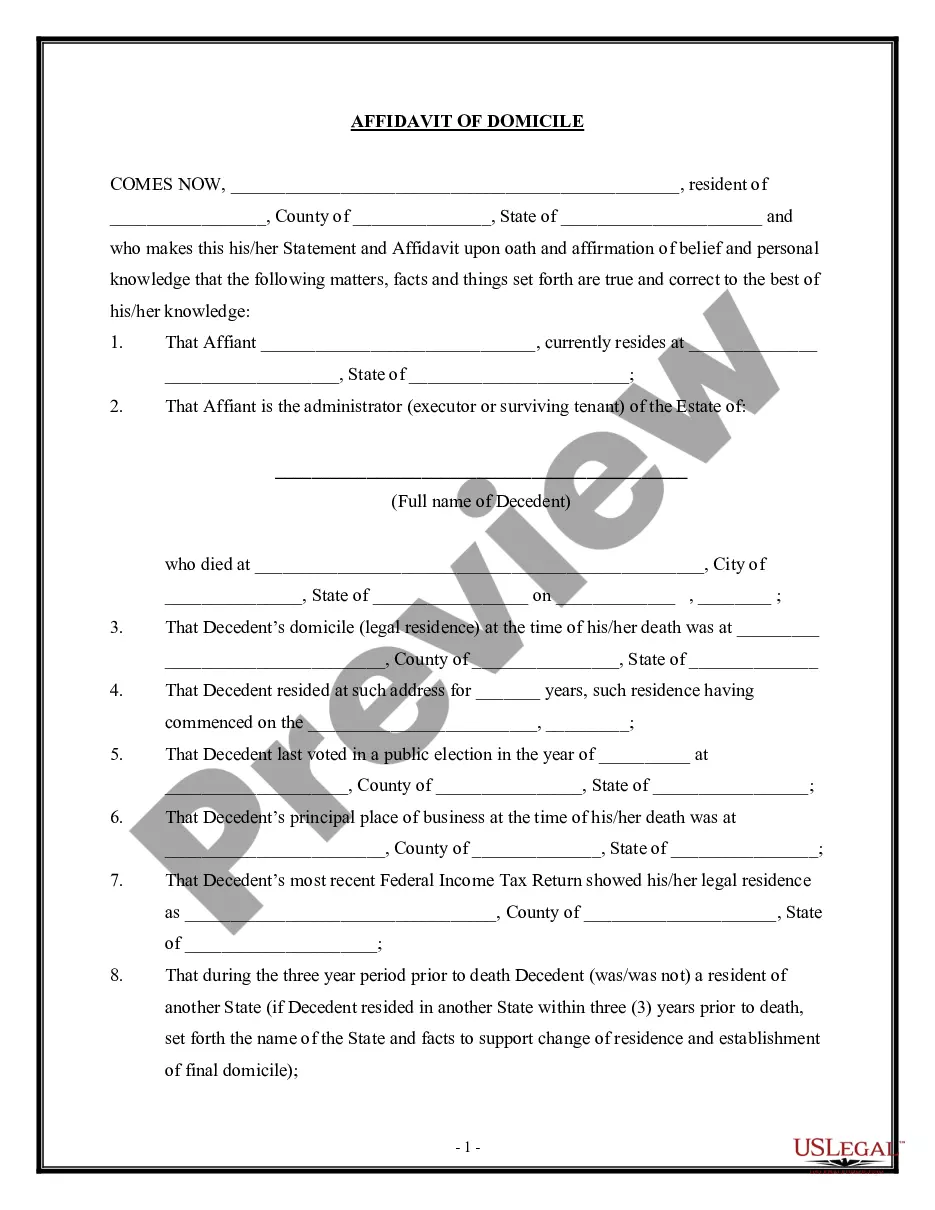
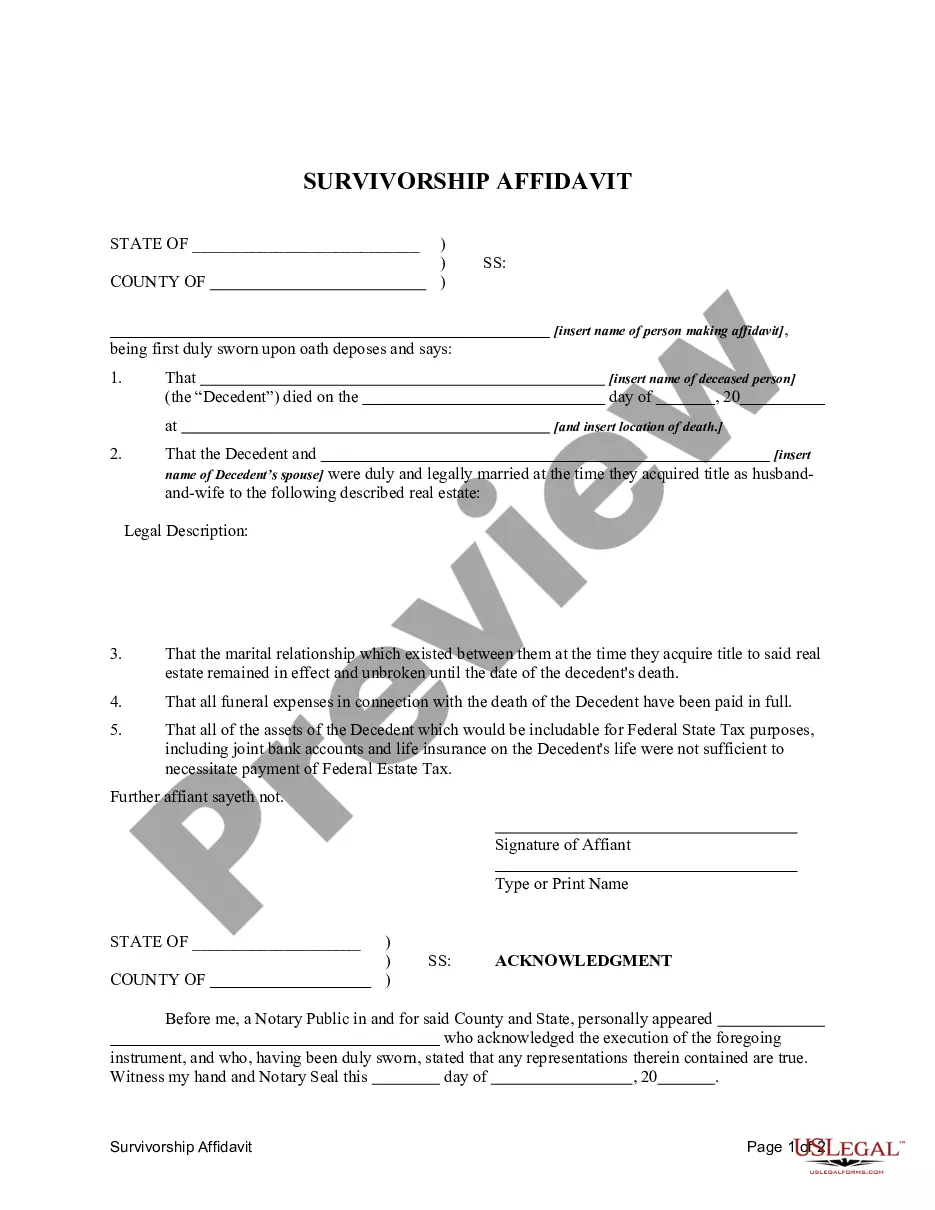
The Affidavit of Domicile is a legal document used to confirm the address of a deceased person at the time of their passing. This affidavit is important for estate administration, as it verifies the legal residence of the decedent, which can affect the distribution of the estate. This form is distinct from other affidavits as it specifically addresses domicile verification, which is crucial for settling estate matters and transferring property ownership.
Form components explained
- Affiant's personal information, including name and residence.
- Details about the decedent, including their full name and date of death.
- Verification of the decedent's legal residence at the time of death.
- Affidavit affirmations about the decedent's voting history and business address.
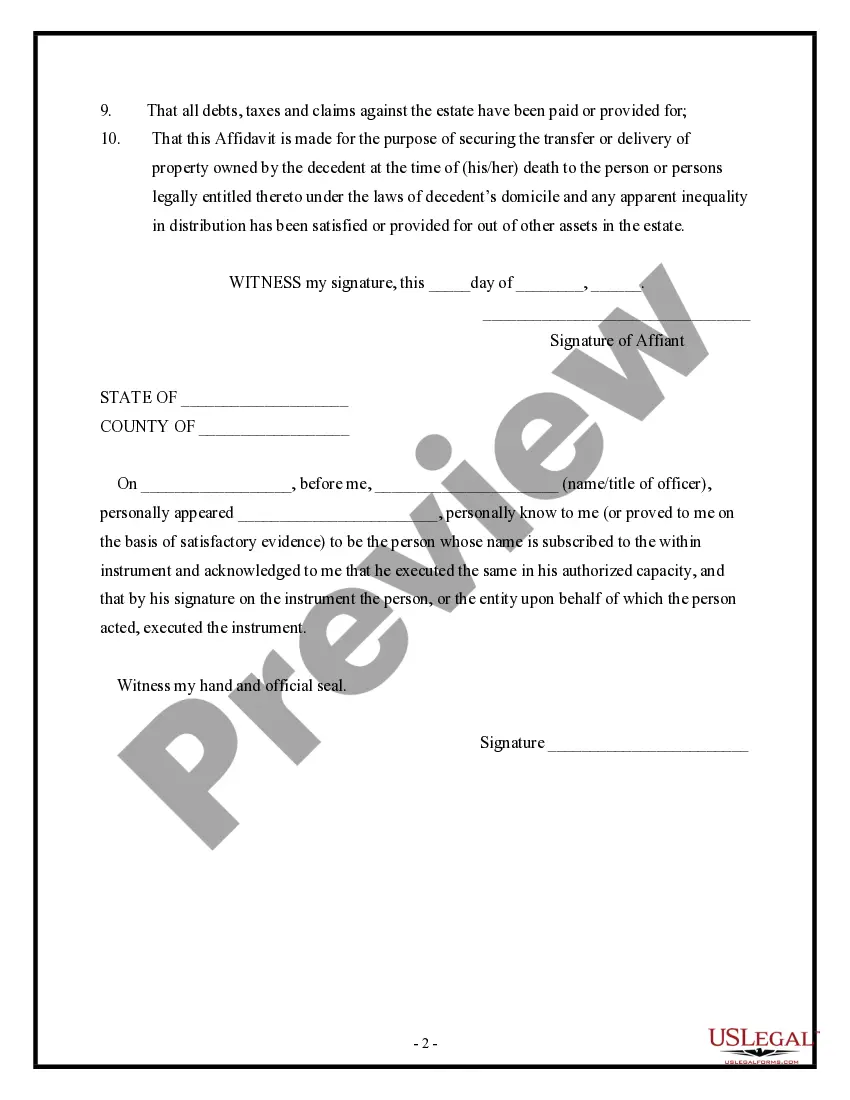
- Confirmation that all debts and claims against the estate have been addressed.
- Signature of the affiant, witnessed by a notary public.

When to use this document
This form should be utilized when administering the estate of a deceased person to confirm their legal address at the time of death. It may be required when transferring property titles or assets, handling real estate matters, or when dealing with estate claims that depend on the decedent's residency. Use this affidavit to ensure compliance with state laws regarding estate administration and property transfer.
Who should use this form
- Executors or administrators of a deceased person's estate.
- Survivors designated to manage the decedent's property.
- Individuals handling the legal affairs of a decedent.
- Heirs or beneficiaries needing to establish proof of residence for asset distribution.
How to complete this form
- Identify the affiant's personal details, including name and residence.
- Provide specifics about the decedent, including full name and date of death.
- Verify the decedent's legal residence during their lifetime.
- Complete any additional affirmations regarding the decedent's circumstances, such as their voting and business address.
- Sign the affidavit in the presence of a notary public, ensuring that all information is accurate and complete.
Notarization guidance
This form must be notarized to be legally valid. US Legal Forms provides secure online notarization powered by Notarize, allowing you to complete the process through a verified video call.
Get your form ready online
Our built-in tools help you complete, sign, share, and store your documents in one place.
Make edits, fill in missing information, and update formatting in US Legal Forms—just like you would in MS Word.
Download a copy, print it, send it by email, or mail it via USPS—whatever works best for your next step.
Sign and collect signatures with our SignNow integration. Send to multiple recipients, set reminders, and more. Go Premium to unlock E-Sign.
If this form requires notarization, complete it online through a secure video call—no need to meet a notary in person or wait for an appointment.
We protect your documents and personal data by following strict security and privacy standards.

Make edits, fill in missing information, and update formatting in US Legal Forms—just like you would in MS Word.

Download a copy, print it, send it by email, or mail it via USPS—whatever works best for your next step.

Sign and collect signatures with our SignNow integration. Send to multiple recipients, set reminders, and more. Go Premium to unlock E-Sign.

If this form requires notarization, complete it online through a secure video call—no need to meet a notary in person or wait for an appointment.

We protect your documents and personal data by following strict security and privacy standards.
Common mistakes
- Failing to provide accurate residence information for the decedent.
- Not completing the notarization process correctly.
- Omitting necessary information regarding debts or claims against the estate.
- Incorrectly affirming the decedent's voting history or business address.
Advantages of online completion
- Convenient access to the form at any time.
- Editability allows users to tailor the document to their specific needs.
- Reliable templates drafted by licensed attorneys ensure legal compliance.
- Quick and straightforward download process helps save time.
Looking for another form?







Form popularity
FAQ
Actually an affidavit is a written for the facts, while on the other hand the undertaking is the promising in court and/or law proceedings or someone else.
A domicile certificate, often referred to as a residence certificate is an official document that can be used to prove that a person is a resident of a particular State/Union Territory.A domicile certificate also plays a crucial role in availing benefits of the scholarship schemes implemented by the state governments.
Title the affidavit. First, you'll need to title your affidavit. Craft a statement of identity. The very next section of your affidavit is what's known as a statement of identity. Write a statement of truth. State the facts. Reiterate your statement of truth. Sign and notarize.
Florida Statute §222.17 states that a person can show intent to maintain a Florida residence as a permanent home by filing a sworn Declaration of Domicile with the Clerk of the Courts. You can submit the form with all the requirements by mail or in person at Miami-Dade County Courthouse East.