Affidavit of Domicile for Stock Transer
About this form
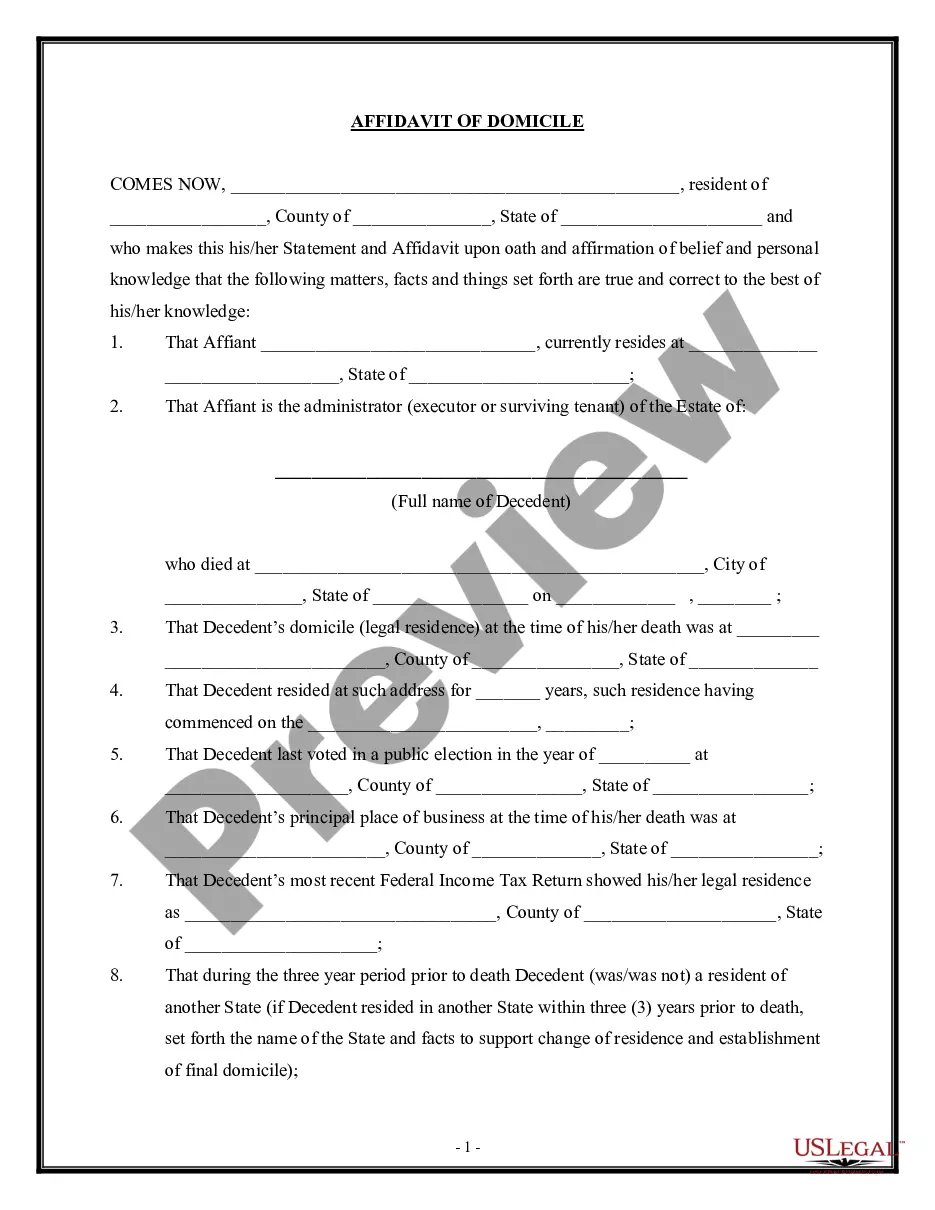
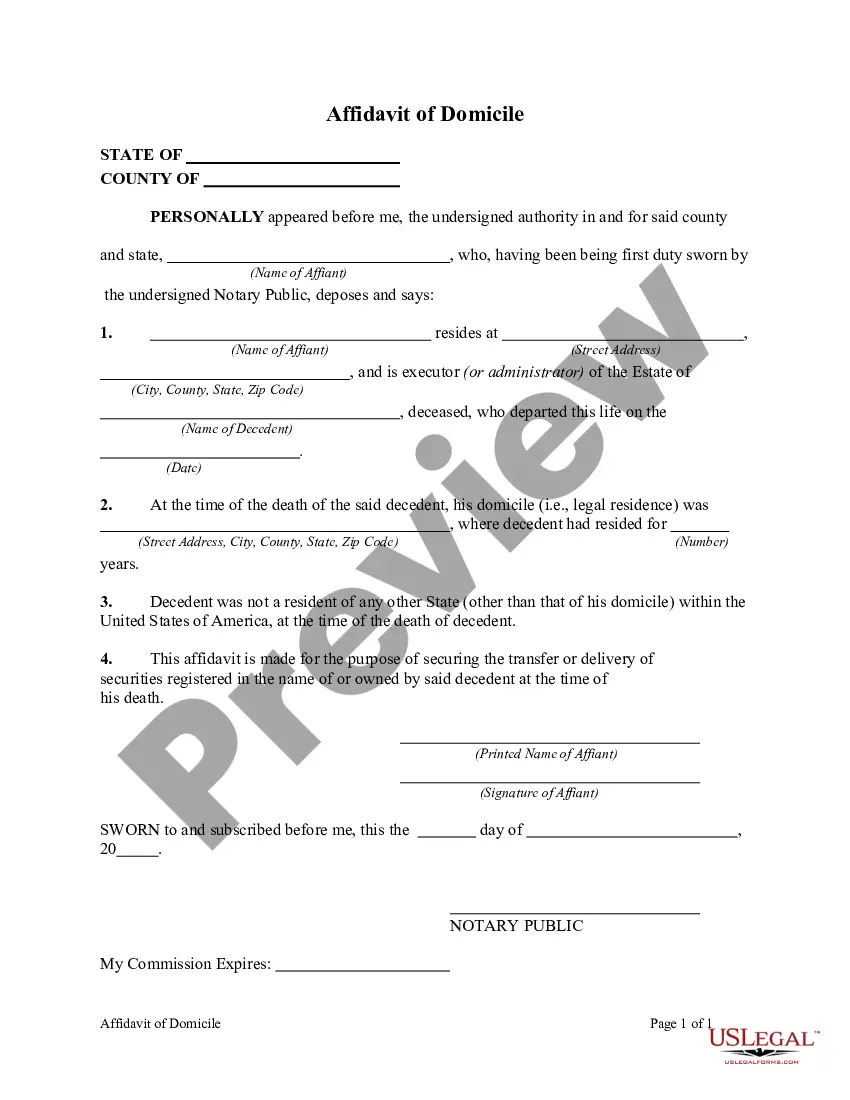
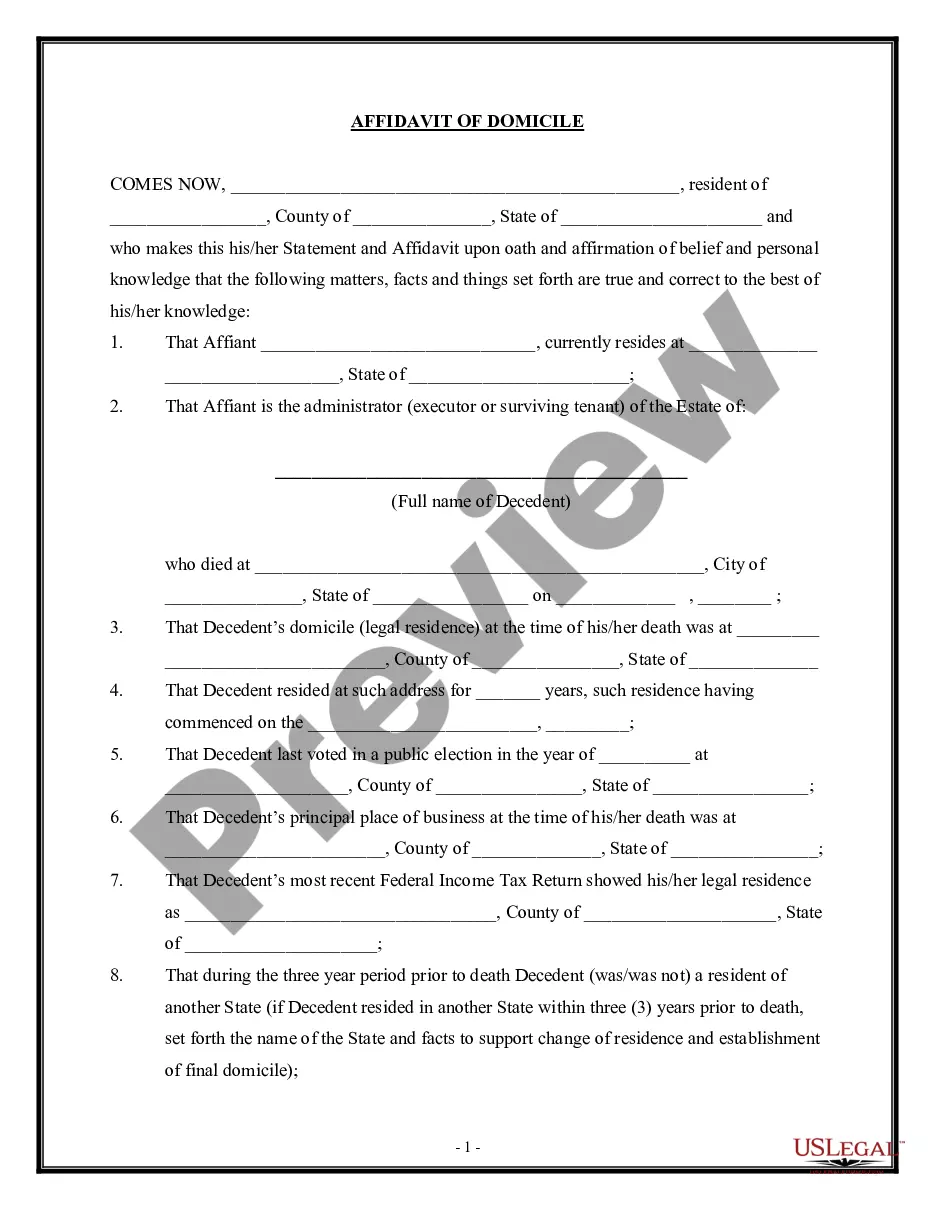
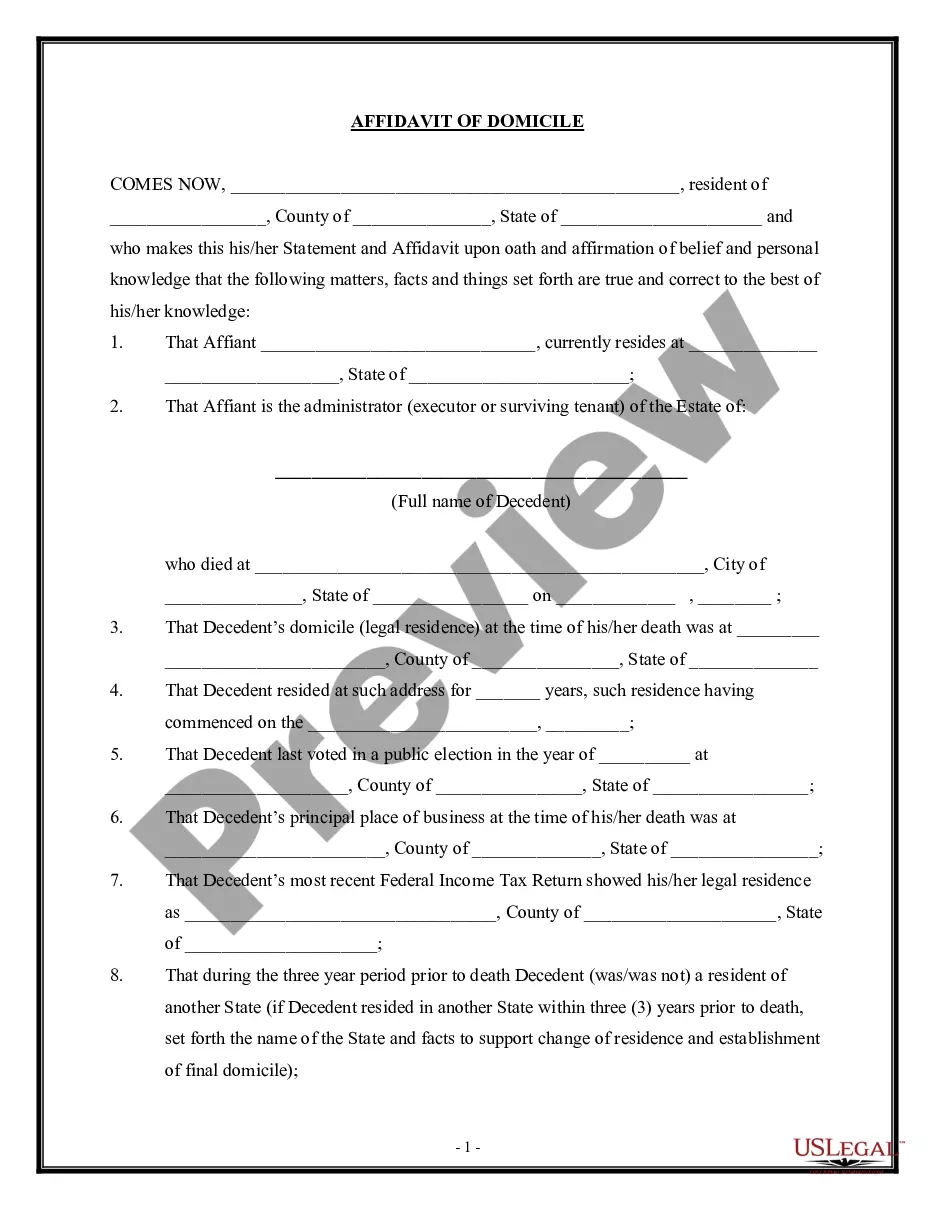
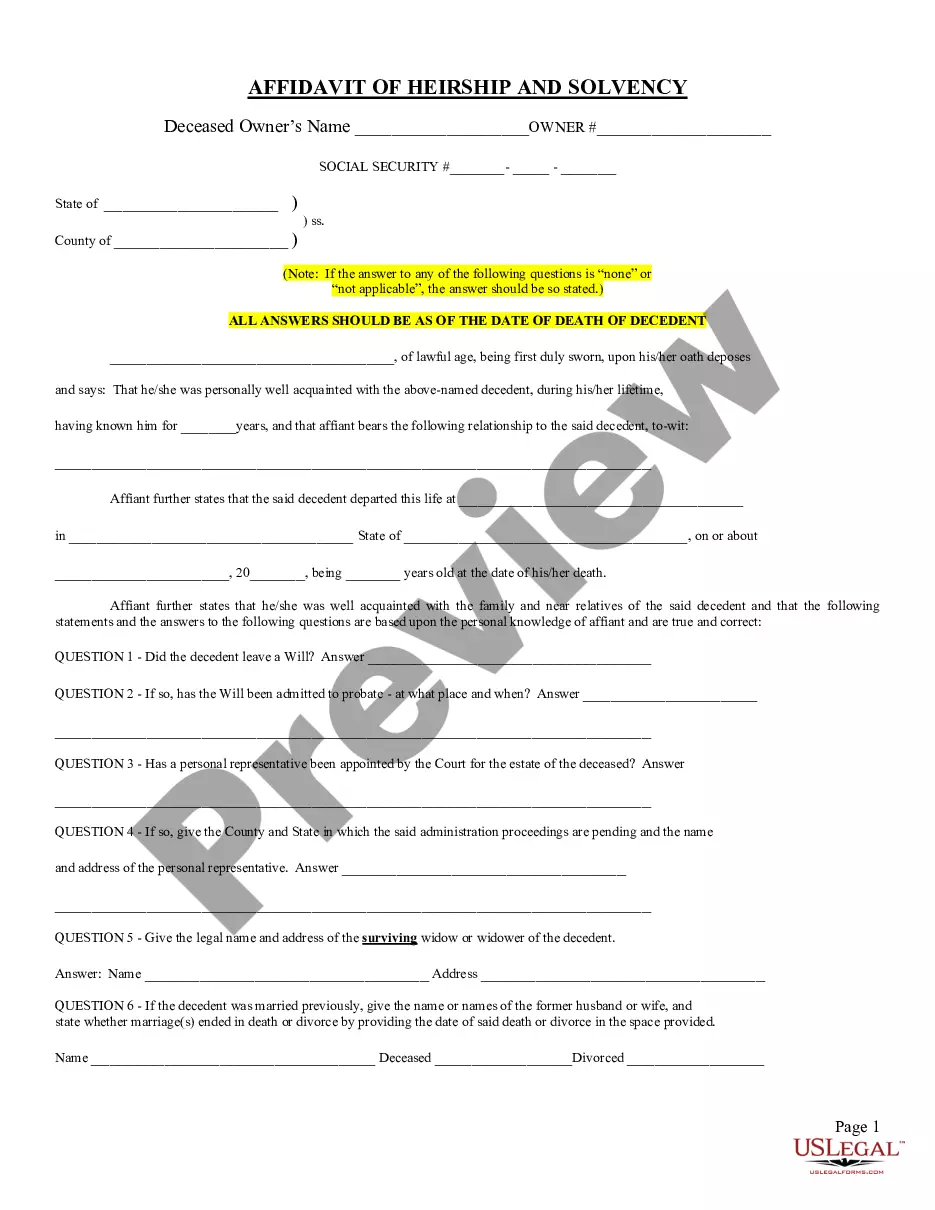
The Affidavit of Domicile for Stock Transfer is a legal document that allows an affiant to verify the legal residence of a deceased individual at the time of their death. This affidavit is essential for facilitating the transfer of stocks or other assets from the decedent's estate to the rightful heirs or beneficiaries. Unlike other affidavits, this document specifically addresses the decedent's residence, which is critical for legal compliance and ensuring proper asset distribution.
Key parts of this document
- Affiant's declaration of identity and residence.
- Details on the decedent's identity, including name and date of death.
- Verification of the decedent's domicile at the time of death.
- Information about the decedent's voting history and principal place of business.
- Confirmation of the decedent's residency status over the last three years.
- A statement regarding the payment of debts and claims against the estate.

When to use this document
This form is typically used when a person passes away, and there is a need to confirm their legal residency to transfer stock or other assets from their estate. It is particularly relevant for executors, administrators, or heirs dealing with the decedent's estate in order to ensure that assets are transferred to those who are legally entitled to them according to local laws.
Who can use this document
- Executors or administrators of a deceased person's estate.
- Heirs or beneficiaries seeking to claim assets from the estate.
- Individuals needing to provide proof of residency for the deceased for legal or financial purposes.
How to prepare this document
- Identify the parties involved, including the affiant and the decedent.
- Fill in the details regarding the decedent's domicile at the time of death.
- Specify the length of residency at the declared address.
- Document the decedent's primary place of business and voting records.
- Sign the document in front of a notary public, ensuring all information is accurate.
Is notarization required?
Yes, this form must be notarized to be legally valid. It requires the affiant to sign in the presence of a notary public, adding an essential layer of authenticity and legal importance. US Legal Forms offers integrated online notarization, available 24/7 for secure and convenient completion.
Get your form ready online
Our built-in tools help you complete, sign, share, and store your documents in one place.
Make edits, fill in missing information, and update formatting in US Legal Forms—just like you would in MS Word.
Download a copy, print it, send it by email, or mail it via USPS—whatever works best for your next step.
Sign and collect signatures with our SignNow integration. Send to multiple recipients, set reminders, and more. Go Premium to unlock E-Sign.
If this form requires notarization, complete it online through a secure video call—no need to meet a notary in person or wait for an appointment.
We protect your documents and personal data by following strict security and privacy standards.

Make edits, fill in missing information, and update formatting in US Legal Forms—just like you would in MS Word.

Download a copy, print it, send it by email, or mail it via USPS—whatever works best for your next step.

Sign and collect signatures with our SignNow integration. Send to multiple recipients, set reminders, and more. Go Premium to unlock E-Sign.

If this form requires notarization, complete it online through a secure video call—no need to meet a notary in person or wait for an appointment.

We protect your documents and personal data by following strict security and privacy standards.
Avoid these common issues
- Not providing accurate information about the decedent's residence.
- Failing to sign in the presence of a notary public.
- Omitting details regarding debts or claims against the estate.
Why use this form online
- Convenience of downloading the form for personal use anytime, anywhere.
- Editability allows users to fill in their information accurately before finalizing.
- Reliability from templates created by licensed attorneys, ensuring legal compliance.
Looking for another form?
Form popularity
FAQ
Prove it. First, you'll need to show that you spend more than half the year183 daysin the state you claim as your domicile (that is, the place you consider your permanent home).
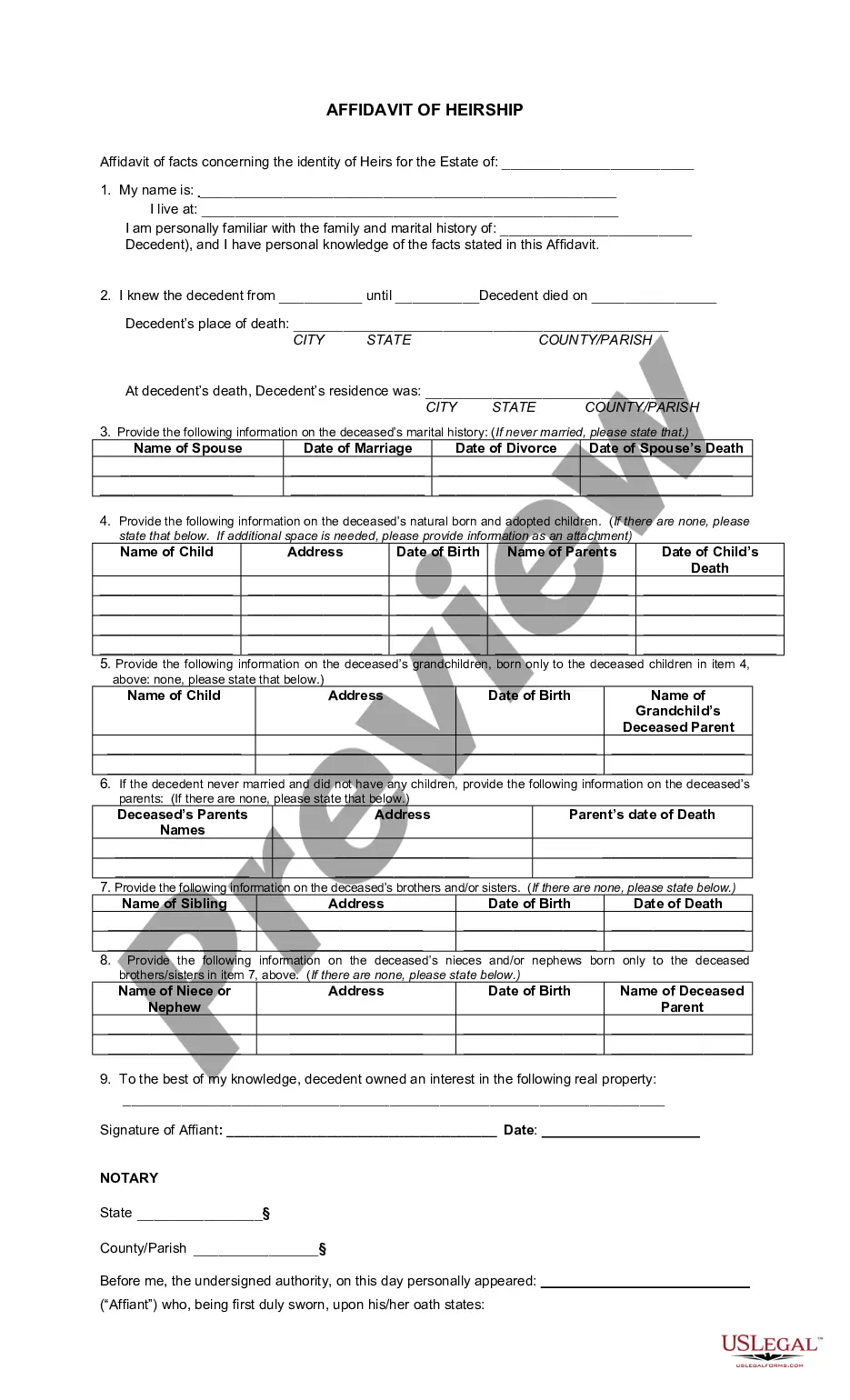
An Affidavit of Heirship is a sworn statement that heirs can use in some states to establish property ownership when the original owner dies intestate. Affidavits of Heirship are generally used when the decedent only left real property, personal property, or had a small estate.
Residential address documents include, but are not limited to: Deed, mortgage, monthly mortgage statement, mortgage payment booklet or residential rental/lease agreement; Florida voter registration card; Florida vehicle registration or title (print a duplicate registration at www.GoRenew.com);
Actually an affidavit is a written for the facts, while on the other hand the undertaking is the promising in court and/or law proceedings or someone else.
File a Florida Declaration of Domicile. Obtain a Florida Driver's License. Register Your Vehicles. Register to Vote in Florida. Open Local Bank Accounts. Notify Tax Officials. Apply for the Florida Homestead Exemption. Update Your Estate Plan.
Keep a log that shows how many days you spend in the old and new locations. Change your mailing address. Get a driver's license in the new state and register your car there. Register to vote in the new state. Open and use bank accounts in the new state.
You may download a domicile form or obtain one at any Clerk of the Circuit Court & Comptroller location. Bring the form to a Clerk's office location to be recorded. You must bring some form of legal identification if you need your document notarized.
An affidavit of domicile (sometimes called an affidavit of residence) is a document used by executors when they transfer ownership of stock or other securities from the name of the deceased person to its new owner. The purpose of the affidavit of domicile is to establish the state of residence of the stockholder.
An Affidavit of Heirship is a document that formally identifies the heirs of a deceased person. When recorded in the real property records, an Affidavit of Heirship has the effect of transferring the decedent's real estate to his/her heirs.