California Grant Deed from Trust to Two Individuals
About this form
The Grant Deed from Trust to Two Individuals is a legal document used to transfer property ownership from a trust (the Grantor) to two specified individuals (the Grantees). This deed complies with all statutory requirements in your jurisdiction and serves to officially record the change in ownership. Unlike similar forms, it specifically addresses transfers from a trust, which may have specific implications and benefits regarding asset management and protection.
Form components explained
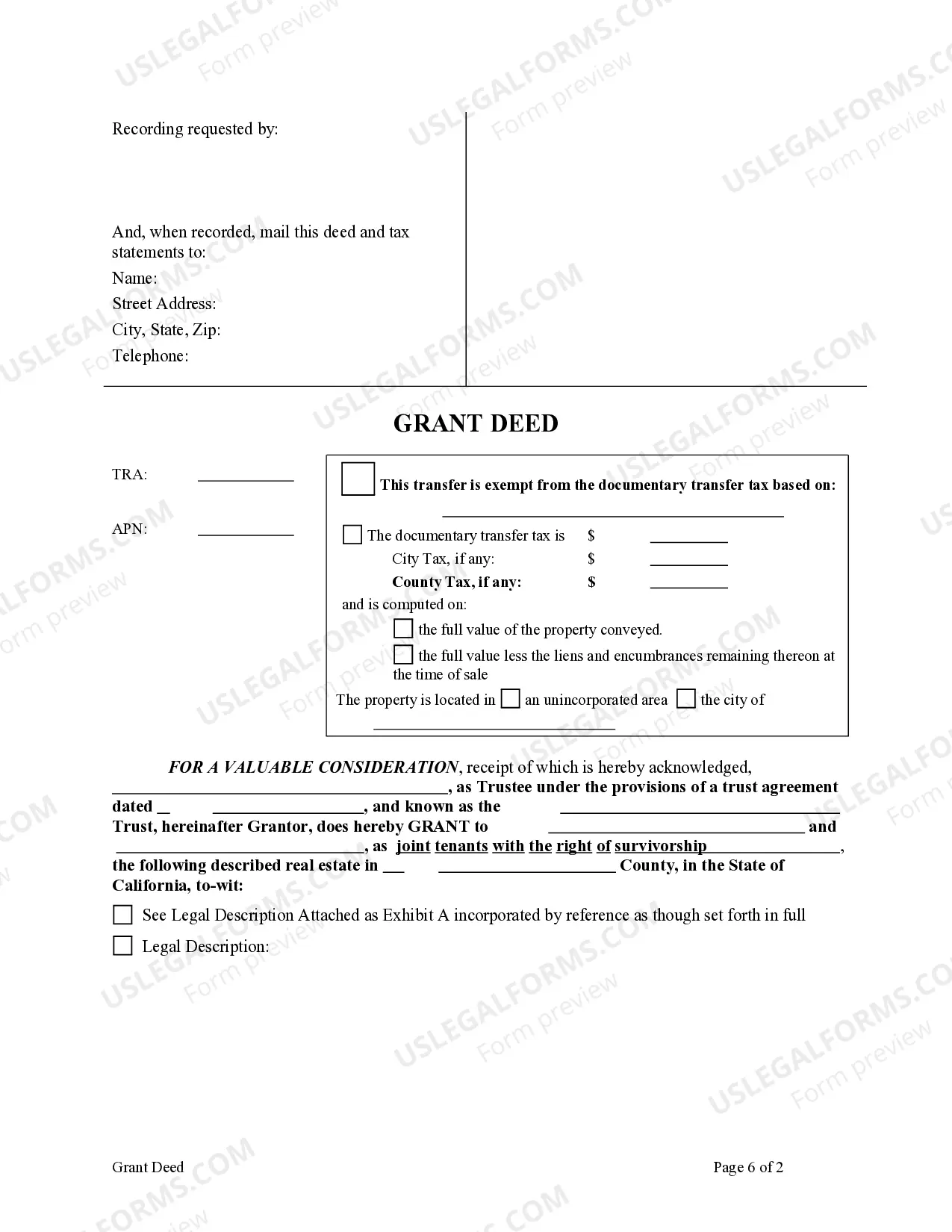
- Parties involved: Identifies the Grantor (the Trust) and the Grantees (the two individuals).
- Property description: Defines the real estate being transferred.
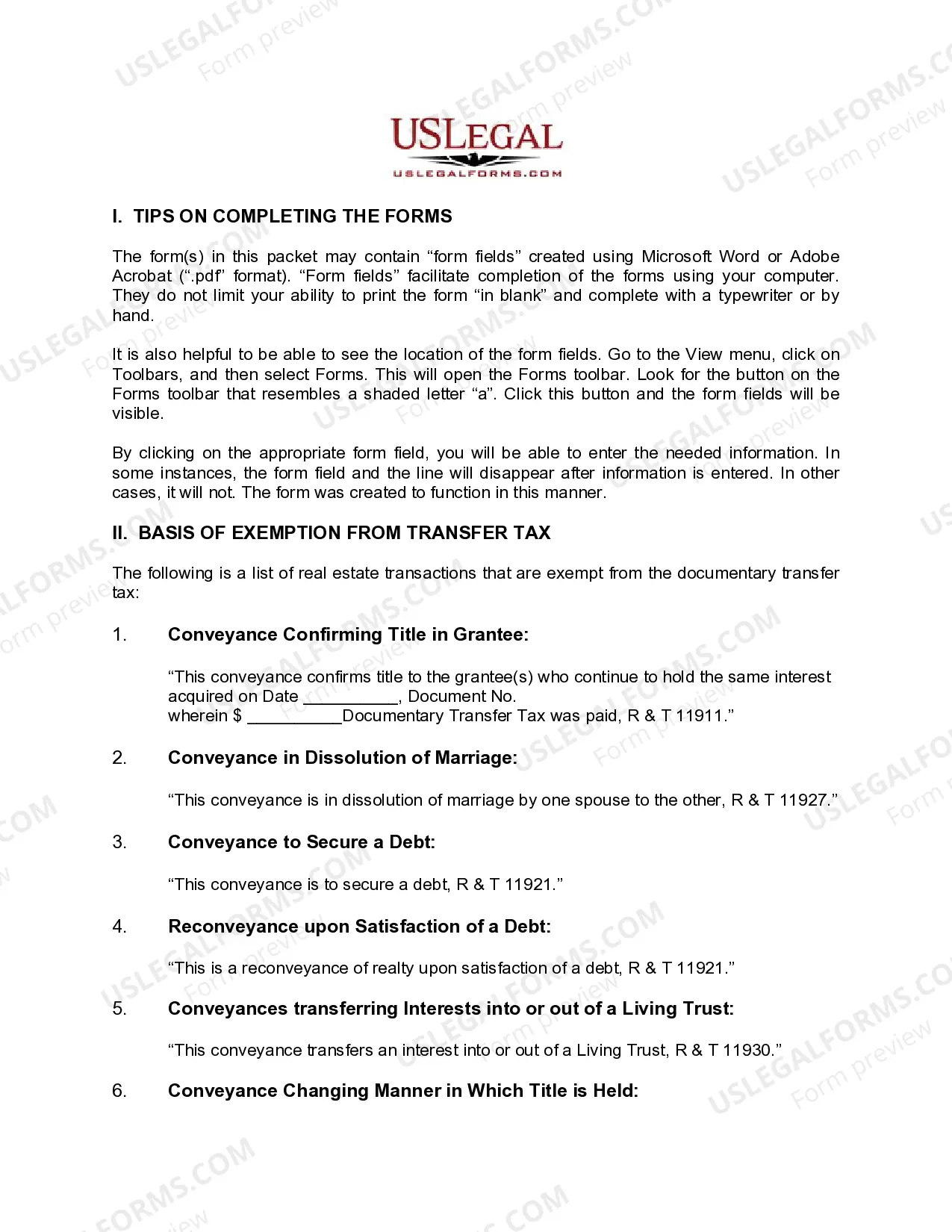
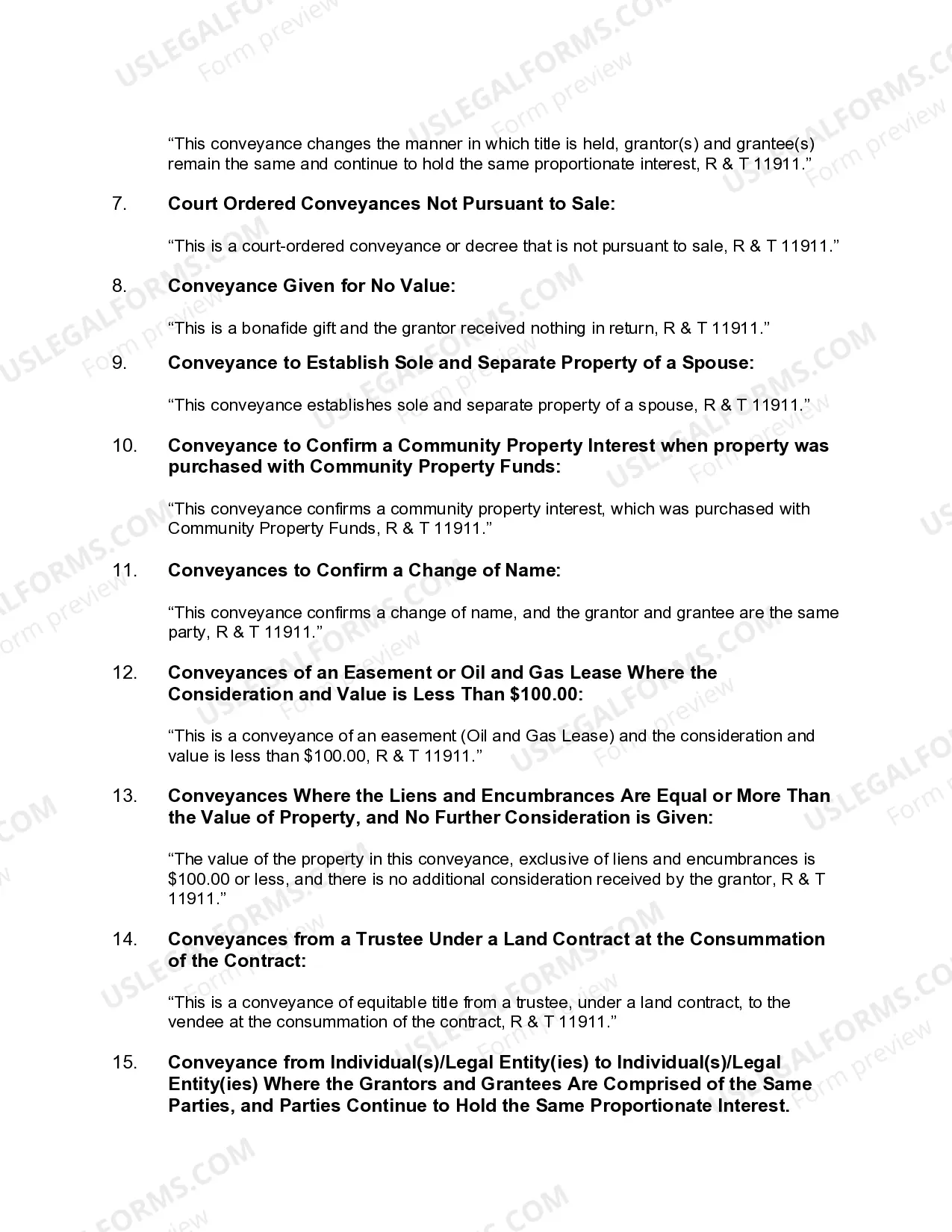
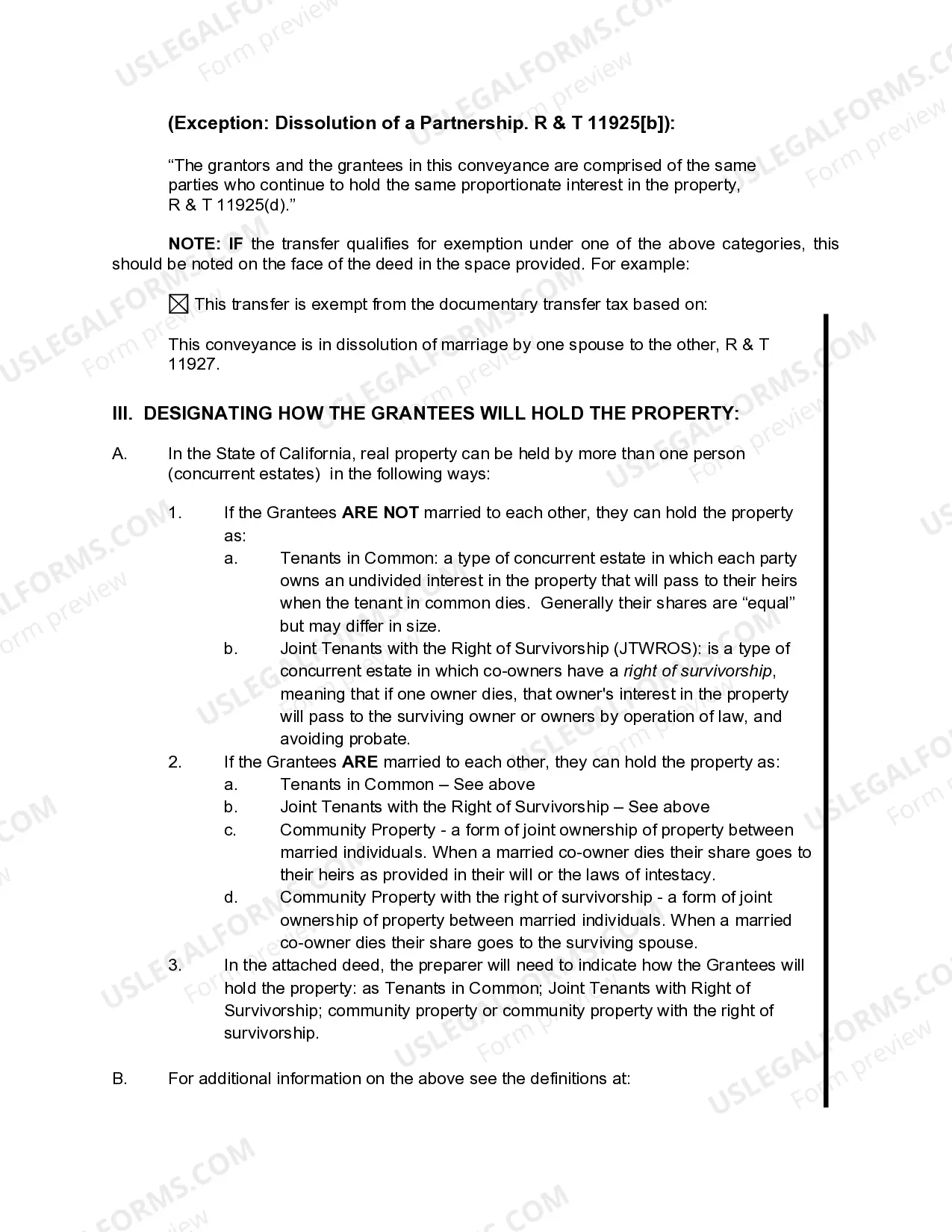
- Exemption declaration: Notes any transfer tax exemptions applicable to the transfer.
- Designating how Grantees will hold the property: Options include Joint Tenants with Right of Survivorship and Tenants in Common.
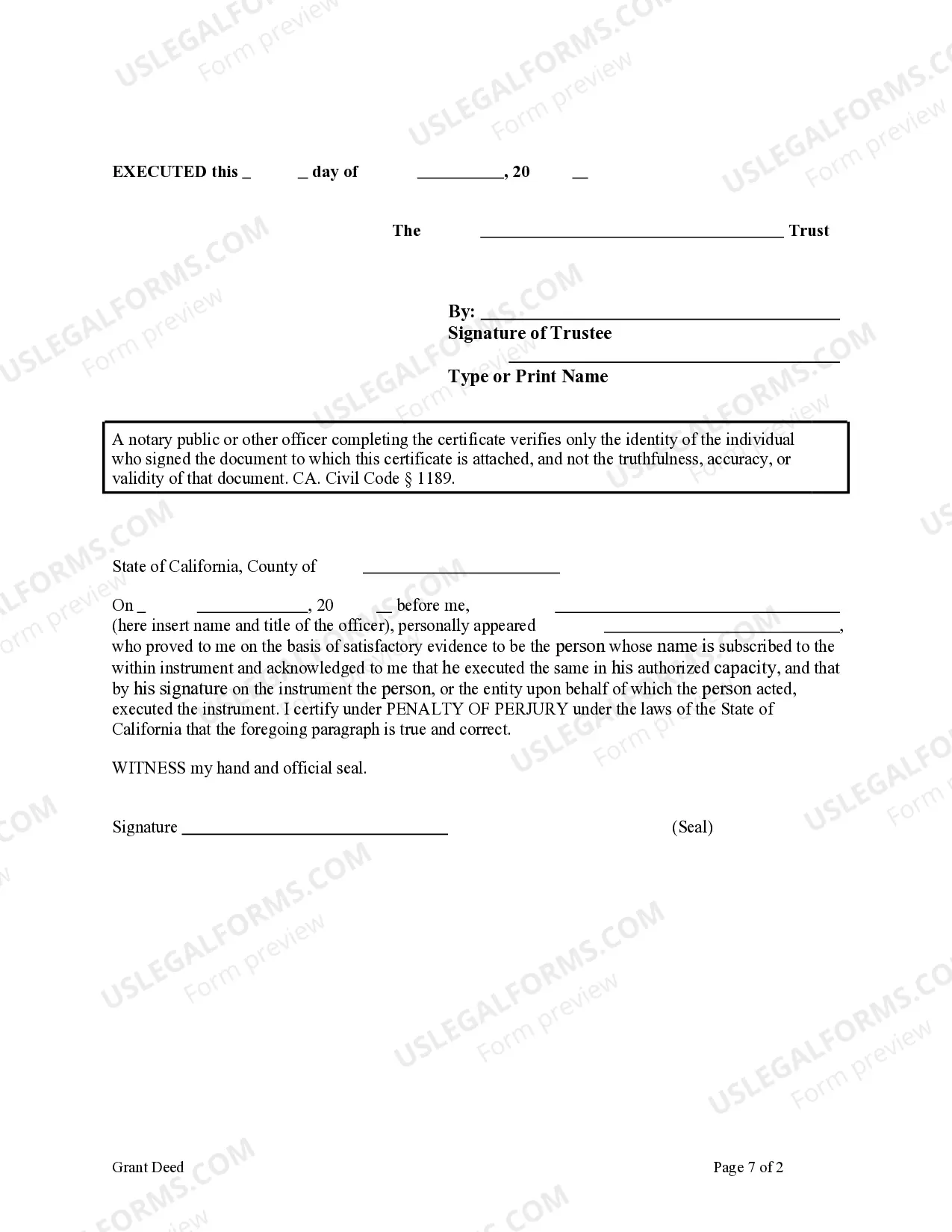
- Signature lines: Required signatures of the Grantor and any required witnesses or Notary Public.




When this form is needed
This form is essential when you wish to transfer property from a trust to two individuals. It is commonly used in estate planning scenarios when the trust has been established to manage or protect assets for the benefit of the beneficiaries. Use this deed when you want to officially change the property's title and ensure that the new owners are recognized by the public record.
Intended users of this form
Individuals who should consider using this form include:
- Trustees looking to transfer property out of a trust to beneficiaries.
- Beneficiaries of a trust who are receiving property as part of their inheritance.
- Estate planners and legal professionals assisting clients with estate transfers.
Steps to complete this form
- Identify the trust as the Grantor and clearly name the two individuals as the Grantees.
- Provide a detailed description of the property being transferred, including the address and any parcel identification numbers.
- Indicate the type of ownership the Grantees will hold, such as Joint Tenants or Tenants in Common.
- Sign the deed in the presence of a Notary Public or any required witnesses, as per your jurisdictionâs requirements.
- File the completed deed with the appropriate county recorder's office to make the transfer public and official.
Is notarization required?
Yes, this form must be notarized to be legally valid. Notarization guarantees the authenticity of signatures and ensures the document is executed properly. U.S. Legal Forms offers integrated online notarization services for your convenience, allowing you to complete the process securely via video call without needing to travel.
Get your form ready online
Our built-in tools help you complete, sign, share, and store your documents in one place.
Make edits, fill in missing information, and update formatting in US Legal Forms—just like you would in MS Word.
Download a copy, print it, send it by email, or mail it via USPS—whatever works best for your next step.
Sign and collect signatures with our SignNow integration. Send to multiple recipients, set reminders, and more. Go Premium to unlock E-Sign.
If this form requires notarization, complete it online through a secure video call—no need to meet a notary in person or wait for an appointment.
We protect your documents and personal data by following strict security and privacy standards.

Make edits, fill in missing information, and update formatting in US Legal Forms—just like you would in MS Word.

Download a copy, print it, send it by email, or mail it via USPS—whatever works best for your next step.

Sign and collect signatures with our SignNow integration. Send to multiple recipients, set reminders, and more. Go Premium to unlock E-Sign.

If this form requires notarization, complete it online through a secure video call—no need to meet a notary in person or wait for an appointment.

We protect your documents and personal data by following strict security and privacy standards.
Avoid these common issues
- Failing to provide adequate property descriptions, leading to confusion about the transferred property.
- Not properly designating how the Grantees will hold the property, which can cause disputes post-transfer.
- Neglecting to get required signatures or notarization, making the deed legally invalid.
- Forgetting to file the deed with the county recorder, which is necessary to update the public records.
Why use this form online
- Convenient access to legal forms that can be downloaded and completed at your own pace.
- Editability allows for easy modifications without needing to restart the document.
- Reliability, knowing the form has been drafted by licensed attorneys and is up-to-date with state laws.
Legal use & context
- Grant Deeds serve as a formal mechanism for property transfer and are usually sufficient for ensuring that the Grantees have full ownership rights.
- It is vital to understand the implications of transferring property out of a trust, including tax consequences and potential impacts on estate planning.
- Using a legally compliant deed helps in avoiding conflicts in property ownership in the future.
Looking for another form?

Form popularity
FAQ
In California, a trustee generally cannot sell trust property to himself without explicit permission from the beneficiaries. This rule helps prevent conflicts of interest and ensures property transactions remain transparent. If you find yourself in this situation, seek legal advice to maintain compliance with state laws and protect everyone's interests involved in a California Grant Deed from Trust to Two Individuals.
Transferring assets from an irrevocable trust is complex and typically not allowed without the beneficiaries' consent or a court order. However, if there is a strong reason for the transfer, such as altering the trust for the beneficiaries' best interests, legal avenues may exist. Consulting with an estate planning attorney can help navigate the rules and determine the best course of action based on your specific situation.
In California, the trustee holds legal title to the property within the trust, while the beneficiaries own the beneficial interest. This means that beneficiaries have the rights to enjoy the property, receive income generated from it, or ultimately inherit it. Understanding this distinction is vital when discussing a California Grant Deed from Trust to Two Individuals, as it outlines the ownership structure clearly.
When transferring property through a California Grant Deed from Trust to Two Individuals, the transfer can often avoid property tax reassessment. This occurs if the property remains within the family and qualifies under specific exemptions. It is crucial to ensure you follow the right procedures and file the necessary forms with your local assessor's office. Consulting with a legal professional can further clarify your options.
While it's not legally required to hire a lawyer to add someone to a deed, it's often a good idea. Legal expertise can help you navigate the specifics of creating a California Grant Deed from Trust to Two Individuals and ensure that all documents are correctly prepared and filed. Additionally, a lawyer can provide valuable advice on the potential legal and financial implications of your decision.
Adding a name to a grant deed in California is a straightforward process. Start by preparing a new deed that specifies the original owner and the individual you wish to add. This document, known as a California Grant Deed from Trust to Two Individuals, will need to be signed and notarized before recording it with the county to make the change official.
To add someone to a grant deed in California, you must create a new grant deed that includes both names. This may involve preparing a California Grant Deed from Trust to Two Individuals that lists the current owner and the individual being added. Be sure to have the deed notarized and then filed at your local county recorder's office to ensure legal recognition.
Adding someone to a deed in California can have significant tax implications, such as potential transfer taxes or changes in property tax assessments. When you create a California Grant Deed from Trust to Two Individuals, the county may reassess the property based on its current value, and this could lead to higher property taxes. It’s wise to consult a tax professional to understand how these changes could affect you.
To transfer property from a trust to an individual in California, you generally need to create a California Grant Deed from Trust to Two Individuals. This process involves drafting a deed that specifies the trust as the grantor and the individuals receiving the property as grantees. You'll then need to sign the deed in front of a notary and record it with the county recorder's office to make it official.
Several factors can make a deed of trust invalid in California, including lack of signature, failure to meet statutory requirements, or if it involves fraud. Additionally, if the underlying obligation does not exist, the deed of trust can be contested. To safeguard your property transfer, consider a reliable method, such as a California Grant Deed from Trust to Two Individuals through our user-friendly platform.