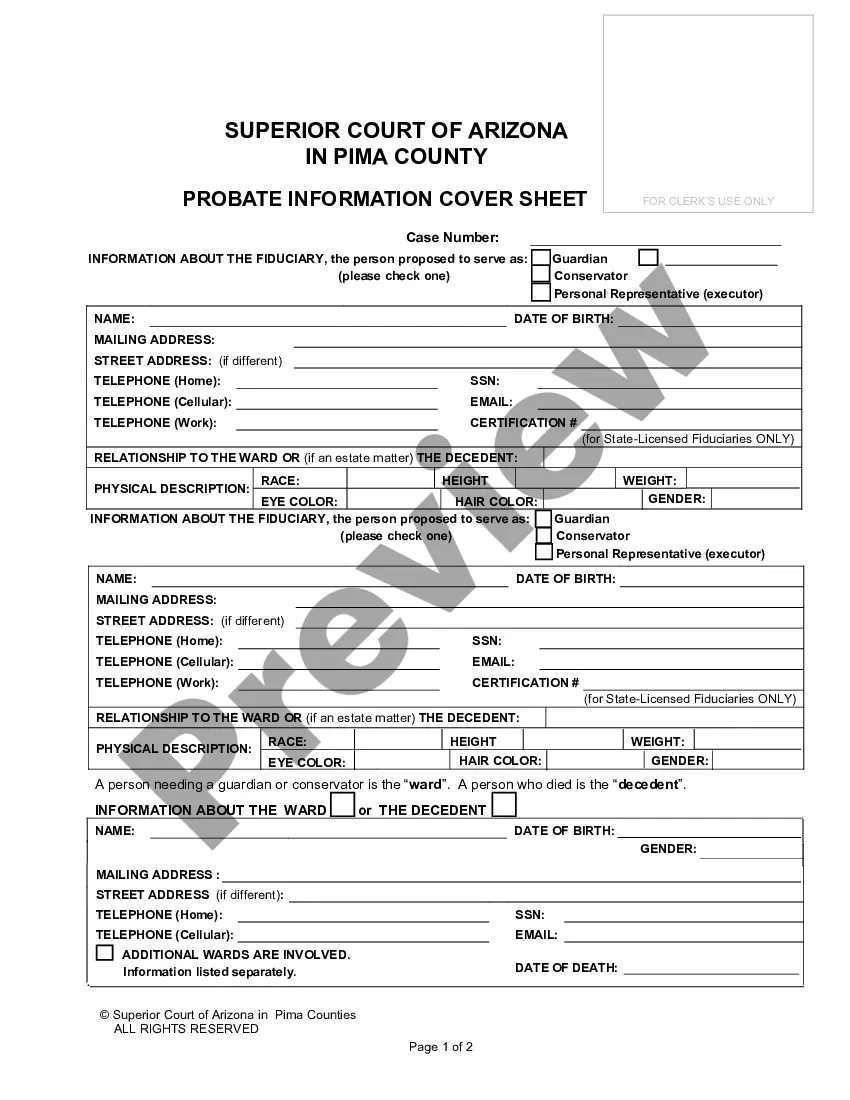
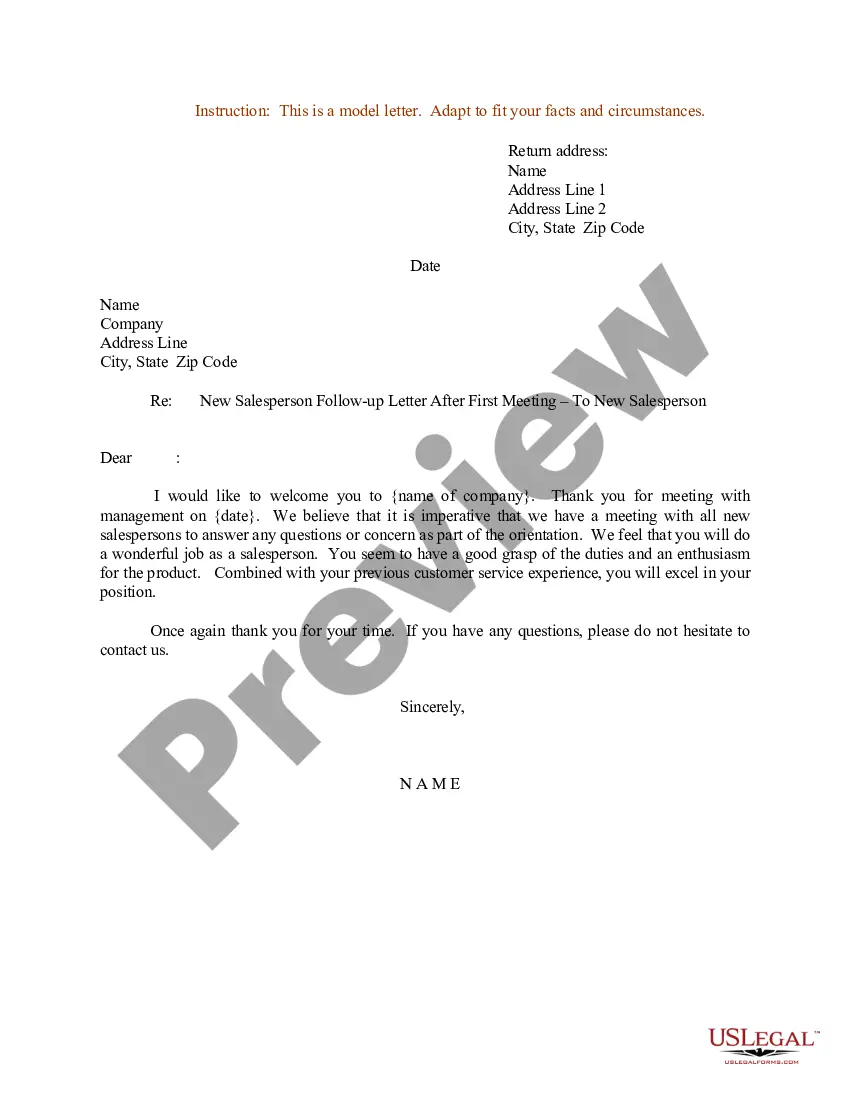
Sample Letter for New Salesperson Follow-up Letter After First Meeting - To New Salesperson
Understanding this form
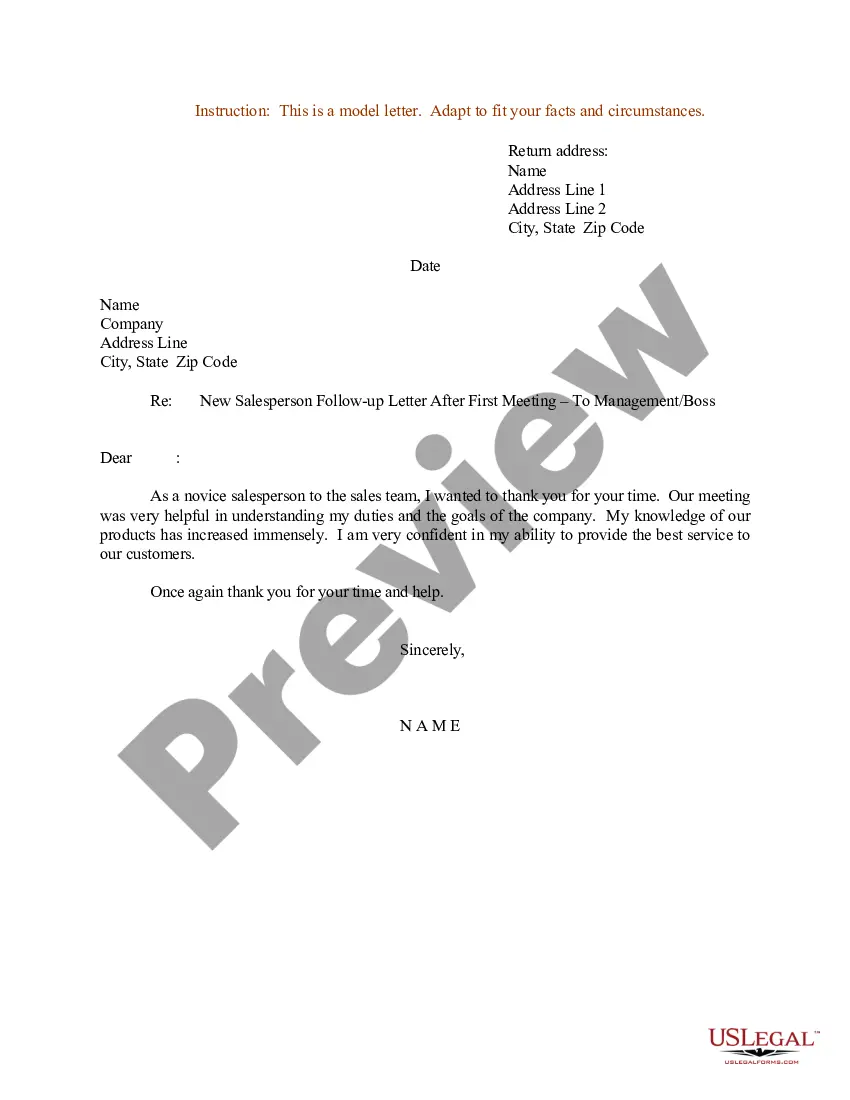
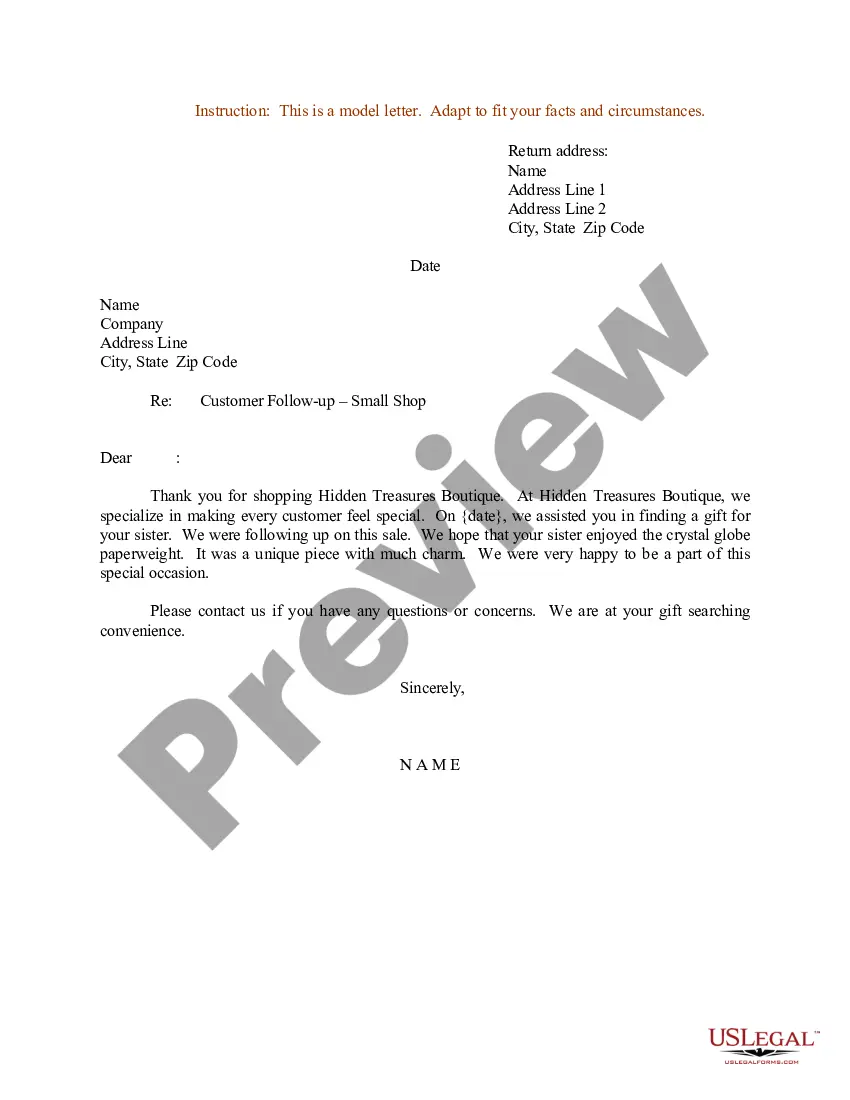
The Sample Letter for New Salesperson Follow-up Letter After First Meeting is a professional template designed to provide a structured way to follow up with a new salesperson after an initial meeting. This form is essential for establishing ongoing communication, reinforcing relationships, and ensuring that any questions or concerns are addressed promptly. Unlike general correspondence templates, this letter specifically caters to the context of business introductions and follows up on the discussions from the first meeting.
Key components of this form
- Return address: Your name and contact information.
- Date: The date when the letter is written.
- Recipient's address: The new salesperson's name and contact information.
- Subject line: Clearly states the purpose of the letter.
- Body: A brief thank you and invitation for further questions or communication.
- Closing: A professional sign-off with your name.
When to use this form
This form should be used after meeting a new salesperson to enhance communication and solidify your business relationship. It is appropriate to send this letter shortly after the meeting to ensure that the conversation remains fresh and demonstrates your professional commitment to the new partnership.
Intended users of this form
- Business owners and managers looking to follow up with new sales personnel.
- Sales team leaders who want to establish rapport with new team members.
- Anyone in a professional role responsible for onboarding new sales representatives.
How to prepare this document
- Identify the parties involved by filling in your return address and the recipient's address.
- Enter the date of writing the letter.
- Clearly state the subject line to indicate the purpose of the letter.
- Express gratitude and leave an open invitation for further communication in the body of the letter.
- Add your name at the end to personalize the correspondence.
Is notarization required?
This form usually doesn’t need to be notarized. However, local laws or specific transactions may require it. Our online notarization service, powered by Notarize, lets you complete it remotely through a secure video session, available 24/7.
Get your form ready online
Our built-in tools help you complete, sign, share, and store your documents in one place.
Make edits, fill in missing information, and update formatting in US Legal Forms—just like you would in MS Word.
Download a copy, print it, send it by email, or mail it via USPS—whatever works best for your next step.
Sign and collect signatures with our SignNow integration. Send to multiple recipients, set reminders, and more. Go Premium to unlock E-Sign.
If this form requires notarization, complete it online through a secure video call—no need to meet a notary in person or wait for an appointment.
We protect your documents and personal data by following strict security and privacy standards.

Make edits, fill in missing information, and update formatting in US Legal Forms—just like you would in MS Word.

Download a copy, print it, send it by email, or mail it via USPS—whatever works best for your next step.

Sign and collect signatures with our SignNow integration. Send to multiple recipients, set reminders, and more. Go Premium to unlock E-Sign.

If this form requires notarization, complete it online through a secure video call—no need to meet a notary in person or wait for an appointment.

We protect your documents and personal data by following strict security and privacy standards.
Mistakes to watch out for
- Neglecting to include the return address.
- Not personalizing the greeting or body of the letter.
- Using overly complex language that may confuse the reader.
- Failing to review for spelling or grammatical errors.
Benefits of using this form online
- Easy to customize to fit your specific needs.
- Convenient download for immediate access.
- Reliability of templates drafted by licensed attorneys.
- Time-efficient way to create professional correspondence.
Legal use & context
- The letter serves as a formal record of communication which may support future interactions.
- It is considered best practice in professional relations to maintain written correspondence.
Summary of main points
- Use this template to strengthen communication with a new salesperson following their first meeting.
- Include key details to personalize the message and enhance professional rapport.
- This form is adaptable for use across various jurisdictions without special requirements.
Looking for another form?







Form popularity
FAQ
Write an attention-grabbing subject line. Mention a conversation you had with your recipient while at the meeting, conference, networking event, etc. to provide context for your recipient this will jog their memory so they can remember you.
Add Context. Try to jog your recipient's memory by opening your email with a reference to a previous email or interaction. Add Value. You should never send a follow-up without upping the ante and demonstrating your worth. Explain Why You're Emailing. Include a Call-to-Action. Close Your Email.
Write a compelling subject line. Tailor your greeting to the industry and situation. Make your first line about them. Explain why you're reaching out. Provide value for them. Include a call-to-action. Say "thanks" and sign off. Follow up with them.
Dear Sir, With due respect, I want to take this opportunity (introduce yourself and your designation). (Describe in your words). I came to know that you are one of our valuable customers through (give the resource from where you got to know about the recipient's company).
Keep it short and sweet. All sales emails should be short, but follow-ups should be even shorter. Make replying a one-stroke task for recipients. Be brutally honest. Acknowledge their interest. Show absolute belief in your product's fit for the prospect. Follow up from a sales call. Add value. Walk away gracefully.
A follow up letter should offer something that is new in its own sense or capacity. It should demonstrate your willingness and interest for the particular thing, plan or deed. You should indicate and mention in your letter if you want a response, if so provide some details of such a response.
Tip: Be brief. Be polite by asking if they've looked it over rather than accuse or point out that you haven't received it yet. Add value by giving them context for the urgency if needed or urgency about the next steps. Finish with a call to action so they know what you want them to do and why it's important.
Clear subject lines. People are busy and they get many emails a day. Keep it brief. Avoid writing a novel quickly get to your point in a few lines! Refresh their memory. Reiterate the value. Ask why. Include a call to action.
Leave every meeting with clear action items. Remind your prospect of your value. Have a follow up sequence in place. Keep the conversation open.