Farmers Market Application and Rules and Regulations
What this document covers
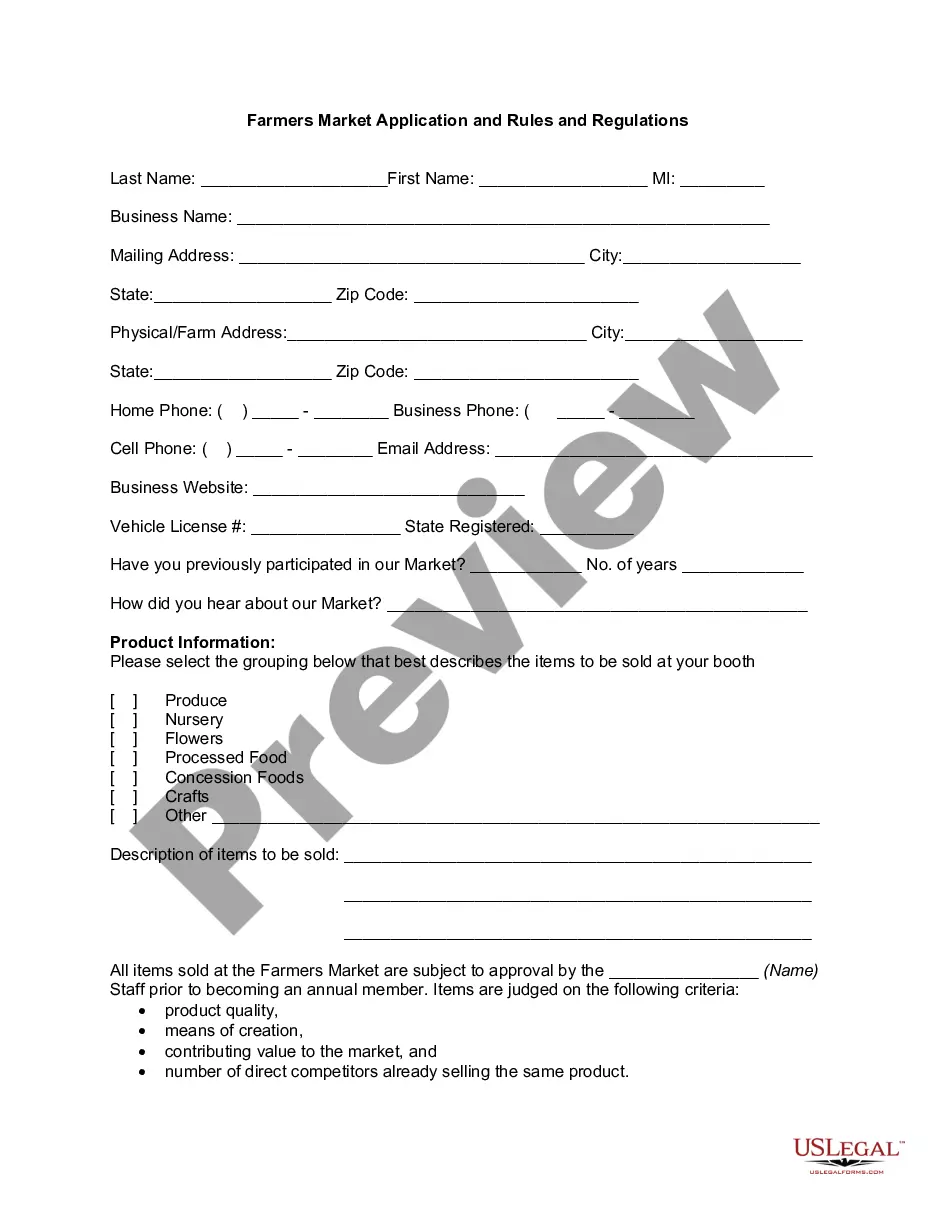
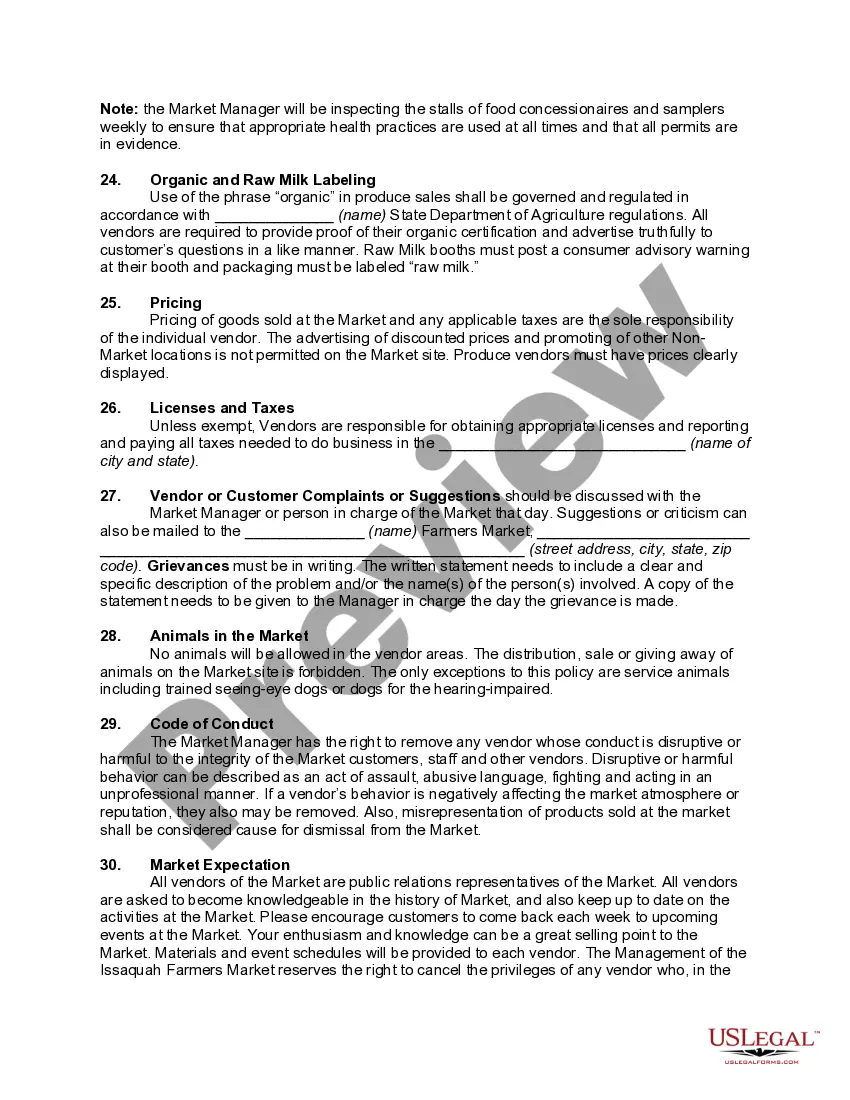
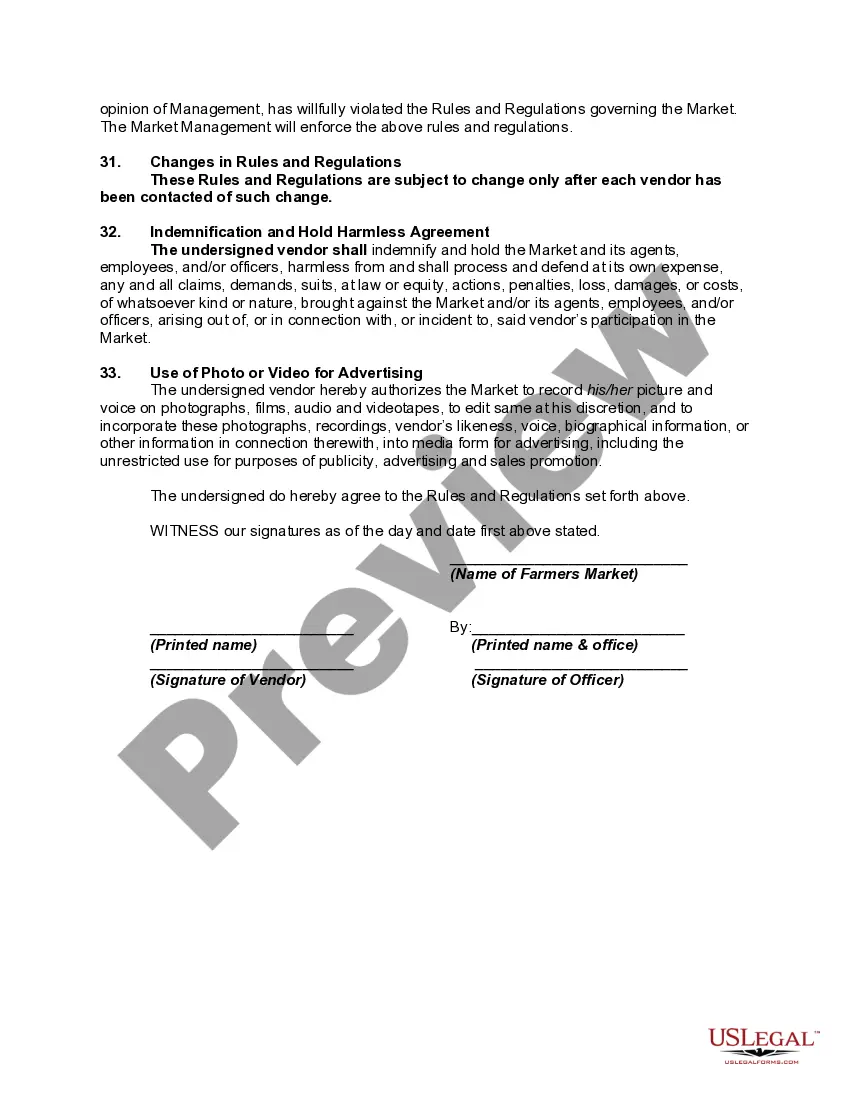
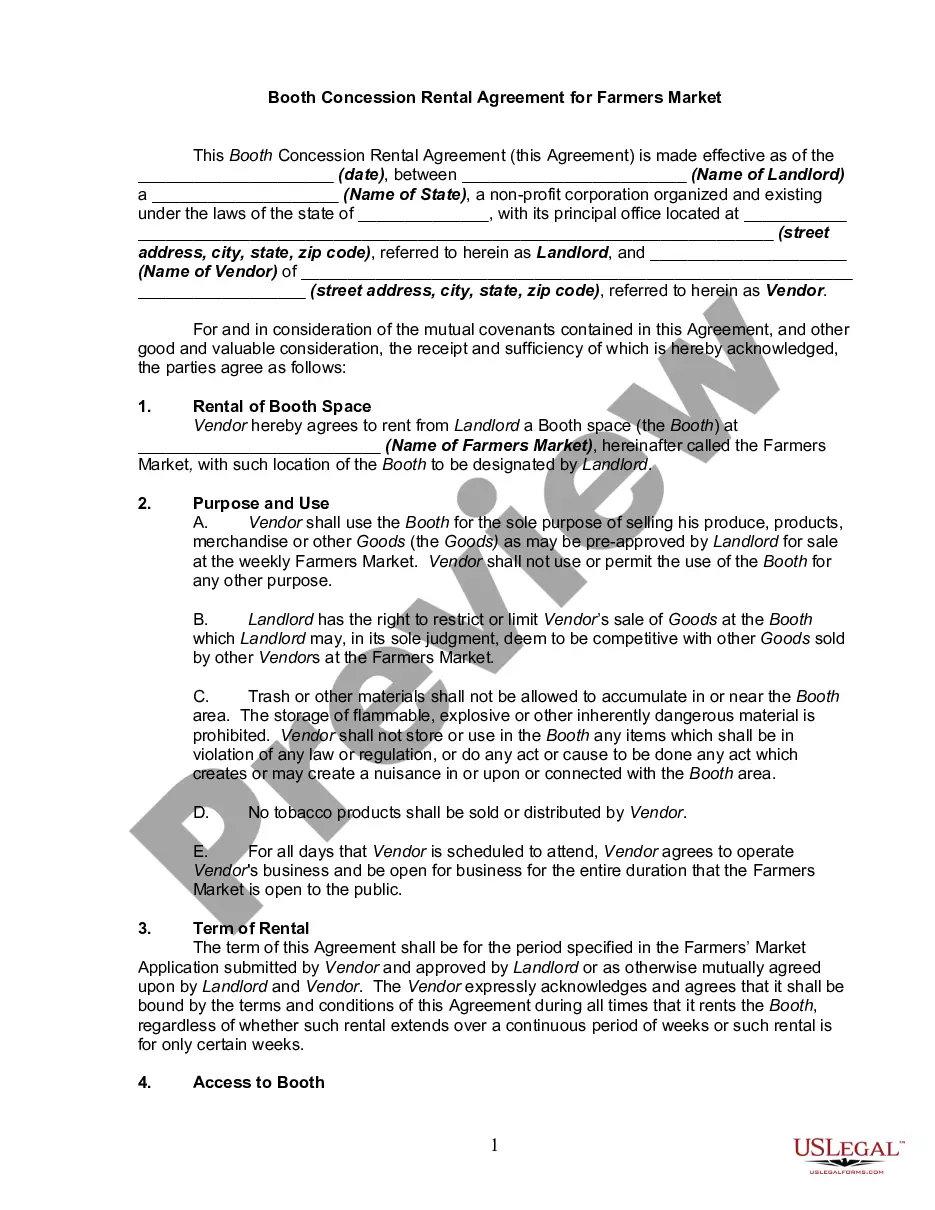
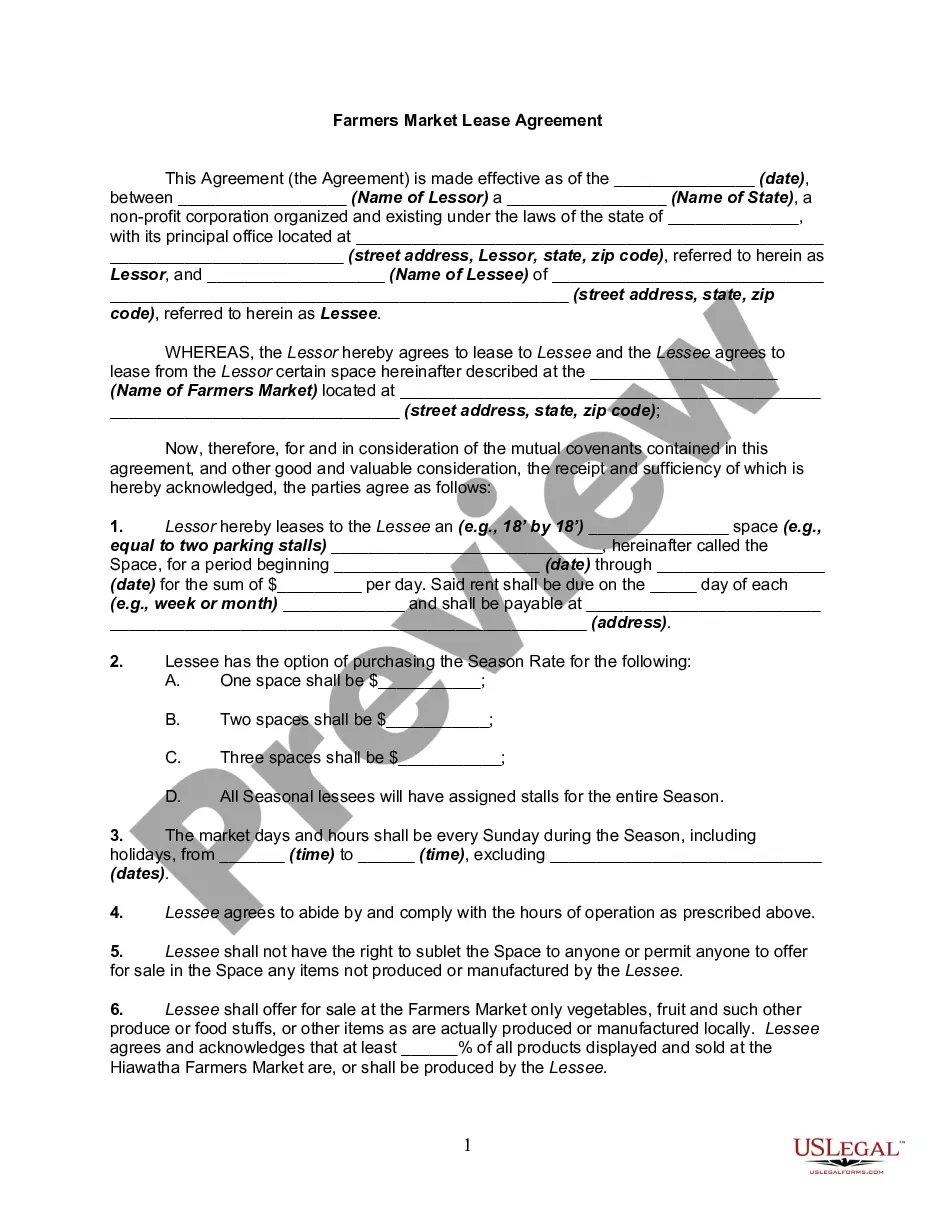
The Farmers Market Application and Rules and Regulations is a legal form that facilitates the registration process for vendors wishing to participate in a local farmers market. This form not only serves as an application for booth space but also outlines the essential rules and regulations that vendors must follow. The application ensures compliance with market standards and allows vendors to effectively sell their products directly to the public.
Main sections of this form
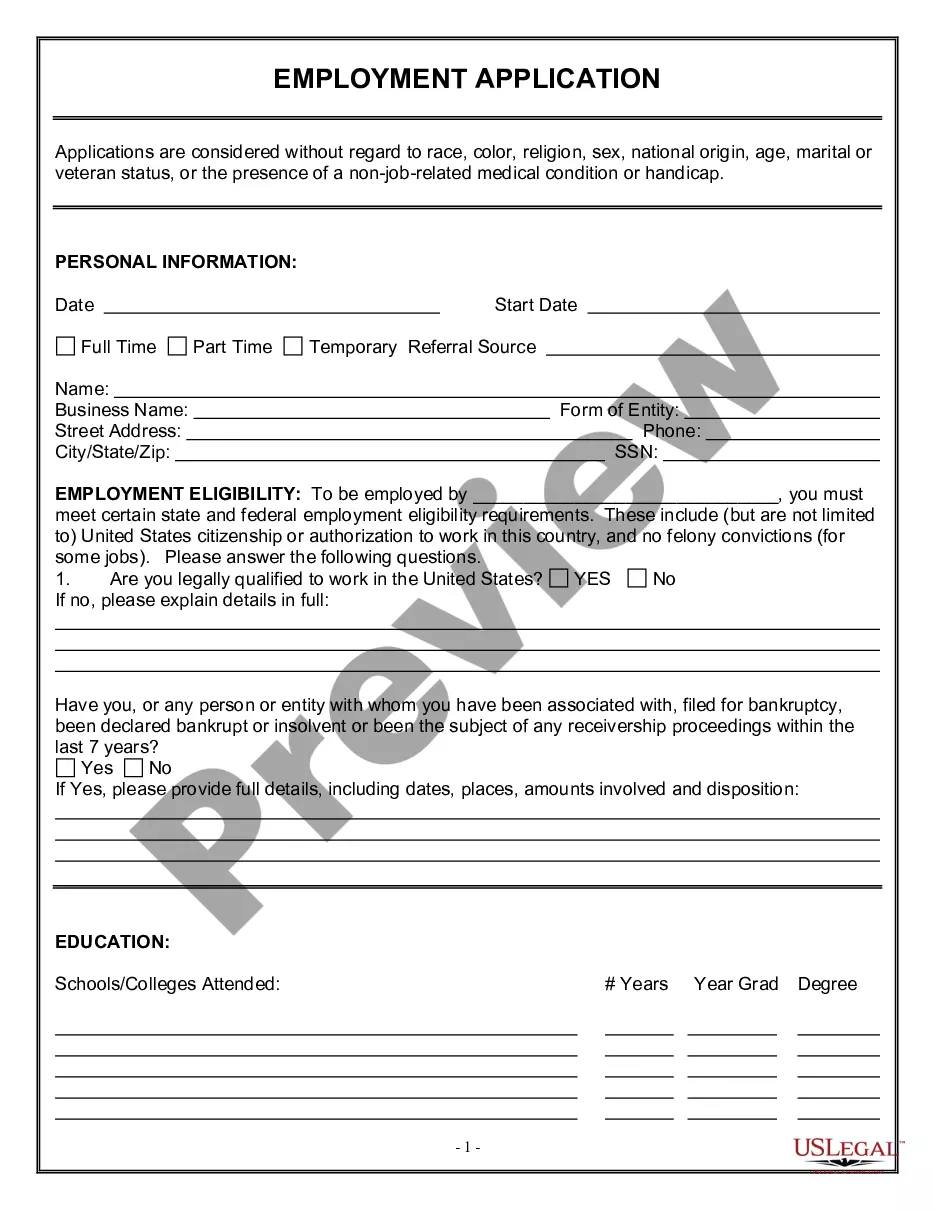
- Vendor information fields: Includes name, contact information, and business details.
- Product information section: Highlights the items vendors plan to sell at the market.
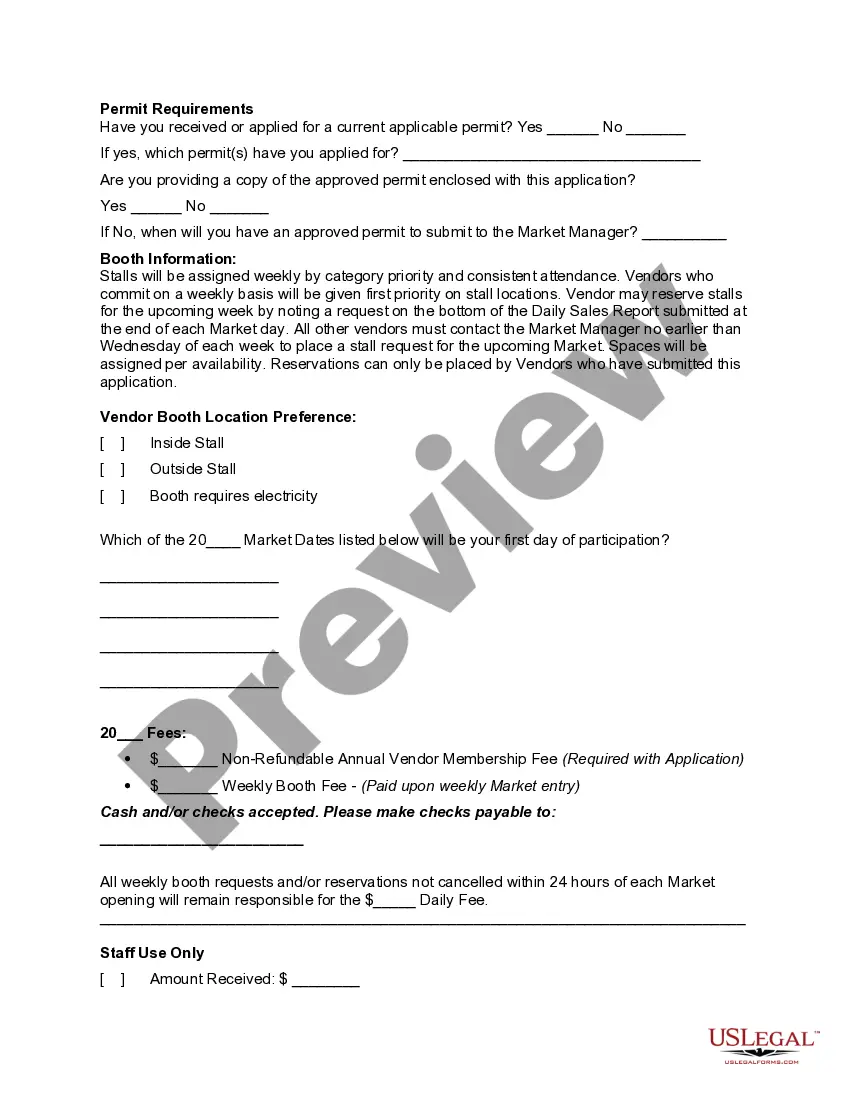
- Permit requirements: Confirms whether vendors possess necessary permits for selling food or artisan goods.
- Booth location preferences: Lets vendors indicate their desired stall placement within the market.
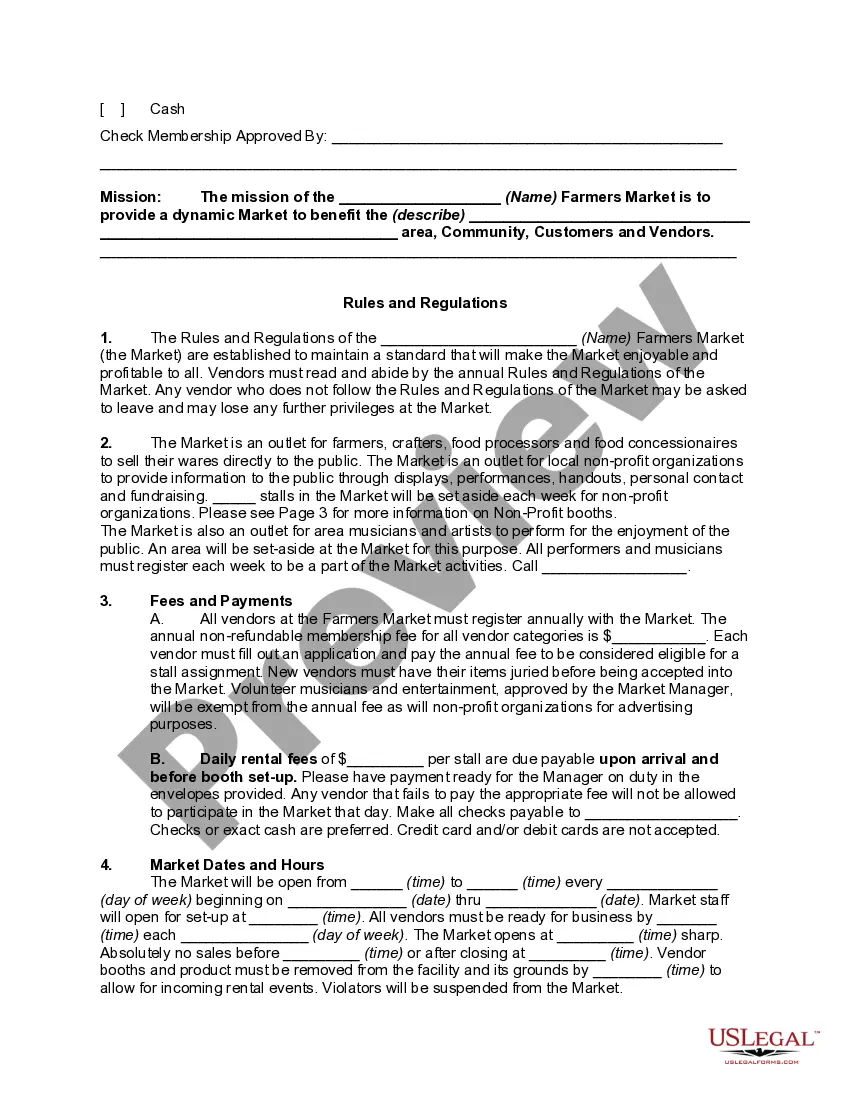
- Fees structure: Details membership and stall fees required for participation.
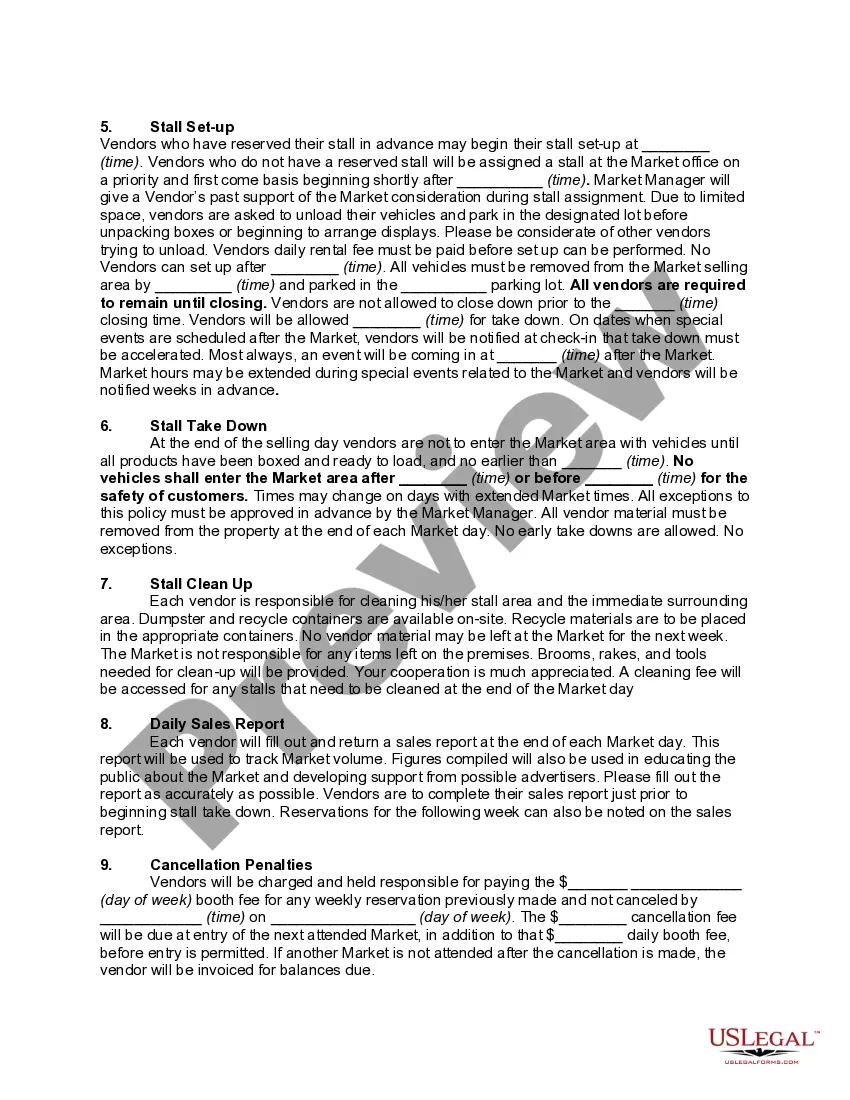
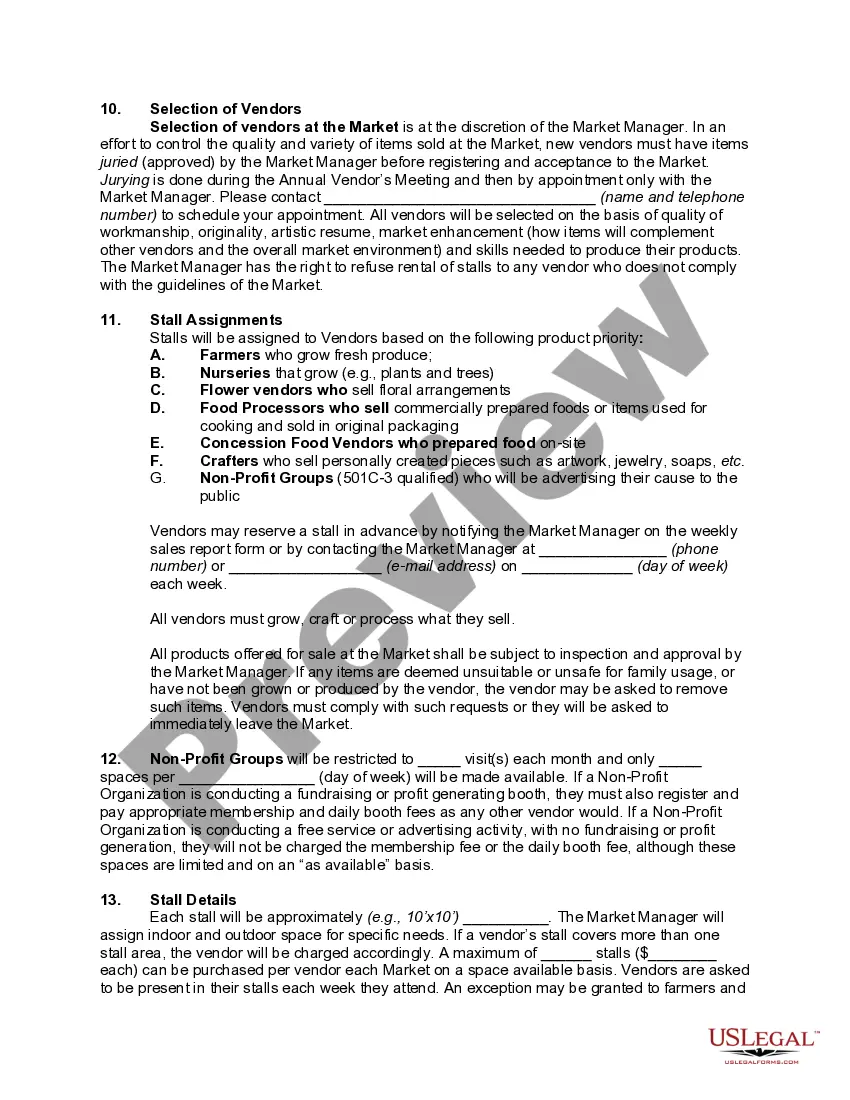
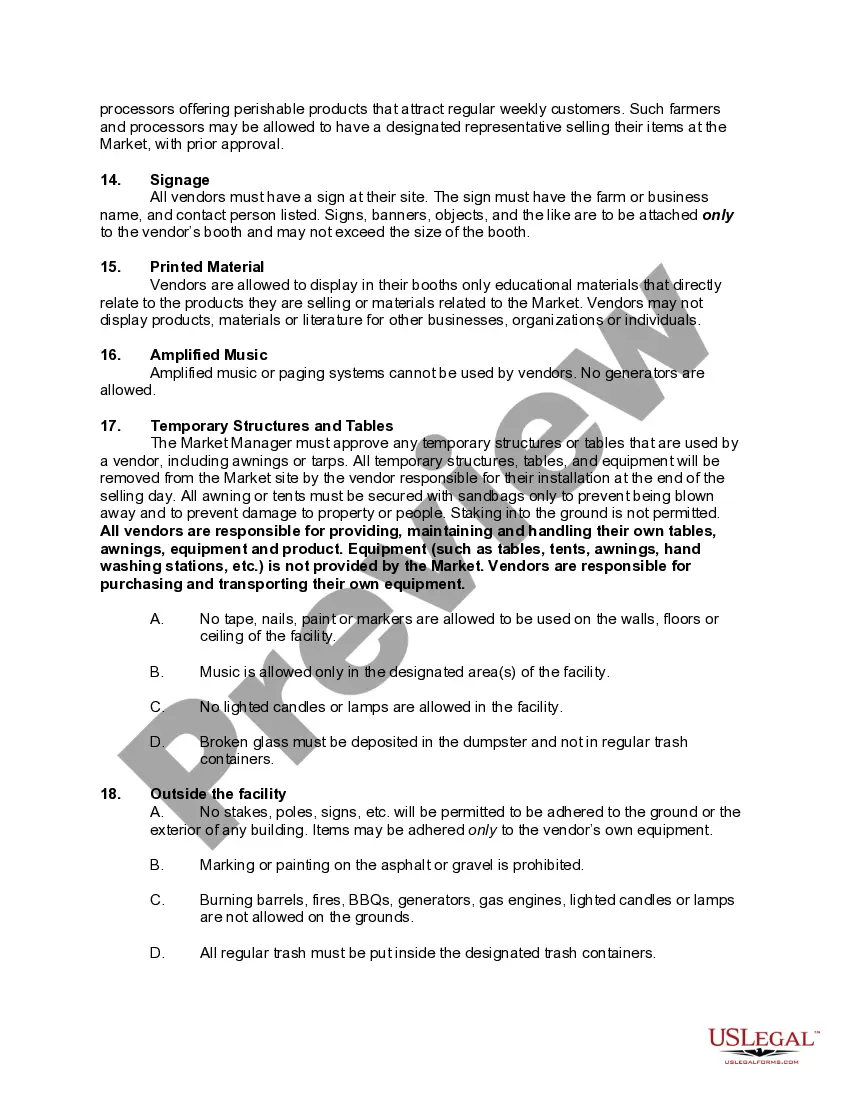
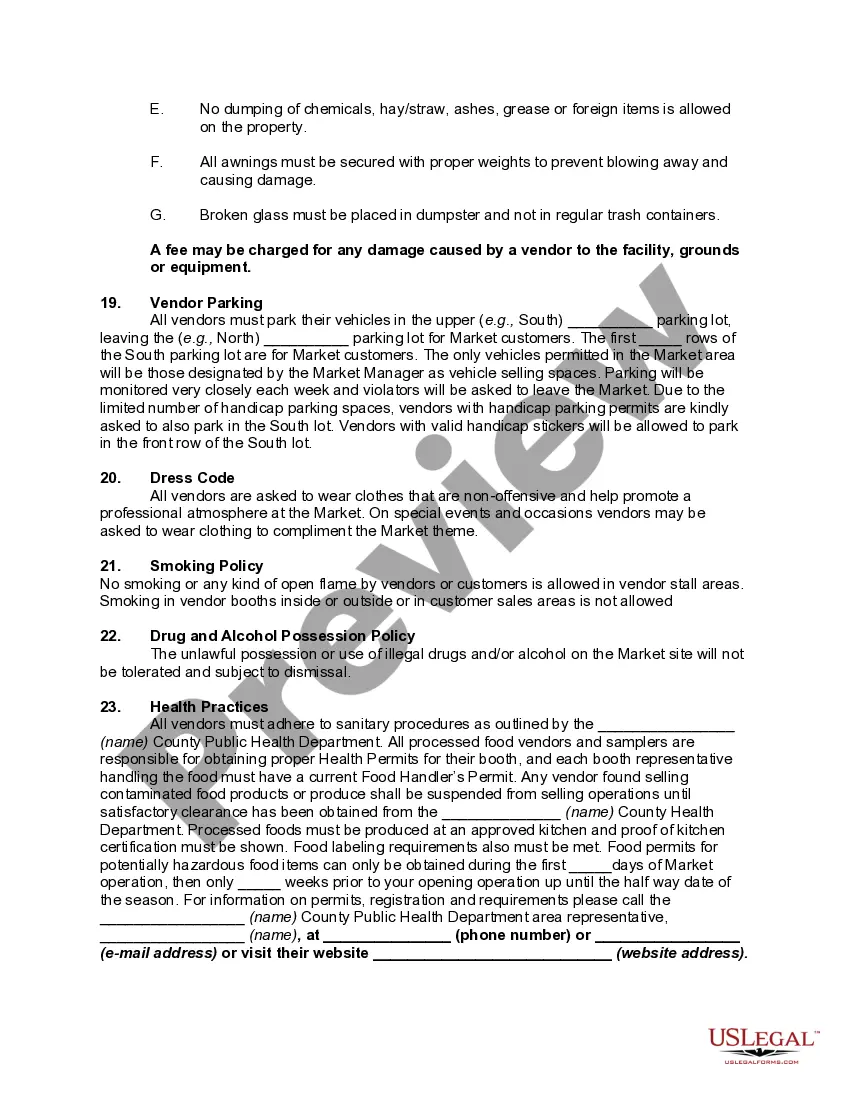
- Rules and regulations: Sets forth the operational guidelines all vendors must adhere to for a successful market experience.
When to use this form
This form is necessary for anyone intending to sell products at a farmers market. Use it when you want to secure a booth for your goods, whether they are farm-fresh produce, handcrafted items, or prepared food. If you are a new vendor or a returning participant seeking to continue selling at the market, completion of this application is required ahead of market dates.
Who this form is for
- Local farmers looking to sell their produce directly to consumers.
- Artisan crafters interested in marketing handmade products to the public.
- Food vendors providing processed or prepared foods.
- Non-profit organizations that wish to host educational booths or fundraising efforts.
- Musicians and performers seeking a venue for local entertainment at the market.
How to complete this form
- Fill out your personal and business information completely, ensuring accuracy.
- Select the type of products you plan to sell, categorizing them according to the guidelines.
- Indicate whether you have the necessary permits and enclose copies of those permits with your application.
- Express your booth location preferences within the provided sections.
- Review the rules and regulations, ensuring that you understand and agree to them before signing.
Does this form need to be notarized?
This form does not typically require notarization unless specified by local law, making it easier for vendors to submit their application and participate without additional steps.
Get your form ready online
Our built-in tools help you complete, sign, share, and store your documents in one place.
Make edits, fill in missing information, and update formatting in US Legal Forms—just like you would in MS Word.
Download a copy, print it, send it by email, or mail it via USPS—whatever works best for your next step.
Sign and collect signatures with our SignNow integration. Send to multiple recipients, set reminders, and more. Go Premium to unlock E-Sign.
If this form requires notarization, complete it online through a secure video call—no need to meet a notary in person or wait for an appointment.
We protect your documents and personal data by following strict security and privacy standards.

Make edits, fill in missing information, and update formatting in US Legal Forms—just like you would in MS Word.

Download a copy, print it, send it by email, or mail it via USPS—whatever works best for your next step.

Sign and collect signatures with our SignNow integration. Send to multiple recipients, set reminders, and more. Go Premium to unlock E-Sign.

If this form requires notarization, complete it online through a secure video call—no need to meet a notary in person or wait for an appointment.

We protect your documents and personal data by following strict security and privacy standards.
Common mistakes to avoid
- Failing to check for required permits before submitting the application.
- Incomplete contact information, making it difficult for the market manager to reach you.
- Not adhering to the specified guidelines regarding product categories.
- Submitting the application without enclosing the required fees or relevant documents.
- Ignoring the rules and regulations, which can lead to disqualification from participation.
Advantages of online completion
- Immediate access: Complete the application at your convenience without needing to visit a physical location.
- Editability: Easily modify any section of the form before submission, ensuring accuracy.
- Time-efficient: Streamlined process saves you time, allowing quicker approval for market participation.
- Secure storage: Your submitted form can be securely stored digitally for your records.
Legal use & context
- This form is used to legally document a vendor's application to participate in a farmers market.
- It serves as an agreement between the vendor and the market regarding operational responsibilities.
- Failure to comply with the rules may result in removal from the market.
Key takeaways
Key points to remember:
- The Farmers Market Application is essential for participating vendors.
- Accurate information and compliance with regulations are critical for approval.
- Approval is based on product quality and adherence to market rules.
- Be mindful of deadlines and fee structures to avoid penalties.
Looking for another form?






Form popularity
FAQ
You're already gardening and growing food, so why not just pack it up and sell it at the farmer's market? If the crowd is large enough and your price your produce correctly, you could make a decent income just selling the typical vegetables and fruits that are found at any farmer's market.
According to this study by NOFA, comparisons of conventionally raised produce on average are priced the same at supermarkets and farmers markets alike.Turns out farmers' markets are actually cheaper (again, on average) than at the grocery store.
Traditional Farming and Produce Sales. The fact that farming would come into play at a farmers market is no surprise. Beekeeping and Honey Sales. Honey is money when it comes to farmers markets. Selling Jams and Jellies.
Determine What You're Going to Sell. Plan Your Stall and Make a Startup Budget. Secure All Necessary Permits and Licenses. Confirm That You Meet Target Markets' Selection Criteria. Get Your Spot at the Market.
A farmers market is a place where farmers come together to sell produce directly to consumers, usually off the back of their trucks. Many markets include fish, meat, and dairy products, as well as fresh fruits and vegetables.By cutting out middlemen, they offer farmers a more profitable way to sell their crops.
Be Out of Season. Wait, what? Pile It High and Kiss It Goodbye. This old saying is a farmer favorite because it's accurate. Have Visible Signs. Use Tablecloths and Tent Canvases. Be Clean and Organized. Stand Up and Greet Customers.
So just because you have access to a farmers market doesn't mean it's the best thing for your business. A farmers market has to be a viable part of your business model. If you're investing five to eight hours every weekend to sell food, it should sell. If it doesn't sell, that's not viable.
STEP 1: Plan your business. STEP 2: Form a legal entity. STEP 3: Register for taxes. STEP 4: Open a business bank account & credit card. STEP 5: Set up business accounting. STEP 6: Obtain necessary permits and licenses. STEP 7: Get business insurance. STEP 8: Define your brand.
Make the plan. As with any business, you'll need to draft a professional business plan to start your market. Divide. Diversify. Location. Make the rules. Follow the law. Get some help.