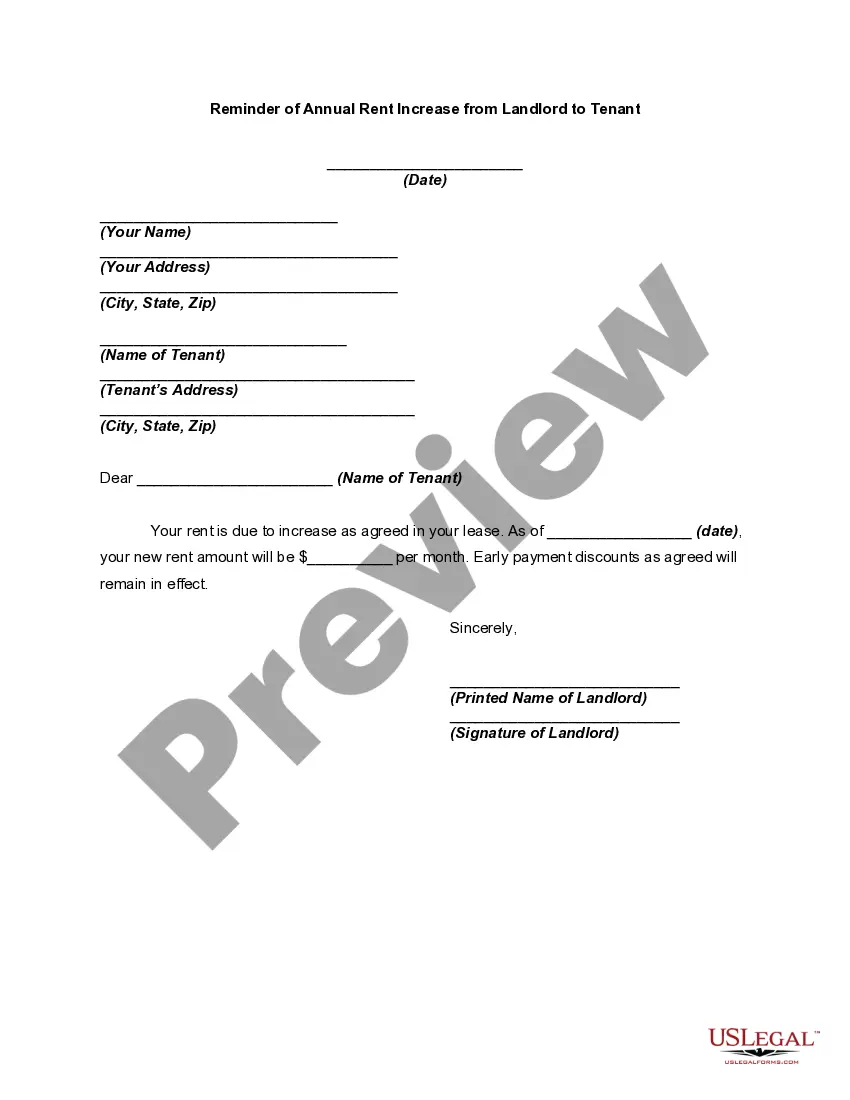
Reminder of Annual Rent Increase from Landlord to Tenant
Understanding this form
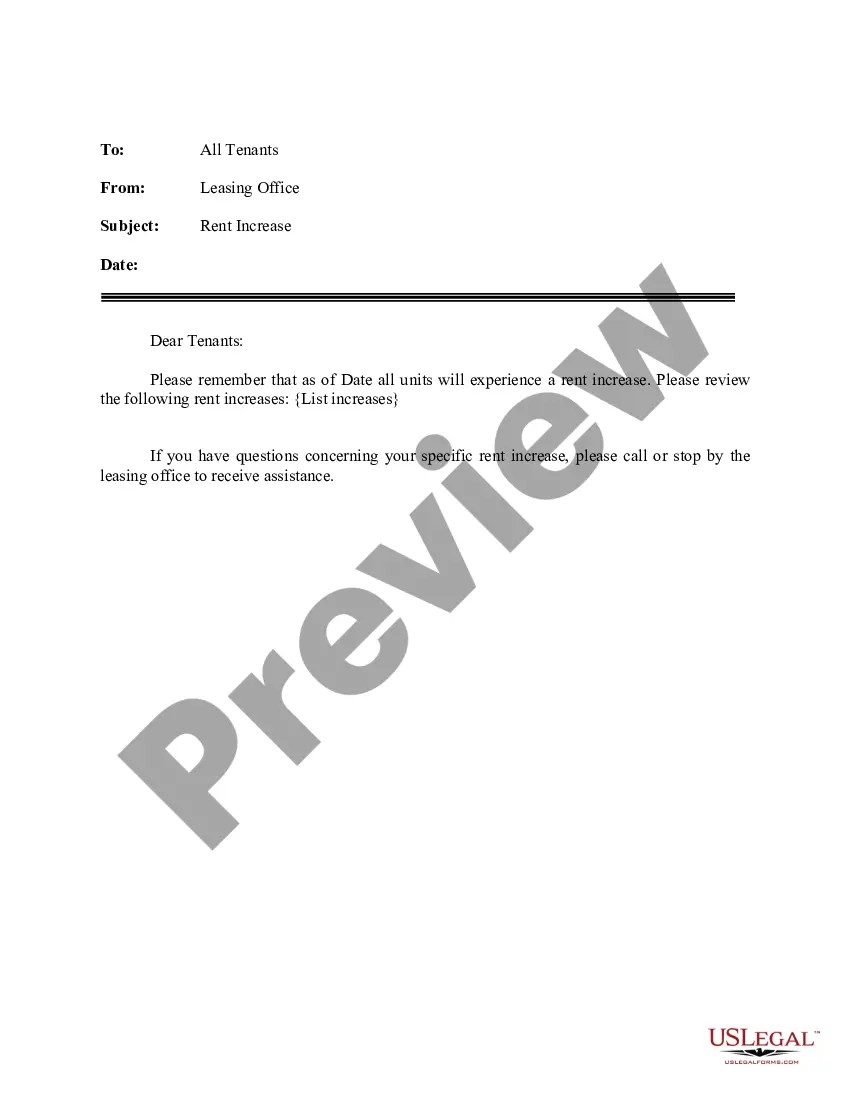
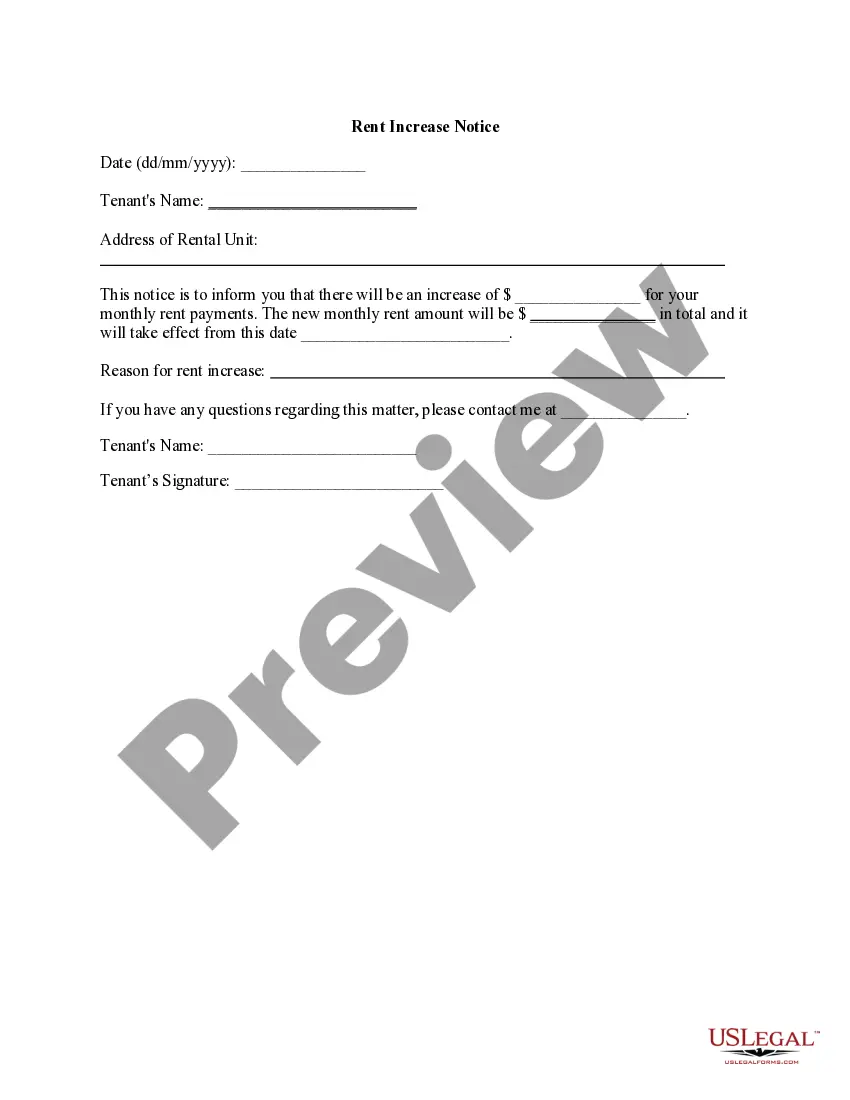
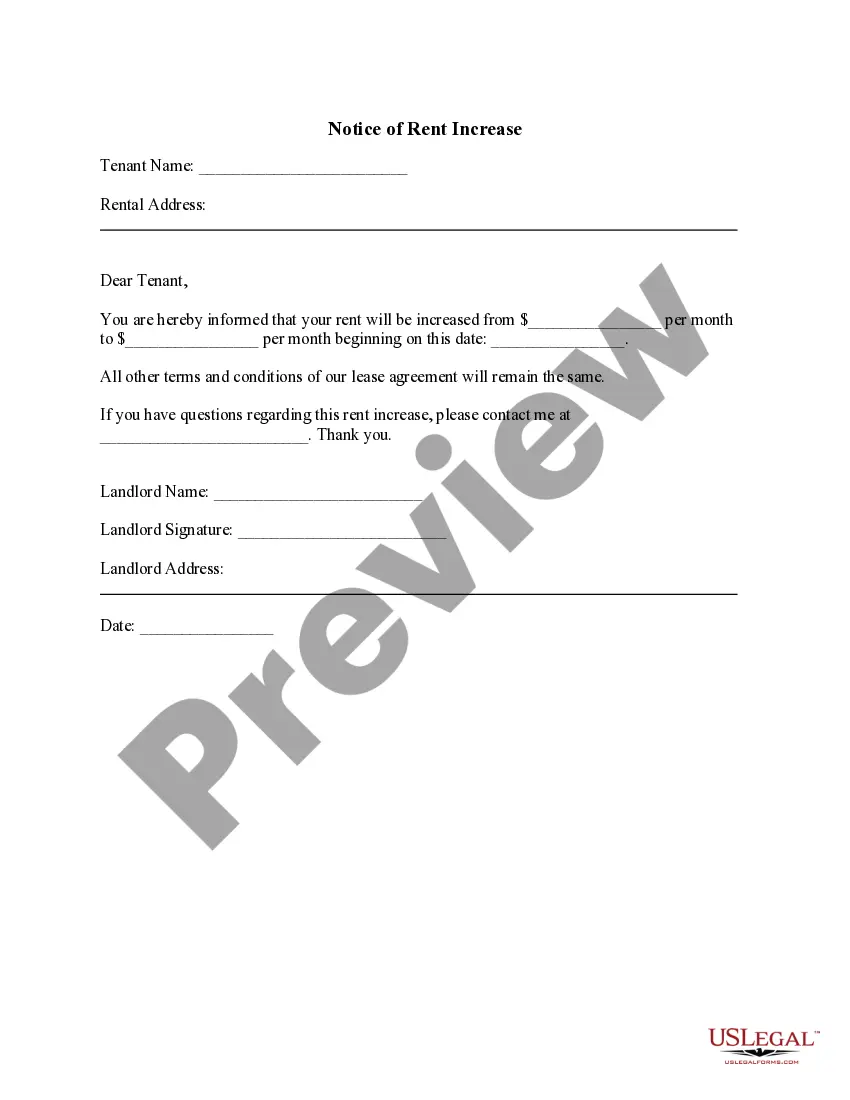
This Reminder of Annual Rent Increase from Landlord to Tenant is a formal notification that informs a tenant about an impending increase in their monthly rent. This document is essential for landlords to maintain transparency and comply with lease agreement terms, ensuring the tenant is aware of their new rent obligations. Unlike other lease forms, this notice specifically addresses rent adjustments, setting it apart in landlord-tenant communications.
Main sections of this form
- Date of the notice.
- Name and address of the landlord.
- Name and address of the tenant.
- Effective date of the new rent increase.
- New monthly rent amount.
- Signature and printed name of the landlord.
When to use this document
This form should be used annually before the rent increase takes effect as per the rental lease agreement. Landlords must provide this reminder to tenants sufficient time in advance, ensuring compliance with state regulations. It is also useful in situations where the landlord wishes to remind the tenant of agreed-upon terms related to rent adjustments.
Who can use this document
- Landlords who have a lease agreement with a tenant.
- Property management companies managing rental properties.
- Individuals renting out residential properties who want to notify tenants of a rent increase.
Steps to complete this form
- Identify and enter the date of the notice at the top of the form.
- Fill in the landlord's name and address details accurately.
- Provide the tenant's name and address as listed in the lease agreement.
- Specify the date on which the new rent amount will take effect.
- Enter the new rent amount that the tenant will be required to pay each month.
- Sign the document and provide your printed name to validate the notice.
Does this form need to be notarized?
This form does not typically require notarization to be legally valid. However, some jurisdictions or document types may still require it. US Legal Forms provides secure online notarization powered by Notarize, available 24/7 for added convenience.
Get your form ready online
Our built-in tools help you complete, sign, share, and store your documents in one place.
Make edits, fill in missing information, and update formatting in US Legal Forms—just like you would in MS Word.
Download a copy, print it, send it by email, or mail it via USPS—whatever works best for your next step.
Sign and collect signatures with our SignNow integration. Send to multiple recipients, set reminders, and more. Go Premium to unlock E-Sign.
If this form requires notarization, complete it online through a secure video call—no need to meet a notary in person or wait for an appointment.
We protect your documents and personal data by following strict security and privacy standards.

Make edits, fill in missing information, and update formatting in US Legal Forms—just like you would in MS Word.

Download a copy, print it, send it by email, or mail it via USPS—whatever works best for your next step.

Sign and collect signatures with our SignNow integration. Send to multiple recipients, set reminders, and more. Go Premium to unlock E-Sign.

If this form requires notarization, complete it online through a secure video call—no need to meet a notary in person or wait for an appointment.

We protect your documents and personal data by following strict security and privacy standards.
Typical mistakes to avoid
- Failing to provide the notice within the required time frame.
- Not including the correct new rent amount or effective date.
- Omitting the landlord's signature or printed name.
- Using outdated or incorrect lease terms as a reference.
Benefits of completing this form online
- Convenience of downloading and filling out the form anytime.
- Editable templates allow customization to individual requirements.
- Access to legally reviewed templates ensures compliance with laws.
Looking for another form?



Form popularity
FAQ
A typical rent increase is around 3-5% annually.
Tenant's name. Property address. Landlord name and contact information. Date the letter is written. Date the rent increase will take effect. Amount of rent increase. Current cost of rent.
Your landlord can't increase your rent during your fixed term unless you agree or your agreement allows it. If your agreement says your rent can be increased it has to say when and how it will be done. This is known as having a 'rent review clause'.
The name of your tenant. The date. The property address. The lease expiration date. The date the rent increase will take effect. The amount of the increase. The current rental amount. Date the new rent will be due.
In most states, a landlord must give tenants notice at least 30 days before they'll enforce a rent increase. However, in other states like California, the notice can increase to 60 days' notice if the increase is more than 10% of the current rent rate.
Remember you're a business. Do your research. Raise the rent all at once or incrementally. Don't negotiate or ask tenants what they think a fair rent increase would be. Be courteous and firm. Find a template you like. Send a formal letter by certified mail. Give the tenant notice.
Your landlord can legally raise your rent. CoStar Group reports that the average rent increase is 3.18% each year. There are reasons (some out of his/her control) why a landlord might increase the rent for his or her apartments, including: Inflation.
Equally, a landlord can choose to increase rents at market value at any time on a periodic tenancy as long as they give one month's notice, or in cases where you pay rent yearly six months notice. It must also be restricted to only once a year without the agreement of the tenant.
For a periodic tenancy (rolling on a week-by-week or month-by-month basis) your landlord cannot normally increase the rent more than once a year without your agreement. For a fixed-term tenancy (running for a set period) your landlord can only increase the rent if you agree.