Sample Letter for Denial of Request for Quarterly Billing
What this document covers
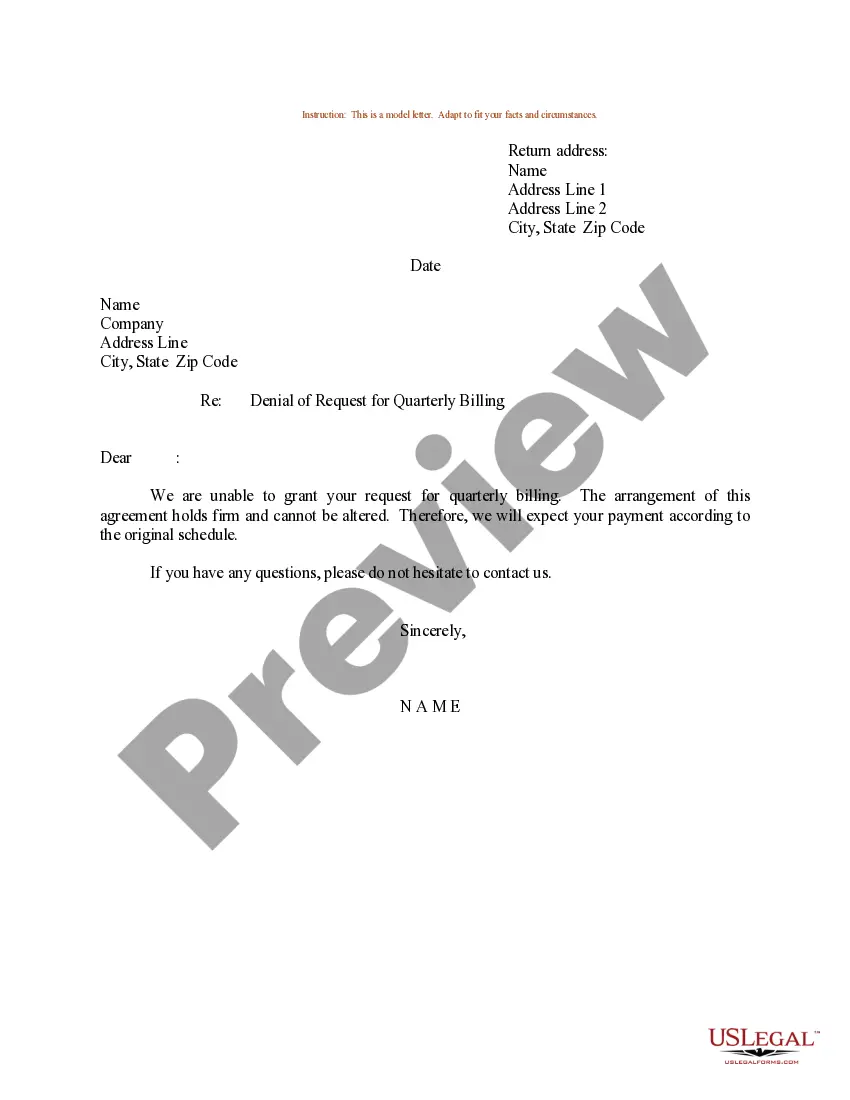
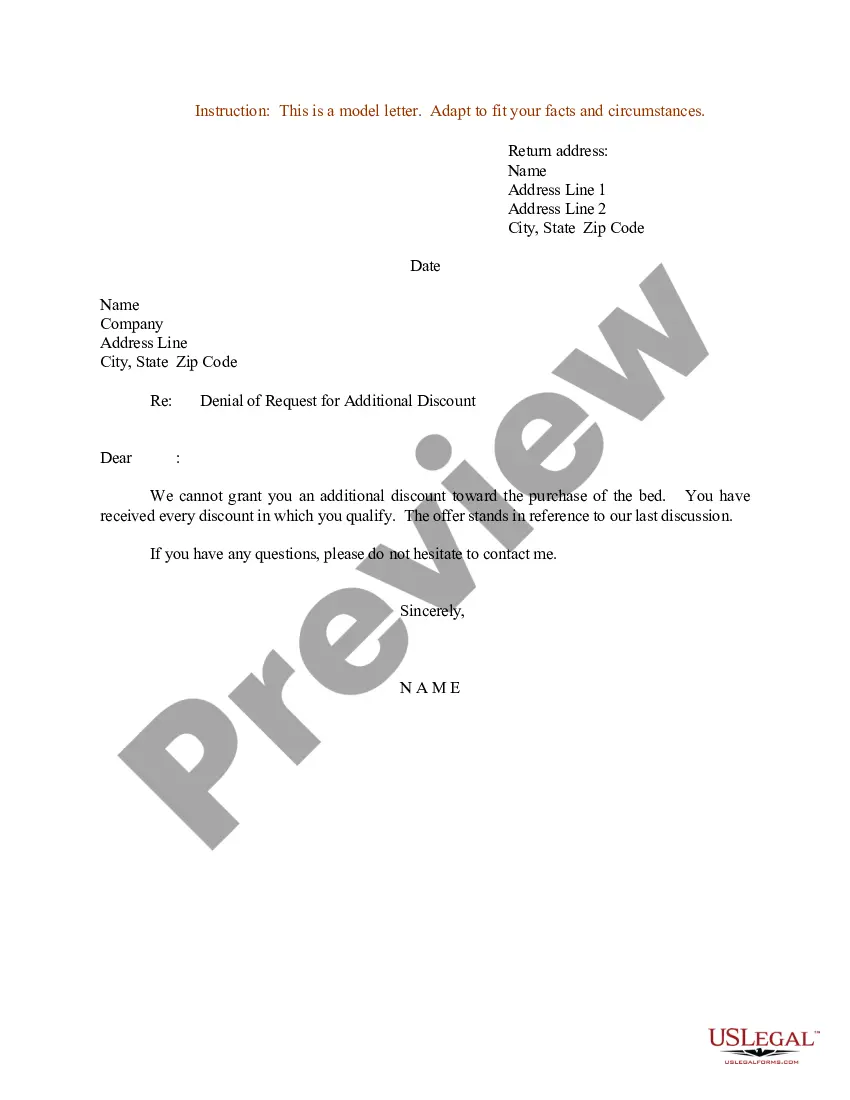
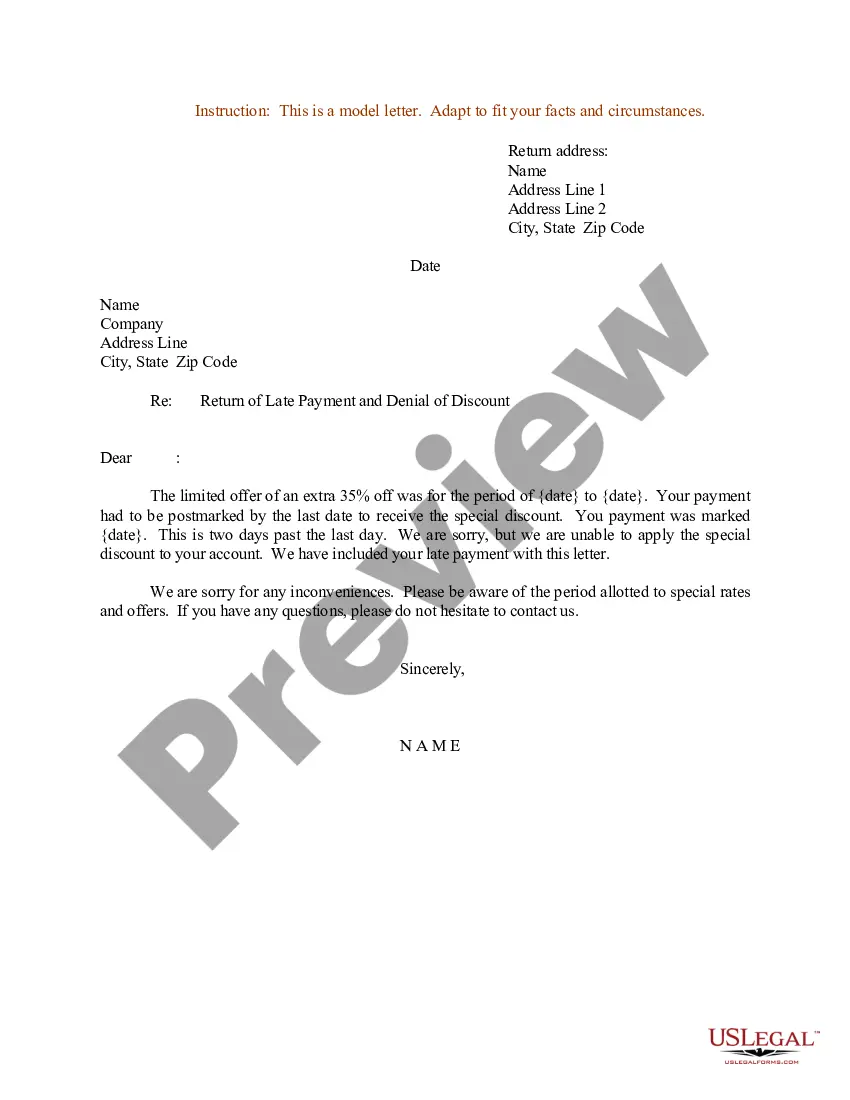
The Sample Letter for Denial of Request for Quarterly Billing is a template designed to assist businesses or individuals in formally declining a request for quarterly billing terms. This letter serves as a clear communication tool, differentiating it from standard rejection letters by focusing specifically on billing arrangements. It ensures that the recipient understands the decision while maintaining a professional tone.
Main sections of this form
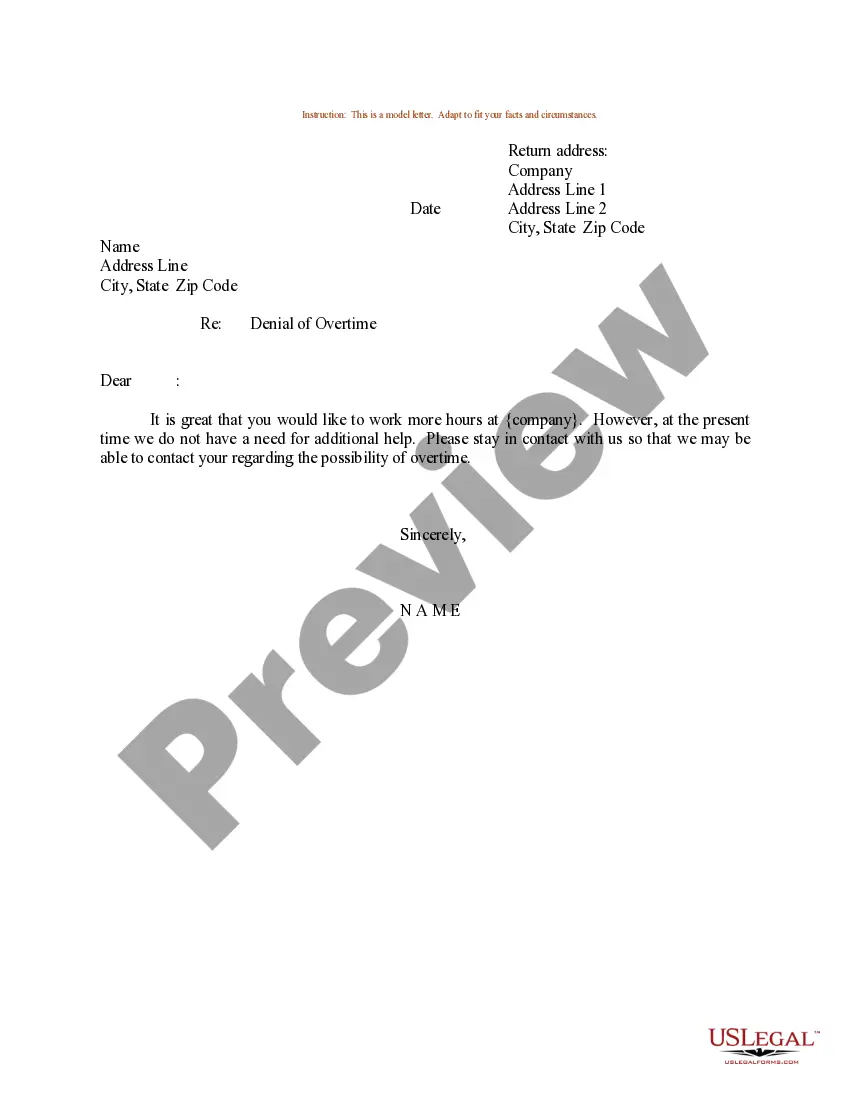
- Return address: Includes your name and contact details.
- Date: The date when the letter is sent.
- Recipient's address: Name and address of the person or company receiving the letter.
- Subject line: Clearly states the purpose, indicating it's a denial of the billing request.
- Closing signature: A space for your name to provide a personal touch.
Situations where this form applies
This form is typically used when a request for quarterly billing terms is deemed unsuitable. Scenarios may include when a service agreement specifies different payment terms or when a client has not met eligibility for this billing frequency. Itâs essential to communicate this denial clearly to maintain professional relationships and avoid misunderstandings.
Who should use this form
- Business owners who receive requests for different billing arrangements.
- Managers in companies with specific payment policies.
- Individuals handling billing matters for self-owned services or products.
Instructions for completing this form
- Identify the parties involved by entering your name and address at the top.
- Enter the date the letter is being sent.
- Fill in the recipientâs name and address accurately to ensure proper delivery.
- Clearly state the subject of the letter to highlight the purpose of your communication.
- Sign the letter with your name, confirming your position and authority in the matter.
Notarization guidance
This form does not typically require notarization unless specified by local law. However, having a witness for correspondence can enhance the professionalism of the communication.
Get your form ready online
Our built-in tools help you complete, sign, share, and store your documents in one place.
Make edits, fill in missing information, and update formatting in US Legal Forms—just like you would in MS Word.
Download a copy, print it, send it by email, or mail it via USPS—whatever works best for your next step.
Sign and collect signatures with our SignNow integration. Send to multiple recipients, set reminders, and more. Go Premium to unlock E-Sign.
If this form requires notarization, complete it online through a secure video call—no need to meet a notary in person or wait for an appointment.
We protect your documents and personal data by following strict security and privacy standards.

Make edits, fill in missing information, and update formatting in US Legal Forms—just like you would in MS Word.

Download a copy, print it, send it by email, or mail it via USPS—whatever works best for your next step.

Sign and collect signatures with our SignNow integration. Send to multiple recipients, set reminders, and more. Go Premium to unlock E-Sign.

If this form requires notarization, complete it online through a secure video call—no need to meet a notary in person or wait for an appointment.

We protect your documents and personal data by following strict security and privacy standards.
Common mistakes
- Forgetting to include the date of the letter.
- Incorrectly addressing the recipient, which can lead to confusion.
- Using a vague subject line that does not specify the purpose of the letter.
Advantages of online completion
- Convenience: Easily fill out and download the form from anywhere.
- Editability: Customize the letter to fit your specific situation.
- Reliability: Ensure that the letter is legally sound and professionally structured.
Quick recap
- The Sample Letter for Denial of Request for Quarterly Billing is essential for clear communication regarding billing requests.
- Always provide a reason for the denial to maintain professionalism.
- This template is adaptable for use in multiple states without specific legal variations.
Looking for another form?
Form popularity
FAQ
Let the candidate know ASAP. Many hiring managers wait until the end of the hiring process before they notify unsuccessful candidates. Pick up the phone. Keep it brief. Personalize, personalize, personalize. Be honest. Ask for feedback.
Get straight to the point. Give them feedback. Let the candidate know that there may still be a chance. Wish them good luck. Send it as soon as possible. Write different rejection letters for each stage in the hiring process. Keep it personal. Thank the candidate.
A thank you Always thank an applicant for their interest in the company and any time they spent completing an application or interviewing with staff. Personalization. Use the applicant's first name and the title of the position. Feedback. Invitation to apply again.
Write the pertinent details such as the name of applicant, date, and address at the upper part of the letter. Specify the request which you are disapproving. Enumerate through narration or in bulleted form the specific requirements which the applicant have failed to adequately meet.
Always thank the reader. Notice how Michael begins the sentence by thanking her for her proactiveness in following up on her previous request. State what you can do. Reaffirm your answer at the end of the email.
Respond by first restating the original request to prevent confusion. Be specific about the reason the request has been denied and offer an alternative if applicable, such as a different date when an absence would be feasible. Use polite and professional language. Being blunt could cause undue offence.
Let the candidate know ASAP. Many hiring managers wait until the end of the hiring process before they notify unsuccessful candidates. Pick up the phone. Keep it brief. Personalize, personalize, personalize. Be honest. Ask for feedback.
Respond by first restating the original request to prevent confusion. Be specific about the reason the request has been denied and offer an alternative if applicable, such as a different date when an absence would be feasible. Use polite and professional language. Being blunt could cause undue offence.