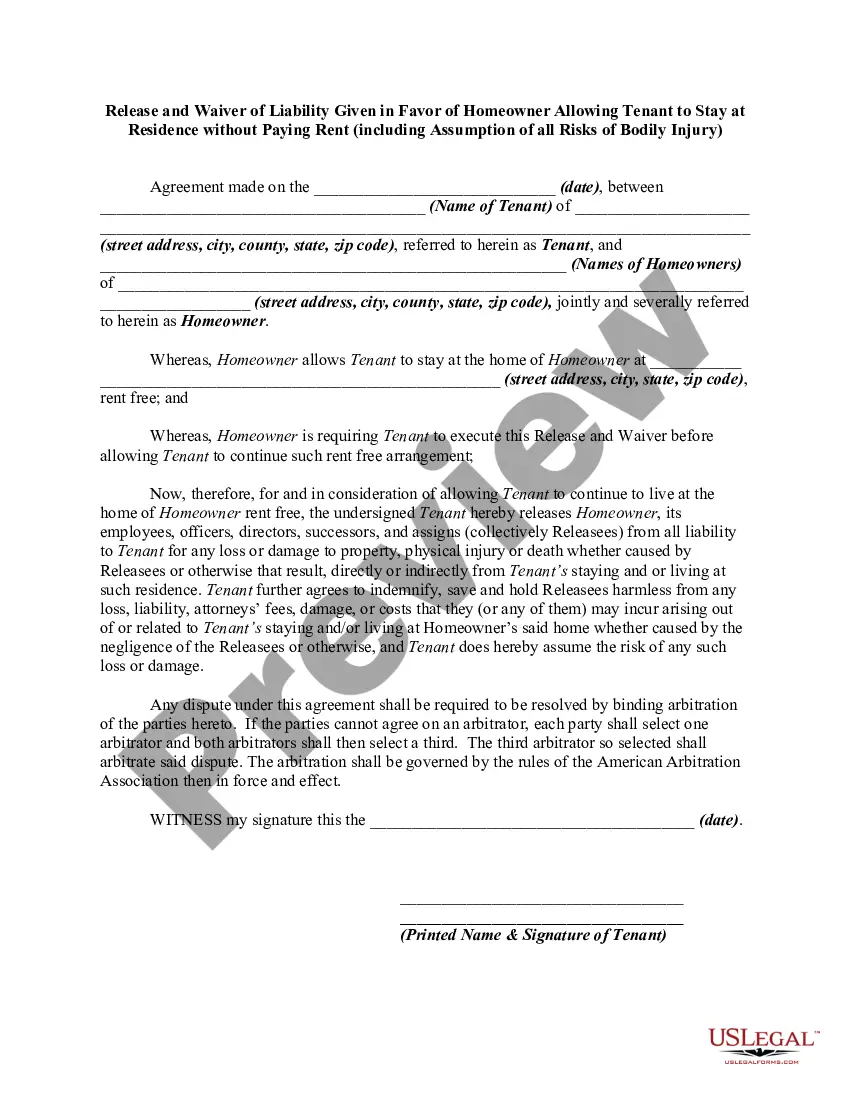
Release and Waiver of Liability Given in Favor of Homeowner Allowing Tenant to Stay at Residence without Paying Rent including Assumption of all Risks of Personal Bodily Injury
What is this form?
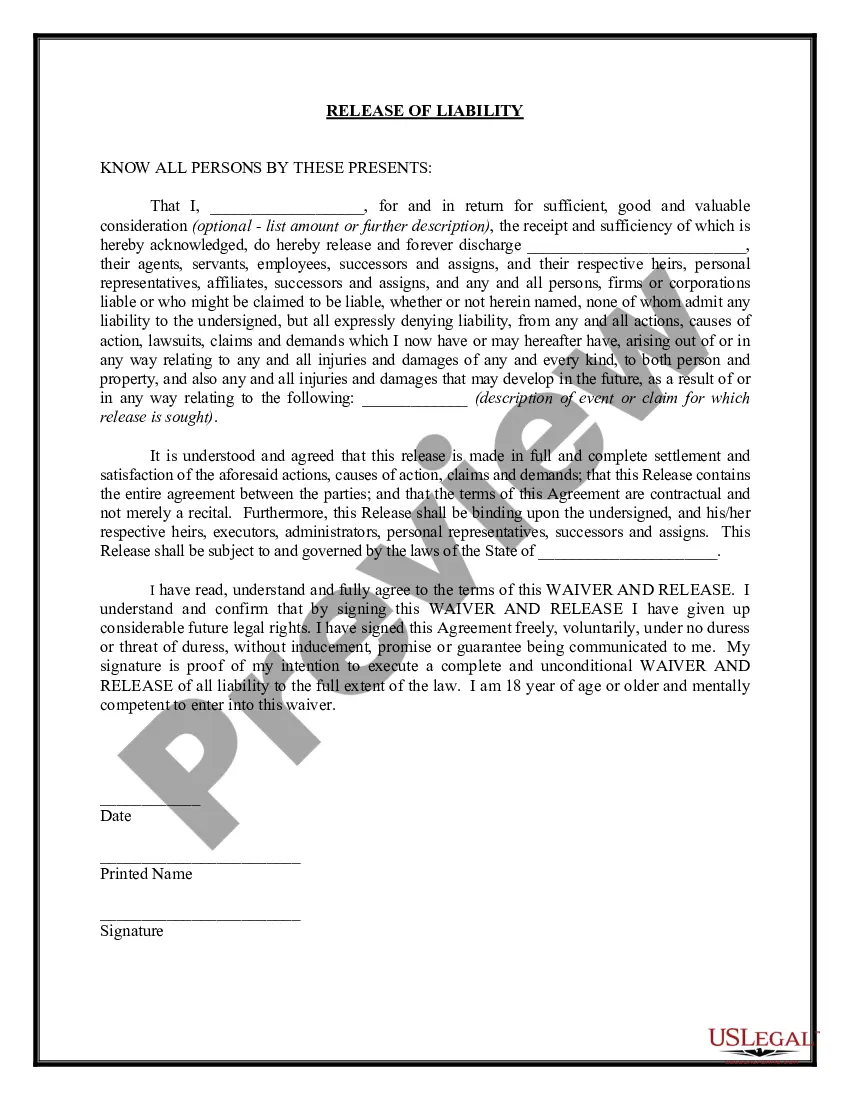
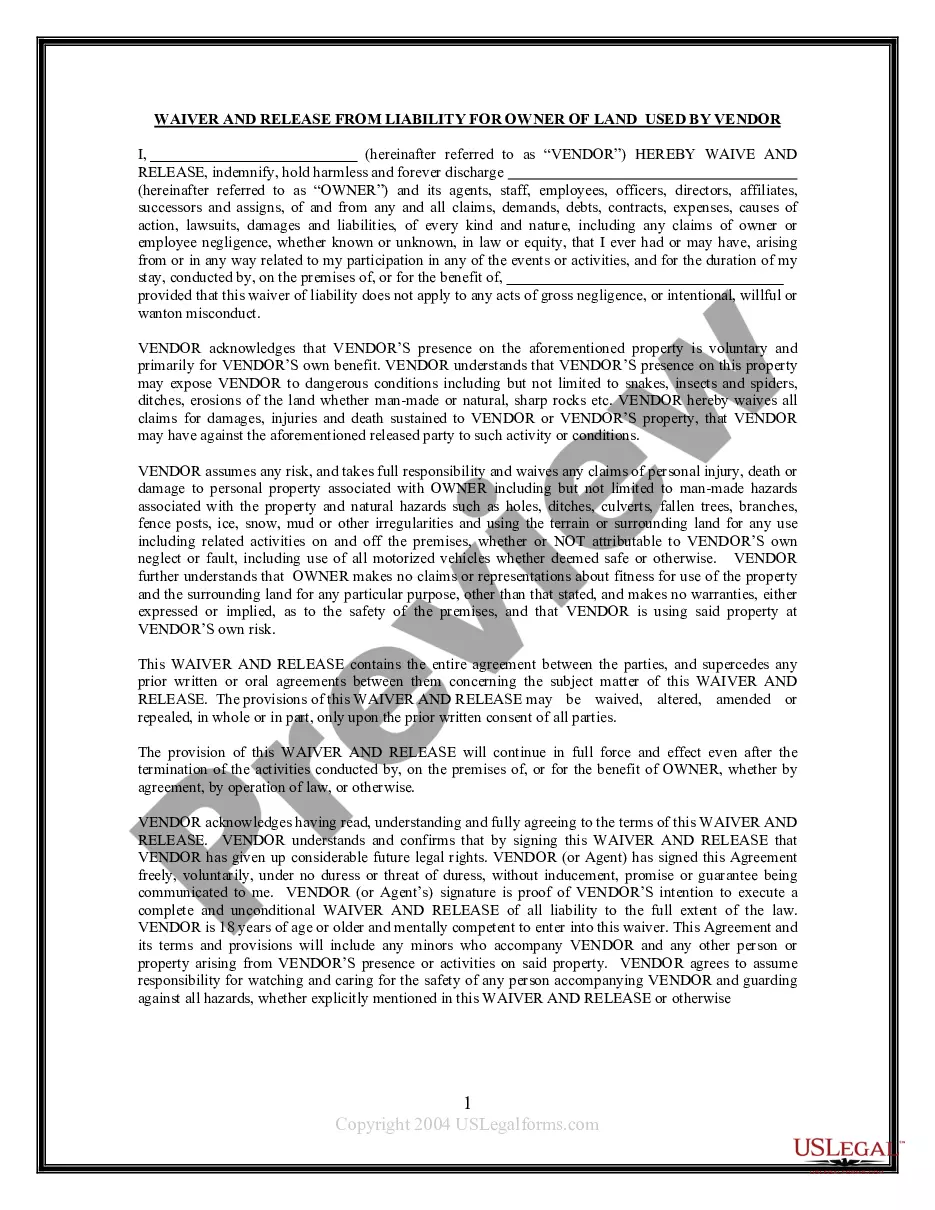
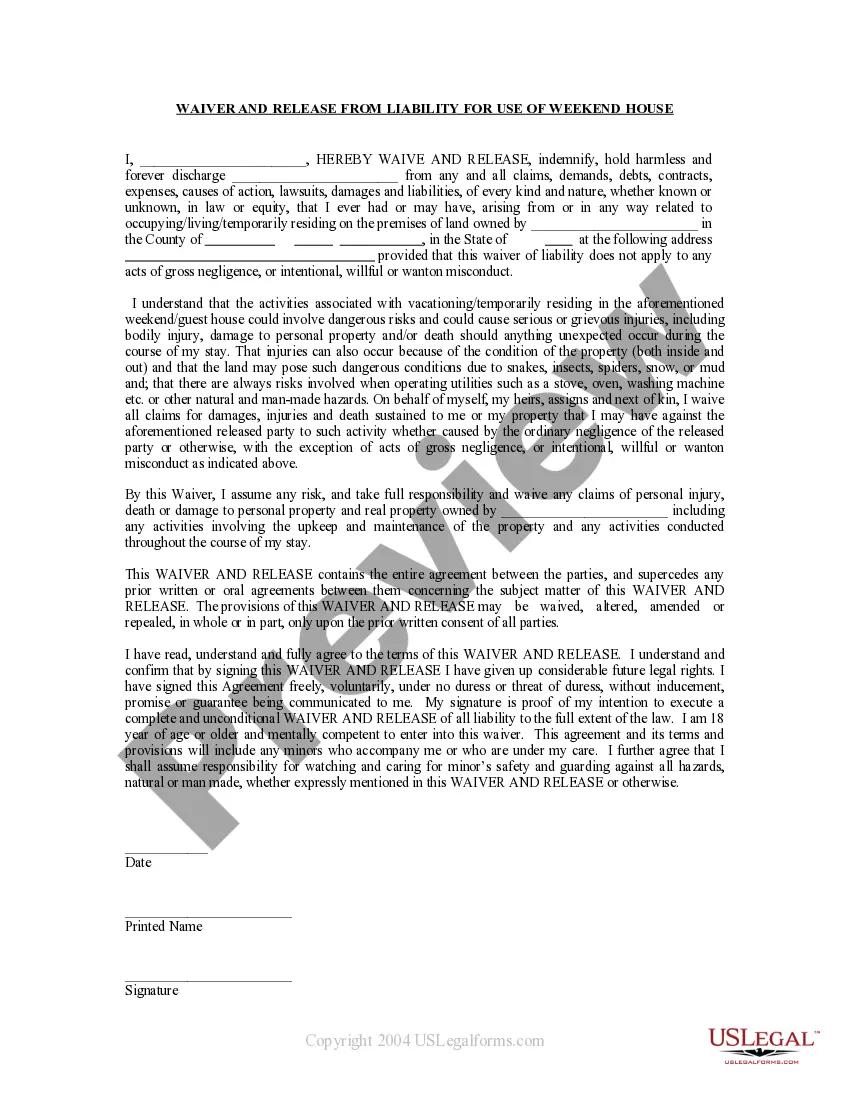
This Release and Waiver of Liability is a legal document that protects a homeowner from claims or lawsuits arising from a tenant staying at their residence rent-free. By signing this form, the tenant agrees to release the homeowner from liability for personal injuries or damages that may occur while they live in the home. This form differs from other agreements, such as rental contracts, by specifically addressing the waiver of legal claims in situations where no rent is being paid. It is essential for both parties to understand the risks and their rights before entering into this agreement.
Main sections of this form
- Identification of the parties: Names and addresses of the homeowner and tenant.
- Property description: The address of the residence where the tenant will stay.
- Liability waiver: Tenant releases the homeowner from claims related to injuries or damages.
- Indemnification clause: Tenant agrees to protect the homeowner from any losses or legal fees incurred.
- Arbitration agreement: Details on how disputes will be resolved through binding arbitration.
- Signature section: Spaces for the tenant's printed name and signature, along with the date.
When to use this document
This form should be used when a homeowner allows a tenant to stay at their property without paying rent. It is particularly important in situations where the homeowner wants to ensure legal protection against potential liabilities resulting from the tenant's stay. Scenarios might include family members or friends who need temporary housing but may not have the means to pay rent, or when a homeowner wants to avoid future disputes over liability while the tenant occupies their home.
Who should use this form
This form is intended for:
- Homeowners providing rent-free housing to tenants.
- Tenants who are receiving temporary housing without rent obligations.
- Legal representatives assisting clients in drafting liability waivers related to housing arrangements.
Completing this form step by step
- Identify the parties: Enter the names and addresses of both the homeowner and the tenant.
- Specify the property: Clearly state the address of the residence where the tenant will live rent-free.
- Include the date: Write the date of the agreement to indicate when it takes effect.
- Review the liability waiver: Ensure the tenant understands the implications of waiving liability.
- Sign and date: The tenant must print their name and sign the document, along with the date.
Is notarization required?
Notarization is generally not required for this form. However, certain states or situations might demand it. You can complete notarization online through US Legal Forms, powered by Notarize, using a verified video call available anytime.
Get your form ready online
Our built-in tools help you complete, sign, share, and store your documents in one place.
Make edits, fill in missing information, and update formatting in US Legal Forms—just like you would in MS Word.
Download a copy, print it, send it by email, or mail it via USPS—whatever works best for your next step.
Sign and collect signatures with our SignNow integration. Send to multiple recipients, set reminders, and more. Go Premium to unlock E-Sign.
If this form requires notarization, complete it online through a secure video call—no need to meet a notary in person or wait for an appointment.
We protect your documents and personal data by following strict security and privacy standards.

Make edits, fill in missing information, and update formatting in US Legal Forms—just like you would in MS Word.

Download a copy, print it, send it by email, or mail it via USPS—whatever works best for your next step.

Sign and collect signatures with our SignNow integration. Send to multiple recipients, set reminders, and more. Go Premium to unlock E-Sign.

If this form requires notarization, complete it online through a secure video call—no need to meet a notary in person or wait for an appointment.

We protect your documents and personal data by following strict security and privacy standards.
Common mistakes
- Failing to include both parties' correct names and addresses.
- Omitting the property address, which is crucial for clarity.
- Not having the tenant sign and date the form.
- Neglecting to explain the liability waiver clearly to the tenant.
- Forgetting to include an arbitration clause, which may lead to disputes on how to resolve conflicts.
Benefits of completing this form online
- Immediate access to a professionally drafted legal document.
- Easy to edit and customize according to specific needs.
- Convenient download and print options for quick use.
- Cost-effective solution compared to hiring a lawyer for simple agreements.
Legal use & context
- This release and waiver is legally binding once signed by the tenant.
- The form can help prevent future legal disputes between the homeowner and tenant regarding liability.
- It's crucial to ensure that both parties clearly understand the terms of the waiver before signing.
Main things to remember
- The form protects homeowners from liability when allowing tenants to stay rent-free.
- It is important to clearly define the roles and responsibilities of both parties.
- Ensure compliance with local regulations to maintain the enforceability of the document.
Looking for another form?
Form popularity
FAQ
A release of liability or an exculpatory clause states that you are willing to release a party of its legal obligation to another. The typical waiver might be something you are required to sign before you can participate in something, such as the case with the 24-Hour Fitness lawsuit.
A waiver is a legal agreement the primary purpose of which is to let you or another party modify or relinquish a right, privilege, or claim. The agreement can be a separate document on its own, such as if you sign a waiver form, or added to a contract as a waiver clause.
A liability waiver, or release waiver, is a legal document that a company or organization requires members of the public to sign in order to protect their organization from being sued if you sustain an injury.Depending on the facts of your case, you may still be able to file a lawsuit and recover damages.
In many cases, the waiver is not enforceable.If you've been injured due to negligent actions, you can sue even if you signed a waiver. Winning a lawsuit concerning negligence is not uncommon. Many celebrities have sued for negligence even though they signed documents stating they understood the risks.
A liability waiver, or release of liability, is a legal document that a company or organization has you sign in order to protect them from being sued in the event that you are injured.
A property damage loss waiver (PDLW ) program is a damage liability option that provides multifamily property owners and managers financial protection if a participating resident negligently causes damages or losses to the community or building.
A waiver explained A release form or a waiver is simply a legal document containing an agreement between two parties. The first party is the releasor (person promising not to sue) and the releasee (the party that is reliable).
Simply put, waivers don't always protect against a lawsuit. Different states have different laws regarding waivers and their ability to completely protect against litigation. Whether a waiver is sufficient to provide protection against a trainer's liability varies from state to state and, often, case to case.
In California, a liability waiver must be clear, unambiguous, and explicit. In other words, waivers cannot be printed in faded ink, in small font, on the back of a paper, or in an otherwise ambiguous form. If the waiver that you sign is not represented clearly, it may not hold up in the event of a lawsuit.