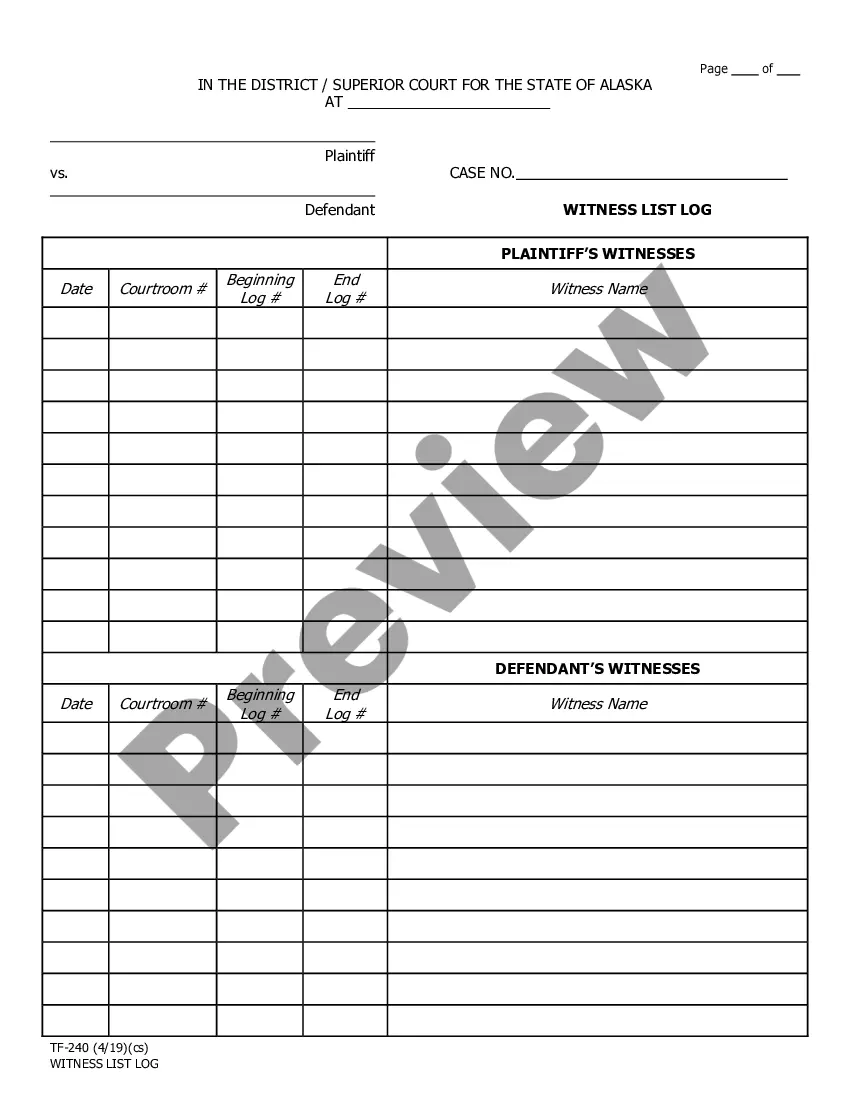
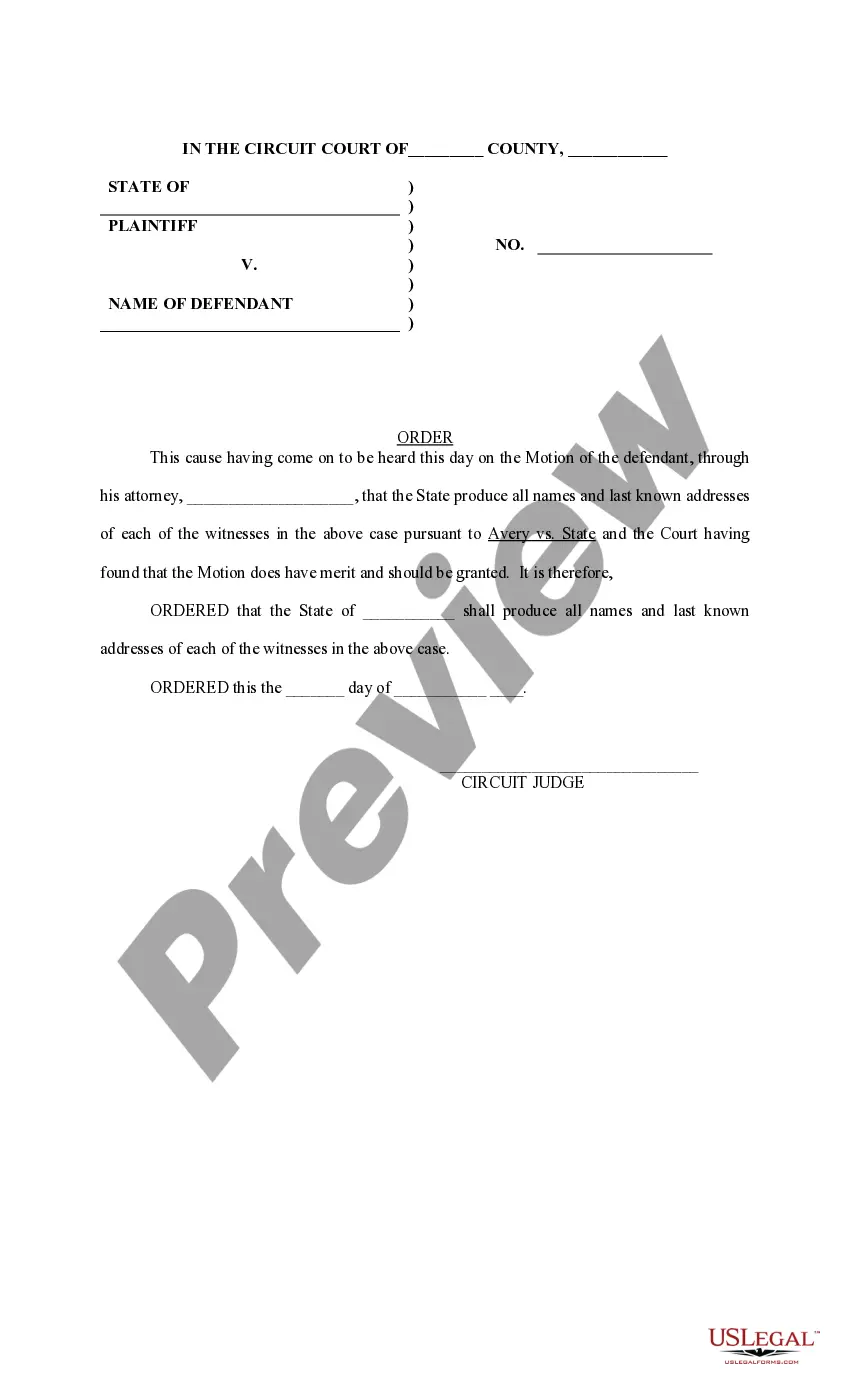
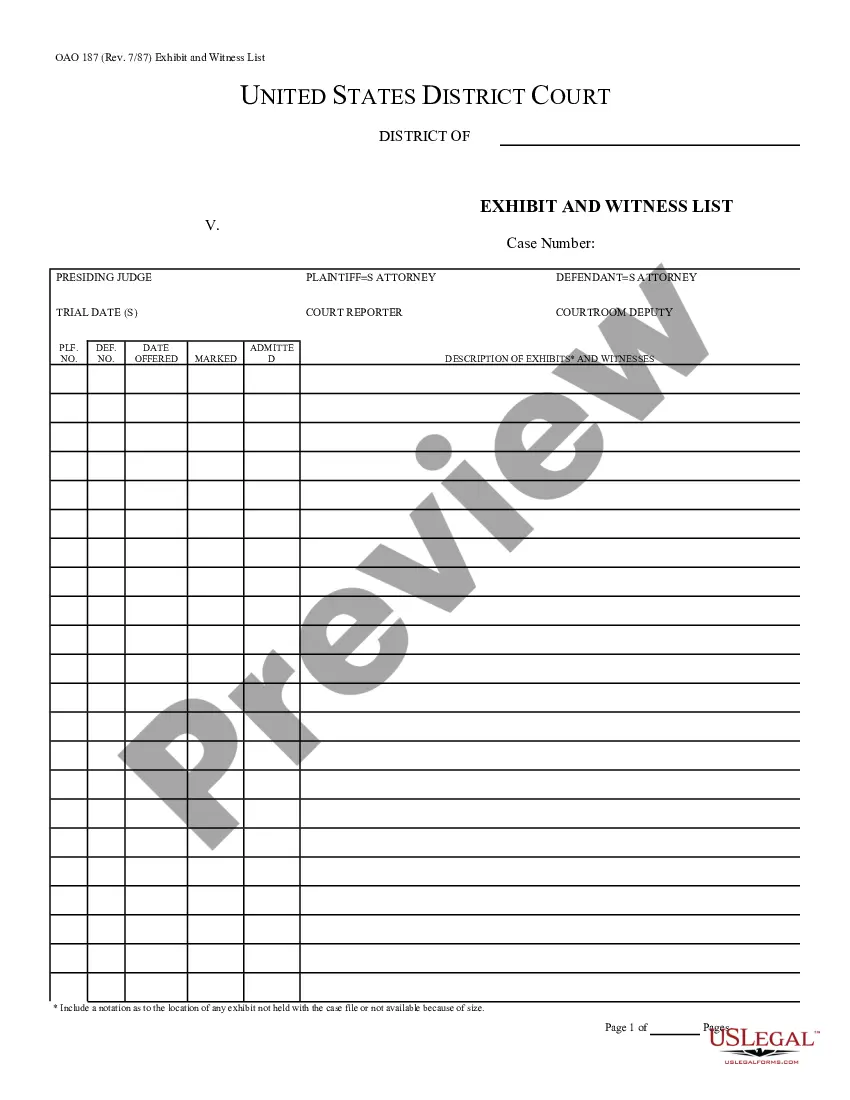
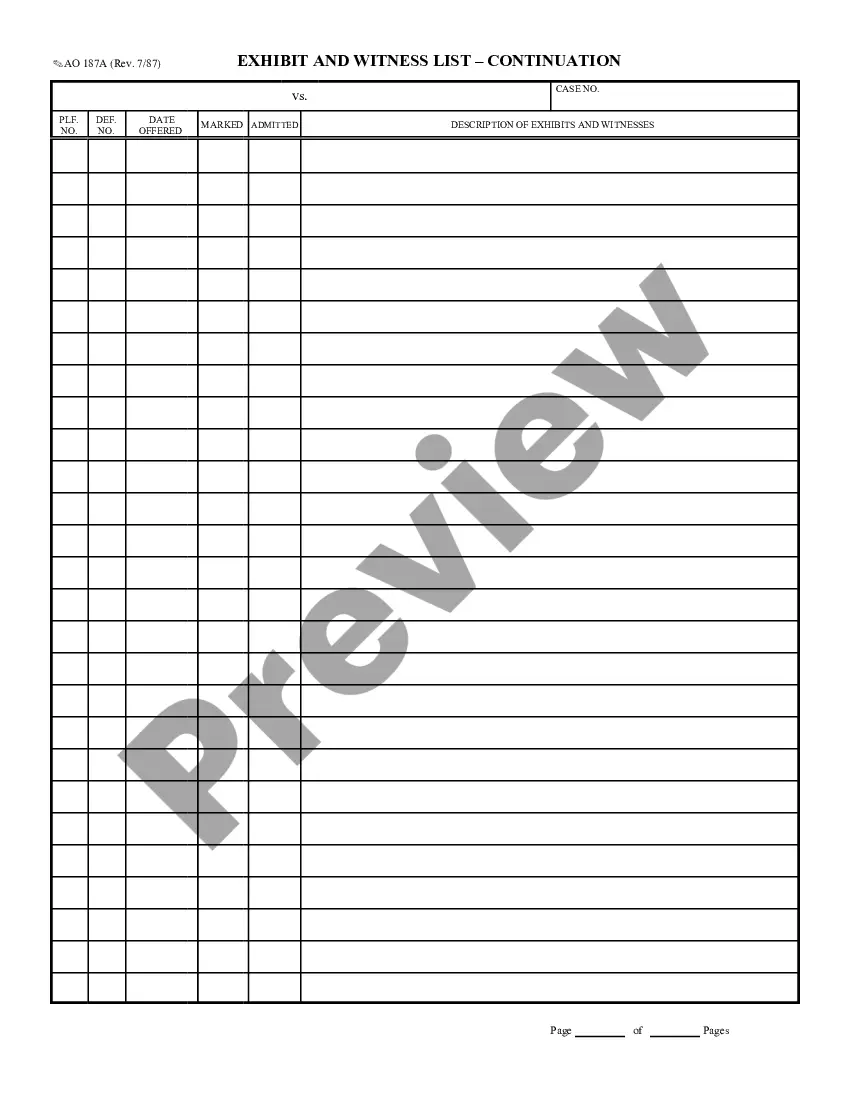
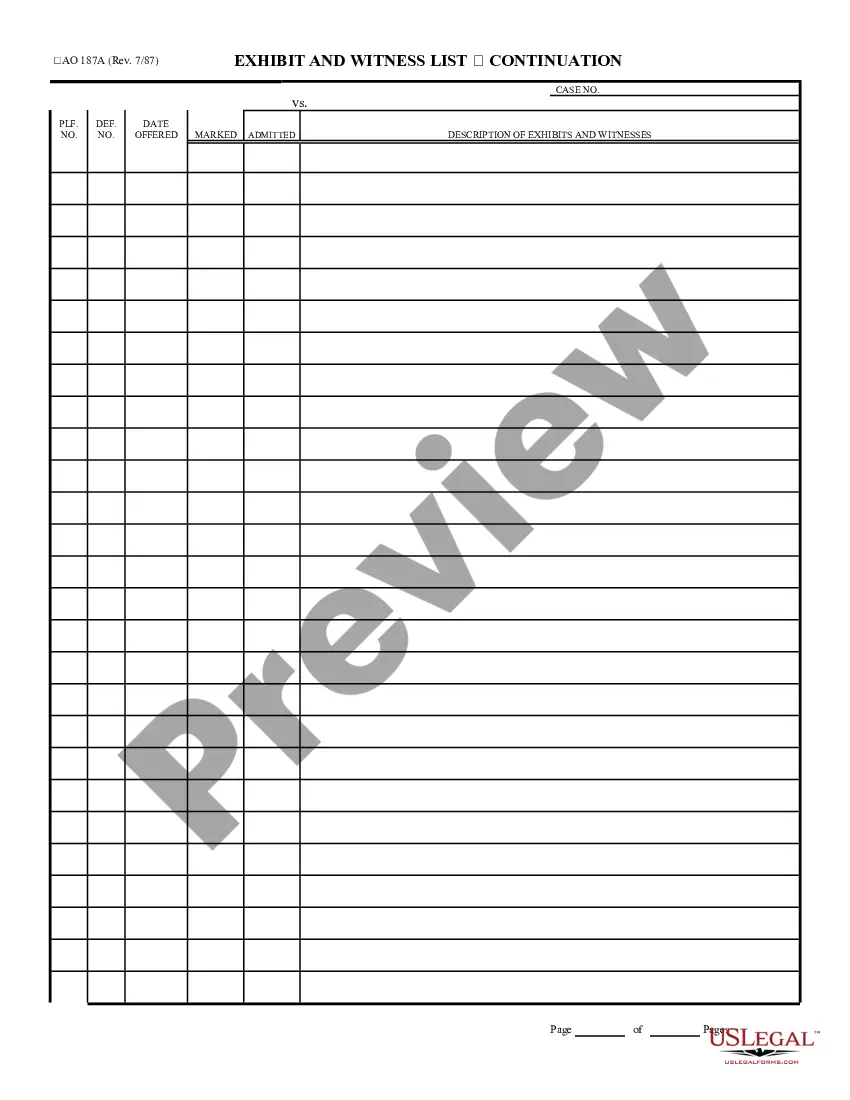
Witness List, is an official form from the Alaska Court System, which complies with all applicable laws and statutes. USLF amends and updates the forms as is required by Alaska statutes and law.
Alaska Witness List
Instant download
This website is not affiliated with any governmental entity
Public form
Description
Get your form ready online
Our built-in tools help you complete, sign, share, and store your documents in one place.
Built-in online Word editor
Make edits, fill in missing information, and update formatting in US Legal Forms—just like you would in MS Word.
Export easily
Download a copy, print it, send it by email, or mail it via USPS—whatever works best for your next step.
E-sign your document
Sign and collect signatures with our SignNow integration. Send to multiple recipients, set reminders, and more. Go Premium to unlock E-Sign.
Notarize online 24/7
If this form requires notarization, complete it online through a secure video call—no need to meet a notary in person or wait for an appointment.
Store your document securely
We protect your documents and personal data by following strict security and privacy standards.

Make edits, fill in missing information, and update formatting in US Legal Forms—just like you would in MS Word.

Download a copy, print it, send it by email, or mail it via USPS—whatever works best for your next step.

Sign and collect signatures with our SignNow integration. Send to multiple recipients, set reminders, and more. Go Premium to unlock E-Sign.

If this form requires notarization, complete it online through a secure video call—no need to meet a notary in person or wait for an appointment.

We protect your documents and personal data by following strict security and privacy standards.
Looking for another form?



How to fill out Alaska Witness List?
Utilizing Alaska Witness List templates designed by expert attorneys helps you avoid complications when completing paperwork.
Simply download the template from our site, fill it in, and ask a legal expert to review it.
This can save you significantly more time and expenses compared to having a lawyer draft a document from scratch for you.
Minimize the time spent on filling out forms with US Legal Forms!
- If you already possess a US Legal Forms subscription, just Log In to your account and go back to the sample page.
- Locate the Download button next to the template you are examining.
- After downloading a file, you can find all your saved templates in the My documents section.
- If you do not have a subscription, it's not an issue.
- Follow the steps below to register online, obtain, and fill out your Alaska Witness List template.
- Ensure you are downloading the correct state-specific form.
Form popularity
FAQ
Witnesses: As a general rule, witnesses are not permitted to watch court proceedings.Victims that are testifying at the trial: although victims have a right to attend public court proceedings, they lose this right if a judge decides that the victim's testimony would be affected by hearing other testimony at the trial.
The order of examination is laid down under section 138 which states that: Witnesses shall be first examined-in-chief, then (if the adverse party so desires) cross-examined, and finally (if the party calling him so desires) re-examined.
Court procedure In a court proceeding, a witness may be called (requested to testify) by either the prosecution or the defense. The side that calls the witness first asks questions in what is called direct examination. The opposing side then may ask their own questions in what is called cross-examination.
An exhibit list is a court document that lists all the exhibits that you intend to (or may) use at trial.
Although the process might be different from state to state and from court to court, in most courts, you will let the judge know who it is that you want to call to come and testify by saying Your Honor, I call my first witness, Jane Doe. Then, the court officer will generally go into the waiting room to alert the
As part of the discovery process, the parties can usually ask each other to identify any witnesses who saw incidents that occurred or who have other relevant information.In other cases, you will have to request a witness list during discovery.
There are three Stages of Examination of Witness, Examination-in-chief, Cross-Examination and Re-examination.
A lay witness the most common type is a person who watched certain events and describes what they saw. An expert witness is a specialist someone who is educated in a certain area. A character witness is someone who knew the victim, the defendant, or other people involved in the case.
In the United States, such a witness is "more than likely to be true based on his/her experience, knowledge, training and appearance of honesty and forthrightness...." Some factors for determining the credibility of testimony in U.S. courts include: (1) the witness had personal knowledge, (2) he or she was actually