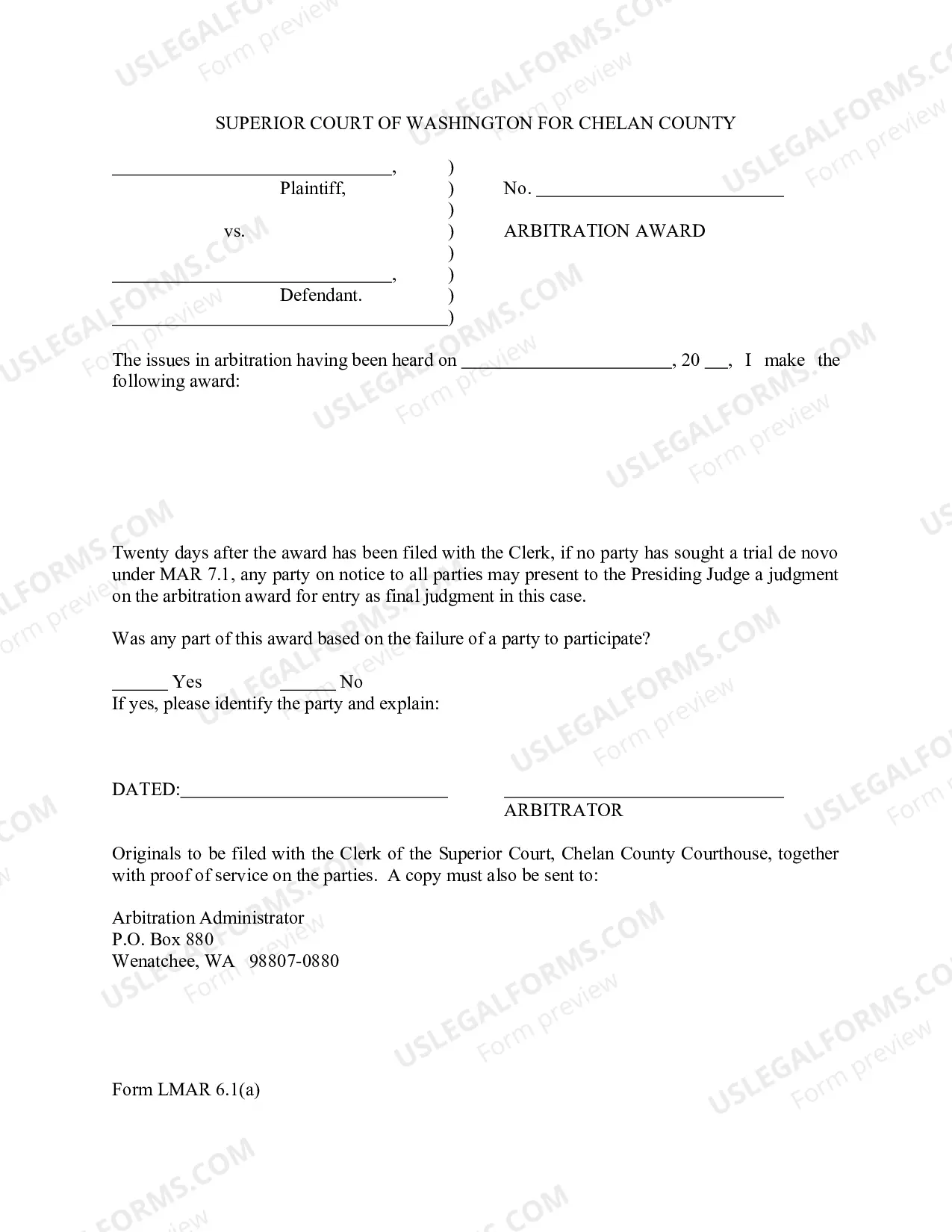
Witness Questionnaire
Overview of this form
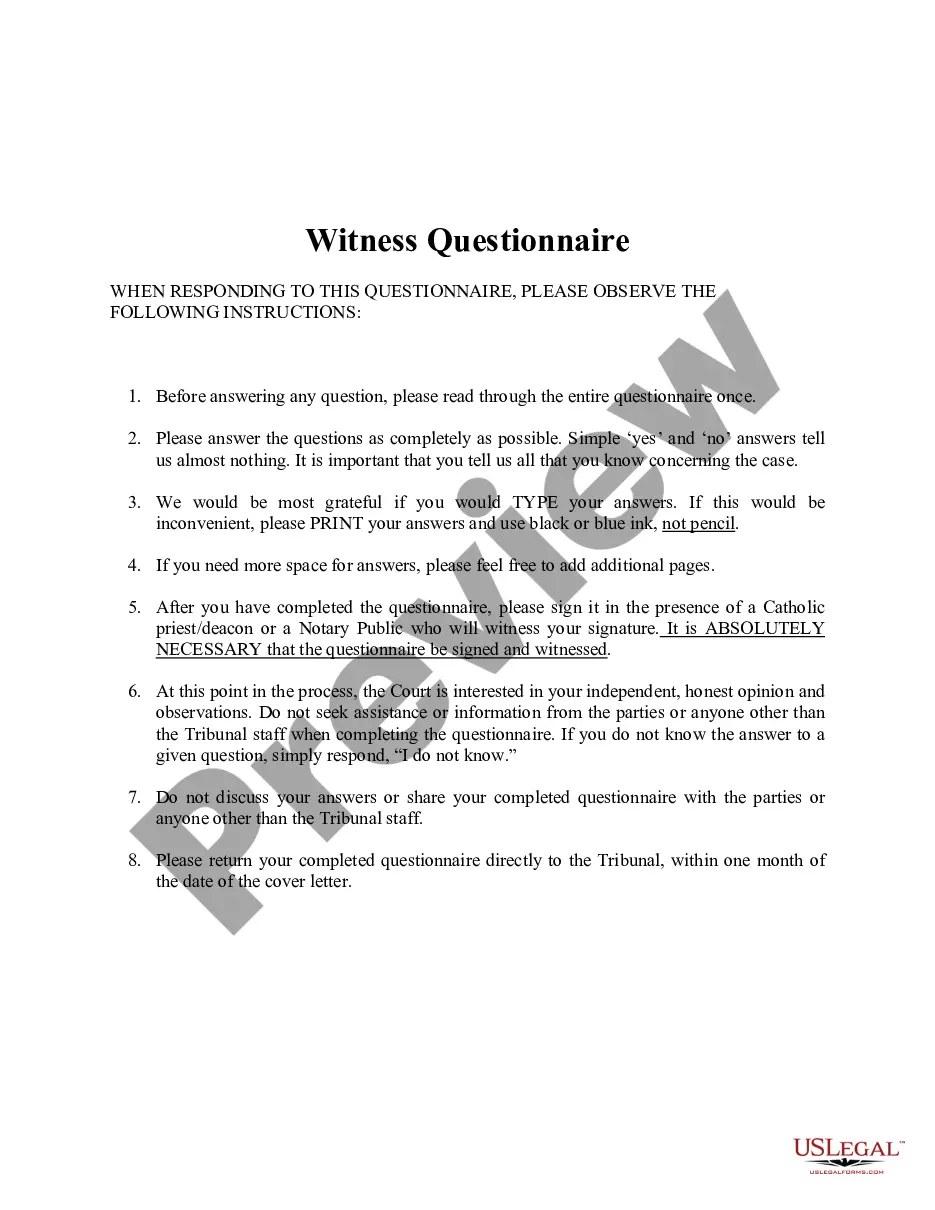
The Witness Questionnaire is a legal document used in proceedings regarding the nullity of a marriage. It is essential for courts to gather detailed witness testimony that may influence the outcome of the case. Unlike other testimonial forms, this questionnaire focuses specifically on the witness's observations and opinions related to the validity of the marriage in question, ensuring that all relevant aspects are thoroughly examined.
Key components of this form
- Instructions for completing the questionnaire, emphasizing the need for thoughtful and thorough responses.
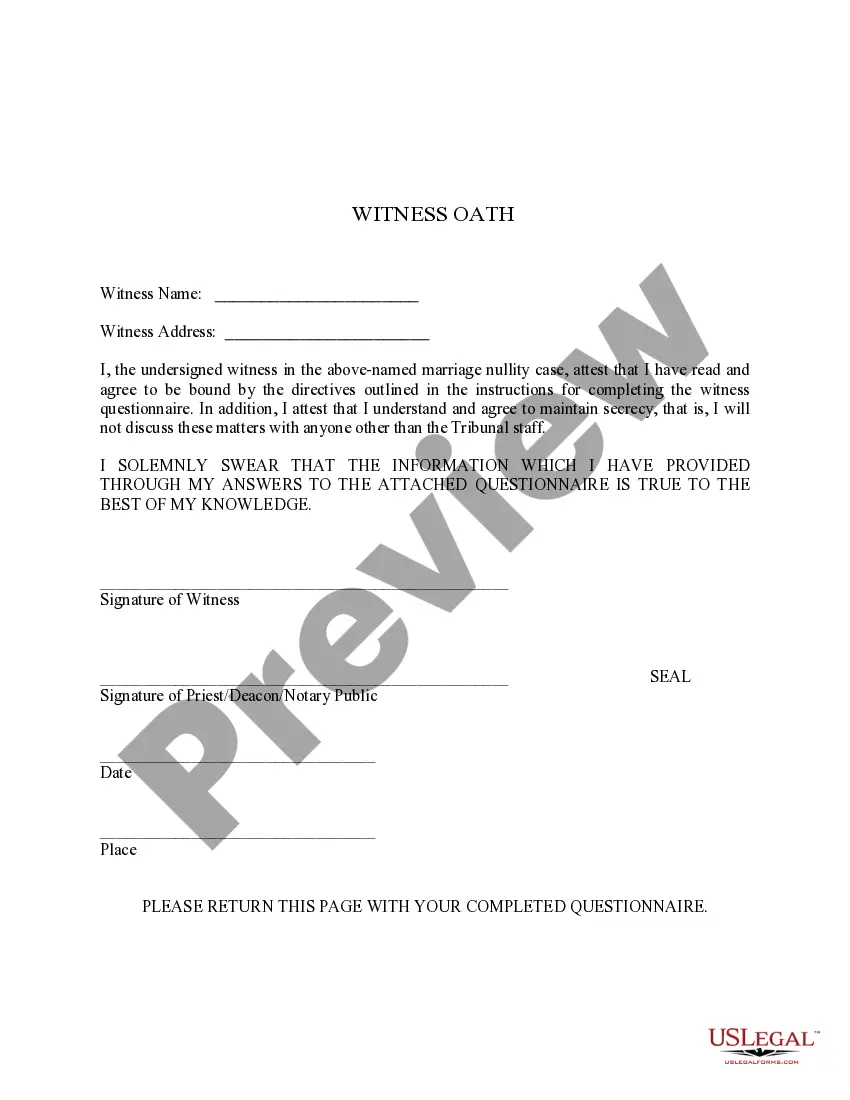
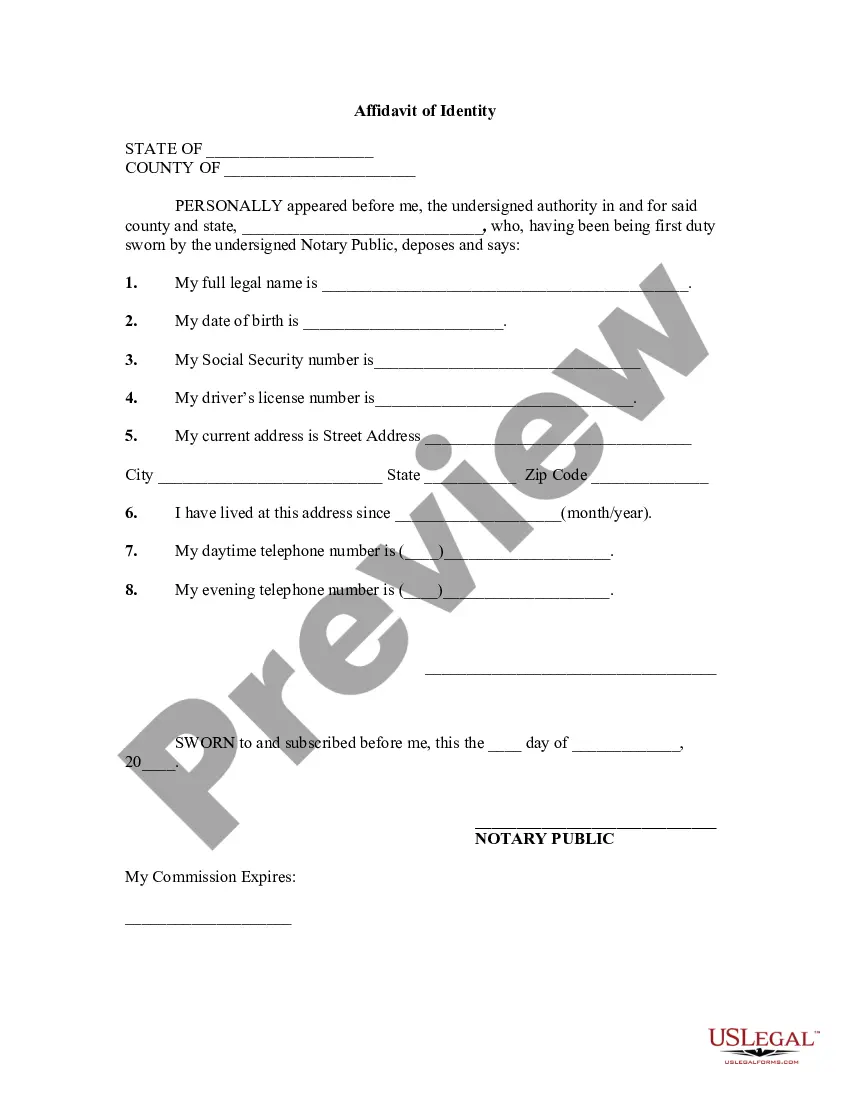
- Witness oath section, requiring a signature for validation, along with a notaryâs acknowledgment.
- Personal details of the witness, including their relationship to the parties involved.
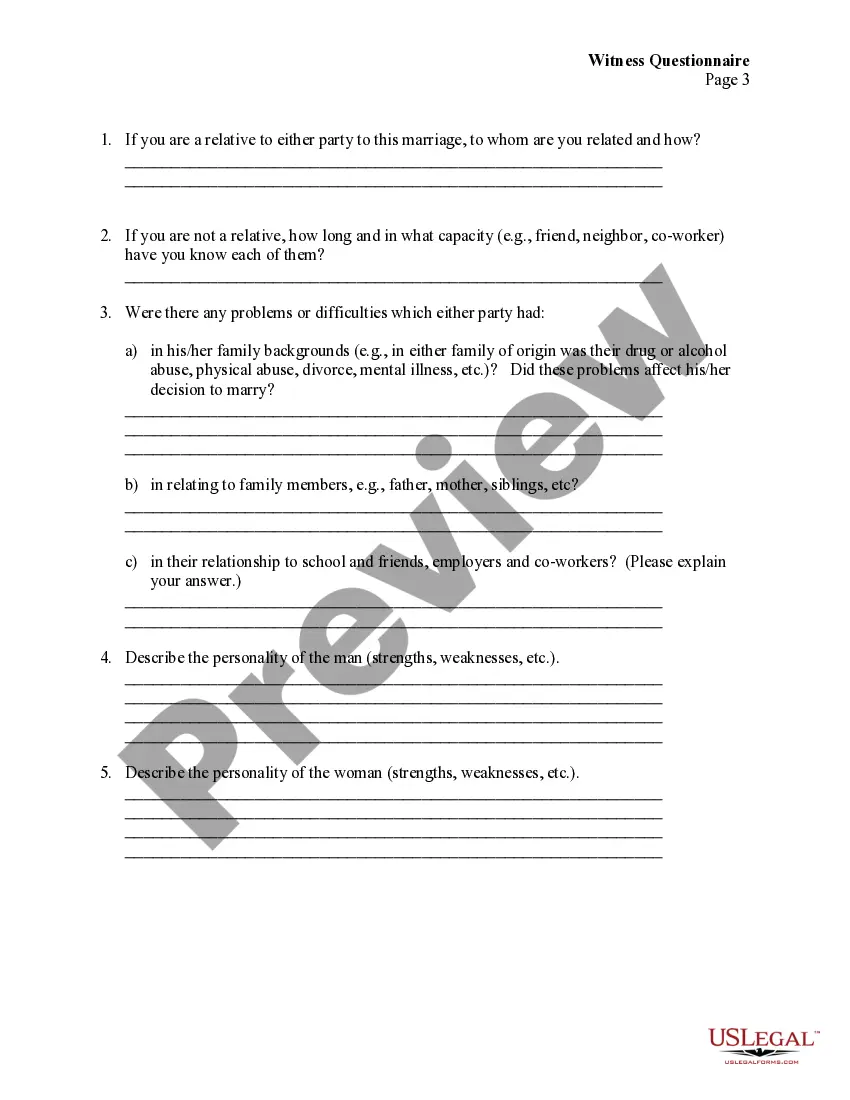
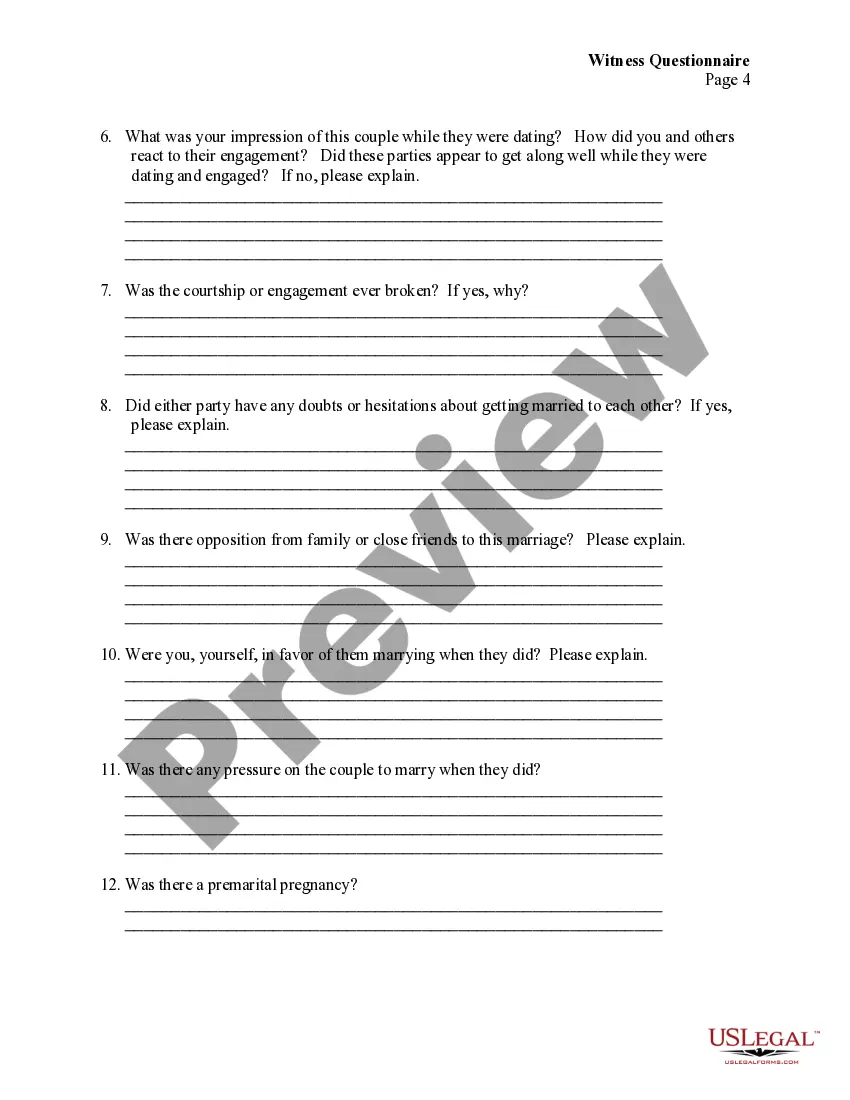
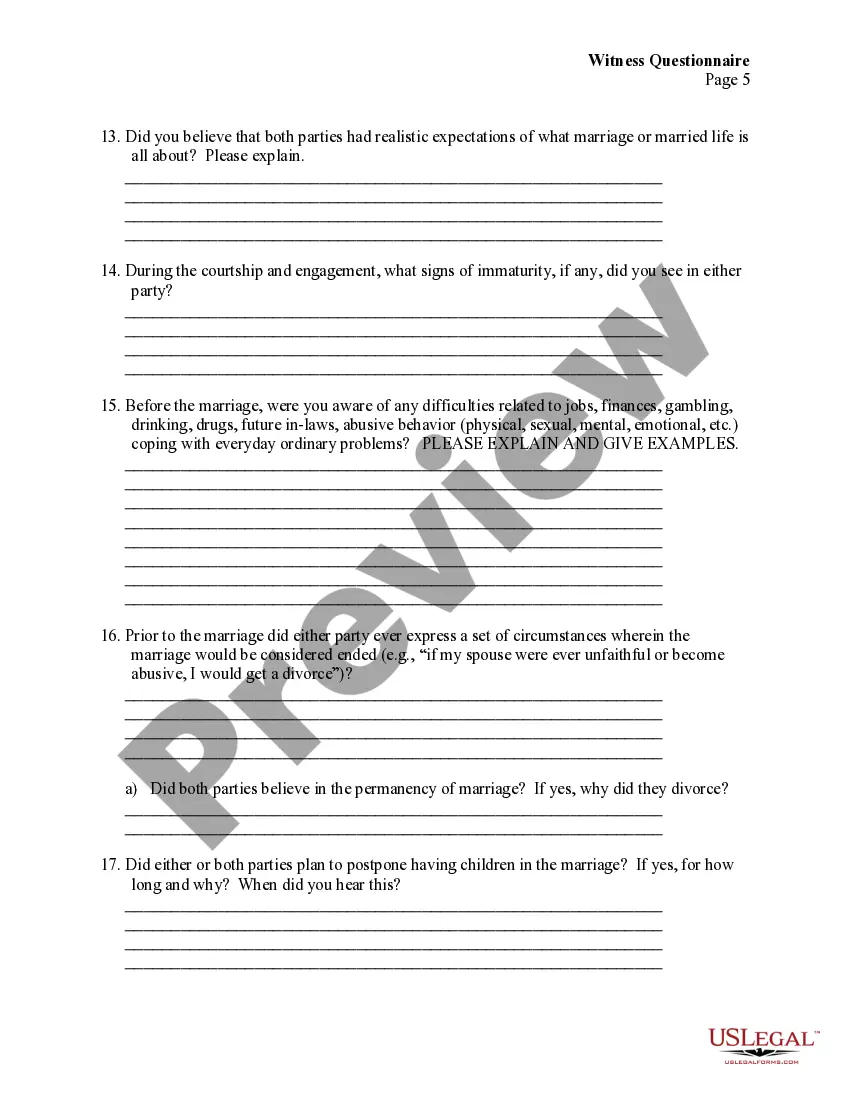
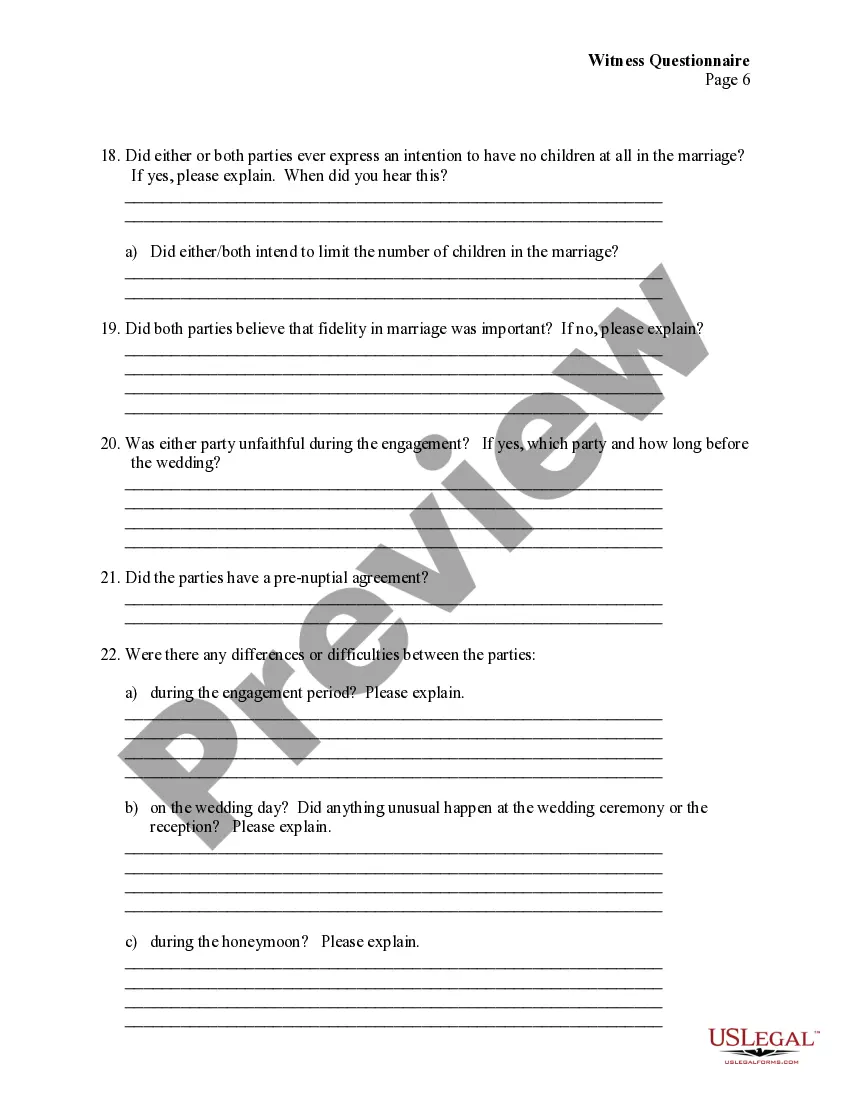
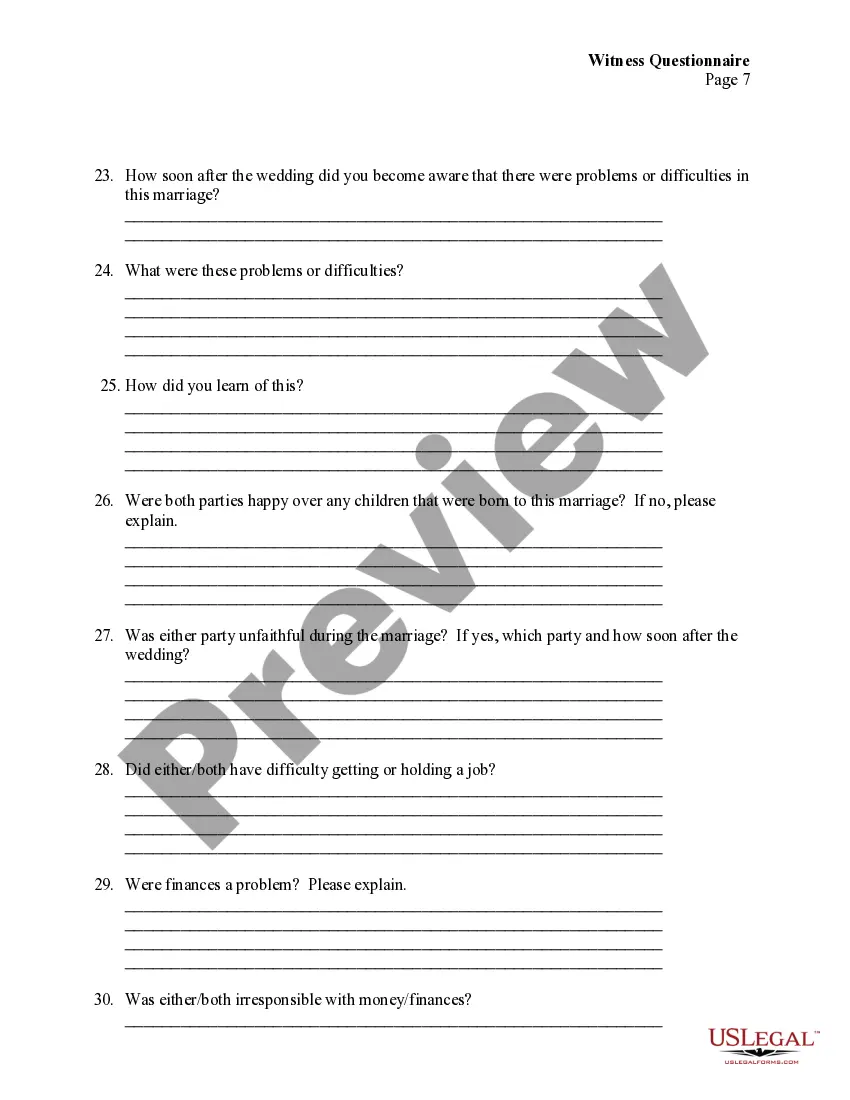
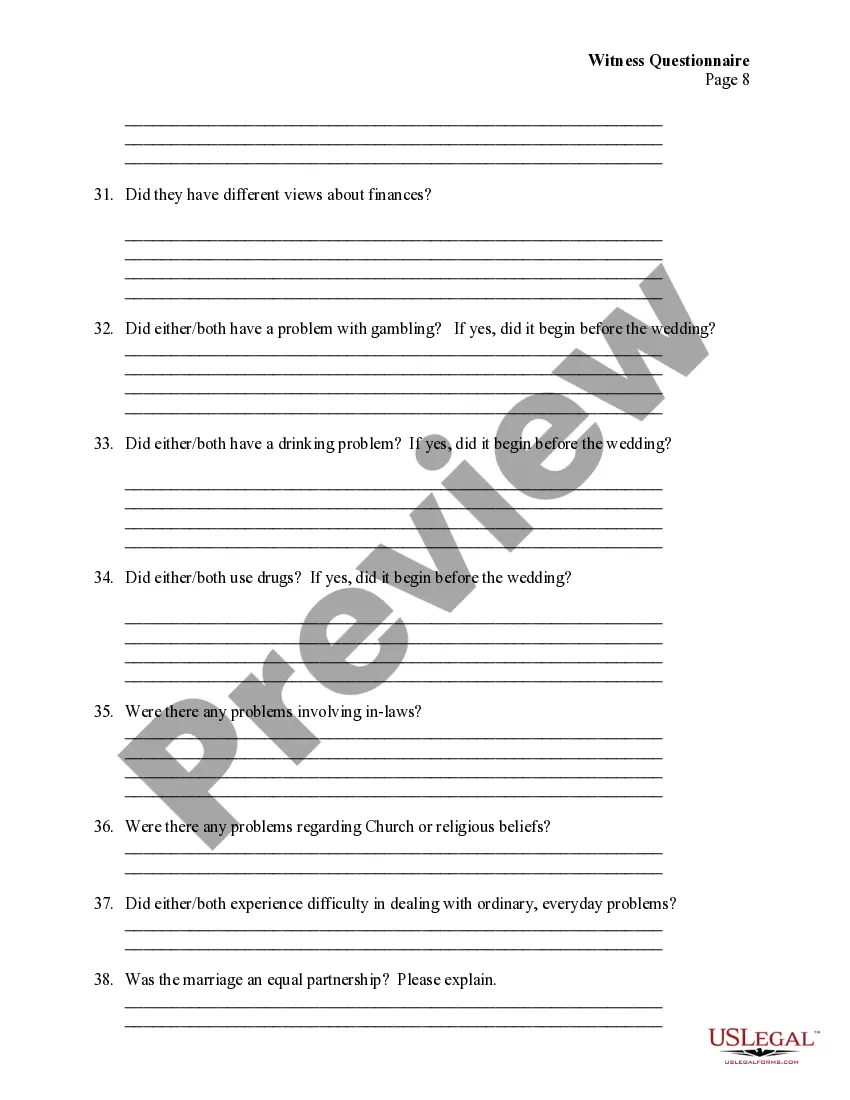
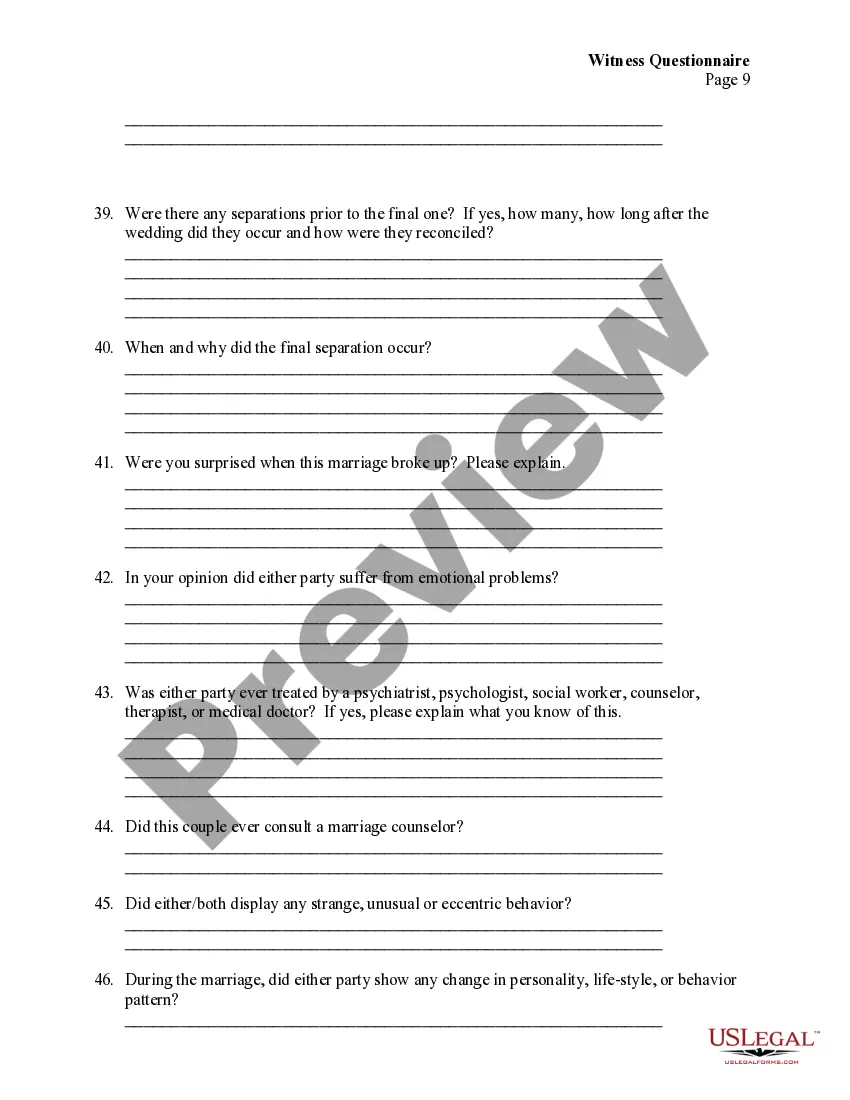
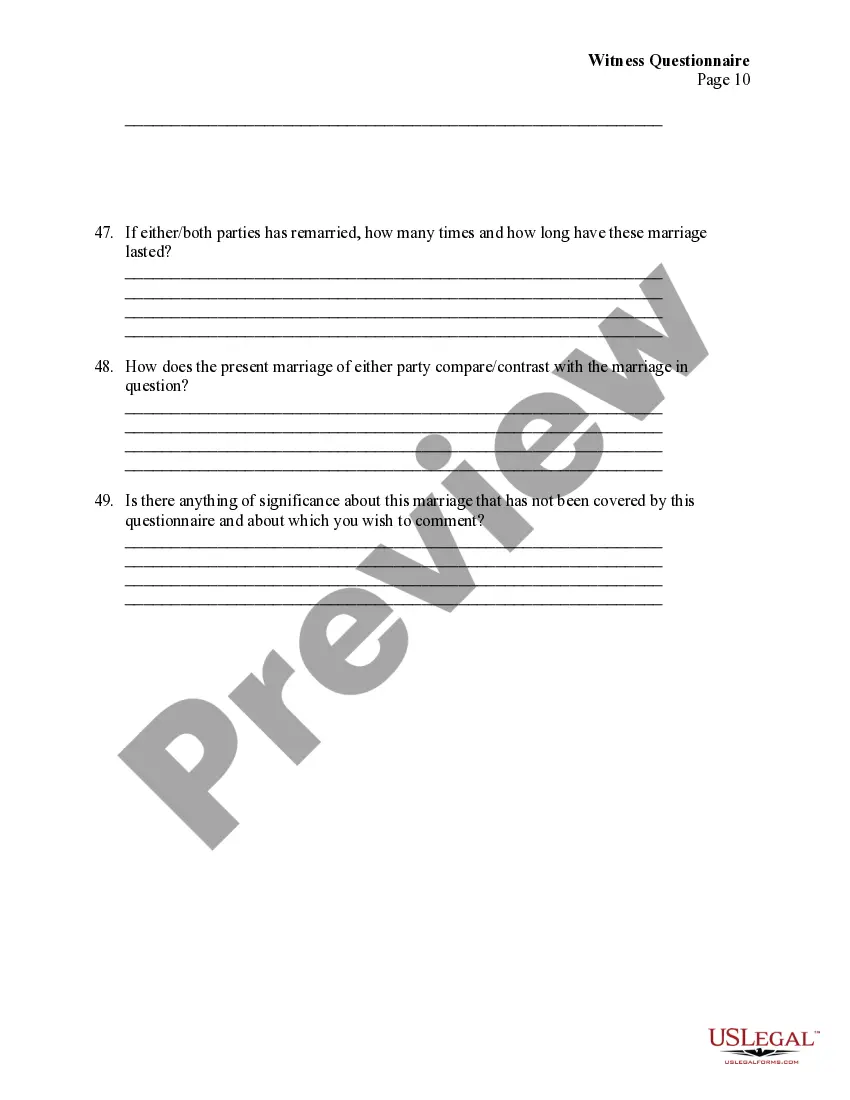
- Questions addressing various aspects of the marriage, including individual backgrounds, personality traits, and relationship dynamics.
- Detailed inquiries into any issues leading to the marriage's nullity, such as emotional health, financial stability, and fidelity.
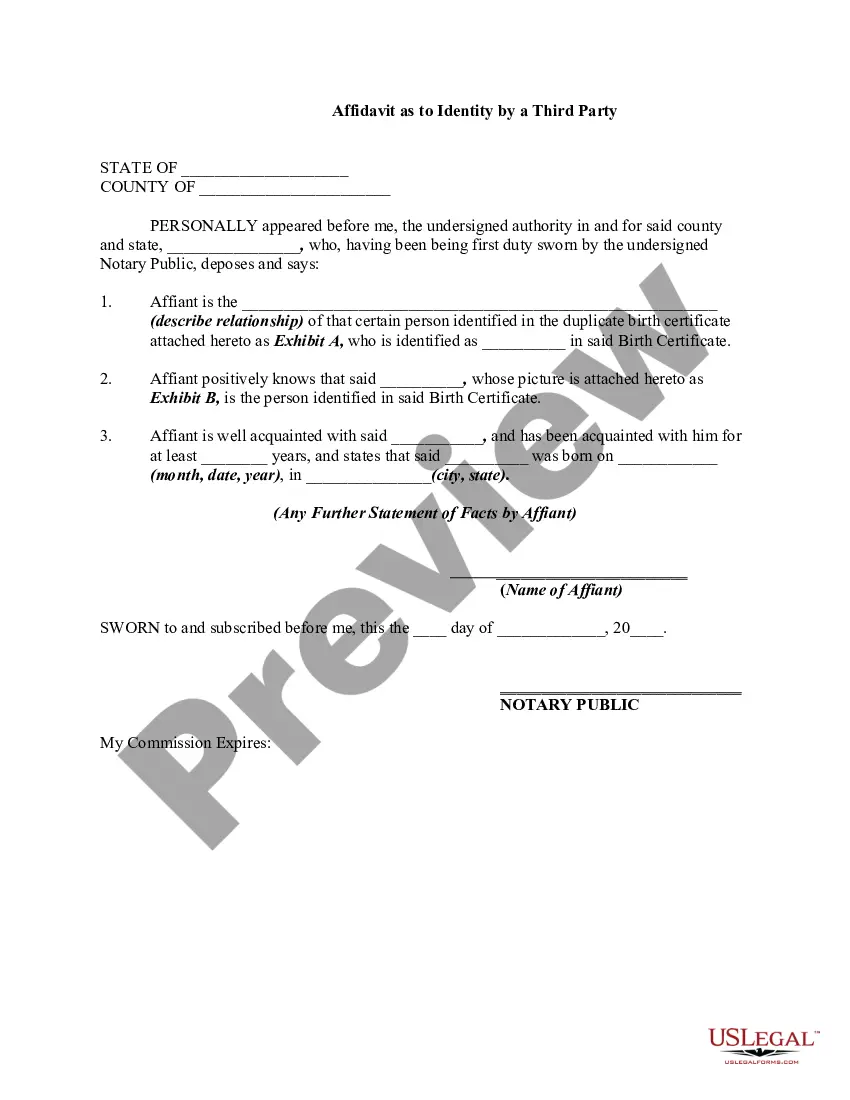
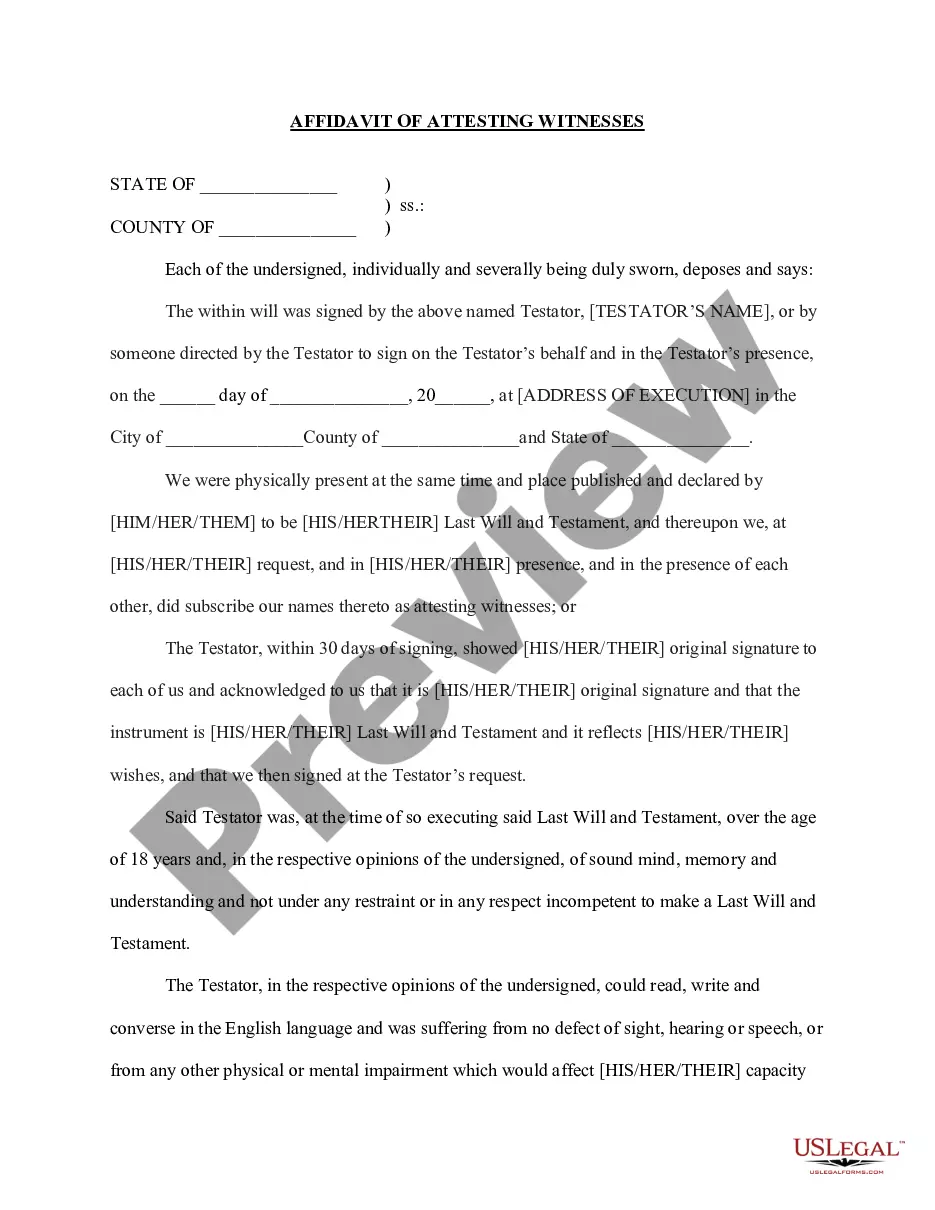
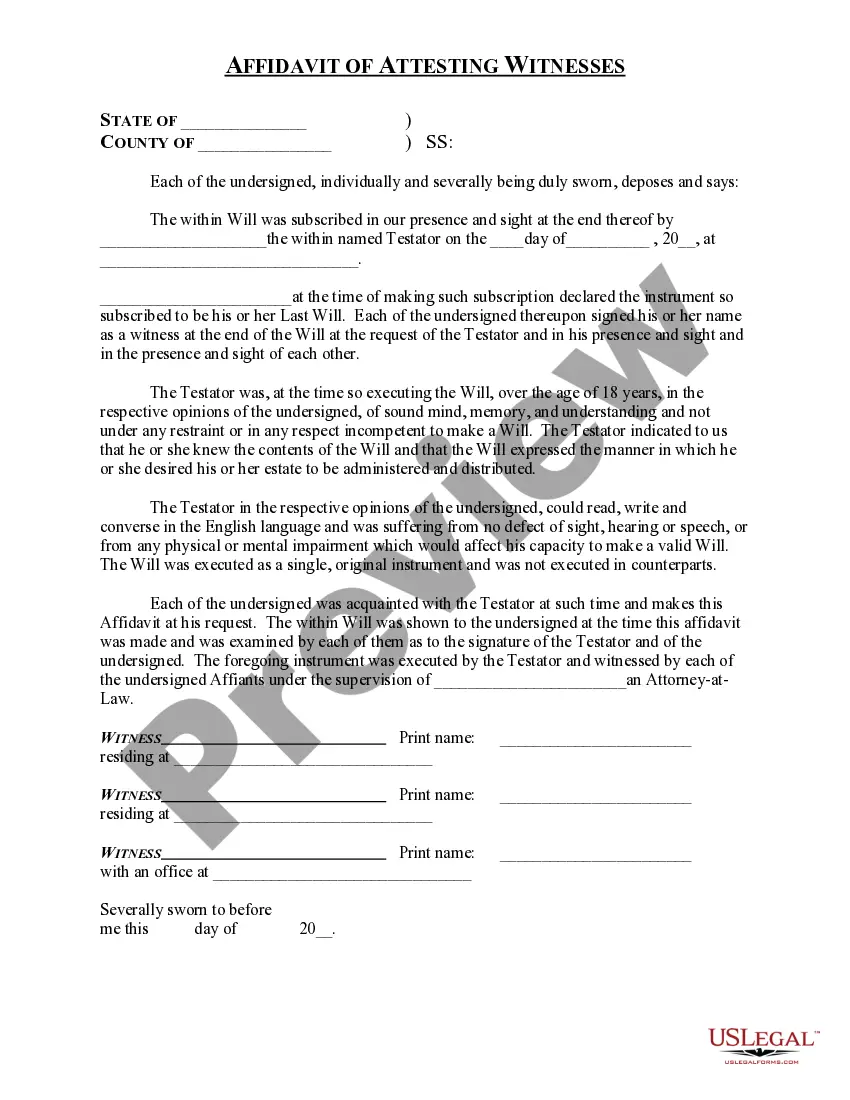
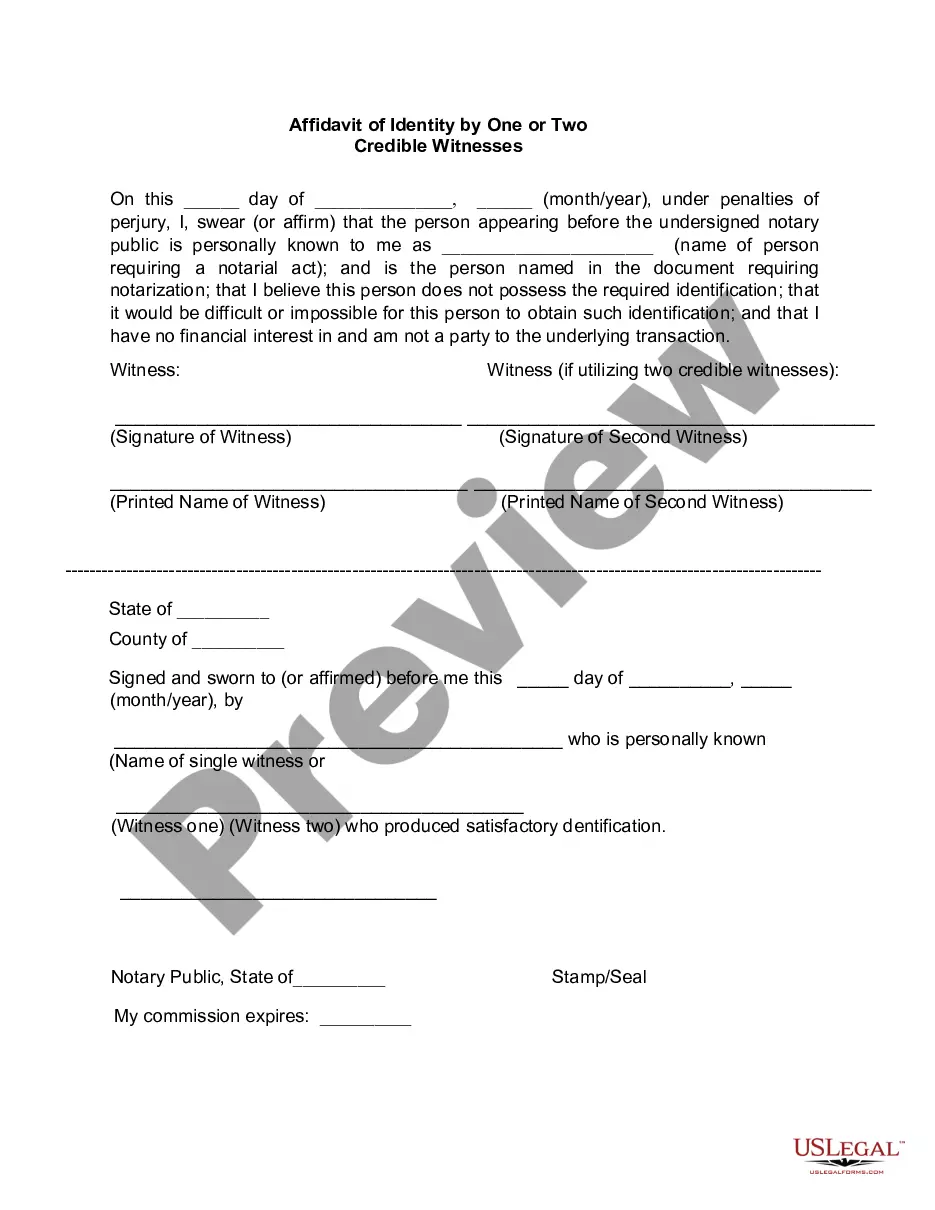
Situations where this form applies
This form should be used when a court is investigating an allegation of marriage nullity. If you are called upon as a witness to provide insight or firsthand accounts regarding the relationship between the parties involved, this questionnaire is crucial. It helps the court assess whether the allegations have merit based on thorough testimonies reflecting the experiences and observations of individuals outside the marriage.
Who this form is for
This questionnaire is intended for:
- Individuals who have been requested to provide testimony regarding the validity of a specific marriage.
- Witnesses who are friends, family, or associates of either party in the marriage.
- Anyone with relevant knowledge pertaining to the relationship dynamics, personal histories, or any challenges faced by the couple before or during the marriage.
Completing this form step by step
- Read through the entire questionnaire to understand the questions thoroughly.
- Provide detailed and thoughtful answers to each question, avoiding simple "yes" or "no" responses.
- Sign the completed form in the presence of a Catholic priest/deacon or a Notary Public for validation.
- Return the completed questionnaire directly to the Tribunal within the specified timeframe.
- Keep a copy of the filled form for your records.
Does this form need to be notarized?
Yes, this form must be notarized to be legally valid. The signature of the witness must be acknowledged by a Catholic priest/deacon or a Notary Public to ensure authenticity. US Legal Forms offers integrated online notarization services that are available 24/7, providing a secure and streamlined process for obtaining notarization without the need to travel.
Get your form ready online
Our built-in tools help you complete, sign, share, and store your documents in one place.
Make edits, fill in missing information, and update formatting in US Legal Forms—just like you would in MS Word.
Download a copy, print it, send it by email, or mail it via USPS—whatever works best for your next step.
Sign and collect signatures with our SignNow integration. Send to multiple recipients, set reminders, and more. Go Premium to unlock E-Sign.
If this form requires notarization, complete it online through a secure video call—no need to meet a notary in person or wait for an appointment.
We protect your documents and personal data by following strict security and privacy standards.

Make edits, fill in missing information, and update formatting in US Legal Forms—just like you would in MS Word.

Download a copy, print it, send it by email, or mail it via USPS—whatever works best for your next step.

Sign and collect signatures with our SignNow integration. Send to multiple recipients, set reminders, and more. Go Premium to unlock E-Sign.

If this form requires notarization, complete it online through a secure video call—no need to meet a notary in person or wait for an appointment.

We protect your documents and personal data by following strict security and privacy standards.
Common mistakes to avoid
- Providing incomplete answers that do not sufficiently explain the witness's observations or opinions.
- Failing to sign the form in the presence of an authorized witness, which renders the document invalid.
- Not returning the form within the one-month deadline specified by the Tribunal.
- Discussing the contents of the questionnaire with unauthorized individuals, risking the confidentiality of the process.
Why use this form online
- Convenient access to legal forms from anywhere, without the need for in-person visits.
- Editable format allows for thorough completion before submission.
- Fast download options provide immediate access to the necessary documentation.
- Reliable templates drafted by licensed attorneys ensure compliance with legal standards.
Looking for another form?

Form popularity
FAQ
Start by asking the witness their name and address. If your witness is a professional, you should ask what their job is, what their educational degrees are, and how long they have been doing their job. The ask specific questions about what information they have about your case.
?How do you know that?? is a question to ask often. Ask the witness to list all individuals who know of any of the events. ?Who else might know?? is a question to ask often. Asking short, simple questions is likely to provide responsive answers.
Start by asking the witness their name and address. If your witness is a professional, you should ask what their job is, what their educational degrees are, and how long they have been doing their job. The ask specific questions about what information they have about your case.
If a witness is not willing to testify, you might have to get a subpoena. A subpoena is a court order that makes a person come to court to testify. Once you know who your witnesses will be, you might have to tell the other side. This often happens during discovery with a witness list.
You can start questioning your witnesses, one at a time, by asking them their name and asking them some background information, like how they know the parties in the case. You will then have to get into asking questions about the event they witnessed or any other issue they are there to testify about.
5 Things to Know About Your Annulment Questionnaire The questions are detailed because marriage is detailed.Give detailed answers, but stick to the facts.Take your time, speak from your own truth.Carefully choose your witnesses.The Church is here to support (not judge) you.
Practical Suggestions for Cross-Examination Be brief. Short questions, plain words. Always ask leading questions. Do not ask a question to which you do not know the answer in advance. Listen to the witness's answers. Never quarrel with the witness. Don't allow the witness to repeat his or her direct testimony.