Extension of Loan Agreement Secured by a Deed of Trust as to Maturity Date and Increase in Interest Rate
What is this form?
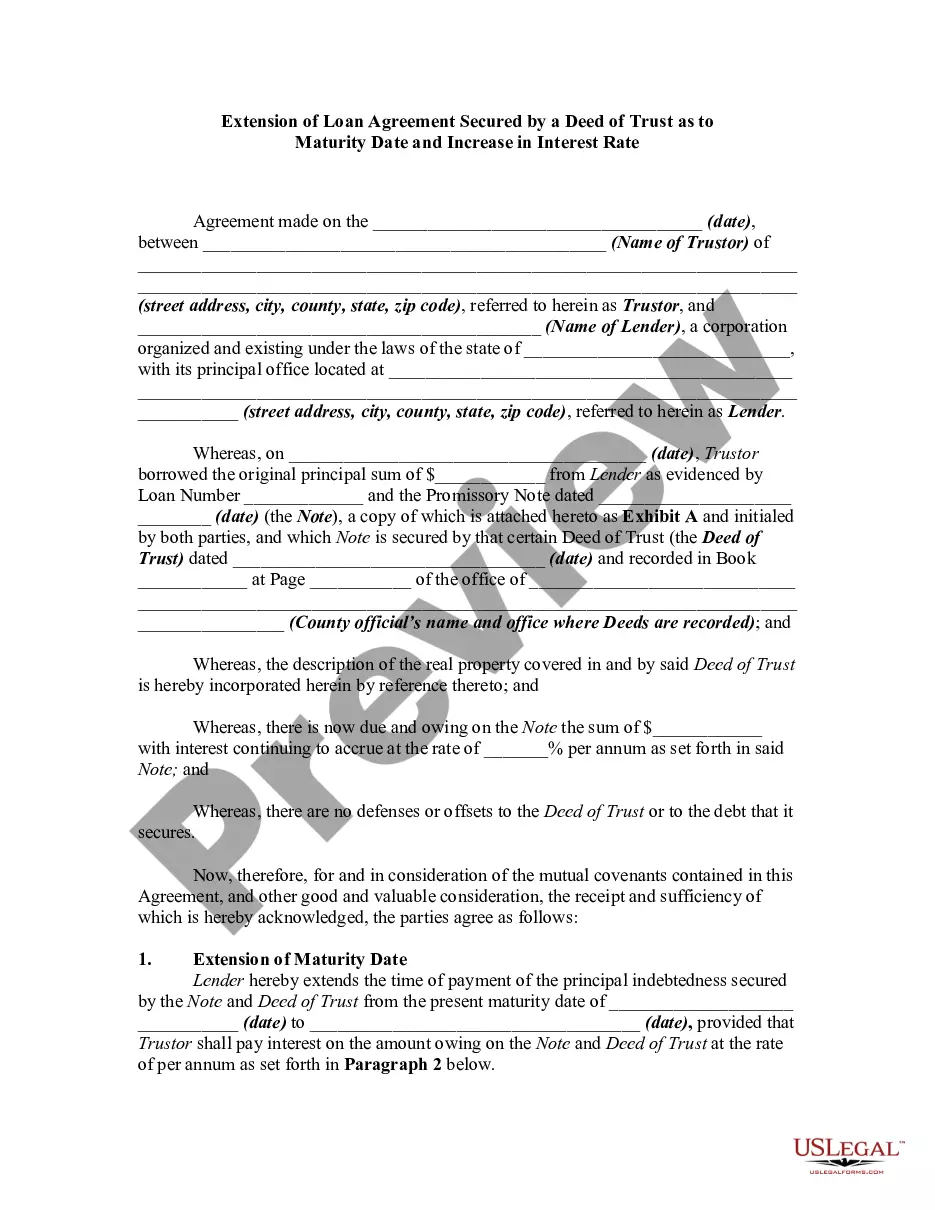
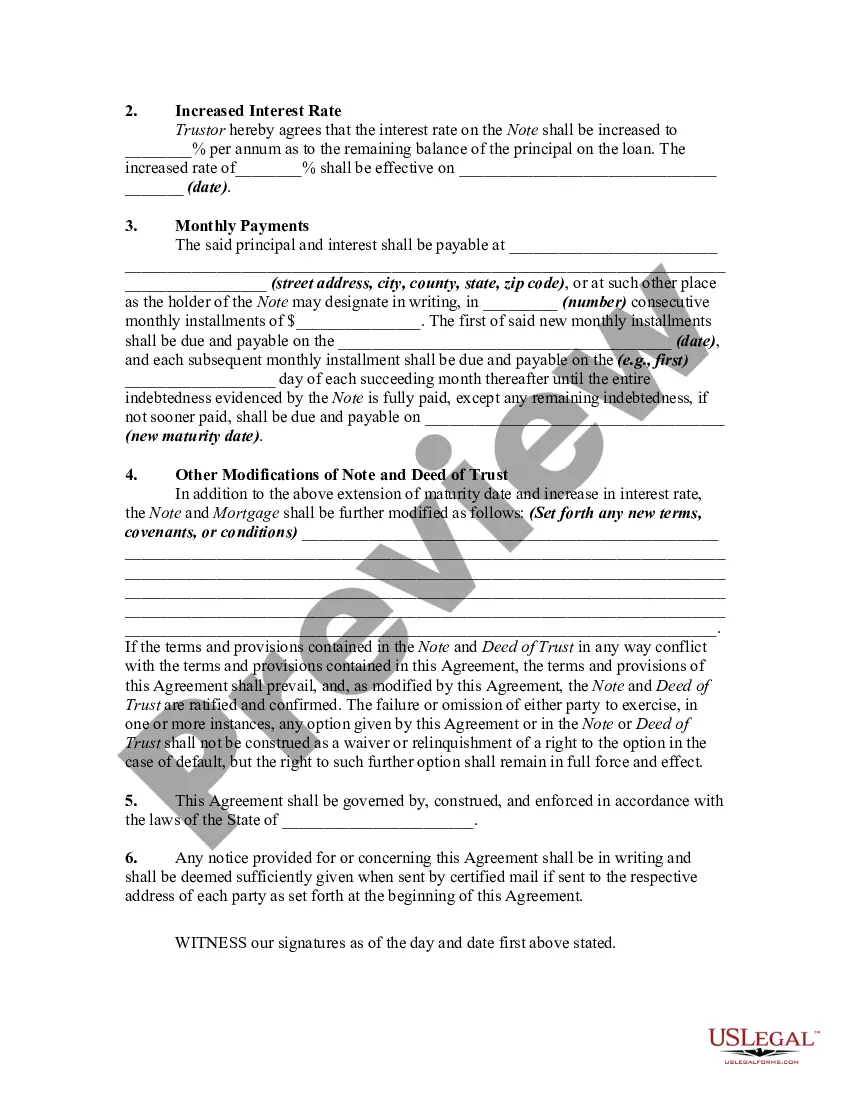
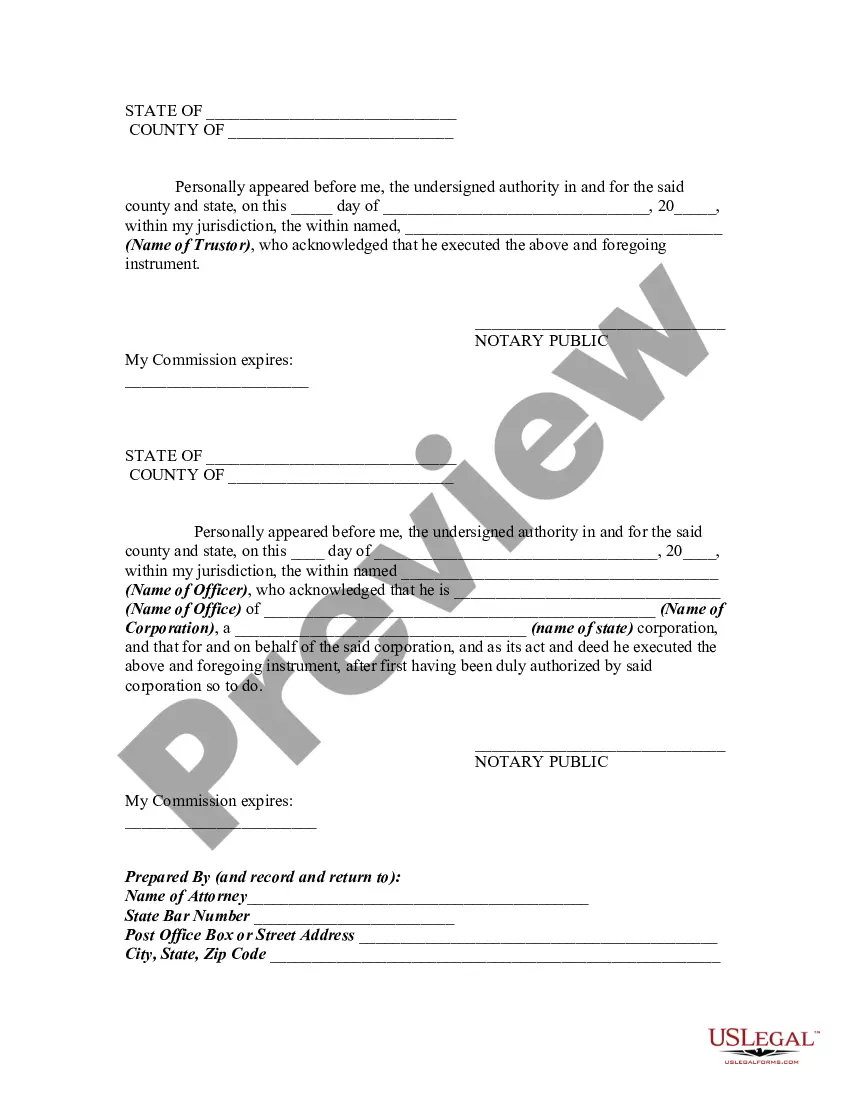
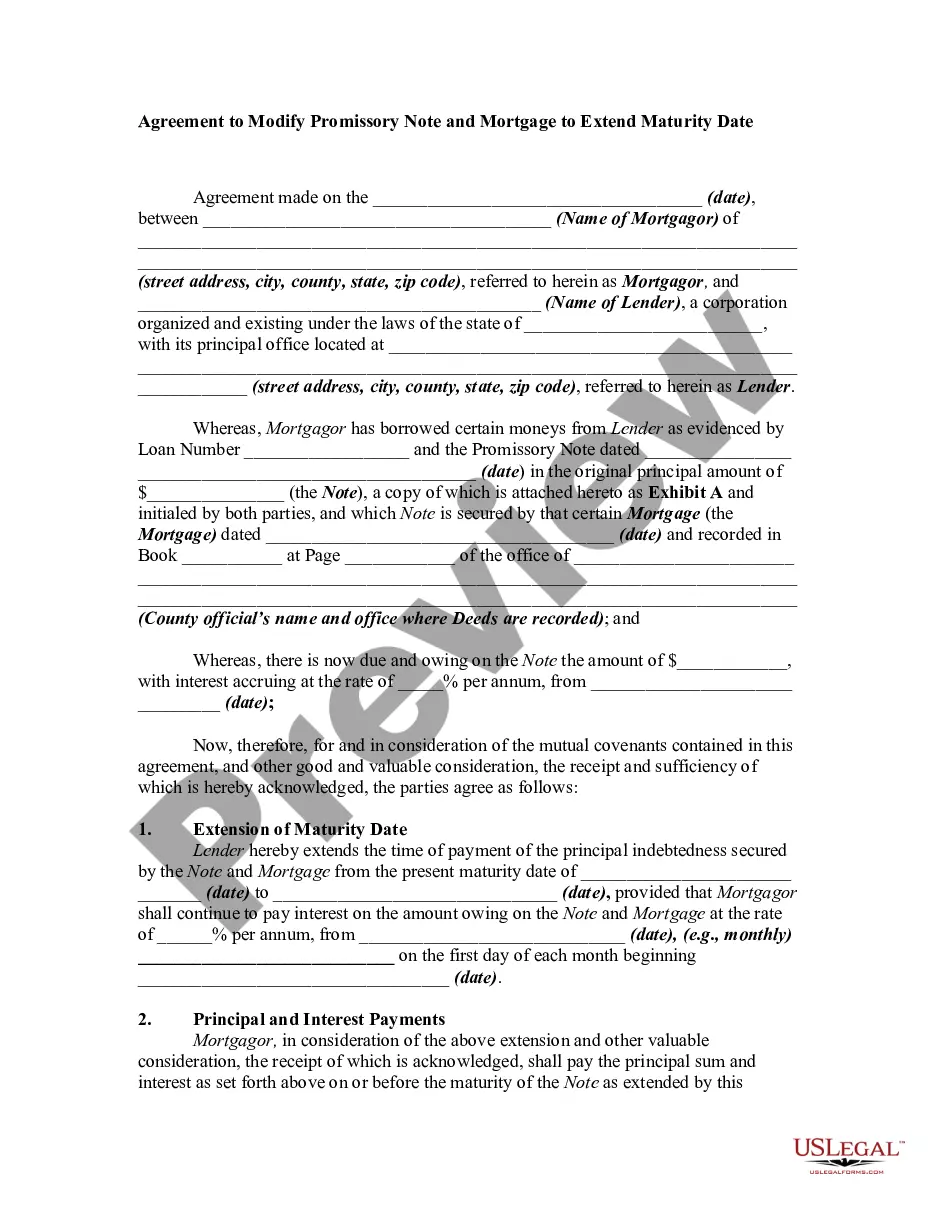
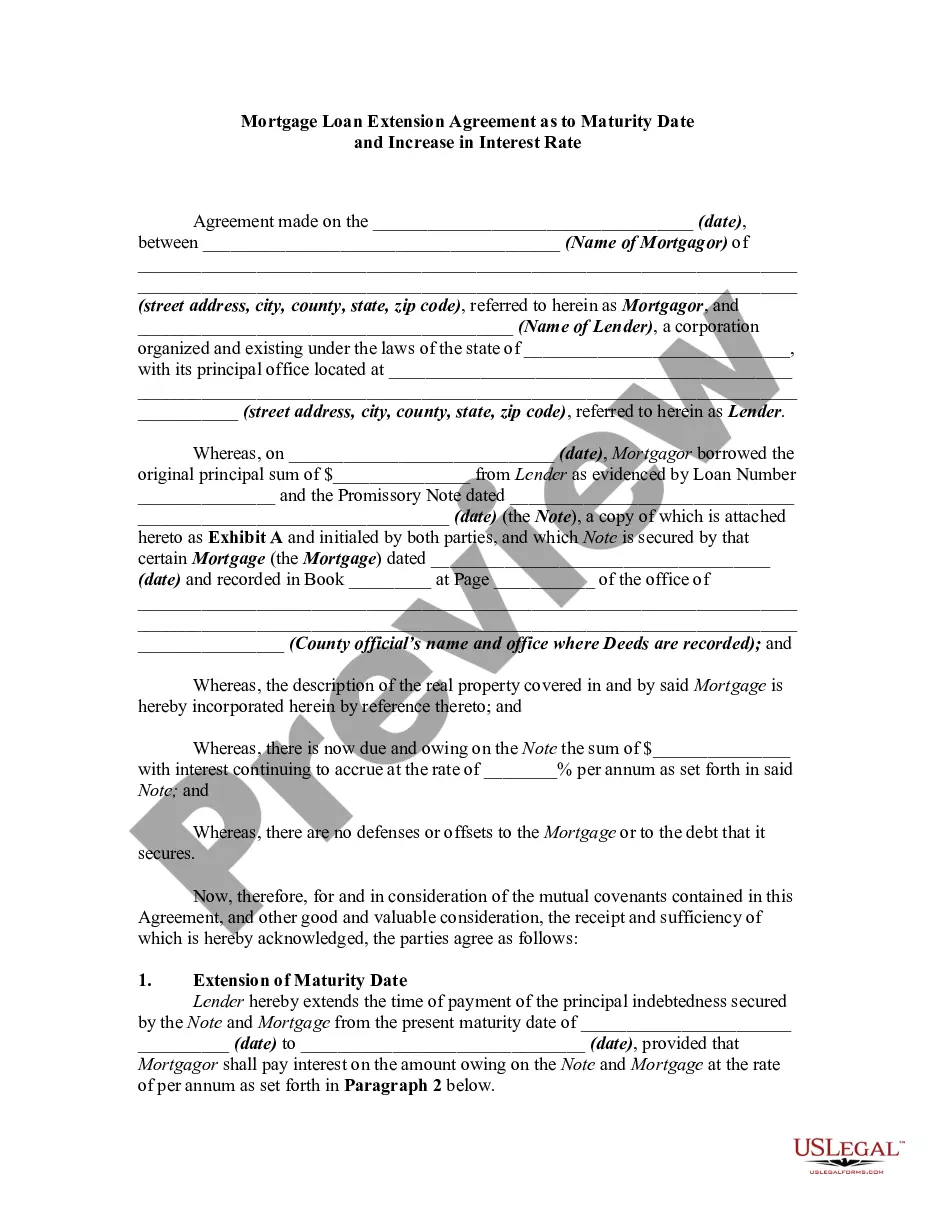
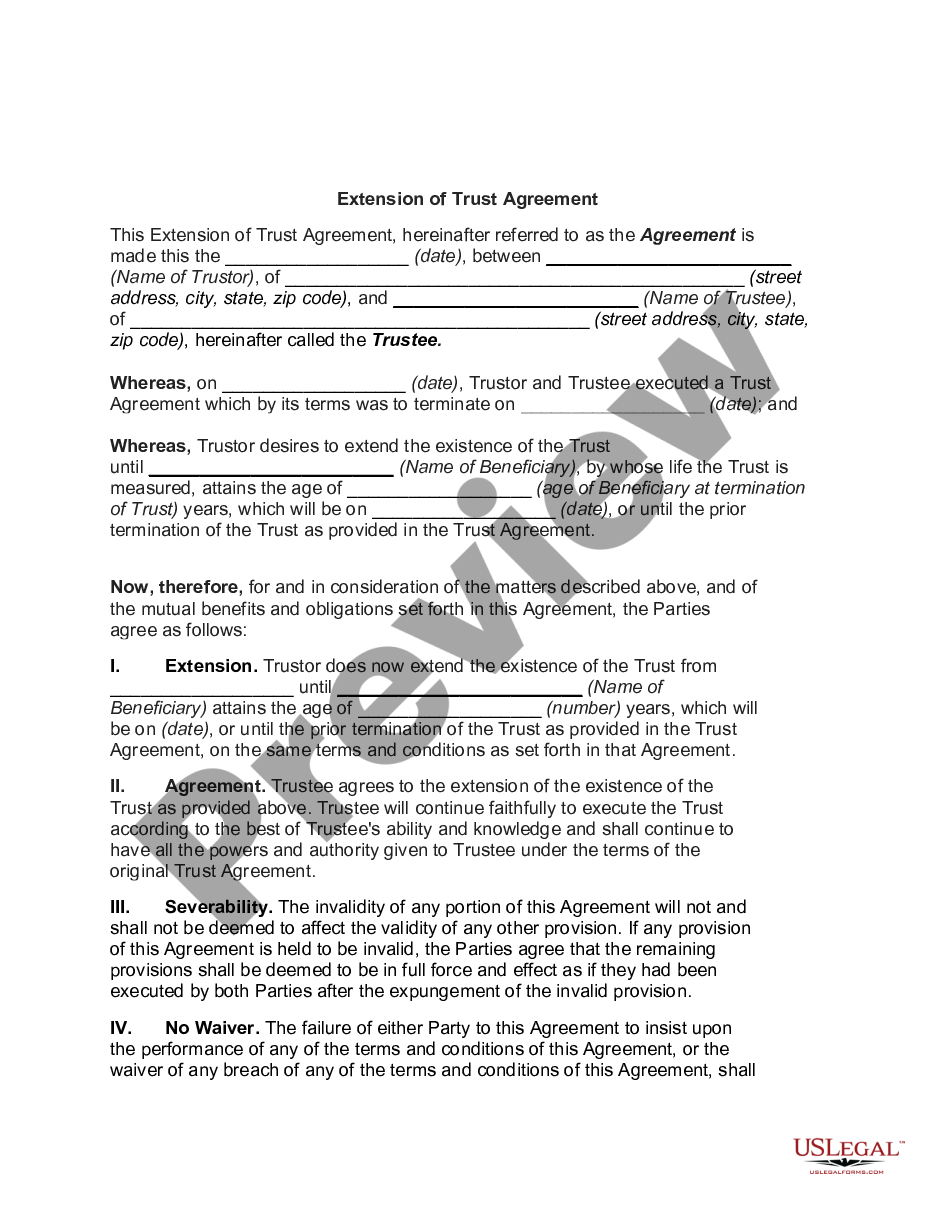
The Extension of Loan Agreement Secured by a Deed of Trust as to Maturity Date and Increase in Interest Rate is a legal document that modifies an existing loan agreement and its associated deed of trust. This form allows parties to extend the maturity date of the loan and adjust the interest rate, facilitating revised payment terms. It is essential for borrowers and lenders who need to amend the terms of a loan to suit their current financial circumstances while ensuring the agreement maintains legal standing.
Main sections of this form
- Date of agreement and details of the parties involved (Trustor and Lender).
- Background on the original loan and deed of trust.
- New maturity date agreed upon by both parties.
- Updated interest rate on the outstanding loan amount.
- Payment schedule for the modified loan terms.
- Other modifications to the loan agreement or deed of trust.


When to use this form
This form is used when a borrower (Trustor) and lender need to formally amend an existing loan agreement and deed of trust. Situations may include when the borrower requires additional time to repay their loan or when the parties agree to a higher interest rate on the remaining balance. Using this form legally documents the agreed changes and ensures that both parties are protected under the new terms.
Who this form is for
This form is suitable for:
- Trustors (borrowers) seeking to modify the terms of an existing loan.
- Lenders who need to document changes to loan agreements.
- Individuals or entities engaged in real estate transactions involving a deed of trust.
- Licensed attorneys preparing loan modifications for clients.
How to prepare this document
- Identify the parties involved - enter the names and addresses of the Trustor and Lender.
- Detail the original loan dates and amounts for clear reference.
- Specify the new maturity date that both parties agree upon.
- Indicate the new interest rate and the effective date for this change.
- Outline the new payment schedule, including the installment amounts and due dates.
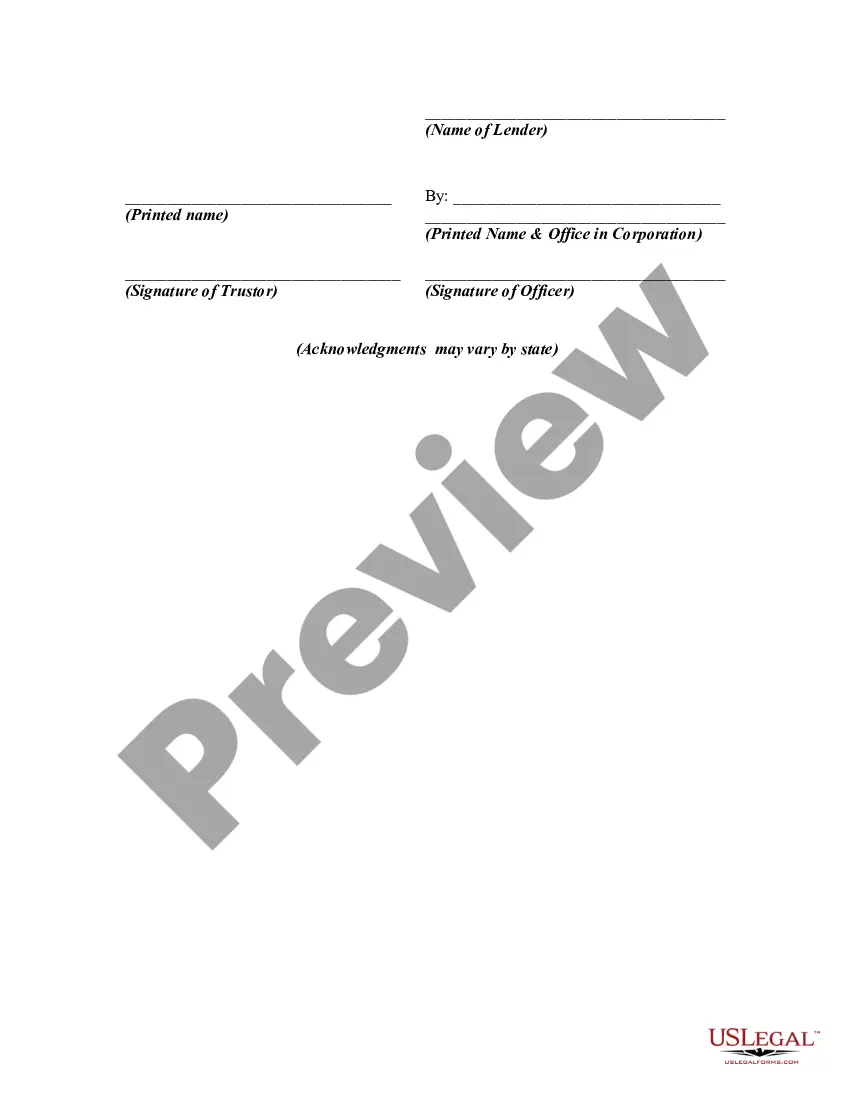
- Ensure all parties sign and date the agreement, and consider notarization for legal validity.
Is notarization required?
Yes, this form must be notarized to be legally valid. This requirement ensures the authenticity of the signatures involved, providing an additional level of protection for both parties. US Legal Forms offers integrated online notarization, allowing you to complete the process securely through a video call with a notary public, available 24/7.
Get your form ready online
Our built-in tools help you complete, sign, share, and store your documents in one place.
Make edits, fill in missing information, and update formatting in US Legal Forms—just like you would in MS Word.
Download a copy, print it, send it by email, or mail it via USPS—whatever works best for your next step.
Sign and collect signatures with our SignNow integration. Send to multiple recipients, set reminders, and more. Go Premium to unlock E-Sign.
If this form requires notarization, complete it online through a secure video call—no need to meet a notary in person or wait for an appointment.
We protect your documents and personal data by following strict security and privacy standards.

Make edits, fill in missing information, and update formatting in US Legal Forms—just like you would in MS Word.

Download a copy, print it, send it by email, or mail it via USPS—whatever works best for your next step.

Sign and collect signatures with our SignNow integration. Send to multiple recipients, set reminders, and more. Go Premium to unlock E-Sign.

If this form requires notarization, complete it online through a secure video call—no need to meet a notary in person or wait for an appointment.

We protect your documents and personal data by following strict security and privacy standards.
Common mistakes to avoid
- Failing to provide accurate party information, which can lead to enforceability issues.
- Not updating the interest rate correctly, which could result in financial discrepancies.
- Overlooking the need for signatures or notarization, which may invalidate the agreement.
- Not clearly stating the new payment terms, causing confusion for future payments.
Why complete this form online
- Convenience of accessing and filling out the form from any location.
- Editability allows for easy adjustments before finalizing the agreement.
- assurance that the document complies with standard legal requirements.
- Immediate access to a legally sound document prepared by licensed attorneys.
Looking for another form?



Form popularity
FAQ
A deed of trust is a legal document among three parties: the borrower, the beneficiary and the trustee who holds the legal title to the property.Once the modification has been filed, it replaces any conflicting information in the original deed of trust.
The lender is the person or legal entity providing the loan to the borrower. The trustee is a neutral third-party who holds the legal title to a property until the borrower pays off the loan in full. They're called a trustee because they hold the property in trust for the lender.
A point is 1% of the purchase price of the property being offered as security for the loan. In the event of a borrower's default, a subordination clause makes foreclosure easier by giving a lender the right to declare the entire debt due and payable.
The trustee's primary function is to hold and maintain a property title for the borrower and the lender for the duration of the loan. Therefore, it is the trustee who retains factual ownership and control of the property in question, not the lender.
With a deed of trust, you temporarily give control of the title to your property to the lender for security purposes. Once you pay off the debt, the lender conveys that temporary control back to you.
The lender gives the borrower the money to buy the home in exchange for one or more promissory notes, while the trustee holds the legal title to the property until the loan is paid off.
Who pays for those services is a matter of contract negotiation. Recording fees: These fees may be paid by you or by the seller, depending upon your agreement of sale with the seller. The buyer usually pays the fees for legally recording the new deed and mortgage.
In a deed of trust, the borrower is called the trustor and the lender is the beneficiary. The trustee holds title to the property until the trustor has fully repaid the loan to the beneficiary, at which time the lender notifies the trustee, who then transfers full title of the property to the trustor.
A deed of trust is a written instrument with three parties: The trustor, who is the borrower and homeowner. The beneficiary, who is the lender. The trustee, who is a third party such as an insurance company or escrow management agency that holds actual title to the property in trust for the beneficiary.