Plaintiff's Motion in Limine to Prohibit Evidence on the Issue of Performance, Productivity, and / or Efficiency
What is this form?
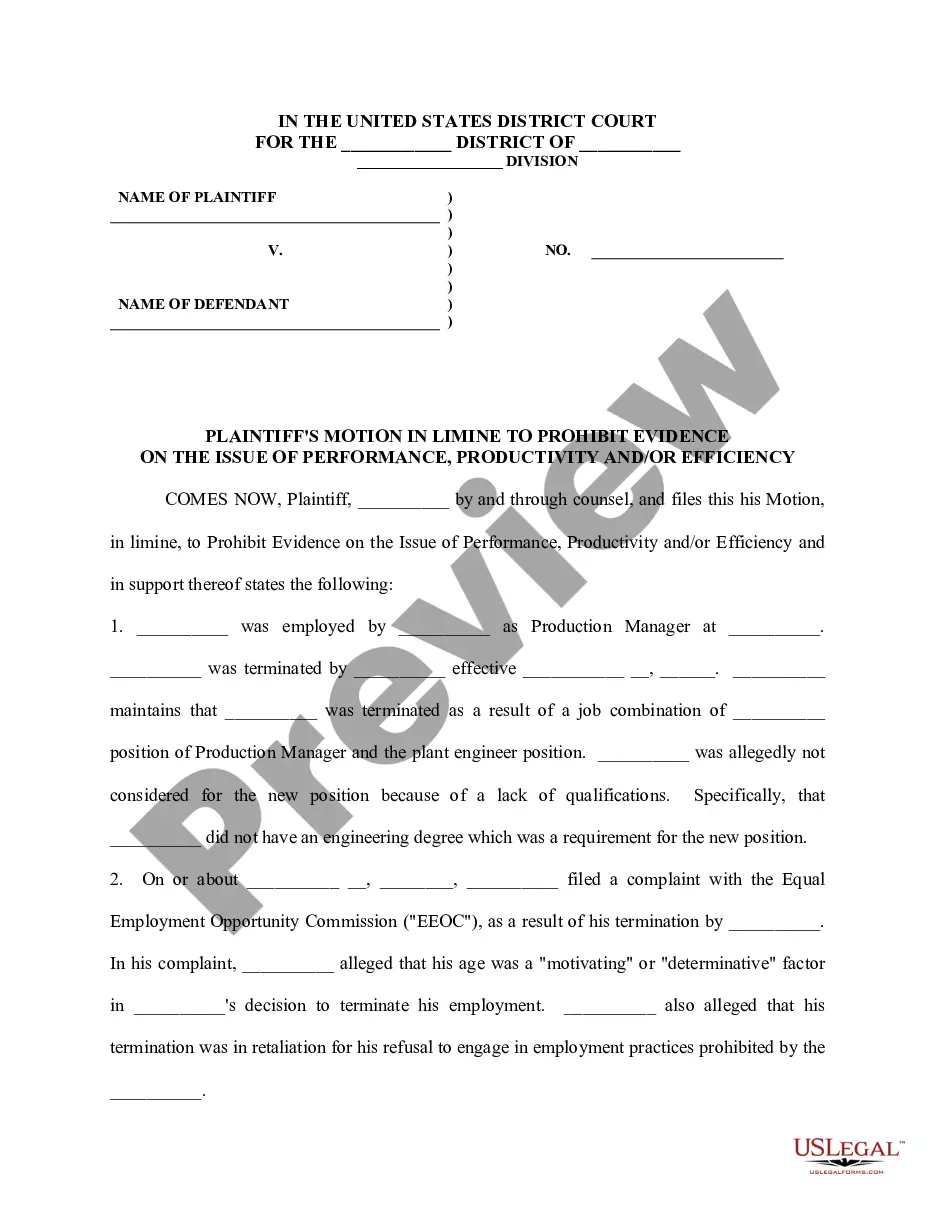
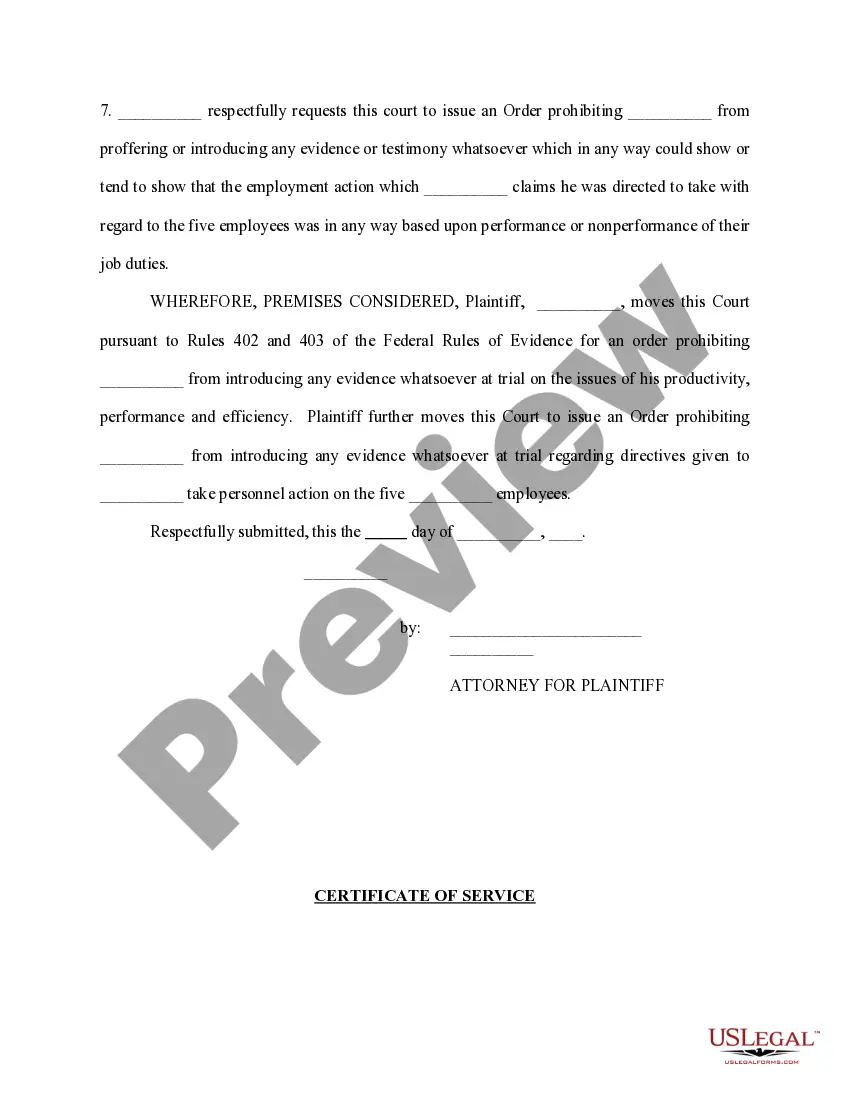
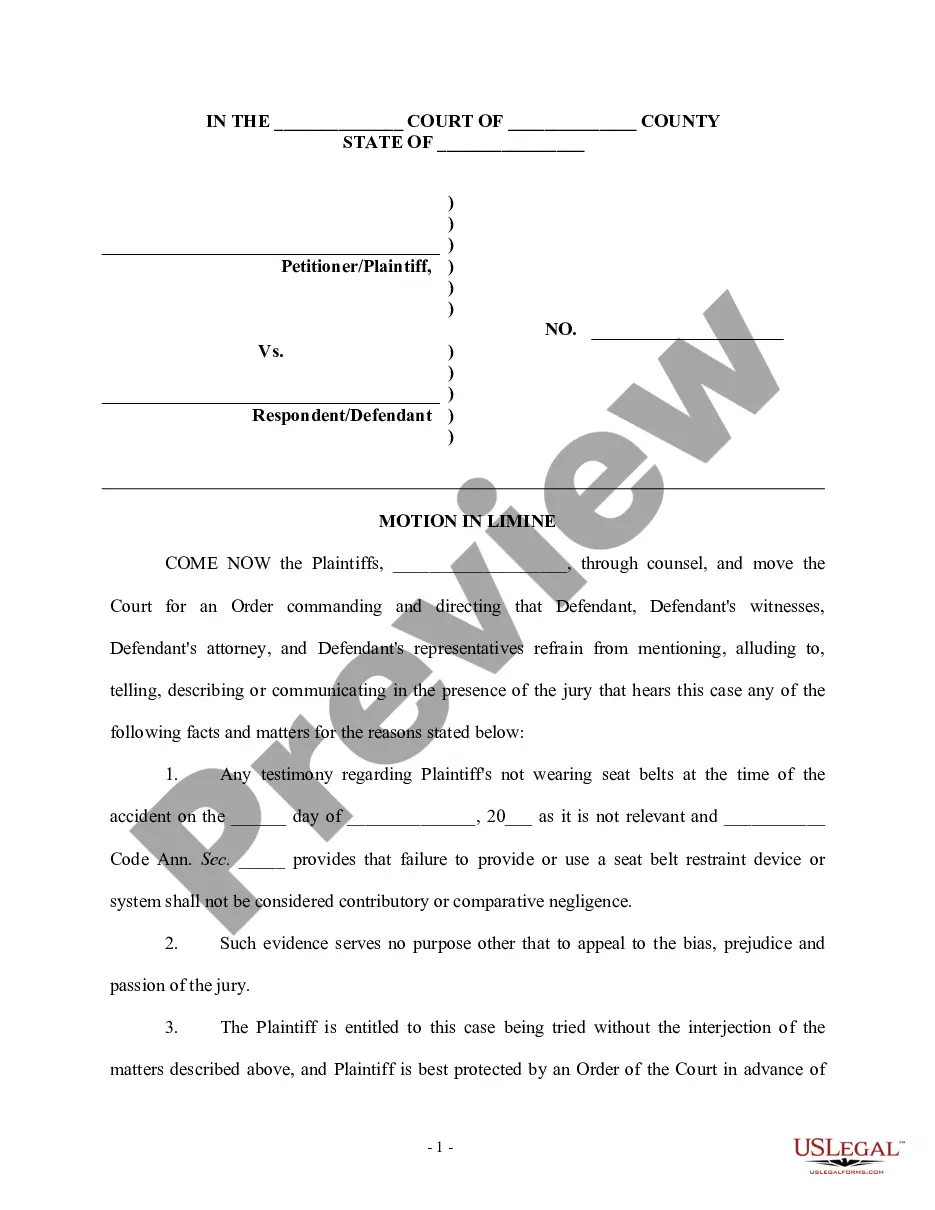
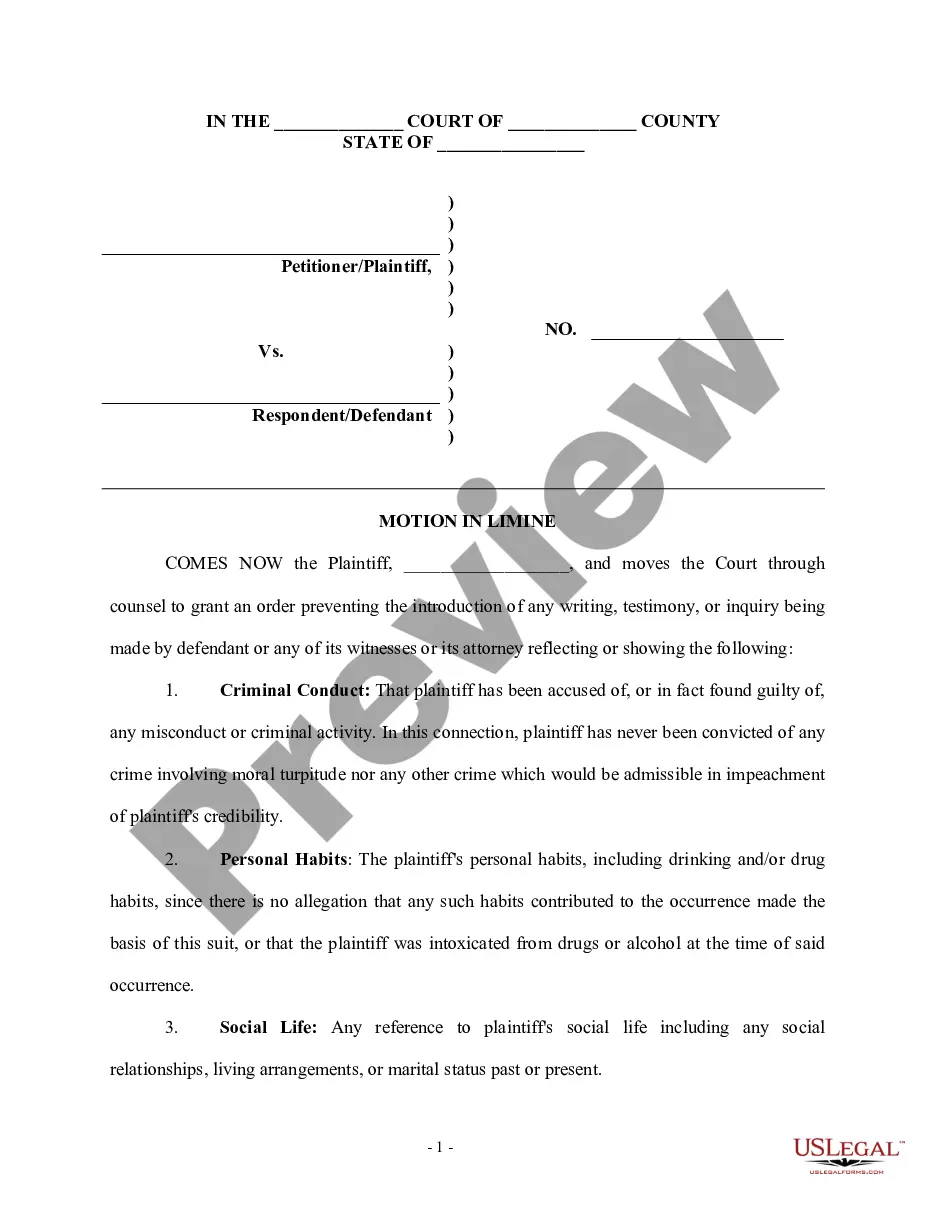
This form is a Plaintiff's Motion in Limine to prohibit introduction of evidence regarding performance, productivity, and/or efficiency in an age discrimination case. Its primary purpose is to exclude specific evidence claiming inadequacies in job performance that could unfairly impact the case. This motion aims to ensure that the plaintiff's age-related claims are evaluated without bias from performance-related arguments, thus safeguarding the integrity of the legal process.
Form components explained
- Introduction identifying the parties involved and outlining the motion's purpose.
- Background information on the plaintiffâs employment status and termination.
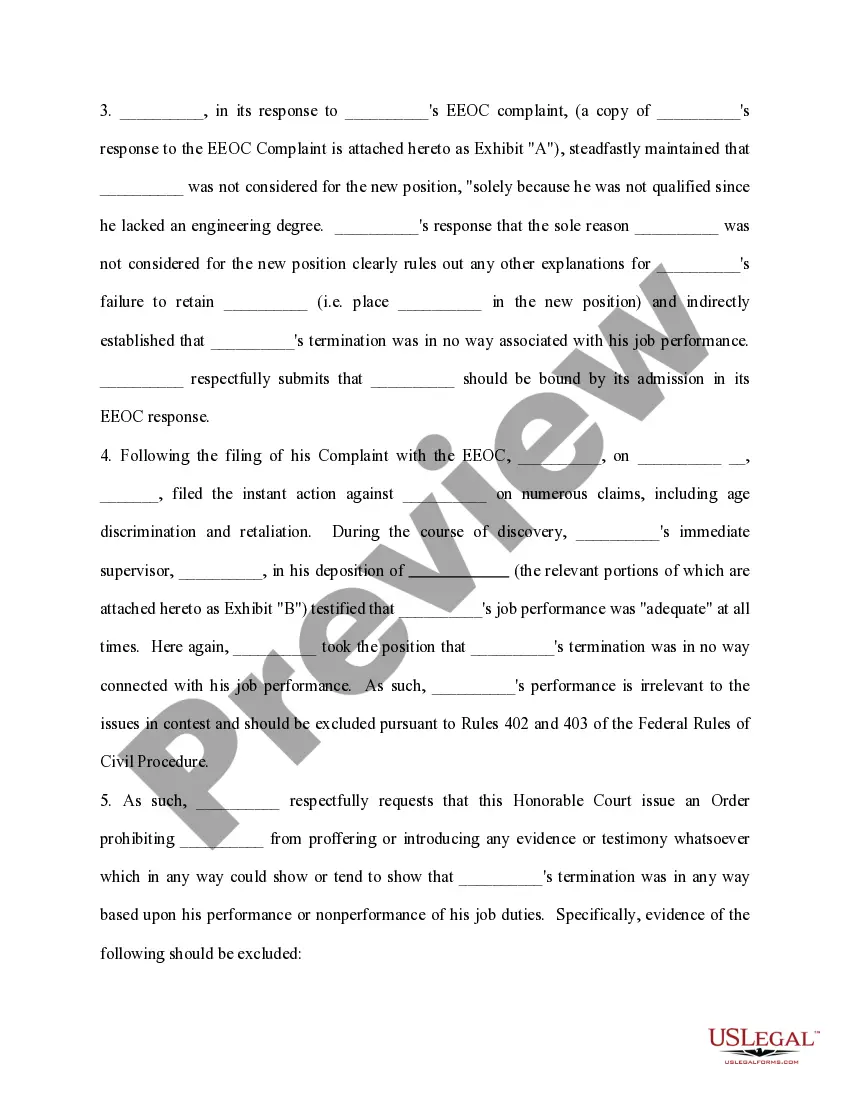
- Reference to the Equal Employment Opportunity Commission (EEOC) complaint.
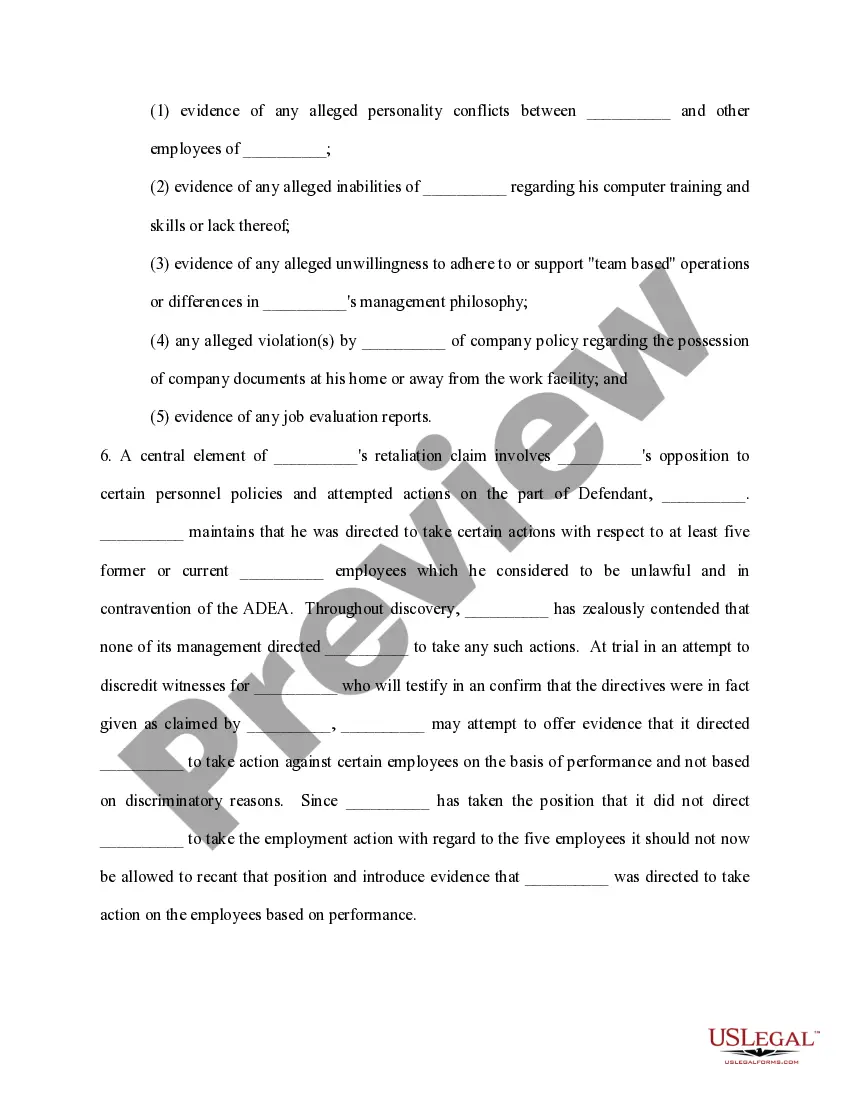
- Arguments asserting the irrelevance of performance evidence to the case.
- A request to the court to exclude specific types of evidence regarding performance.

Situations where this form applies
This form should be used when a plaintiff seeks to prevent the introduction of performance-related evidence in an age discrimination lawsuit. It is particularly helpful when the evidence has the potential to undermine the plaintiff's assertions by introducing irrelevant performance metrics that do not correlate with the alleged discriminatory actions taken by the employer.
Intended users of this form
- Plaintiffs in age discrimination lawsuits.
- Attorneys representing clients in employment-related legal disputes.
- Individuals challenging wrongful termination based on age discrimination claims.
Completing this form step by step
- Enter the names of the plaintiff and defendant, along with their legal representatives.
- Provide the employment details of the plaintiff, including job title and termination date.
- Outline the claims made in the EEOC complaint related to age discrimination.
- List the specific types of evidence to be excluded, detailing why they are irrelevant.
- Complete the signature and date sections at the end of the document.
Notarization guidance
This form does not typically require notarization unless specified by local law. However, confirm your jurisdiction's requirements concerning notarization for legal documents to ensure full compliance.
Get your form ready online
Our built-in tools help you complete, sign, share, and store your documents in one place.
Make edits, fill in missing information, and update formatting in US Legal Forms—just like you would in MS Word.
Download a copy, print it, send it by email, or mail it via USPS—whatever works best for your next step.
Sign and collect signatures with our SignNow integration. Send to multiple recipients, set reminders, and more. Go Premium to unlock E-Sign.
If this form requires notarization, complete it online through a secure video call—no need to meet a notary in person or wait for an appointment.
We protect your documents and personal data by following strict security and privacy standards.

Make edits, fill in missing information, and update formatting in US Legal Forms—just like you would in MS Word.

Download a copy, print it, send it by email, or mail it via USPS—whatever works best for your next step.

Sign and collect signatures with our SignNow integration. Send to multiple recipients, set reminders, and more. Go Premium to unlock E-Sign.

If this form requires notarization, complete it online through a secure video call—no need to meet a notary in person or wait for an appointment.

We protect your documents and personal data by following strict security and privacy standards.
Common mistakes to avoid
- Failing to include adequate evidence supporting the motion.
- Not specifying the types of evidence to be excluded.
- Omitting important dates or details about the plaintiff's employment.
Advantages of online completion
- Convenient access to customizable legal templates.
- Editability allows users to tailor the form to their specific case details.
- Reliable documents drafted with legal standards in mind to improve accuracy.
Legal use & context:
- This motion is legally recognized and can help streamline trial proceedings by excluding irrelevant evidence.
- It reinforces the focus on discriminatory practices rather than employee performance.
- Depending on the jurisdiction, the rules for filing this motion may vary; always consult local legal guidelines for compliance.
Summary of main points
- The Plaintiff's Motion in Limine is essential in protecting the integrity of age discrimination claims.
- Clear specification of what evidence should be excluded can strengthen a Plaintiff's case.
- Using this form helps streamline legal proceedings and focuses the trial on relevant issues.
Looking for another form?





Form popularity
FAQ
The three primary standards of proof are proof beyond a reasonable doubt, preponderance of the evidence and clear and convincing evidence.
Definition of plaintiff: The individual who files a lawsuit against another party is the plaintiff, while the party the lawsuit is brought against is considered the defendant. Anyone can be a plaintiff.
(In the trial court, the first name listed is the plaintiff, the party bringing the suit. The name following the "v" is the defendant. If the case is appealed, as in this example, the name of the petitioner (appellant) is usually listed first, and the name of the respondent (appellee) is listed second.
In civil cases, the plaintiff has the burden of proving his case by a preponderance of the evidence. A "preponderance of the evidence" and "beyond a reasonable doubt" are different standards, requiring different amounts of proof.
Plaintiff is the term used to describe a party who initiates a court action, whether a lawsuit in civil court, or charges in criminal court, in order to seek a legal remedy. The party responding to the lawsuit, or the person being charged with a crime, is known as the Defendant.
In a civil lawsuit, the burden of proof rests on the plaintiff or the person filing the suit. The plaintiff should prove that the allegations are true and that the defendant, or the other party, caused damages. When it comes to establishing a civil case, the plaintiff must usually do so by a preponderance of evidence.
The definition of a plaintiff is someone who brings a lawsuit against someone into court. An example of a plaintiff is a wife filing for divorce.The party in a civil law case who brings the action in a court of law.
Plaintiff, the party who brings a legal action or in whose name it is broughtas opposed to the defendant, the party who is being sued. The term corresponds to petitioner in equity and civil law and to libelant in admiralty.
In a civil case, the plaintiff must prove his case by a preponderance of the evidence.If the plaintiff has successfully proves that a fact is more likely so than not, it must be accepted as true by the judge or jury. In criminal cases, the prosecution must prove its case beyond a reasonable doubt.