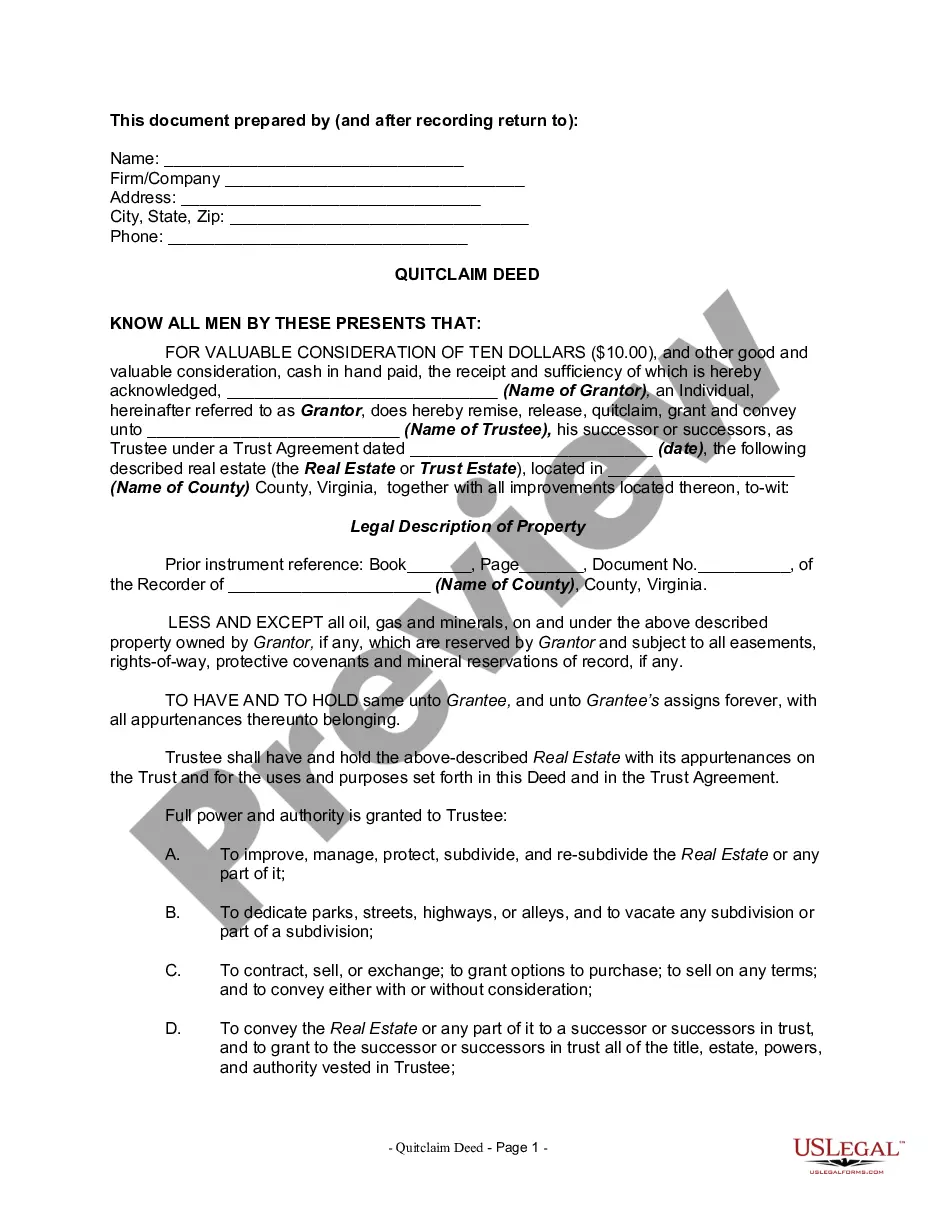
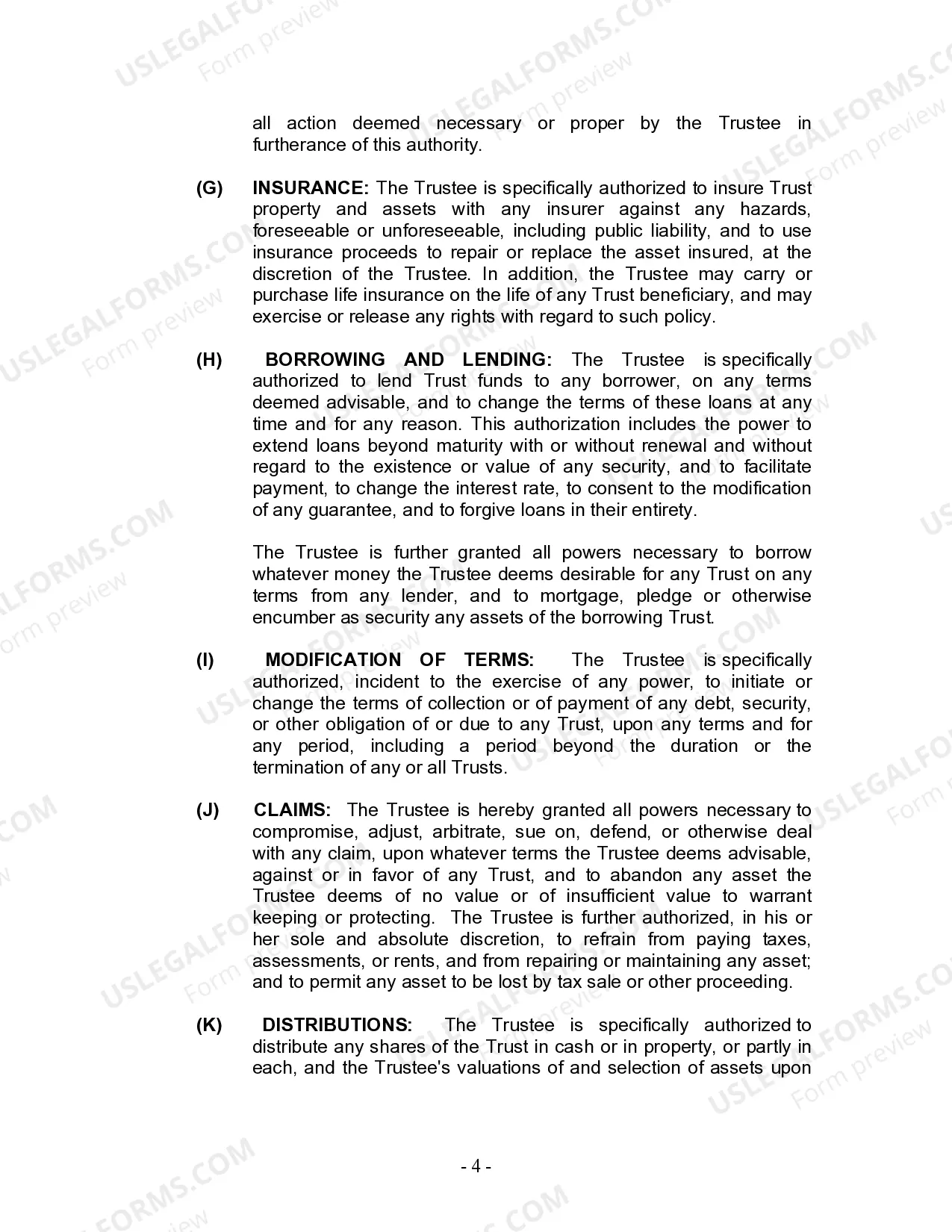
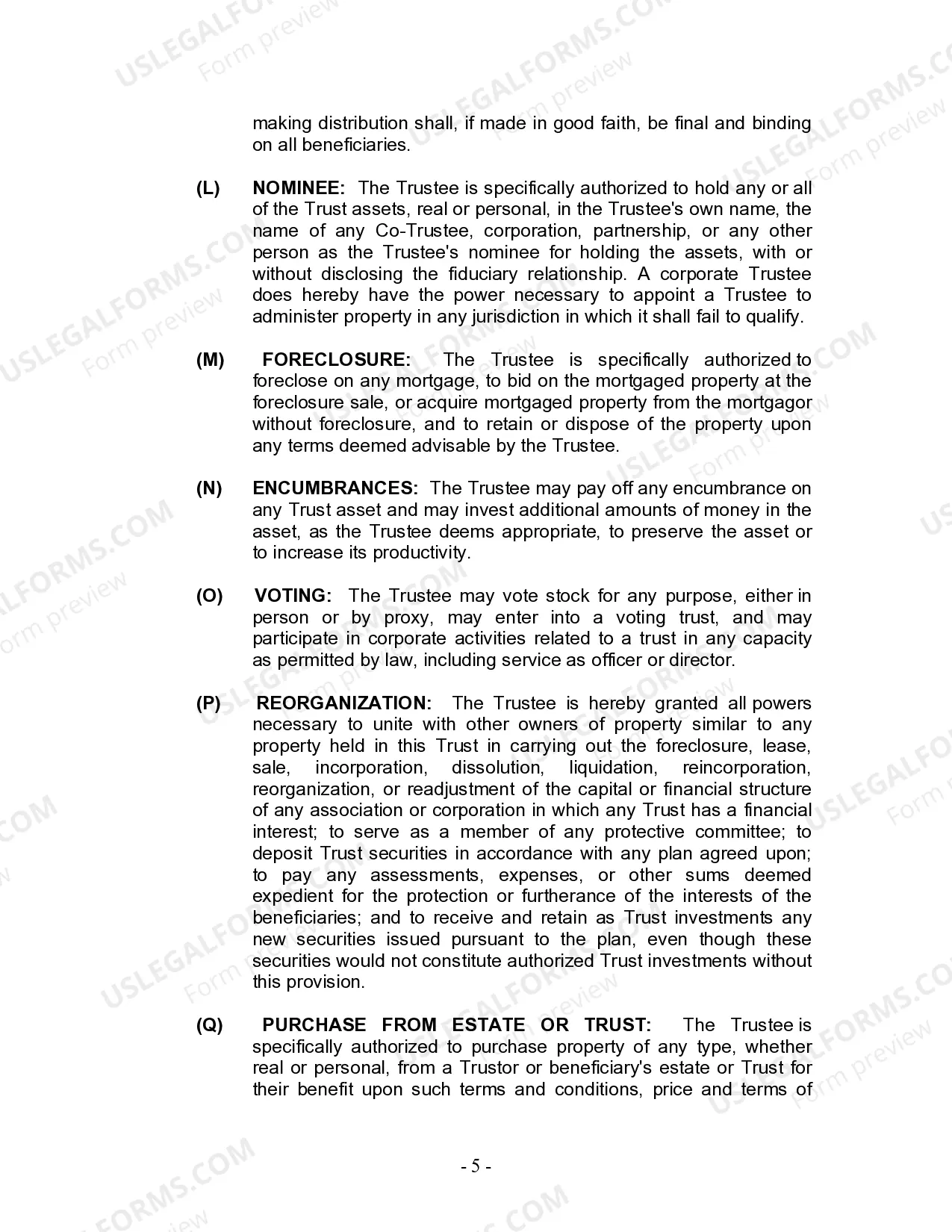
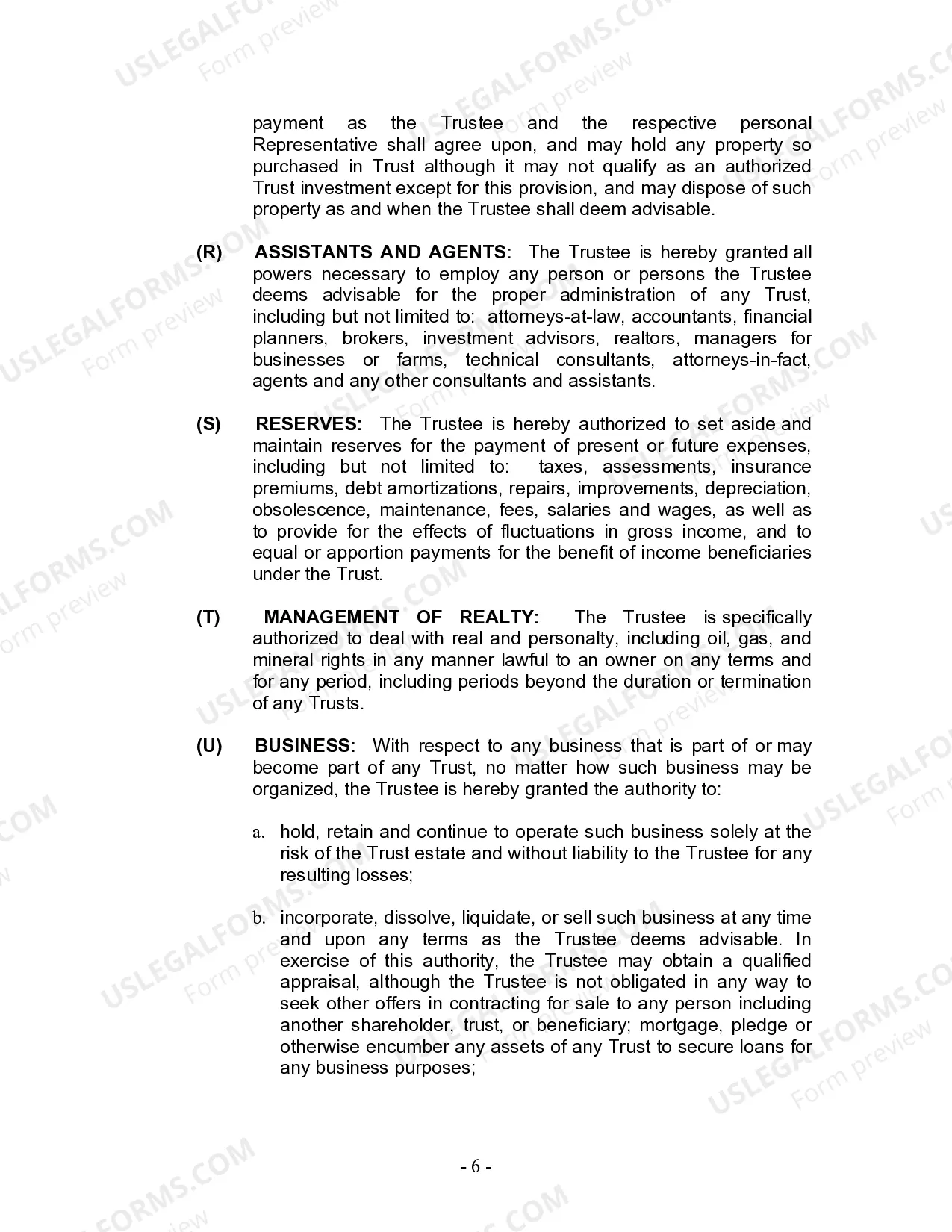
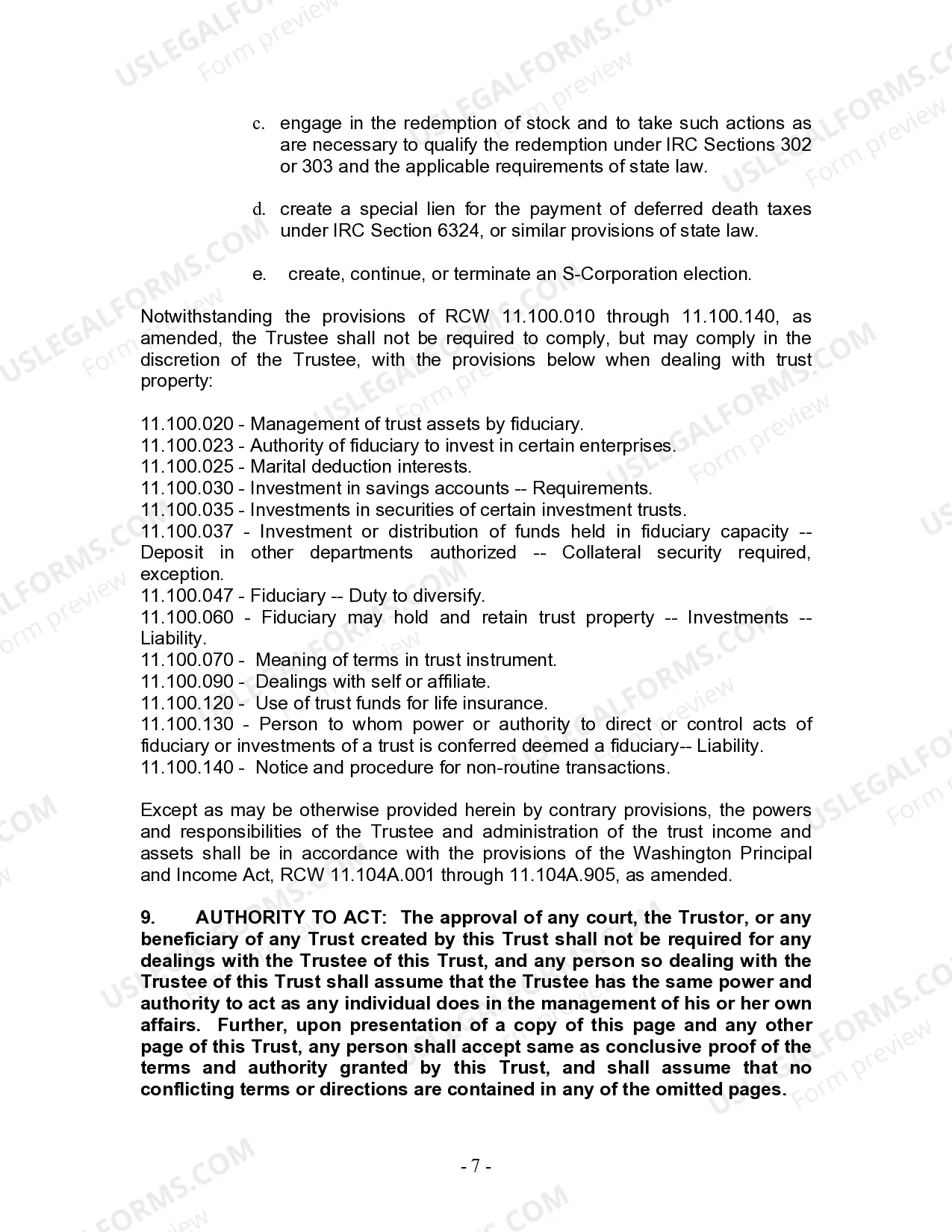
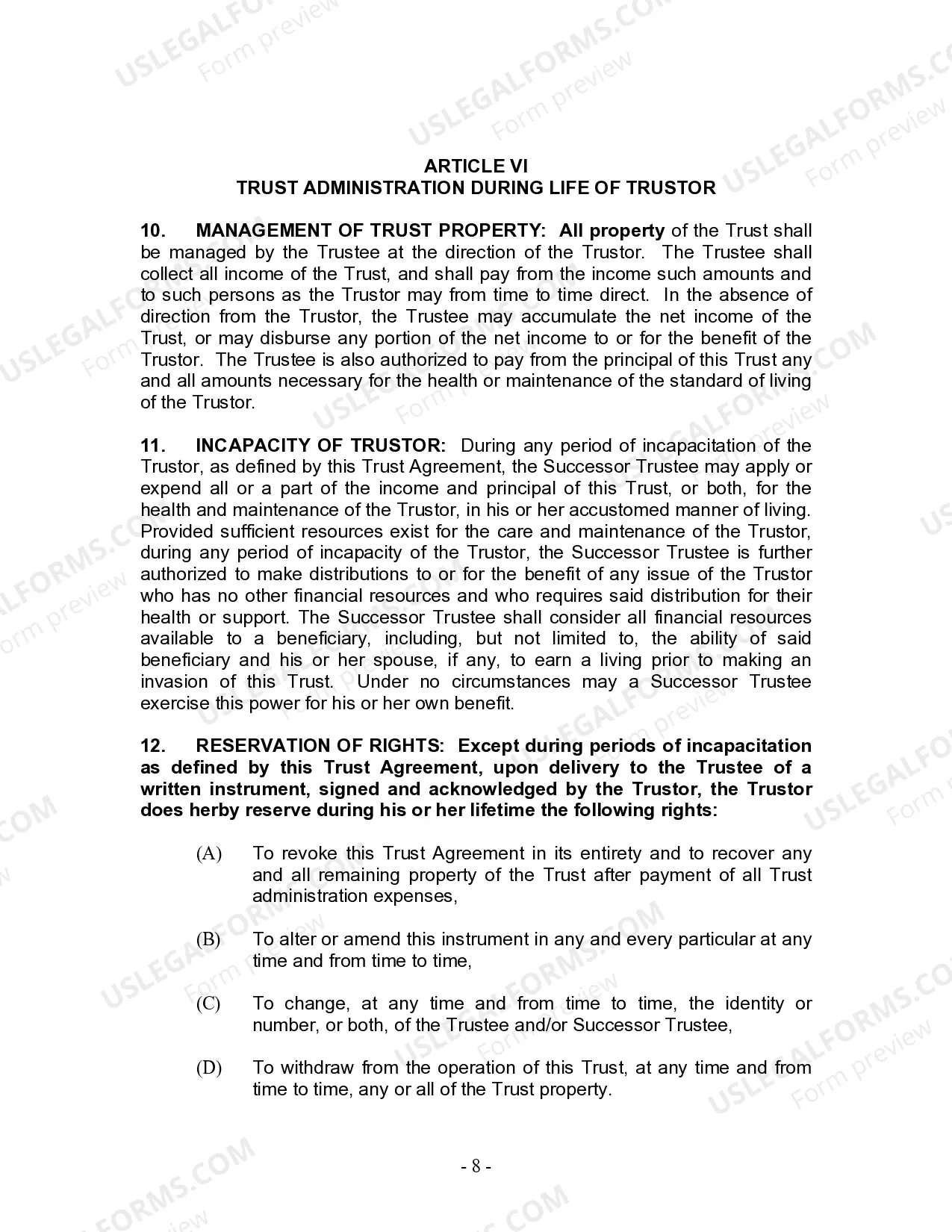
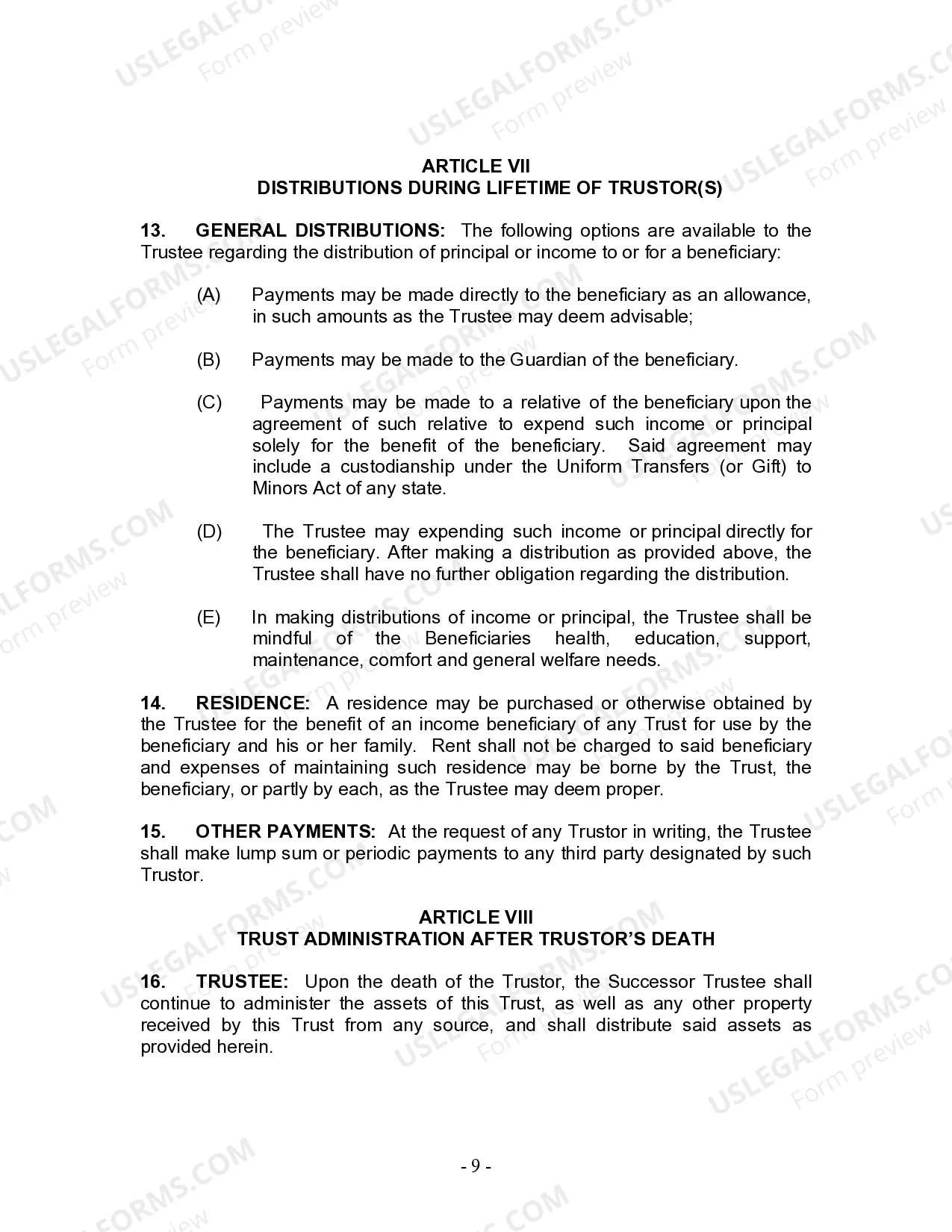
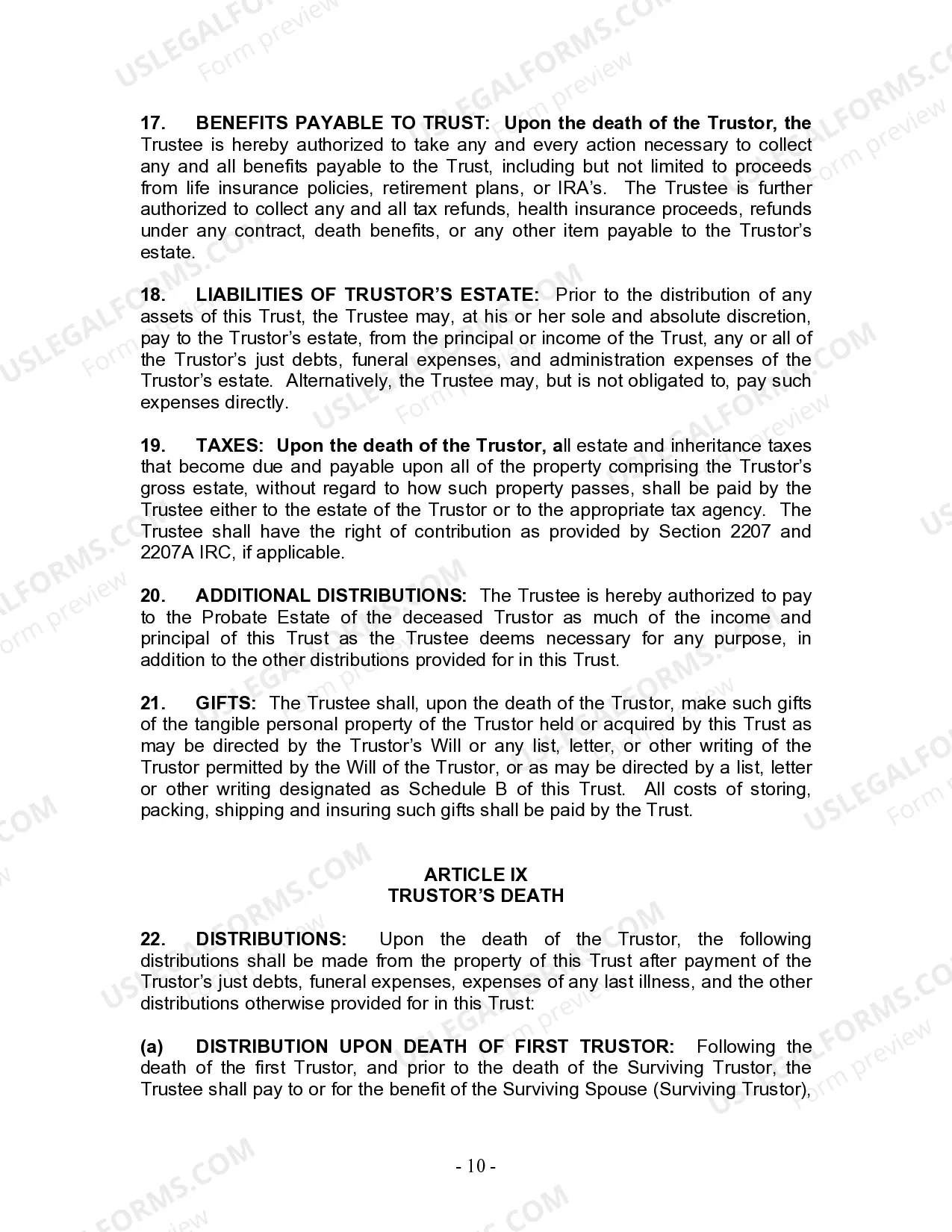
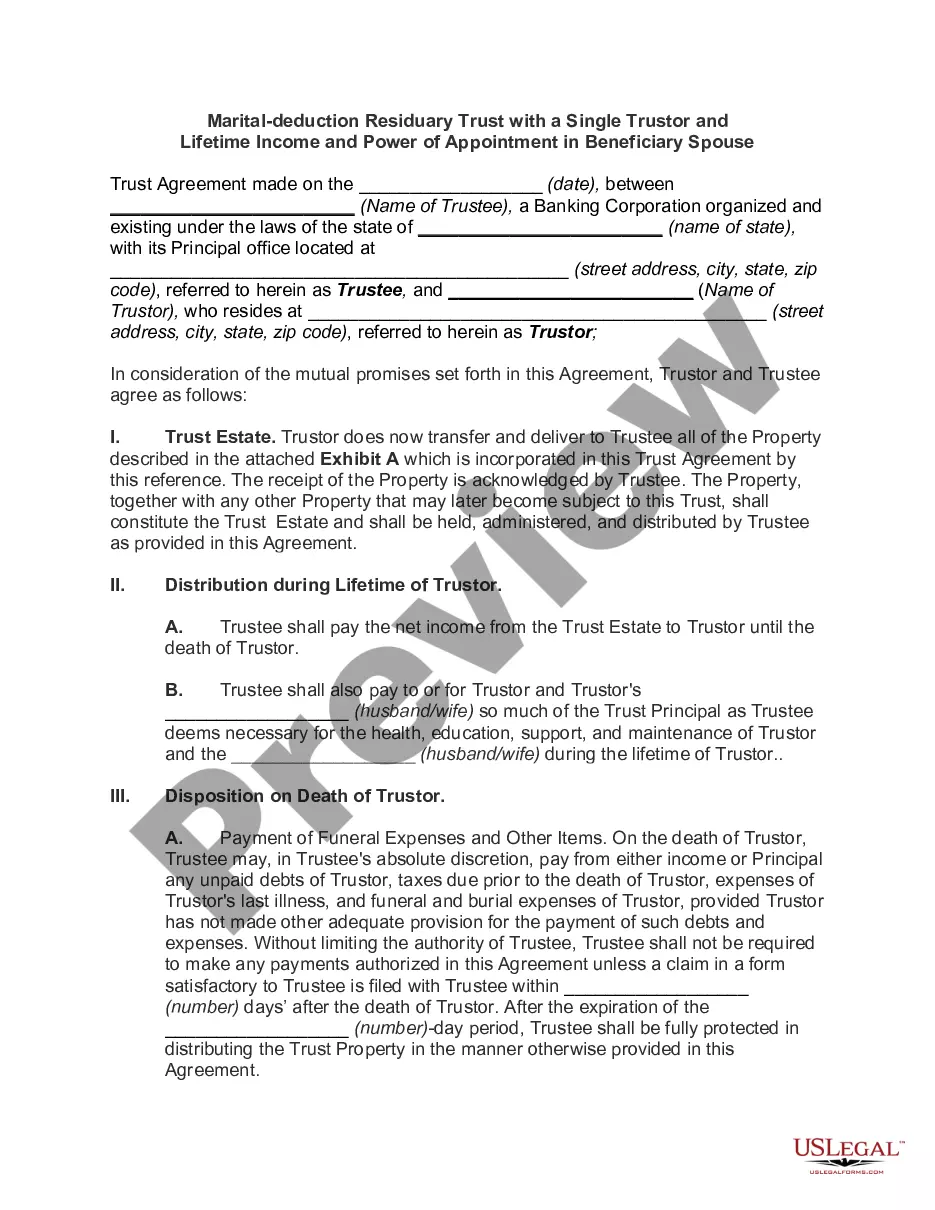
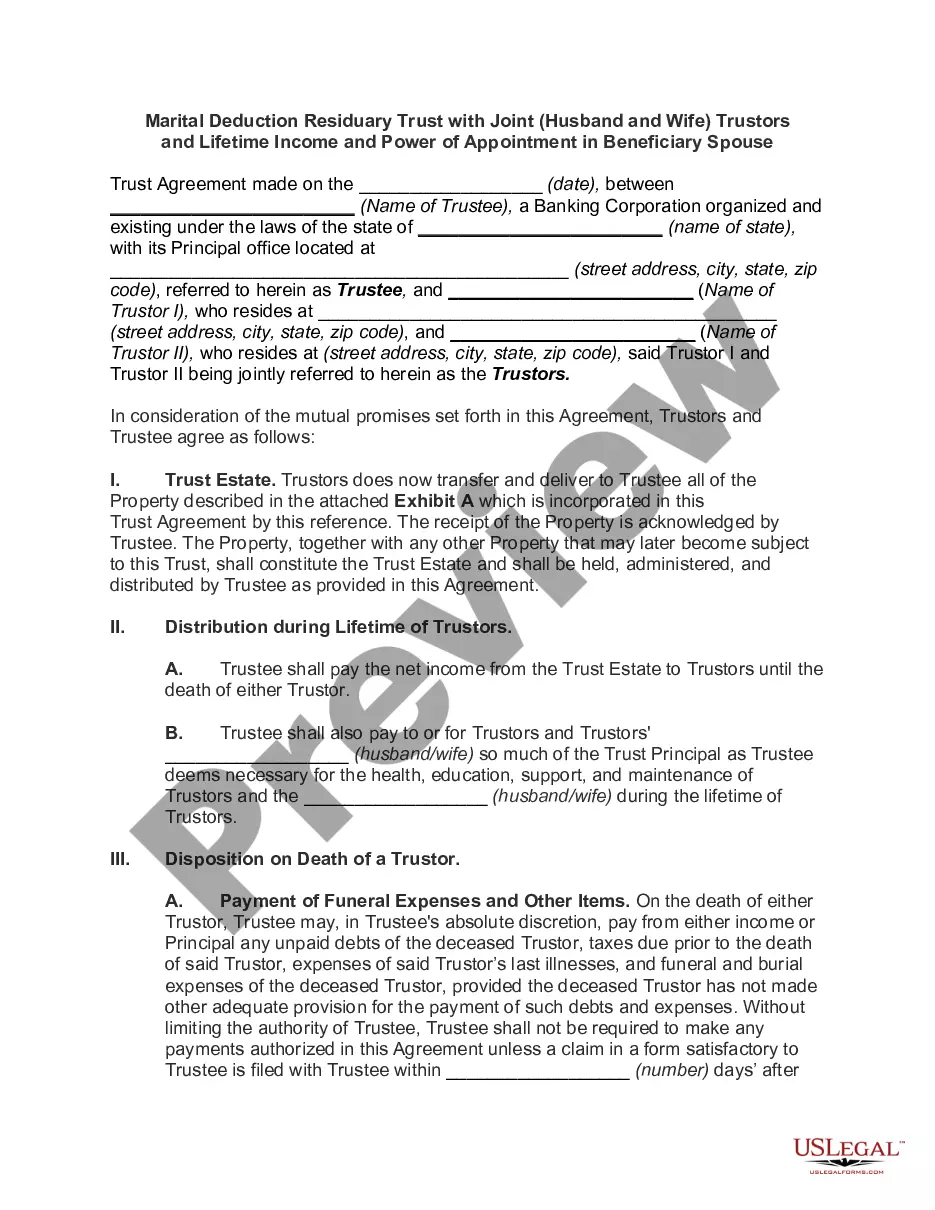
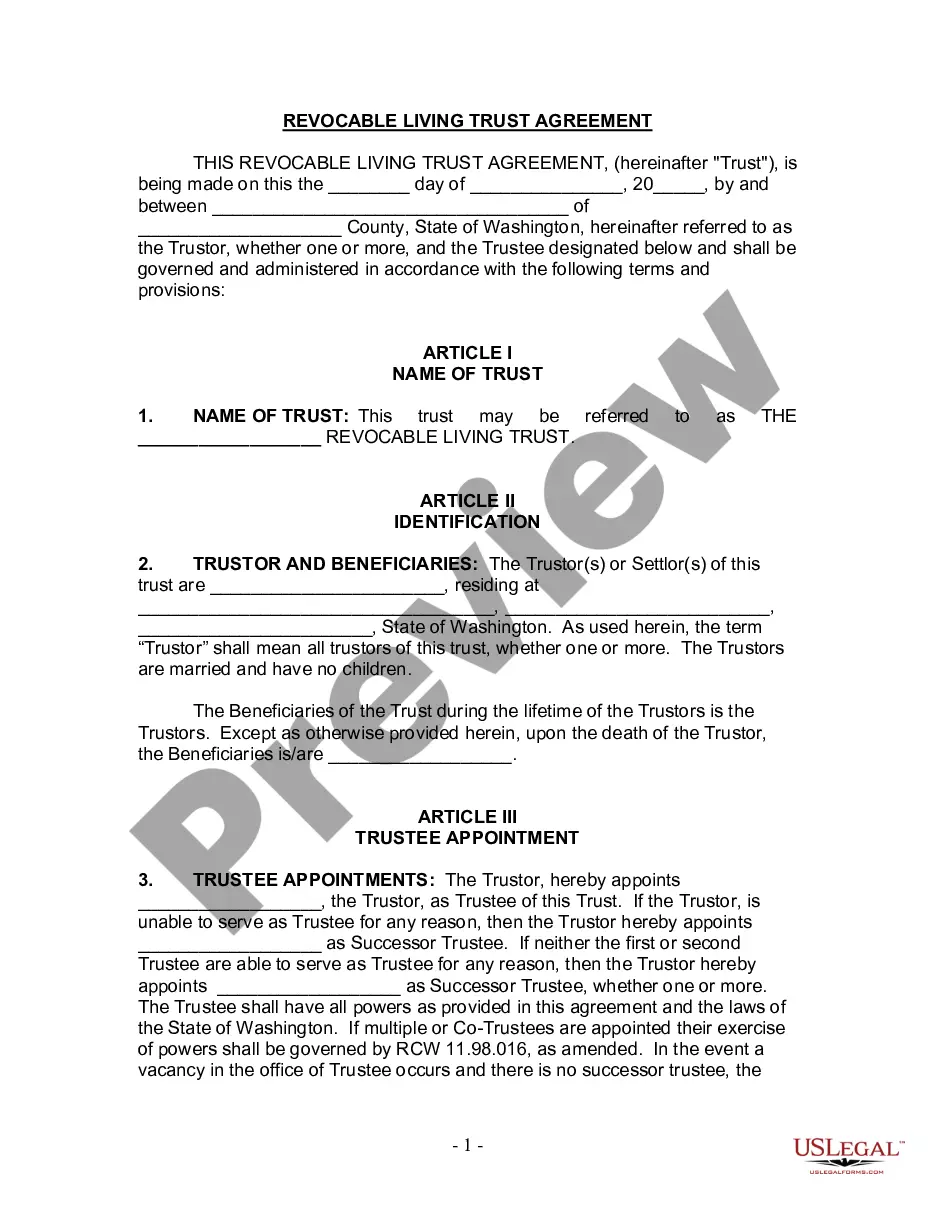
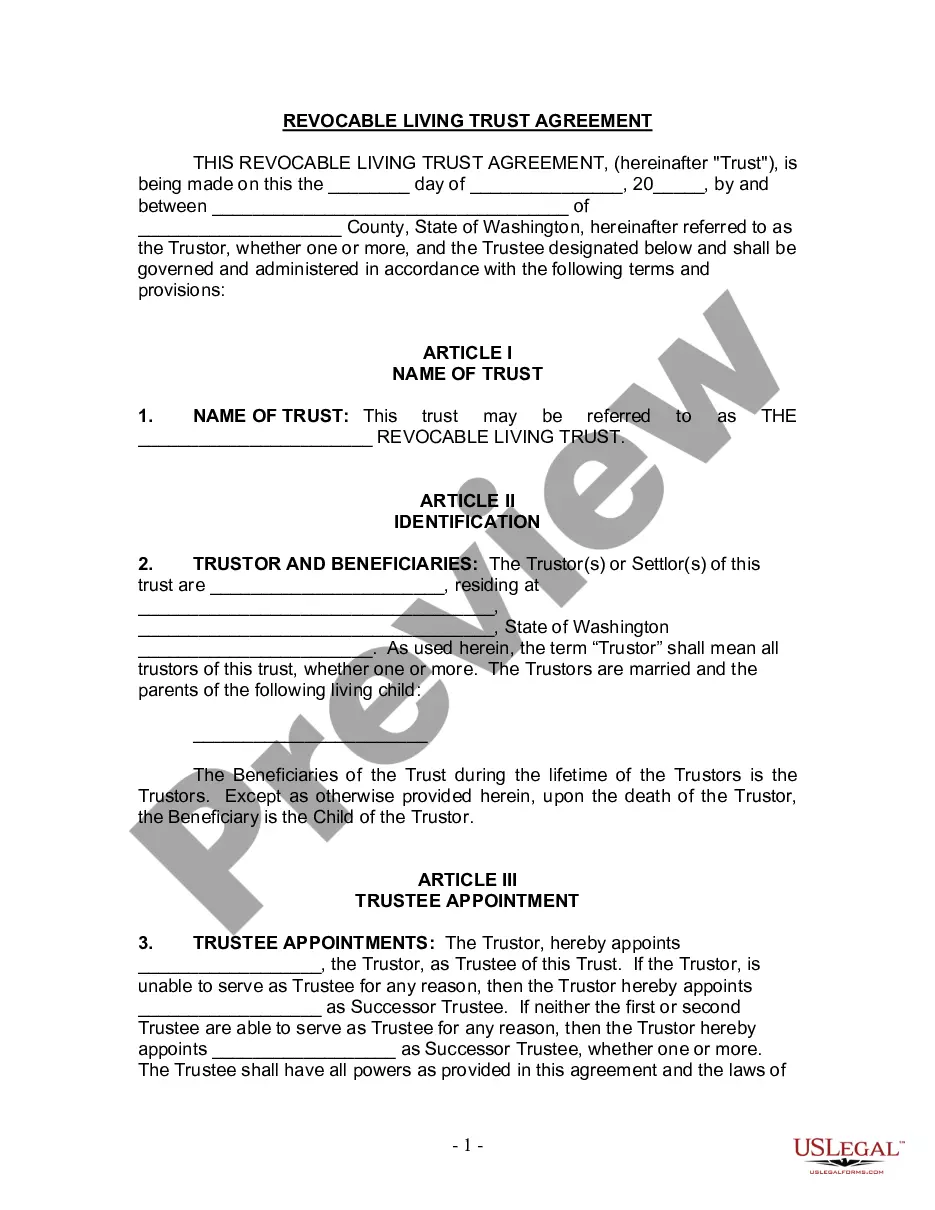
This form is a living trust form prepared for your state. A living trust is a trust established during a person's lifetime in which a person's assets and property are placed within the trust, usually for the purpose of estate planning. The trust then owns and manages the property held by the trust through a trustee for the benefit of named beneficiary, usually the creator of the trust (settlor). The settlor, trustee and beneficiary may all be the same person. In this way, a person may set up a trust with his or her own assets and maintain complete control and management of the assets by acting as his or her own trustee. Upon the death of the person who created the trust, the property of the trust does not go through probate proceedings, but rather passes according to provisions of the trust as set up by the creator of the trust.
Washington Living Trust for Husband and Wife with Minor and or Adult Children
Description
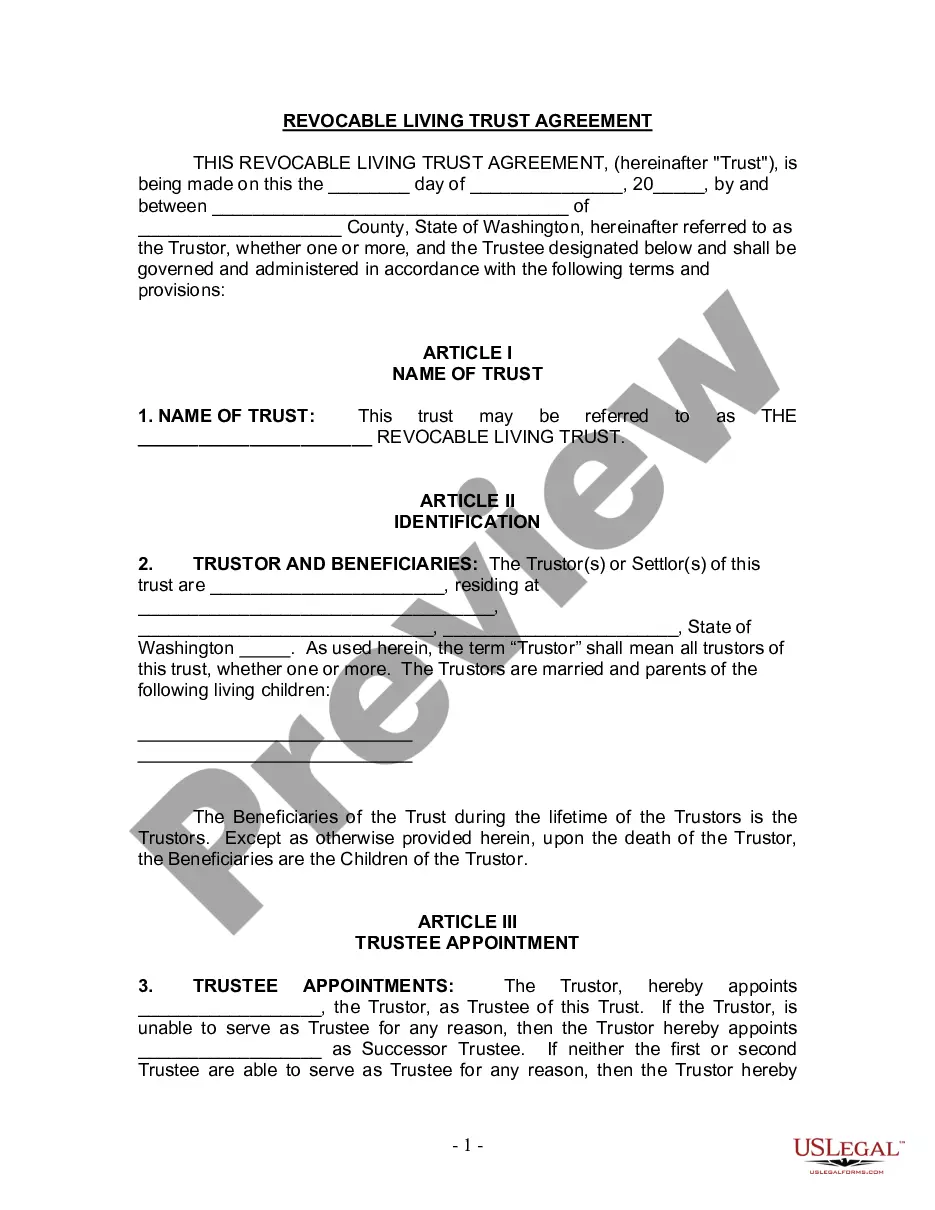
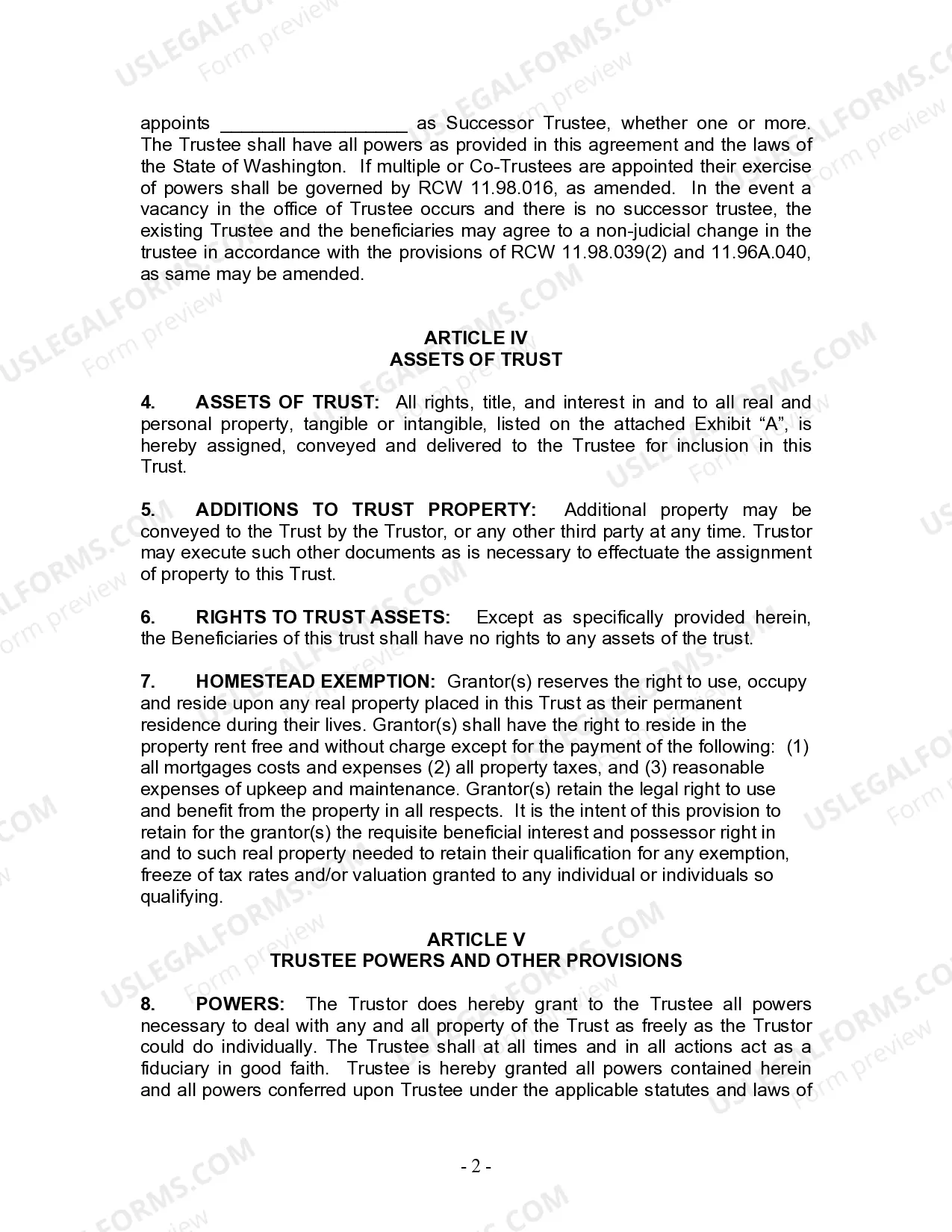
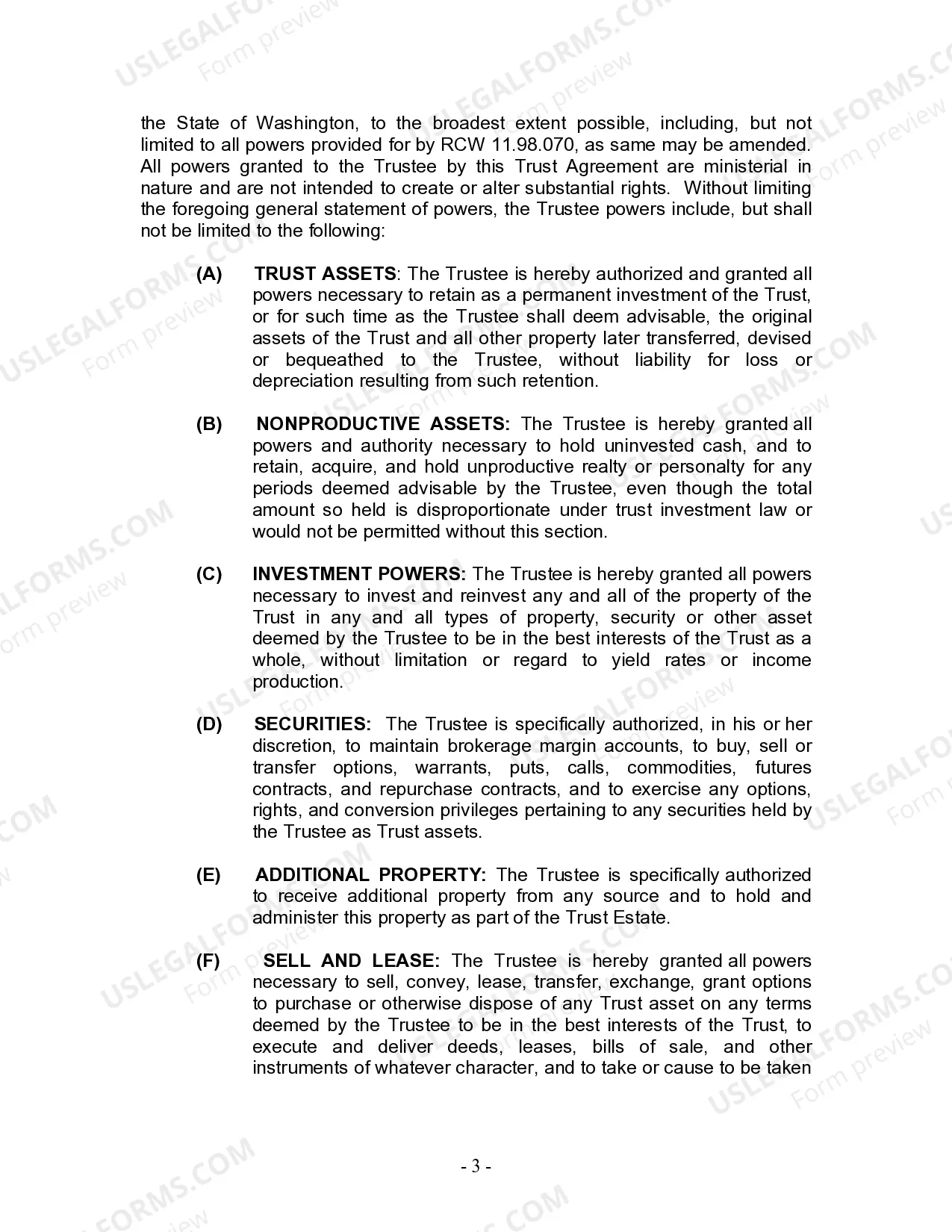



How to fill out Washington Living Trust For Husband And Wife With Minor And Or Adult Children?
Out of the large number of platforms that offer legal templates, US Legal Forms provides the most user-friendly experience and customer journey while previewing forms prior to buying them. Its comprehensive catalogue of 85,000 samples is categorized by state and use for efficiency. All of the documents available on the service have already been drafted to meet individual state requirements by qualified legal professionals.
If you already have a US Legal Forms subscription, just log in, search for the template, press Download and obtain access to your Form name in the My Forms; the My Forms tab holds all your downloaded forms.
Keep to the guidelines listed below to get the document:
- Once you find a Form name, make certain it is the one for the state you really need it to file in.
- Preview the template and read the document description before downloading the sample.
- Look for a new sample using the Search engine in case the one you have already found is not appropriate.
- Just click Buy Now and select a subscription plan.
- Create your own account.
- Pay using a card or PayPal and download the document.
When you’ve downloaded your Form name, you may edit it, fill it out and sign it with an web-based editor that you pick. Any form you add to your My Forms tab can be reused multiple times, or for as long as it continues to be the most up-to-date version in your state. Our service offers quick and easy access to templates that suit both legal professionals and their customers.
Form popularity
FAQ
There is no difference between a trust and a living trust.Trusts are considered separate entities that manage a person's assets. The person who manages the assets of a trust is called a trustee, who manages the assets based on the terms of the trust document.
When it comes to protecting your loved ones, having both a will and a trust is essential. The difference between a will and a trust is when they kick into action. A will lays out your wishes for after you die. A living revocable trust becomes effective immediately.
When it comes to protecting your loved ones, having both a will and a trust is essential. The difference between a will and a trust is when they kick into action. A will lays out your wishes for after you die. A living revocable trust becomes effective immediately.
When it comes to protecting your loved ones, having both a will and a trust is essential. The difference between a will and a trust is when they kick into action. A will lays out your wishes for after you die. A living revocable trust becomes effective immediately.
Combining a Will and Trust Together: Should You Use Both? The use of a living trust and a will together as part of your estate planning is acceptable under California law. The benefit of this approach is that you can address separate issues on each document.
A revocable trust and living trust are separate terms that describe the same thing: a trust in which the terms can be changed at any time.Trusts are also a way to reduce tax burdens and avoid assets going to probate.
Paperwork. Setting up a living trust isn't difficult or expensive, but it requires some paperwork. Record Keeping. After a revocable living trust is created, little day-to-day record keeping is required. Transfer Taxes. Difficulty Refinancing Trust Property. No Cutoff of Creditors' Claims.
Using a revocable living trust instead of a will means assets owned by your trust will bypass probate and flow to your heirs as you've outlined in the trust documents. A trust lets investors have control over their assets long after they pass away.