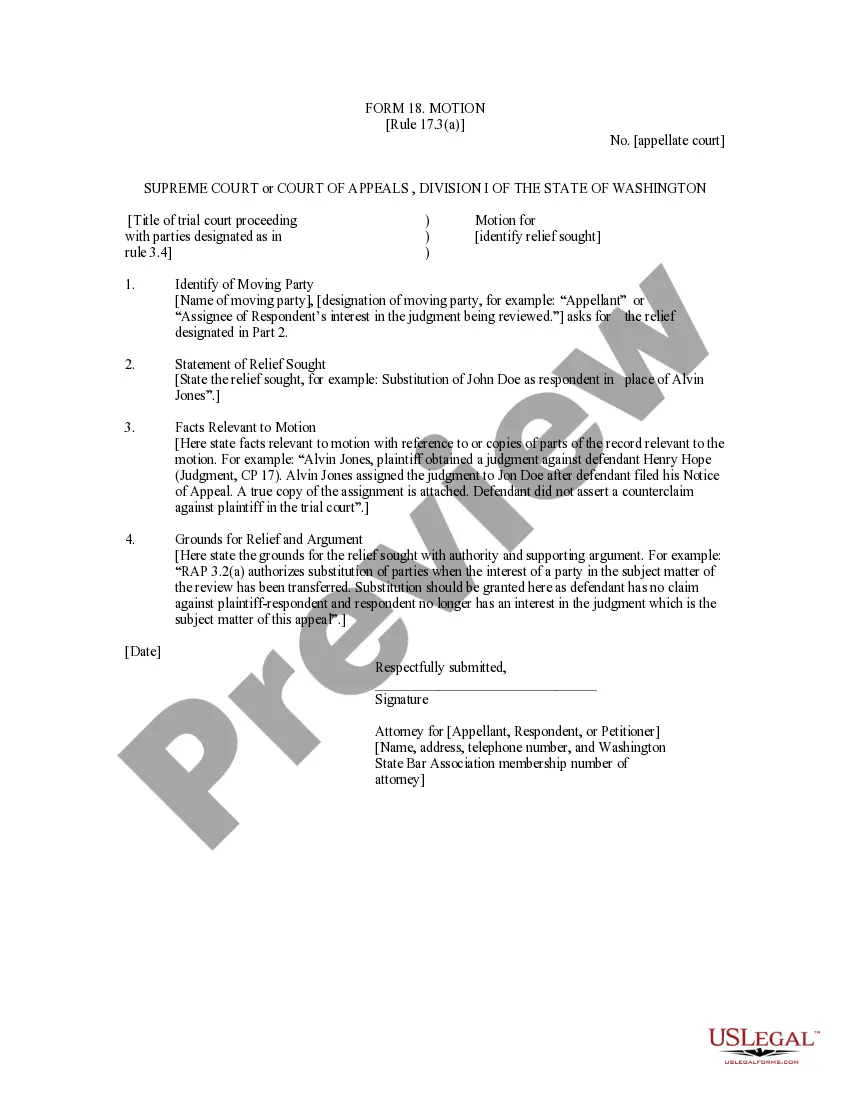
Complaint for Breach of Covenant of Quiet Enjoyment
About this form
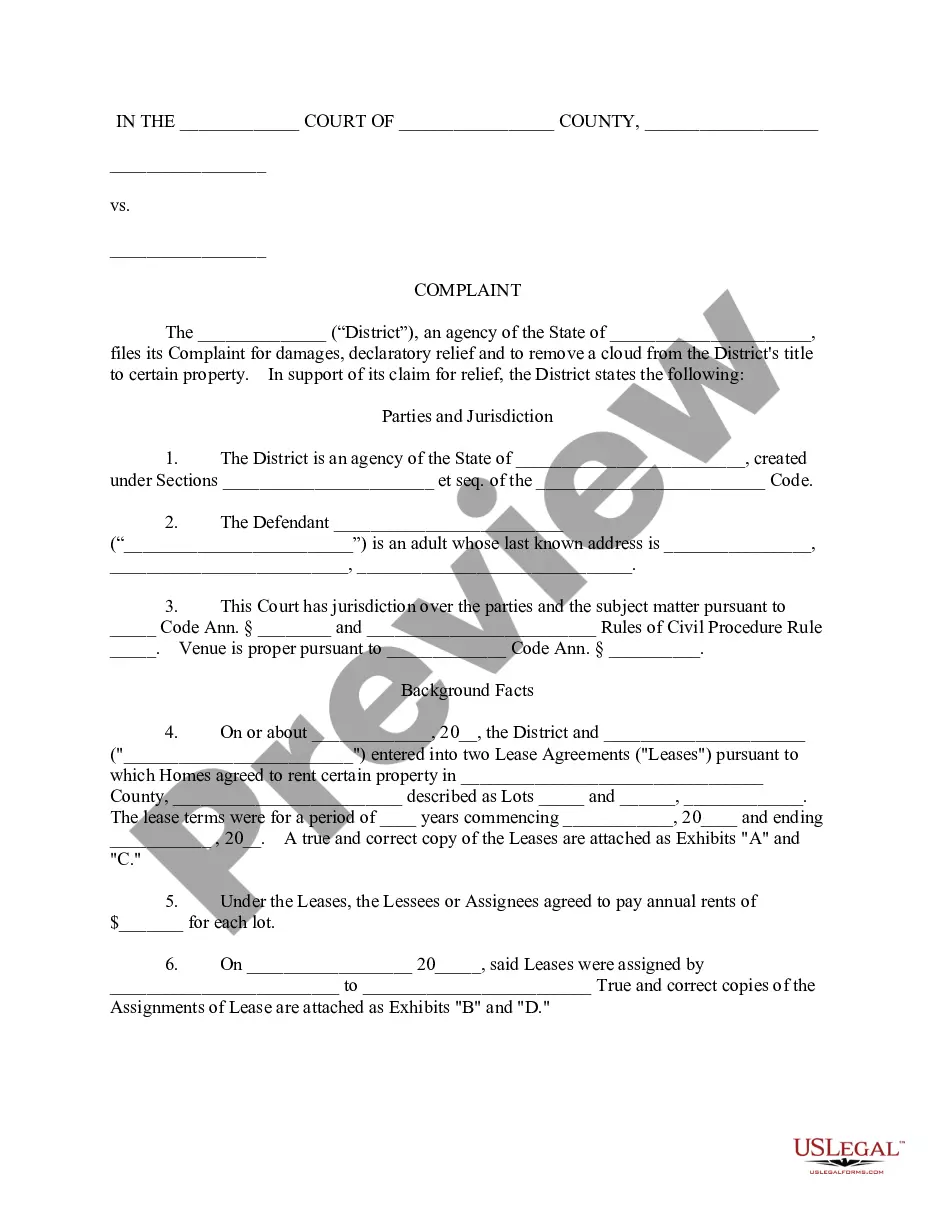
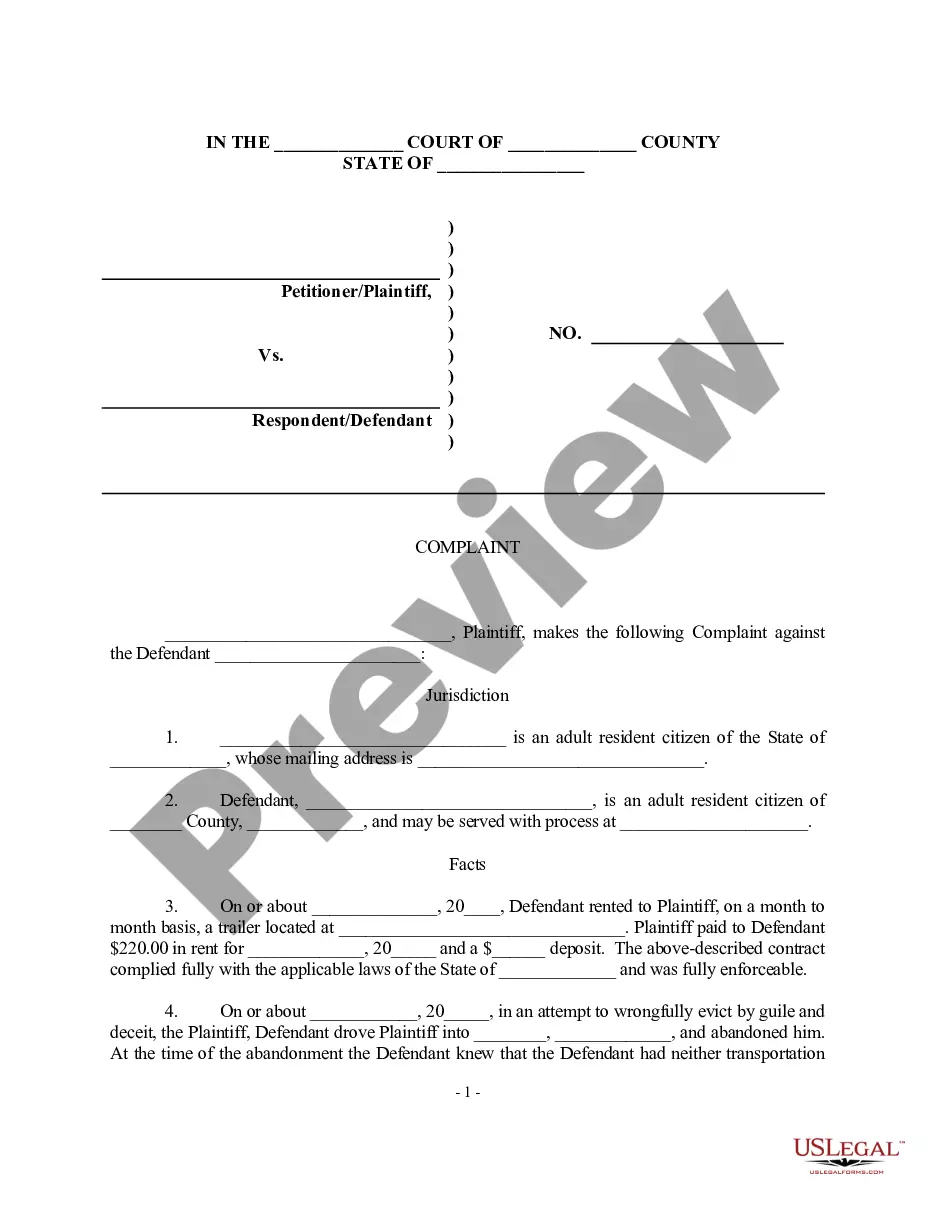
The Complaint for Breach of Covenant of Quiet Enjoyment is a legal document used by tenants to address violations of their right to enjoy their living space without interference. This form is specifically aimed at lodging a formal complaint against a landlord who has failed to uphold the covenant of quiet enjoyment, which is typically implied in rental agreements. Unlike other eviction or lease violation forms, this complaint focuses exclusively on disturbances that affect a tenant's peace and enjoyment of their home.
Main sections of this form
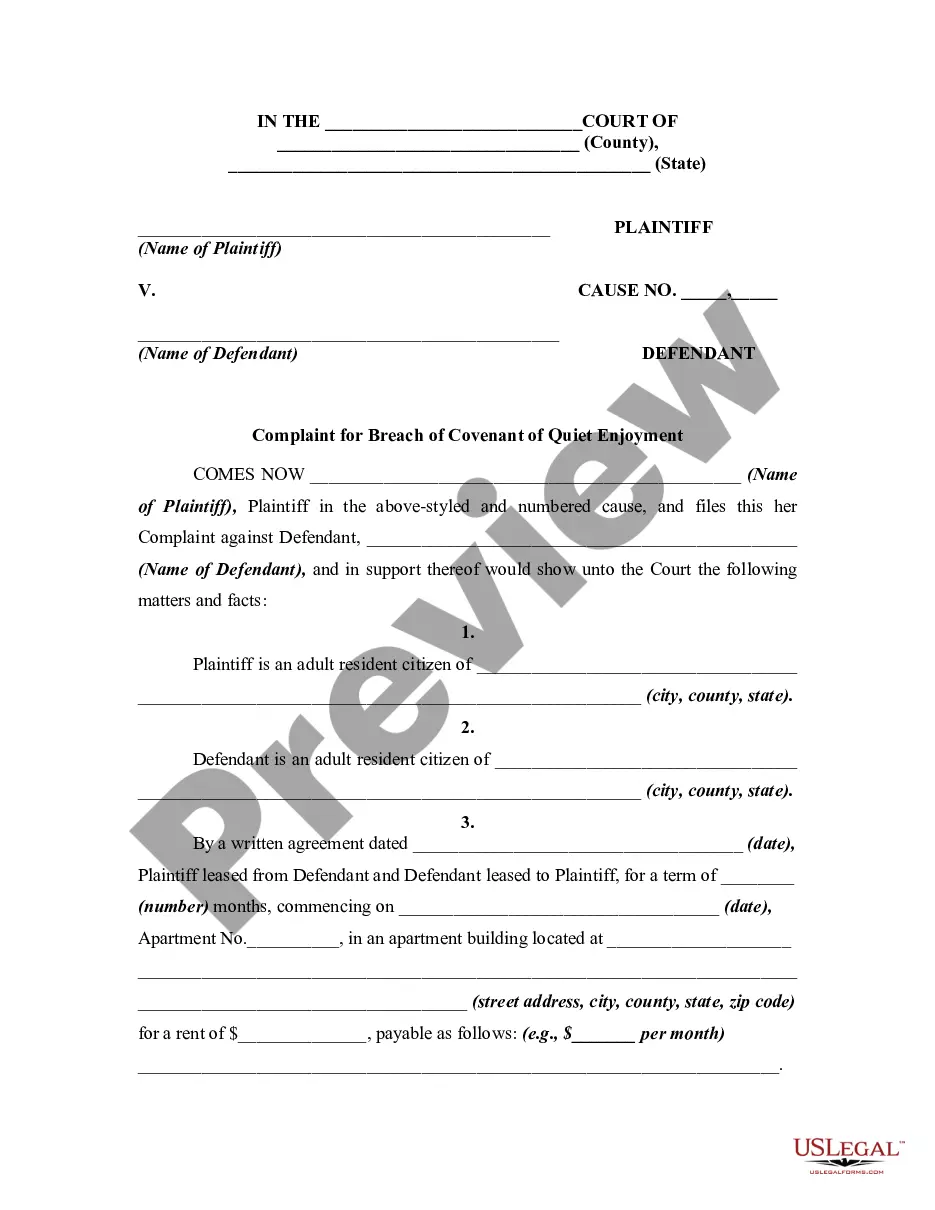
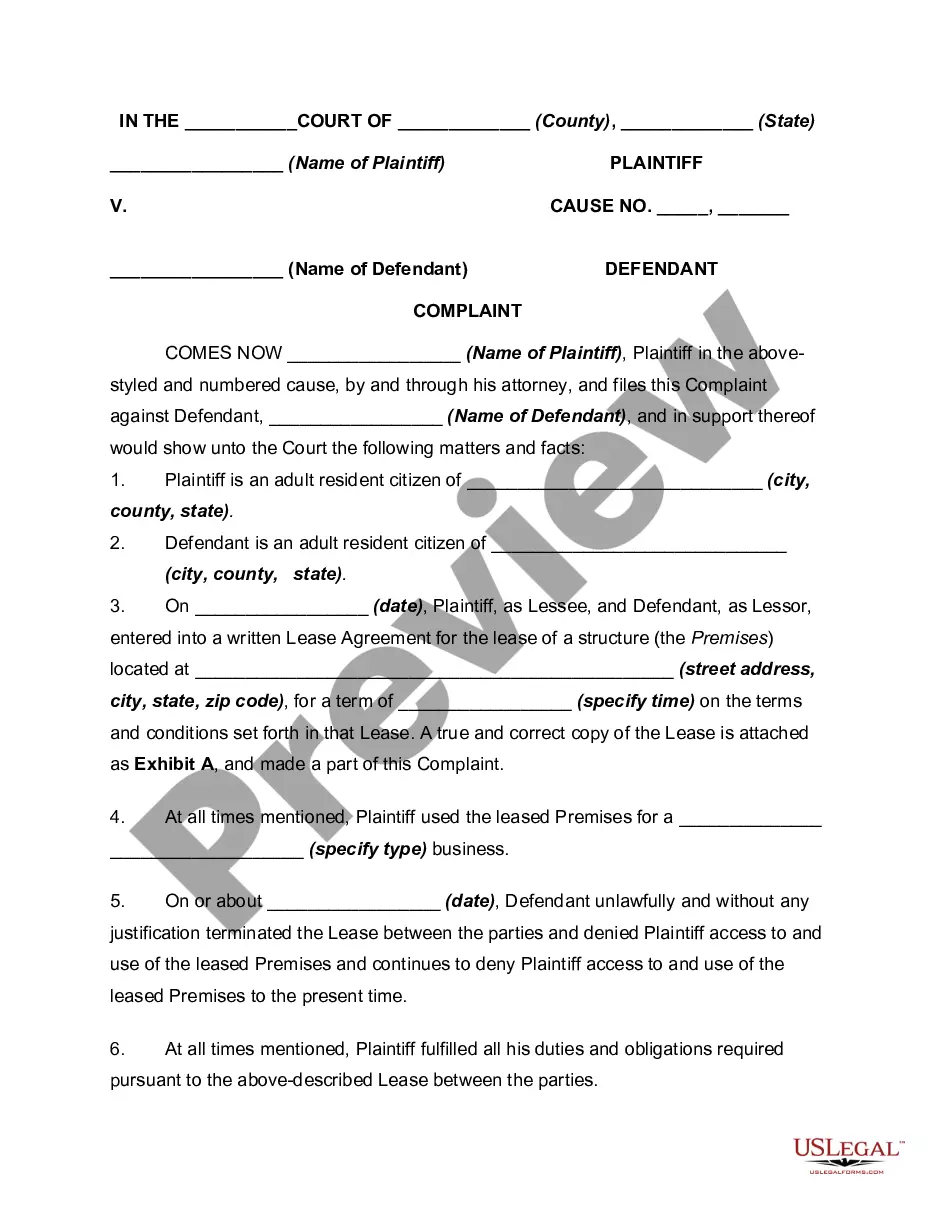
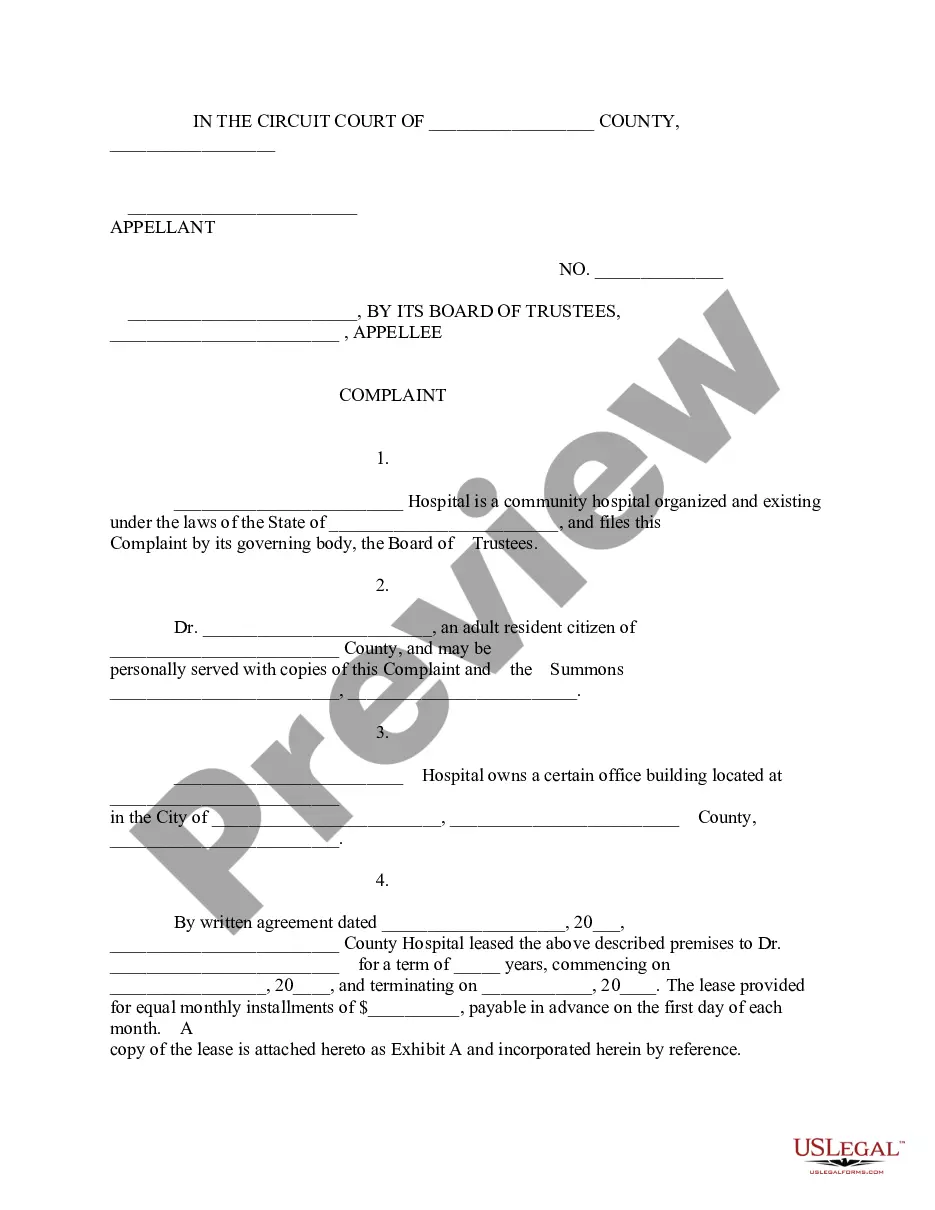
- Plaintiff and Defendant information: names and residential details of both parties.
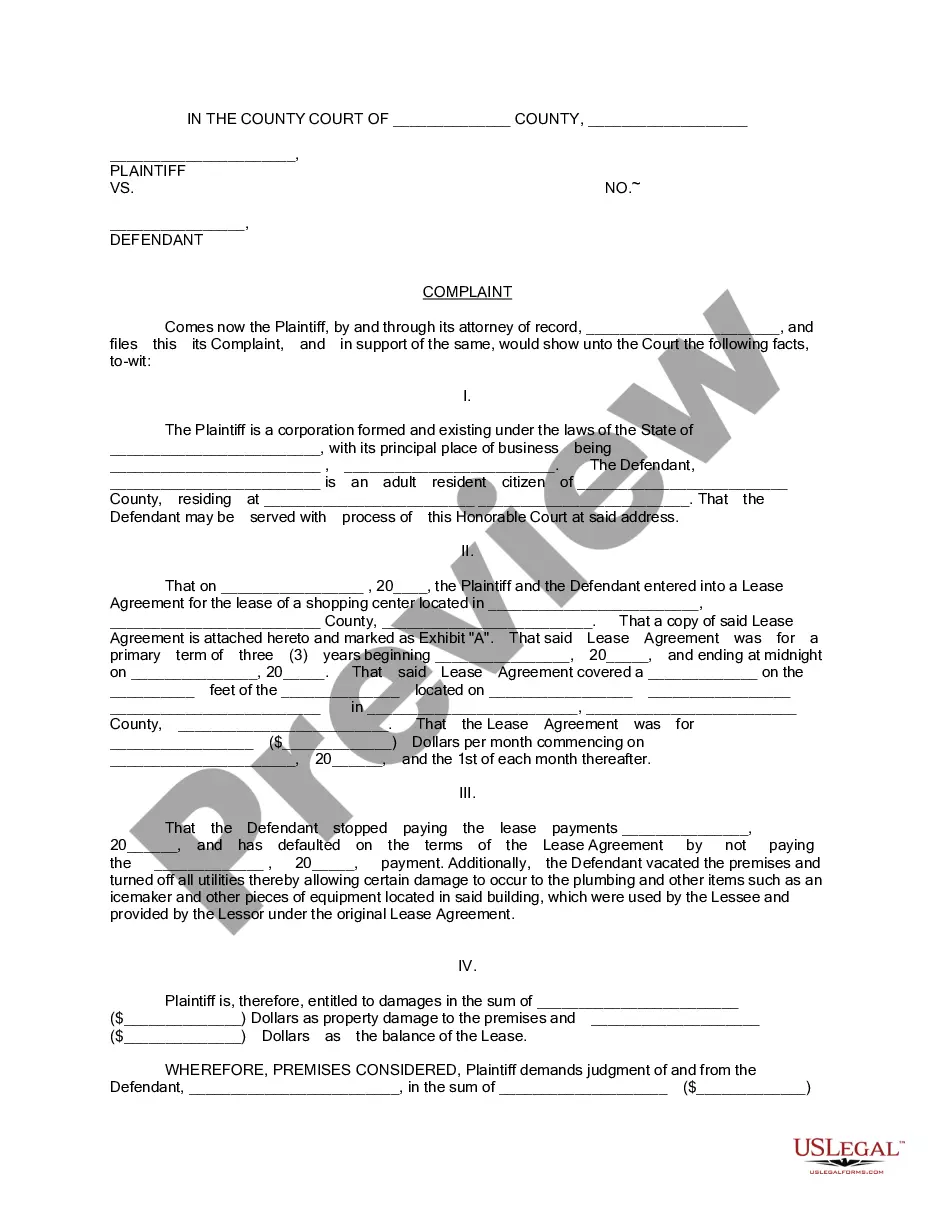
- Lease agreement details: dates, property information, and rental terms.
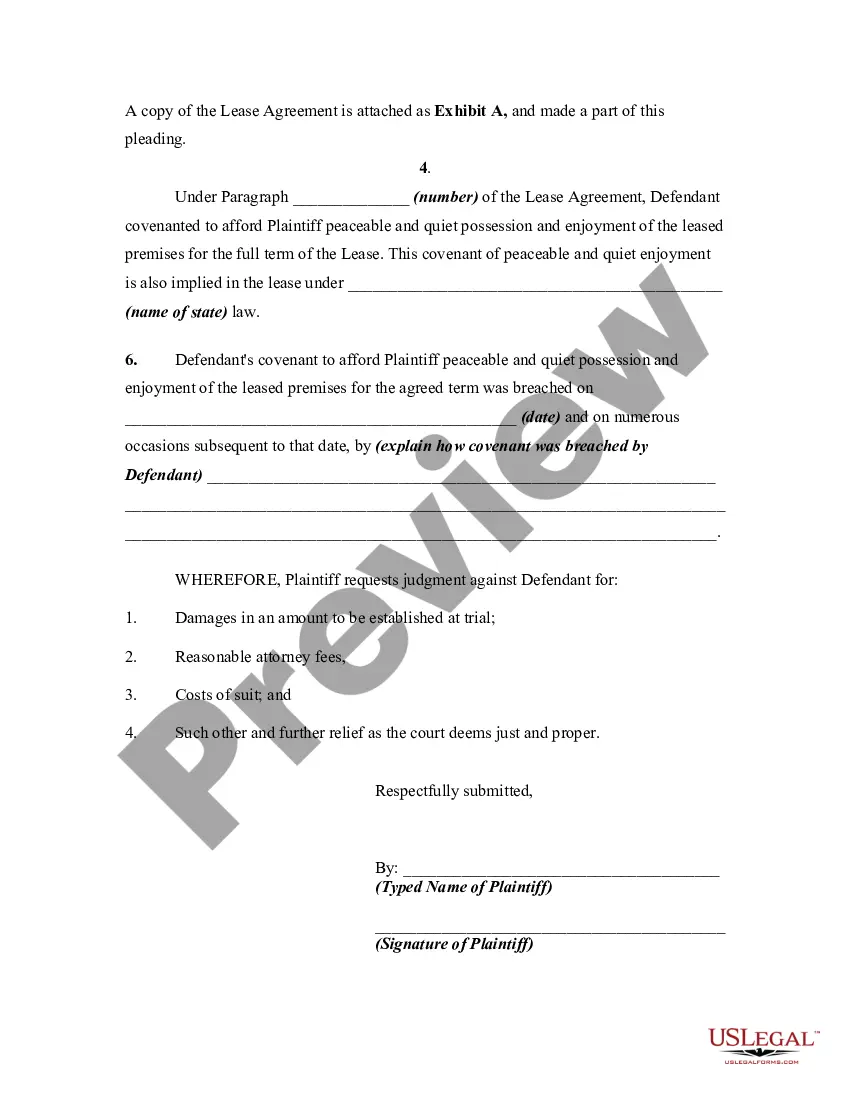
- Covenant breach description: specific instances of how the landlord violated the quiet enjoyment covenant.
- Requested relief: damages, attorney fees, and other remedies sought from the court.
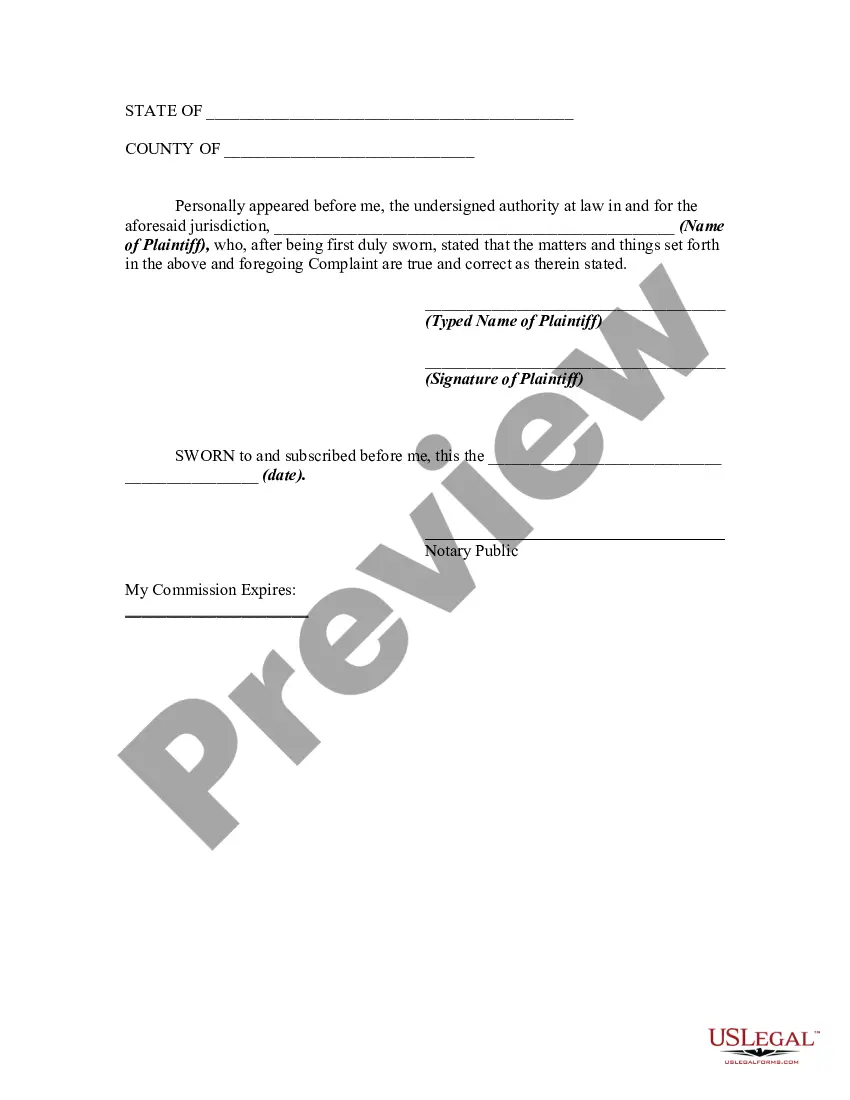
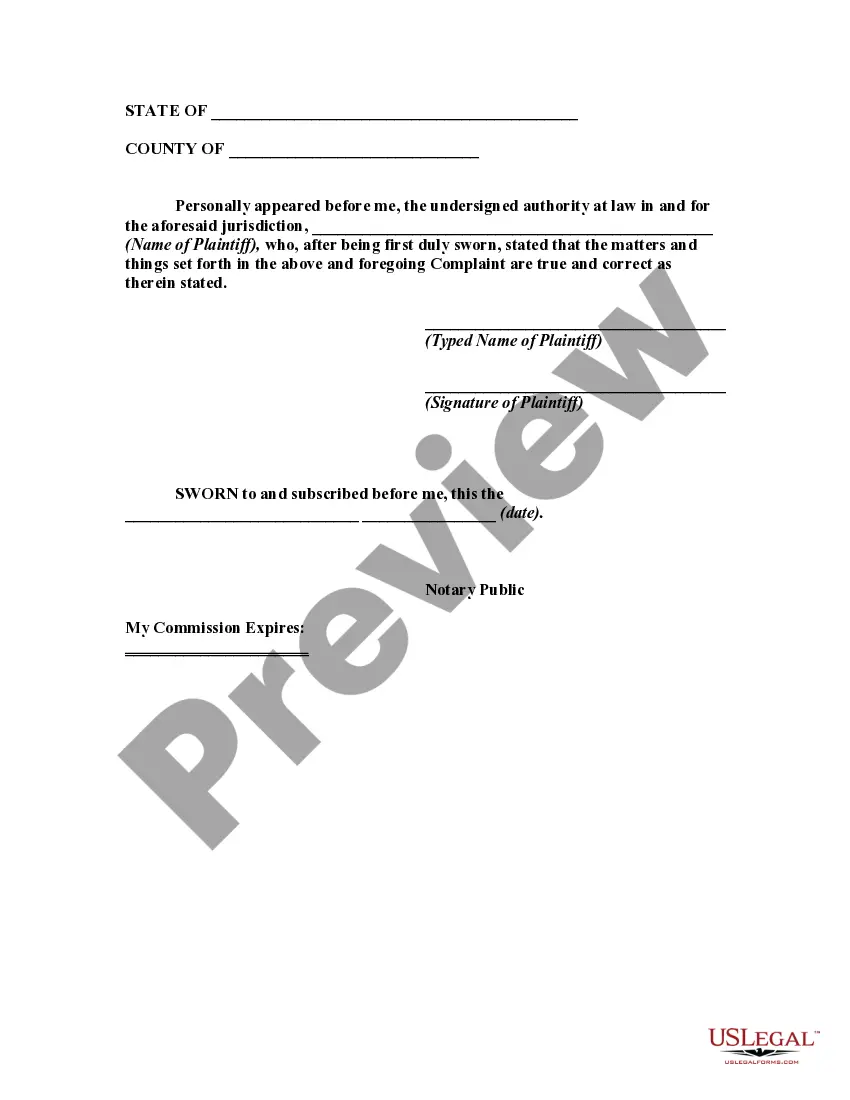
- Signature and notarization section: verification of the complaint by the plaintiff.
Common use cases
This form should be used when a tenant believes their right to quiet enjoyment has been breached by their landlord. Common situations include excessive noise from repair work, harassment by the landlord, or failure to address serious safety or health issues within the property that disrupt living conditions. If a tenant feels that their living situation has become intolerable due to landlord interference, this form serves as a formal means to seek resolution through the courts.
Who should use this form
- Tenants experiencing repeated interference from their landlord.
- Individuals living in rental units under a lease agreement.
- Anyone seeking legal redress for a breach of quiet enjoyment in a residential setting.
How to complete this form
- Identify the parties: enter the names and addresses of both the plaintiff (tenant) and defendant (landlord).
- Specify the property: provide details about the rental property including address and apartment number.
- Fill in the lease details: include the lease start date, duration, and rental payment terms.
- Describe the breach: clearly outline how the landlord has violated the covenant of quiet enjoyment.
- Sign and notarize: ensure the complaint is signed and, if required, notarized before submission.
Is notarization required?
This form needs to be notarized to ensure legal validity. US Legal Forms provides secure online notarization powered by Notarize, allowing you to complete the process through a verified video call, available anytime.
Get your form ready online
Our built-in tools help you complete, sign, share, and store your documents in one place.
Make edits, fill in missing information, and update formatting in US Legal Forms—just like you would in MS Word.
Download a copy, print it, send it by email, or mail it via USPS—whatever works best for your next step.
Sign and collect signatures with our SignNow integration. Send to multiple recipients, set reminders, and more. Go Premium to unlock E-Sign.
If this form requires notarization, complete it online through a secure video call—no need to meet a notary in person or wait for an appointment.
We protect your documents and personal data by following strict security and privacy standards.

Make edits, fill in missing information, and update formatting in US Legal Forms—just like you would in MS Word.

Download a copy, print it, send it by email, or mail it via USPS—whatever works best for your next step.

Sign and collect signatures with our SignNow integration. Send to multiple recipients, set reminders, and more. Go Premium to unlock E-Sign.

If this form requires notarization, complete it online through a secure video call—no need to meet a notary in person or wait for an appointment.

We protect your documents and personal data by following strict security and privacy standards.
Common mistakes
- Failing to provide complete information about the rental agreement.
- Not including specific instances of how quiet enjoyment was breached.
- Submitting the complaint without the necessary signatures or notarization.
- Overlooking state-specific laws that may affect the form.
Advantages of online completion
- Convenience of completing the form from home without time constraints.
- Easy access to legal guidelines and templates created by licensed attorneys.
- Edit and customize the form to fit individual circumstances before printing.
- Secure storage and quick retrieval of documents when needed.
Legal use & context
- The covenant of quiet enjoyment is an implied term in most residential leases.
- This form allows tenants to seek legal recourse if their rights are infringed.
- The outcome of the complaint can lead to damages or specific performance by the landlord.
What to keep in mind
- This form is crucial for tenants facing disruptions to their quiet enjoyment of the property.
- It is essential to provide detailed accounts of the disturbance for legal validity.
- Consult local laws to understand specific requirements applicable to your state.
Looking for another form?
Form popularity
FAQ
According to Nolo, quiet enjoyment is The right of a property owner or tenant to enjoy his or her property without interference. Disruption of quiet enjoyment may constitute a legal nuisance.
A covenant of quiet enjoyment insures an owner or tenant against a disturbance of his or her right to possess or use property. For example, a covenant of quiet enjoyment could prevent a tenant from being evicted by a person with superior title. Also called covenant for quiet enjoyment.
A landlord cannot evict a tenant without an adequately obtained eviction notice and sufficient time. A landlord cannot retaliate against a tenant for a complaint. A landlord cannot forego completing necessary repairs or force a tenant to do their own repairs.A landlord cannot remove a tenant's personal belongings.
The Florida Residential Landlord Tenant Act prevails over what the lease says. A tenant is entitled to the right of private, peaceful possession of the dwelling. Once rented, the dwelling is the tenant's to lawfully use.If the landlord has to make repairs to make the dwelling fit to live in, the landlord must pay.
In most situations your landlord does not need to give you a reason (although acting on discriminatory or retaliatory motives is illegal). A landlord can simply give you a written notice to move, allowing you 15 days as required by Florida law and specifying the date on which your tenancy will end.
Every California lease includes a covenant of quiet enjoyment, and such a covenant is often an express term in commercial leases. But unlike residential rental agreements, parties to a commercial lease can modify or waive the covenant of quiet enjoyment.
In Florida, a landlord can terminate a tenancy early and evict a tenant for a number of different reasons, including not paying rent, violating the lease or rental agreement, or committing an illegal act. To terminate the tenancy, the landlord must first give the tenant written notice.
According to the Fair Housing Act, Florida landlords cannot ask potential renters questions about medical history, age, any disability, familial status, ancestry, national origin, marital status, sexual orientation, religion, color or race. Tenants cannot be discriminated against due to any of these reasons.