Sample Letter for Opinions on Motions for Summary Judgment
What is this form?
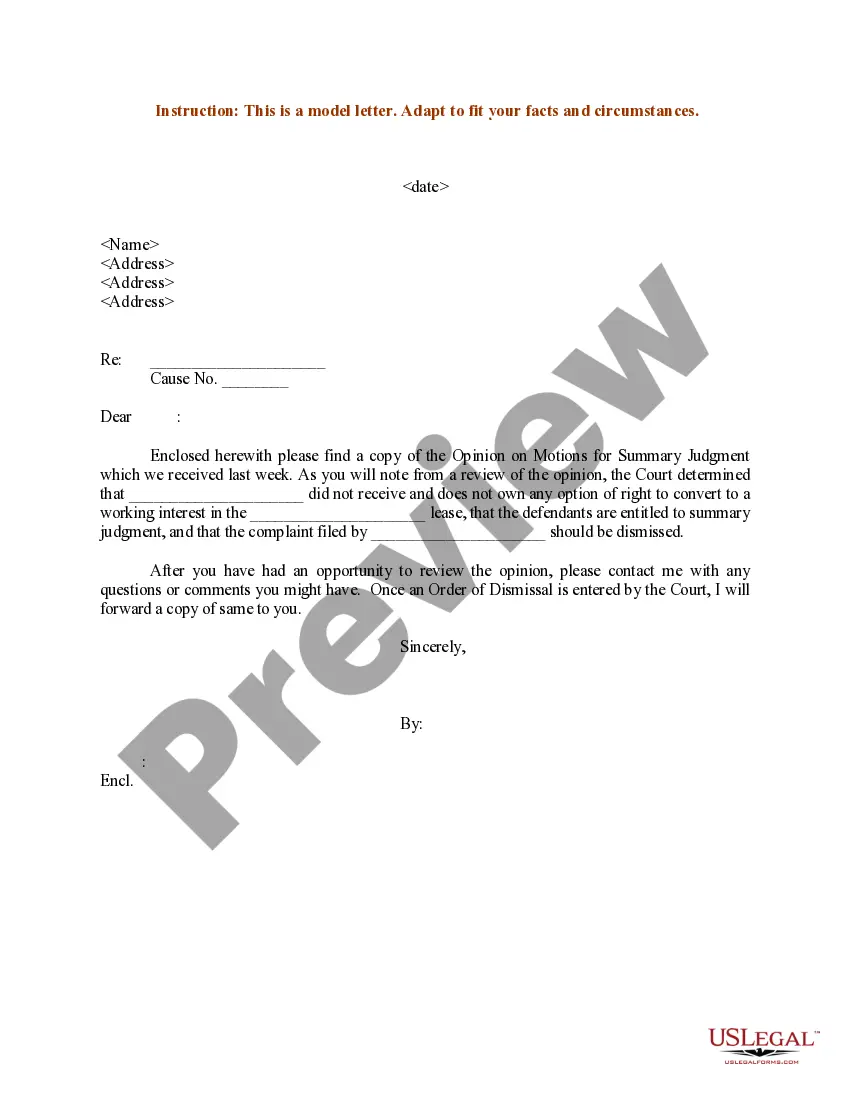
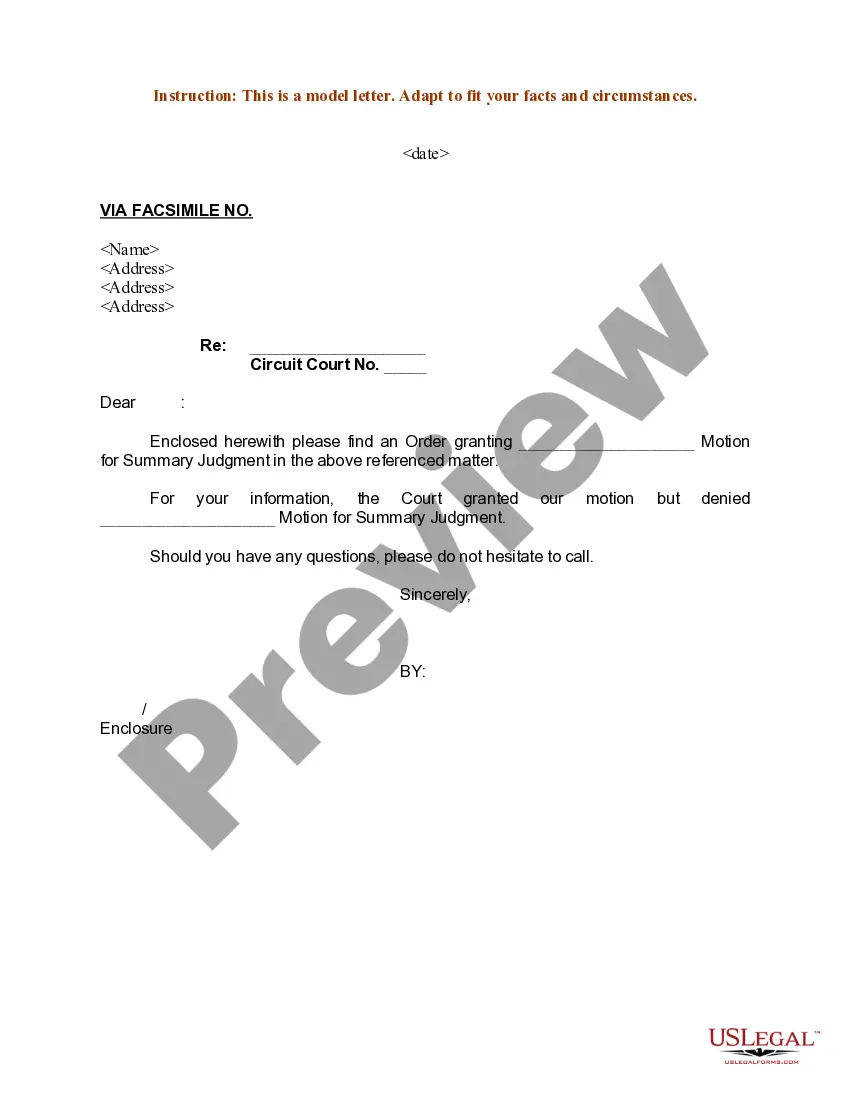
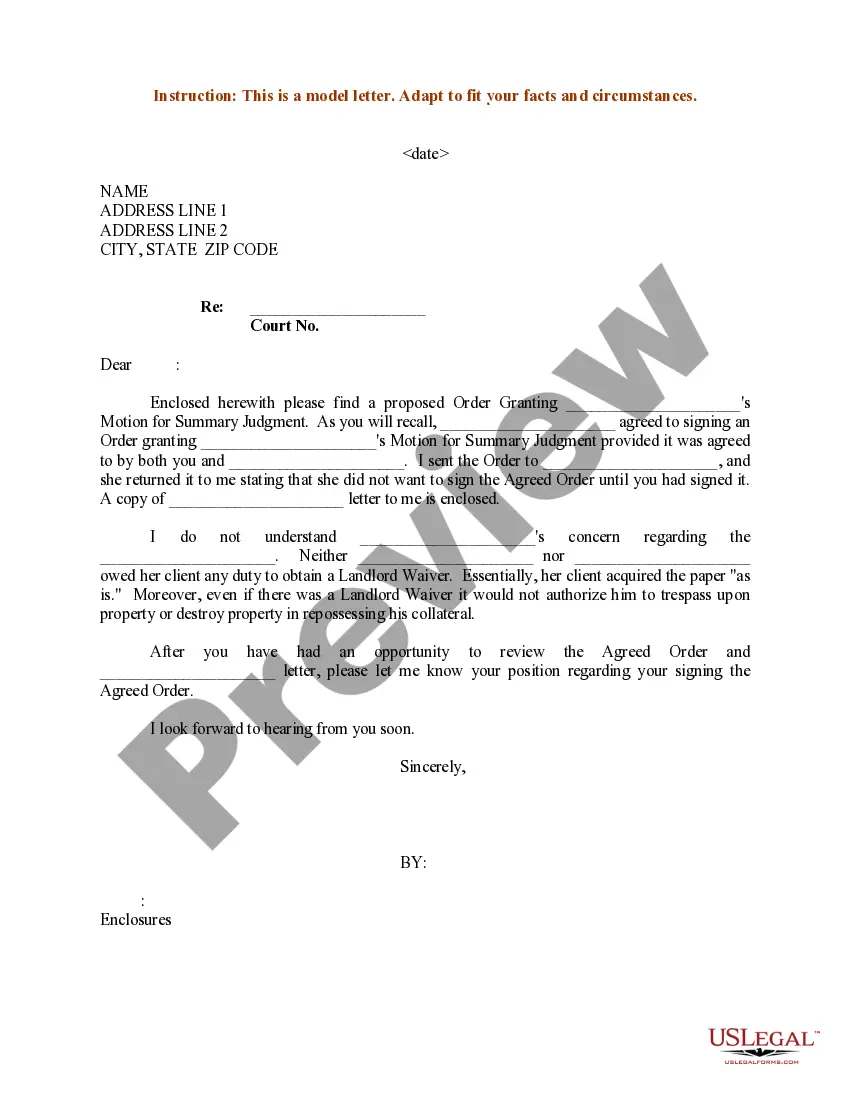
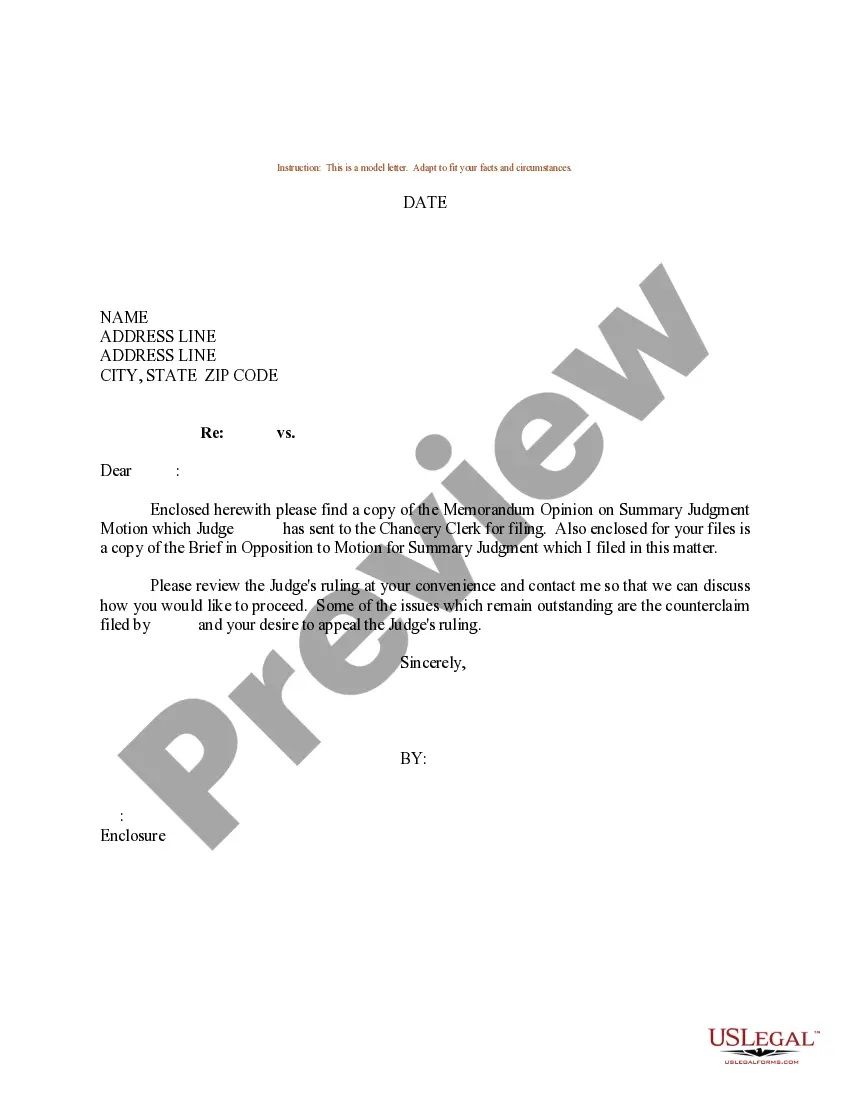
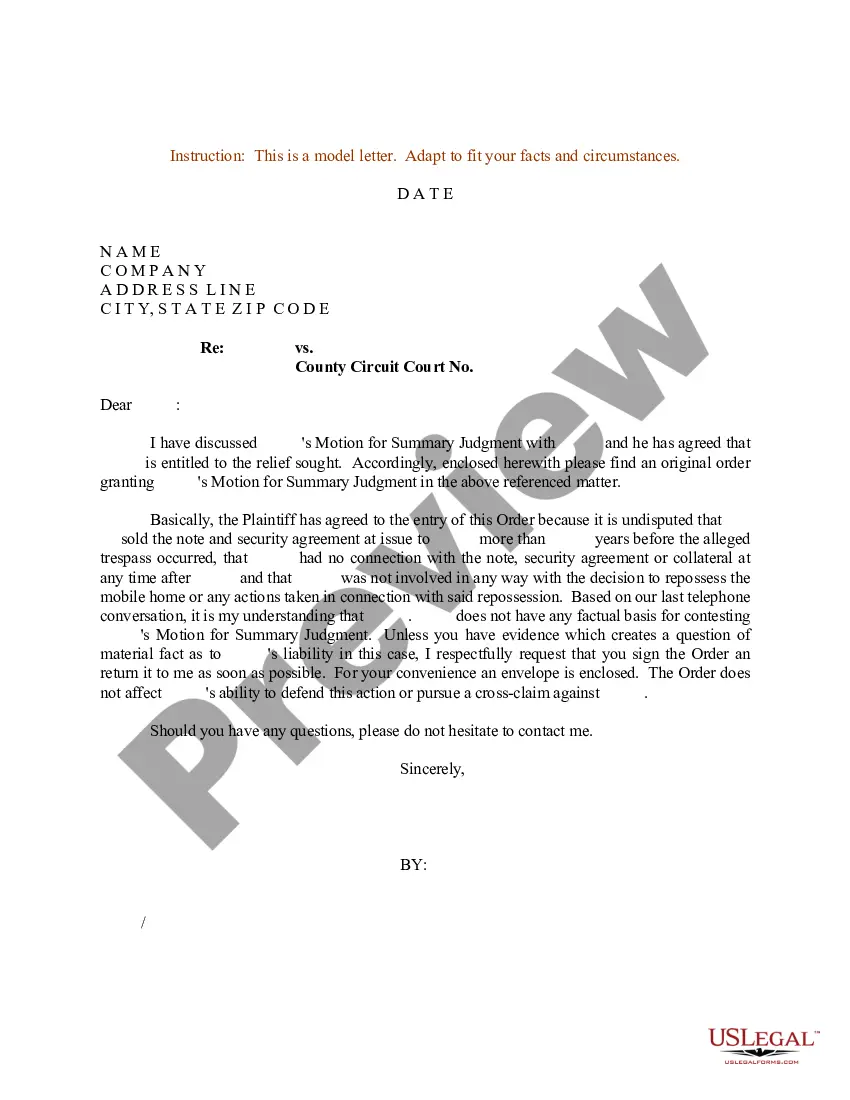
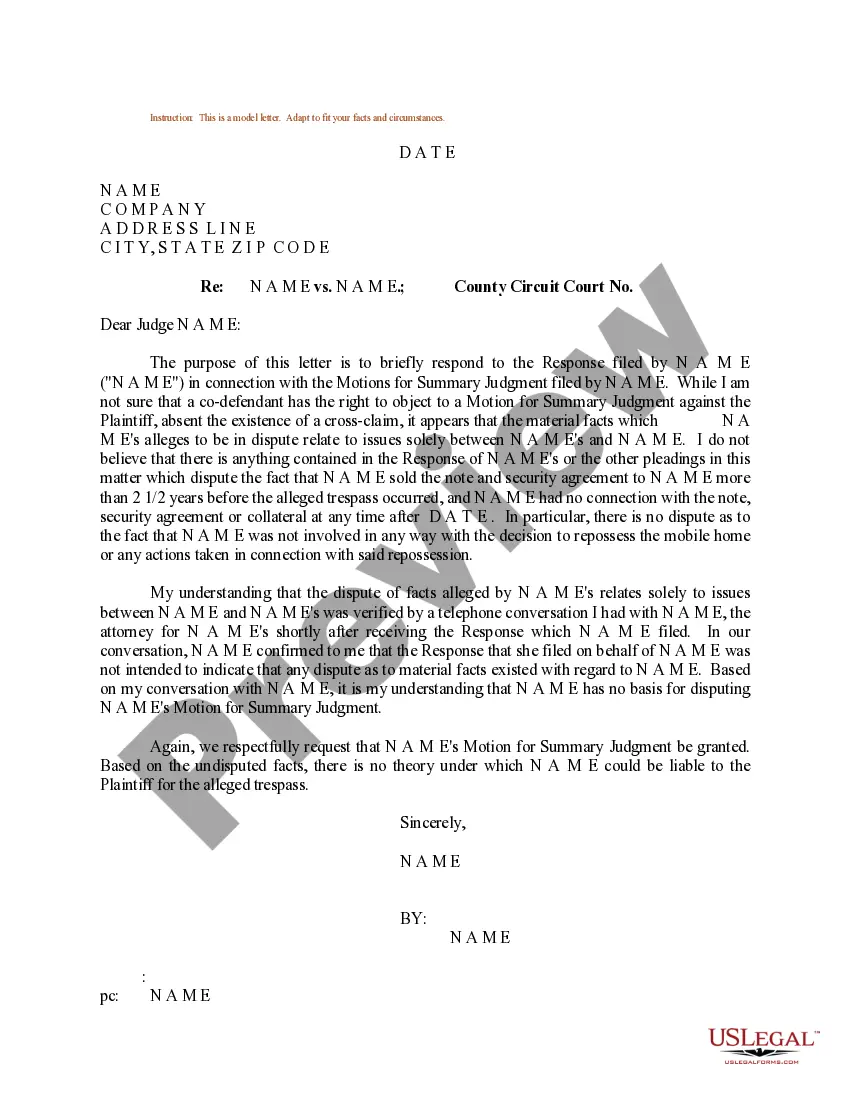
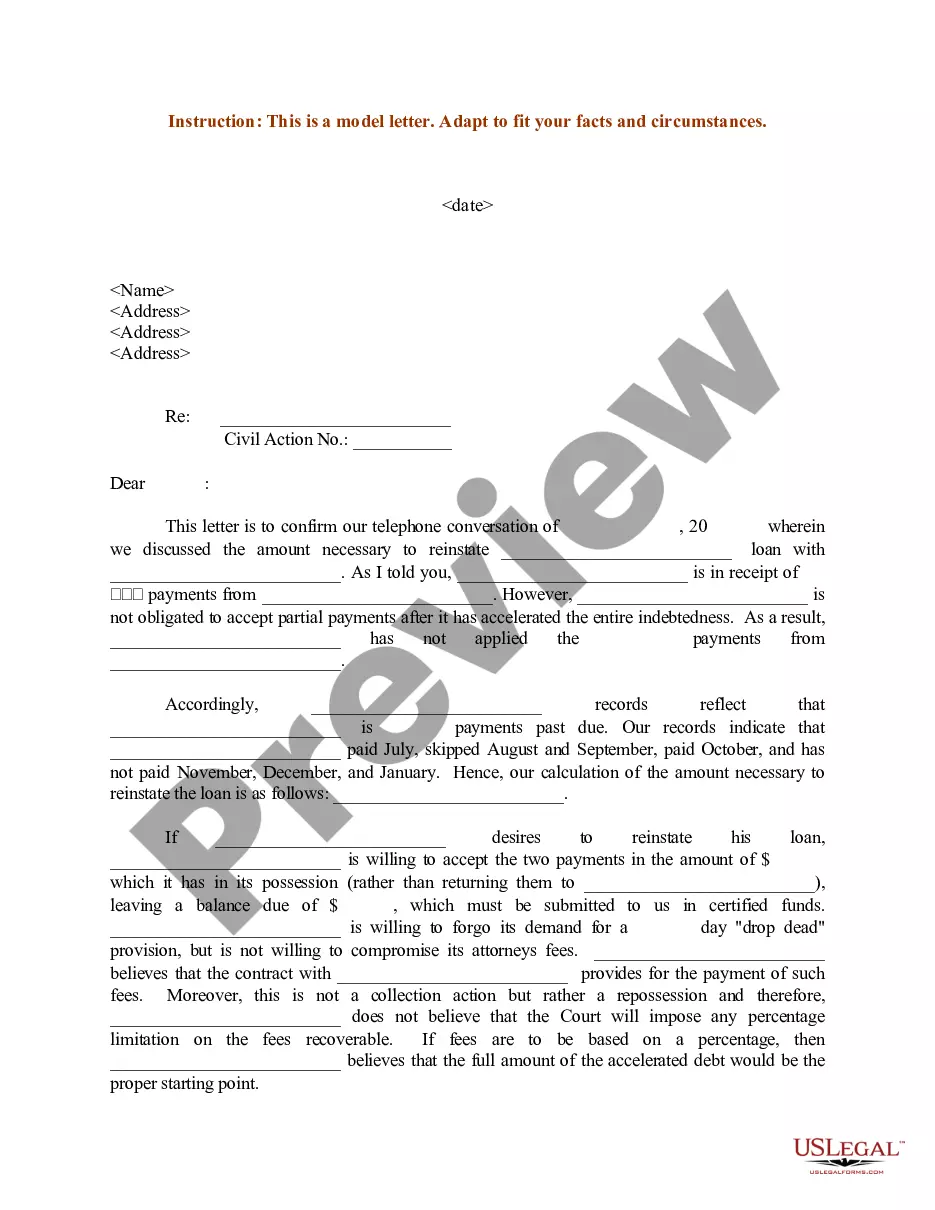
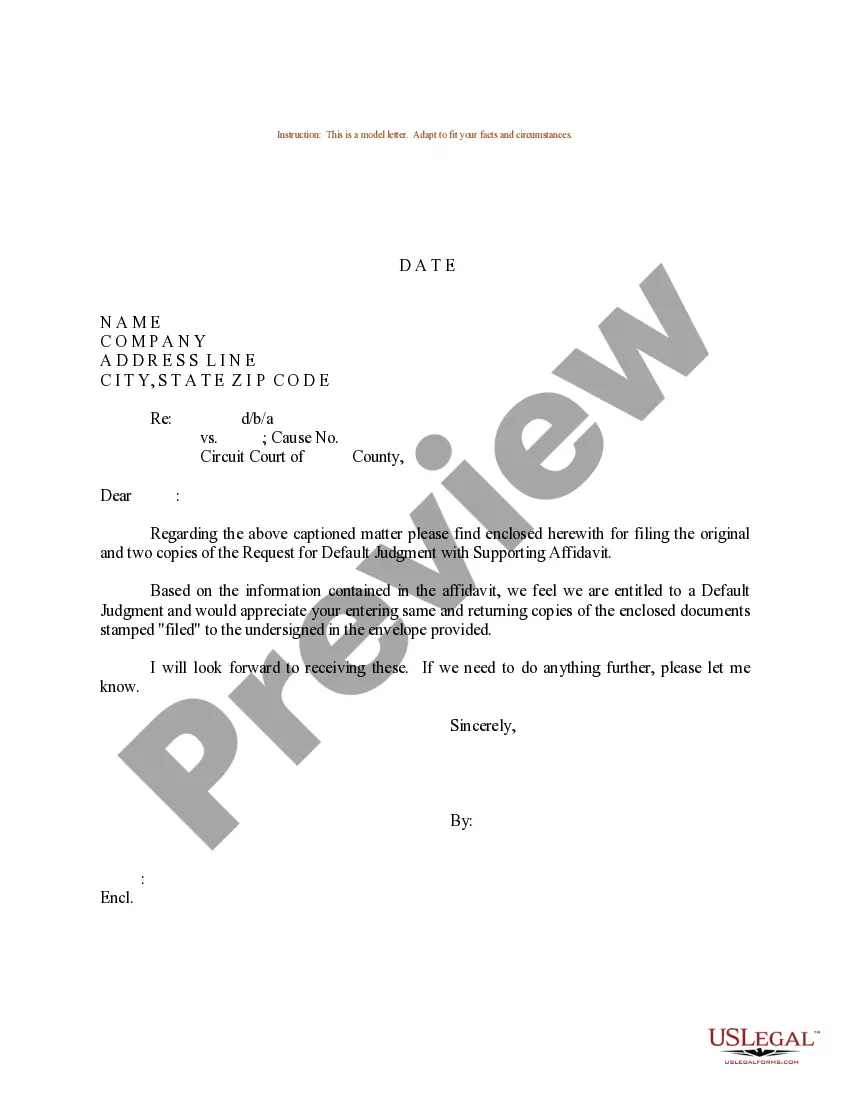
The Sample Letter for Opinions on Motions for Summary Judgment is a formal document designed to facilitate communication regarding the court's assessment of motions for summary judgment. This form serves as a template for attorneys or legal professionals to request feedback or questions about a legal opinion from relevant parties, differing from other general correspondence templates by focusing specifically on judicial motions and their implications. Utilizing this template ensures that critical details are addressed accurately in legal discussions.
Key components of this form
- Date field to indicate when the letter is being sent.
- Recipient's name and address for proper delivery.
- A section for referencing the specific case and cause number.
- A request for questions or comments regarding the opinion reviewed.
- A closing letter segment with a signature line for the sender.
When this form is needed
This form is used in situations where legal professionals need to follow up on a motion for summary judgment submitted to the court. It is particularly useful after receiving a judicial opinion and when clarifying any uncertainties regarding the court's decisions. This template streamlines the communication process, making it easier to address any inquiries or comments related to the opinion.
Who should use this form
- Attorneys or legal representatives involved in litigation.
- Clients wishing to communicate with their legal counsel about court opinions.
- Legal professionals needing a structured format for correspondence on judicial matters.
Instructions for completing this form
- Enter the date at the top of the letter.
- Fill in the recipient's name and address to ensure proper delivery.
- Specify the reference details, including the case name and cause number.
- Include any specific inquiries or comments you wish to convey after the review of the opinion.
- Sign the document and include your name and title in the closing section.
Does this form need to be notarized?
In most cases, this form does not require notarization. However, some jurisdictions or signing circumstances might. US Legal Forms offers online notarization powered by Notarize, accessible 24/7 for a quick, remote process.
Get your form ready online
Our built-in tools help you complete, sign, share, and store your documents in one place.
Make edits, fill in missing information, and update formatting in US Legal Forms—just like you would in MS Word.
Download a copy, print it, send it by email, or mail it via USPS—whatever works best for your next step.
Sign and collect signatures with our SignNow integration. Send to multiple recipients, set reminders, and more. Go Premium to unlock E-Sign.
If this form requires notarization, complete it online through a secure video call—no need to meet a notary in person or wait for an appointment.
We protect your documents and personal data by following strict security and privacy standards.

Make edits, fill in missing information, and update formatting in US Legal Forms—just like you would in MS Word.

Download a copy, print it, send it by email, or mail it via USPS—whatever works best for your next step.

Sign and collect signatures with our SignNow integration. Send to multiple recipients, set reminders, and more. Go Premium to unlock E-Sign.

If this form requires notarization, complete it online through a secure video call—no need to meet a notary in person or wait for an appointment.

We protect your documents and personal data by following strict security and privacy standards.
Avoid these common issues
- Not including the case number or title, making it difficult for recipients to identify the matter.
- Failing to proofread for grammatical or spelling errors, which can affect professionalism.
- Using overly complex language that may confuse the recipient.
Why use this form online
- Convenient: Downloadable formats allow for quick access and editing.
- Reliable: Updated templates ensure compliance with current legal standards.
- Customizable: Easily modify the template to fit specific case details.
Key takeaways
- This form serves as a formal communication tool regarding motions for summary judgment.
- It is essential for legal professionals dealing with court opinions and seeking clarification.
- Utilizing this template helps ensure professional standards in legal correspondence.
Looking for another form?
Form popularity
FAQ
Your three options following the court's grant of summary judgment or summary adjudication to the defense. This article explores the benefits and best practices of three options following the grant of summary judgment or summary adjudication: (1) a new-trial motion, (2) a writ, and (3) an appeal.
Overview. If one party to a case has filed a motion with the court, the other side can file an opposition. An opposition is a written statement explaining to the judge why the other side is not entitled to whatever he is asking for in his motion. It is your opportunity to oppose the other side's request.
Rule 56 of the Federal Rules of Civil Procedure governs summary judgment for federal courts. Under Rule 56, in order to succeed in a motion for summary judgment, a movant must show 1) that there is no genuine dispute as to any material fact, and 2) that the movant is entitled to judgment as a matter of law.
A response must be in writing and include the same supporting documents as a motion for summary judgment. The opposition to the motion for summary judgment should also include a statement of facts showing the dispute and supporting documents.
If a defendant refuses to produce documents or witnesses for depositions, you can oppose the summary-judgment motion by submitting your declaration and showing that facts essential to justify your opposition may exist but cannot for reasons stated be presented to the court.
Stated different, to successfully defend against summary judgment the non-moving party (you) should seek to demonstrate that indeed there are material facts in dispute. Alternatively, the non-moving party (you) can argue that the undisputed facts support a judgment as a matter of law in your favor.
When a motion for summary judgement is granted, it indicates there is sufficient evidence to declare one party the clear winner.The judge will then rule on the case based on the facts and evidence. A summary judgement can often be beneficial as it potentially skips a lengthy (and costly) court trial.
If a defendant refuses to produce documents or witnesses for depositions, you can oppose the summary-judgment motion by submitting your declaration and showing that facts essential to justify your opposition may exist but cannot for reasons stated be presented to the court.
The key to defeating a motion for summary judgment is to show the court that there are still facts in dispute. Summary judgment is only appropriate if none of the facts are disputed.