Release of Landlord, Waiver of Liability, and Assumption of all Risks of Personal Bodily Injury Regarding Use of Swimming Pool Located on Landlord's Property at Apartment Complex - Tenant has Child or Children
About this form
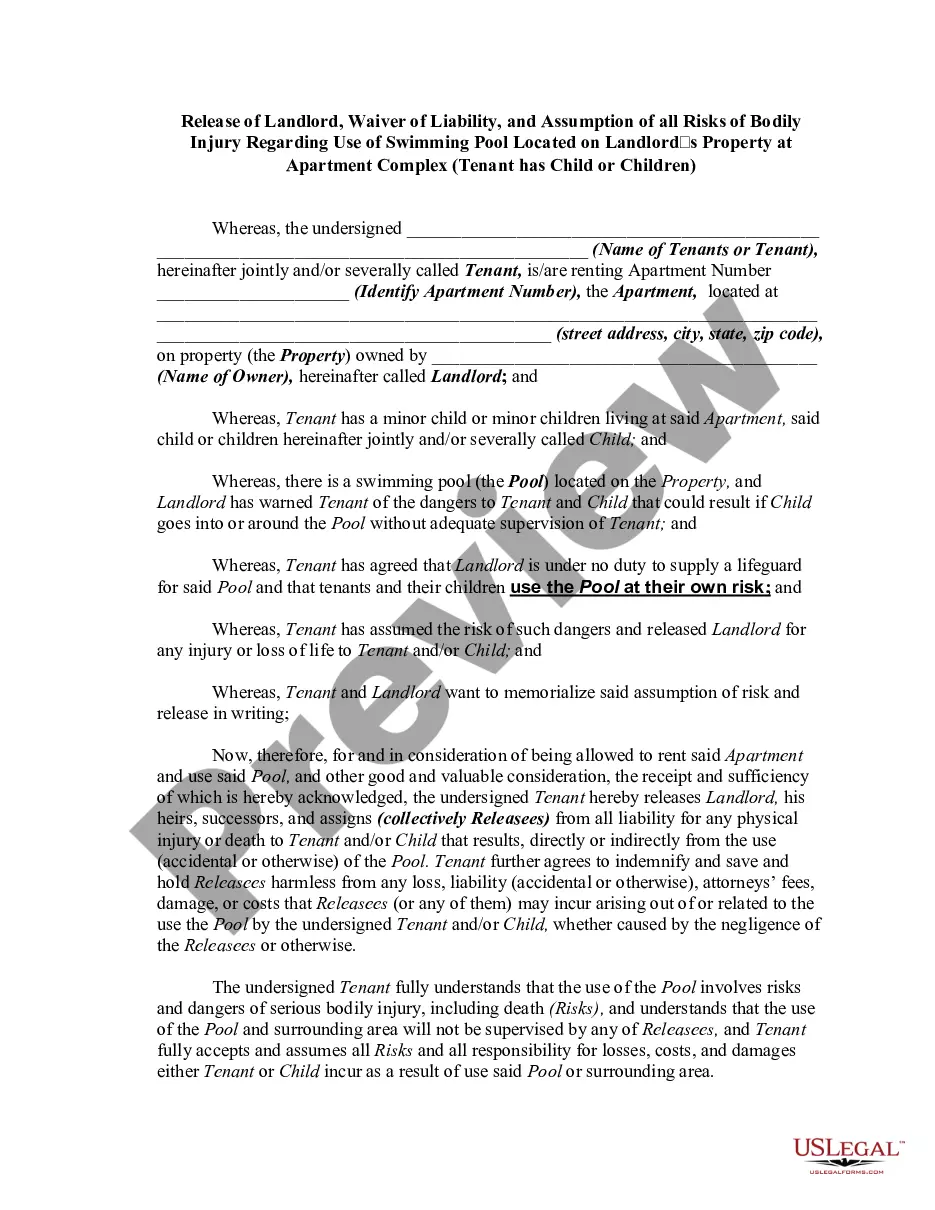
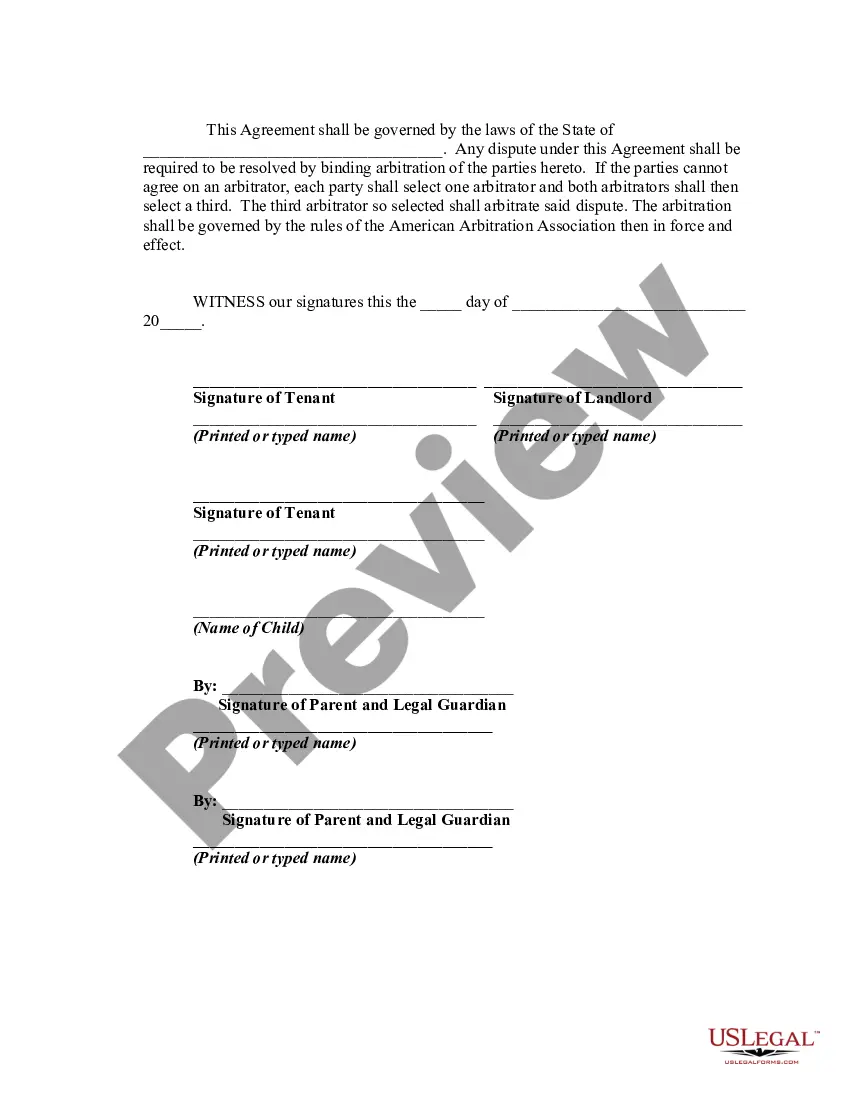
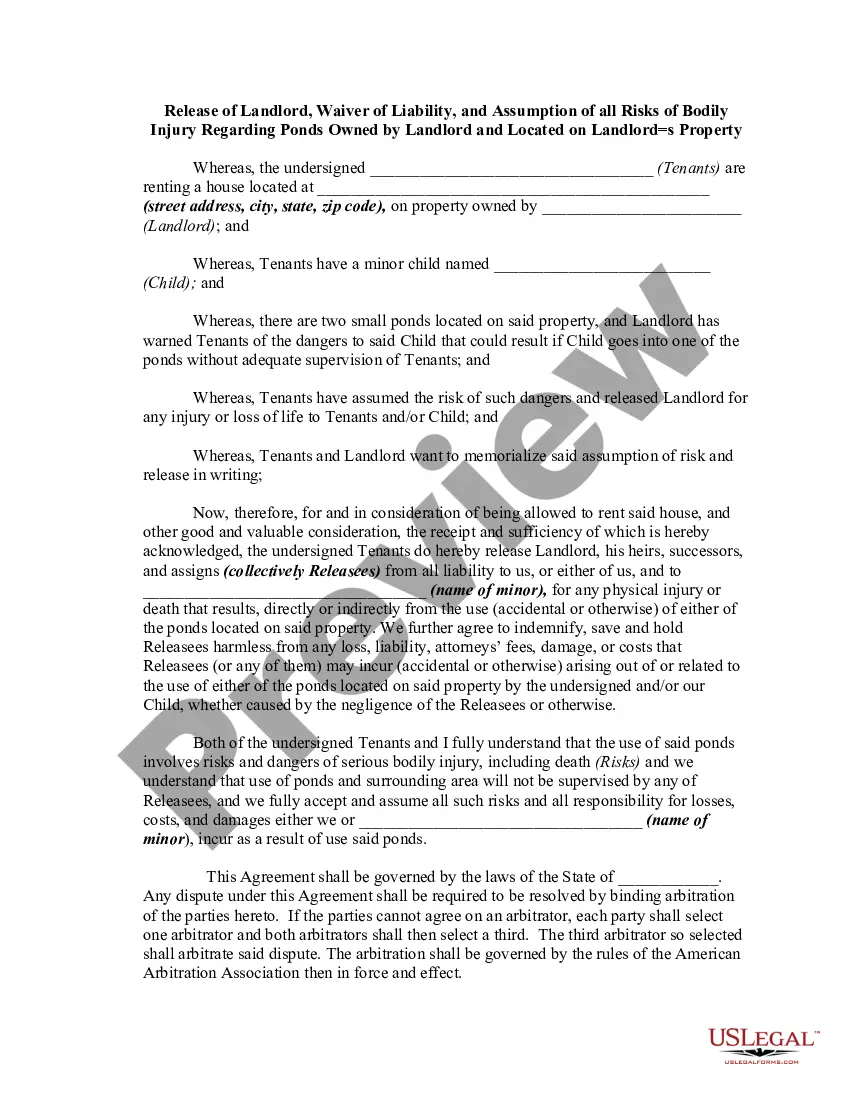
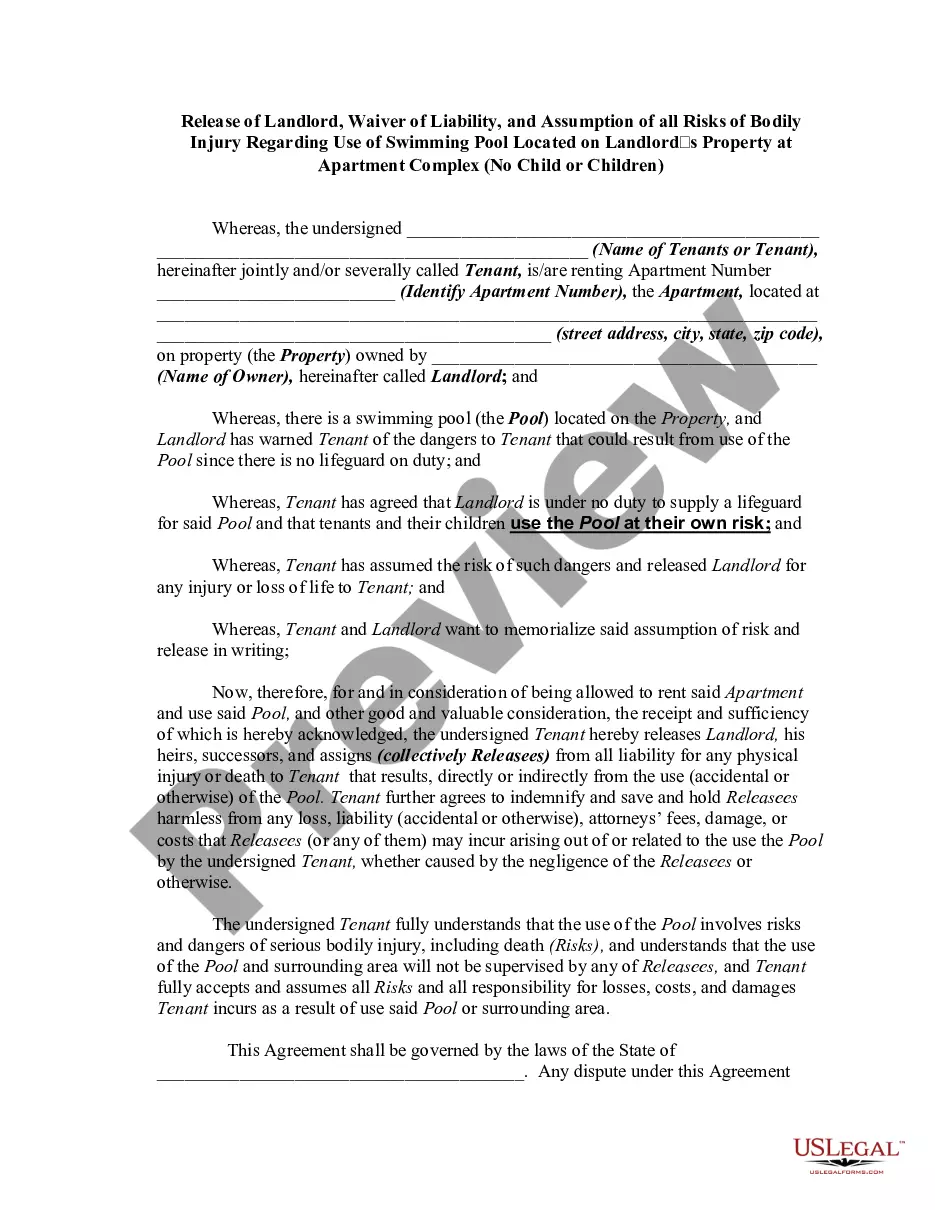
This Release of Landlord, Waiver of Liability, and Assumption of all Risks of Personal Bodily Injury Regarding Use of Swimming Pool Located on Landlord's Property at Apartment Complex is a legal document that protects landlords from liability concerning the use of a swimming pool by tenants and their minor children. It serves as a formal acknowledgment of the risks associated with swimming pool use and indicates that tenants accept full responsibility for their actions and any potential injuries that may occur. This form is distinct because it specifically addresses tenants who have children, ensuring their unique risks are acknowledged and managed.
Main sections of this form
- Identification of the parties involved: Tenant and Landlord.
- Details regarding the rental property and swimming pool location.
- Explicit acknowledgment of potential dangers associated with pool use.
- Release of liability clause protecting the Landlord from claims related to injuries.
- Indemnification agreement where Tenant agrees to cover any costs incurred by Landlord due to injuries.
- Governing law and dispute resolution through arbitration.
When to use this document
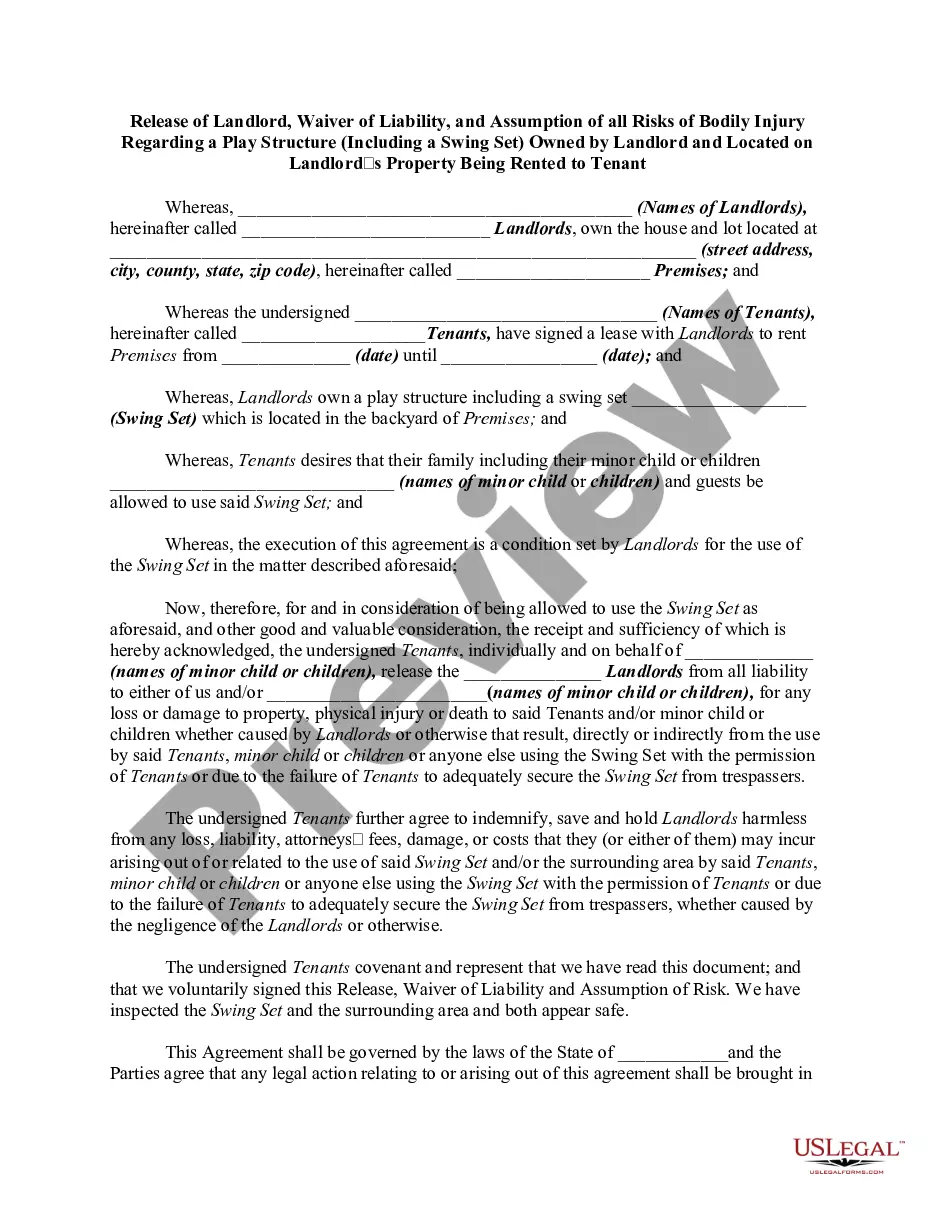
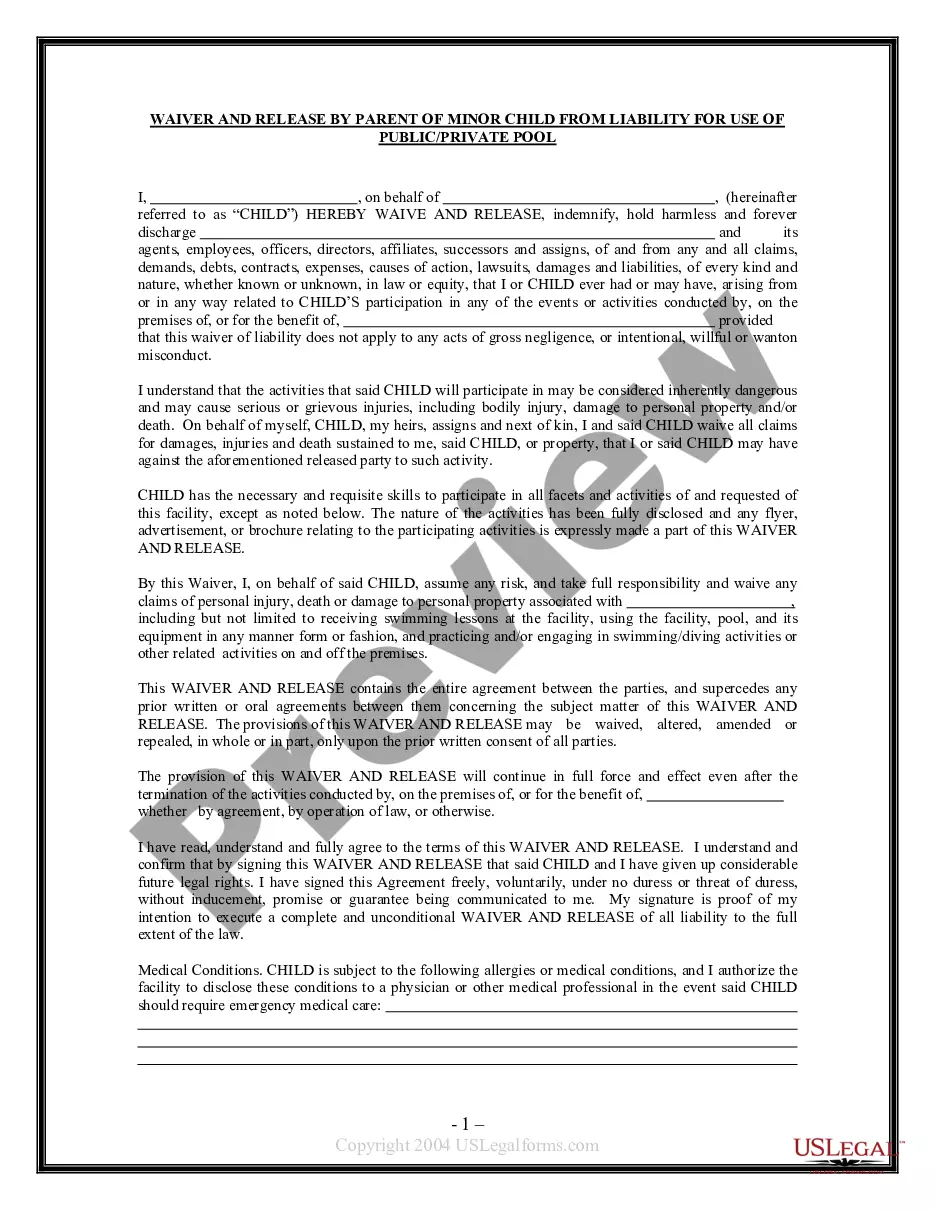
This form should be used when tenants with minor children are renting an apartment that includes access to a swimming pool. It is necessary in situations where the tenants wish to acknowledge the inherent risks of using the swimming pool and to formally release the landlord from liability for any accidents or injuries that may happen while the pool is being used. This guarantees that both parties understand their rights and responsibilities regarding the use of the pool facility.
Who this form is for
- Tenants renting an apartment with a swimming pool.
- Parents or legal guardians of minor children residing in the rental unit.
- Landlords seeking to protect themselves from liability related to the pool use.
Completing this form step by step
- Identify the Tenant(s) by filling in their names.
- Specify the rented Apartment Number and full address of the property.
- Recognize any minor children by including their names.
- Review and check the italicized sections that outline risks and the agreement to waive liability.
- Both Tenant and Landlord must sign and date the form in the appropriate spaces.
Does this form need to be notarized?
Notarization is generally not required for this form. However, certain states or situations might demand it. You can complete notarization online through US Legal Forms, powered by Notarize, using a verified video call available anytime.
Get your form ready online
Our built-in tools help you complete, sign, share, and store your documents in one place.
Make edits, fill in missing information, and update formatting in US Legal Forms—just like you would in MS Word.
Download a copy, print it, send it by email, or mail it via USPS—whatever works best for your next step.
Sign and collect signatures with our SignNow integration. Send to multiple recipients, set reminders, and more. Go Premium to unlock E-Sign.
If this form requires notarization, complete it online through a secure video call—no need to meet a notary in person or wait for an appointment.
We protect your documents and personal data by following strict security and privacy standards.

Make edits, fill in missing information, and update formatting in US Legal Forms—just like you would in MS Word.

Download a copy, print it, send it by email, or mail it via USPS—whatever works best for your next step.

Sign and collect signatures with our SignNow integration. Send to multiple recipients, set reminders, and more. Go Premium to unlock E-Sign.

If this form requires notarization, complete it online through a secure video call—no need to meet a notary in person or wait for an appointment.

We protect your documents and personal data by following strict security and privacy standards.
Common mistakes to avoid
- Failing to include all names of tenants and children.
- Not specifying the exact address and apartment number fully.
- Leaving the signature section incomplete.
- Not reviewing state-specific requirements that may affect the form.
Why use this form online
- Convenience of downloading and completing the form from home.
- Editable templates that allow for customization based on specific circumstances.
- Instant access to legal forms drafted by licensed attorneys.
Looking for another form?







Form popularity
FAQ
Put cameras everywhere (Nest Cam is a good brand), make sure you put signs "Premises secured by video surveillance" and you will be good to go. While it won't prevent the landlord from entering, it will prevent the landlord from doing anything funky, and who knows, with time even stop.
While tenants cannot unreasonably deny access to a landlord, landlords must also follow all of the state and local rules regarding access to tenants' apartments. Roughly half of states have rules governing landlord entry into tenants' apartments.
The big take-away is that in most circumstances a landlord cannot enter a property without agreement from the tenant. And If the landlord ignores the law and enters the property without permission, the tenant may be able to claim damages or gain an injunction to prevent the landlord doing it again.
The landlord can enter without consent, however they must provide you with a proper notice to enter that: Gives the required minimum notice for the state you live in;No notice is required for an emergency to do urgent repairs or if the landlord is concerned about your welfare.