Mechanical License
Overview of this form
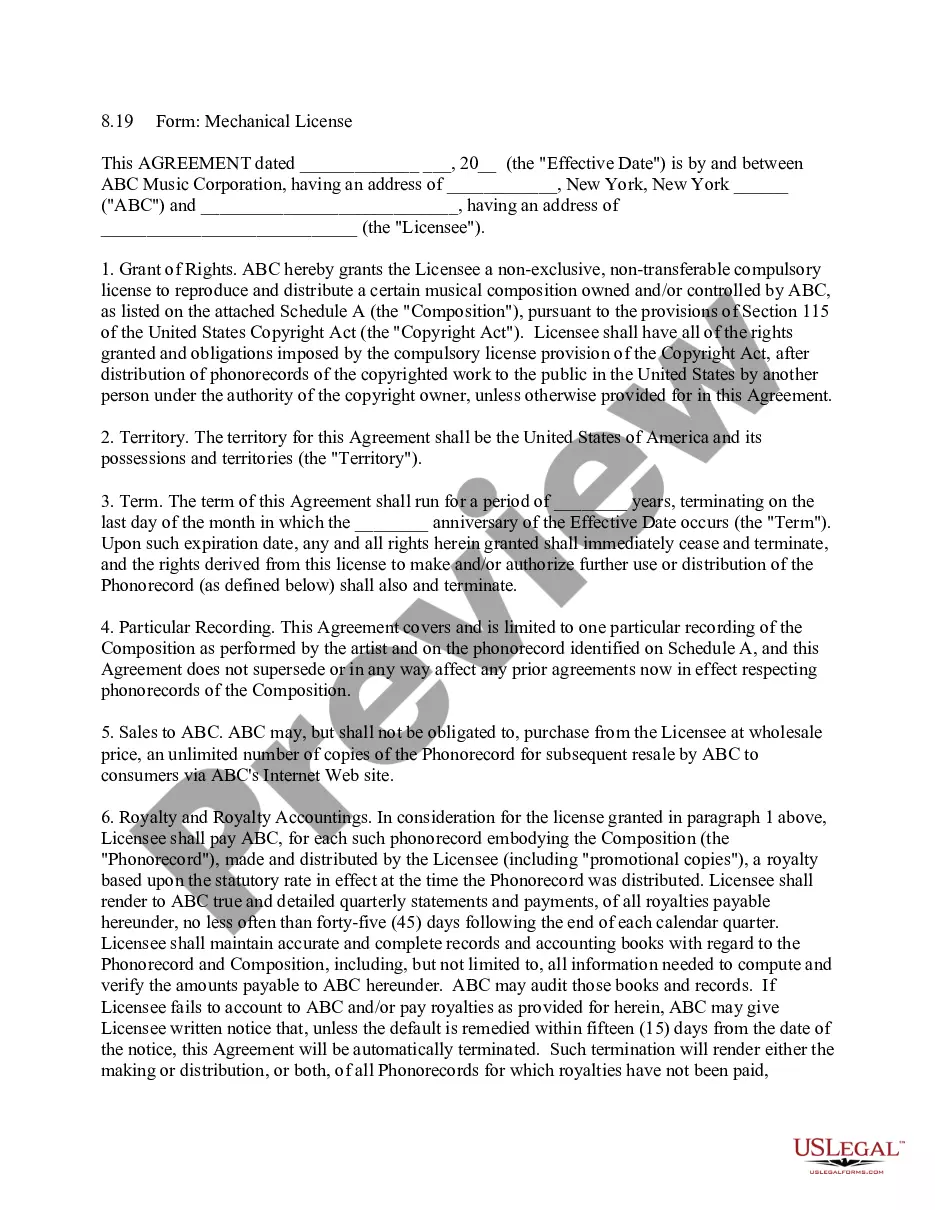
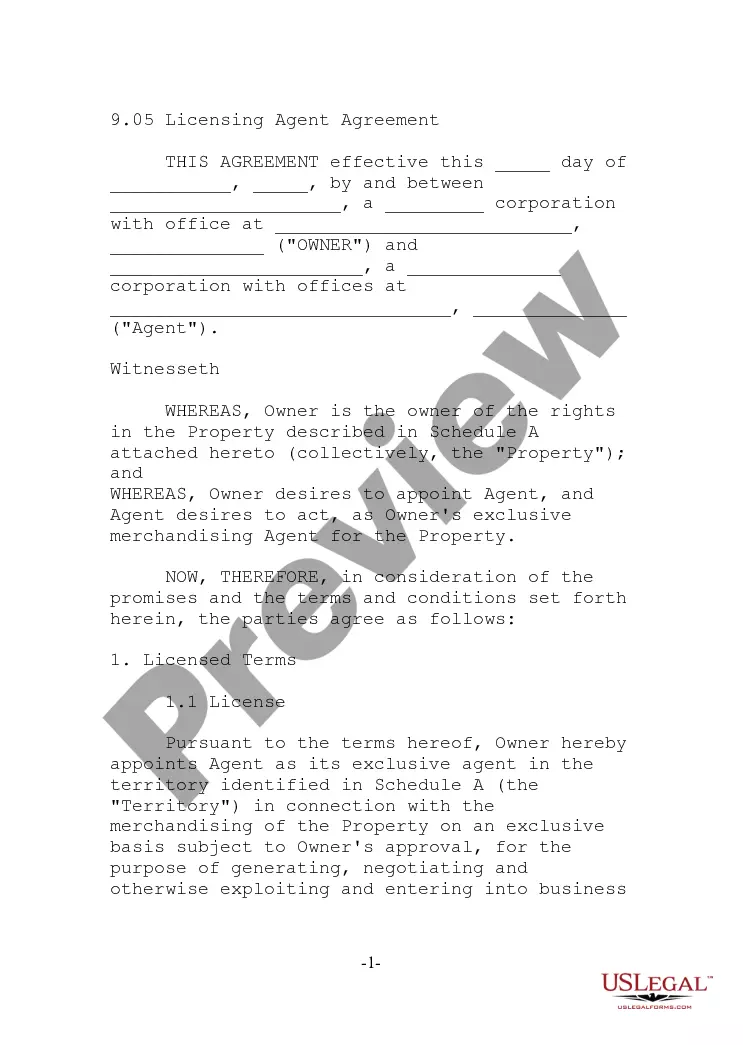
The Mechanical License is a legal document that grants rights to reproduce and distribute a specific musical composition. This form is crucial for artists and organizations wishing to legally cover or distribute music that is already copyrighted. Unlike other licensing agreements, this document follows the provisions of Section 115 of the United States Copyright Act, ensuring compliance with copyright laws while permitting the use of a song without requiring detailed negotiations for each instance. It is particularly useful in the entertainment and multimedia industries.
Main sections of this form
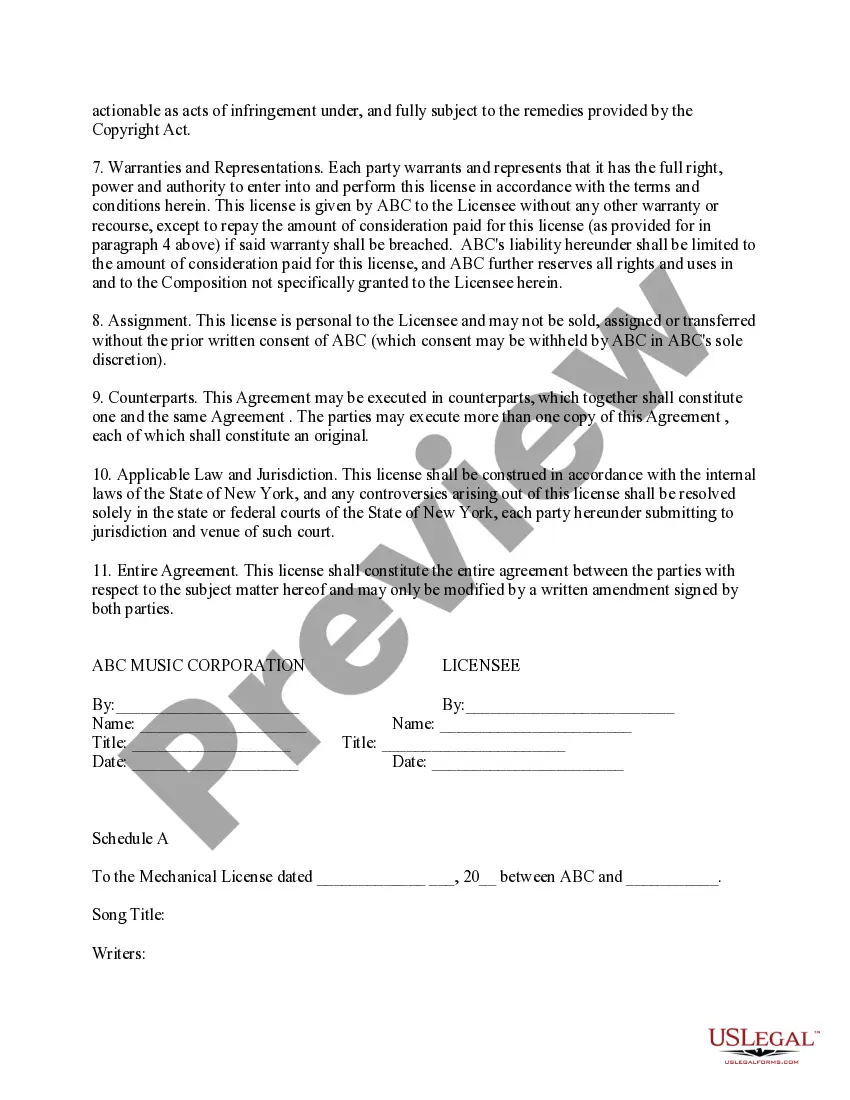
- Grant of Rights: Defines the scope of the license granted to the Licensee, including non-transferability and non-exclusivity.
- Territory: Specifies the geographical area where the license is applicable, which is the United States.
- Term: Indicates the duration of the agreement and when it terminates.
- Particular Recording: Limits the license to one specific recording of the musical composition.
- Royalty and Royalty Accountings: Outlines the payment structure for royalties, including reporting requirements for the Licensee.
- Warranties and Representations: Details the legal assurances made by both parties regarding their authority to enter into the agreement.
When to use this form
This form should be used when a music artist, producer, or record label wants to legally cover, reproduce, or distribute a musical composition that is owned or controlled by another party. It is particularly relevant when the intended use includes multiple copies for sale or distribution, such as albums, streams, or digital downloads. If you plan to reproduce a song that you do not own, securing a Mechanical License is essential to avoid copyright infringement.
Intended users of this form
The Mechanical License is intended for:
- Music artists seeking to cover existing songs legally.
- Record labels distributing music that includes copyrighted material.
- Producers and studios working on projects that require the use of pre-existing compositions.
- Any entity or individual looking to ensure compliance with copyright laws while distributing music.
How to prepare this document
- Identify the parties involved, including the granting entity (ABC Music Corporation) and the Licensee.
- Fill in the effective date of the agreement.
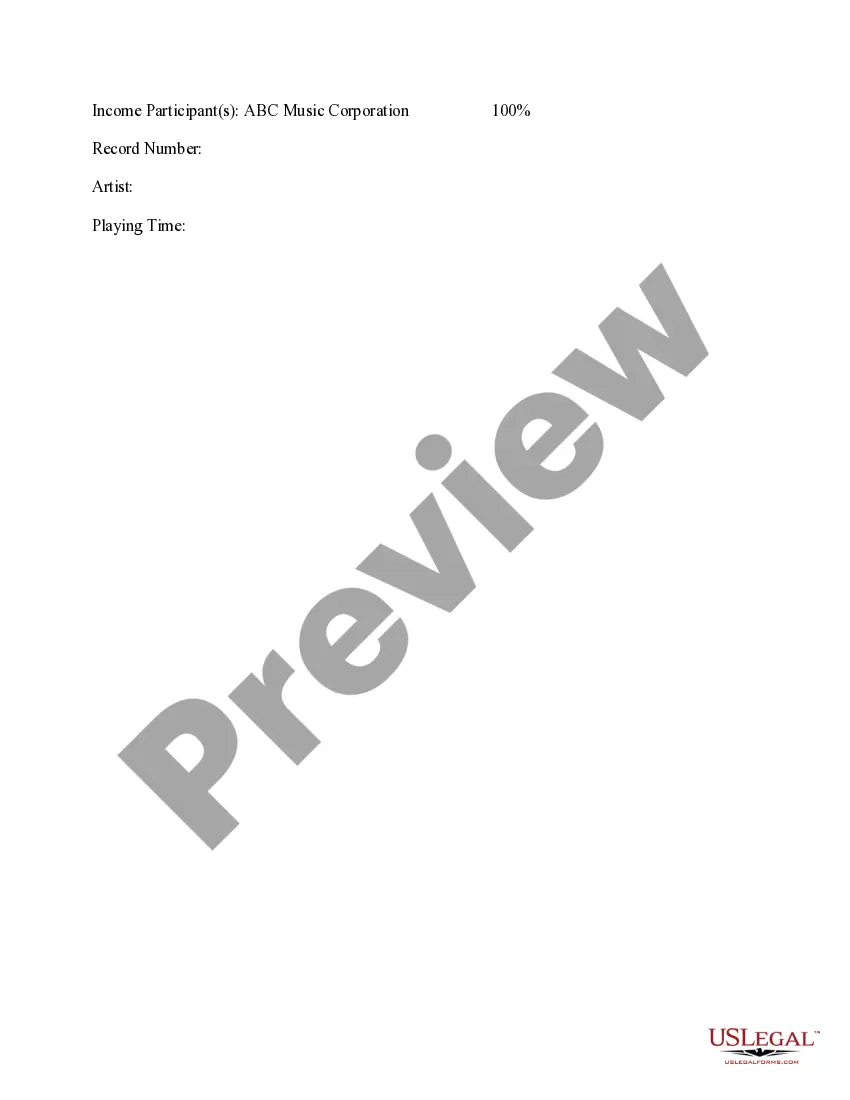
- List the specific composition to be licensed in Schedule A, including title, writers, and associated artists.
- Specify the term of the license and any conditions related to the use of the composition.
- Ensure both parties sign and date the agreement to validate it.
Notarization guidance
Notarization is not commonly needed for this form. However, certain documents or local rules may make it necessary. Our notarization service, powered by Notarize, allows you to finalize it securely online anytime, day or night.
Get your form ready online
Our built-in tools help you complete, sign, share, and store your documents in one place.
Make edits, fill in missing information, and update formatting in US Legal Forms—just like you would in MS Word.
Download a copy, print it, send it by email, or mail it via USPS—whatever works best for your next step.
Sign and collect signatures with our SignNow integration. Send to multiple recipients, set reminders, and more. Go Premium to unlock E-Sign.
If this form requires notarization, complete it online through a secure video call—no need to meet a notary in person or wait for an appointment.
We protect your documents and personal data by following strict security and privacy standards.

Make edits, fill in missing information, and update formatting in US Legal Forms—just like you would in MS Word.

Download a copy, print it, send it by email, or mail it via USPS—whatever works best for your next step.

Sign and collect signatures with our SignNow integration. Send to multiple recipients, set reminders, and more. Go Premium to unlock E-Sign.

If this form requires notarization, complete it online through a secure video call—no need to meet a notary in person or wait for an appointment.

We protect your documents and personal data by following strict security and privacy standards.
Typical mistakes to avoid
- Failing to list all parties involved clearly.
- Not specifying the duration of the license.
- Overlooking the inclusion of the required composition details in Schedule A.
- Neglecting to sign and date the agreement.
Why use this form online
- Easy access: Download legally vetted forms from anywhere.
- Editability: Customize the template to fit specific needs quickly.
- Time-saving: Complete the process without lengthy legal consultations.
- Cost-effective: Access professionally drafted documents at a fraction of the cost compared to hiring a lawyer.
Legal use & context
- The Mechanical License is enforceable under U.S. copyright law, allowing licensors to authorize reproduction of music without personal negotiation.
- Use of the form helps prevent infringement issues related to copyrighted compositions.
- It is important for both parties to understand their rights and obligations outlined in the license to avoid legal disputes.
Summary of main points
- The Mechanical License is essential for reproducing and distributing copyrighted music legally.
- Proper completion of the form is crucial for ensuring compliance with copyright laws.
- Customization of the form is necessary to reflect specific terms relevant to the agreement.
Looking for another form?
Form popularity
FAQ
A mechanical license pays a royalty to the copyright holder (owner) of the composition (song) being requested. This is typically the composer or their publisher. However, sometimes mechanical rights change hands, such as when they are sold.
Spotify, for example, pays HFA for the mechanical license for songs used on their platform in the United States, so you do not have to worry about securing a mechanical license if you're only releasing to Spotify.
. To get an HVAC license, you need to apply for a mechanical contractor's license in the HVAC equipment classification. If your application is accepted, LARA will contact you to schedule your exam. These exams are held at five testing centers around the state, so you can pick the one closest to you.
While performance royalties are paid for the right to play a composition in public, mechanical royalties are paid for the right to reproduce a composition through the process of recording, manufacturing, and distributing the work.
Mechanical royalties from Spotify are collected by HFA, and then that money is paid out to each publisher based on the compulsory license. This money is then distributed back to the songwriter.Your publisher would pay these respective royalties to you, the songwriter they represent.
To get paid your mechanical royalties, you must be registered for a separate collection society that specifically works on mechanicals. In the U.S., the Harry Fox Agency is the group that issues mechanical licenses and collects royalties to pay out to the rights holders, but each country has its own group.
The mechanical right is the right to reproduce a piece of music onto CDs, DVDs, records or tapes. (Non-mechanical reproduction includes such things as making sheet music, for which royalties are paid by the publisher to the composer.)
Mechanical royalties are a royalty paid to a songwriter whenever a copy of one of their songs is made. For instance, when a record label presses a CD of your song, you are due a mechanical royalty.
You can contact the publisher/songwriter directly and ask them for a mechanical license. You can also secure a mechanical license without express permission from the publisher/songwriter by complying with the terms of Section 115 of the Copyright Act.