Third-Party Source Code Nondisclosure Agreement
Understanding this form
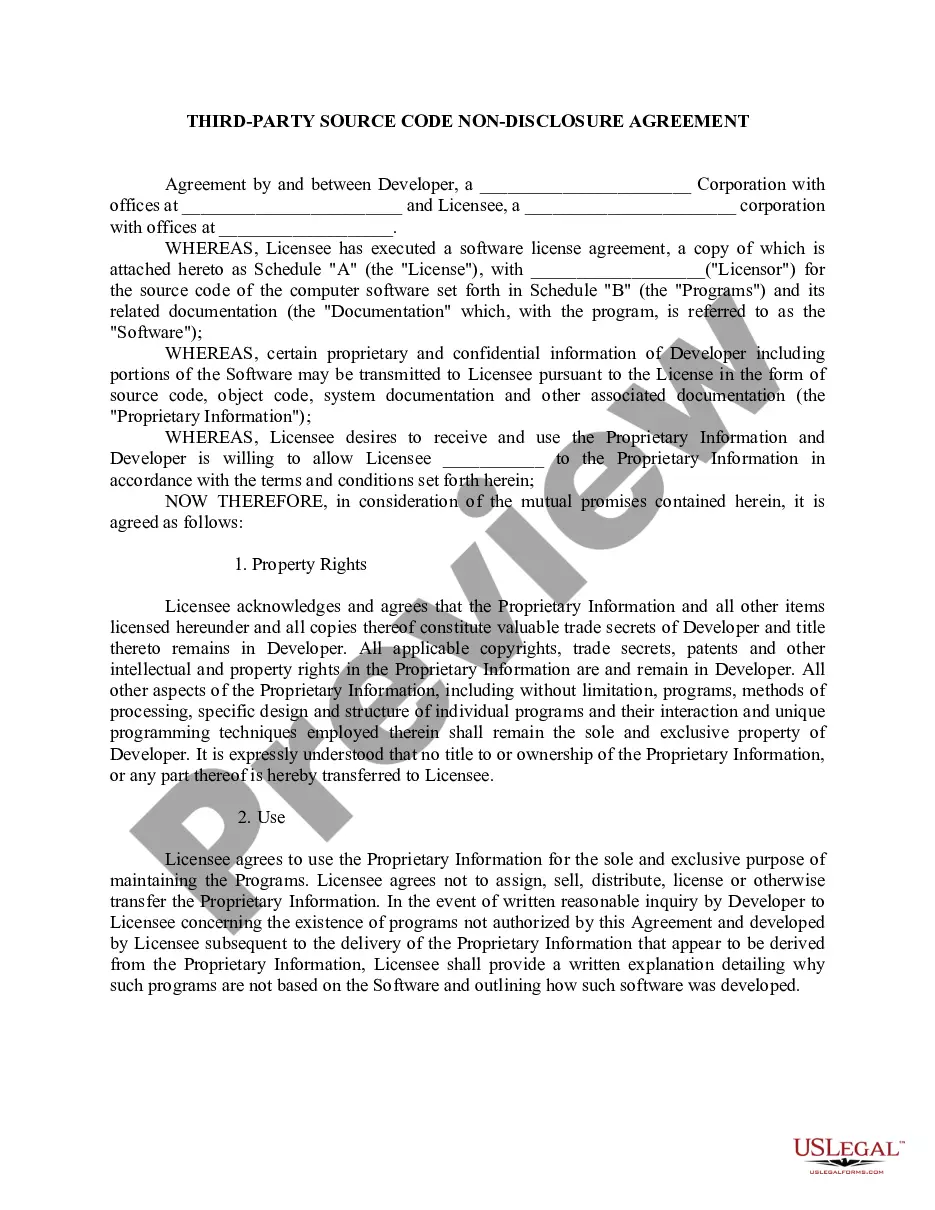
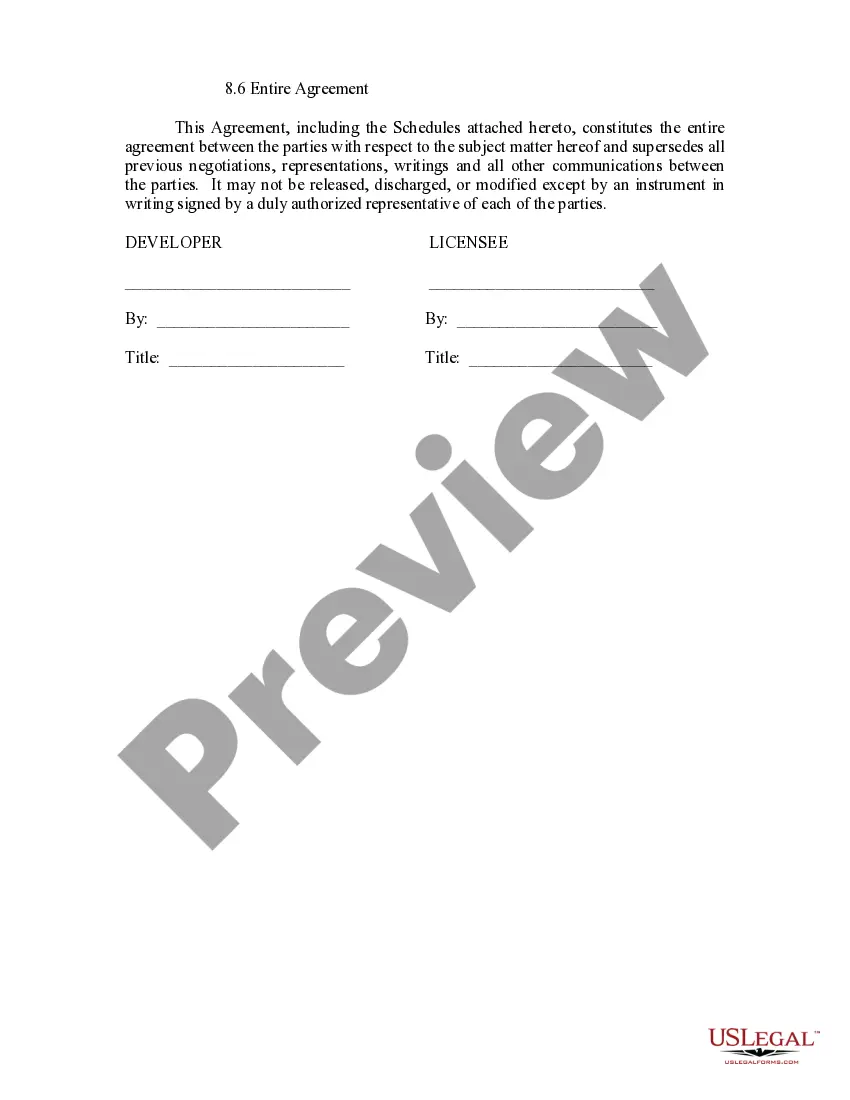
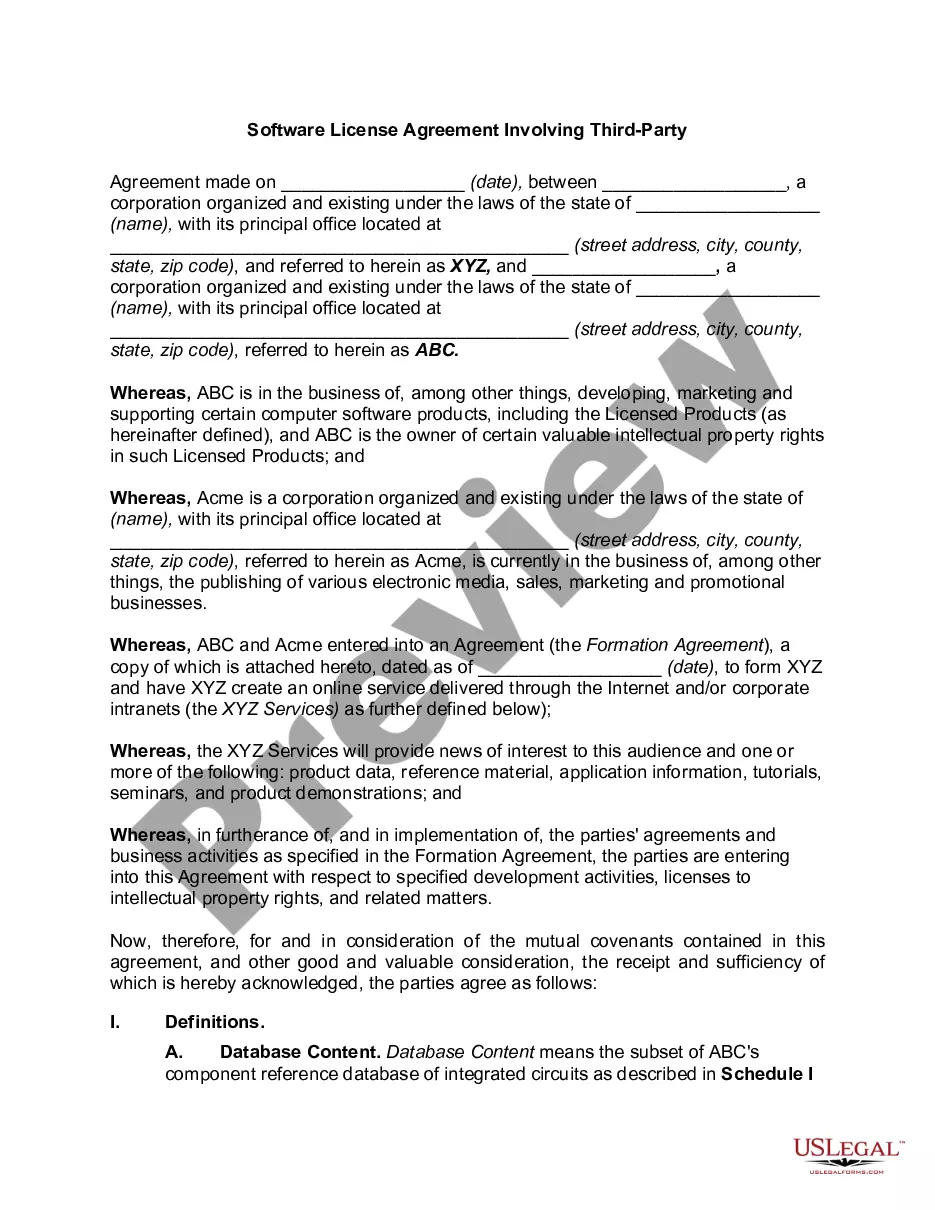
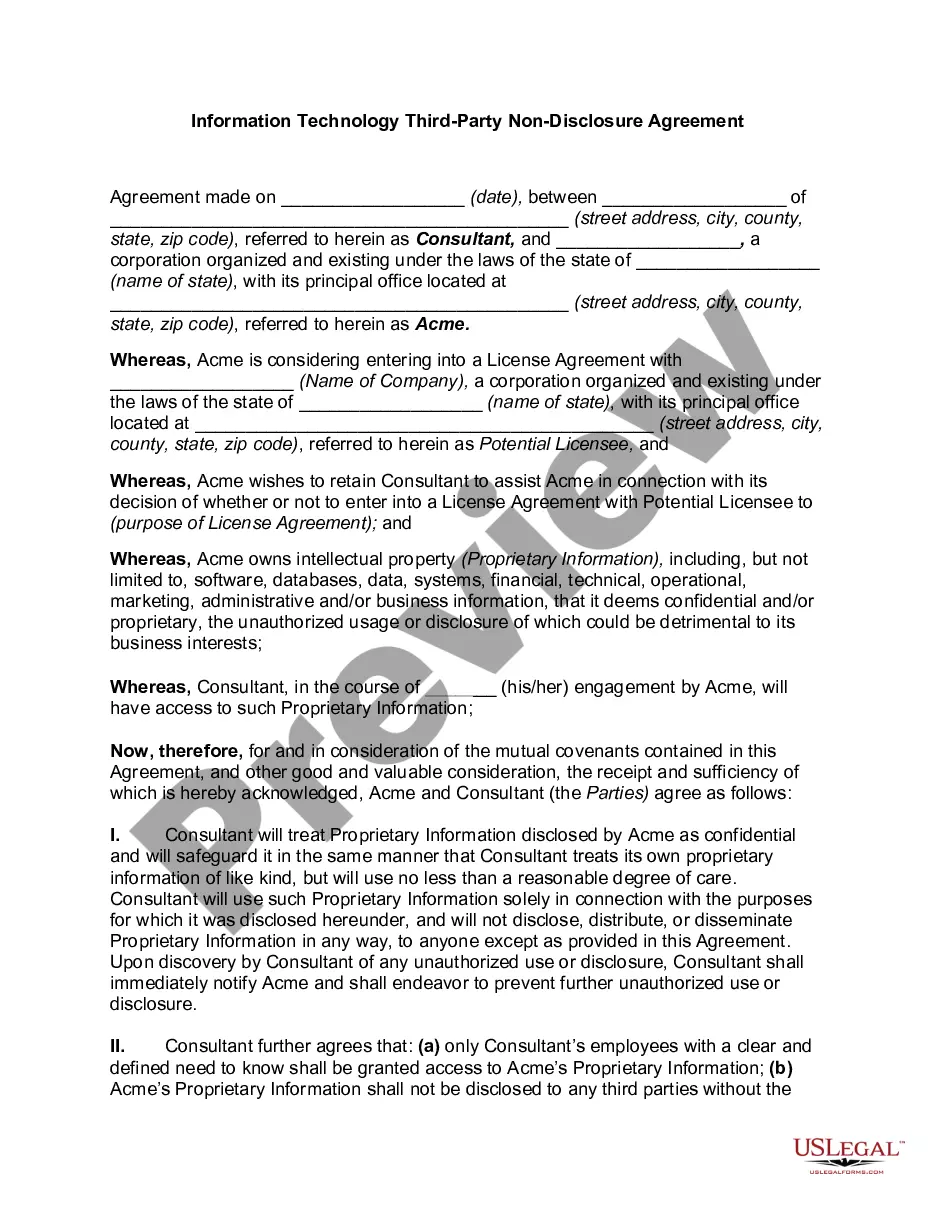
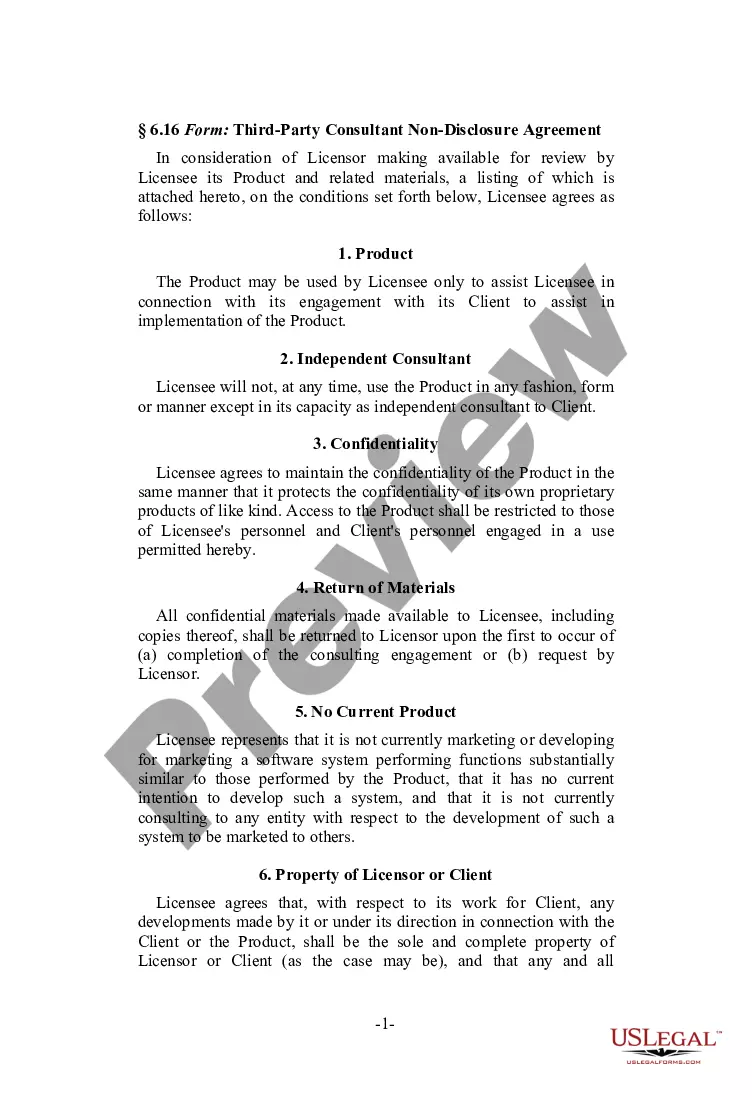
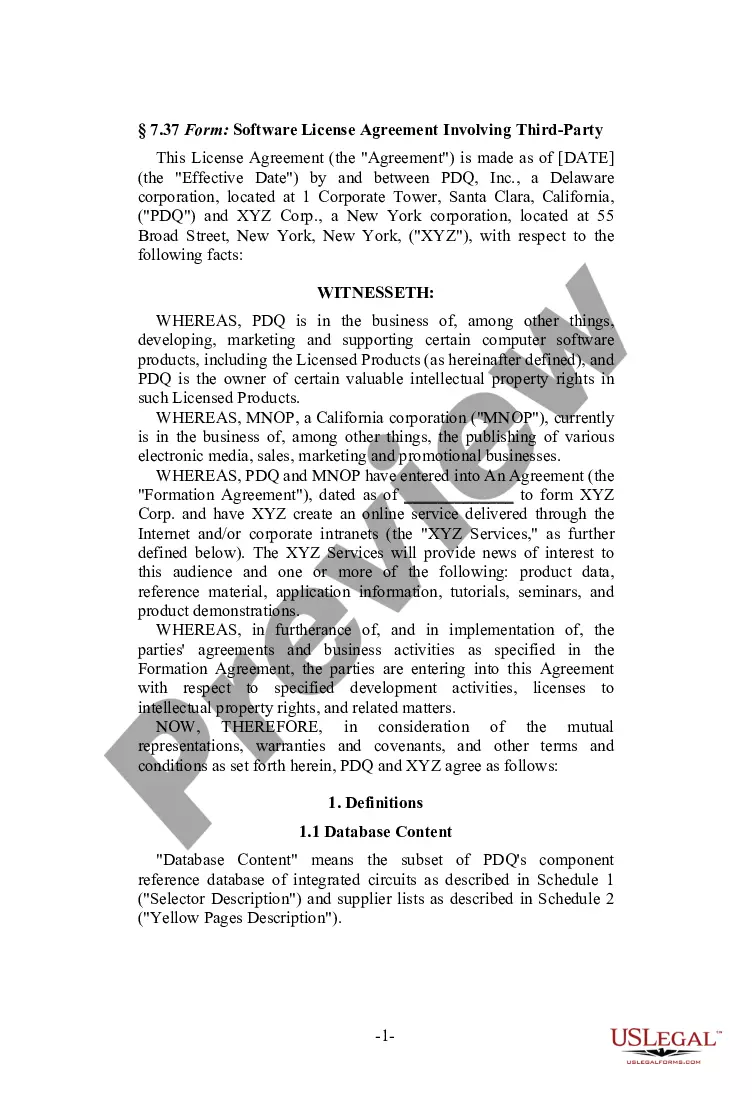
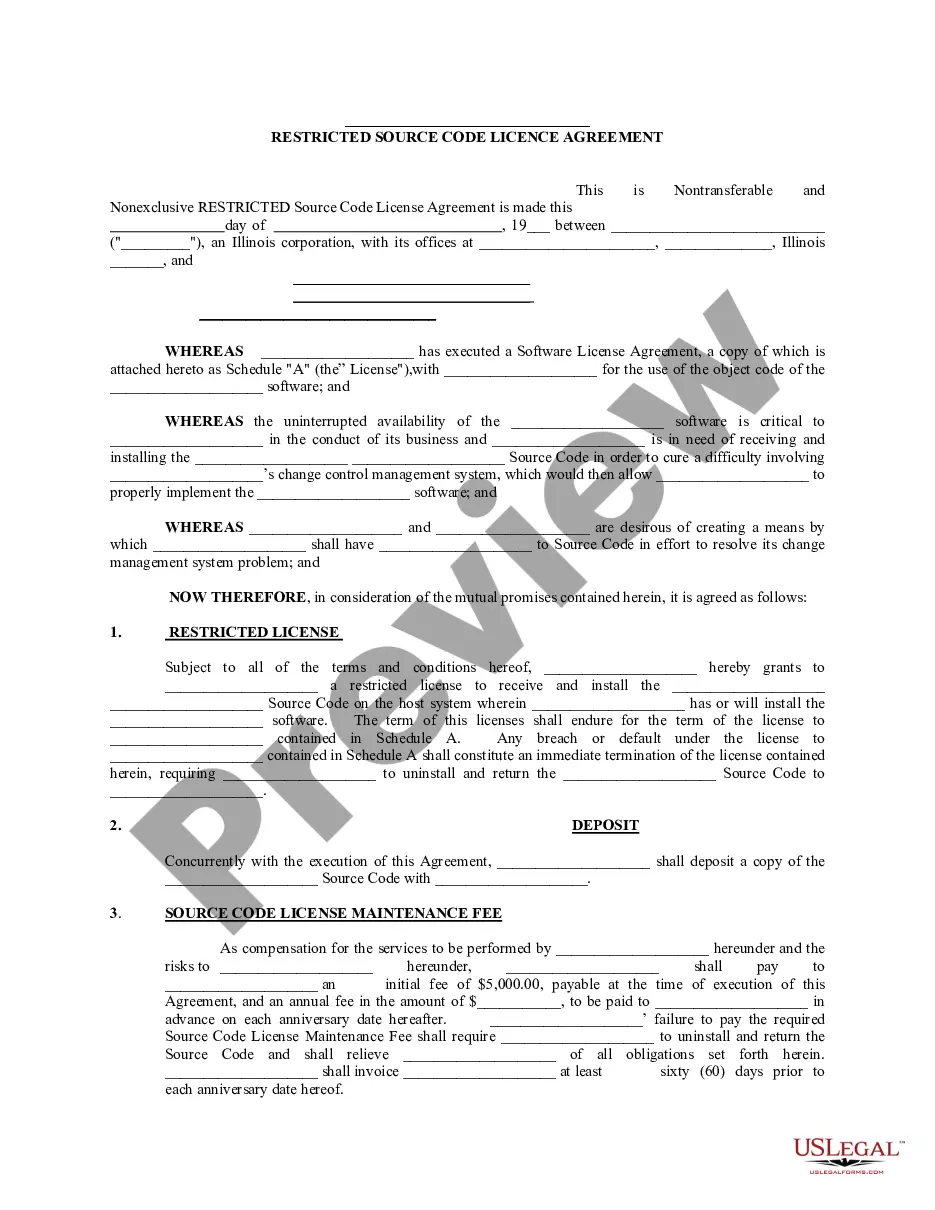
The Third-Party Source Code Nondisclosure Agreement is a legal document that establishes the confidentiality obligations between developers and licensees regarding proprietary software code. This specialized nondisclosure agreement protects trade secrets and ensures that proprietary information remains confidential while allowing the licensee to use the software for maintenance purposes. Unlike standard nondisclosure agreements, this form is tailored for the software industry, emphasizing intellectual property rights and specific obligations regarding the use of source code.
Key components of this form
- Property Rights: Clarifies that the proprietary information remains the exclusive property of the developer.
- Use: Limits the licensee's use of proprietary information to maintaining the programs only.
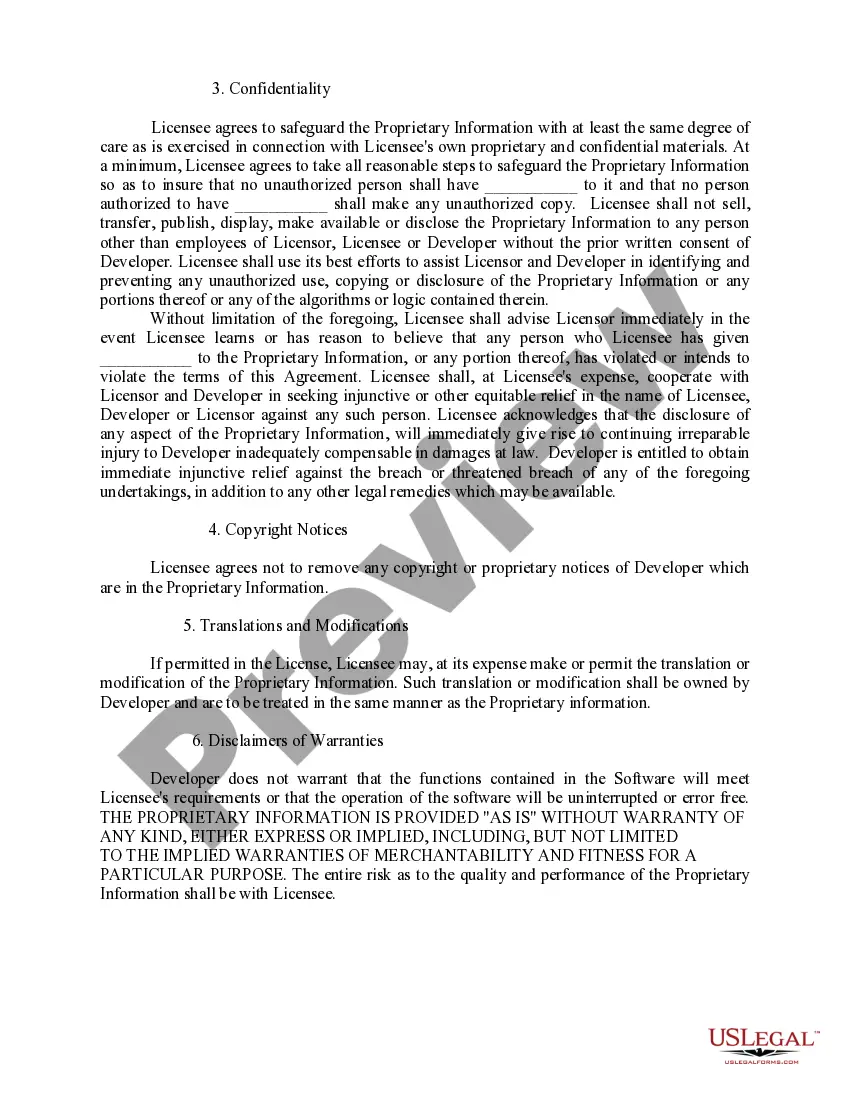
- Confidentiality: Outlines the responsibilities of the licensee to protect proprietary information from unauthorized access or disclosure.
- Copyright Notices: Requires the maintenance of copyright notices on proprietary information.
- Disclaimers of Warranties: Specifies that the developer does not guarantee uninterrupted or error-free software operation.
Situations where this form applies
This form should be used when a software developer is licensing their source code to another entity (licensee) while wishing to maintain the confidentiality of their proprietary information. It is particularly relevant in scenarios where the licensee needs access to the source code for maintenance but must ensure that the information is not disclosed or misused.
Who can use this document
- Software developers who want to protect their proprietary source code.
- Companies planning to license software but need to ensure confidentiality of the underlying code.
- Businesses involved in partnerships where proprietary software will be shared under specific conditions.
- Legal professionals requiring a structure for nondisclosure in software agreements.
How to complete this form
- Identify the parties involved by filling out the developer and licensee information.
- Specify the jurisdiction by entering the appropriate state laws governing the agreement.
- Complete the sections regarding the proprietary information and its intended use.
- Ensure all confidentiality obligations and terms are clearly stipulated.
- Both parties should sign and date the agreement to make it legally binding.
Does this form need to be notarized?
Notarization is generally not required for this form. However, certain states or situations might demand it. You can complete notarization online through US Legal Forms, powered by Notarize, using a verified video call available anytime.
Get your form ready online
Our built-in tools help you complete, sign, share, and store your documents in one place.
Make edits, fill in missing information, and update formatting in US Legal Forms—just like you would in MS Word.
Download a copy, print it, send it by email, or mail it via USPS—whatever works best for your next step.
Sign and collect signatures with our SignNow integration. Send to multiple recipients, set reminders, and more. Go Premium to unlock E-Sign.
If this form requires notarization, complete it online through a secure video call—no need to meet a notary in person or wait for an appointment.
We protect your documents and personal data by following strict security and privacy standards.

Make edits, fill in missing information, and update formatting in US Legal Forms—just like you would in MS Word.

Download a copy, print it, send it by email, or mail it via USPS—whatever works best for your next step.

Sign and collect signatures with our SignNow integration. Send to multiple recipients, set reminders, and more. Go Premium to unlock E-Sign.

If this form requires notarization, complete it online through a secure video call—no need to meet a notary in person or wait for an appointment.

We protect your documents and personal data by following strict security and privacy standards.
Common mistakes
- Failing to clearly define what constitutes proprietary information.
- Not including all necessary parties in the agreement.
- Overlooking the need for signatures, which can render the agreement unenforceable.
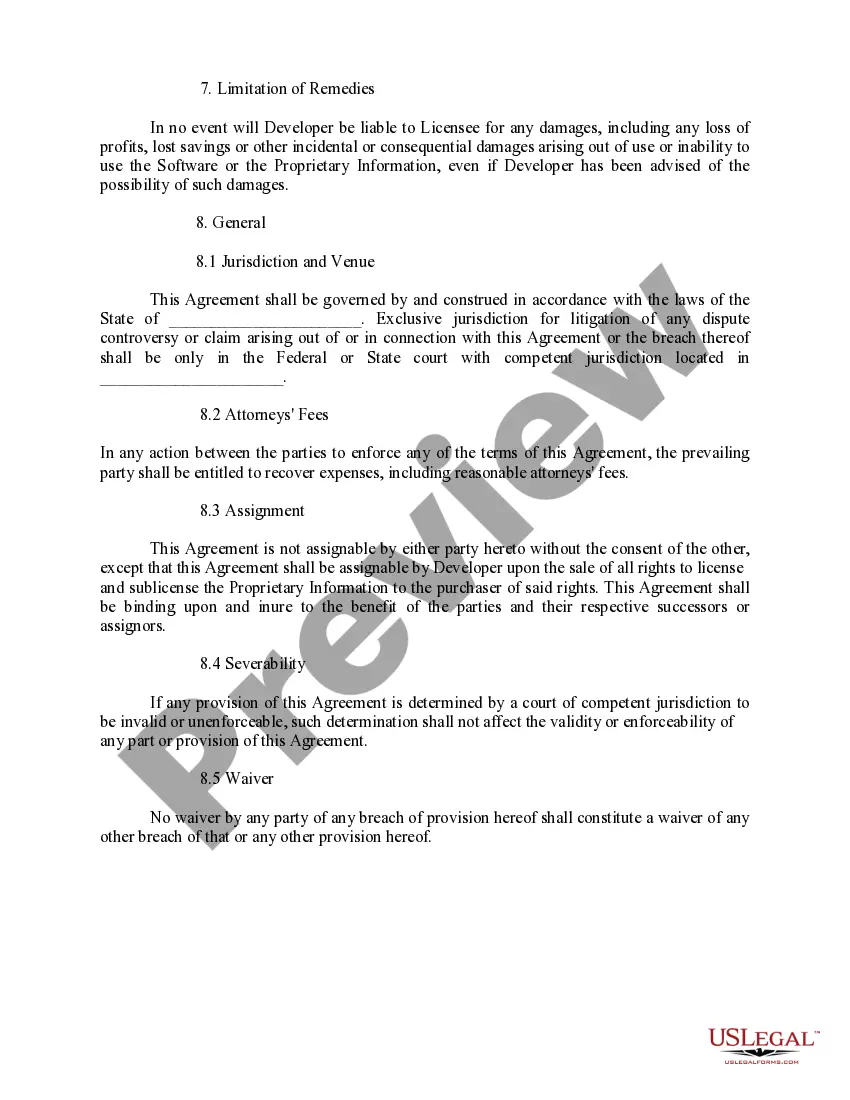
- Neglecting to specify the state jurisdiction, which is crucial for legal enforcement.
Why use this form online
- Convenient access to legal documents anytime, streamlining the process of forming contracts.
- The ability to customize templates based on unique business needs and circumstances.
- Reliable formats created by licensed attorneys, ensuring legal compliance.
- Instant downloads, allowing for immediate use without long waiting periods.
Legal use & context
- The agreement protects the developer's proprietary information legally and ensures confidentiality.
- Failure to adhere to the terms can result in legal action for breach of contract or unfair competition.
- This form is enforceable in court as long as both parties sign and it complies with applicable state laws.
Summary of main points
- Nondisclosure agreements are crucial for protecting proprietary software information.
- Clearly define the rights and responsibilities of both parties to avoid potential disputes.
- Always ensure proper completion and understanding of the form before signing.
Looking for another form?


Form popularity
FAQ
In the Sample NDA Agreement, the Disclosing Party is the person disclosing secrets, and the Receiving Party is the person or company who receives the confidential information and is obligated to keep it secret. The terms are capitalized to indicate they are defined in the agreement.
"Recipient" means a party to this agreement that receives or obtains directly or indirectly Confidential Information. "Representative" means, in relation to a party, that party's employees, agents, accountants and lawyers.
Read the Duration clauses. Good NDAs will have two different terms of duration. Read the termination clause. Like any other relationship, business partnerships can come to an early end unexpectedly. Read the Return of Information clause.
Disclosing Party means the party disclosing Confidential Information to the other party, including any Affiliate of such other party. (d) Receiving Party means the party receiving Confidential Information from the other party, including any Affiliate of such other party.
The party to be charged must have signed the contract. Since the NDAs benefit you, so long as the other party has signed, that ishould be sufficient.
Identification of the parties. Definition of what is deemed to be confidential. The scope of the confidentiality obligation by the receiving party. The exclusions from confidential treatment. The term of the agreement.
An employer will often require an employee to sign an NDA because it allows their company to operate at a higher level, with less risk.Understand, your employer is not asking you to sign an NDA out of mistrust, they are asking you to sign one because it is essential to conducting business smoothly and efficiently.
Identify each party in the first section of the form. The NDA form will start by declaring it to be an agreement and identifying who the agreement is between. Whoever is disclosing the information to be protected is the "disclosing party"; write his or her name on this space.