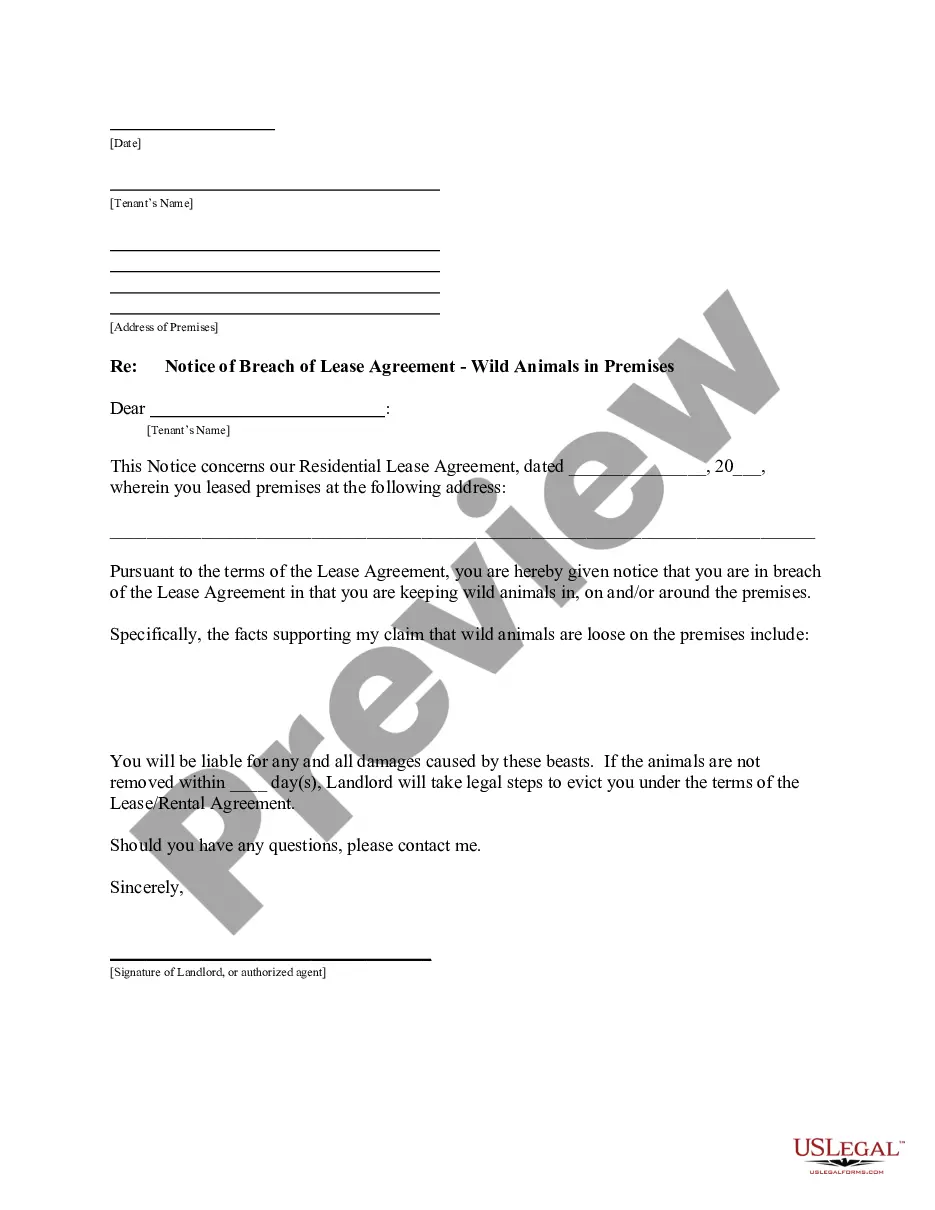
Software License Agreement Involving Third-Party
About this form
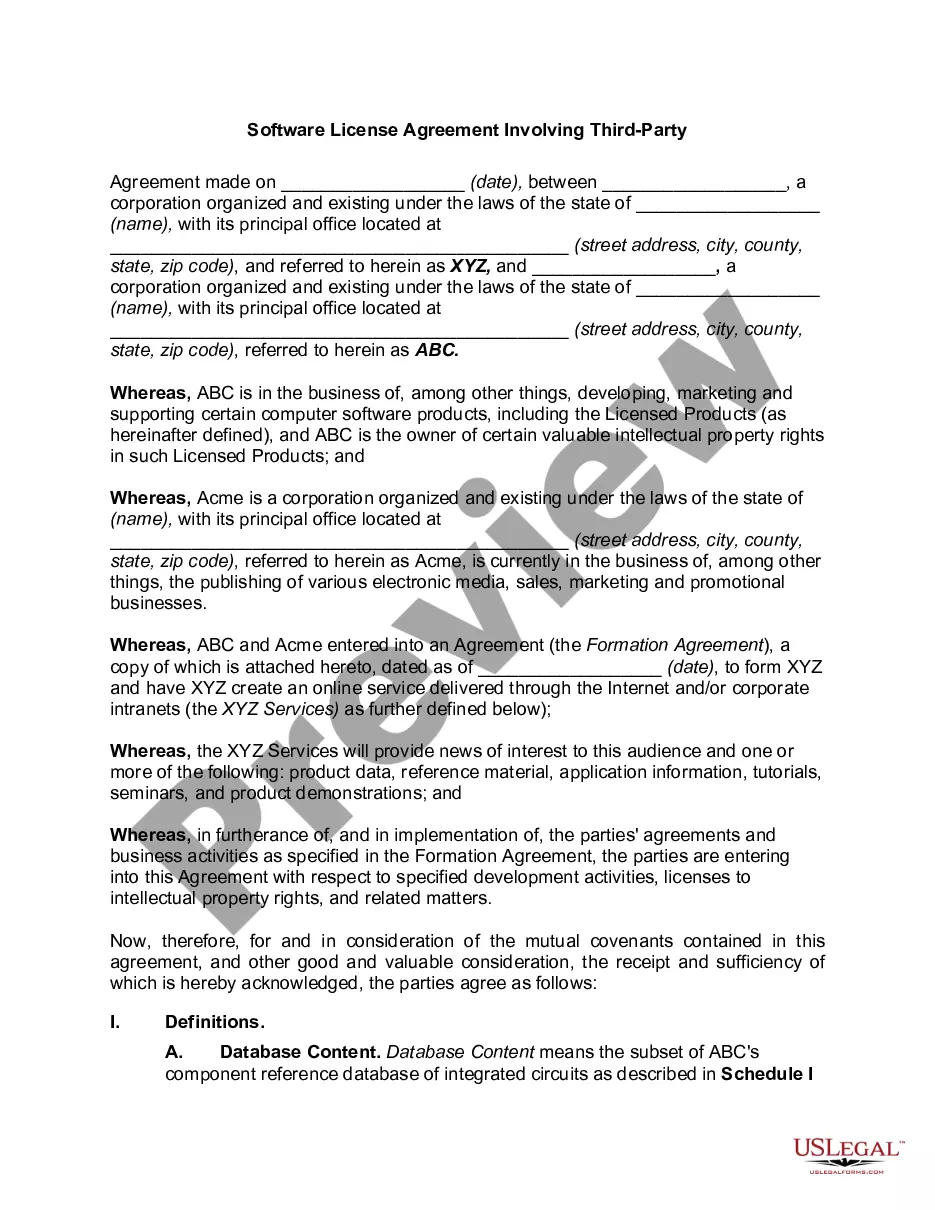
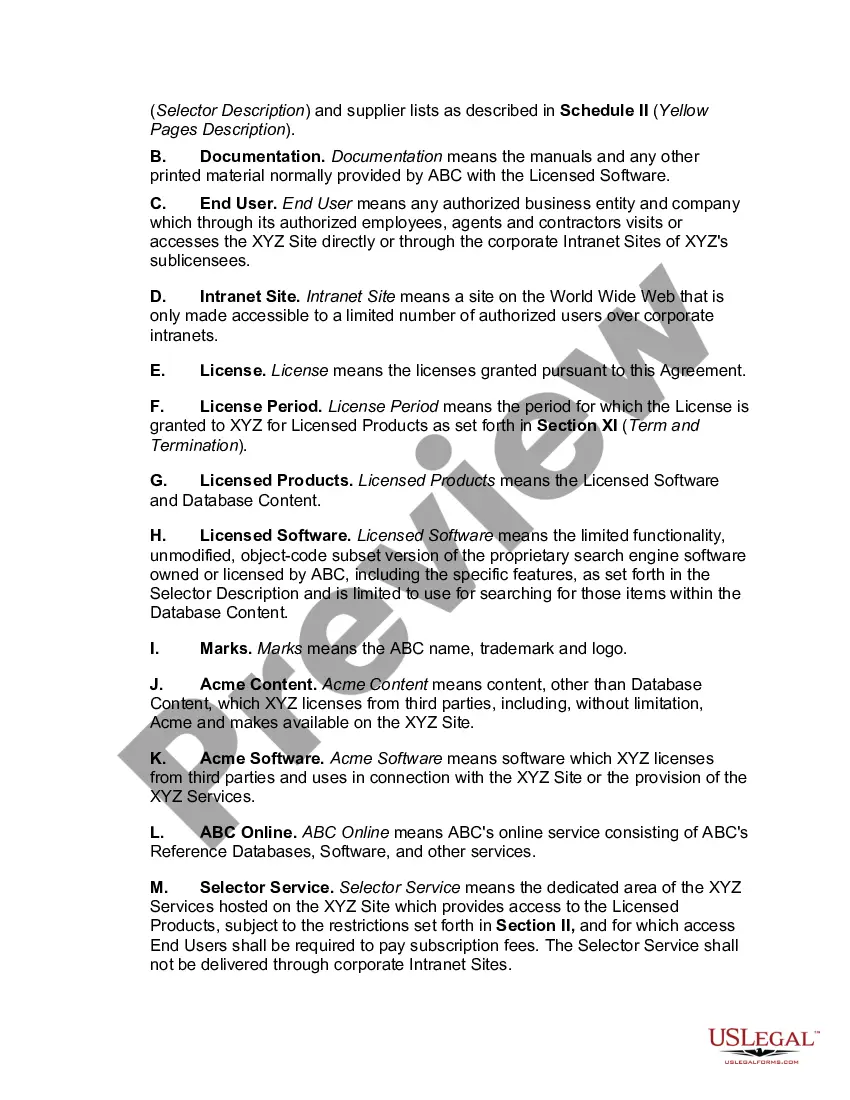
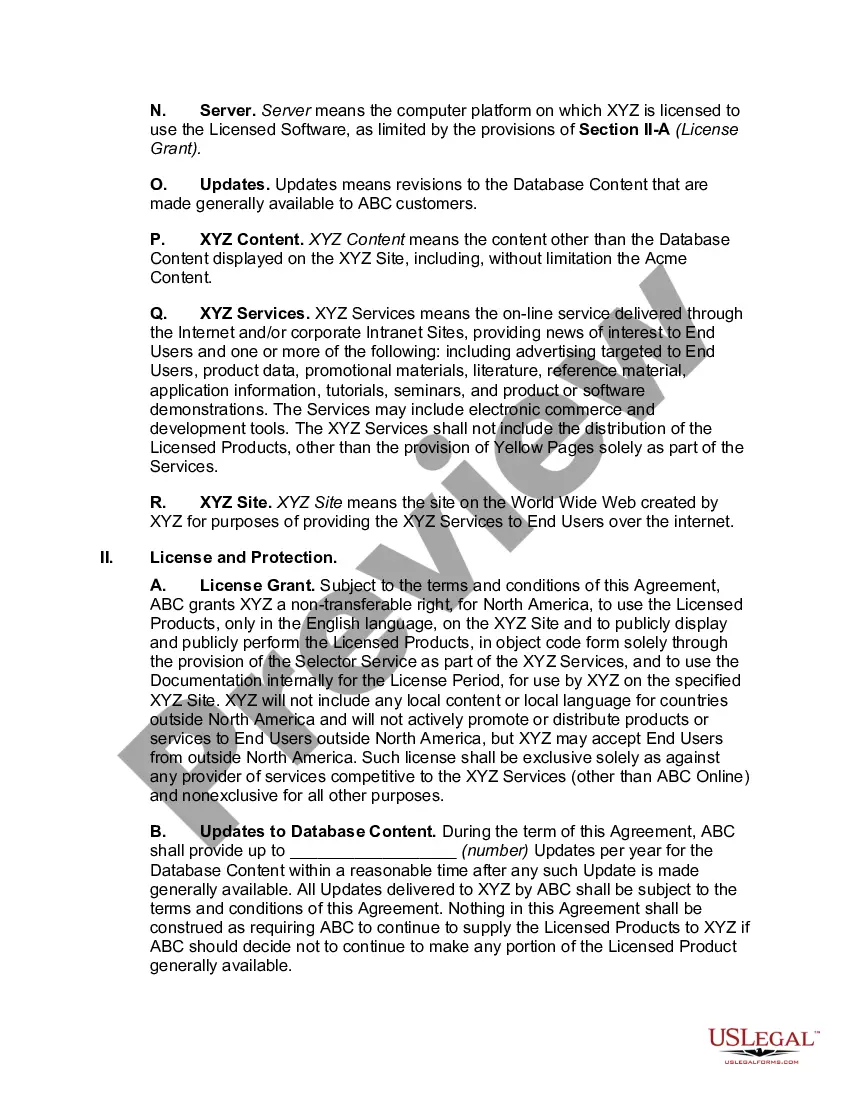
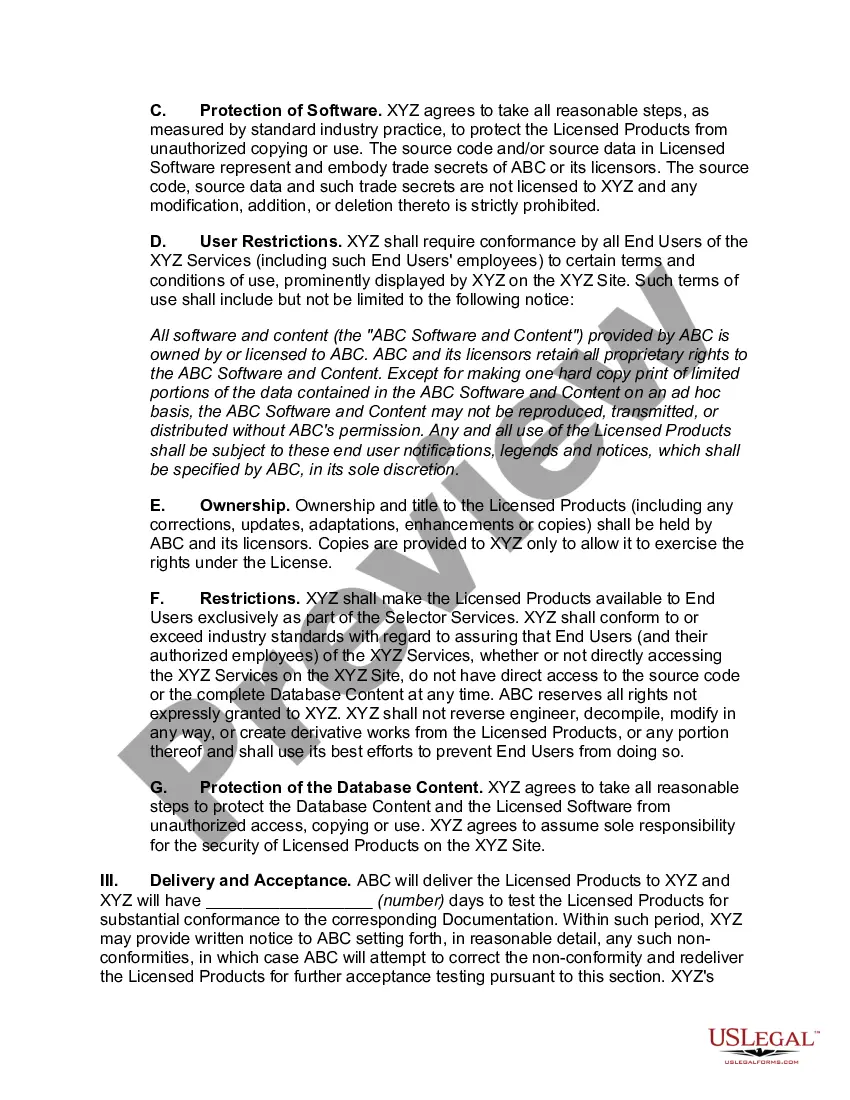
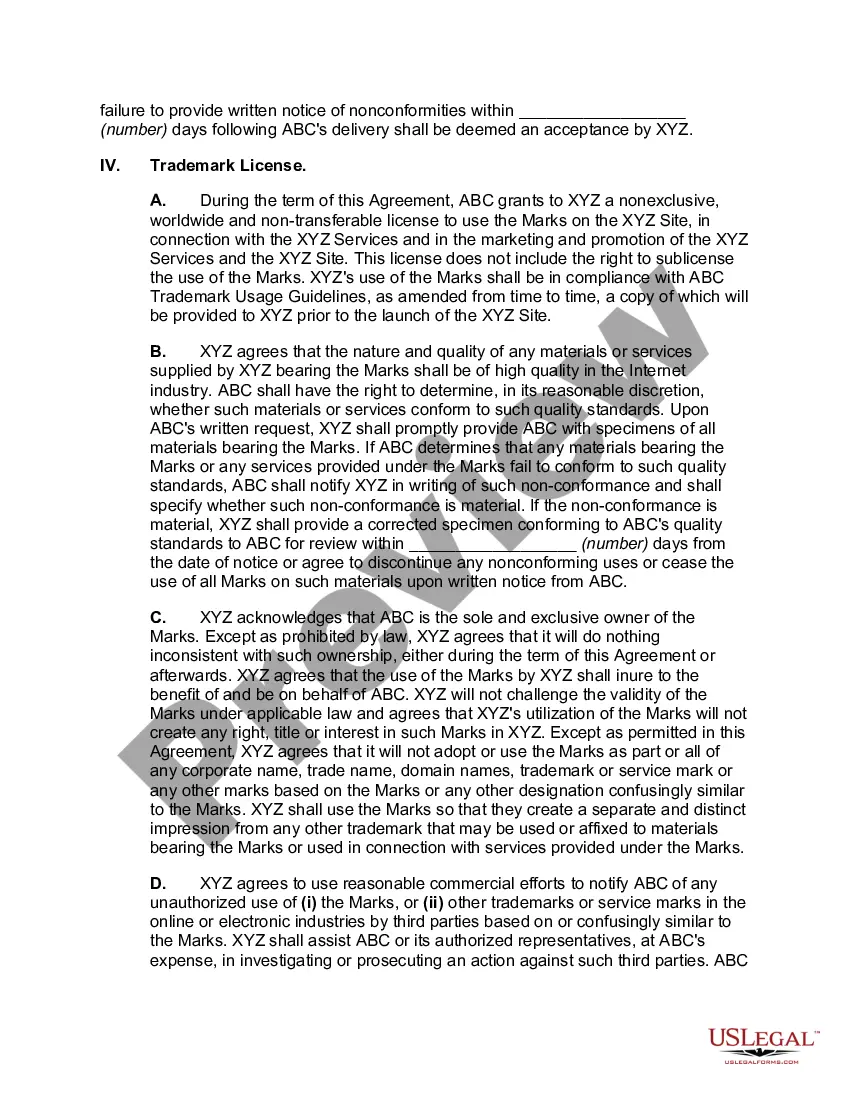
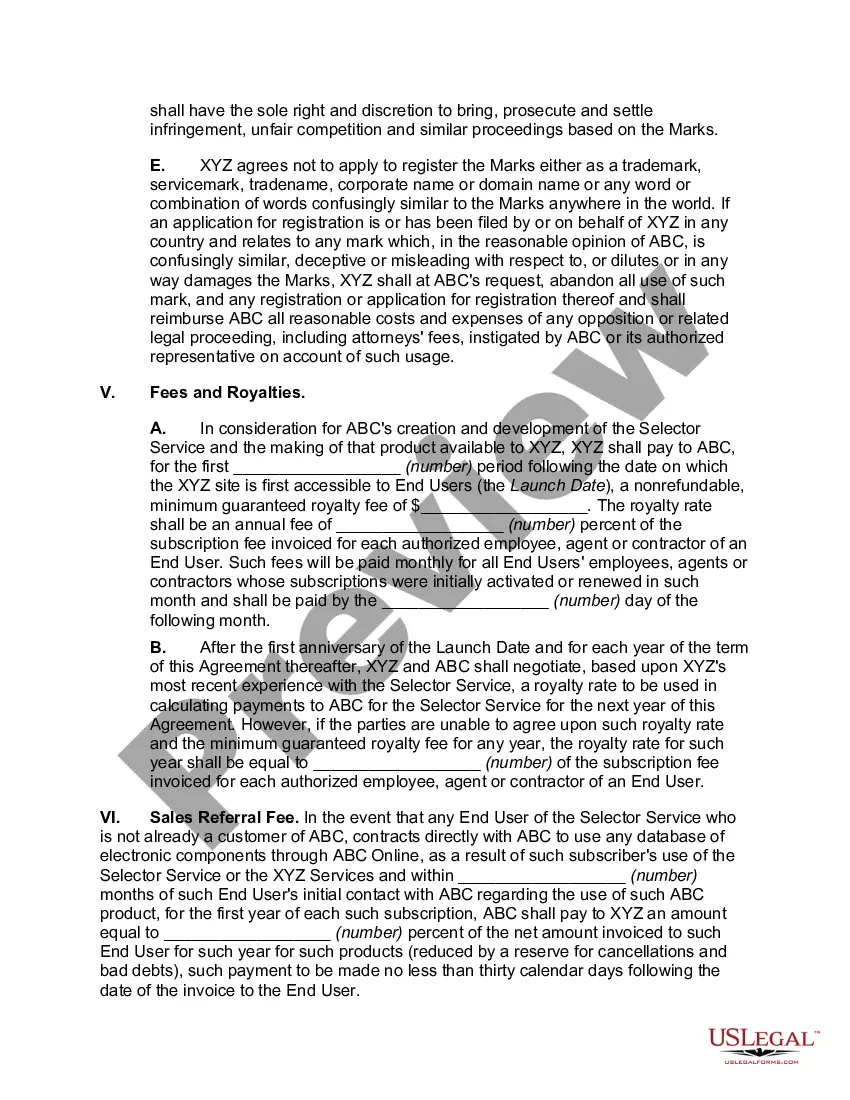
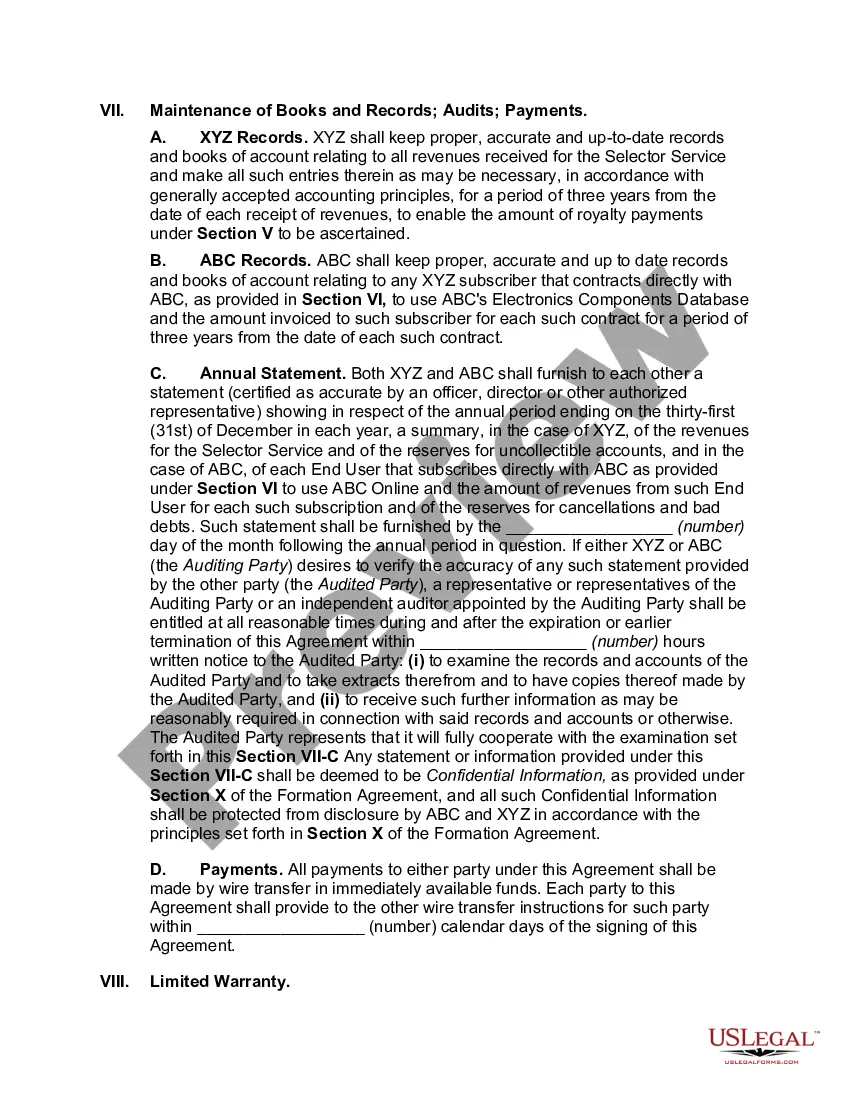
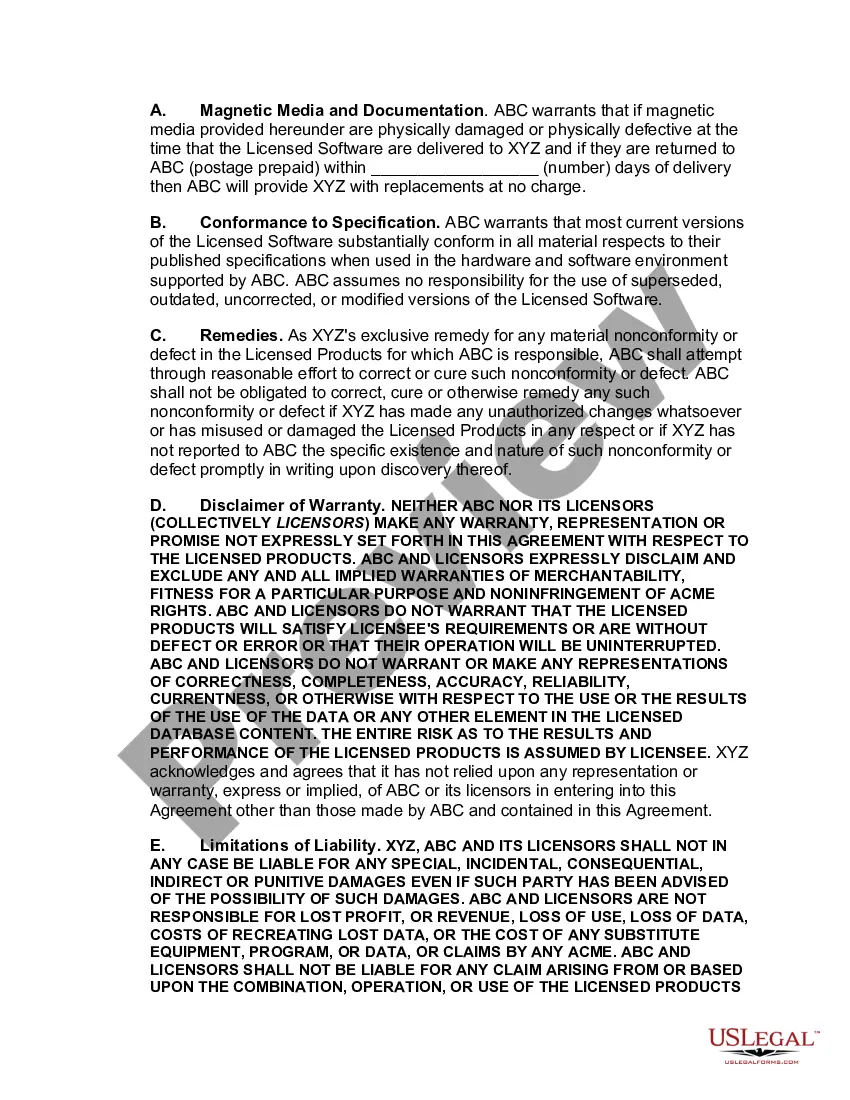
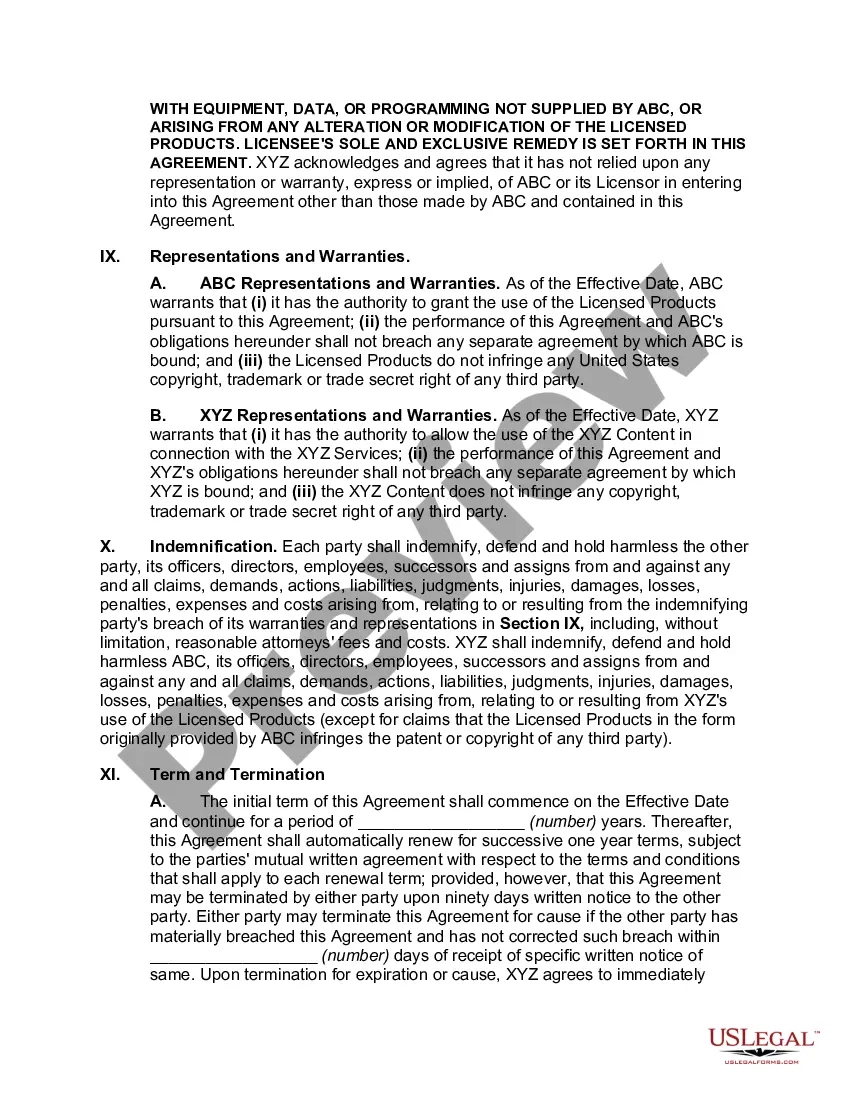
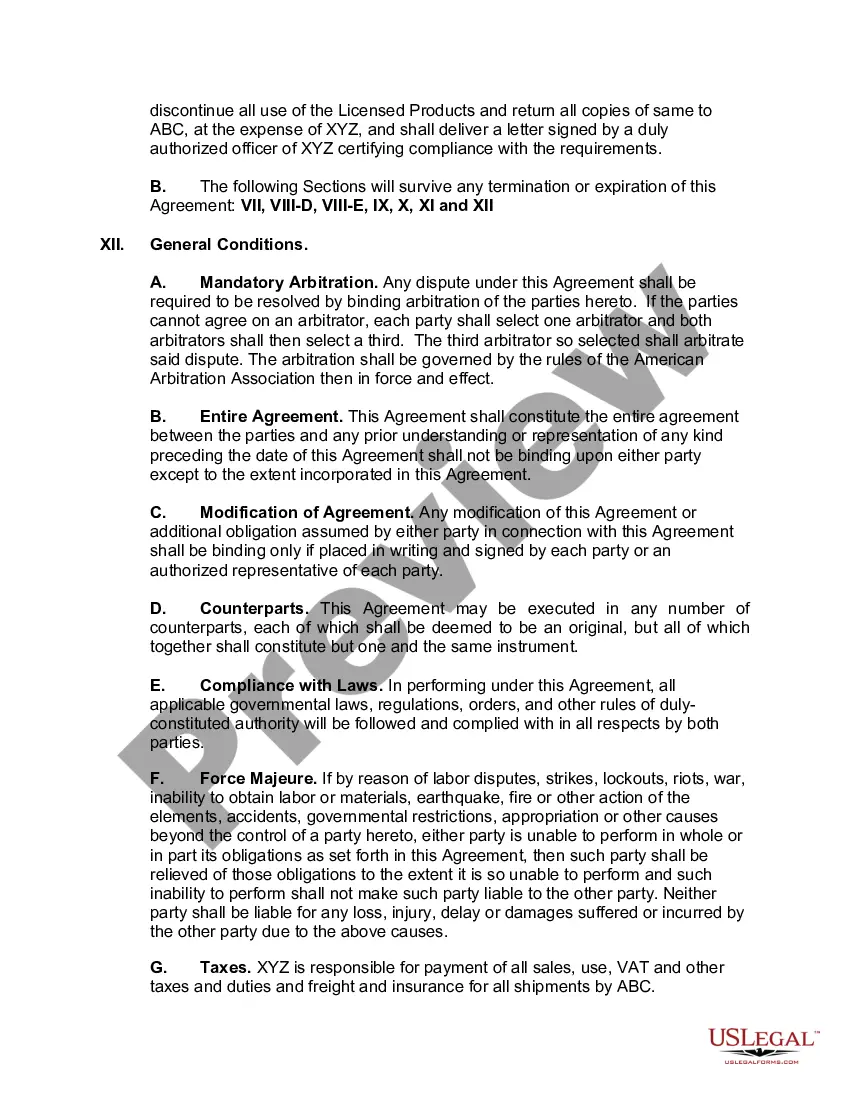
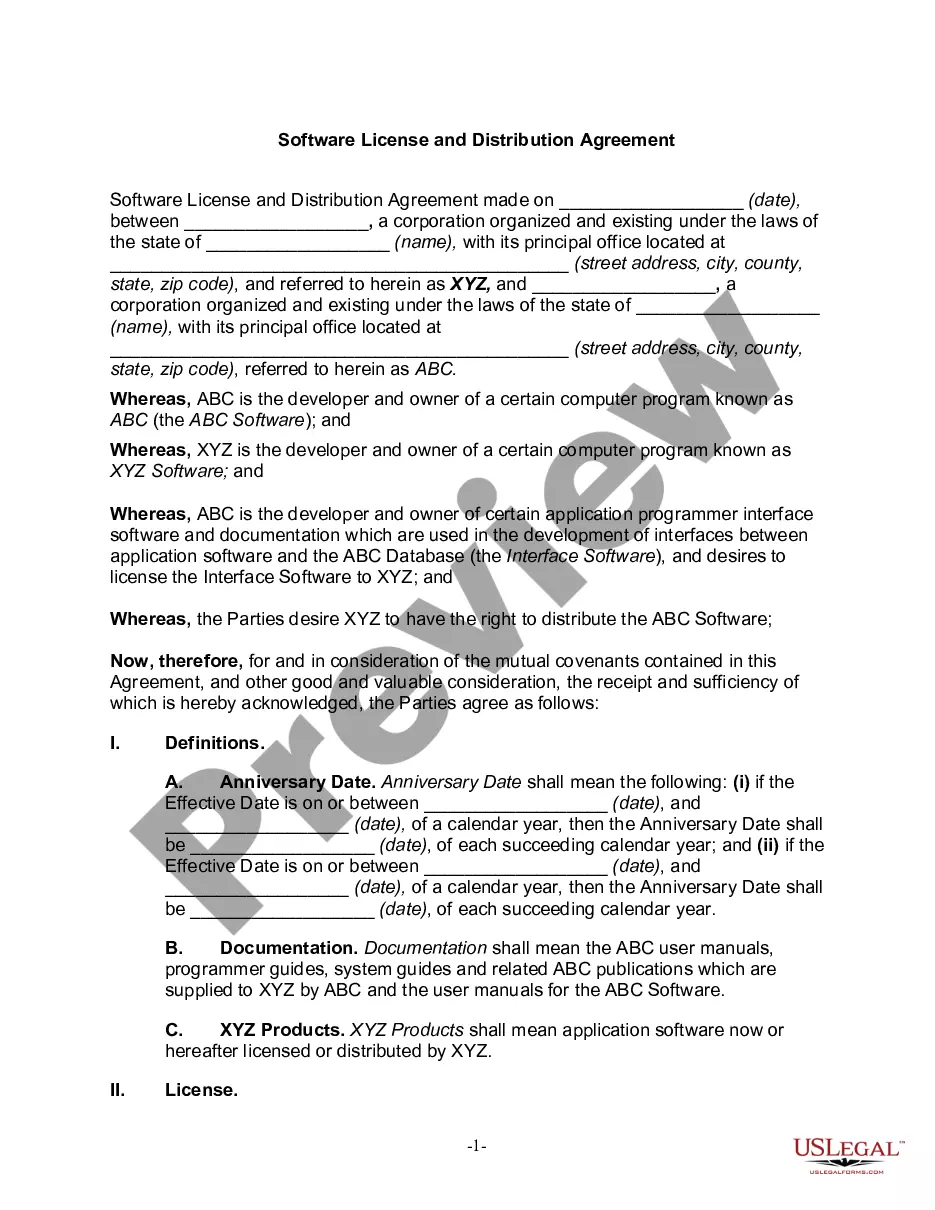
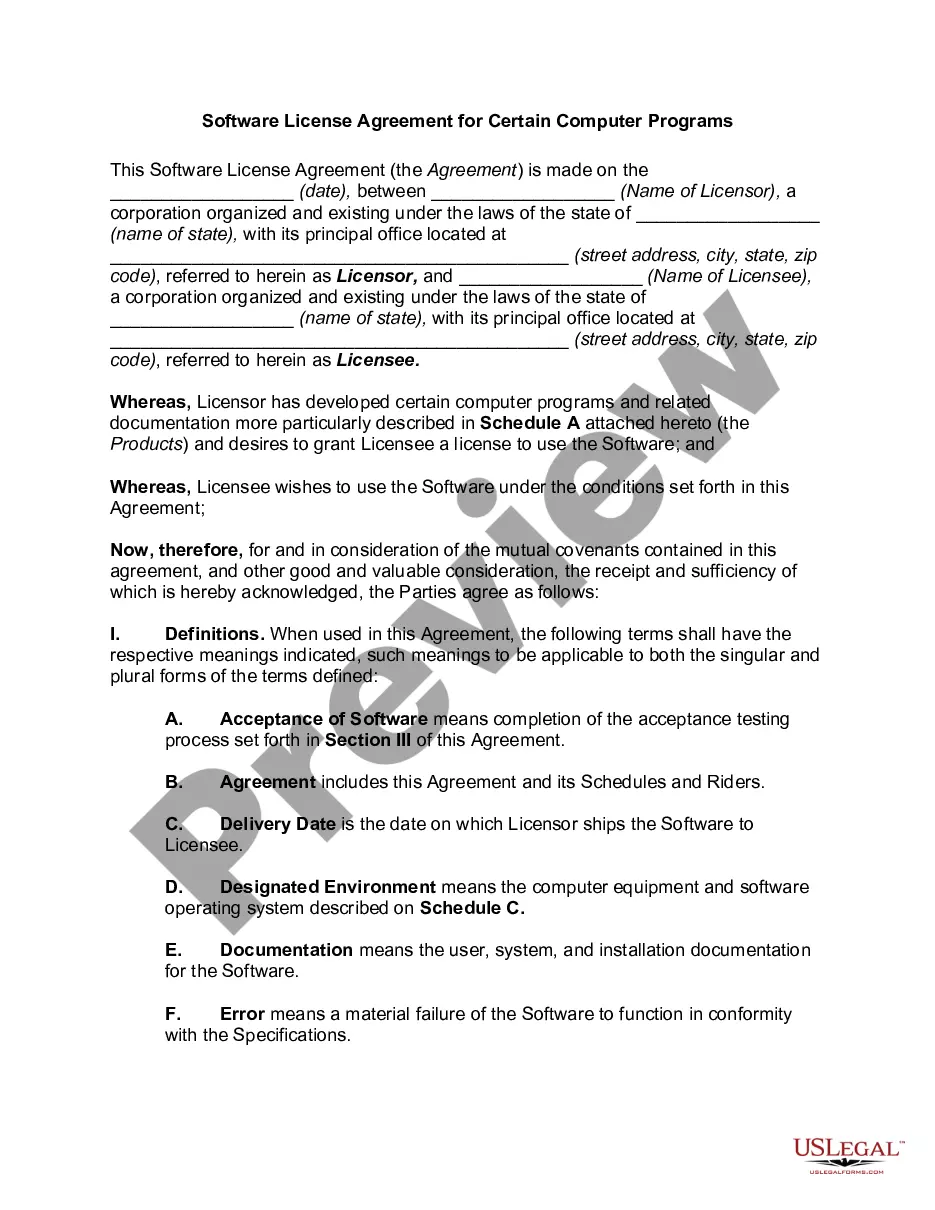
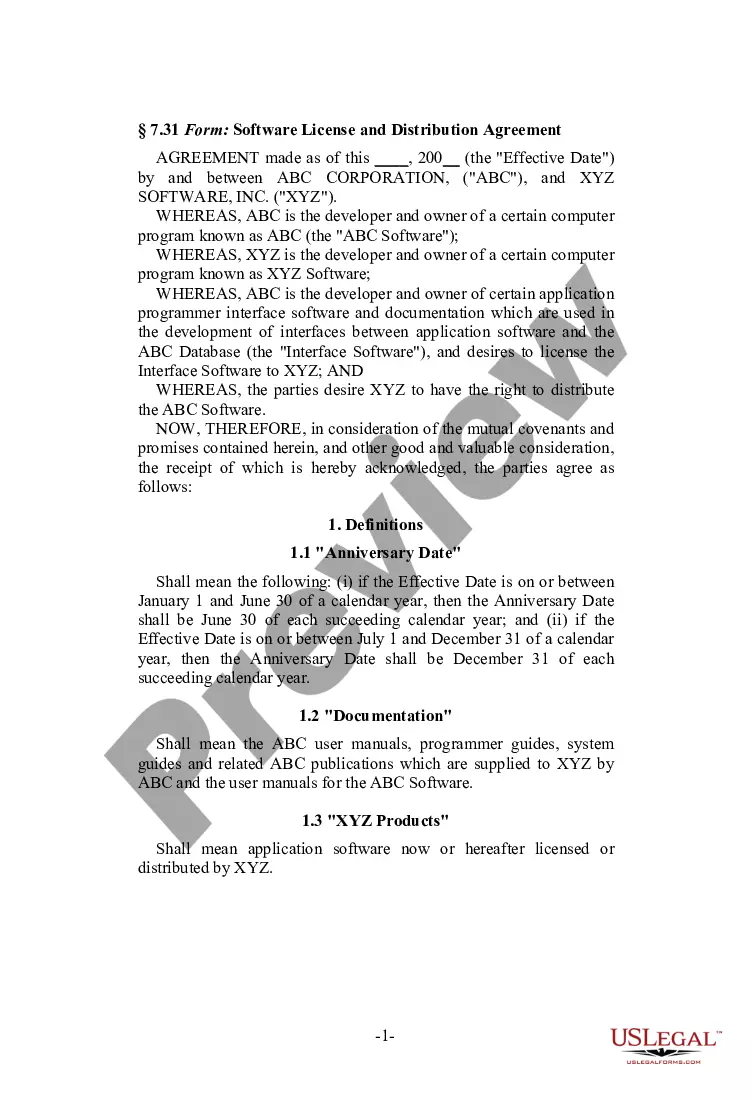
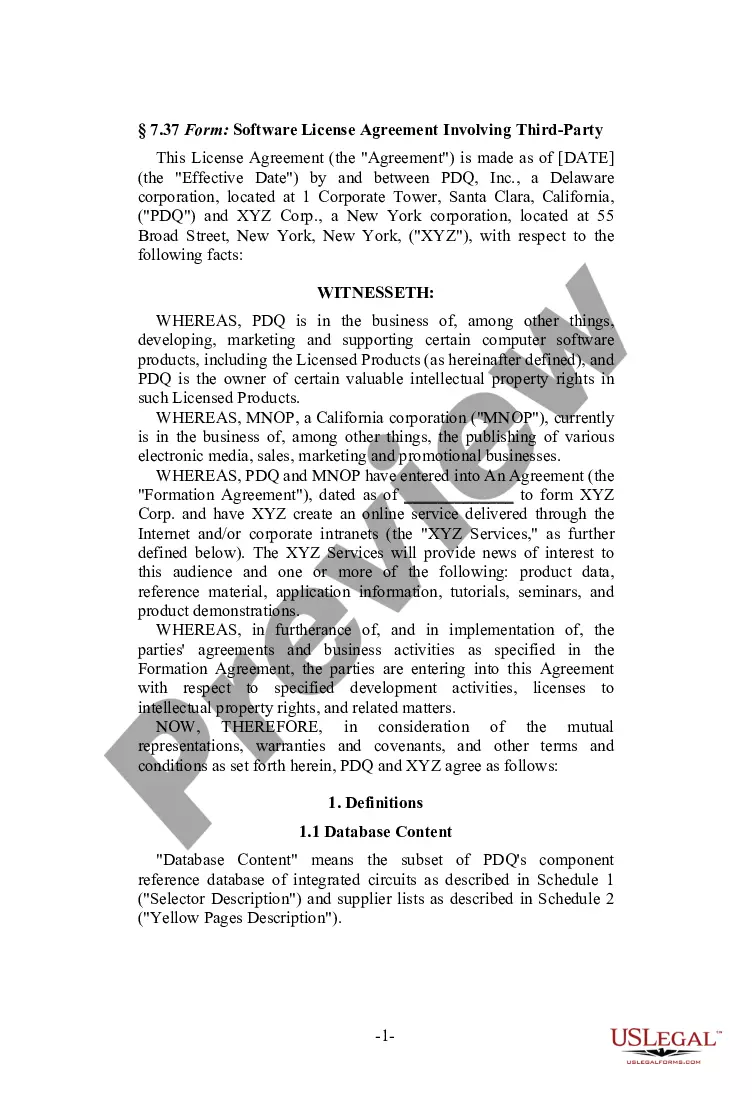
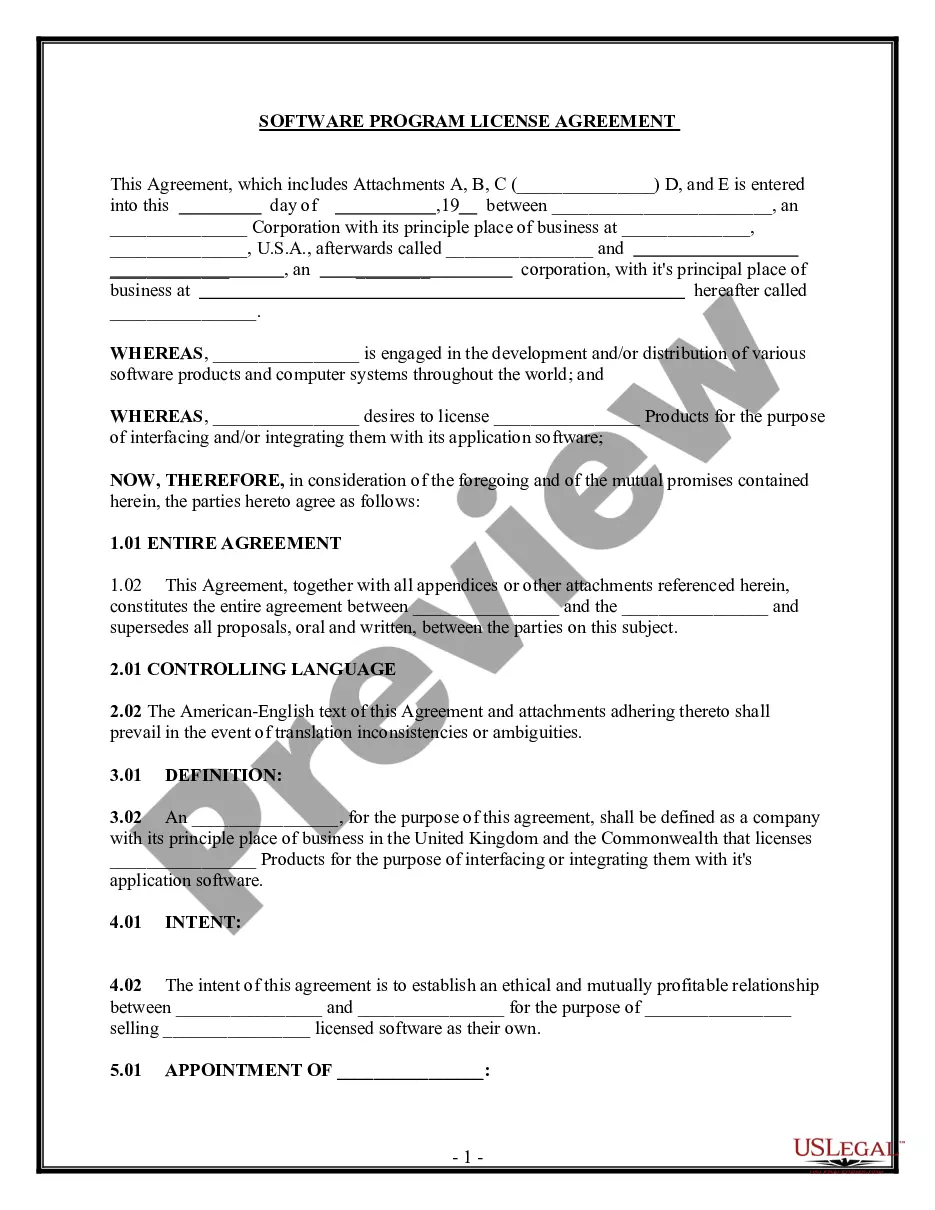
The Software License Agreement Involving Third-Party is a comprehensive legal document that outlines the terms under which one party (the licensee) can use software products owned by another party (the licensor), including third-party agreements. This form is essential for businesses and contractors engaging in software distribution and services, ensuring clarity on intellectual property rights, usage limitations, and responsibilities between the involved parties. Unlike simpler agreements, this contract addresses specific details about database content, documentation, and the rights granted to the licensee, making it suitable for complex software arrangements.
Key parts of this document
- Definitions section clarifying key terms like "Licensed Products," "End User," and "Documentation."
- License terms outlining usage rights and any restrictions placed on the licensee.
- Fees and royalties structure detailing payments due to the licensor based on usage.
- Warranties and liabilities section outlining the responsibilities and protections for both parties.
- Termination provisions detailing the duration of the agreement and circumstances under which it may be ended.

When to use this document
This form is necessary when a software developer or contractor enters into an agreement with a business or individual to license software that involves third parties. It should be used in scenarios where detailed provisions regarding usage rights, updates, payments, and responsibilities need to be established to protect both parties involved in the software services. Common situations include software startups licensing their products, established companies distributing third-party software, and collaborations between multiple parties for the development of software services.
Who this form is for
This agreement is designed for:
- Businesses licensing software for internal use or distribution.
- Independent contractors providing software or service solutions.
- Companies collaborating with third-party developers or vendors.
- Organizations needing clear terms regarding intellectual property and licensing.
How to prepare this document
- Identify and enter the full names and details of the parties involved in the agreement.
- Define the specific software products and services being licensed, including any third-party components.
- Specify the license grant terms, including any restrictions on use and geographical limitations.
- Detail the payment structure, including fees, royalties, and schedules for payments.
- Include the effective date of the agreement and duration of the license period.
Does this form need to be notarized?
This form does not typically require notarization unless specified by local law. However, having it notarized can enhance its legal standing in some jurisdictions and provide additional verification of the parties' identities.
Get your form ready online
Our built-in tools help you complete, sign, share, and store your documents in one place.
Make edits, fill in missing information, and update formatting in US Legal Forms—just like you would in MS Word.
Download a copy, print it, send it by email, or mail it via USPS—whatever works best for your next step.
Sign and collect signatures with our SignNow integration. Send to multiple recipients, set reminders, and more. Go Premium to unlock E-Sign.
If this form requires notarization, complete it online through a secure video call—no need to meet a notary in person or wait for an appointment.
We protect your documents and personal data by following strict security and privacy standards.

Make edits, fill in missing information, and update formatting in US Legal Forms—just like you would in MS Word.

Download a copy, print it, send it by email, or mail it via USPS—whatever works best for your next step.

Sign and collect signatures with our SignNow integration. Send to multiple recipients, set reminders, and more. Go Premium to unlock E-Sign.

If this form requires notarization, complete it online through a secure video call—no need to meet a notary in person or wait for an appointment.

We protect your documents and personal data by following strict security and privacy standards.
Avoid these common issues
- Failing to clearly define the scope of the license, leading to potential misuse.
- Ignoring the potential need for updates or maintenance of the software.
- Not specifying payment terms, resulting in disputes over royalties.
- Neglecting to outline the responsibilities of parties regarding intellectual property rights.
Benefits of using this form online
- Convenience of downloading and completing the form at your own pace.
- Editable templates allow customization to fit specific needs.
- Access to professionally drafted documents ensures legal reliability.
Looking for another form?
Form popularity
FAQ
Wisegeek explains software licensing as a type of contract which exists between the person of company who produces a type of software, and the end user, or person who purchases or downloads the software to use. This means that there are many different types of software licenses.
Public domain. This is the most permissive type of software license. Permissive. LGPL. Copyleft. Proprietary.
A software license is a contract between the entity that created and supplied an application, underlying source code, or related product and its end user.
Commercial software is any software or program that is designed and developed for licensing or sale to end users or that serves a commercial purpose. Commercial software was once considered to be proprietary software, but now a number of free and open-source software applications are licensed or sold to end users.
Don't assume you can't negotiate. Understand the pricing and use schemes. Get promises in writing. Get measurable promises. Carefully look at the indemnification provisions. Consider the intellectual property investment you intend to make. Look for a range of meaningful remedies. Think about renewal from day one.
MIT (Massachusetts Institute of Technology) License. The true open-source license. Apache License 2.0. GPL (General Public License) Artistic License 2.0. EPL (Eclipse Public License) 1.0. BSD (Berkeley Software Distribution) Licenses. No license. 4 Replies to 7 Ways to License your Software
A software license is a document that provides legally binding guidelines for the use and distribution of software.Software licenses typically are either proprietary, free or open source, the distinguishing feature being the terms under which users may redistribute or copy the software for future development or use.
Third Party License means all licenses, agreements, obligations or other commitments under which a Person has granted the Seller a right to use Intellectual Property but retains one or more rights to use such Intellectual Property.
User agreements like EULAs are legally binding contracts between the software author and the end-user. End User License Agreements are enforceable as long as it is clear that it is a contract and both parties can understand the terms.