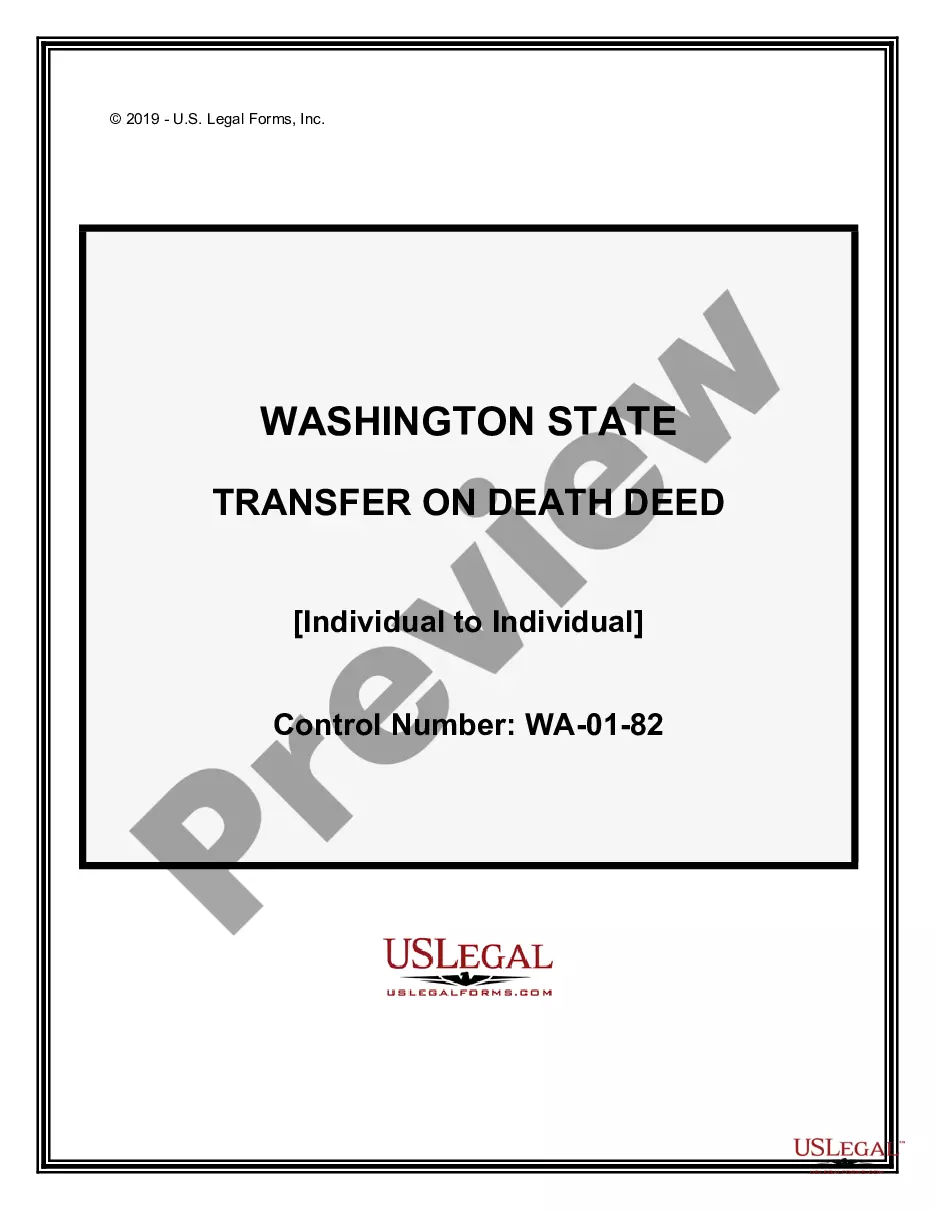
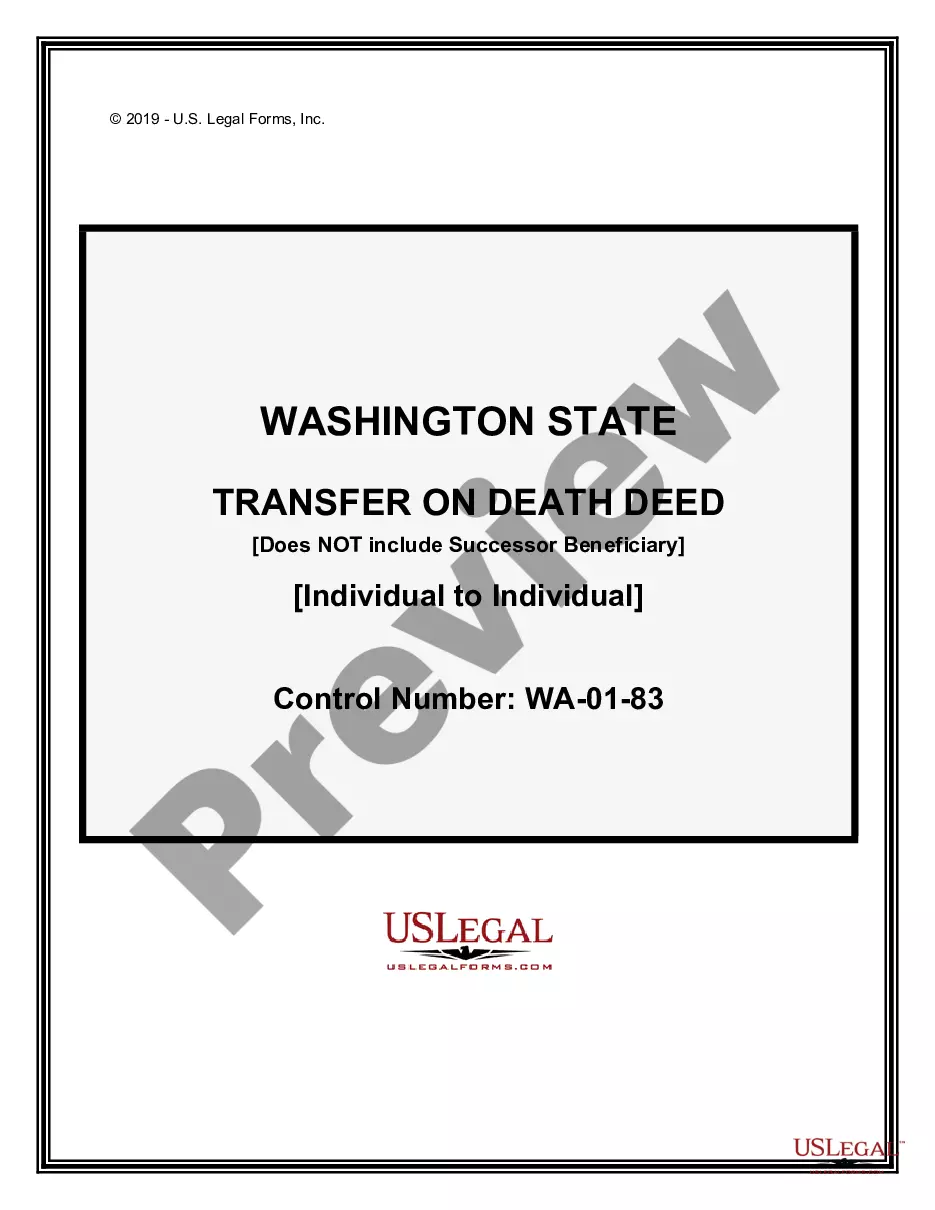
Washington Transfer on Death Quitclaim Deed from Individual to Two Individuals without provision for Successor Beneficiary
About this form
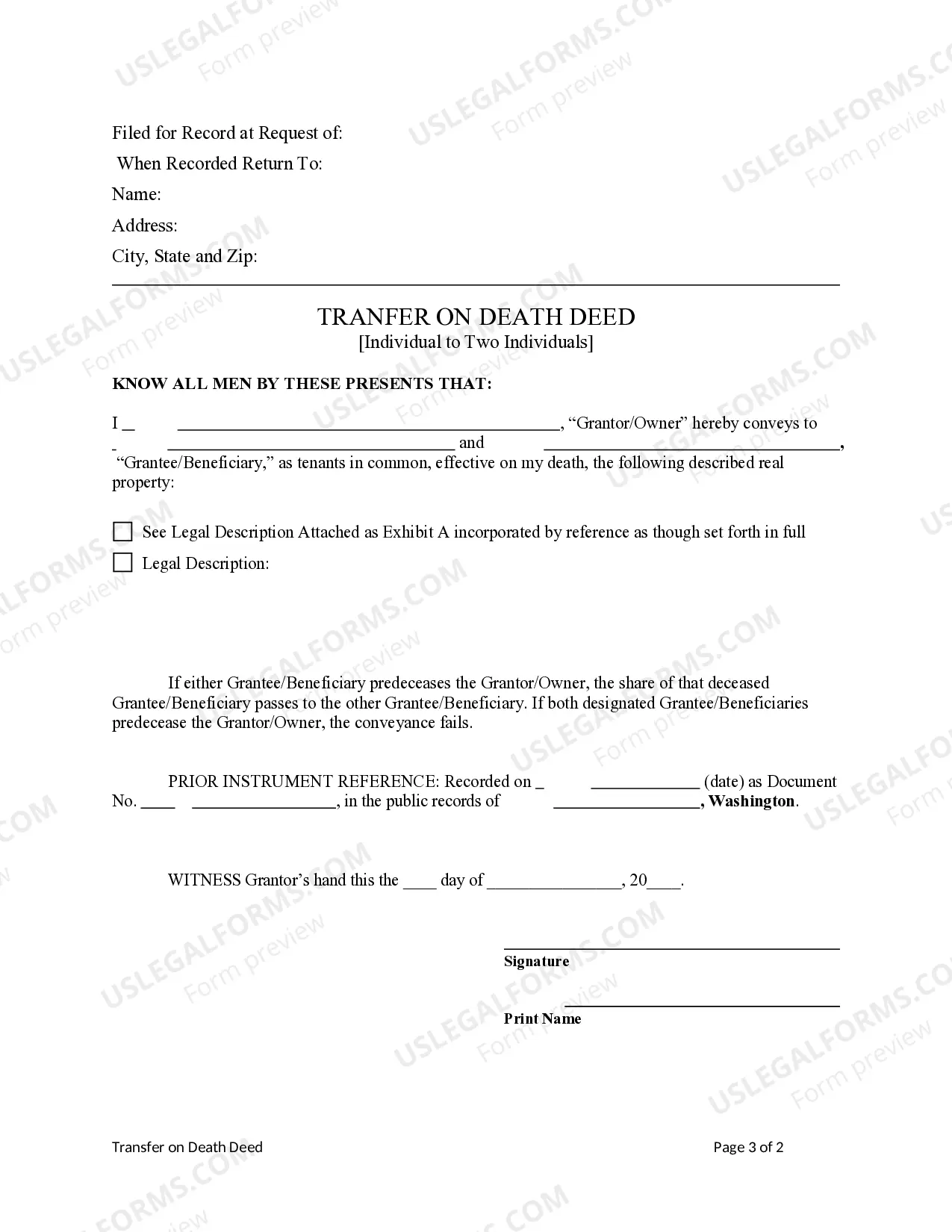
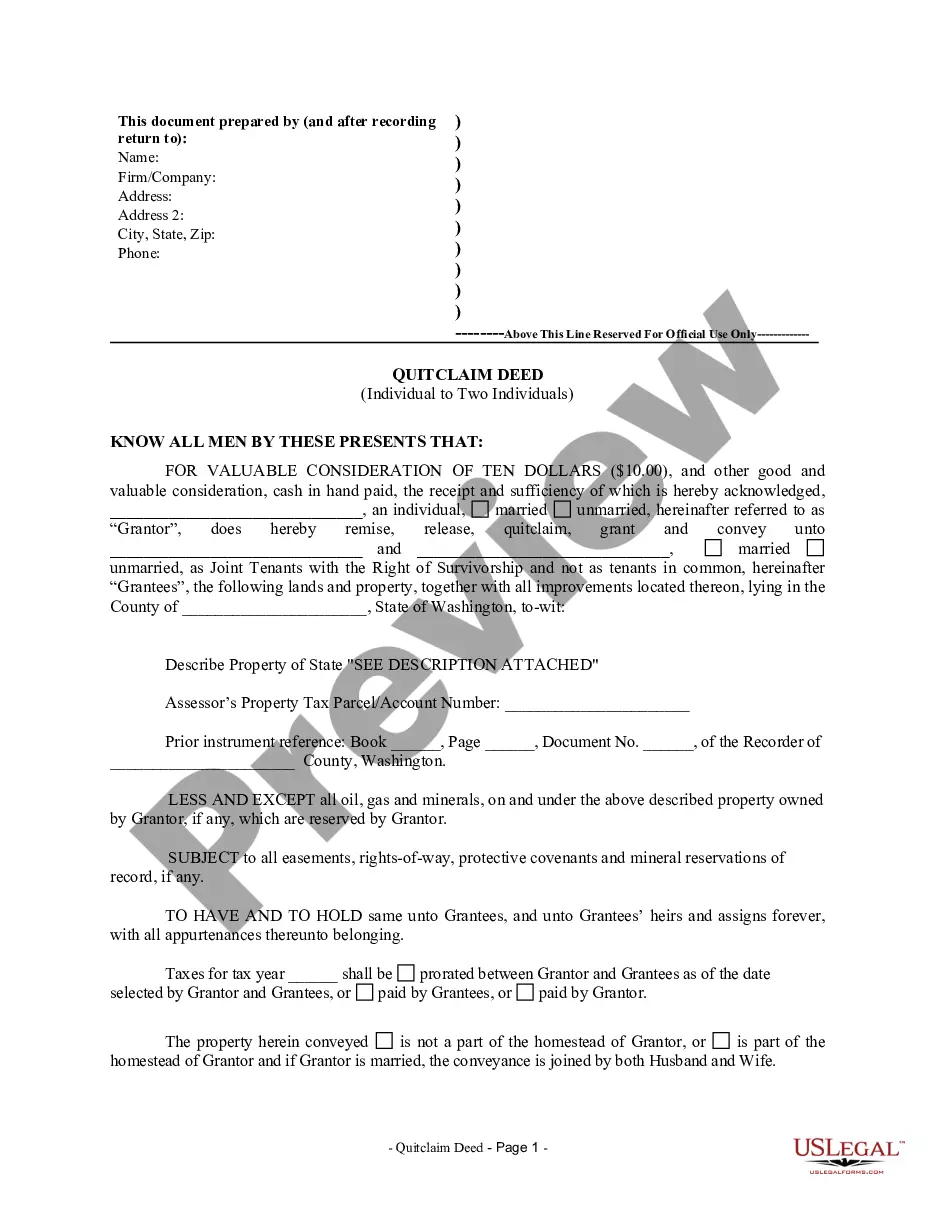
This form is a Transfer on Death Quitclaim Deed, allowing an individual (the Grantor) to transfer property to two individuals (the Grantees) upon the Grantor's death. This transfer remains revocable until the Grantor passes away and does not provide for a successor beneficiary if the primary beneficiaries do not survive the Grantor. This deed complies with all state statutory laws and is designed to simplify the transfer of property without the need for probate.
What’s included in this form
- Grantor's details: Name and address of the individual transferring property.
- Grantees' information: Names and addresses of the two individuals who will receive the property.
- Description of property: A clear description of the property being transferred.
- Revocability clause: Indicates that the transfer can be revoked by the Grantor until their death.
- No successor beneficiary: States that if the primary beneficiaries do not survive the Grantor, the property will not transfer to anyone else.
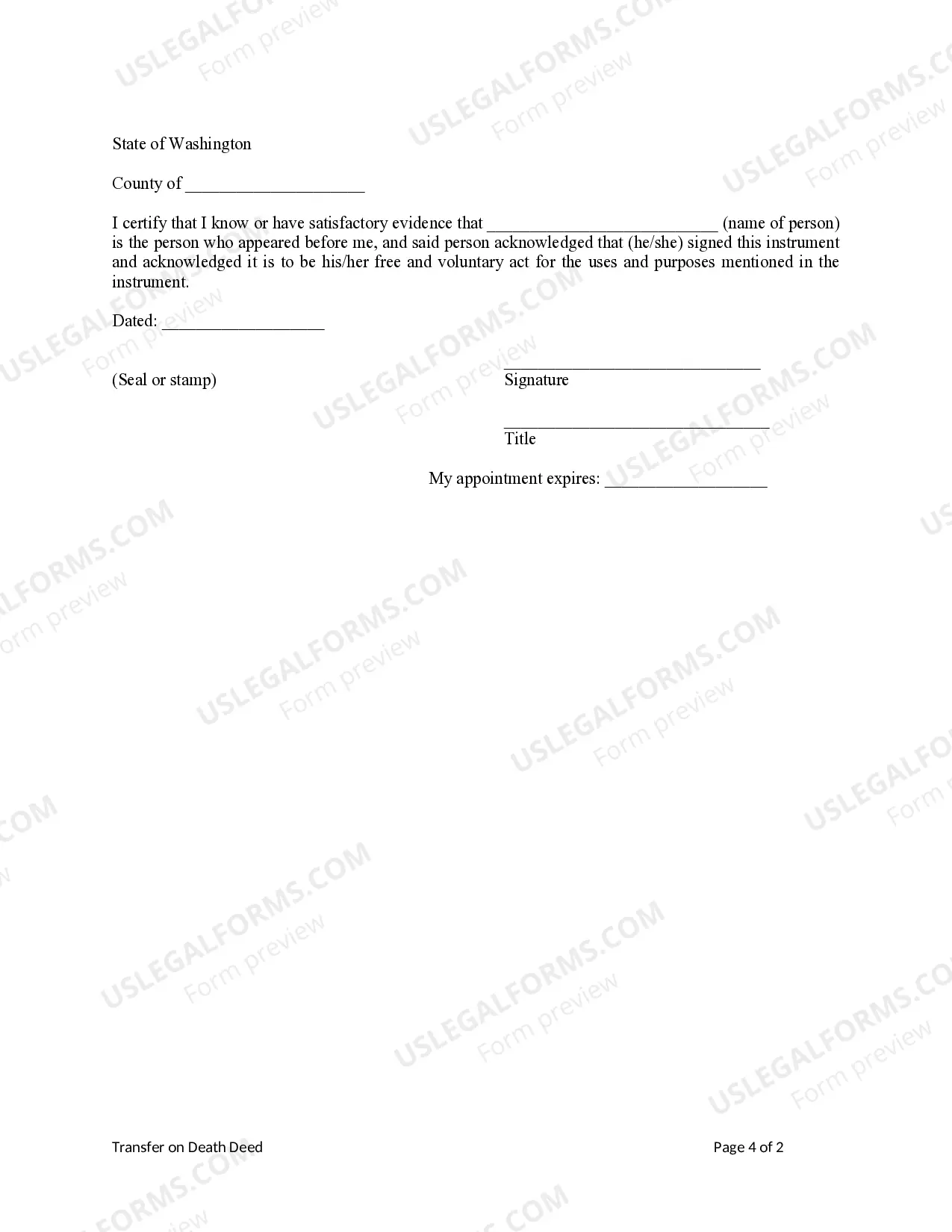
- Signature and date: Required fields for the Grantorâs signature and the date of signing.

Situations where this form applies
This form should be used when an individual wishes to transfer property to two specific individuals upon their death, without creating further beneficiaries. It is ideal for those wanting to ensure that the property passes directly to the chosen individuals without going through probate or involving additional beneficiaries if something happens to the primary ones.
Intended users of this form
This form is suitable for:
- Individuals looking to secure property transfer upon death.
- Those who want to avoid the probate process for their real estate.
- People preferring a straightforward transfer without additional complexities.
How to complete this form
- Identify the parties involved: Fill in the Grantor's name and address, followed by the names and addresses of the two Grantees.
- Specify the property: Provide a clear and detailed description of the property being transferred.
- Include revocability details: Note that the transfer can be revoked until the Grantor's death.
- Sign the form: The Grantor must sign and date the form in the designated fields.
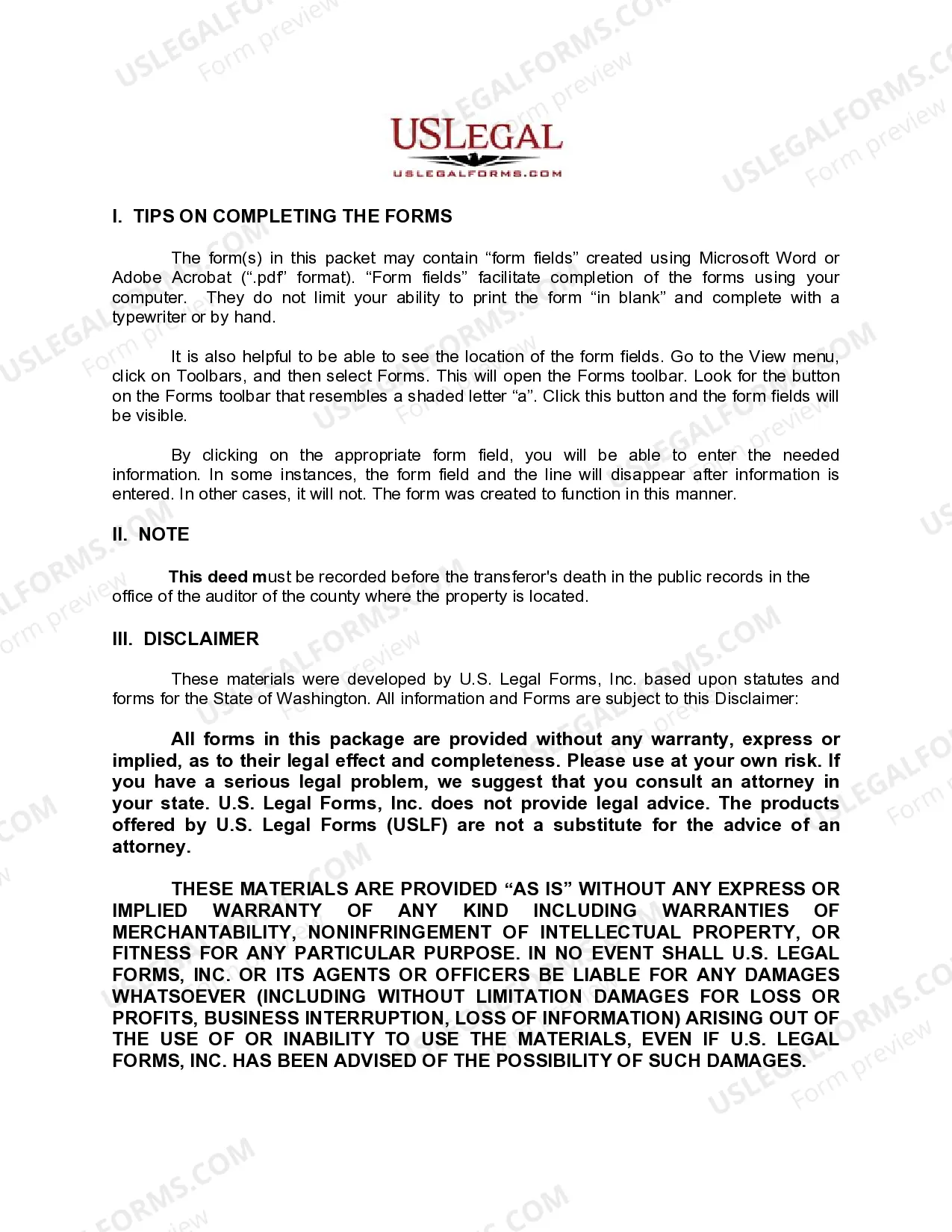
- Record the deed: Ensure the form is recorded in the public records before the Grantor's death to be legally valid.
Is notarization required?
This form does not typically require notarization unless specified by local law. However, verifying the specific requirements in your state is advisable to ensure compliance.
Get your form ready online
Our built-in tools help you complete, sign, share, and store your documents in one place.
Make edits, fill in missing information, and update formatting in US Legal Forms—just like you would in MS Word.
Download a copy, print it, send it by email, or mail it via USPS—whatever works best for your next step.
Sign and collect signatures with our SignNow integration. Send to multiple recipients, set reminders, and more. Go Premium to unlock E-Sign.
If this form requires notarization, complete it online through a secure video call—no need to meet a notary in person or wait for an appointment.
We protect your documents and personal data by following strict security and privacy standards.

Make edits, fill in missing information, and update formatting in US Legal Forms—just like you would in MS Word.

Download a copy, print it, send it by email, or mail it via USPS—whatever works best for your next step.

Sign and collect signatures with our SignNow integration. Send to multiple recipients, set reminders, and more. Go Premium to unlock E-Sign.

If this form requires notarization, complete it online through a secure video call—no need to meet a notary in person or wait for an appointment.

We protect your documents and personal data by following strict security and privacy standards.
Common mistakes
- Failing to record the deed prior to the Grantor's death.
- Omitting necessary details about the property being transferred.
- Not signing or dating the form correctly.
- Choosing not to check local regulations that may affect the transfer.
Why use this form online
- Convenience of completing and downloading the form from home.
- Editable format allows for easy adjustments before finalizing.
- Access to reliable legal forms created by licensed attorneys.
Legal use & context
- This deed allows for the transfer of property without going through the probate process.
- It is essential that the deed is recorded in a timely manner to ensure its validity.
- Consulting with a legal professional may provide clarity on the implications of this deed.
Quick recap
- A Transfer on Death Quitclaim Deed allows for smooth property transfer upon death.
- The form serves specific purposes and lacks a provision for successor beneficiaries.
- Ensure all details are correctly completed and the deed is properly recorded.
Looking for another form?

Form popularity
FAQ
An account holder may choose to list both of their children as equal beneficiaries. However, an account holder can also choose to list individuals in unequal amounts. For example, you could designate a primary beneficiary to receive 50 percent of the funds and two secondary beneficiaries who receive 25 percent each.
File a petition in probate court. The first step to transferring the property to the rightful new owners is to open up a case in probate court. Petition the court for sale and convey the property to the purchaser. Next, you must petition the court to sell the property.
The Washington transfer-on-death deed form allows property to be automatically transferred to a new owner when the current owner dies, without the need to go through probate. It also gives the current owner retained control over the property, including the right to change his or her mind about the transfer.
So long as the quitclaim deed is valid (properly notarized, etc.) it can be recorded even after the grantor's death, so property owned by the deceased which has been deeded in that quitclaim deed should not need to pass through probate.
In most cases, the surviving owner or heir obtains the title to the home, the former owner's death certificate, a notarized affidavit of death, and a preliminary change of ownership report form. When all these are gathered, the transfer gets recorded, the fees are paid, and the county issues a new title deed.
If it was inherited, succession law comes into play. Once the beneficiaries and their shares, rights and liabilities are decided, the property has to be transferred in their names. For this you need to apply for property transfer at the sub-registrar's office.
When someone dies without a will, it's called dying intestate. When that happens, none of the potential heirs has any say over who gets the estate (the assets and property). When there's no will, the estate goes into probate.Legal fees are paid out of the estate and it often gets expensive.
If you die without leaving a will, then your estate will be distributed in accordance with the law of succession. This also happens: When the will is not valid because it was not made properly.
TOD account holders can name multiple beneficiaries and divide assets any way they like.However, the beneficiaries have no access or rights to a TOD account while its owner is alive. Those beneficiaries can also be changed at any time, so long as the TOD account holder is deemed mentally competent.