Oregon Instructions - Filing for Dissolution (Divorce) Co-Petitioners Cases Without Children
Overview of this form
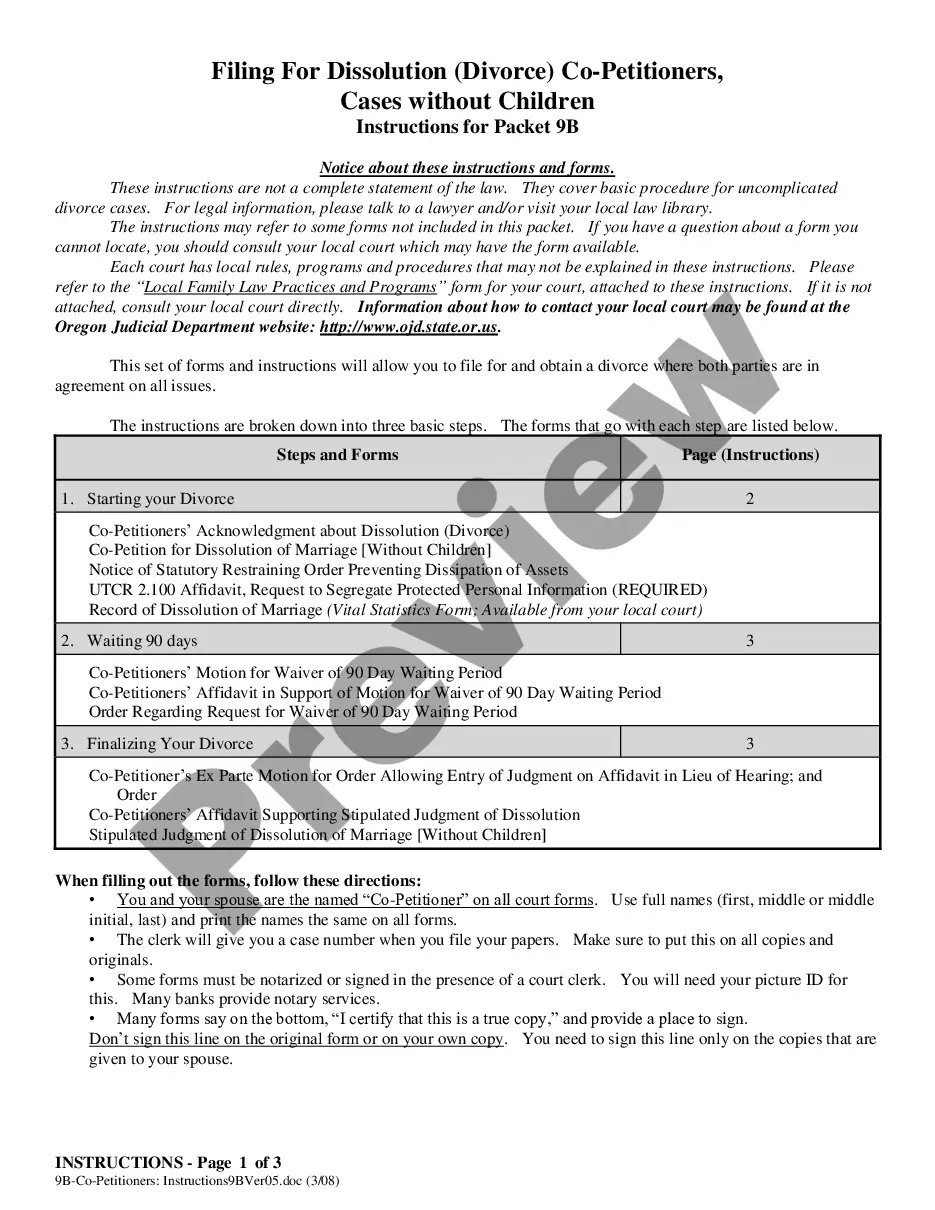
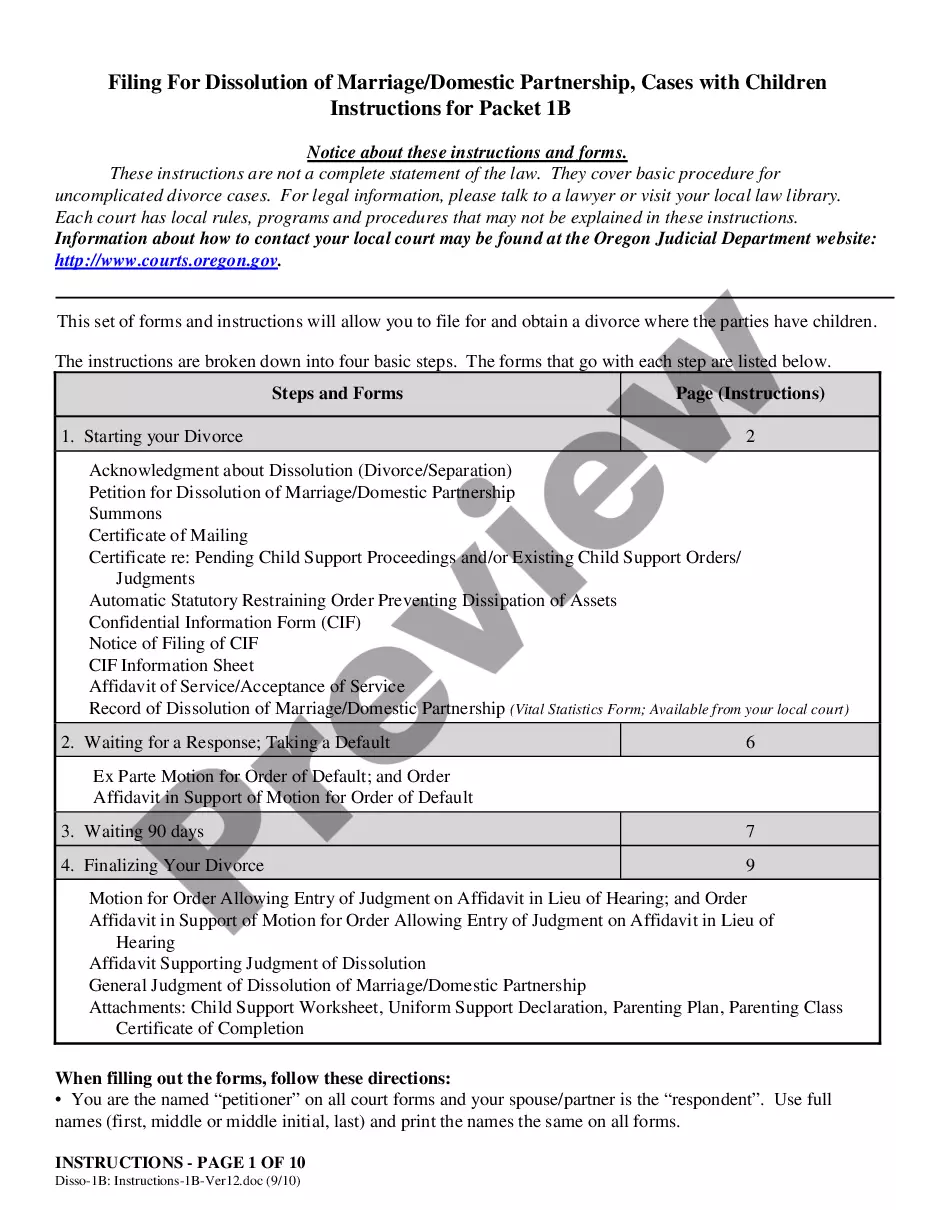
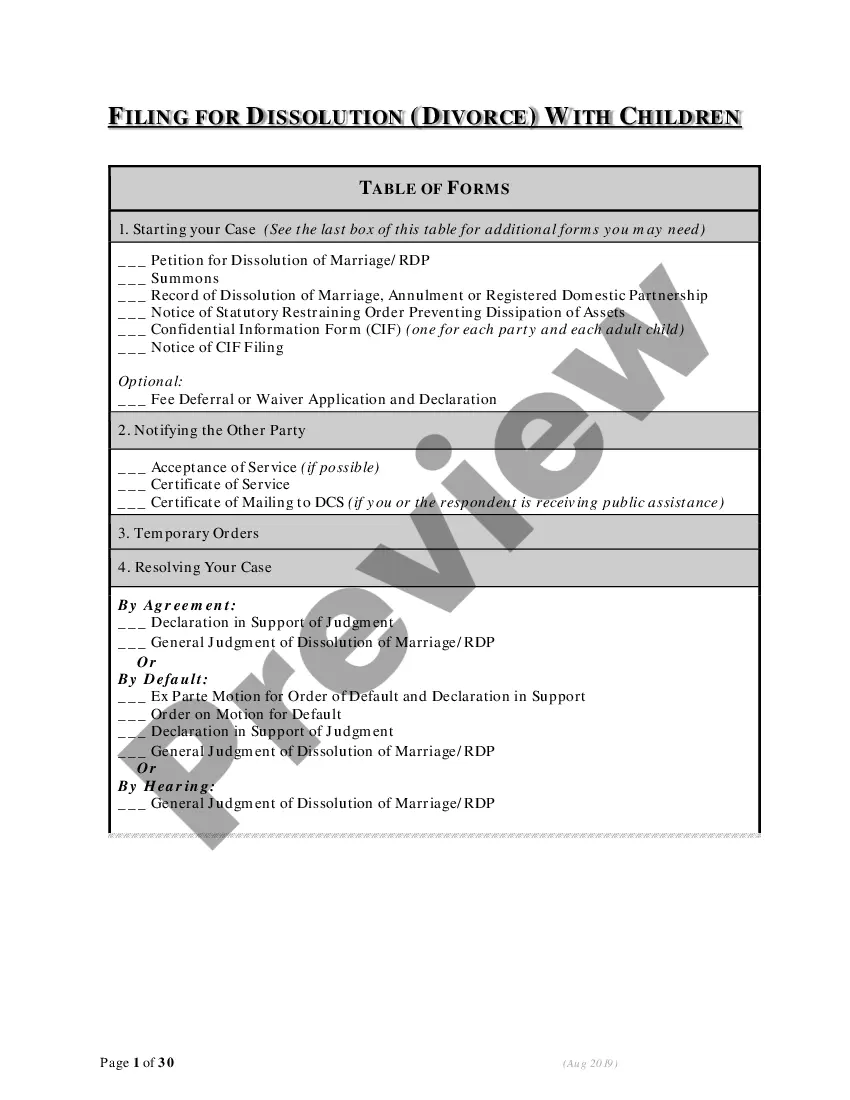
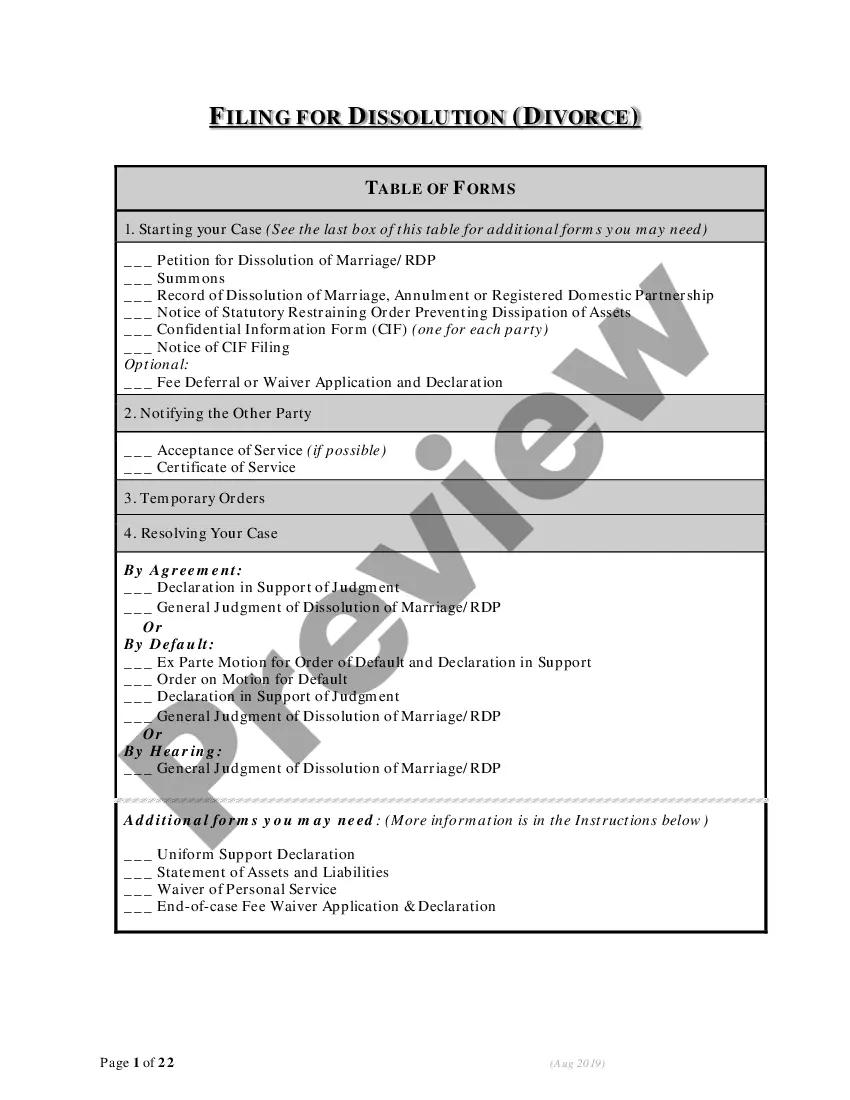
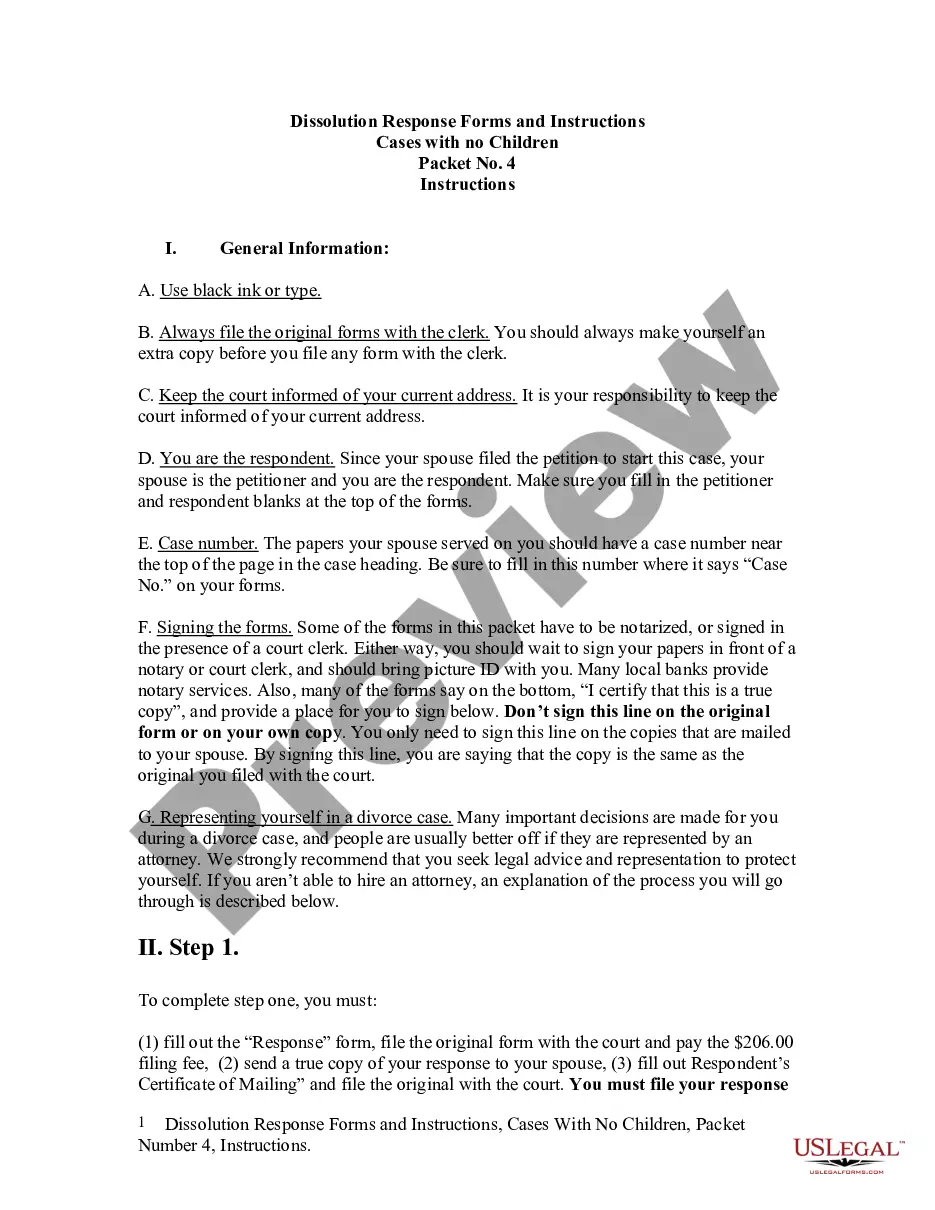
This form provides instructions for co-petitioners filing for dissolution (divorce) in cases without minor children. It guides couples through a straightforward divorce process, ensuring both parties understand their rights and obligations under Oregon law. This form is ideal for couples who agree on all aspects of their divorce, allowing for an efficient and amicable resolution.
Main sections of this form
- Co-Petitionersâ Acknowledgment about Dissolution (Divorce)
- Co-Petition for Dissolution of Marriage [Without Children]
- Notice of Statutory Restraining Order Preventing Dissipation of Assets
- Affidavit for Waiver of 90-Day Waiting Period
- Stipulated Judgment of Dissolution of Marriage [Without Children]
When to use this document
This set of instructions should be utilized in situations where both spouses agree on the terms of the divorce, including property division and any support obligations. It is particularly relevant for couples without minor children who wish to avoid the complexities typically associated with child custody and support arrangements.
Who this form is for
- Couples seeking a mutual and uncomplicated divorce.
- Co-petitioners who have no minor children.
- Individuals looking to streamline their divorce process due to mutual agreement on all issues.
How to prepare this document
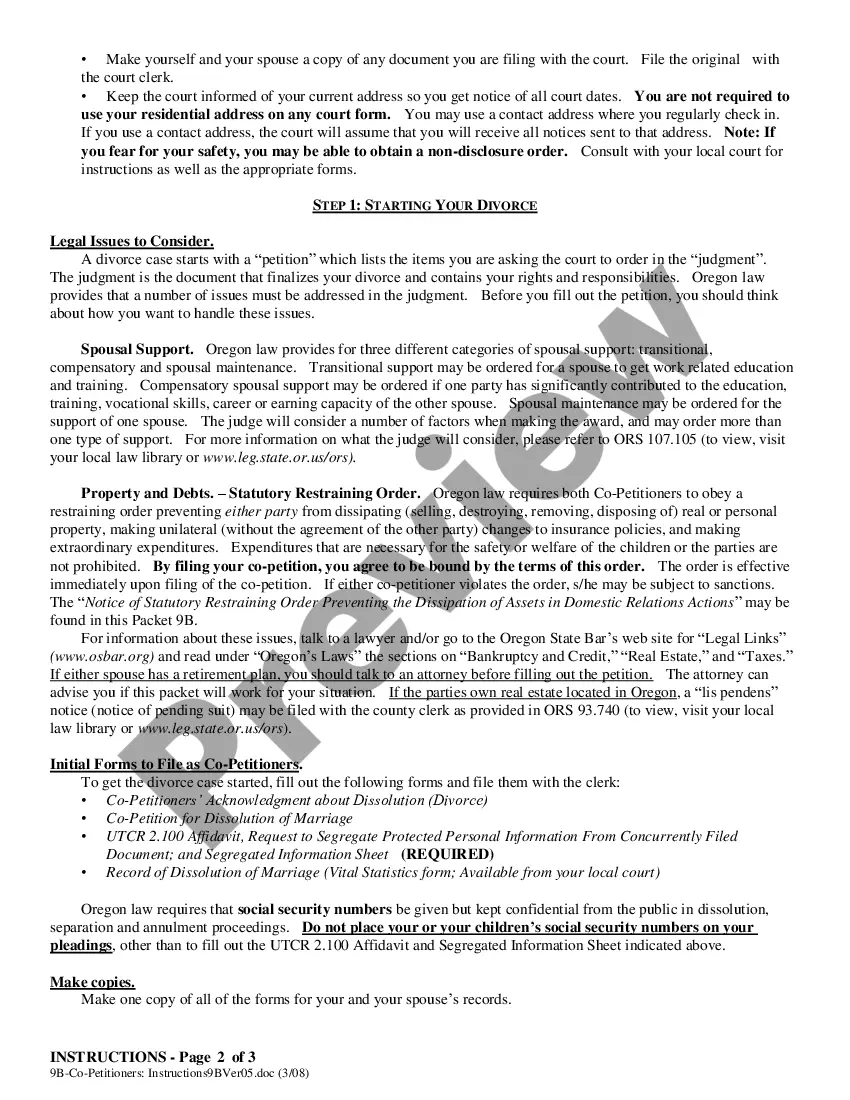
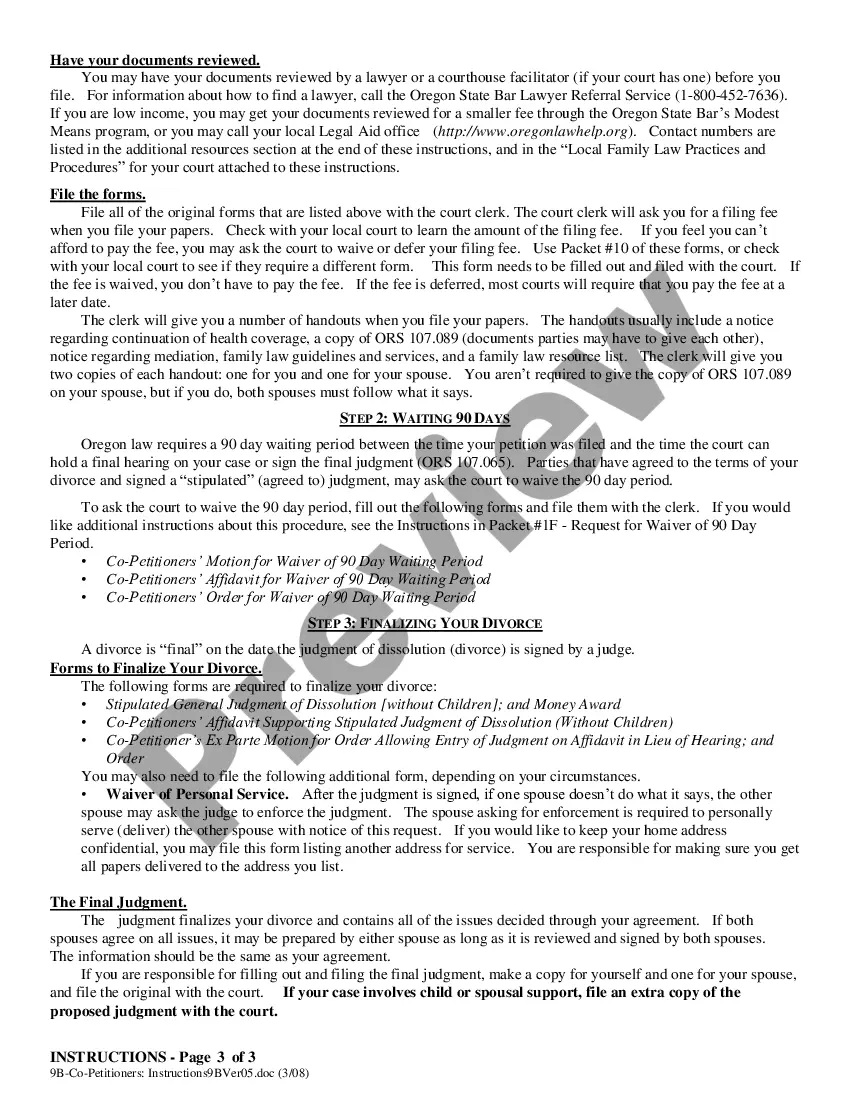
- Begin by identifying both parties as "Co-Petitioners" on all forms, using full names consistently.
- Complete the required initial forms, including the Co-Petitionersâ Acknowledgment and the Co-Petition for Dissolution of Marriage.
- File the original forms with the court clerk and retain copies for your records.
- Wait for the mandatory 90-day period before drafting and filing the final Judgement of Dissolution.
- Make sure to keep the court updated about your contact information throughout the process.
Notarization requirements for this form
This form does not typically require notarization unless specified by local law. However, some specific documents within the packet may need to be notarized to validate their content or to ensure compliance with court requirements.
Get your form ready online
Our built-in tools help you complete, sign, share, and store your documents in one place.
Make edits, fill in missing information, and update formatting in US Legal Forms—just like you would in MS Word.
Download a copy, print it, send it by email, or mail it via USPS—whatever works best for your next step.
Sign and collect signatures with our SignNow integration. Send to multiple recipients, set reminders, and more. Go Premium to unlock E-Sign.
If this form requires notarization, complete it online through a secure video call—no need to meet a notary in person or wait for an appointment.
We protect your documents and personal data by following strict security and privacy standards.

Make edits, fill in missing information, and update formatting in US Legal Forms—just like you would in MS Word.

Download a copy, print it, send it by email, or mail it via USPS—whatever works best for your next step.

Sign and collect signatures with our SignNow integration. Send to multiple recipients, set reminders, and more. Go Premium to unlock E-Sign.

If this form requires notarization, complete it online through a secure video call—no need to meet a notary in person or wait for an appointment.

We protect your documents and personal data by following strict security and privacy standards.
Mistakes to watch out for
- Failing to use full names of both parties consistently on all documents.
- Not notarizing required forms before submission.
- Ignoring the 90-day waiting period requirement before seeking a final judgment.
- Submitting documents without making required copies for both parties.
Advantages of online completion
- Easy access to web-based resources simplifies the divorce filing process.
- Documents can be downloaded and edited efficiently at your convenience.
- Reliable templates drafted by licensed attorneys ensure legal accuracy.
Key takeaways
- This form is ideal for couples filing for divorce when both parties are in agreement.
- Understanding the steps involved can help streamline your divorce process.
- Make sure to comply with all local court rules and maintain up-to-date contact information.
Looking for another form?


Form popularity
FAQ
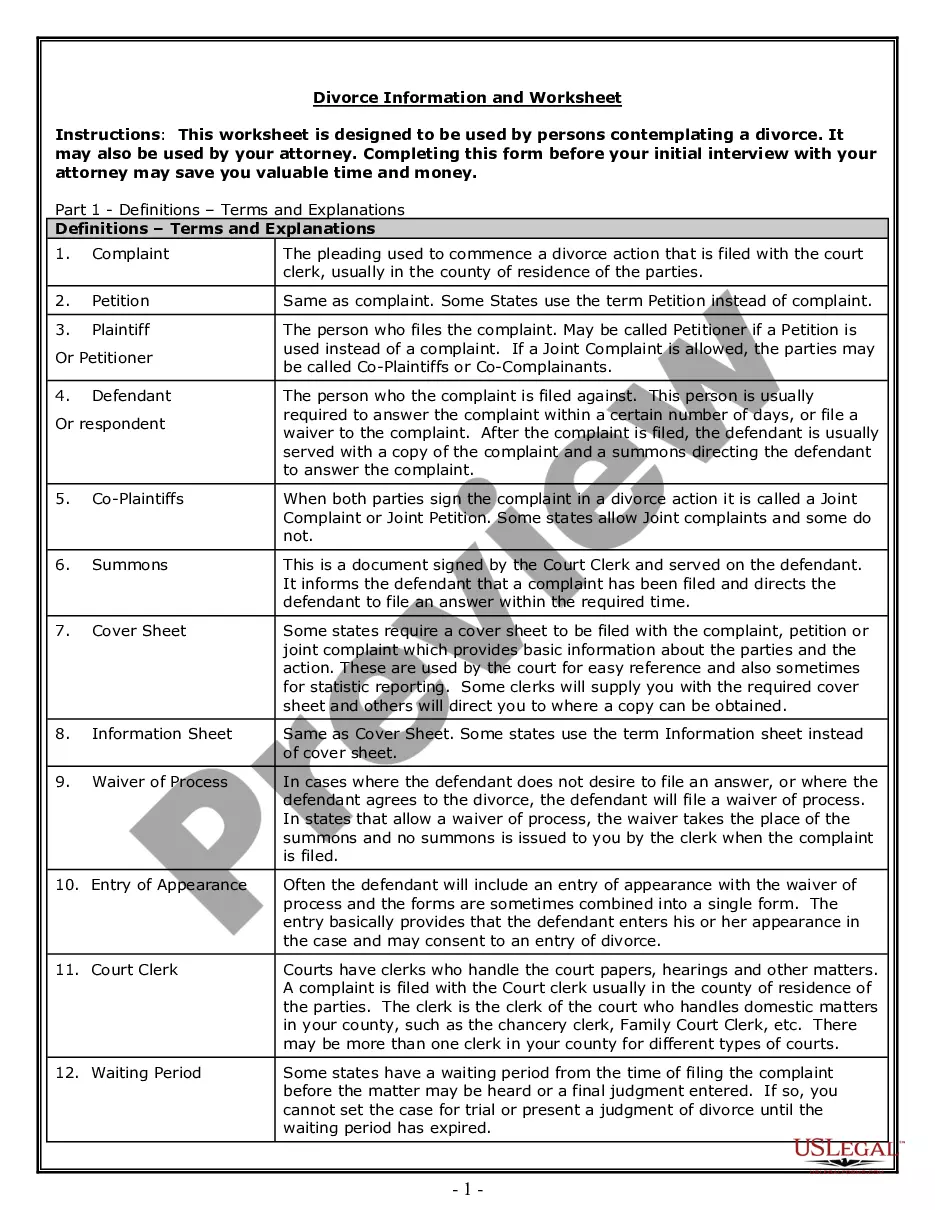
In a contested divorce the petitioner (plaintiff) petitions the court for a divorce and respondent (defendant) has to respond. When the petition is jointly filed, the spouses are called Co-Petitioners. The husband and wife petition the court together with paperwork that is signed by both parties.
Joint Petition for a Summary Dissolution. A summary dissolution is a special court process for ending a divorce quickly and efficiently. If all the requirements are met, the court will simply grant the divorce without a hearing.
You both agree to the terms of the divorce You must both agree: That you want to end the marriage or domestic partnership. That neither of you will ever get spousal support. How you will split up any property and debts.
After the six month waiting period, the court will enter a judgment officially dissolving the marriage. Parties do not have to appear in court for this judgment, and afterwards, they are free to remarry. Summary dissolutions can be the right option for many couples seeking a change.
After the six month waiting period, the court will enter a judgment officially dissolving the marriage. Parties do not have to appear in court for this judgment, and afterwards, they are free to remarry. Summary dissolutions can be the right option for many couples seeking a change.
How Long Does a Summary Dissolution Take? Once you and your spouse are able to come to an agreement and file all the required paperwork with the court, there will be a 6 month waiting period. After the 6 month waiting period, you will be divorced.
The summary dissolution process Gather and share financial information. Read through a booklet from the court and fill out forms about your finances.Fill out forms and write up an agreement.File the forms with the court.
"Petitioner" refers to the party who petitioned the Supreme Court to review the case. This party is variously known as the petitioner or the appellant. "Respondent" refers to the party being sued or tried and is also known as the appellee.