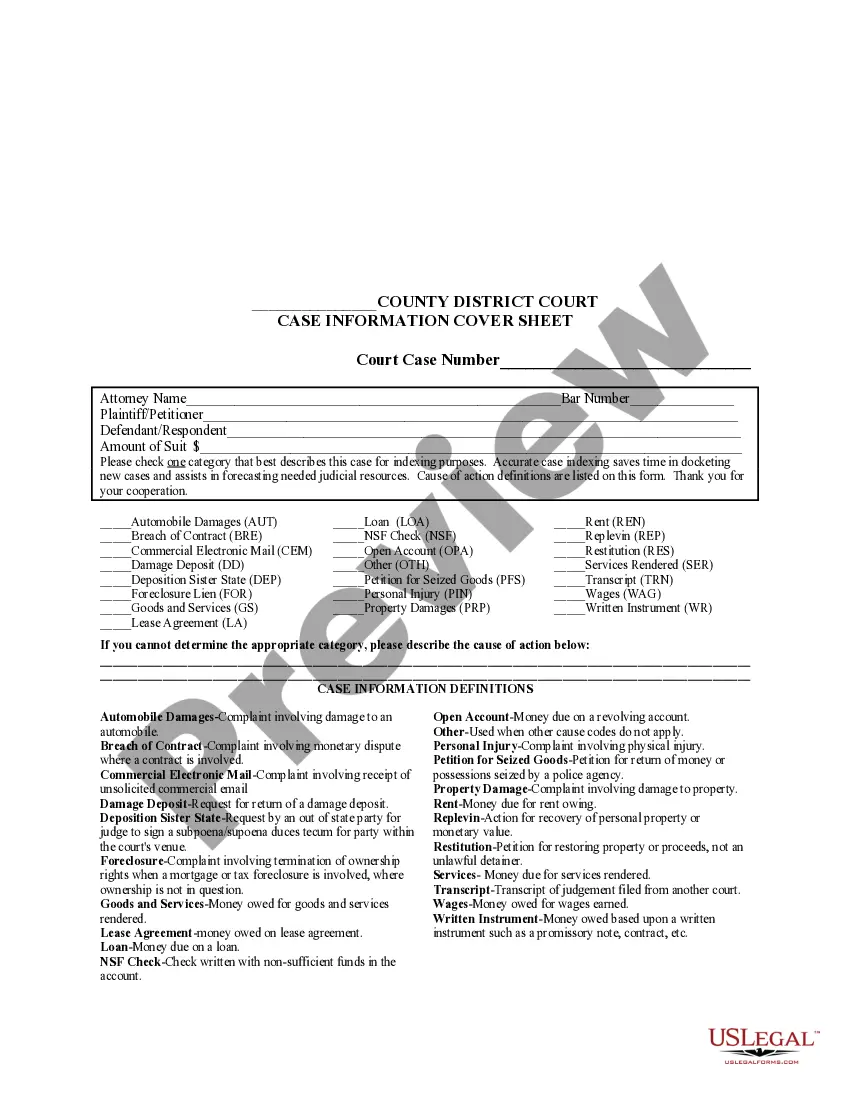
Notice to Trustee of Assignment by Beneficiary of Interest in Trust
What is this form?
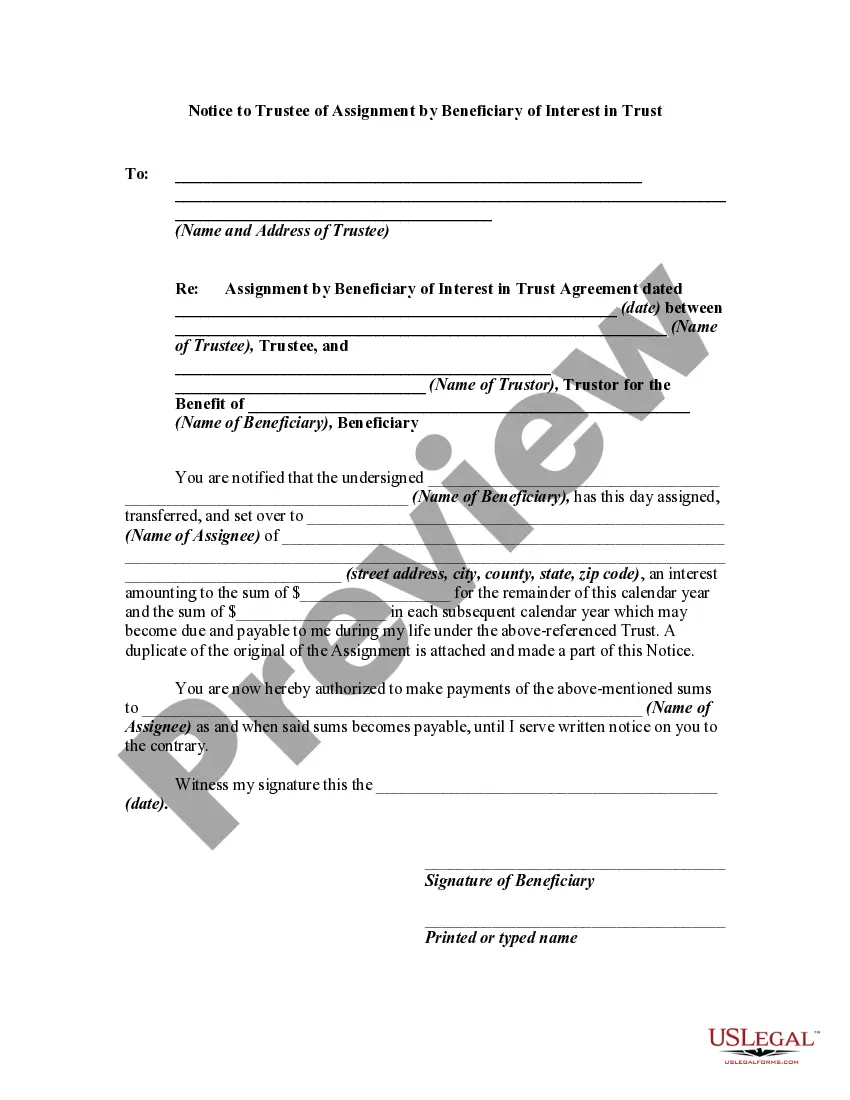
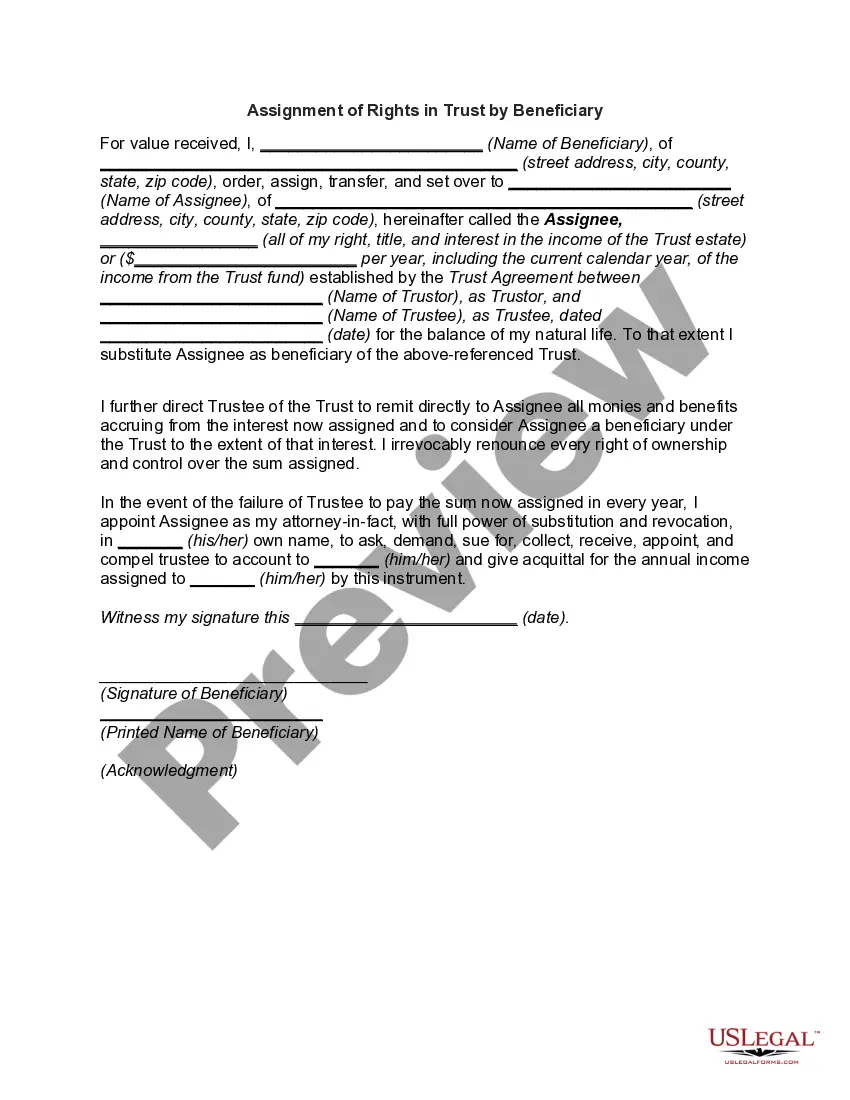
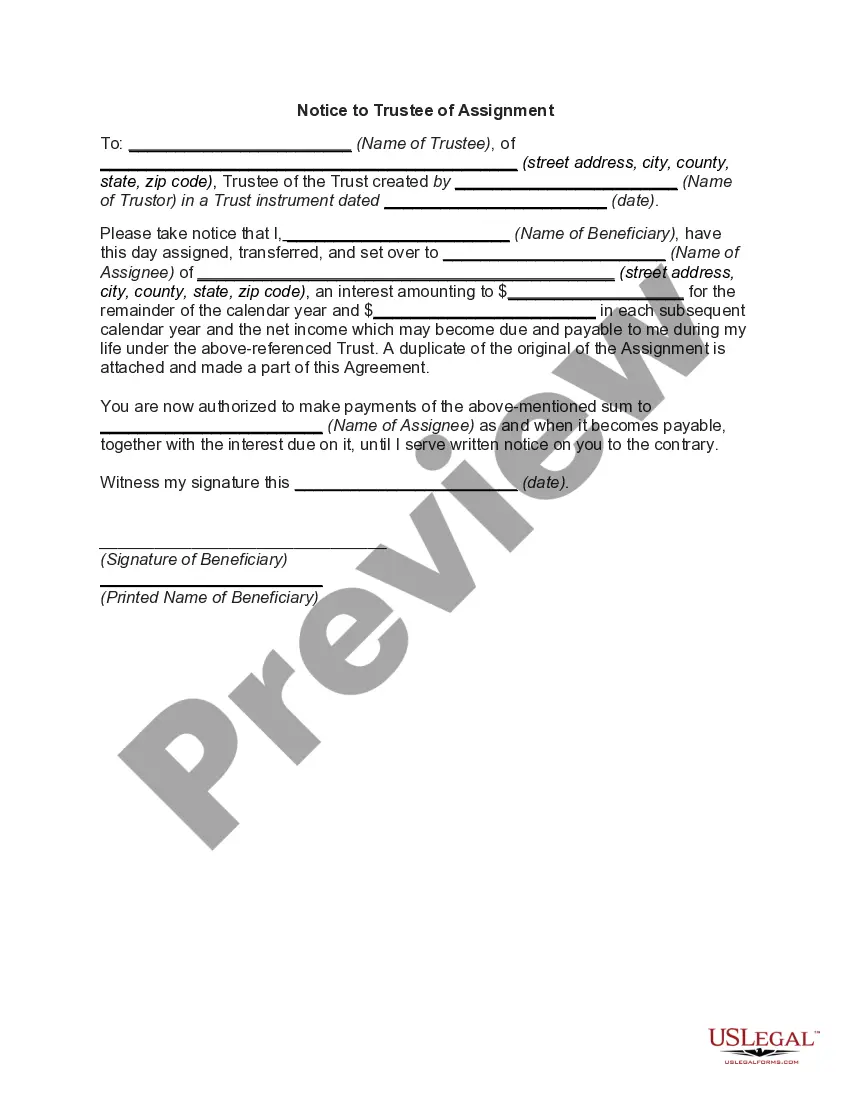
The Notice to Trustee of Assignment by Beneficiary of Interest in Trust is a legal document that notifies a trustee about a beneficiary's assignment of their interest in a trust. This form ensures that the trustee is aware of any changes to who will receive trust benefits, which is essential in managing trust distributions effectively. It is different from other trust-related forms as it specifically addresses the communication of an interest assignment rather than general amendments or additions to the trust document itself.
Key parts of this document
- Name and address of the trustee receiving the notice.
- Date of the original trust agreement.
- Name of the trustor, who established the trust.
- Name of the beneficiary assigning their interest.
- Name and address of the assignee to whom the interest is being assigned.
- Authorization for the trustee to make payments to the assignee.
- Signature of the beneficiary to confirm the assignment.
Common use cases
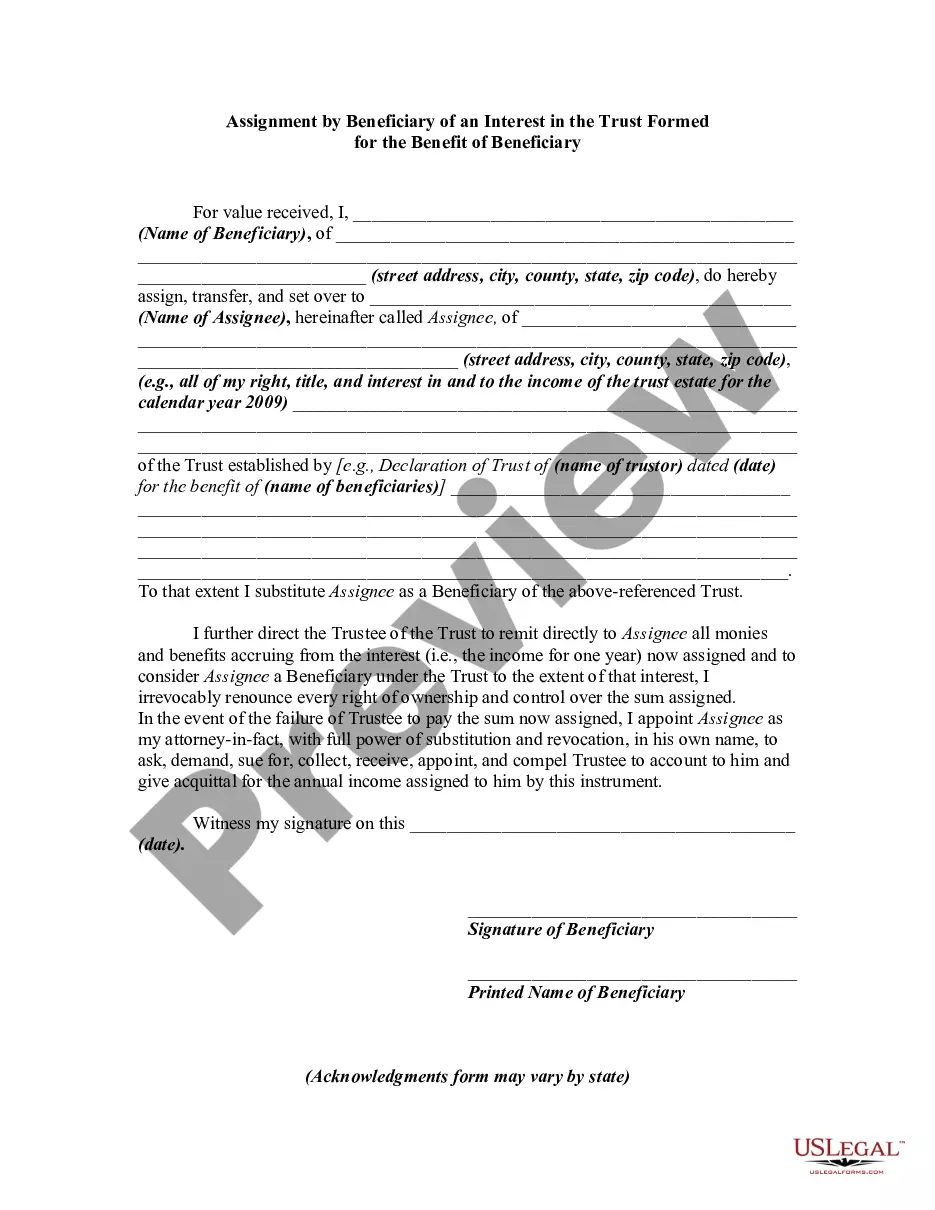
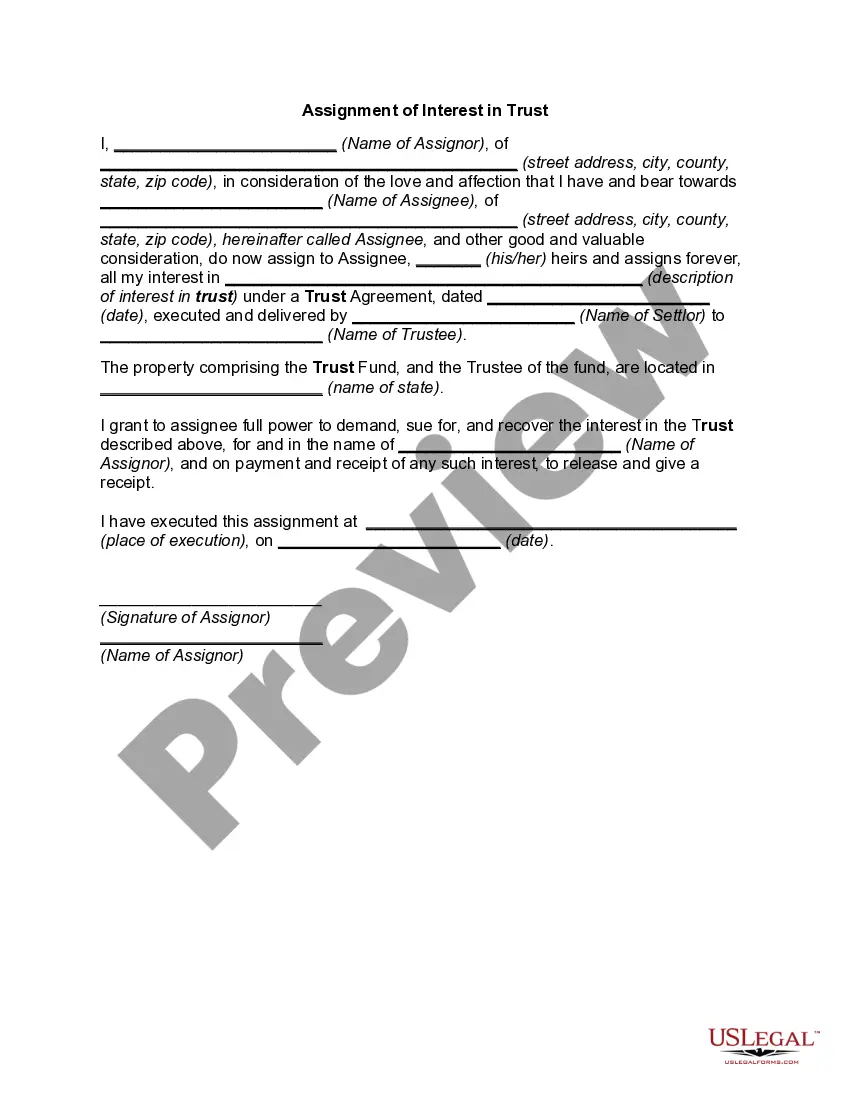
This form should be used when a beneficiary of a trust wishes to assign their interest to another party, known as the assignee. It is applicable in situations such as transferring trust benefits to a family member, friend, or creditor, or when financial arrangements necessitate the reallocation of trust interests. By using this form, the beneficiary formally communicates the assignment to the trustee, ensuring that payments are redirected appropriately.
Who should use this form
- Beneficiaries of a trust who have the legal right to assign their interest.
- Assignees who wish to receive payments or benefits from a trust.
- Trustees who need to be informed about changes in benefit assignments.
- Legal practitioners assisting clients with trust management and assignments.
How to complete this form
- Identify the trustee by providing their name and address at the beginning of the form.
- Specify the original trust agreement's date and the names of the trustee and trustor.
- Clearly state the name of the beneficiary who is assigning their interest.
- Enter the name and address of the assignee receiving the interest.
- Specify the amount of interest being assigned for the current and subsequent calendar years.
- Sign and date the form to finalize the assignment and provide the necessary authorization to the trustee.
Does this form need to be notarized?
Notarization is generally not required for this form. However, certain states or situations might demand it. You can complete notarization online through US Legal Forms, powered by Notarize, using a verified video call available anytime.
Get your form ready online
Our built-in tools help you complete, sign, share, and store your documents in one place.
Make edits, fill in missing information, and update formatting in US Legal Forms—just like you would in MS Word.
Download a copy, print it, send it by email, or mail it via USPS—whatever works best for your next step.
Sign and collect signatures with our SignNow integration. Send to multiple recipients, set reminders, and more. Go Premium to unlock E-Sign.
If this form requires notarization, complete it online through a secure video call—no need to meet a notary in person or wait for an appointment.
We protect your documents and personal data by following strict security and privacy standards.

Make edits, fill in missing information, and update formatting in US Legal Forms—just like you would in MS Word.

Download a copy, print it, send it by email, or mail it via USPS—whatever works best for your next step.

Sign and collect signatures with our SignNow integration. Send to multiple recipients, set reminders, and more. Go Premium to unlock E-Sign.

If this form requires notarization, complete it online through a secure video call—no need to meet a notary in person or wait for an appointment.

We protect your documents and personal data by following strict security and privacy standards.
Common mistakes to avoid
- Failing to provide complete information for the trustee, beneficiary, or assignee.
- Not specifying the correct date of the original trust agreement.
- Omitting the signature or date when executing the form.
- Assigning an interest without confirming the legal right to do so.
Why complete this form online
- Convenient access to the form for immediate use.
- Editability allows customization to fit your specific situation.
- Reliable resources from licensed attorneys ensuring legal compliance.
- Quick download option, eliminating the need for printing or mailing.
Legal use & context
- It serves as an official notice, protecting the beneficiary's rights and interests.
- A legally valid assignment must be clearly communicated to avoid disputes.
- Each jurisdiction may have different requirements regarding assignments in trust Law.
Main things to remember
- The form is essential for notifying trustees of changes in trust assignments.
- Complete it carefully, ensuring all details are accurate and complete.
- Consult local laws for any state-specific requirements.
Looking for another form?


Form popularity
FAQ
A beneficiary of trust is the individual or group of individuals for whom a trust is created. The trust creator or grantor designates beneficiaries and a trustee, who has a fiduciary duty to manage trust assets in the best interests of beneficiaries as outlined in the trust agreement.
Usually, a trust prohibits beneficiaries from assigning their interest in the trust before distribution. The anti-assignment provision protects undistributed trust assets from claims by a beneficiary's creditors.
A beneficiary may not transfer an interest in a trust in violation of a valid spendthrift provision and, except as otherwise provided in this chapter, a creditor or assignee of the beneficiary may not reach the interest or a distribution by the trustee before its receipt by the beneficiary.
Write a salutation followed by a colon, for example, "Dear Mr. Jones:"If you'd rather type the letter and print it out instead of writing it by hand, you can do that if you wish. Identify yourself as the trustor of the revocable trust in the body of the letter. State your purpose for requesting money from your trust.
If you inherit from a simple trust, you must report and pay taxes on the money. By definition, anything you receive from a simple trust is income earned by it during that tax year.Any portion of the money that derives from the trust's capital gains is capital income, and this is taxable to the trust.
Any beneficiary who is 14 years of age or older can nominate a trustee, even though a minor under the age of 18 is not legally qualified to serve as trustee. be appointed as trustee of any trust unless the Court finds that no other qualified person is willing to act as trustee.
Generally speaking, beneficiaries have a right to see trust documents which set out the terms of the trusts, the identity of the trustees and the assets within the trust as well as the trust deed, any deeds of appointment/retirement and trust accounts.
A beneficiary of a trust may wish to disclaim their interest in the trust for:Any disclaimer of an interest in a trust by a trust beneficiary must be made to the trustee of that trust. For a disclaimer to be valid, it must be supported by some evidence that the beneficiary is disclaiming their interest.
Generally speaking, a letter of intent, also known as a side letter is a letter from the grantor to the trustee that provides guidance to the trustee in the exercise of some discretionary power.