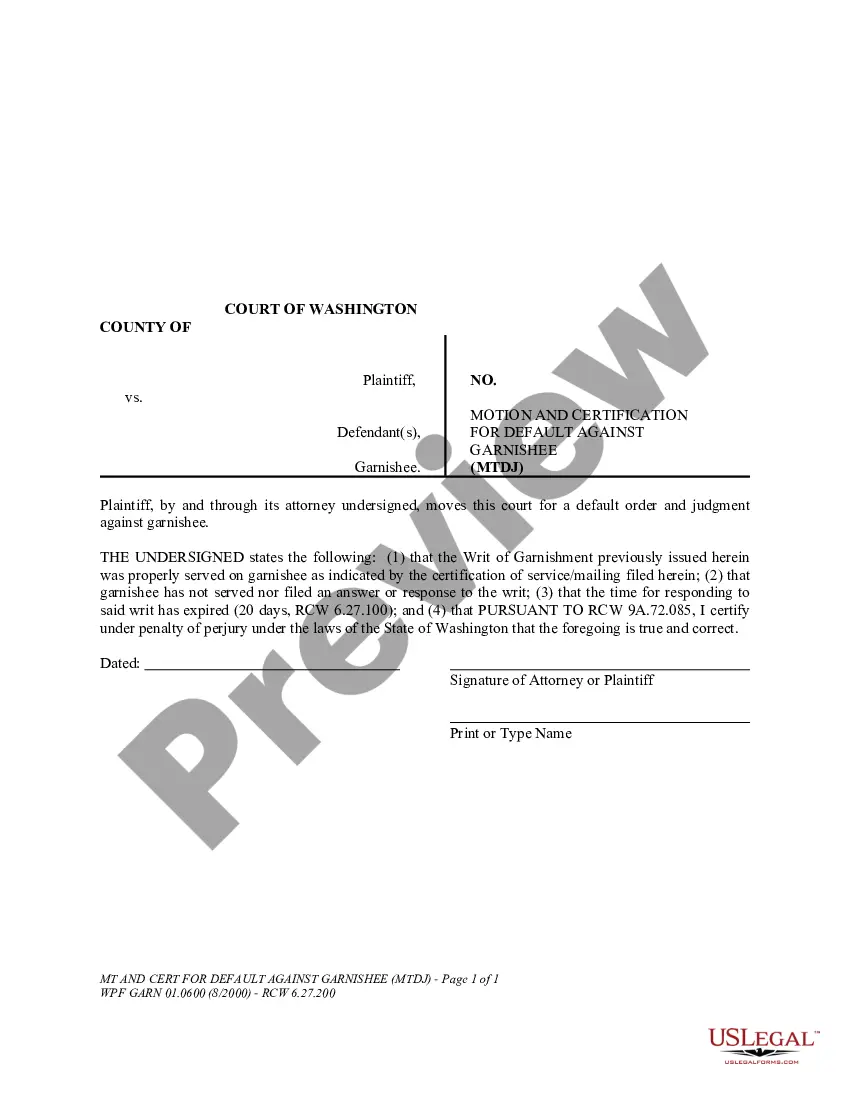
Agreement Among Beneficiaries to Terminate Trust
About this form
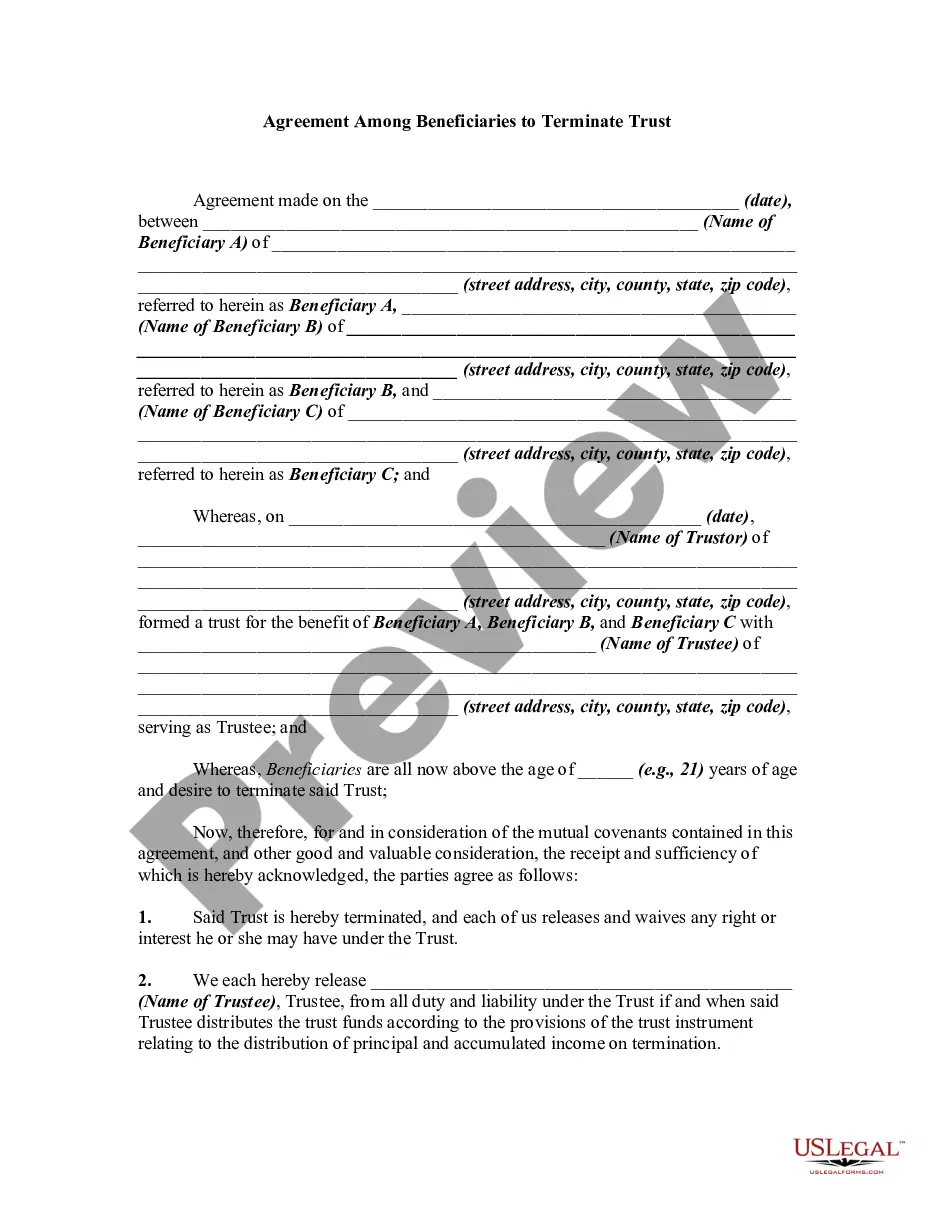
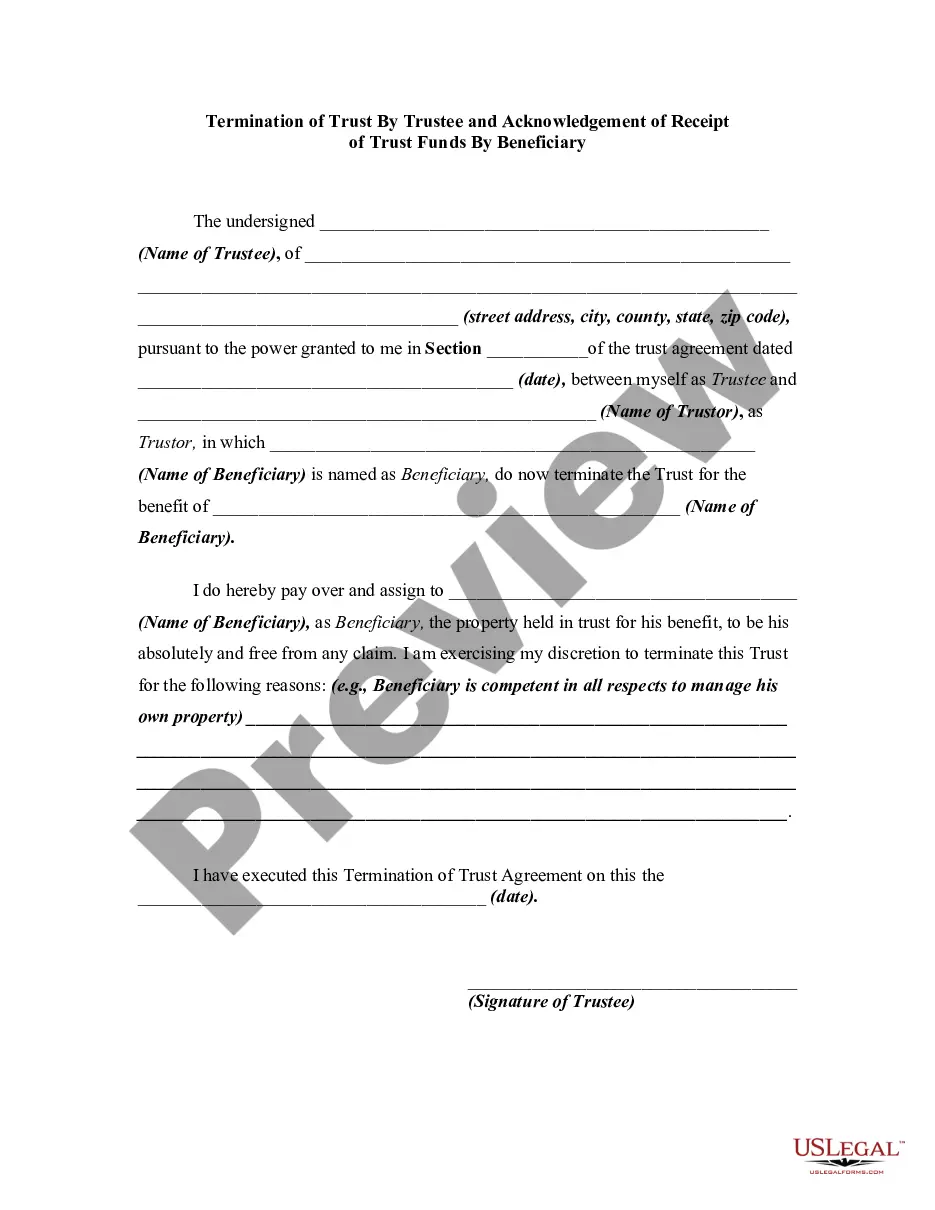
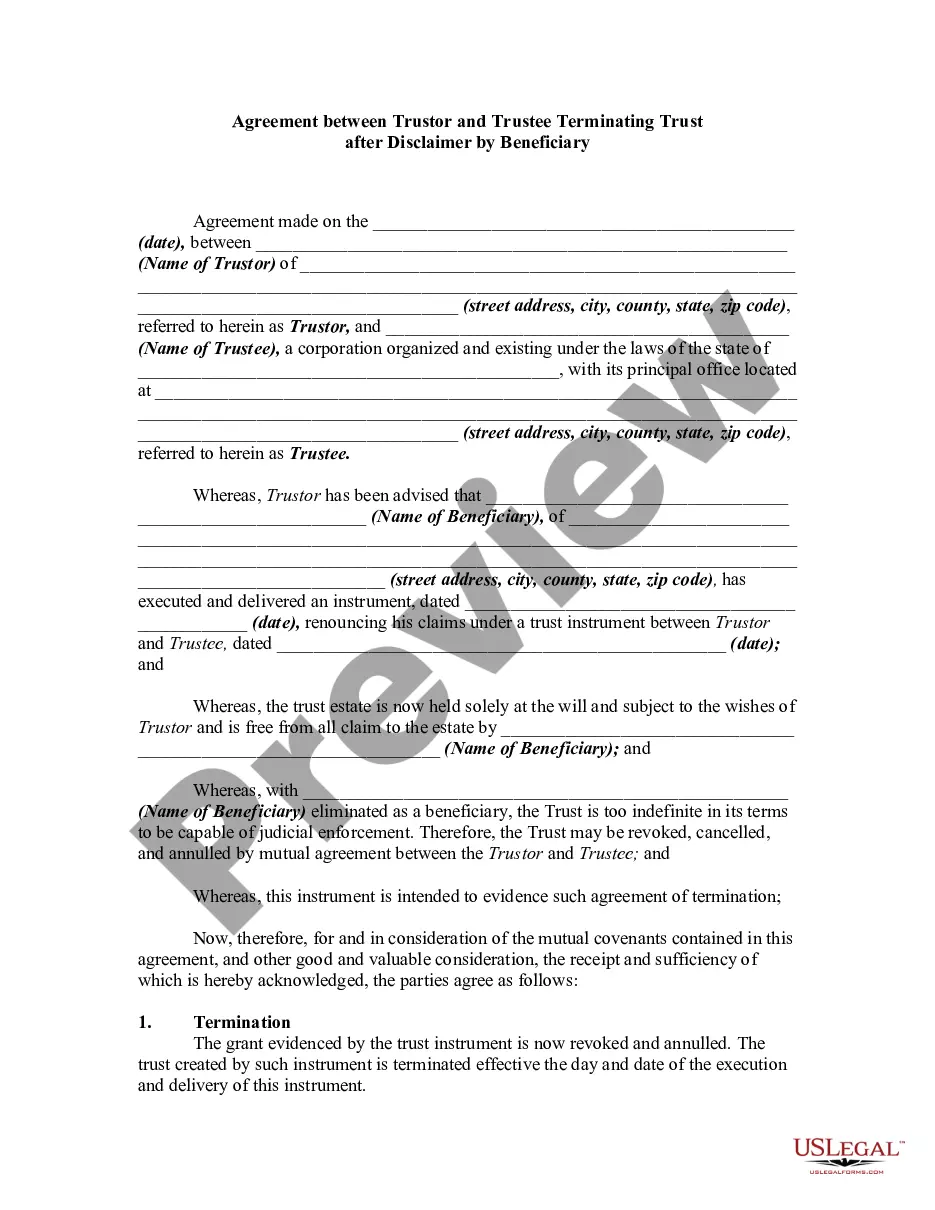
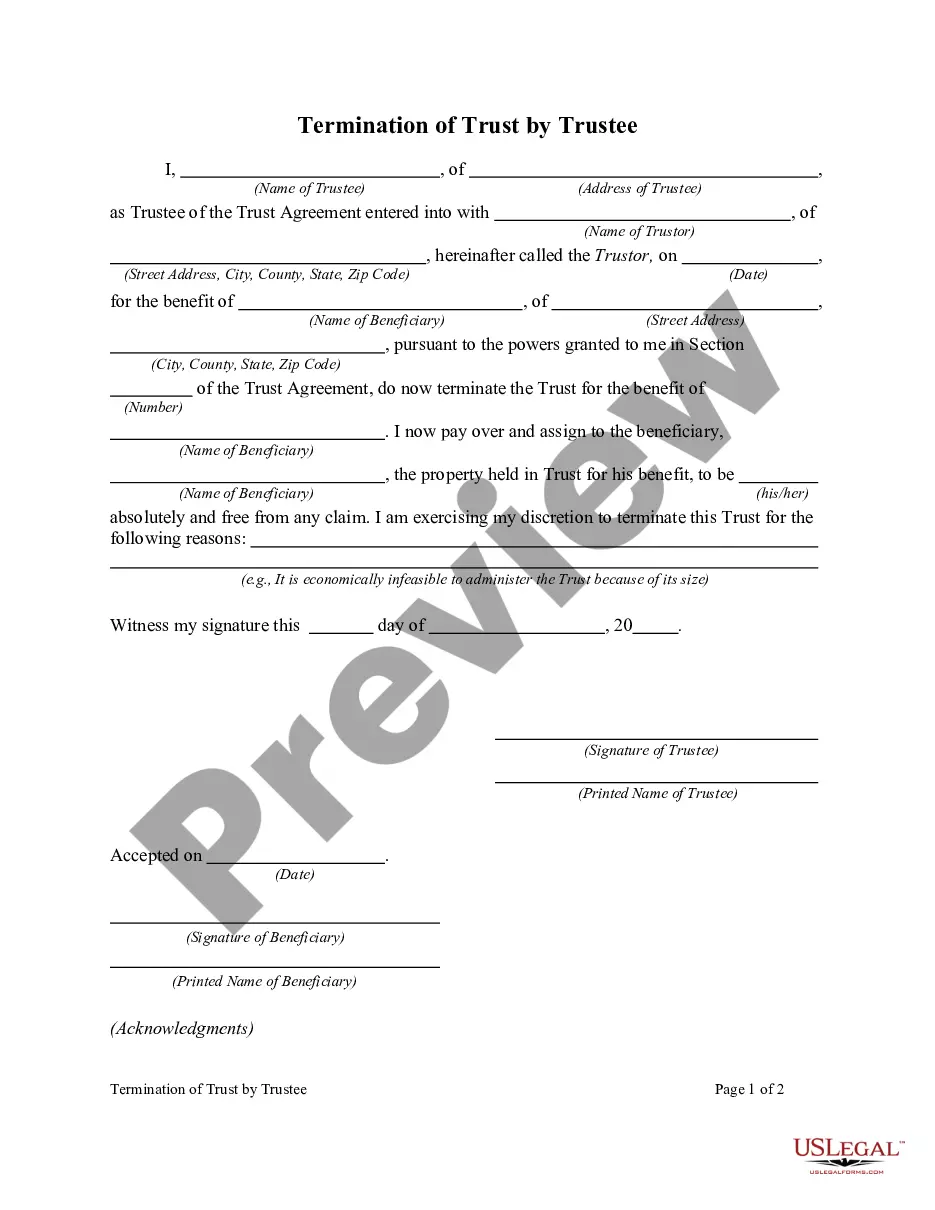
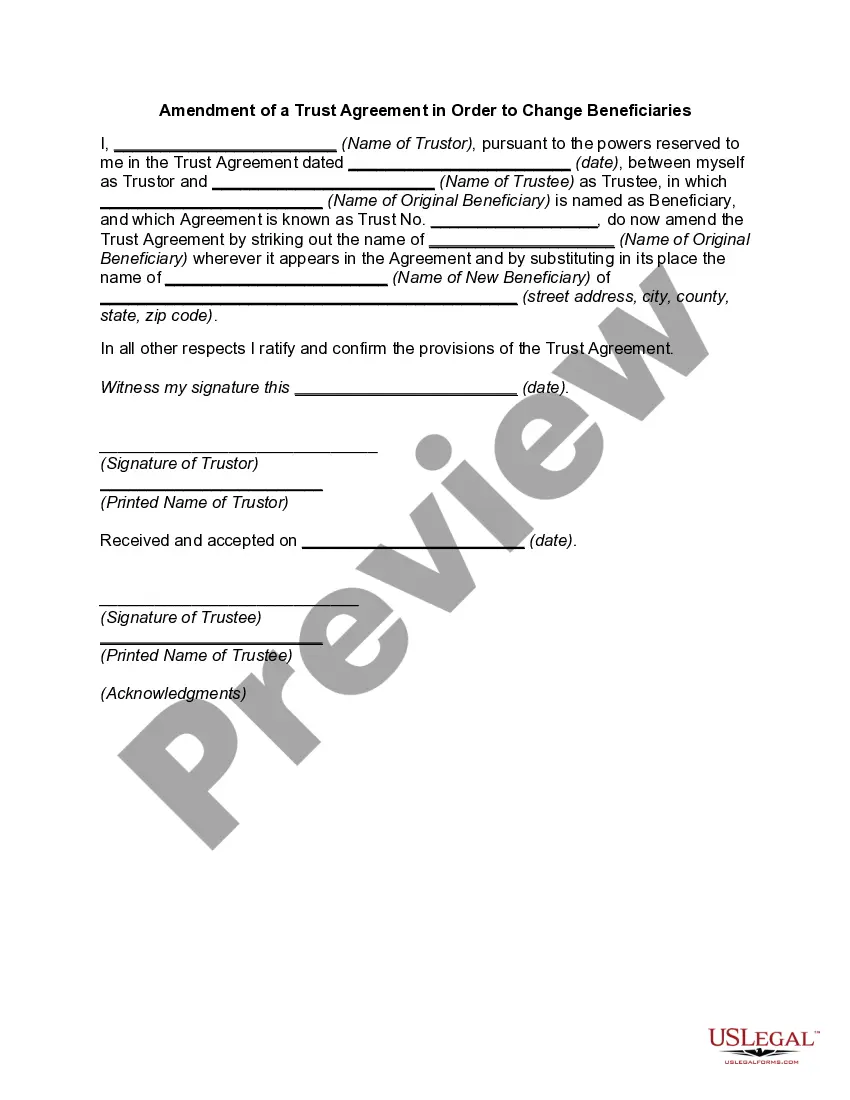
The Agreement Among Beneficiaries to Terminate Trust is a legal document used to terminate an existing trust with the consent of all beneficiaries. This agreement is crucial when the continuation of a trust is no longer necessary for its intended purposes, such as tax benefits, or when its terms allow for termination. Unlike similar forms, this agreement specifically requires the unanimous consent of all competent and eligible beneficiaries, which allows for a straightforward dissolution of the trust.
Form components explained
- Date of the agreement.
- Name and address of each beneficiary involved.
- Name and details of the trustor who created the trust.
- Confirmation that all beneficiaries are of legal age and mentally competent.
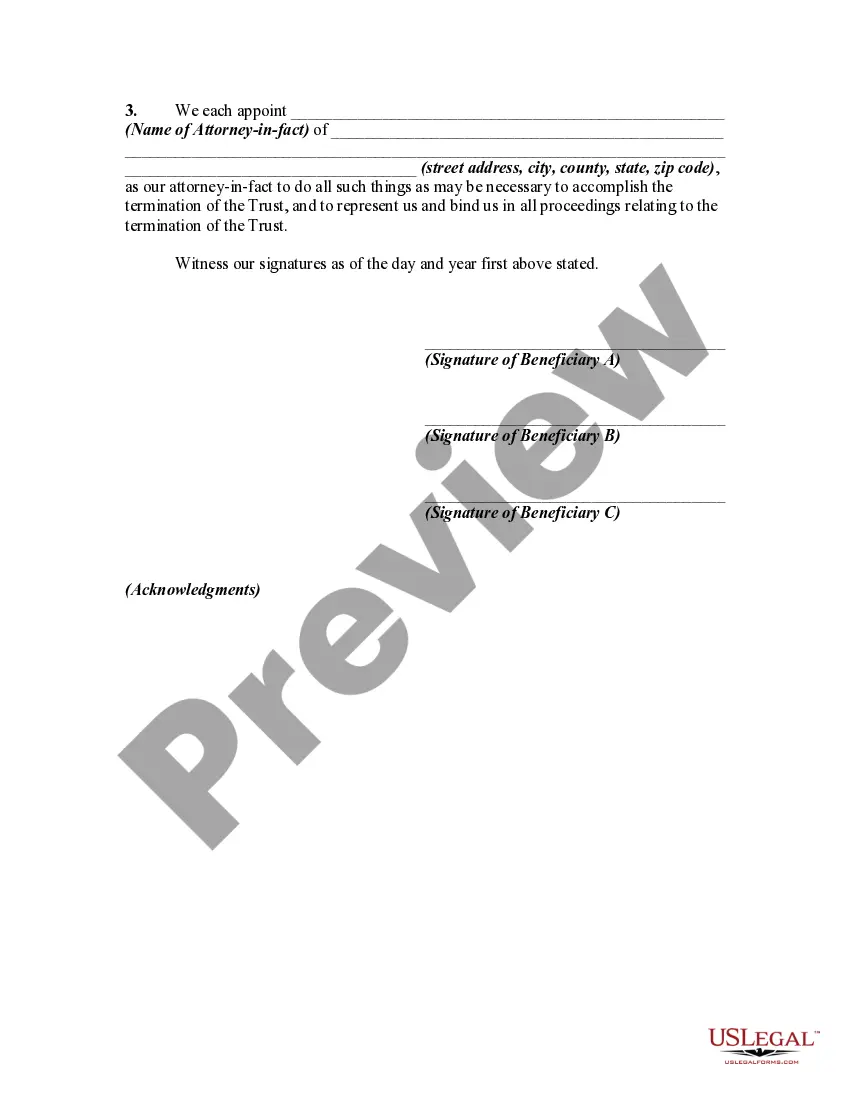
- Details about the appointed attorney-in-fact for executing the trust termination.
- Signatures of all beneficiaries along with acknowledgment clauses.
Situations where this form applies
This form should be used when all beneficiaries of a trust agree to terminate it. It is applicable in scenarios where beneficiaries are of legal age, mentally competent, and wish to proceed with dissolving the trust without going against the intentions of the trustor. For instance, if a trust is no longer serving its purpose or if all parties wish to liquidate trust assets, this agreement provides a legal avenue to formalize that decision.
Intended users of this form
- All beneficiaries of the trust who are legally eligible and competent.
- Individuals involved in managing or overseeing the trust's assets.
- Legal representatives or attorneys acting on behalf of the beneficiaries.
How to prepare this document
- Identify and enter the date on which the agreement is made.
- List the names and addresses of all beneficiaries involved in the agreement.
- Provide the name and address of the trustor who established the trust.
- Confirm that all beneficiaries are over the age of majority as defined by state law.
- Have all beneficiaries sign the document to acknowledge their agreement to the termination.
Notarization requirements for this form
In most cases, this form does not require notarization. However, some jurisdictions or signing circumstances might. US Legal Forms offers online notarization powered by Notarize, accessible 24/7 for a quick, remote process.
Get your form ready online
Our built-in tools help you complete, sign, share, and store your documents in one place.
Make edits, fill in missing information, and update formatting in US Legal Forms—just like you would in MS Word.
Download a copy, print it, send it by email, or mail it via USPS—whatever works best for your next step.
Sign and collect signatures with our SignNow integration. Send to multiple recipients, set reminders, and more. Go Premium to unlock E-Sign.
If this form requires notarization, complete it online through a secure video call—no need to meet a notary in person or wait for an appointment.
We protect your documents and personal data by following strict security and privacy standards.

Make edits, fill in missing information, and update formatting in US Legal Forms—just like you would in MS Word.

Download a copy, print it, send it by email, or mail it via USPS—whatever works best for your next step.

Sign and collect signatures with our SignNow integration. Send to multiple recipients, set reminders, and more. Go Premium to unlock E-Sign.

If this form requires notarization, complete it online through a secure video call—no need to meet a notary in person or wait for an appointment.

We protect your documents and personal data by following strict security and privacy standards.
Mistakes to watch out for
- Not obtaining consent from all beneficiaries before proceeding.
- Failing to verify that all beneficiaries are of legal age and mentally competent.
- Neglecting to fill out the trustor's details accurately.
- Overlooking the need for signatures and dates on the agreement.
Why complete this form online
- Easy access to professionally drafted forms tailored to your needs.
- Convenient download options that allow for quick completion and customization.
- Guidance provided to ensure you accurately populate each section of the form.
- Ability to modify the document as needed without the hassle of physical paperwork.
Quick recap
- This agreement facilitates the termination of a trust among its beneficiaries.
- All beneficiaries must be competent adults for the agreement to be valid.
- Using a standardized form helps ensure that important elements are not overlooked.
Looking for another form?
Form popularity
FAQ
The terms of an irrevocable trust may give the trustee and beneficiaries the authority to break the trust. If the trust's agreement does not include provisions for revoking it, a court may order an end to the trust. Or the trustee and beneficiaries may choose to remove all assets, effectively ending the trust.
In most situations, beneficiaries can remove a trustee who is not doing his or her job. However, you will need to show that certain conditions have been met to warrant removal.
The settlor or the trustee can close a family trust by revoking it if the trust deed gives them the power to do so. The trust deed will set out the process for the settlor or trustee to revoke the trust. You will need to formally record the revocation of the trust, and make the records available to the beneficiaries.
The first step in dissolving a revocable trust is to remove all the assets that have been transferred into it. The second step is to fill out a formal revocation form, stating the grantor's desire to dissolve the trust.
In other words, a California court may now terminate an irrevocable trust if all beneficiaries of the trust agree despite the presence of a spendthrift provision in the trust as long as the court finds good cause to do so.
An irrevocable trust is a trust with terms and provisions that cannot be changed. However, under certain circumstances, changes to an irrevocable trust can be made and a trust can even be terminated. A material purpose of the trust no longer exists.
Further, a trust will be considered as terminated when all the assets have been distributed except for a reasonable amount which is set aside in good faith for the payment of unascertained or contingent liabilities and expenses (not including a claim by a beneficiary in the capacity of beneficiary).
As discussed above, irrevocable trusts are not completely irrevocable; they can be modified or dissolved, but the settlor may not do so unilaterally. The most common mechanisms for modifying or dissolving an irrevocable trust are modification by consent and judicial modification.
The first step in dissolving a revocable trust is to remove all the assets that have been transferred into it. The second step is to fill out a formal revocation form, stating the grantor's desire to dissolve the trust.